
Quick Take
- The cage most commonly marketed as "guinea pig safe" could actually dangerous for guinea pigs, though not for the reason you'd expect. See the cage caveat →
- A cat doesn't need to get inside the enclosure to seriously injure or kill a guinea pig. Most owners overlook exactly how little contact it takes. See the real risk →
- There's a common DIY cage upgrade that cats actively dislike, and it also doubles as your cheapest line of defense. See the mesh solution →
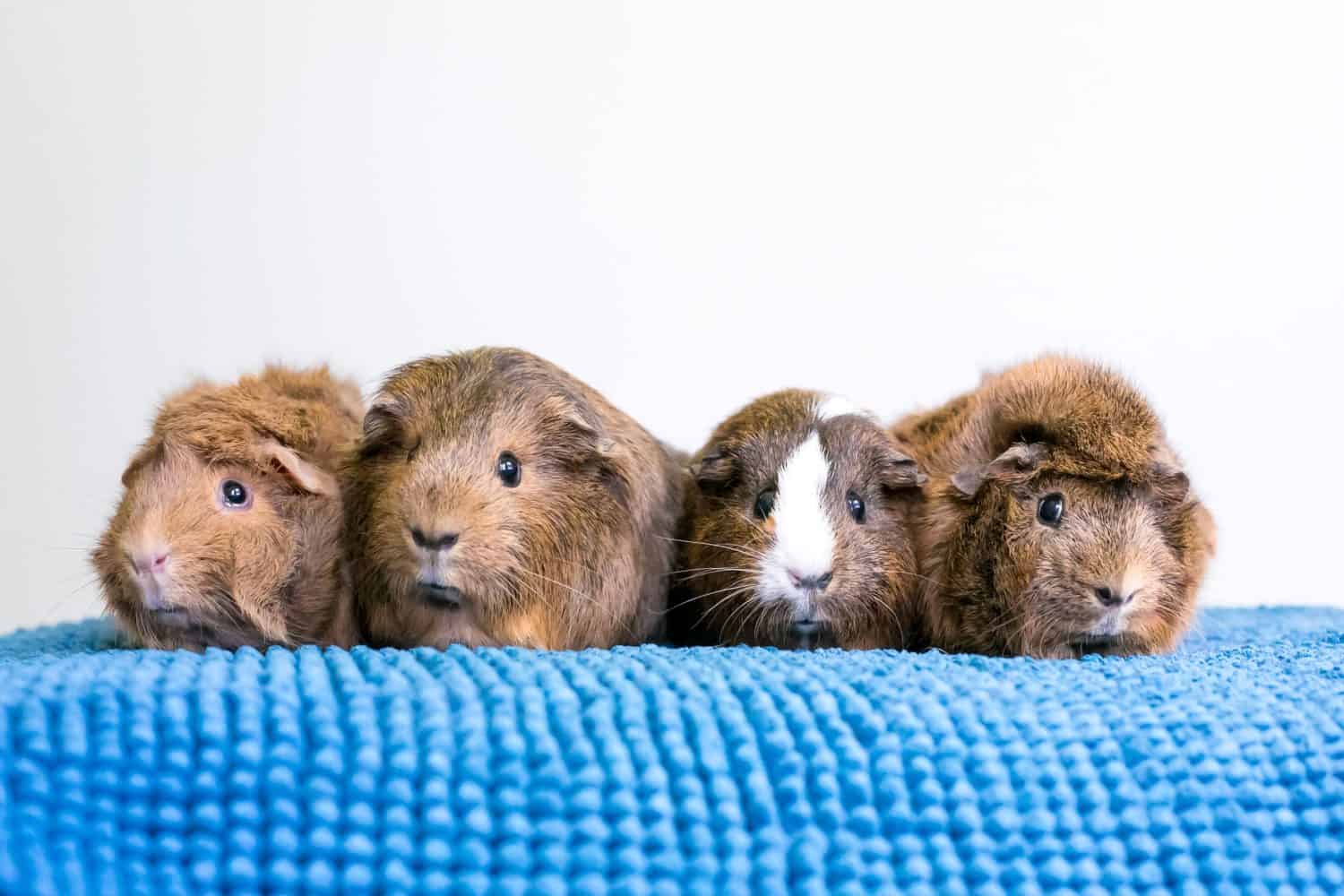
Is it possible to have cats and guinea pigs in the same home? If so, how do you cat-proof a guinea pig enclosure? You can have both cats and guinea pigs at the same time. However, it can be challenging and requires making some modifications to your guinea pigs’ enclosure. It’s up to you to keep your guinea pigs safe and ensure that the animals never interact. In this article, we’ll discuss tips and tricks for cat-proofing your enclosure so your guinea pigs are protected.
Don’t Compromise on Size or Ventilation
Before we begin, it’s important to note that you should not compromise on size for the sake of easy safety. Most cages that are marketed for guinea pigs are smaller than experts recommend. While these are often cat-proof, they’re not suitable for guinea pigs and won’t give them the space they need to exercise properly. The minimum amount of space required for two guinea pigs is 7.5 square feet, or around 30 x 36 inches. However, most people agree that at least 10.5 square feet, or 30 x 50 inches, is better.
You’ll also want to ensure that the cage has enough ventilation for your guinea pigs. Ideally, their cages shouldn’t have solid sides. Guinea pigs produce a lot of ammonia because they’re constantly defecating and urinating. Ammonia build-up in the cage can lead to bad smells. Most importantly, it can cause upper respiratory infections that can lead to pneumonia in guinea pigs. Poor air circulation can also cause heatstroke in guinea pigs.
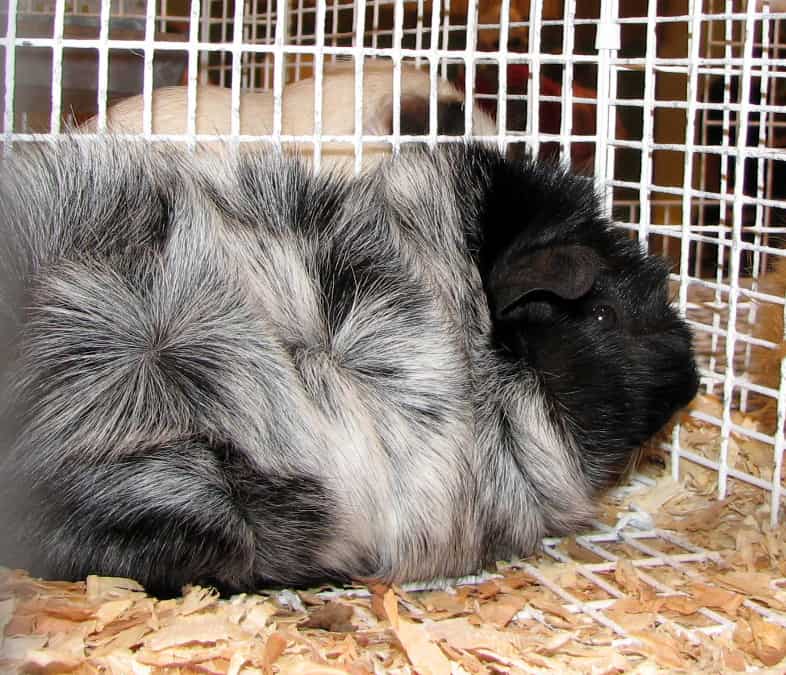
C&C cages are great for guinea pigs, but the standard openings are still large enough for a cat’s paw.
A C&C cage is a perfect example of what to look for. C&C stands for cubes and coroplast. The walls are made with modular metal grids with a sturdy plastic floor. However, the standard openings are generally large enough for a cat to reach a paw into, so we’ll show you how to make your guinea pig’s C&C enclosure cat-proof.
#1: Cover the Sides of the Cage with Mesh
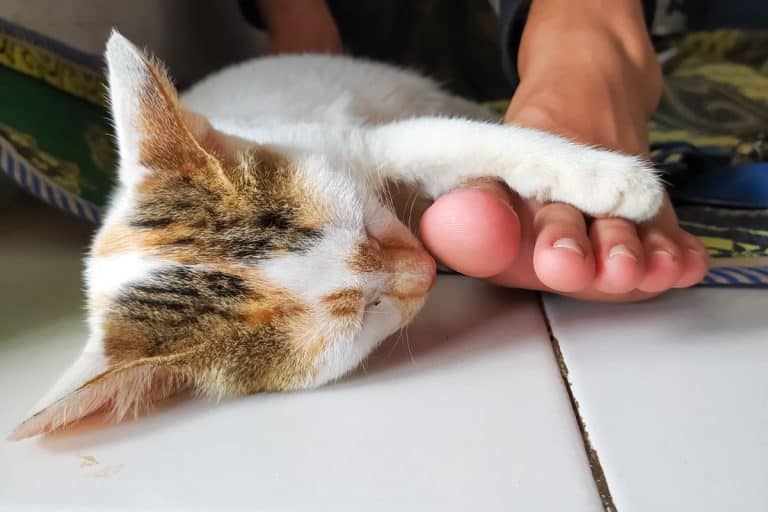
If your cat is interested enough in the guinea pigs to reach through the bars or grids with their paws, covering the sides with mesh is a great solution. It maintains proper ventilation while not leaving large openings for sneaky kitty paws.
There are several options available, including window screening, fine-gauge wire mesh, or hardware cloth to line the inside walls of your enclosure. Hardware cloth will be the sturdier option for especially stubborn felines.
#2: Make a Lid Using C&C Grids
Many people with cats or other animals make lids for their C&C cages using spare grids. This is an easy and inexpensive way to keep your piggies safe. Be sure to zip-tie your C&C grids together so that the lid and cage hold up to your cat’s antics.
We recommend using three zip ties each time you attach two grids together, one on each end and one in the middle. Cats generally do not like the feel of the grids, so they typically won’t jump on top of the cage. However, make sure your lid is sturdy enough to hold your cat’s weight if they get adventurous. You should also line the lid with mesh if the top of the cage is within your cat’s reach. You can also purchase mesh security covers online and at pet stores.
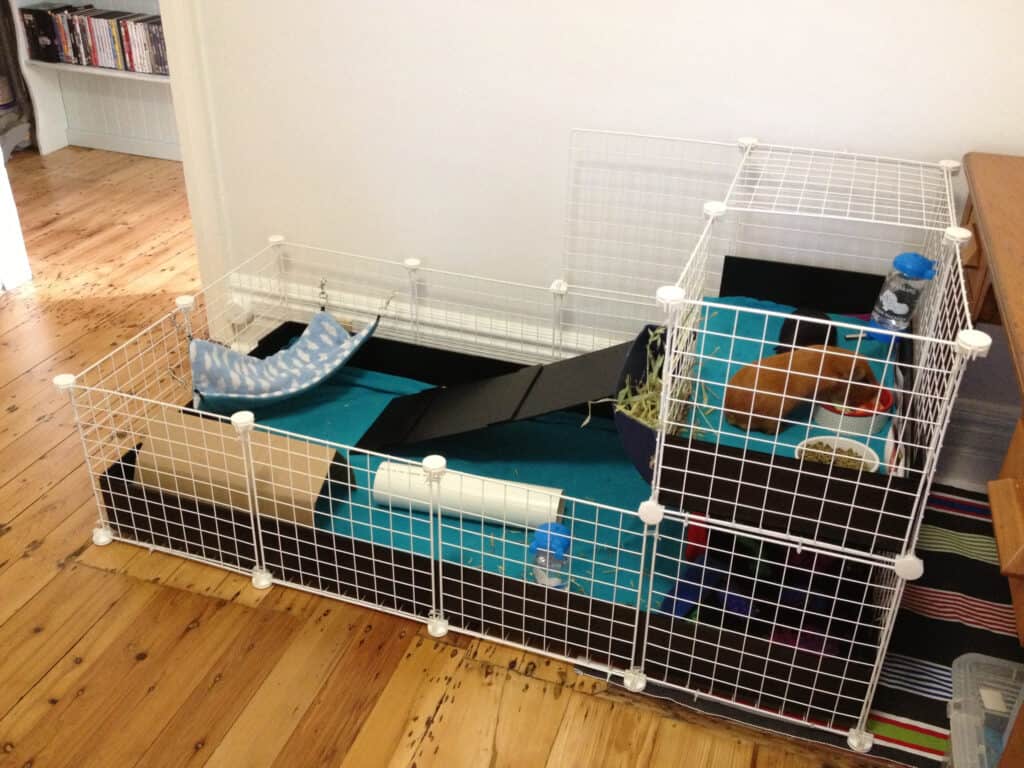
C&C grids like the ones making up the cage above can be used to make lids as well.
#3: Purchase Locks for Cage Doors
Locking the cage doors can keep smart cats from breaking into your guinea pigs’ cage. Locks also help if you have children at home and you are worried about them opening the cage without your knowledge.
#4: Keep Your Guinea Pigs’ Cage Off the Floor
Putting your guinea pigs’ cage up on a table can help keep them away from the cats, especially if the cage covers the entire table. While most cats like to climb, this prevents them from sitting right next to the cage and causing mischief.
#5: Keep the Guinea Pigs in a Closed Room
Your guinea pig enclosure should be kept in a room that can be closed off to your cat when you cannot supervise everyone. Even with the above precautions, you can’t be too careful. Keeping predator and prey animals in the same household can be tricky, so keeping your guinea pigs in a closed room is an extra layer of protection. However, cats can easily sneak in when you open the door, so make sure your cage is cat-proofed, regardless of whether the cage is in a closed-off room.
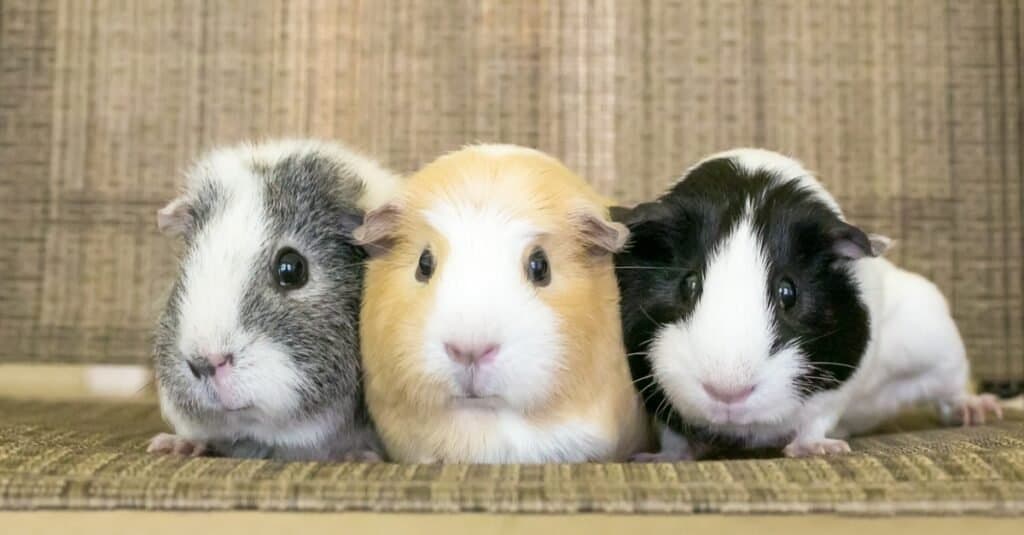
Keep your guinea pigs safe from curious felines by placing their enclosure in a closed room.
©Mary Swift/Shutterstock.com
Never Allow Cats and Guinea Pigs to Interact
Cats and guinea pigs should not interact. Not in the cage, not during floor time, and not while you’re cuddling them in your lap. While some cats have low prey drives and don’t seem interested in hurting your guinea pigs, even an accident or a playful swipe can cause serious damage. Cats’ mouths and claws harbor bacteria that can cause deadly infections even from just a small scratch. Cats are predators by nature, so it’s not worth taking the chance.
So, how do you give your guinea pigs floor time when you have cats? The best option is to close the cat in another part of the house. If you allow your guinea pigs to free roam in one room, if your cat is not shut up, it could sneak into the room when you open the door. By keeping your cat behind closed doors, you can rest assured your piggies are safe, even if you get distracted by something else, need to use the bathroom, or are otherwise preoccupied.