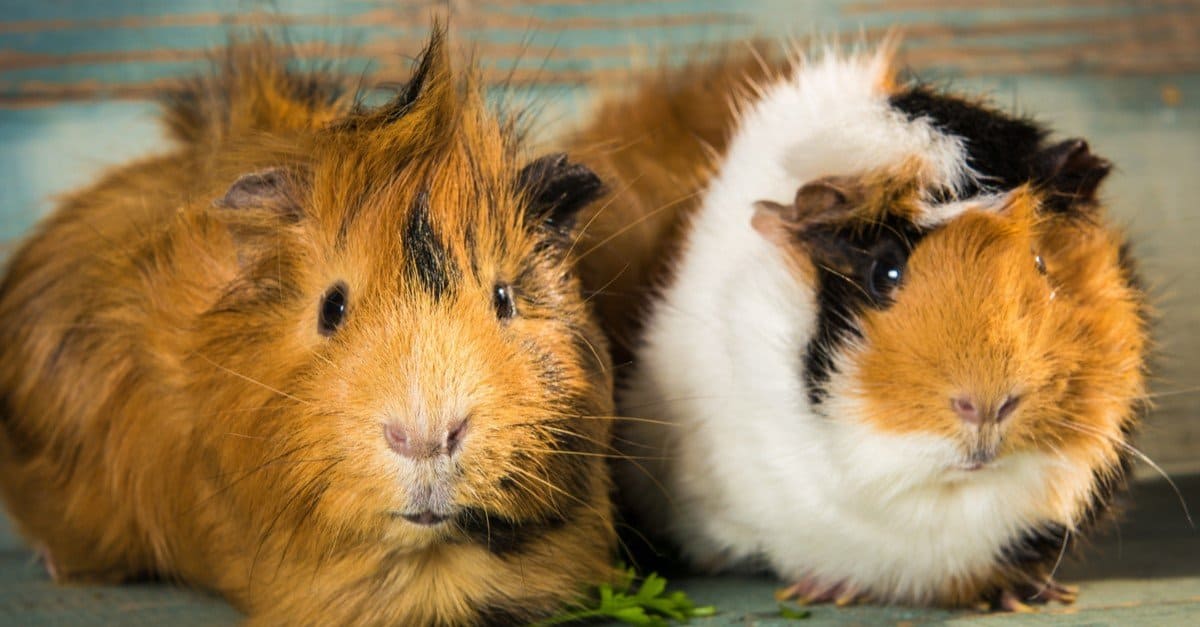

Guinea pigs are among the oldest — and some might say the cutest — domesticated animals in the world. Sociable, gentle, and pleasant to be around, they appeal to children and adults alike. There are many different guinea pig breeds, each varying in color, texture, and fur pattern.
The species we know as the domesticated guinea pig (Cavia porcellus) does not exist naturally in the wild. However, they have wild relatives that still roam parts of Central and South America. Domesticated guinea pigs have a long and compelling history that dates back thousands of years. This article will cover where they came from and how they were used throughout history.
Guinea Pig Classification
Guinea pigs are rodents in the order Rodentia, and they belong to the family Caviidae. Members of this family are native to many different locations throughout South America, including the Amazon basin. However, some species are less common in dense rainforest habitats. Along with all other cavies, this family also includes the largest living rodent, the capybara, which actually looks a bit like an overgrown guinea pig.
Further down the taxonomical ranking, the domesticated guinea pig is one of six recognized species that belong to the genus Cavia. The five other species, which look similar to the common domesticated variety, are called the Brazilian guinea pig, the shiny guinea pig, the intermediate guinea pig, the greater guinea pig, and the montane guinea pig. Some taxonomists recognize three other species of feral guinea pigs that returned to the wild at some point after domestication. There are also four more extinct species known from the fossil record.
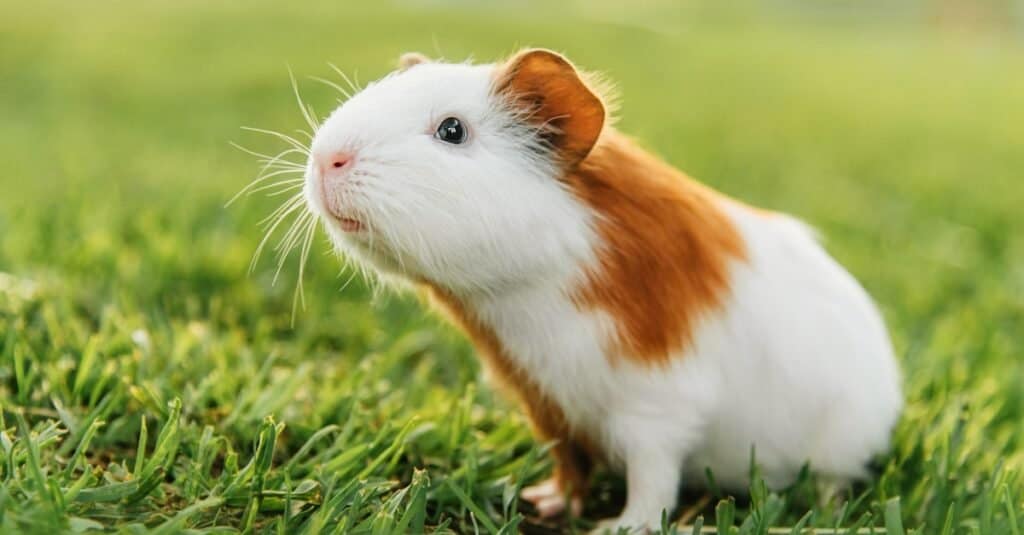
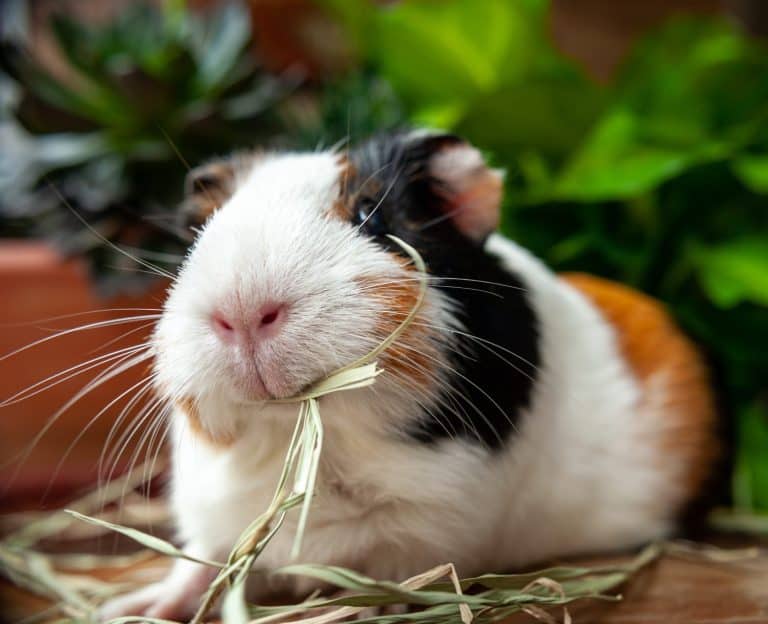
The domesticated guinea pig is one of six recognized species that belong to the genus Cavia.
©Rita_Kochmarjova/Shutterstock.com
The Evolution of the Guinea Pig
The very first members of the Caviidae family probably evolved in South America between 26 and 7 million years ago from ancestral rodents that arrived from North America. Once they arrived in South America, however, this group became the cavy-like animals we know today. Most cavies are characterized by large heads, short but heavy bodies, and barely visible tails. They’re also relatively large compared to many rodents.
Wild cavies are most commonly found in grasslands, forests, and marshes with plenty of vegetation. Most species prefer relatively low-lying areas, but the montane guinea pig can survive at elevations of up to 16,000 feet. In the wild, they travel together in small herds that consist of a male boar, several female sows, and their young offspring. This social configuration enables a single male to control reproductive access to several of the females in his herd. Wild guinea pigs are highly active during dawn and dusk, but to protect themselves, they seek shelter in the burrows created by other animals during the rest of the day. This is how wild guinea pigs lived before domestication.
The Domestication of the Guinea Pig
Based on genetic analysis, the guinea pig was probably first domesticated in the Andean region of South America around 5,000 B.C.E. Today, this region corresponds to the countries of Ecuador, Peru, and Bolivia. The exact history is now lost to us, but genetic evidence suggests the guinea pig was first domesticated from the wild species Cavia tschudii. It was then systematically selected for appealing traits such as gentleness and docility. Along with the llama and alpaca, the guinea pig is one of the few animals domesticated in South America.
The guinea pig initially had a variety of uses for the local people, including companionship, food, and even religious customs. According to one common tradition, guinea pigs were used to diagnose painful illnesses such as arthritis and rheumatism. Black guinea pigs were said to be particularly skilled at the art of diagnosis. The guinea pig held such a central place in the Andean culture that they were exchanged as popular gifts, both as signs of respect and affection. The animal was called a “quwi” (or “cuy”) in Quechua, one of the main language families in the Andean region.
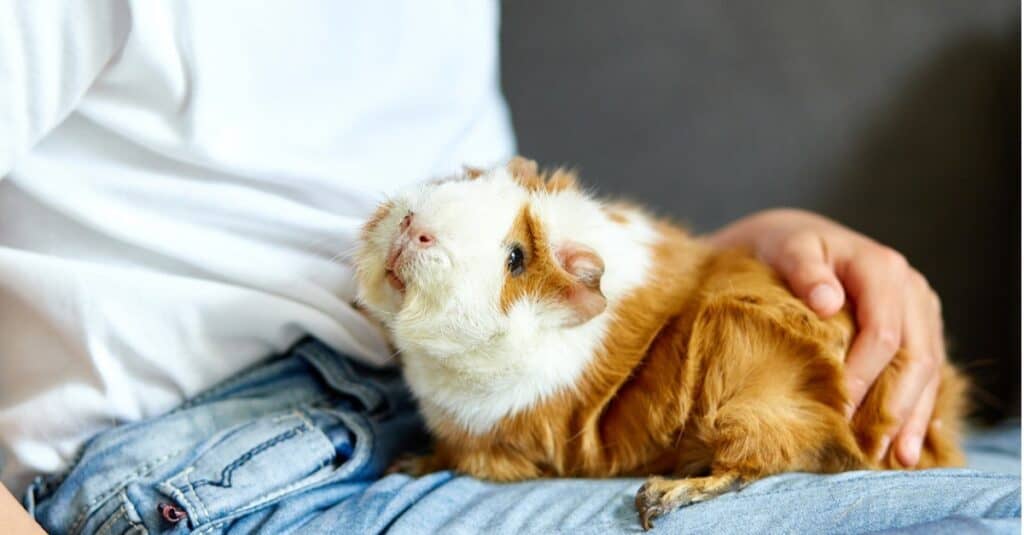
Guinea pigs were first domesticated around 5,000 B.C.E.
©iStock.com/bondarillia
Social Significance
Around the year 500 B.C.E., guinea pigs began to make their first appearances in folk art and handicrafts. The Moche people, who flourished around 100 to 800 C.E., incorporated guinea pigs and other animals into their social and religious customs. The statues and art they created depicting animals testify to this spiritual and social significance. The rise of the Inca civilization in the early 15th century also had an important effect on the fortunes of the guinea pig. The Incas began to breed new, exotic varieties with unique fur colors and textures. Many of the breeds we still know today were originally bred in this creative period.
These animals continued to be used for food and diagnosis. However, the Incas seemed to have a particular habit of sacrificing their guinea pigs to the gods as well. Some of these practices endured in remote villages long after the Spanish conquest forcefully ended many Andean traditions.
The Guinea Pig Goes Global
After the fall of the Inca Empire in the early 16th century, the guinea pig became a popular export from the Andean region. The first written record of the guinea pig appears in a 1547 account from Santo Domingo, now the capital of the Dominican Republic, where guinea pigs were not native but introduced. Later that century, Spanish explorers returning home brought guinea pigs with them. The animals caught the fancy of upper-class Europeans. One of the greatest early fans was none other than Queen Elizabeth I, who helped to solidify their status as popular pets.
The animal was known by many different names in these early days. The Portuguese called them Porquinho da Índia, or “little pig from India” as the Americas were initially mistaken for the Indies. The Germans named them Meerschweinchen, meaning “little sea pigs,” perhaps because they came from overseas. The Latin name porcellus, which is also the scientific name for the species, simply means “little pig.”
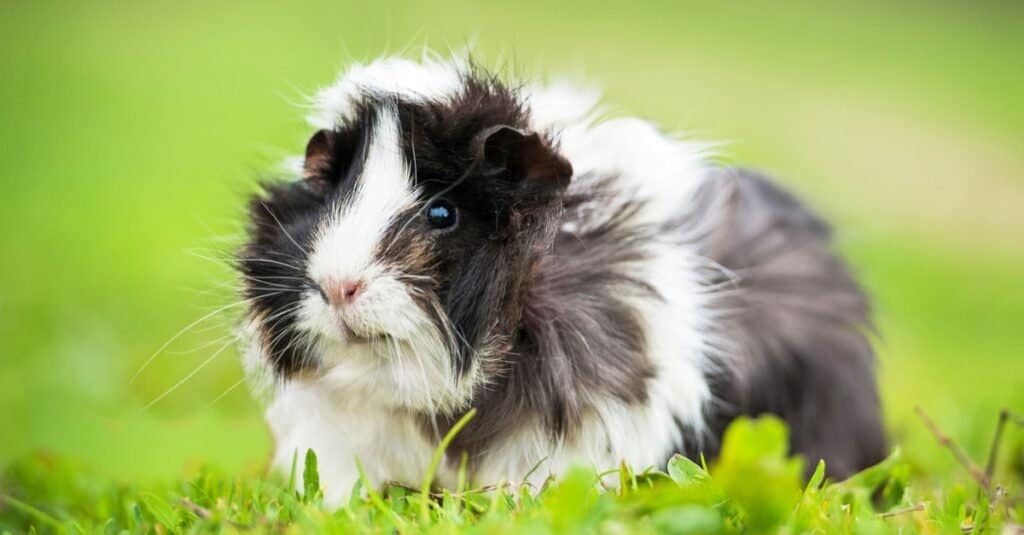
The first written record of the guinea pig appears in a 1547 account in Santo Domingo.
©Rita_Kochmarjova/Shutterstock.com
The English name is likewise a bit of a misnomer, and the origin is not entirely clear. One of the most popular theories is that “guinea” refers to the cost of the animal. The guinea was a gold coin in 17th-century England, composed of metals extracted from the Guinea region of West Africa. This explanation is unlikely, however, because the term was already thought to be in use by the time the coin was first minted. Another explanation is that the animal came to England via a stop in Guinea. “Guinea” might also have been common English slang for any foreign location.
Modern History
By the 1800s, guinea pigs were being used as experimental subjects in laboratory tests to study nutrition, diseases, toxicology, and health products. Hence, the term guinea pig when referring to a person who is a subject of a scientific experiment or test. Their biological similarities to humans and the ease of working with them made them ideal test subjects. It’s estimated that they have contributed to 23 Nobel Prizes for medicine and physiology. They have contributed to the discovery of vitamin C and the hormone adrenaline. They have also contributed to the development of blood transfusions, antibiotics, asthma medicines, and vaccines. Along with other rodents, guinea pigs are closely associated with scientific study and the advancement of medicine.
Today, the animal still flourishes as a lovable pet and companion. Millions of people around the world keep them as pets. While far removed from their natural habitat, the humble guinea pig has become one of the most fascinating animals on the planet.