
Quick Take
- The window between "not hungry" and life-threatening emergency is far shorter for guinea pigs than most owners realize, and waiting too long to act can cost them their life. See the danger window →
- GI stasis sounds technical, but the warning signs hiding in plain sight are ones most guinea pig owners mistake for normal behavior. Spot the warning signs →
- That hay alternative you're using might seem perfectly fine. What you may not know is what it's silently failing to do for your guinea pig. See why hay can't be replaced →
- Guinea pigs share a surprising nutritional vulnerability with humans, and missing it doesn't just affect their diet. It attacks their entire body. Explore the vitamin C risk →
Guinea pigs differ from many other household pets because they have fast digestive systems and a constant need for food. You may be wondering how long guinea pigs can go without eating before it becomes dangerous. In this article, we’ll discuss how long guinea pigs can go without food, the signs that they’re in GI stasis, and what to do if your guinea pig isn’t eating.
How Long Can Guinea Pigs Go Without Eating?
When a guinea pig stops eating, you must treat it as an emergency. Call your veterinarian as soon as you notice changes in your guinea pig’s appetite. Even just 6-12 hours without food is dangerous for a guinea pig, as this can cause gastrointestinal stasis (also known as GI stasis), a life-threatening condition. Veterinarians warn that 4-6 hours can be a red flag, but over 12 hours is an emergency.
The longer your guinea pig goes without food, the more at risk they will be. This is why they need constant and unlimited access to fresh hay. In addition, guinea pigs should get grass-based pellets, plus fresh vegetables and herbs. They also need access to water at all times.
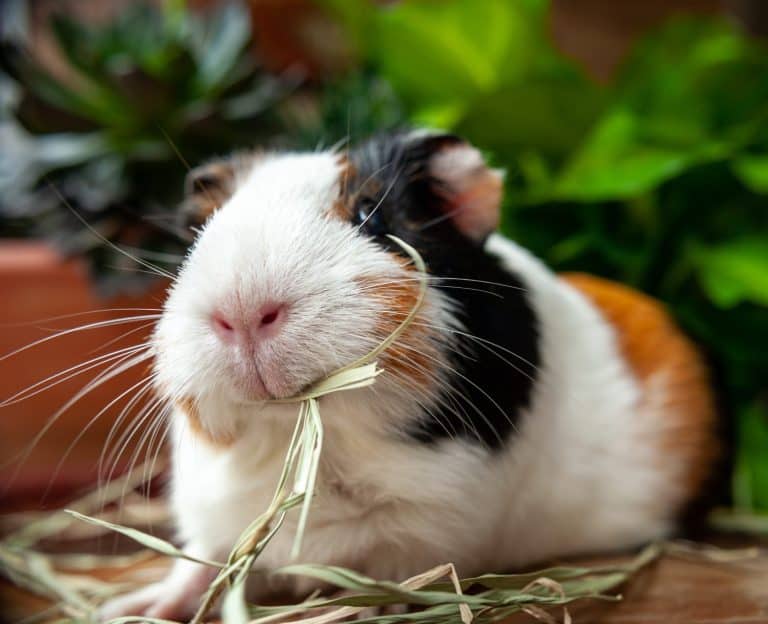
When your guinea pig stops eating, don’t wait to contact your vet for advice.
©Sofiia Petrova/iStock via Getty Images
What Is GI Stasis in Guinea Pigs?
Gastrointestinal stasis happens when a guinea pig’s digestive system stops functioning properly. It may slow down or stop completely. Guinea pigs have very fast digestive systems and when they are healthy, food is constantly moving through their bodies.
When a guinea pig has GI stasis, it may eat less than usual or refuse to eat entirely. They will produce fewer droppings or none at all. They may hide more than usual and become lethargic or weak. Causes of stasis can include poor diet, dental issues, and stress.
Are There Alternatives to Hay for Guinea Pigs?
Your guinea pigs should always have access to safe hay such as timothy or orchard grass. Orchard grass is a great replacement for timothy hay if you’re allergic to timothy. Some people dislike the smell of hay and attempt to use compressed hay blocks or similar products. While these are great for enrichment in addition to loose hay, they aren’t a replacement. Your guinea pig will not be able to eat enough if this is all that they’re given.
Timothy-based pellets are also not a replacement for hay and too many pellets can cause obesity. Technically, guinea pigs can eat grass, but it’s impractical to grow enough to sustain them. This is why most people feed them dried hay instead. If you do feed your guinea pigs grass, it is best to feed them fresh grass that was grown in pots. Never feed them grass from your lawn, as this can cause digestive issues.
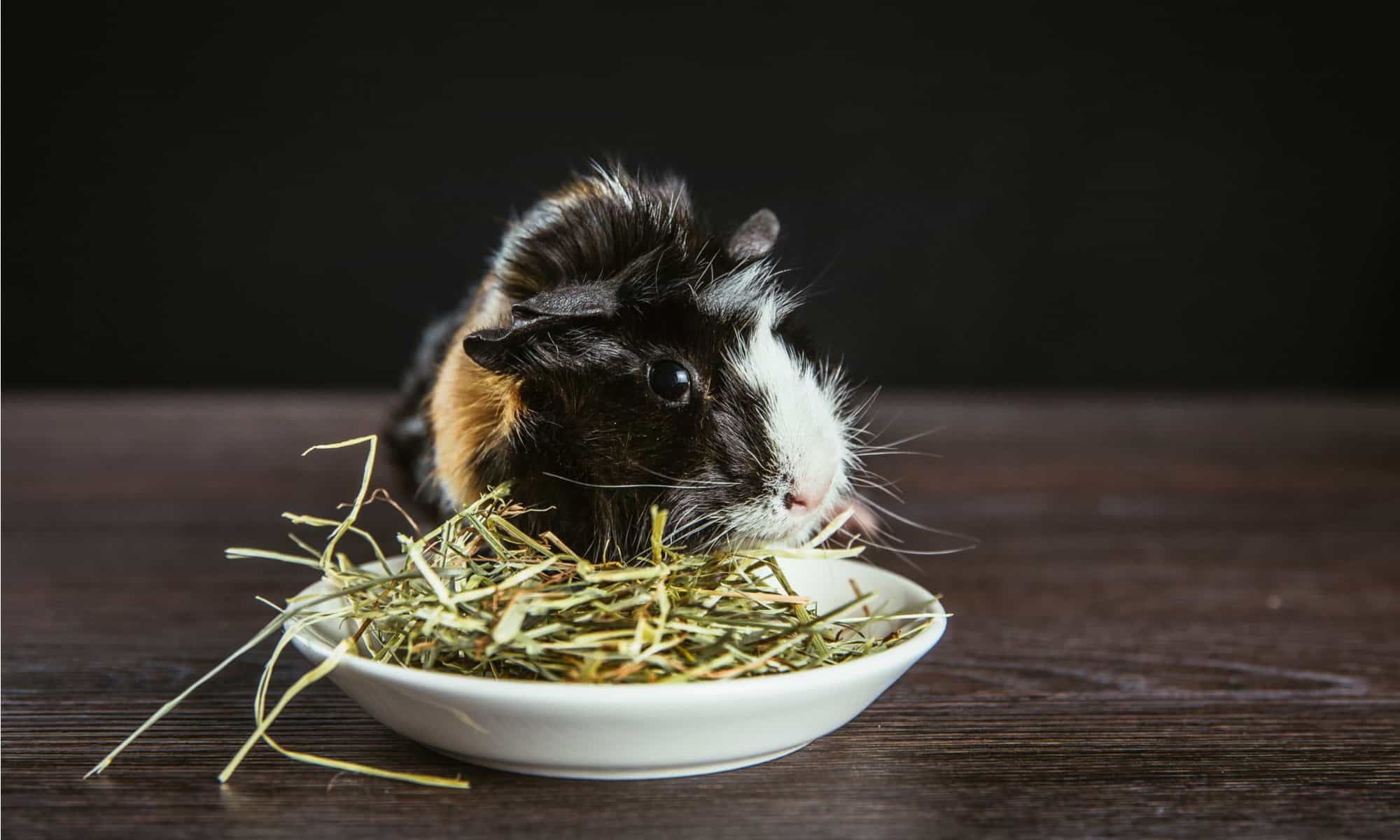
There’s no real replacement for an unlimited supply of hay for guinea pigs, and running out for even a few hours can be detrimental to their health. Because their teeth grow continuously throughout their lives, chewing hay helps wear them down to the proper shape and length. A poor diet can lead to serious dental issues.
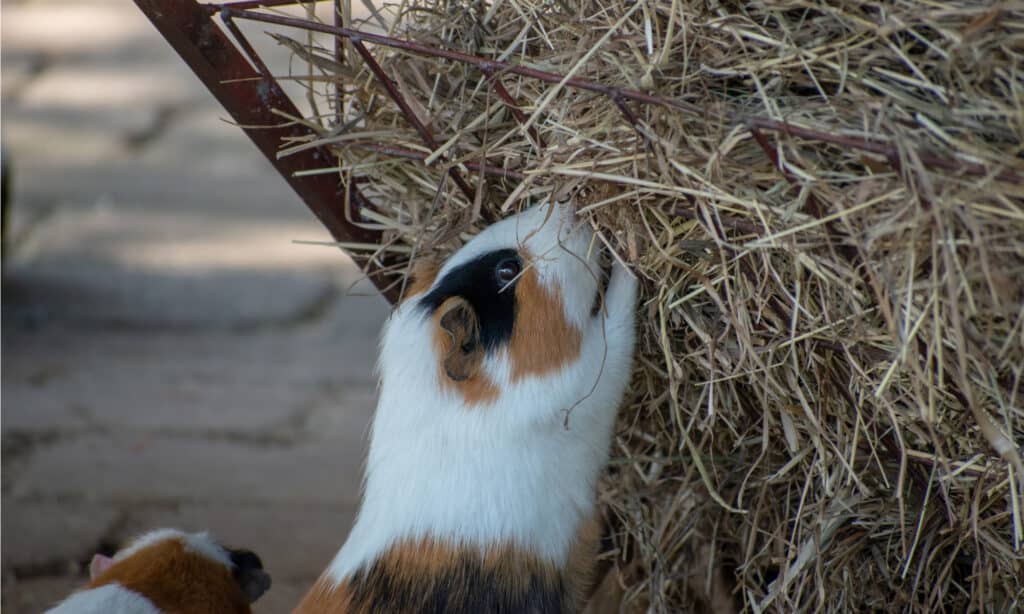
Your guinea pig should always have access to grass hay.
©Wirestock Creators/Shutterstock.com
The Guinea Pig Diet
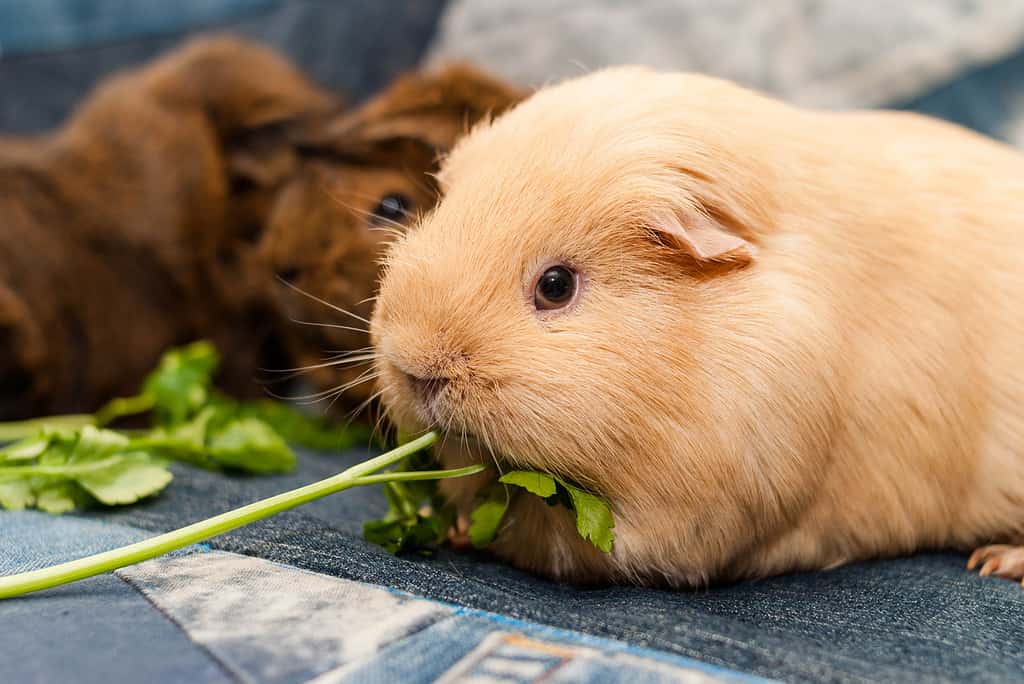
Ideally, you should feed each of your guinea pigs a cup of fresh vegetables daily. They should eat primarily dark leafy greens with plenty of vitamin C and limited amounts of calcium and sugar. If you need to skip veggies for a day or two, this isn’t likely to hurt your guinea pigs as long as they have sufficient hay available.
However, a diet without vegetables isn’t healthy in the long term and can cause scurvy. This can cause guinea pigs to lose their appetite, develop bleeding under the skin or in their organs, get swollen joints, and have dental issues. Guinea pigs can’t make vitamin C, so they must get it from their food. They need at least 10 mg of vitamin C per kilogram of body weight each day. Grass-based pellets should also be provided daily, as these are another good source of vitamin C.
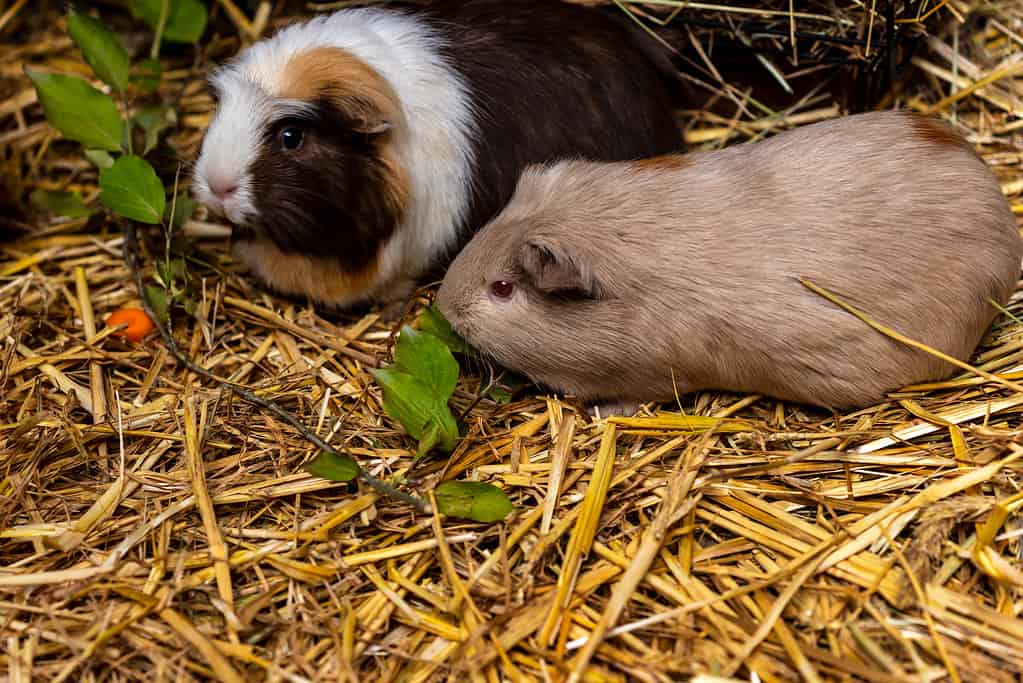
Feed your guinea pigs a variety of vegetables consisting of primarily dark, leafy greens.
©Vronja_Photon/iStock via Getty Images
What to Do If Your Guinea Pig Won’t Eat
With cats and dogs, we typically begin to worry if they haven’t eaten in around 24 hours. With guinea pigs, waiting that long can mean treating them too late. As we mentioned above, even 4-6 hours without food is a warning sign, but 12 hours or more is critical. It’s important to have an exotic vet nearby with experience in treating guinea pigs. You should check your area for emergency vets that will treat your guinea pig.
Call as soon as you notice your guinea pig’s appetite has changed, even if they’re just eating less or only eating certain foods. It’s not always possible to get a same-day appointment, but it’s ideal. Your vet can also give you advice on how to care for your guinea pig in the meantime, such as feeding a recovery food or critical care formula.
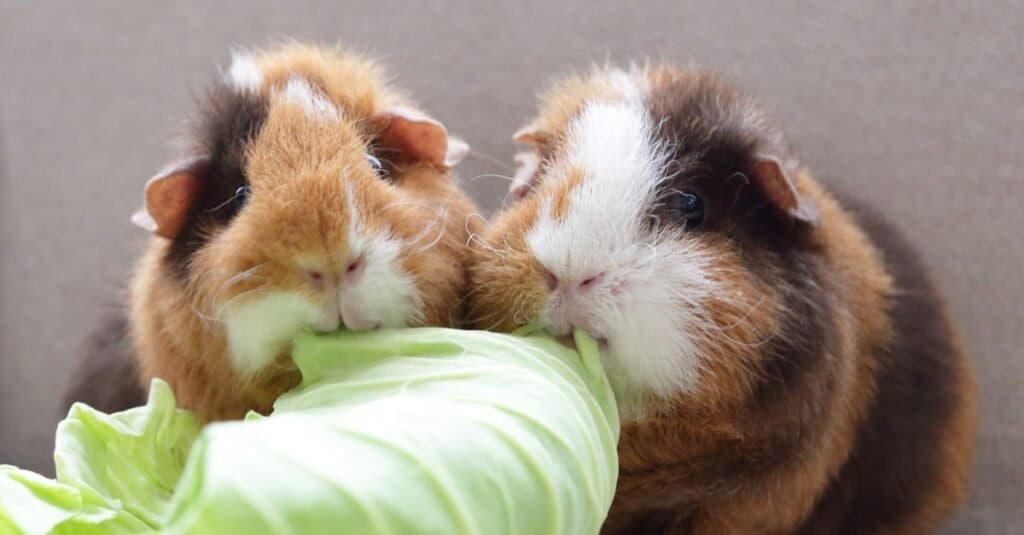
You should contact your vet if your guinea pig refuses to eat, as time is of the essence.
©yurilily/Shutterstock.com