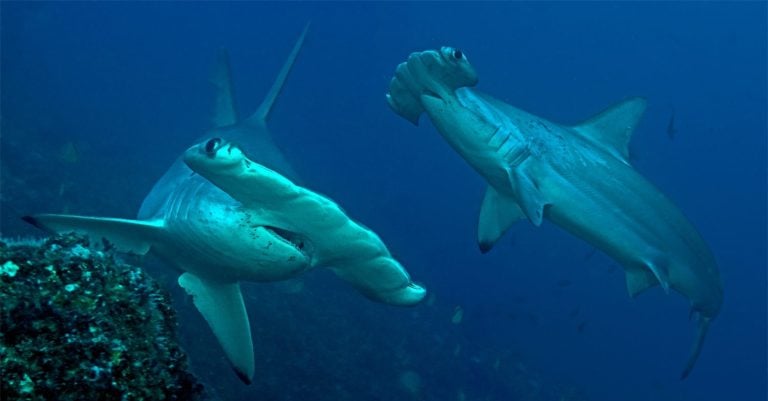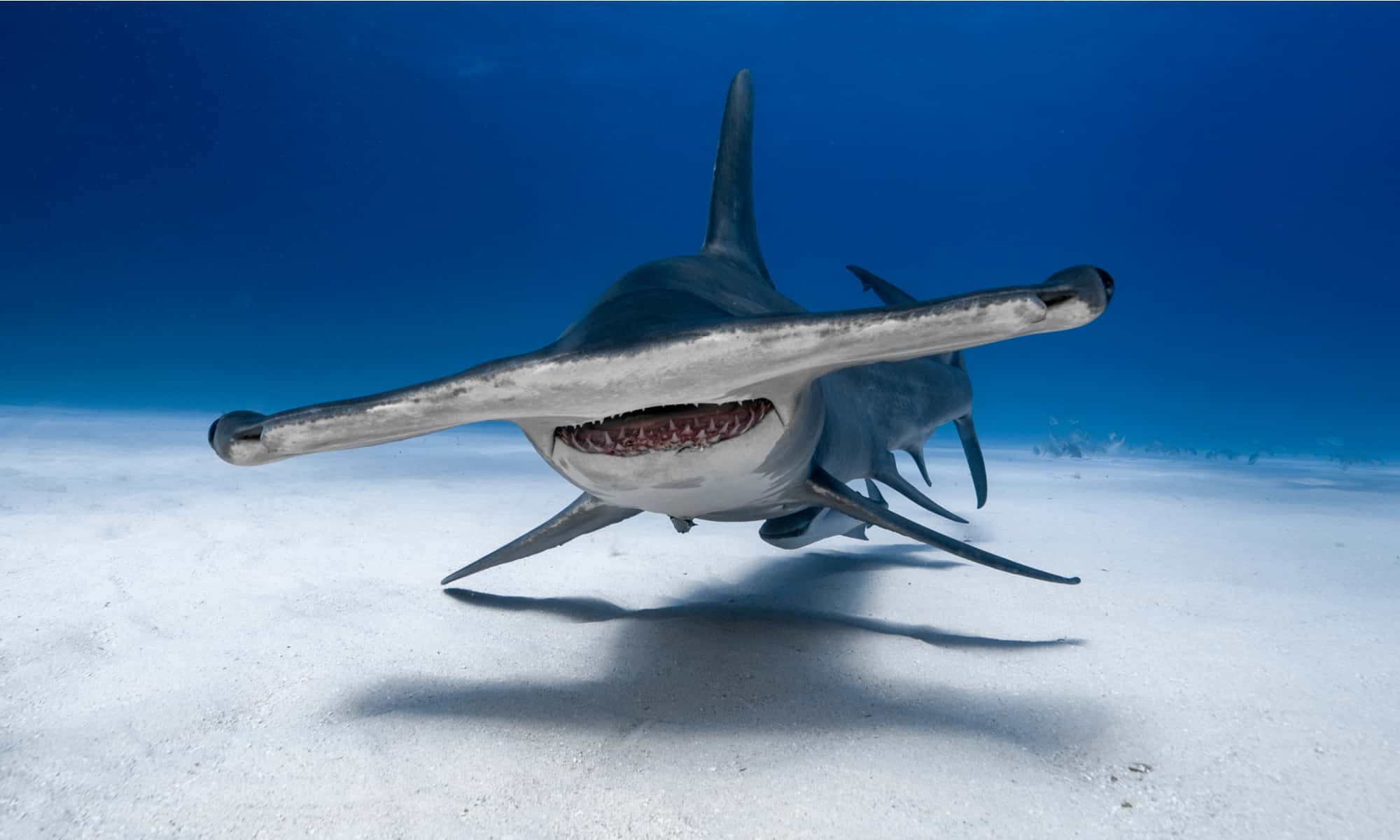

One of the most instantly recognizable creatures of the sea, hammerhead sharks (Sphyrnidae) have long been the subject of debate and amazement. Most information about hammerhead sharks is recent and explains a lot about shark behavior and evolution. While more research is needed to unlock all of the secrets of the hammerhead, keep reading to learn 10 amazing facts about hammerhead sharks.
10. There are Ten Species of Hammerhead Sharks
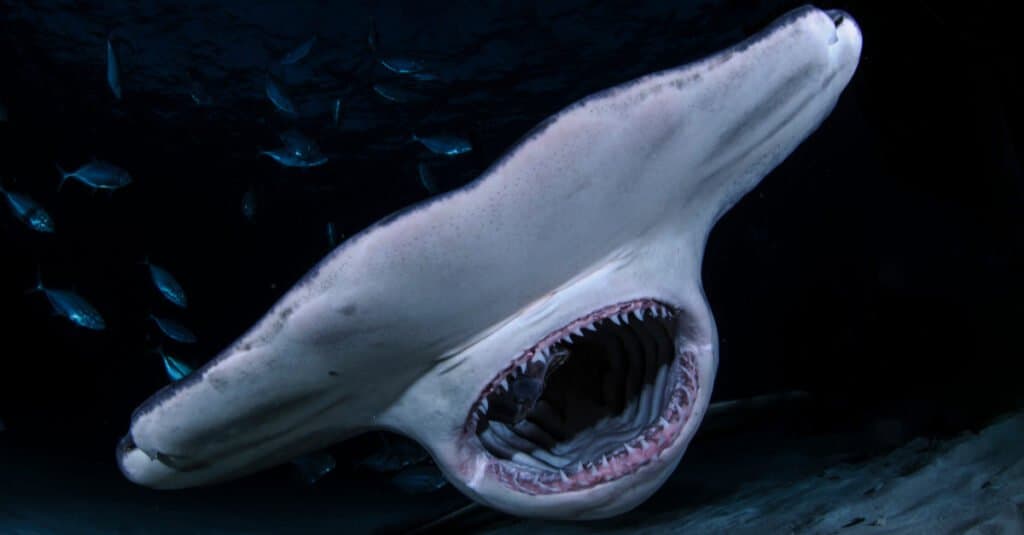
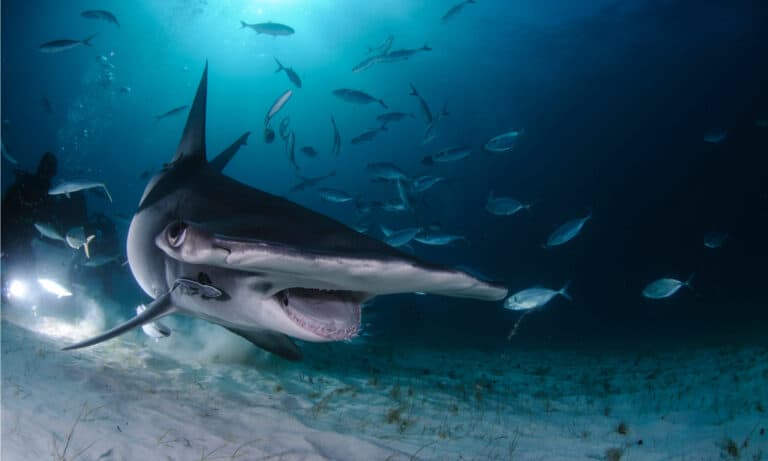
A close-up of a hammerhead shark!
©Martin Voeller/Shutterstock.com
Nine hammerhead species are contained in the genus Sphyrna, while one, the winghead shark (Eusphyra blochii), has its own genus, Eusphyra.
Sharks in the genus Sphyrna are the scalloped bonnethead (S. corona), whitefin hammerhead (S. couardi), Carolina hammerhead (S. gilberti), scalloped hammerhead (S. lewini), scoophead (S. media), great hammerhead (S. mokarran), bonnethead (S. tiburo), smalleye hammerhead (S. tudes), and smooth hammerhead (S. zygaena).
9. The Hammerhead of the Shark is Called a Cephalofoil
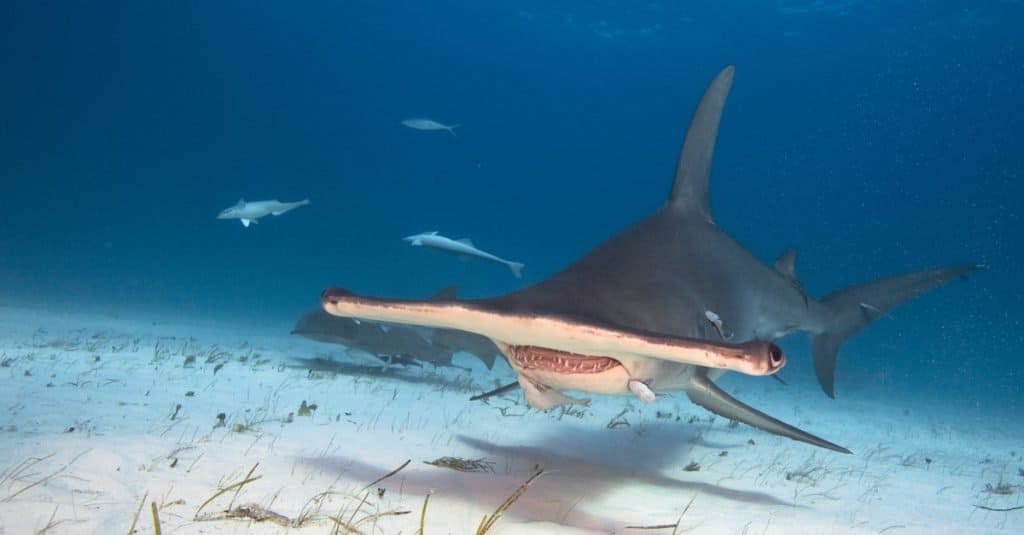
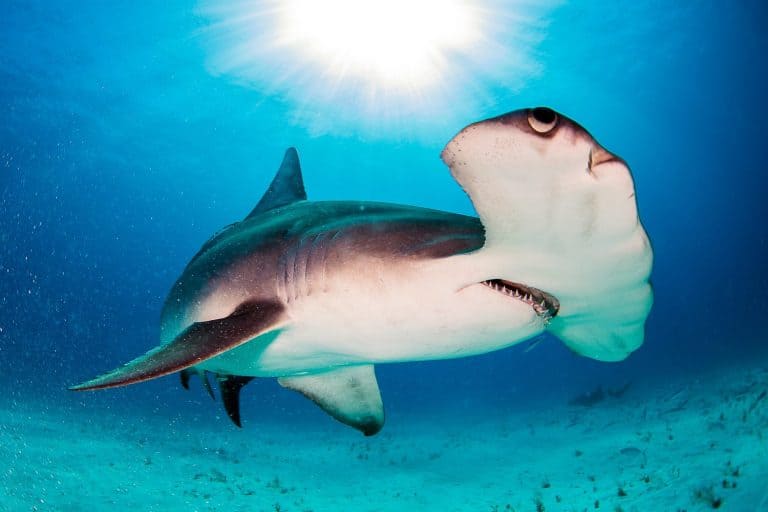
This shark’s name comes from the unusual shape of its head, an amazing piece of anatomy.
©frantisekhojdysz/Shutterstock.com
The cephalofoil is responsible for the distinctive shape of the hammerhead group and gives them incredibly effective binocular vision and superior depth perception. It is thought that the size of the cephalofoil gives hammerheads an increased ability to navigate vast distances and to detect the electrical fields surrounding possible prey.
8. Some Hammerheads Use Their Hammerheads to Hunt
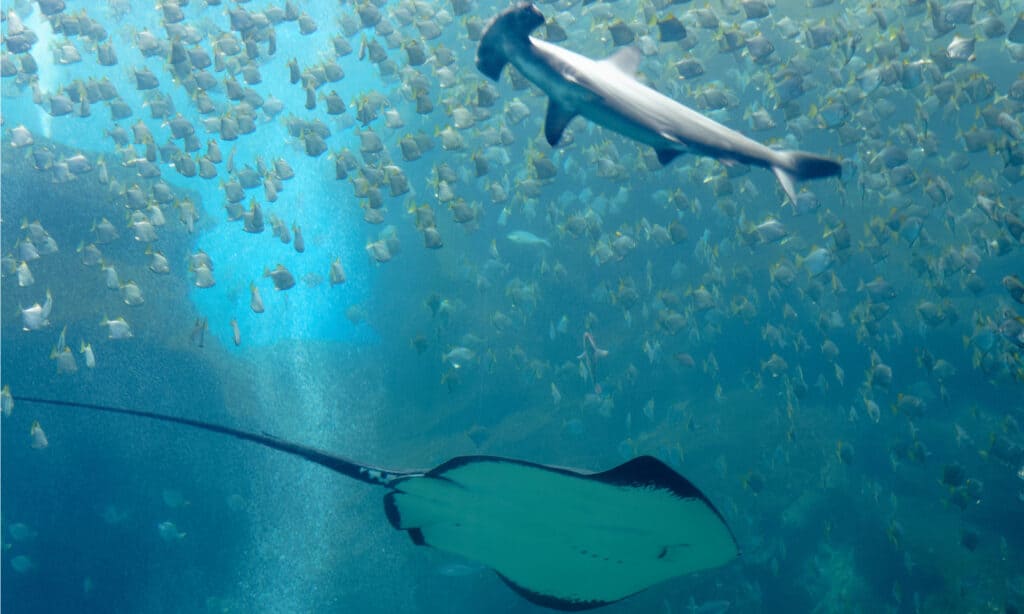
A hammerhead shark will pin down its prey.
©CHEN MIN CHUN/Shutterstock.com
In addition to the incredible visual prowess the cephalofoil gives hammerheads, it’s been observed that they use their heads to ram into and pin down stingrays, forcing them into the substrate (ocean floor). This repeated action eventually tires out the stingray, making it easier for the sharks to eat it.
7. Hammerheads are Immune to Stingray Venom
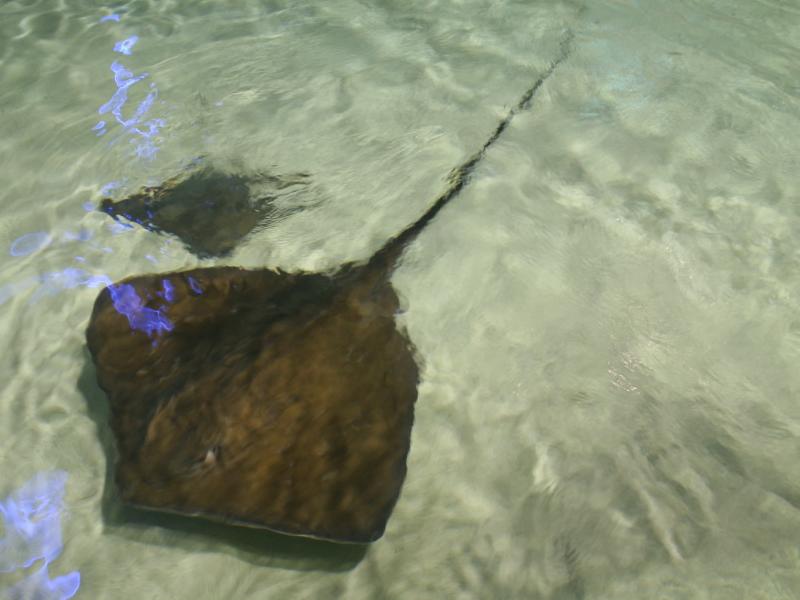
The spinal blade of a stingray can secrete venom; both the blade and venom are dangerous.
©Cliff / Creative Commons – Original
Stingray barbs are venomous, causing fever, nausea, swelling, seizures, and death in humans, most notably Steve Irwin, the Crocodile Hunter. Hammerheads are unaffected by the venom, however, and many hammerheads have been found with stingray barbs embedded in their faces.
6. Hammerheads have a 360° Field of Vision
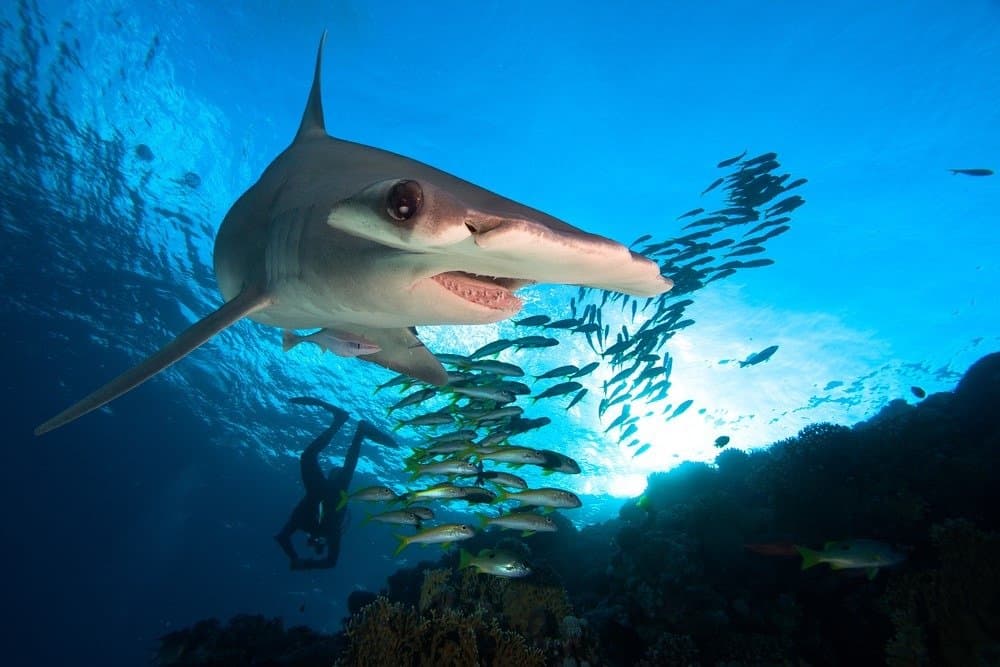
Hammerheads have large eyes positioned to give them an all-around view, except for the tip of the nose.
©frantisekhojdysz/Shutterstock.com
Each of the hammerhead’s eyes is positioned at the end of the lateral head extension, allowing the shark to see nearly everything. The one exception is a large blind spot right in front of its nose. Divers claim to have witnessed small fish hiding in the hammerhead’s blind spot.
5. Hammerhead Sharks are not Aggressive
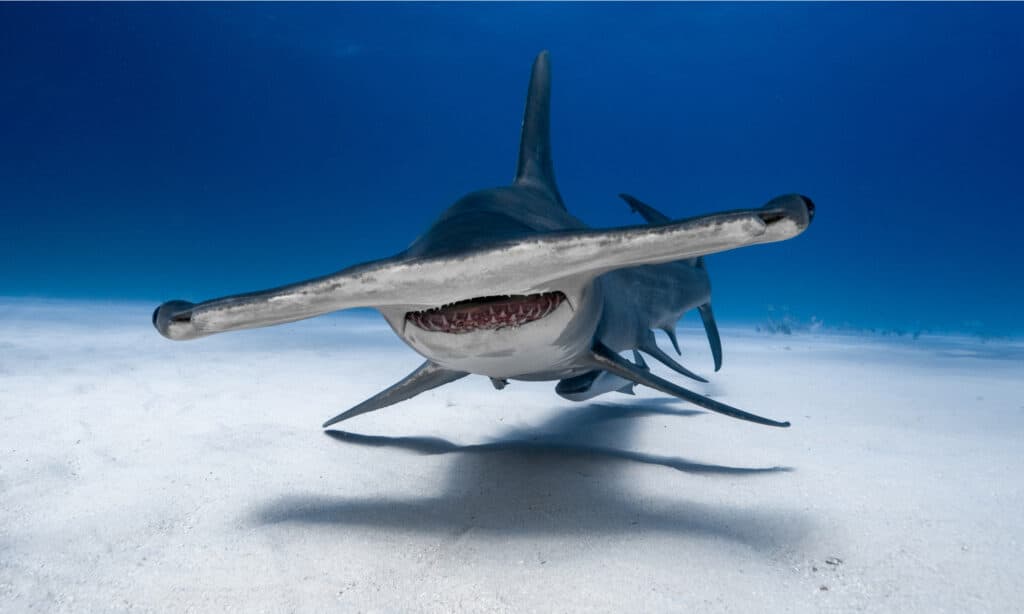
Hammerheads can be aggressive while hunting, but are not prone to attack humans.
©Sail Far Dive Deep/Shutterstock.com
Of 17 recorded hammerhead shark attacks, there have been zero fatalities. Most of the attacks occurred when the sharks were provoked or unintentionally caught in fishing nets. Hammerheads also have disproportionately small mouths compared to other sharks.
4. Hammerhead Sharks are a Relatively New Species
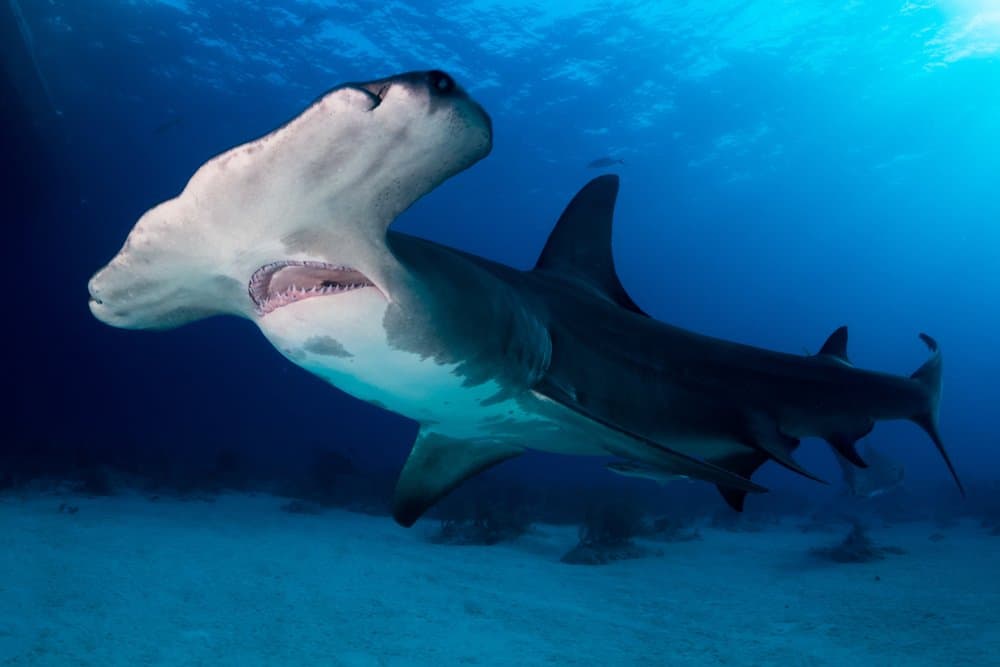
Hammerheads appeared about 23 million years ago, but sharks have existed for 420 million years.
©HakBak/Shutterstock.com
Some species of sharks are referred to as dinosaurs because they existed at the same time as dinosaurs, but this does not apply to hammerheads. Hammerhead sharks most likely emerged during the Miocene Epoch (23-5.3 million years ago), while dinosaurs have been extinct for 65 million years.
3. Hammerheads Can Get Suntans
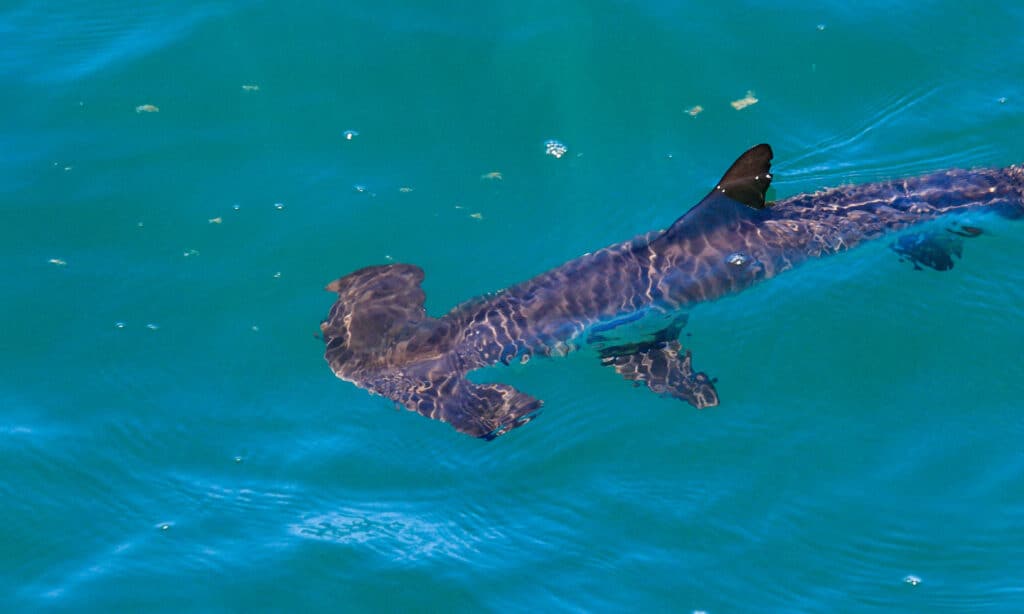
Since hammerhead sharks spend so much time in shallow waters, they can actually get a tan.
©iStock.com/Alessandro De Maddalena
Because they swim in shallow waters, some hammerheads get suntanned. Hammerhead shark skin contains melanocytes, the cells that produce pigment. When they are exposed to sunlight, their skin will darken.
2. Hammerhead Sharks Swim Sideways

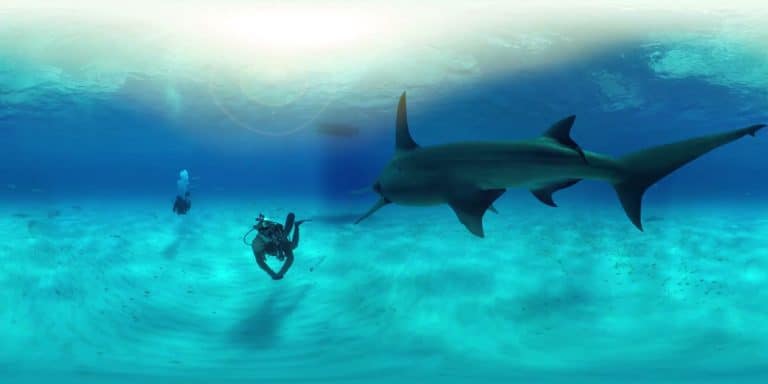
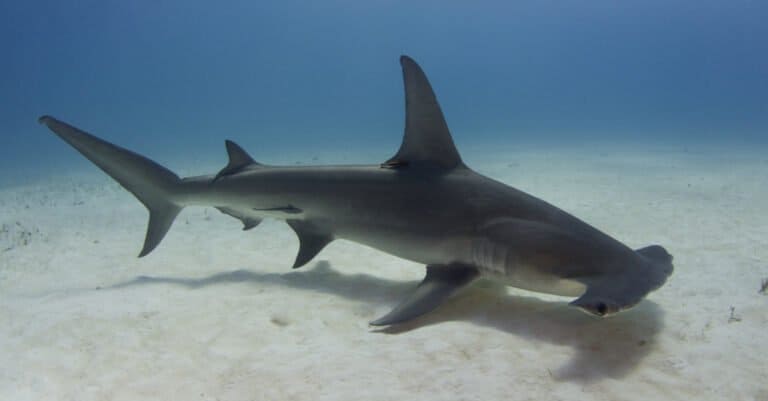
Great hammerheads spend the majority of their time swimming sideways.
©Littlegreenman, Public domain, via Wikimedia Commons – Original / License
In a 2016 experiment published in the Journal of Experimental Biology, GoPros were attached to hammerheads to document how they swim. After reviewing the footage, it was found that the sharks spent almost 90% of the time flipped to their side, between 50°-75°.
1. A Hammerhead Shark Reproduced Asexually.
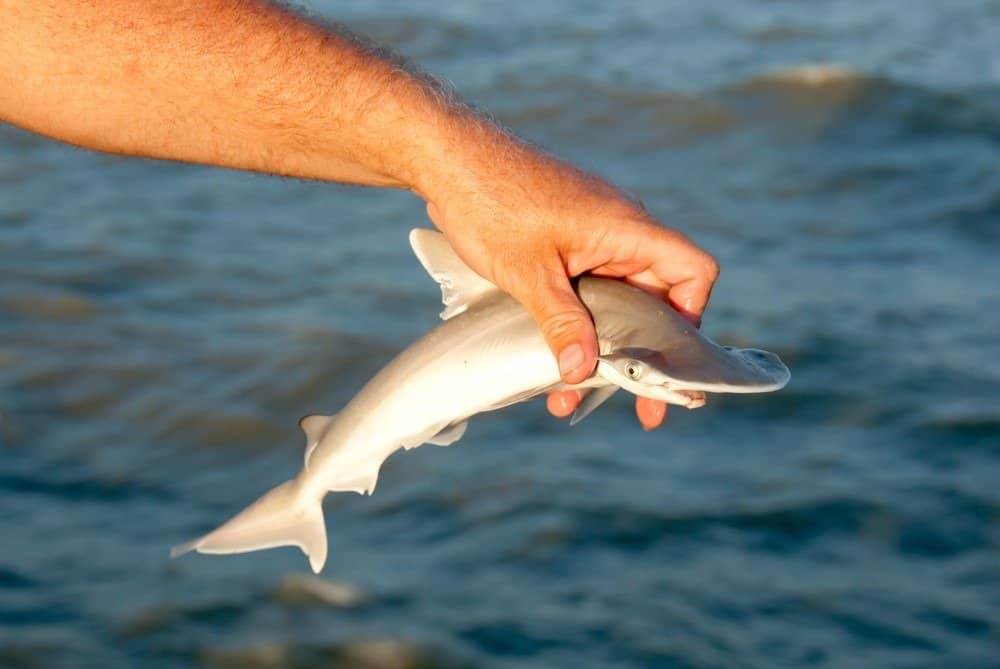
A baby hammerhead shark is quite small compared to its enormous size as an adult.
©starryvoyage/Shutterstock.com
The number one most interesting fact about hammerheads involves a captive bonnethead shark at the Henry Doorly Zoo in Omaha, Nebraska. All of the bonnetheads in the zoo’s aquarium were female. However, in 2001, one of the sharks gave birth. In 2007, it was determined that the calf had no paternal DNA. The absence of this DNA confirmed that the calf was born through parthenogenesis, a form of asexual reproduction in which a female shark’s egg develops without fertilization. This was the first case of asexual reproduction observed in sharks.