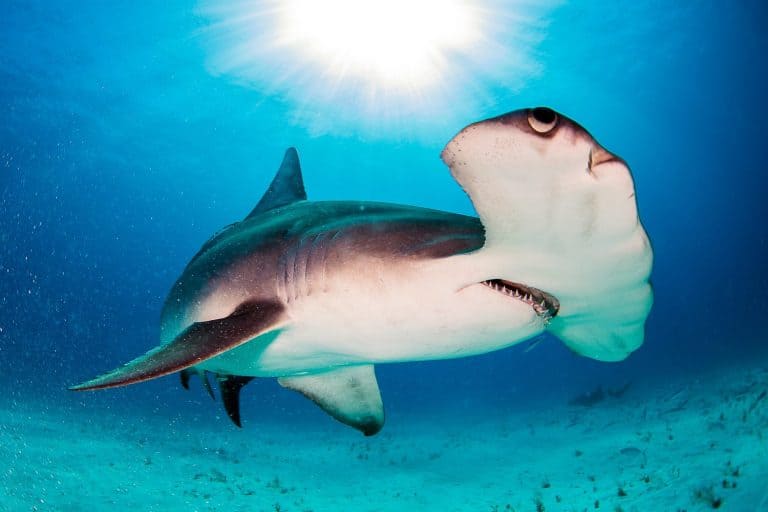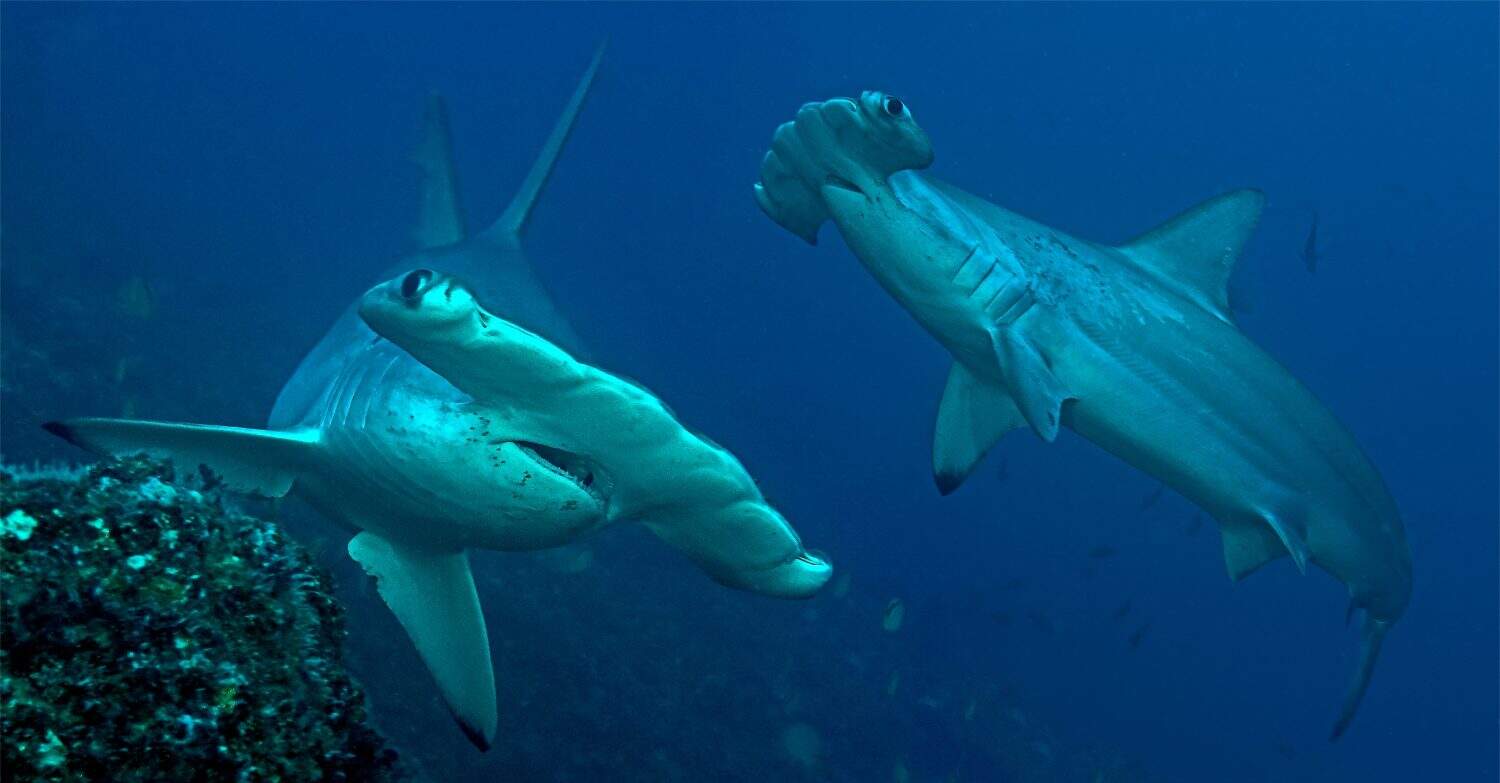

Hammerheads are sharks that, as an entire species, are on a decline. Consequently, finding them in any sort of large numbers is getting harder to do each year. Places where the sharks used to frequent in the hundreds have become nearly void of the hammerheads, leaving many who enjoy seeing the unique-looking shark wondering where to see the world’s largest gathering of hammerhead sharks.
As it turns out, while the hammerheads enjoy being in areas of the Pacific, Atlantic, and Indian Oceans, there is one spot on the planet where they can be seen with frequency year-round. The location should not be a surprise, given the abundant plant and animal life found there. The majority of hammerhead sharks can be found in the Galapagos at the Galapagos Marine Reserve.
The Galapagos Marine Reserve Is Home to the World’s Largest Gathering of Hammerhead Sharks
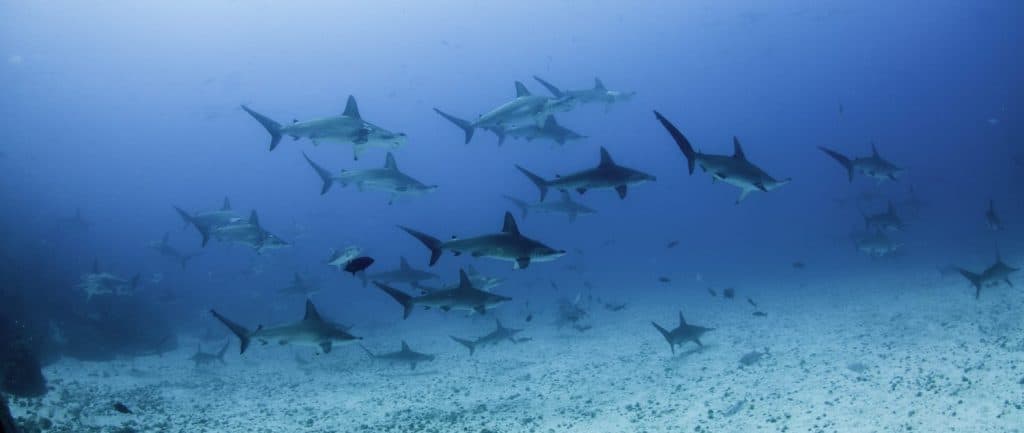
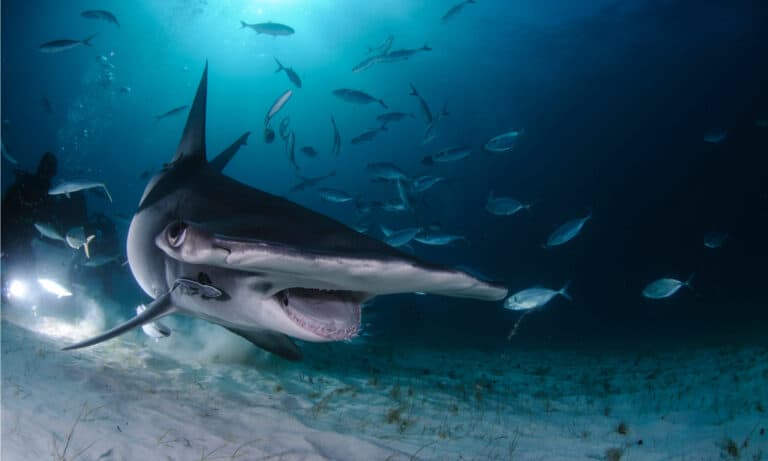
Despite hammerhead shark populations disappearing, hundreds can be found at the Galapagos Marine Reserve.
©wildestanimal/Shutterstock.com
The Galapagos Marine Reserve has the highest concentration of hammerhead sharks on the planet. Here, it is not uncommon to see these unique-looking sharks swimming in schools, sometimes with hundreds at a time being present.
Throughout the year, it is not uncommon to have a hammerhead shark sighting at the Galapagos Marine Reserve. This has to do with the temperature of the warmer coastal water staying around 72°F during the winter and 79.5°F during the summer. However, for those who want a better chance of seeing one or more while visiting, the time when the hammerhead sharks are most often seen is between August and December.
The reason why there are so many hammerhead sharks at the Galapagos Marine Reserve at the end of summer and into the winter is two-fold. It is both the time that the hammerhead sharks give birth, leaving their offspring in nurseries off the coast of Santa Cruz Island, and when the water is most abundant with food.
The nursery off the coast of Santa Cruz Island was not discovered until 2017. While it had been there for generations of hammerhead sharks, it had remained hidden and protected until it was found. It is at the nursery that the hammerhead sharks will live for their first few years of life before venturing out into the open ocean alone.
In many parts of the world, the prey that hammerhead sharks feed on has been overfished. Consequently, they have had to find a location where mackerel, smaller sharks, and grouper could be hunted. The time between August and the winter months is when these fish and other species that the hammerheads consume are at their peak. Therefore, hammerheads will stay in and near the Galapagos Marine Reserve for several months of the year until they are ready to migrate to other parts of the Atlantic, Pacific, and Indian Oceans.
See Hammerhead Sharks in the Carolinas
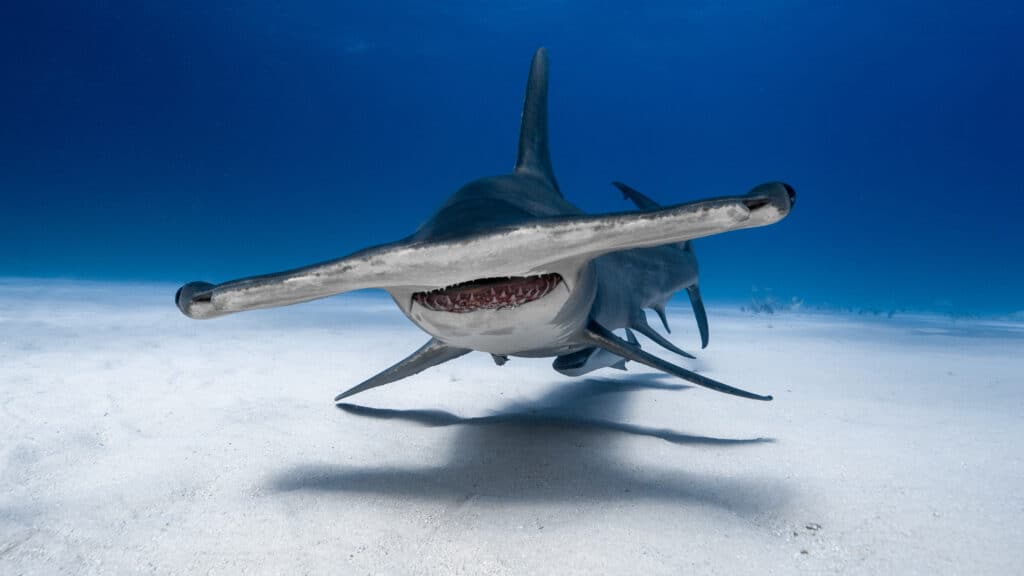
Great hammerhead sharks are just one of the species of hammerheads found off the coast of the Carolinas.
©Sail Far Dive Deep/Shutterstock.com
Hammerhead sharks become most visible off the coast of the Carolinas beginning in the summer. However, each species of hammerhead has its preferences as to when it comes to the Carolinas; therefore, it is possible to see hammerheads year-round.
| Species Of Hammerhead | Months Found Off North And South Carolina |
| Scalloped Hammerhead | March through May |
| Great Hammerhead | Summer months |
| Carolina Hammerhead | Summer through fall |
| Smooth Hammerhead | Winter through spring |
While hammerhead sharks can still be found migrating from the Gulf of Mexico to New York, the Carolinas are where the most species can be found throughout the year. This is a far cry from decades ago, when Florida was where hammerheads once congregated en masse.
The Florida Coast Was Once a Hammerhead Shark’s Playground
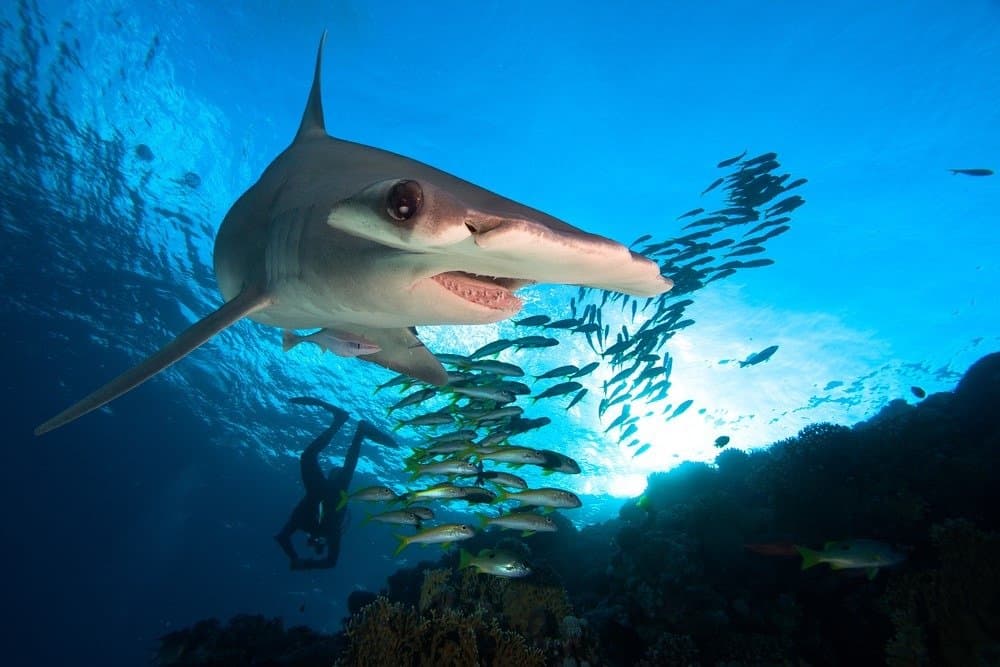
Hammerhead shark sightings are becoming less frequent off the coast of Florida.
©frantisekhojdysz/Shutterstock.com
It used to be that off the Florida coast, hammerhead sharks would congregate during the summer months. However, over the past decade, the sharks have been seen less and less, to the point that Florida is no longer the spot the sharks prefer to be off the Atlantic coastline.
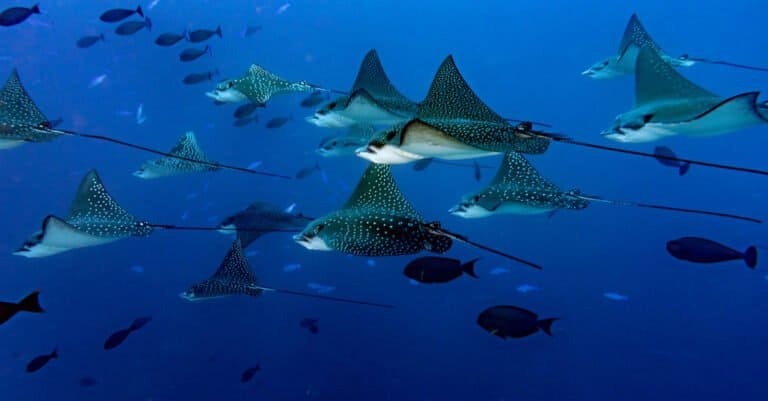
As a result of climate change, the ocean water has become too warm for hammerhead sharks. While the sharks prefer water temperatures of 68°F to 82°F, the waters off the coast of South Florida, where the hammerheads used to congregate, can get as high as 87°F. Consequently, not only is the water too warm for the sharks, but the prey they enjoy, stingrays, find it too warm as well. Therefore, as the stingrays look for cooler water, the hammerhead sharks do as well.
In addition to the stingrays looking for cooler water, the other fish they consume, mackerel and grouper, have been overfished off the Florida coast. This makes it more difficult for the hammerhead sharks to find enough prey. This has also led to the sharks moving away from the coast of the Sunshine State, leading to hammerheads preferring the waters off the Carolinas instead.
Probably the most significant factor in the fact that hammerhead sharks are seen less frequently along the Florida coastline is that the multiple species of hammerhead sharks are endangered or critically endangered, given that the sharks have been hunted both legally and illegally for decades.
Hammerhead Sharks Are An Endangered Species
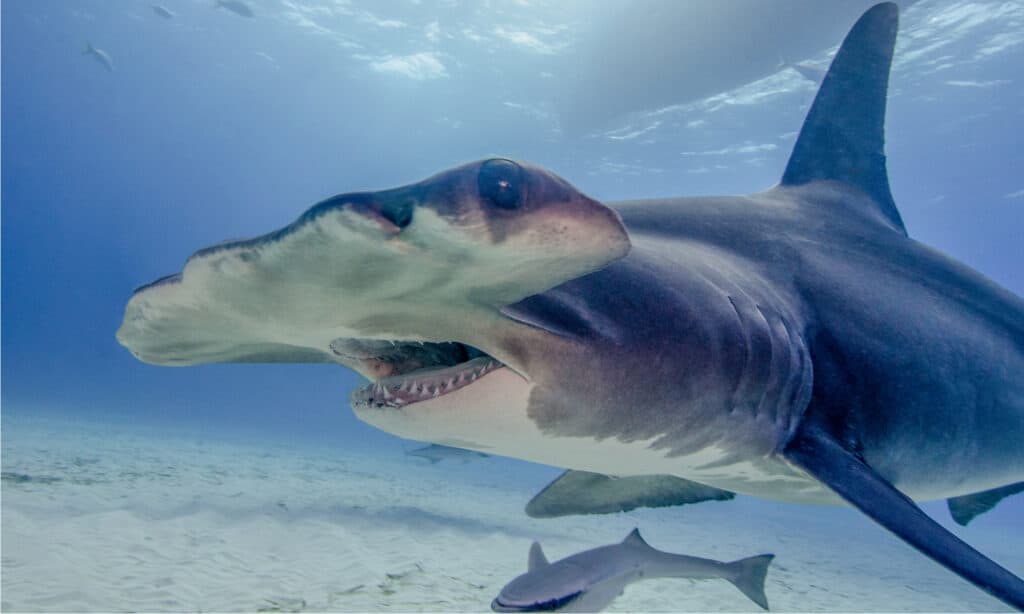
Several species of hammerhead sharks are threatened with extinction.
©Brent Barnes/Shutterstock.com
Hammerhead sharks’ population has been in decline for decades. As one of the types of sharks that are included in the 100 million sharks killed annually, the different species of hammerhead sharks are listed as vulnerable, endangered, or critically endangered by the IUCN.
| Species of Hammerhead Shark | Status |
| Smooth Hammerhead | Vulnerable |
| Scalloped Hammerhead | Critically Endangered |
| Great Hammerhead | Critically Endangered |
| Carolina Hammerhead | Unknown |
| Smalleye Hammerhead | Critically Endangered |
| Winghead Hammerhead | Endangered |
| Bonnethead Shark | Endangered |
| Scalloped Bonnethead | Critically Endangered |
| Scoophead Shark | Critically Endangered |
Each of these species, except for the Carolina, whose population status is unknown, has a decreasing population. This is something that is going to continue as illegal shark finning is participated in, the sharks become products of bycatch, even when they are not targeted by fishing boats, and climate change moves sharks from their traditional hunting grounds in search of food.
There have been steps taken to help protect hammerhead sharks globally. Whether these unique sharks can ultimately be saved, however, remains to be seen.
What Can Be Done to Save the Hammerhead Sharks?
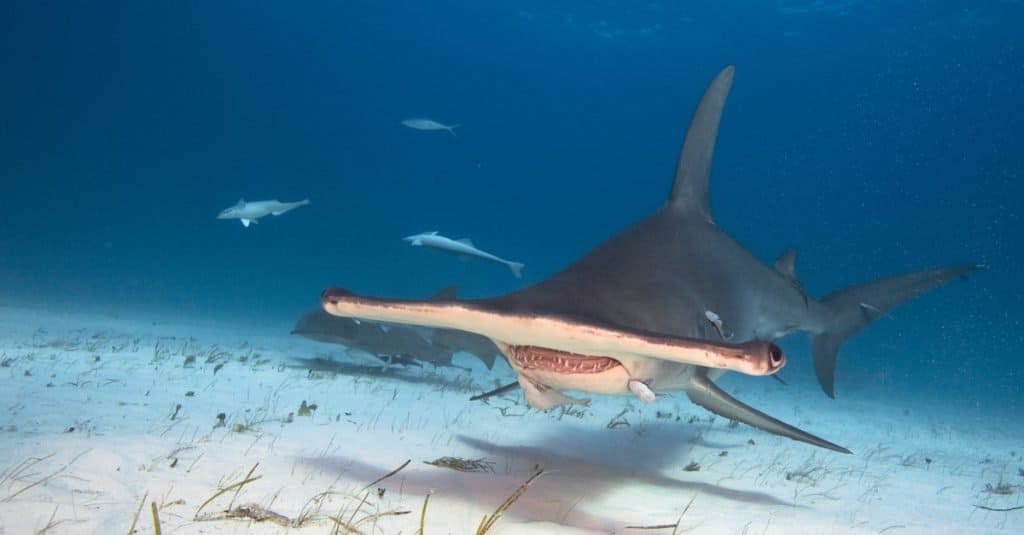
In order for hammerhead shark populations to survive, changes need to be made both locally and globally.
©frantisekhojdysz/Shutterstock.com
Over the last decade or more, hammerhead sharks have found themselves internationally protected. Under the Convention on International Trade in Endangered Species of Wild Fauna and Flora (CITES), three species of hammerhead sharks are protected. Different countries, such as Costa Rica, have created marine protection areas, where hammerhead sharks cannot be targeted. These areas not only allow the sharks to remain safe in parts of the ocean they have inhabited for generations, but regions identified as shark nurseries are protected as well.
Despite these conservation efforts, hammerhead shark populations are still declining. The slow gestation rate and the few offspring the sharks have make it nearly impossible to increase their population as more are pulled from the ocean annually. But this does not mean the fight is over to save the sharks. There are things that can be done on a local level to help the hammerhead sharks survive.
Some of the things people can do to help save hammerhead sharks include:
- Participate in and report local shark sightings
- Educate local populations about the importance of conservation for hammerhead sharks
- Only purchase seafood that is sustainably sourced
- Support organizations that are working to save hammerhead sharks and other marine life
While these efforts may seem like they would not make a difference when it comes to saving hammerhead sharks, if this were done globally, there would be a massive impact.
If these apex predators were to go extinct, species that were kept under control by the hammerhead sharks will have populations explode to levels never before seen. An overabundance of species that used to be kept in check will lead to the depletion of resources beneath the waves, negatively impacting marine life of all sizes. This is why hammerhead sharks need protection both locally and globally to keep ocean habitats from dramatically changing, so that the Galapagos Marine Reserve is no longer the only location where large groups of hammerhead sharks can be seen and enjoyed.