Not all shark bites are the same. Provoked bites occur when people handle, feed, or otherwise interact with a shark. Unprovoked bites happen without any intentional human involvement. The Florida Museum of Natural History reports that these incidents accounted for half of all U.S. cases and nearly a third of the global total. Florida led the nation in 2024 with 14 unprovoked shark bites, the highest of any state. Where and why these bites arise often depend on a mix of factors, including beach crowding, water conditions, and the presence of prey that can attract sharks close to shore.
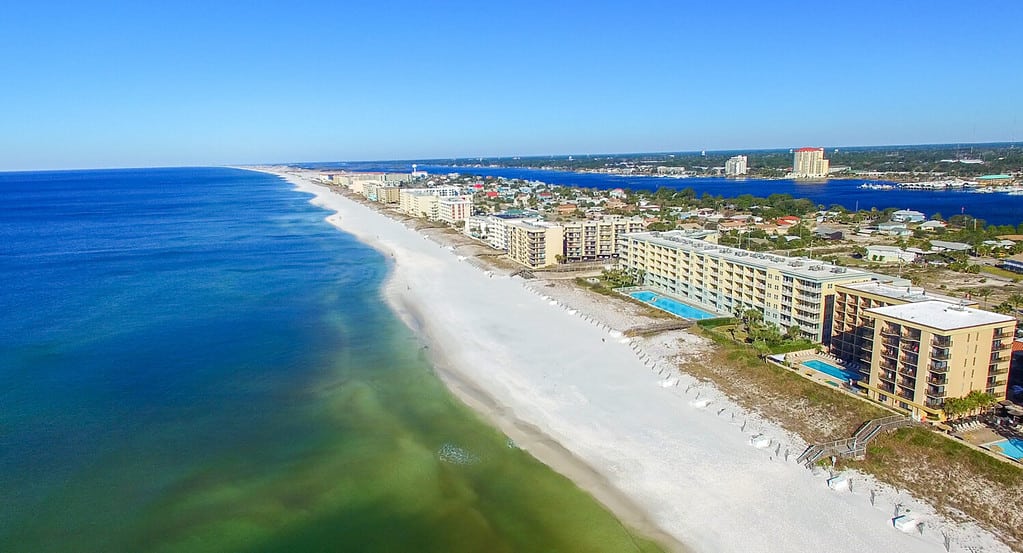
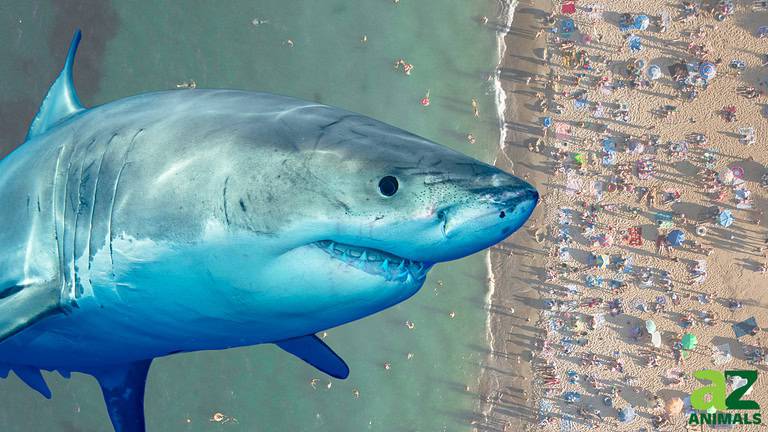
An aerial view of one of Florida’s Panhandle beaches, where multiple shark attacks occurred on June 7, 2024.
©pisaphotography/Shutterstock.com
Early Summer Shark Attacks off the Panhandle Coast
On June 7, Florida’s Panhandle experienced a rare series of shark attacks. Around midday, 45-year-old Elisabeth Foley was swimming beyond the first sandbar at Watersound Beach when a shark bit her torso. In an attempt to escape, she tried to strike the shark, but it bit her hand and pulled her underwater. The wounds were severe, and doctors later amputated Foley’s right hand.
Less than two hours later, at nearby Seacrest Beach, sharks attacked two teenage girls as they waded in waist-deep water. A helicopter transported fifteen-year-old Lulu Gribbin to the hospital due to her severe injuries, resulting in the amputation of her left hand and right leg above the knee. The second teenager, McCray Faust, sustained only minor injuries. In the aftermath of these incidents, Lulu’s story inspired the creation of Lulu’s Law. If passed, the federal proposal would direct the FCC to implement wireless emergency alerts to warn swimmers and beachgoers when a shark attack has been confirmed nearby.
Research published in Frontiers in Marine Science indicates that bull sharks are active in the estuarine outflows like those along this stretch of the Florida Panhandle’s coastline. These shallow, brackish waters mix fresh and salt water and support schools of fish that draw large predators. Along the Florida Panhandle, similar coastal outflows make the region a natural habitat for bull sharks.
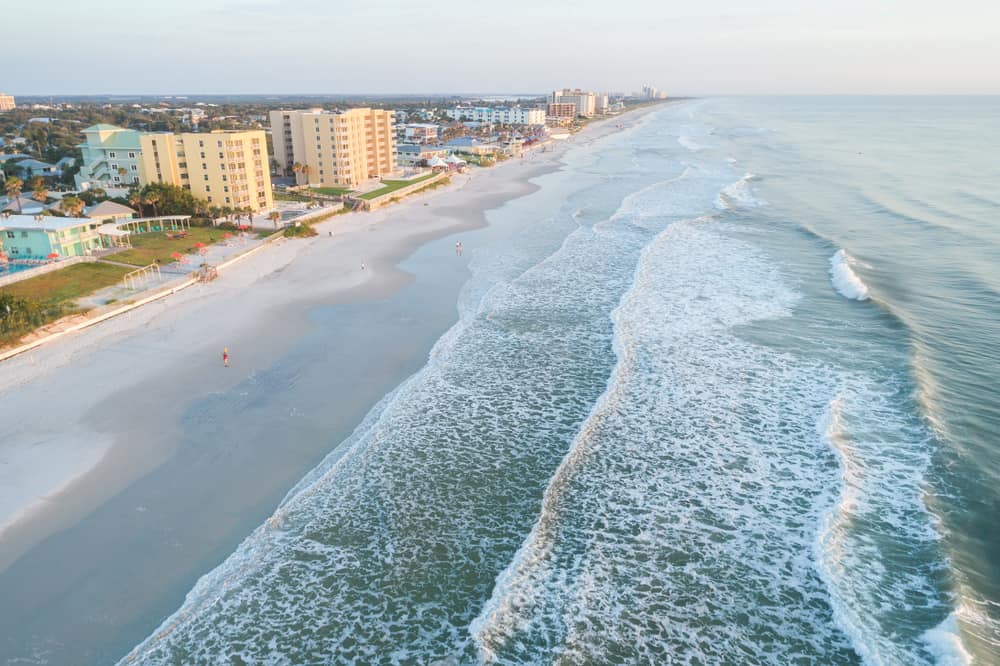
New Smyrna Beach, the “shark bite capital of the world,” recorded two shark bites during the July 4th weekend in 2024.
©Sky Cinema/Shutterstock.com
Holiday Crowds and Hidden Sharks at New Smyrna Beach
While the Gulf Coast dealt with its cluster of attacks in June, Florida’s east coast experienced its surge of shark activity in July. New Smyrna Beach proclaims itself to be the “shark bite capital of the world.” The July 4th weekend of 2024 supported this claim. Over the holiday weekend, sharks bit two people at New Smyrna.
The first victim was Connor Baker, a 21-year-old from Ohio. Baker was playing a game of football in shallow water when a shark latched onto his foot. The bite cut through four tendons. Baker underwent surgery to repair the damage and began physical therapy. The next day, a shark bit a 26-year-old man from Sarasota while he floated in an inner tube. His injuries were comparatively minor, needing only stitches. Dense holiday crowds combined with rough surf reduced visibility, making it easier for sharks to mistake people for prey.
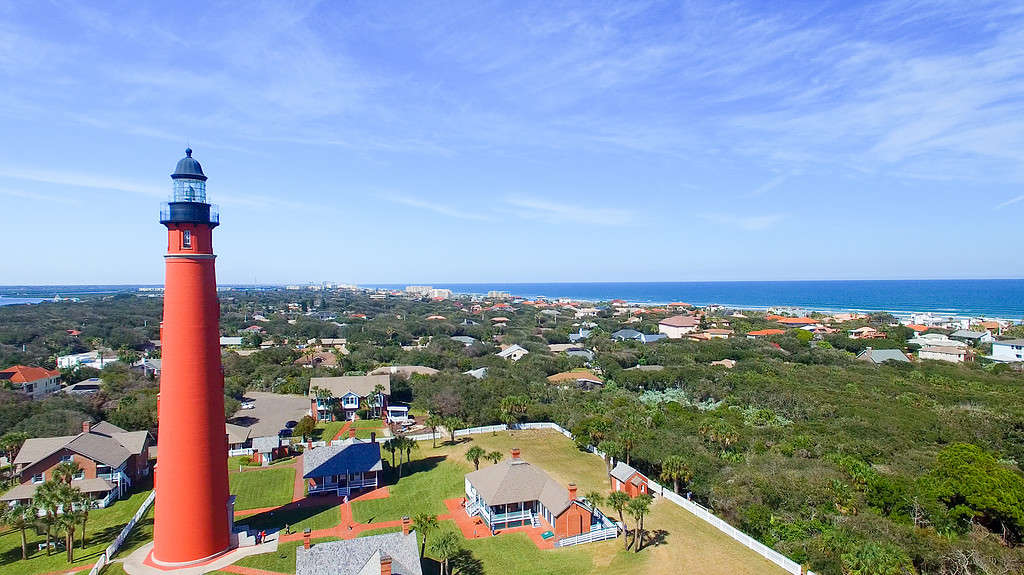
The Ponce Inlet Lighthouse, located near the jetty rocks, is where a shark bit a junior lifeguard during training.
©pisaphotography/Shutterstock.com
Junior Lifeguard Bitten at Ponce Inlet
A Florida junior lifeguard was among those injured in the 2024 documented shark incidents. On July 8, 14-year-old Dempsey Manhart of Flagler County suffered a shark bite during a junior lifeguard training session at Ponce Inlet. The shark struck when he entered the water near the jetty rocks. A guardian rushed him to the hospital after first responders treated him at the scene, and doctors closed the wound with 17 stitches before releasing him later that day. The rocky jetties at Ponce Inlet create shifting currents that carry nutrients to the surface. These nutrients attract schools of fish and other marine life. The abundance of prey draws sharks into the area. Blacktip sharks use the rocks as cover to ambush their prey.
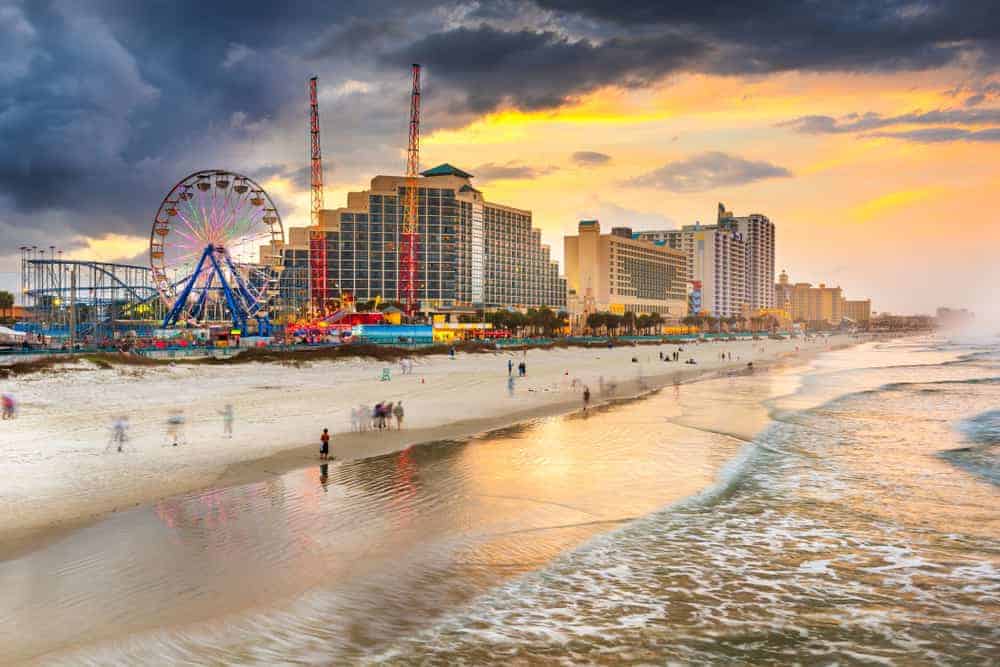
A 14-year-old was bitten at Daytona Beach Shores on July 10, 2024, in surf where sandbars stir up sediment and attract sharks.
©Sean Pavone/Shutterstock.com
Teen Injured in the Surf at Daytona Beach Shores
On July 10, at Daytona Beach Shores, 14-year-old Josiah Garrison was standing in knee-high water when a shark clamped onto his left leg. Lifeguards arrived quickly and provided first aid to limit blood loss. Sandbars in the area regularly stir up sediment and reduce visibility for both sharks and swimmers. Daytona Beach is also among the Florida beaches with the highest number of recorded shark attacks.
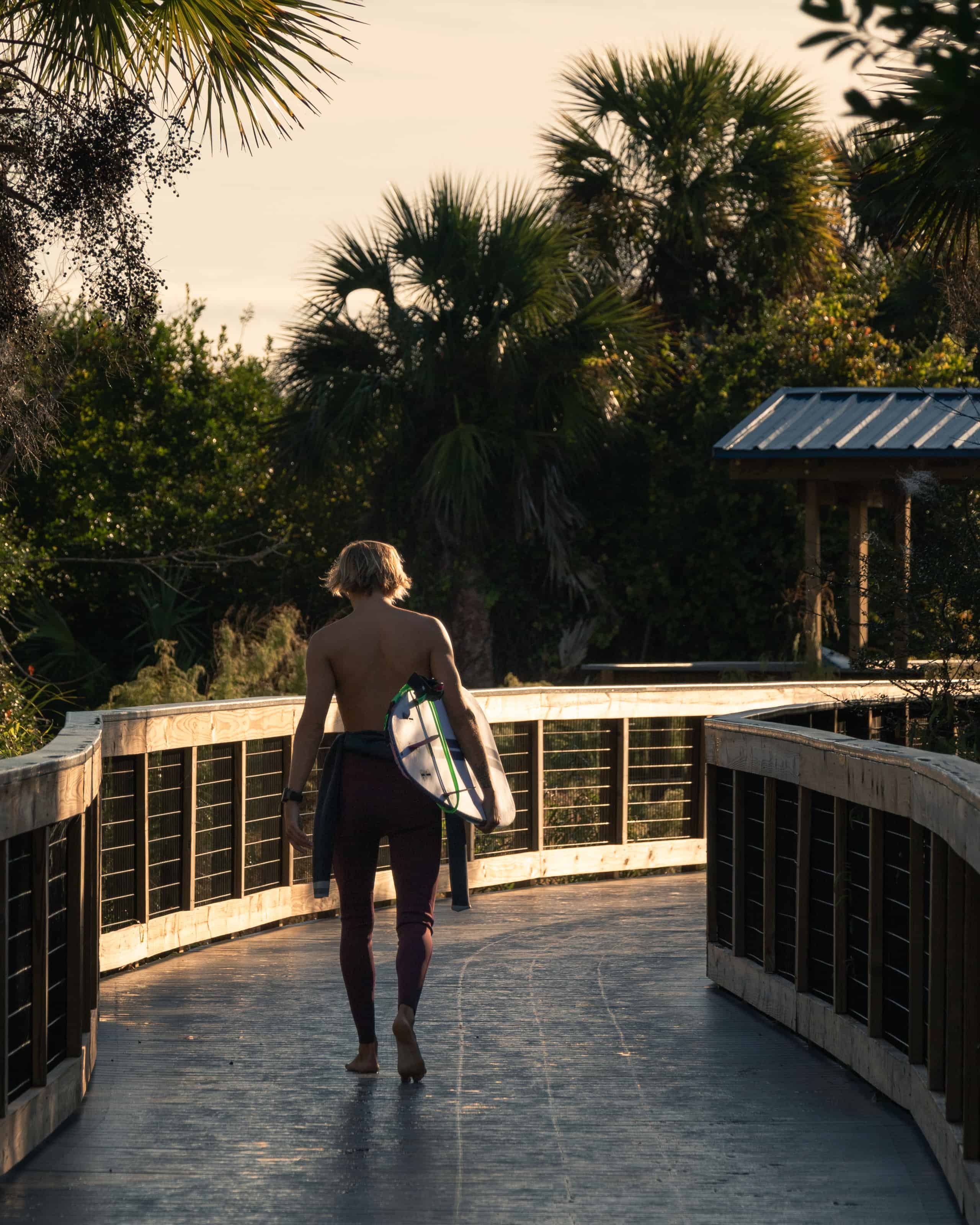
A surfer walks to the beach in Florida, where sharks frequently hunt in shallow waters and occasionally mistake people for their typical prey.
©SR Productions/Shutterstock.com
A Surfer’s Streak Cut Short at Ponce Inlet
Charlie Hajek’s 148-day surfing streak ended abruptly in September 2024 after the veteran surfer stepped on a shark at Ponce Inlet. The shark snapped at his ankle, leaving him bleeding in the surf. Thinking fast, Hajek cinched his board leash around the wound to slow the blood loss. The unexpected collision forced him out of the water and broke his remarkable run. Despite his injury, the 62-year-old walked to the hospital to receive stitches. Hajek’s encounter is a reminder of the potential for sudden interactions between people and sharks in the murky, baitfish-rich waters near the jetties.
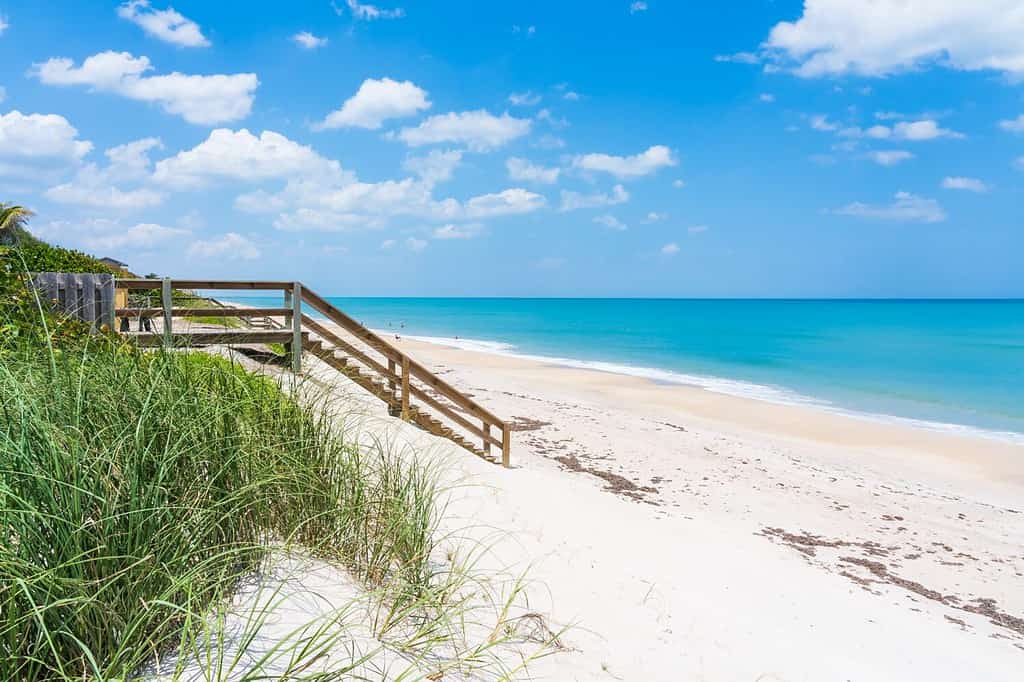
Melbourne Beach, where autumn mullet migrations bring sharks closer to shore.
©Sergey and Marina Pyataev/Shutterstock.com
When Mullet Move, Sharks Move Too
Every fall, mullet migrate south along Florida’s Atlantic coast. As the schools move through the surf, predators like bluefish, tarpon, and sharks follow, sometimes pushing both the fish and their predators closer to shore. In October 2024, this migration coincided with a shark bite at Melbourne Beach in Brevard County. Sixteen-year-old surfer Teddy Wittemann, now a member of the USA Surfing Junior National U18 Team, was reaching for his board when a shark believed to be five to six feet long swam through a school of baitfish and bit his left arm.
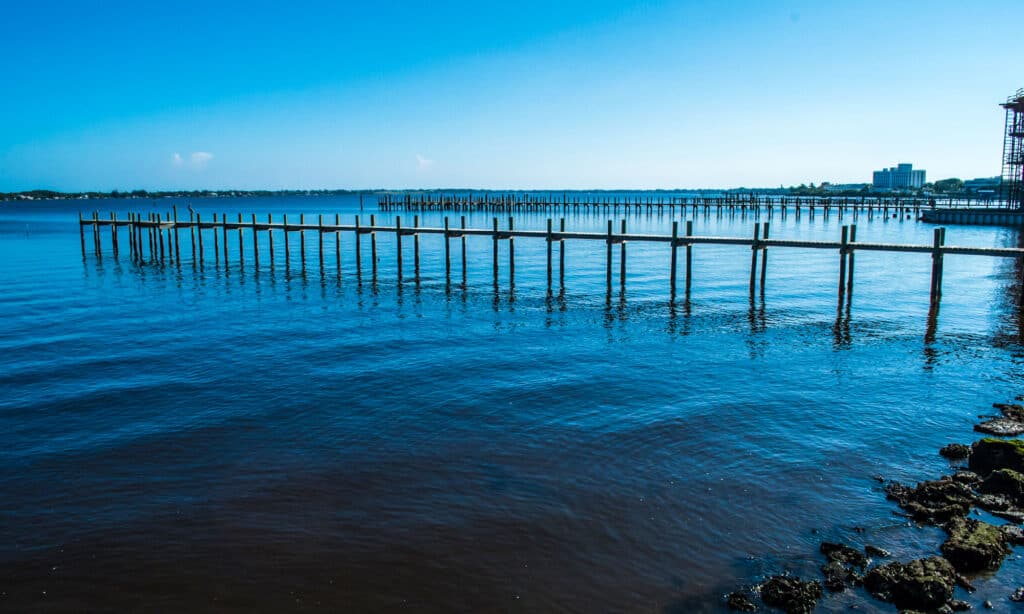
Bathtub Beach in Stuart, Florida, is known for its reef that draws both marine life and sharks close to shore.
©iStock.com/DawnDamico
Bathtub Beach Double Bite
The most unusual incident in October involved Cole Taschman at Bathtub Beach. On October 25, 2024, an eight- to nine-foot bull or tiger shark bit both of Taschman’s feet while he surfed near the reef. The attack left him needing 93 stitches, 10 staples, and tendon surgery to repair several severed tendons. Remarkably, the 28-year-old fishing charter captain from Stuart, FL, had survived an earlier attack at the same beach in 2013. A much smaller shark bit his hand, requiring only 12 stitches. Bathtub Beach is home to over 500 marine creatures, including prey fish that attract sharks to its waters.
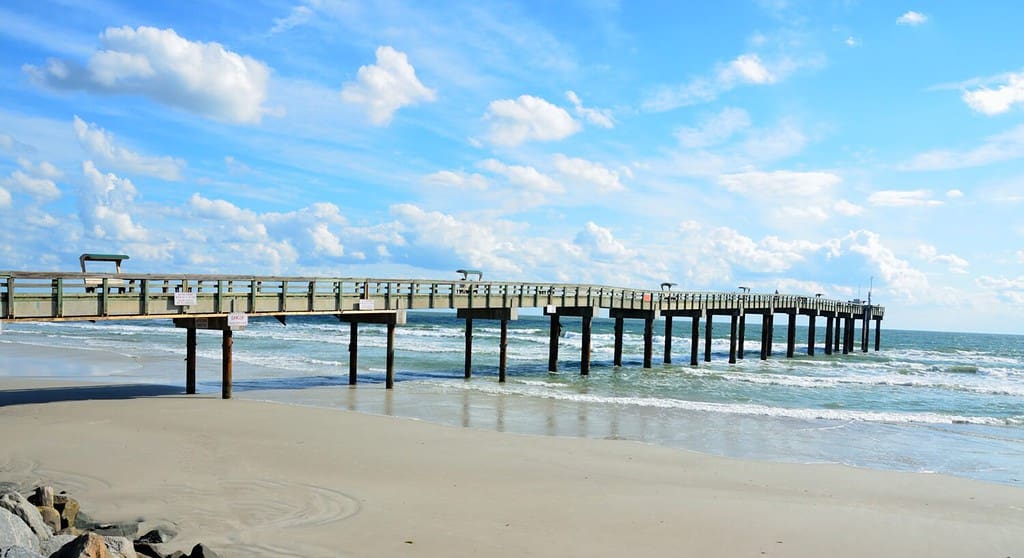
The St. Augustine Beach Pier in St. Johns County, where waters from Ponte Vedra to St. Augustine form a corridor for blacktip and bull sharks.
©Paul Brennan/Shutterstock.com
St. Johns County Bite
There was a single unprovoked shark bite in St. Johns County in 2024, although the time of year when it took place is unknown. The stretch of coastline from Ponte Vedra to St. Augustine is a favored destination for surfing and other beach activities. These waters are home to a range of shark species, including blacktip, spinner, blacknose, and bonnethead. Larger species such as the scalloped hammerhead and mako sharks are also occasionally found just offshore.
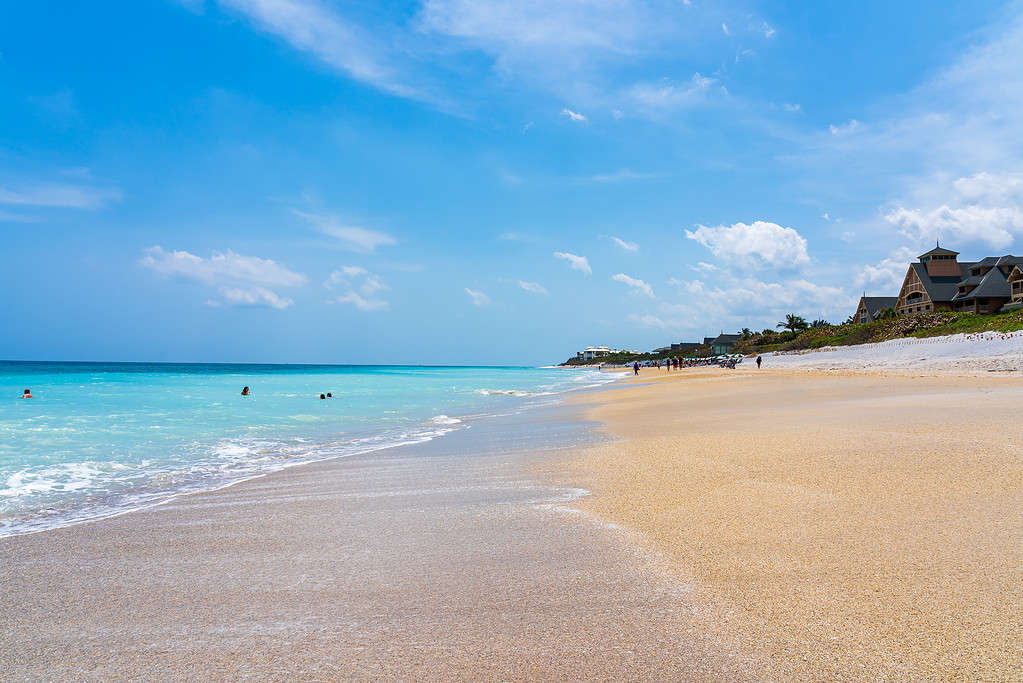
Wabasso Beach Park represents Indian River County’s shoreline, a stretch of coast where sharks move in during seasonal migrations.
©Sergey and Marina Pyataev/Shutterstock.com
Indian River County Shark Bite
Indian River County reported one unprovoked shark bite in 2024, with no further details available. Researchers note that Florida’s Atlantic coast, including waters off Indian River County, is part of a migration route for species such as spinner and blacktip sharks. Features of the seafloor and seasonal movements of fish can at times bring sharks closer to shore, raising the chances of overlap with swimmers.
Florida in 2025
As of early September 2025, TrackingSharks.com lists nine shark bites in Florida, with six classified as unprovoked and three as provoked. Coverage of a Labor Day incident off Key Largo on September 1, 2025, was reported by CNN, adding to this year’s ongoing tally. Fall shark migrations are currently underway, and the final count of bites for 2025 is still pending. Millions will continue to enter Florida’s ocean before the year ends, and they would be wise to remember they are only guests in the environment that sharks call home.