
Quick Take
- A hippo's wide-open mouth looks like a yawn, though it is actually something far more calculated. See the threat display →
- Hippo skulls are built around a structural secret that lets them stay almost completely underwater without losing any awareness of their surroundings. Explore the aquatic adaptations →
- Their teeth never stop growing, and the skull's design exists largely to manage that fact. See how growing teeth shape the skull →
- Hippo ivory is quietly becoming more valuable than elephant ivory, and poachers have taken notice. Read about hippo ivory poaching →
The hippopotamus (Hippopotamus amphibius) is the largest semi-aquatic mammal on Earth, and the deadliest animal in Africa. A hippopotamus’s primary methods of combat, territorial defense, and dominance involve using its massive mouth and razor-sharp canine teeth, which are between 12 and 18 inches long. These territorial behemoths may look cute and cuddly (especially as babies), but they possess an extremely powerful bite capable of fatally injuring large animals, including crocodiles and lions. A hippopotamus’s skull is large and thick, specifically adapted to support the hippo’s jaw muscles, which enable its incredibly powerful bite. Continue reading to discover more about a hippo’s skull, including what it looks like and its size.
What Does a Hippo Skull Look Like?
Hippo skulls are large and consist of thick, dense bone. The eye sockets, ears, and nostrils are positioned very high on the skull, allowing the hippo to remain almost completely submerged while still being able to breathe and see.
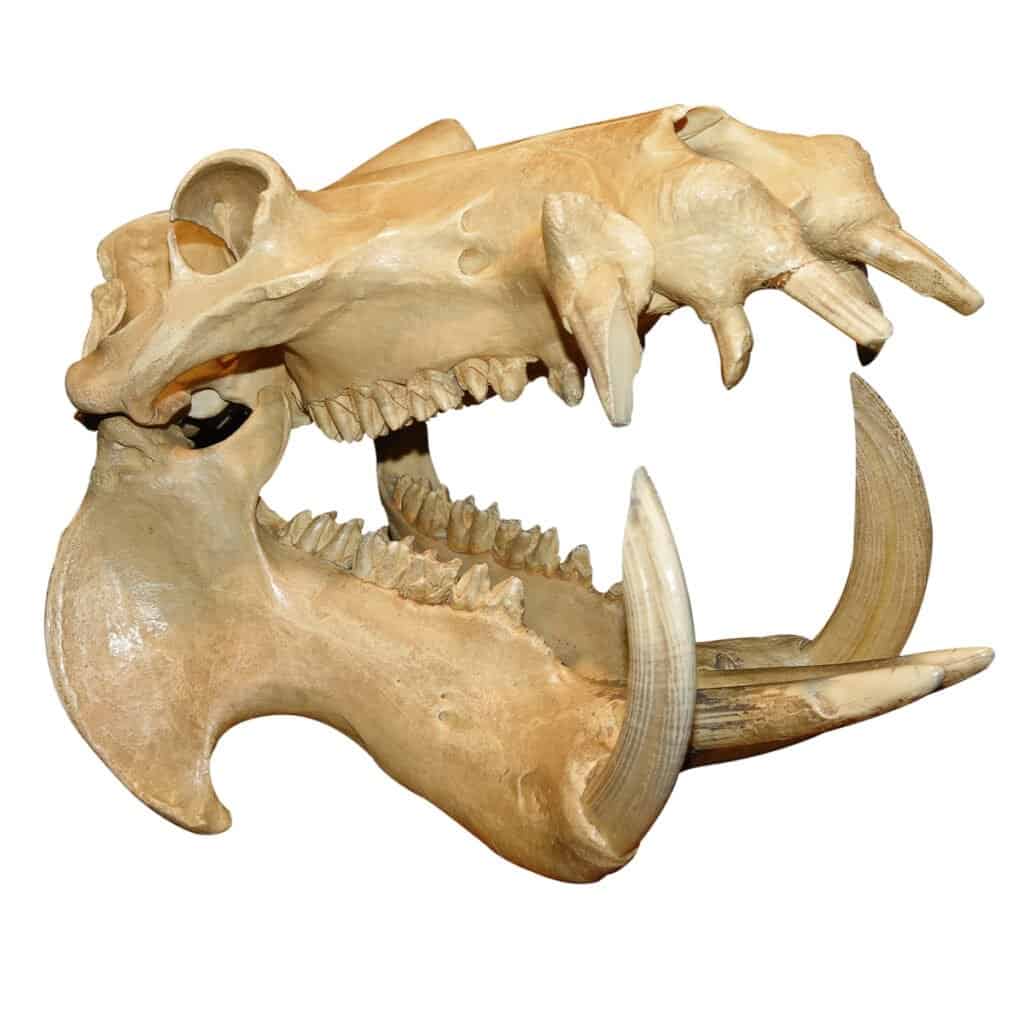
Hippo skulls are clearly designed for animals that live in water. Their ears, nose, and eyes are on top of their skulls, making complete submersion easier.
©VINCENT GIORDANO PHOTO/Shutterstock.com
A hippo’s jaws are powered by a large masseter muscle (used for chewing and to open and close the mouth), allowing it to have a truly massive bite force. Hippos can open their mouths 150 to 180 degrees. Fully opened, an adult male hippo’s mouth is approximately four feet wide. Although it may be mistaken for a yawn, a fully opened mouth is actually a threat display used to show off their massive canine tusks.
How Big is a Hippo Skull?
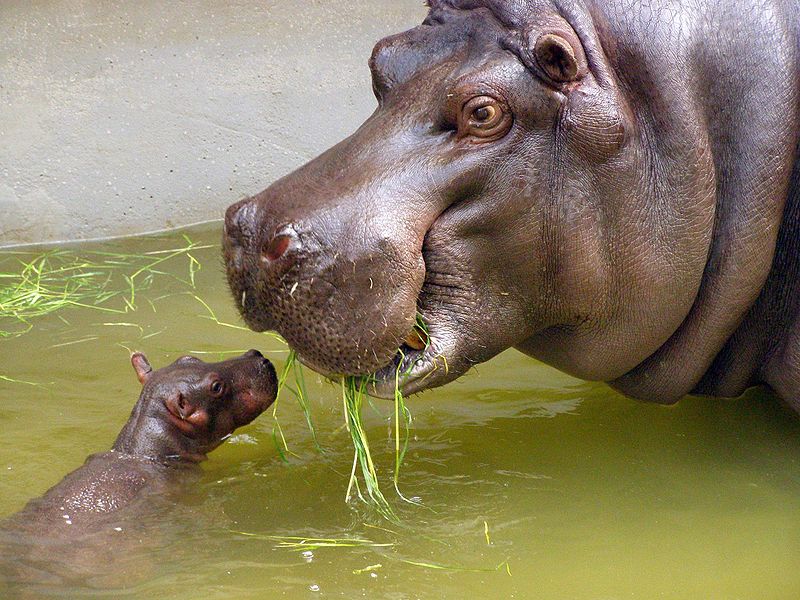
Hippo jaws can stretch to four feet wide when open.
The astounding size of a hippo’s skull gives insight as to why their bites are so powerful. A common hippopotamus skull typically measures between 2 and 2.5 feet wide and 15 to 20 inches long. These heavily built skulls are designed to support immense muscular force and to harbor continuously growing canine teeth (specifically the lower canines), which can reach nearly 20 inches in length.
How Strong Are Hippo Jaws?
Hippopotamuses have some of the strongest jaws in the animal kingdom. Their bite force has been measured at 1,800 pounds per square inch (PSI).
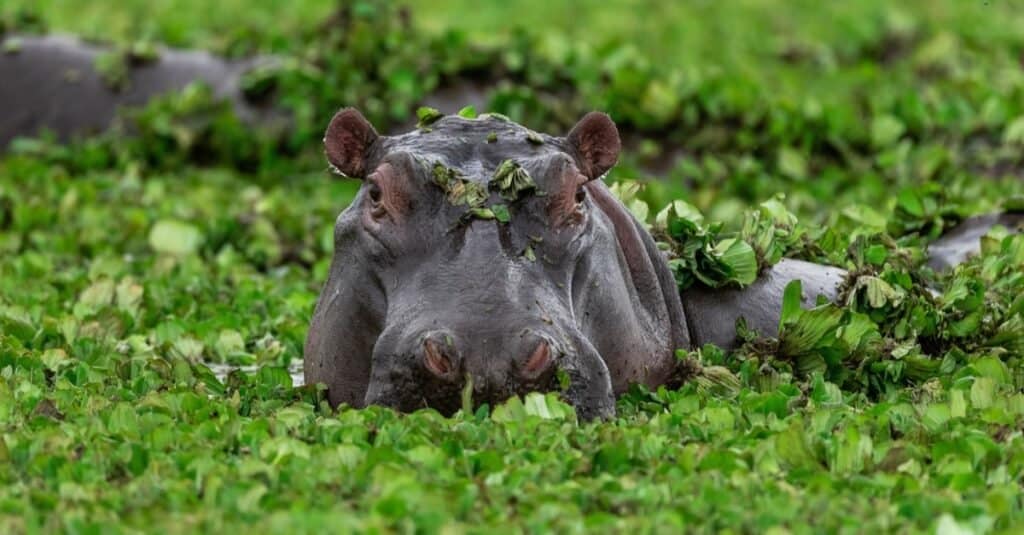
Hippos were once present across all of sub-Saharan Africa, but today their largest populations are found in East, Southern, and some parts of West Africa.
©nataliatamkovich/Shutterstock.com
A hippo can kill a crocodile in a single bite and has been recorded doing so. In fact, a single bite is enough to dispatch any predator without much effort on the hippo’s part. Lions, hyenas, and crocodiles all stay away from these beasts.
What Makes Hippo Skulls Unique?
From an evolutionary perspective, a hippo’s skull is unique. Their eyes and nose are situated at the tops of their heads, allowing them to submerge their bodies and still be able to see and breathe. Hippos need water to keep their skin hydrated, and this placement allows them to spend most of their day submerged. Their ears are also positioned high enough to remain above the water.
Hippo teeth are self-sharpening, as they grind against each other over time. These sharp, continuously growing teeth are formidable weapons, evolved for fighting over feeding grounds and mates.
When eating, hippos have bony lips that they use to grab vegetation. Hippos eat around 88 pounds of food per night on average, which is roughly 1 to 1.5% of their body weight, making the ability to forage efficiently extremely important. Their lips can easily grab and rip vegetation from riverbanks and river bottoms.
Do Hippos Have Tusks?
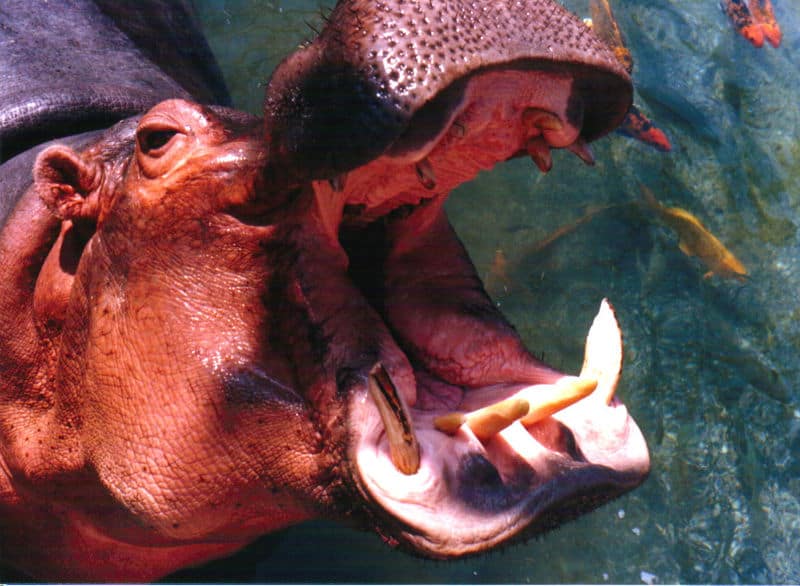
Hippos have ivory tusks that are actually canine teeth.
©Larry D. Moore / Creative Commons – Original
Hippos do have tusks. A hippo’s tusks are actually its canine teeth.
Hippo tusks are made of hard ivory, which is denser and harder to carve than elephant ivory. Although traditionally considered less desirable due to its yellow color and hardness, recent restrictions on elephant ivory have led to increased demand for hippo ivory, making hippos a growing target for poachers.