
Quick Take
- A python's heat-sensing superpower has one critical blind spot that could decide the entire fight. Explore the heat-sensing limits →
- Being the longer animal doesn't automatically mean winning, because size is more complicated than you'd expect. See how size is measured →
- The alligator has one offensive move so devastating it could neutralize the python's only real weapon. See the death roll advantage →
- Pythons are already reshaping the Florida Everglades, though their apex predator status is far from settled. See who dominates the Everglades →
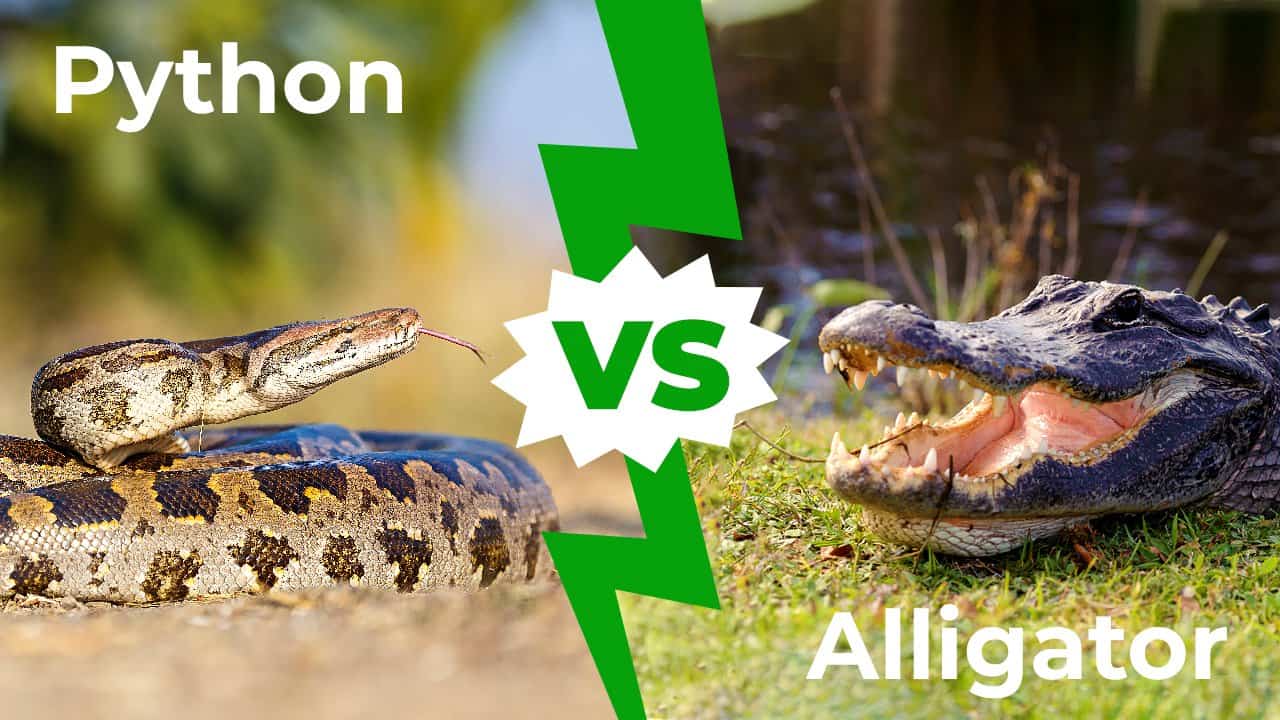
Pythons are nonvenomous constrictor snakes with approximately 30–40 species distributed across sub-Saharan Africa, Southeast Asia, and Australia, in rainforests, savannas, and deserts. Alligators are large, semi-aquatic predatory reptiles known for their broad snouts and dark, armored skin. There are only two recognized species: the American alligator (A. mississippiensis), found in the Southeastern U.S., and the critically endangered Chinese alligator (A. sinensis), located in the Yangtze River valley.
Pythons and American alligators did not share a natural habitat until the former was introduced into Florida as early as the 1930s, with established populations in the Everglades by the 1990s. Now, the two are fighting to be the apex predator in these swampy areas. Although others exist in Florida, the Burmese python (Python bivittatus) is the primary python species in the Florida Everglades. They are large constrictors native to Southeast Asia that have caused severe declines in local mammal populations, with some species declining by over 90%. Their presence stems from a combination of intentional and accidental releases over several decades.
The law of the wild states that bigger, stronger creatures tend to win fights. Five metrics (size, speed, senses, defenses, and offenses) will be used to determine the outcome of this fight. Continue reading to learn who would win a fight between a python and an alligator.
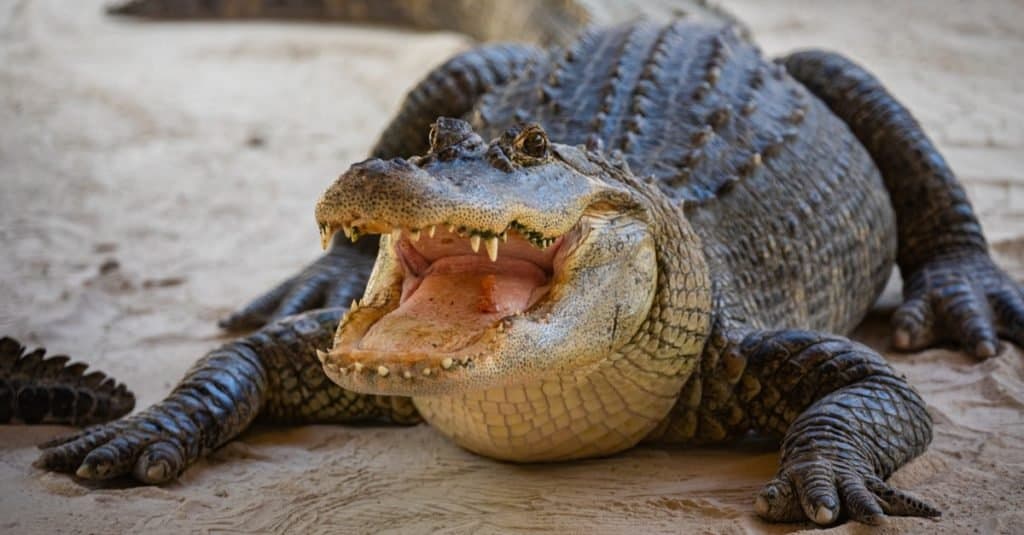
The battle between an alligator and a python usually comes down to size and strength.
©Mia2you/Shutterstock.com
Python vs. Alligator: Size
Pythons can be very large creatures, reaching lengths of up to 28 feet and weighing as much as 200 pounds, using their long bodies to wrap around their prey. Pythons and anacondas are considered the largest snakes in the world. Alligators can also be quite massive, reaching up to 800 pounds and growing as long as 11 feet. The largest alligator ever recorded weighed 1,011.5 pounds.
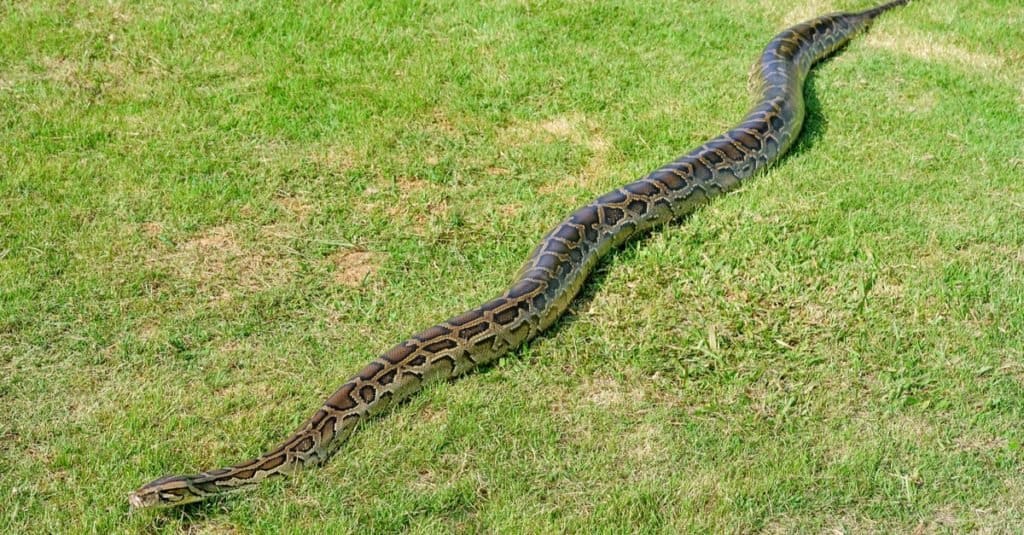
Pythons can reach 28 feet in length and weigh 200 pounds.
©Yatra/Shutterstock.com
Although pythons are longer than alligators, alligators are significantly heavier than pythons.
Size Advantage: Alligator
Python vs. Alligator: Speed and Movement
Catching prey is important to both creatures, and they need speed to make that happen. Pythons can only move about one mile per hour (mph) on land, but they can reach two to three mph in the water. Their slithering motion is slow and makes it hard for them to evade predators.
Alligators can reach speeds of up to 11 mph on land and up to 20 mph in water for short bursts. They also spend a significant amount of time in the water, where they can move at speeds of up to 5 mph.
Speed and Movement Advantage: Alligator
Python vs. Alligator: Defenses
Burmese pythons primarily rely on crypsis (camouflage) to avoid detection, but when threatened, they utilize aggressive defensive tactics, including loud hissing, body inflation, rapid striking, and painful biting.
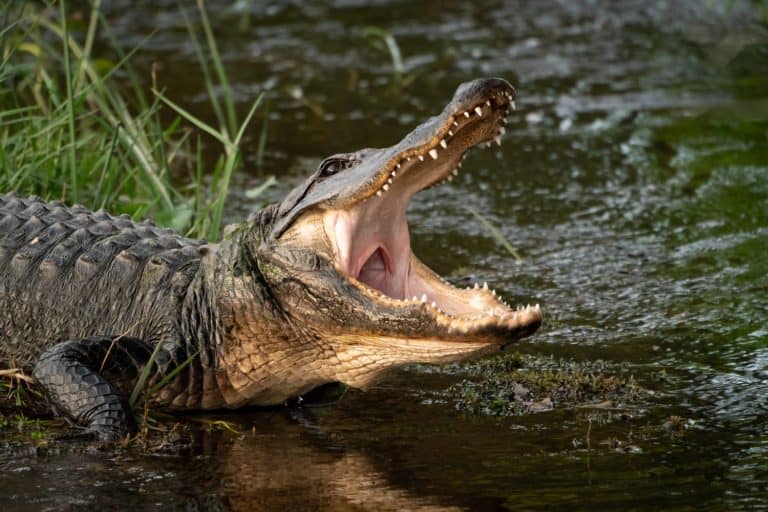
Alligators ward off predators by having a large body, camouflage, strong skin, and a threat display that includes hissing and charging.
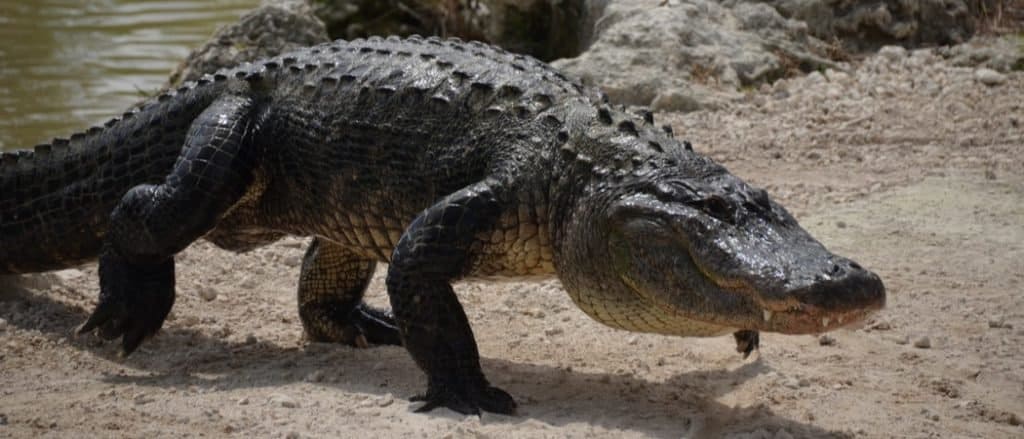
Alligators bite, viciously toss, and dismember their prey.
©Rod Zadeh/Shutterstock.com
Defensive Advantage: Tie
Python vs. Alligator: Offenses
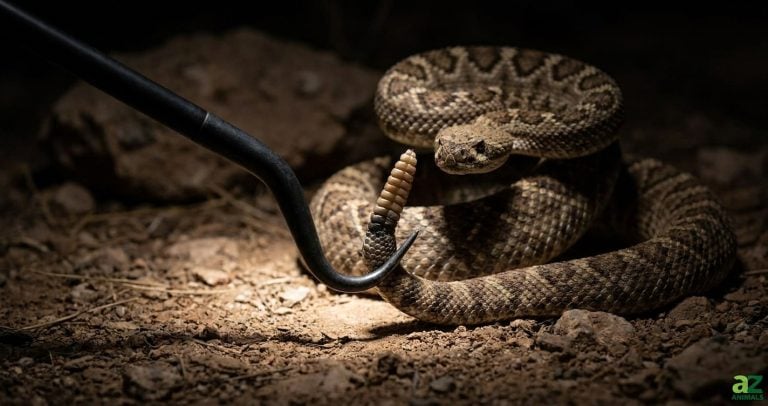
Pythons rely on their skills as ambush predators to attack and kill enemies. They will often lie in wait until prey comes by before making their move. Pythons bite their prey and then coil their bodies around it, constricting it.
Alligators are ambush predators, too. They’ll wait on the water’s edge and then drag prey into the water, inflicting vicious bites while drowning it. When facing a larger creature, they’ll often bite a limb or a spot on the body, clamp down, and perform a “death roll.” By rolling their body over and over, they can rip large chunks from their prey, causing immense soft tissue damage and eventual death.
Offensive Advantage: Alligator
Python vs. Alligator: Bite Force
Pythons can inflict a bite force of around 6–32 pounds per square inch (PSI), but their primary method of subduing prey is through powerful constriction, not bite force.
Alligators use their bite to directly kill their prey. They have one of the most powerful bites on the planet, measuring between 2,125 and 2,960 PSI delivered by 80 two-inch-long teeth.
Bite Force Advantage: Alligator
Python vs. Alligator: Senses
Alligators possess highly developed senses, particularly touch, sight, and hearing. These senses are tailored for hunting and navigating dark, aquatic environments. Their most remarkable sense is touch, mediated by integumentary sensory organs (ISOs) in their jaws, which detect minuscule vibrations and water pressure changes, often more sensitive than human fingertips.
Burmese pythons rely on a highly developed sense of smell via their forked tongue and infrared heat detection to hunt, compensating for poor eyesight. They use their tongue to collect scent particles, transferring them to the Jacobson’s organ in the roof of the mouth. They also use jaw pits to detect prey heat.
Sense Advantage: Tie
Who Would Win in a Fight Between a Python and an Alligator?
A large, mature alligator would win a fight against a python in most cases. At their full size, alligators have the power to ward off or outright kill a python. A python would have to be much longer and stronger than the alligator to kill it. The alligators that are most at risk of losing a skirmish with a python are hatchlings, juveniles, and elderly, infirm specimens.
It’s more likely that an average adult alligator would be large enough to kill the average adult python. The fight could happen in many ways, but it would most likely start near the water. Alligators love when something creeps into their water for an ambush.
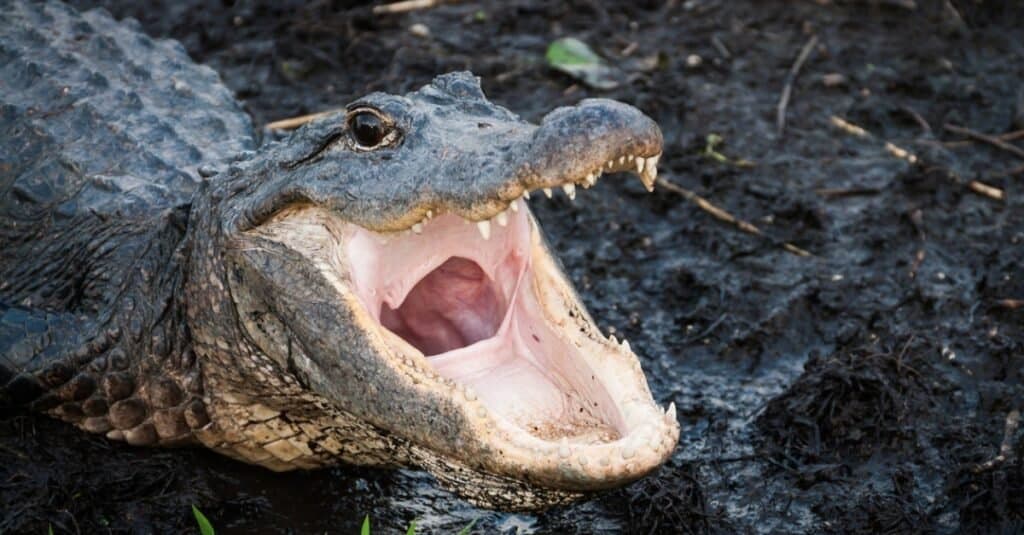
An alligator would win a fight with a python.
©iStock.com/unclegene
The python has good senses, but it likely wouldn’t detect a cold-blooded alligator with most of its body submerged underwater. If the python slinked into the swampy water, the alligator’s senses would detect the vibrations caused by the snake. The python would likely be met by the alligator’s powerful jaws, clamping down on it. The python might retaliate by biting and attempting to coil around the alligator, but the gator has a powerful counterattack.
The alligator would bite and perform a death roll, preventing the python from coiling around it and inflicting fatal damage.