
Quick Take
- A hippo can reach a top speed of around 19 mph.
- Researchers found that hippos almost exclusively trot, and at times, they are briefly airborne.
- Although hippos are semi-aquatic, they cannot swim, as they are too dense and heavy to float.
- Hippos can still move relatively quickly in the water, reaching speeds of up to 5mph.
Hippos are fascinating animals, known for their impressive size and huge, ferocious teeth. However, despite their bulk, hippos are actually quite athletic. Although they are semi-aquatic and spend up to 16 hours of the day in the water, hippos are surprisingly agile on land. Let’s take a look at these giants and learn how fast hippos can run.
How Fast Is a Hippo?
Hippos look big and slow, but that is only half true. Hippos are big, but they are actually fast! On average, hippos weigh around 3,500 pounds, making them some of the largest animals in the world. The only land animals that are larger are elephants and some rhinos. But, how fast can hippos run?
Hippos can reach speeds of around 19 mph. It’s hard to imagine how an animal as large as a hippo runs so fast, but it’s true. Since hippos spend most of their time in water, running isn’t something they often do. Still, they can run at great speeds when they need to. In fact, researchers found that hippos almost exclusively trot, and at times, they briefly become airborne.
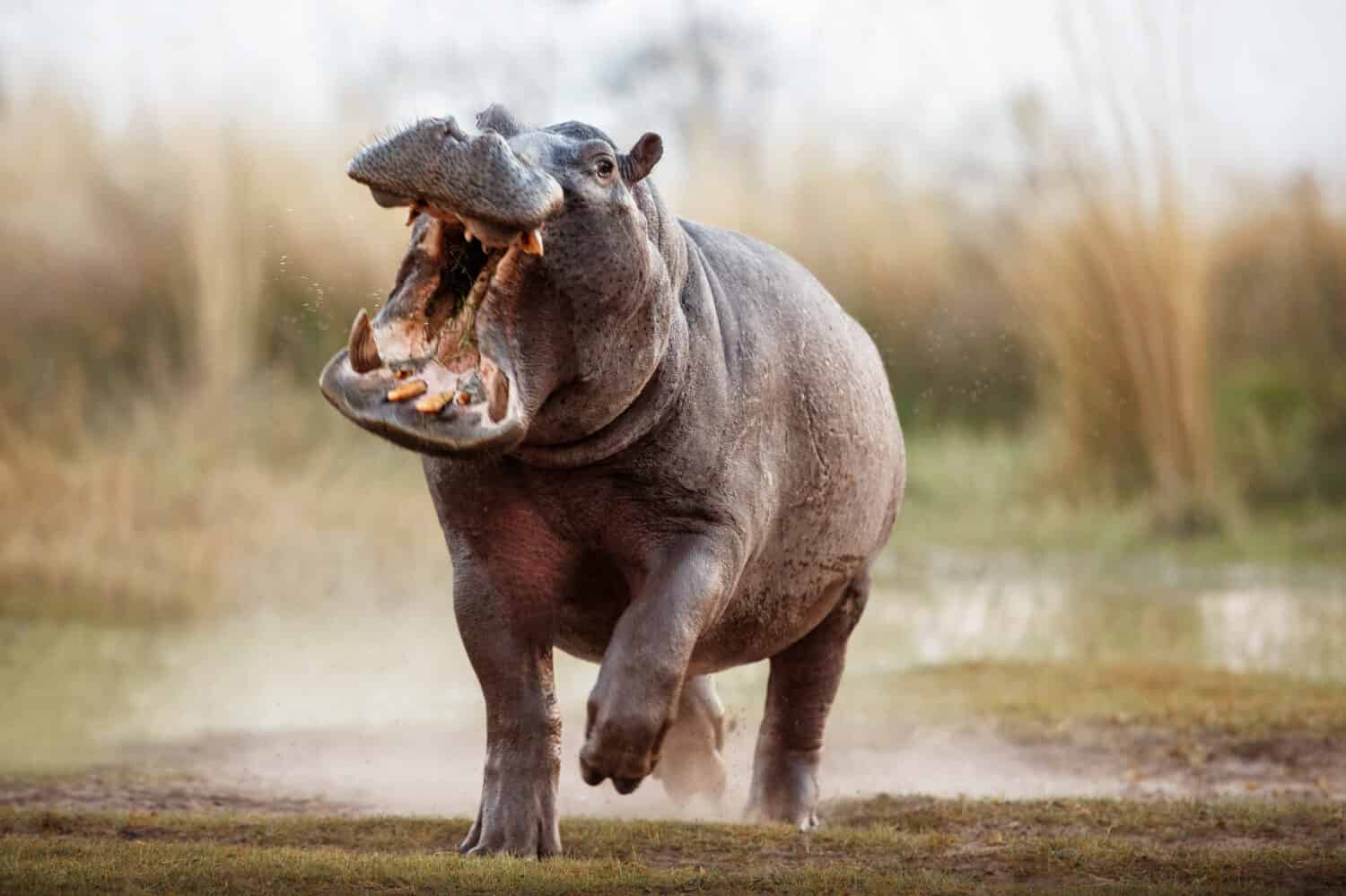
Hippos can run at speeds of up to 19mph.
©PhotocechCZ/Shutterstock.com
Why Hippos Run
We’ve discovered the answer to the question, “how fast can hippos run?” but why would they need to in the first place? Hippos generally spend most of their time in the water but come onto land for a number of reasons. The most common reason hippos come onto land is to feed at night. They spend about five to six hours of their day grazing, most of it during the night when the sun is down and less intense. They can range up to five miles in their search for grass, sometimes traveling significant distances from water.
Additionally, hippos’ habitats undergo extensive environmental changes that can displace the animals living there. Hippos are not exempt from this and may be forced to migrate long distances when the rivers, swamps, or lakes they inhabit dry up. In some instances, hippos have been recorded traveling up to 30 miles in order to find suitable watering holes or rivers.
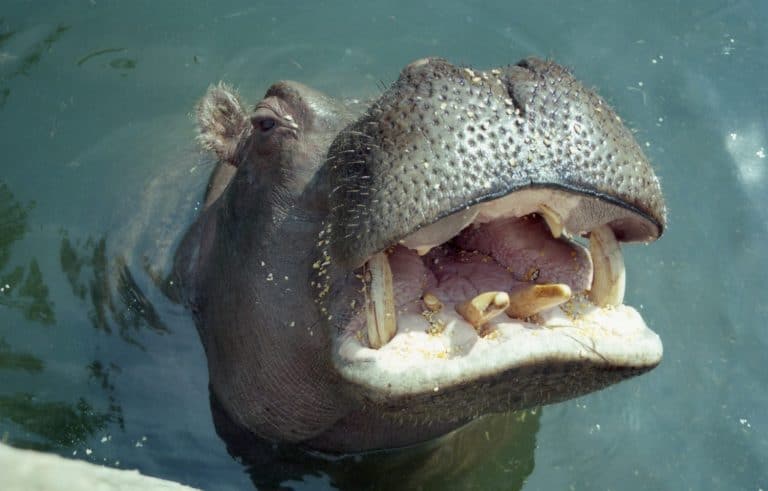
Although hippos primarily trot, a hippo will only run at full speed if it feels threatened. There are a few telltale signs that a hippo is feeling threatened. Yawning is usually the first signal that is used to display their tusks and large size. If a predator or unwary individual doesn’t take the hint, a hippo could charge them with the intent to scare or kill. Hippos are highly territorial and will charge to defend their space.

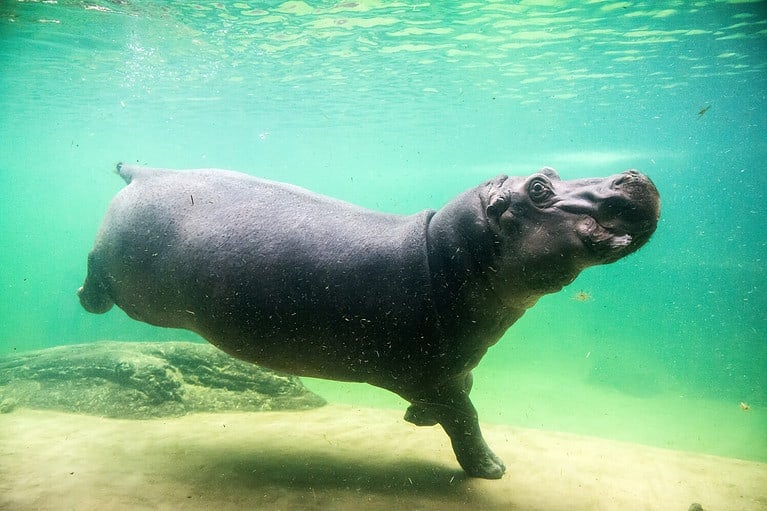
Hippos are unable to swim, so they push themselves off the bottom to move forward.
©iStock.com/Miltiadis Louizidis
How Fast Can a Hippo “Swim?”
They may be semi-aquatic, but hippos cannot actually swim. They have short legs, and they are far too dense and heavy to float. Although they have webbed feet, that adaptation isn’t enough to allow them to swim considering their massive size.
So, how do they get around in the water? Well, hippos generally “bounce” along the river or lake bed when it gets too deep. As shallow-water creatures, they mostly spend their time where they can stand. When they venture out into the deeper water, however, they resort to sinking, pushing off the bottom, and moving forward a bit. The little jumps allow them to traverse deeper areas, although it’s not very fast. Using this bouncing maneuver, they can reach speeds of around 5mph in the water.
Can a Person Outrun a Hippo?
Taking the top speed of a hippo into account, the prognosis doesn’t look good for a human racing for their life. The average human can hit top speeds of 12 to 15mph in a sprint, with regular running speeds of at 6 to 8mph. Although some athletes may be able to sprint as fast as a hippo can run, even athletes can only sprint for so long.
Usain Bolt has the record for the fastest speed ever reached by a human. He hit 27.5 mph for a brief second while he was sprinting for his 100-meter dash world record back in 2009. This speed was brief, however, and wasn’t sustained for the entirety of the run. So, unless you are Usain Bolt and the hippo is already tired, it is unlikely that a human could ever outrun a hippo. It might be best to just climb a tree, as hippos are far too heavy to climb after you.
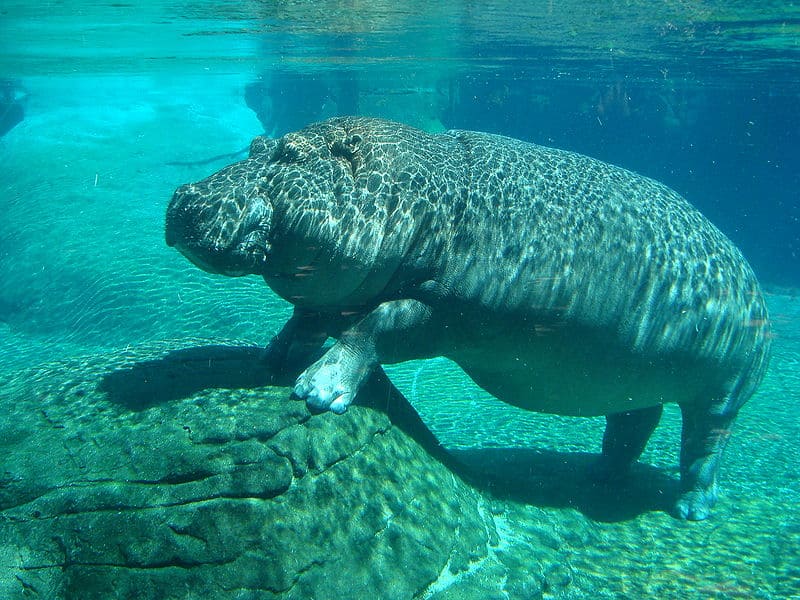
Hippos can move underwater at speeds of up to 5mph, but average humans can only swim at 2mph.
Can a Person Outswim a Hippo?
We’ve covered running, but what about swimming? Could a person outswim a hippo? It may be more likely since hippos are poor swimmers. Let’s take a look at the numbers, though. Average swimmers without training or prep can hit speeds of around 2mph, which isn’t fast enough to escape an angry hippo. Let’s look at some other examples.
Professional swimmers on a national scale can reach top speeds of 5mph in a pool environment. With adrenaline, they may be able to swim slightly faster. Therefore, a professional swimmer might just outpace a hippo in open water. Ultimately, you need to be a professional swimmer placed in ideal environments in order to beat a hippo in a water race. The lesson to take from this? Don’t race hippos.