H
Species Profile

Hovawart

Canis lupus familiaris

Built to guard, bred to bond
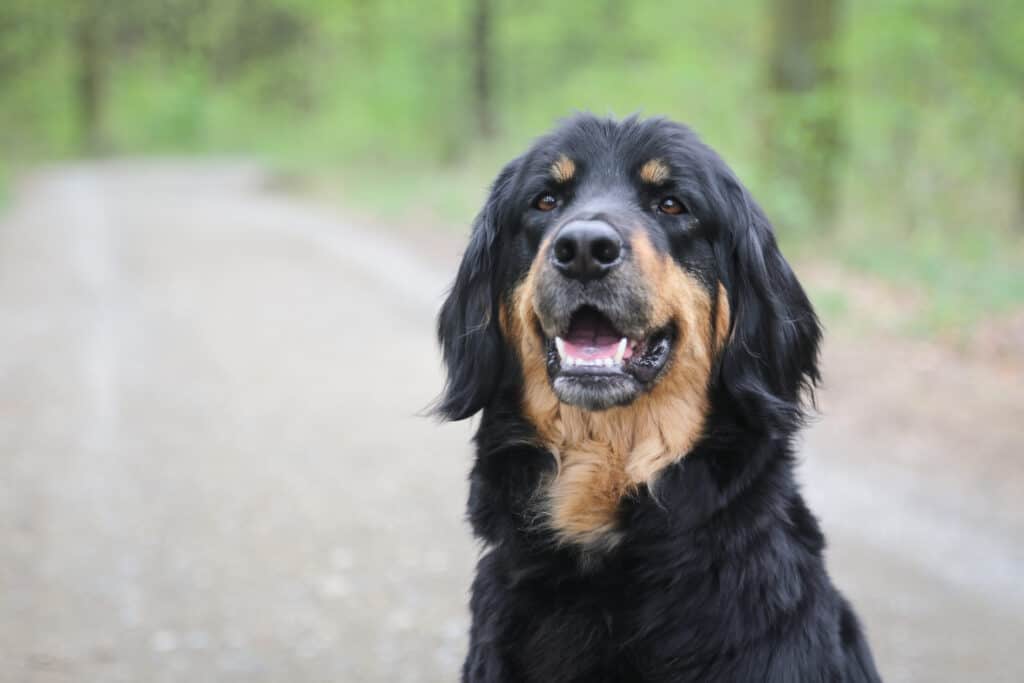
Hana Hanigerova/Shutterstock.com

Hovawart Distribution

Click a location to explore more animals from that region

Origin Location

This map shows the native origin of the Hovawart. As a domesticated species, they are now found worldwide.

Loading map...

Found in 1 country

Size Comparison

Human 5'8"
Hovawart 2 ft 1 in

Hovawart stands at 37% of average human height.

Hovawart German dog breed

At a Glance

Domesticated
Diet Omnivore
Activity Diurnal+
Lifespan 12 years
Weight 40 lbs
Status Not Evaluated
Did You Know?

The name Hovawart comes from a Middle High German term meaning "estate guardian".

Scientific Classification

The Hovawart is a German dog breed historically developed as a farm/estate guardian and general-purpose working dog. It is known for being intelligent, confident, protective, and strongly bonded to its family.

Kingdom
Animalia
Phylum
Chordata
Class
Mammalia
Order
Carnivora
Family
Canidae
Genus
Canis
Species
Canis lupus

Distinguishing Features

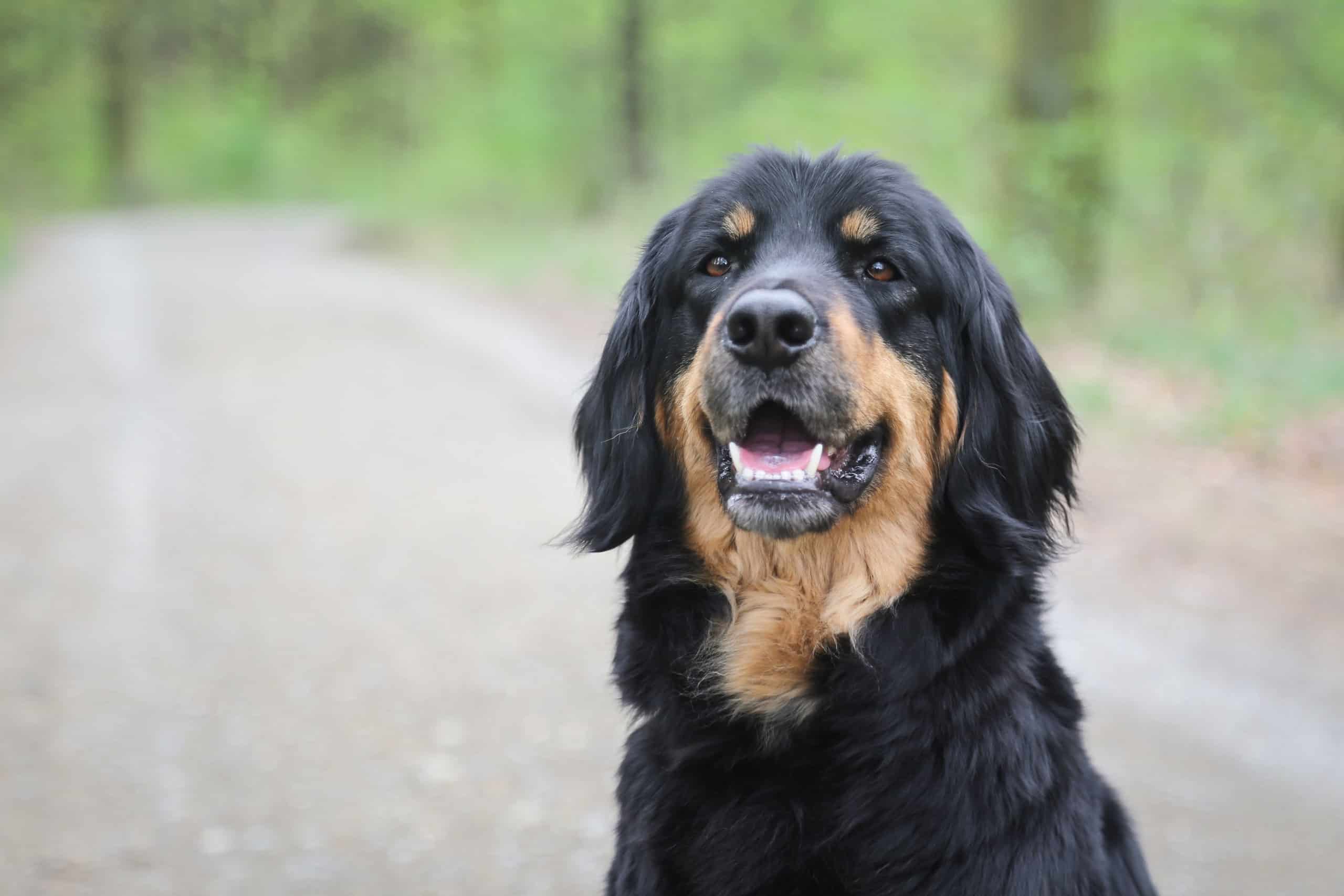
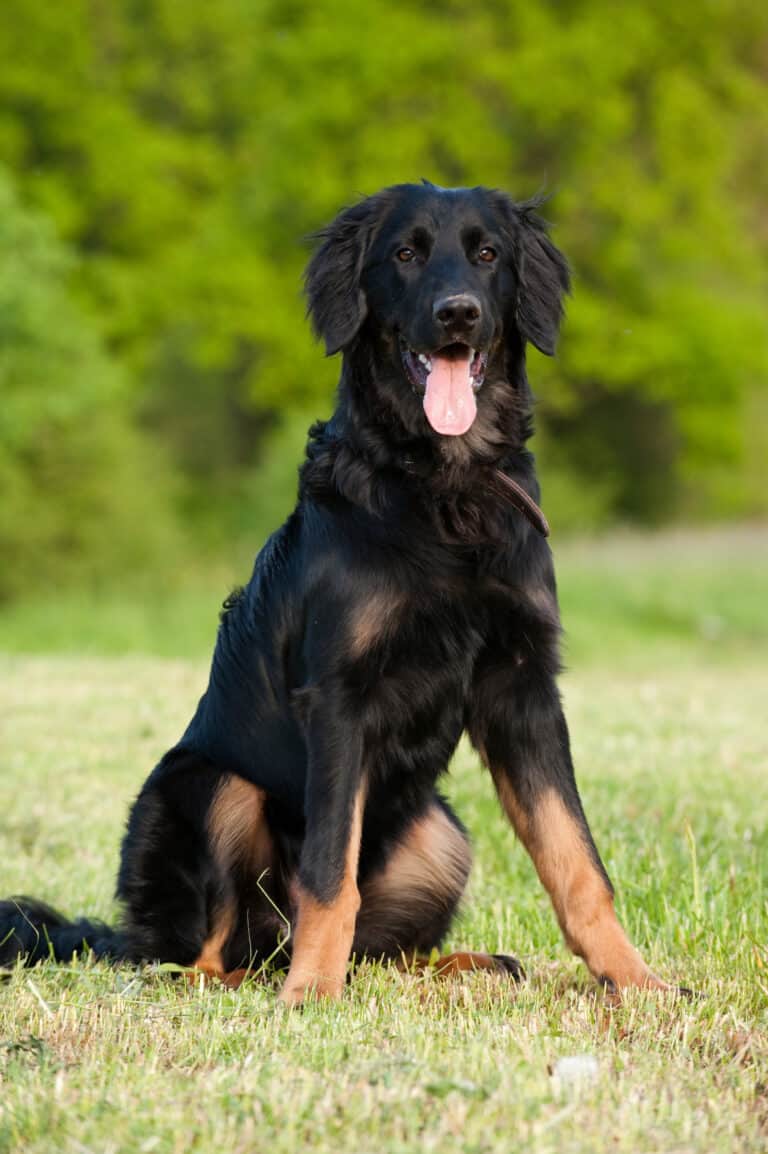
  • Medium-large, robust build with a long coat
  • Common coat colors: black, blond, and black-and-tan
  • Drop ears and a bushy tail
  • Guardian/alert temperament with strong territorial instincts
  • Origin and breed standard associated with Germany (FCI-recognized breed)

Physical Measurements

Males and females differ in size

Height
2 ft 2 in (2 ft 1 in – 2 ft 4 in)
2 ft (1 ft 11 in – 2 ft 2 in)
Length
4 ft (3 ft 7 in – 4 ft 5 in)
3 ft 7 in (3 ft 2 in – 3 ft 11 in)
Weight
84 lbs (66 lbs – 99 lbs)
66 lbs (55 lbs – 77 lbs)
Tail Length
1 ft 4 in (1 ft 2 in – 1 ft 6 in)
Top Speed
28 mph
Moderate endurance speed

Appearance

Primary Colors
Secondary Colors
Skin Type Mammalian skin with a double coat: long, weather-resistant outer coat (often slightly wavy) and a dense undercoat; pigmented skin and nose typically dark, with paw pads suited to outdoor/working conditions.
Distinctive Features
  • Hovawart (Canis lupus familiaris): a German estate or farm guardian and general working dog. It has consistent size, coat type, and standard color varieties.
  • Medium-large, sturdy, slightly rectangular build; strong bone and musculature for endurance work rather than extreme speed or massive bulk.
  • Head: broad with moderate stop; medium-length muzzle; dark, expressive eyes; drop ears set high and carried close to the head (distinguishes from erect-eared guardian/herding breeds like German Shepherds).
  • Coat: long (often 5-10+ cm in places), slightly wavy, with noticeable feathering on legs and tail; tail is long and plumed, carried low to level (not tightly curled).
  • Temperament/behavioral hallmark: intelligent, confident, protective, strongly bonded to family; typically reserved with strangers. Trainable but can be independent-best with early socialization, consistent boundaries, and purposeful work.
  • Care requirements: regular brushing (often 2-3x/week; more during seasonal shedding) to manage undercoat and prevent tangles behind ears, in feathering, and at the tail; routine ear checks/cleaning due to drop ears.
  • Exercise/mental needs: daily aerobic activity plus training or problem-solving tasks (tracking, obedience, protection-style sports, hiking). Under-stimulation can increase nuisance barking/guarding behaviors.
  • Common health considerations seen in the breed: hip dysplasia and elbow dysplasia risk; thyroid disease (e.g., hypothyroidism) reported in some lines; possible eye issues (screening recommended). Maintain healthy weight to reduce joint strain.
  • Working-guardian tendency: may be naturally territorial; careful management and social exposure are important to ensure stable, controllable protection instincts around visitors and other animals.
  • Distinguishes from similar German breeds: generally lighter and less massive than Leonberger; drop-eared and longer-coated than German Shepherd; overall profile is a versatile guardian/companion rather than a specialized herding silhouette.

Sexual Dimorphism

Males are typically noticeably larger, heavier-boned, and more "powerful" in head/neck; females are usually lighter-framed and more refined while retaining the same coat type and color varieties.

  • Larger overall size and heavier musculature; broader head and stronger neck/forequarters.
  • May show a fuller ruff/neck coat impression due to thicker coat and frame.
  • More pronounced masculine expression (broader skull, slightly heavier muzzle).
  • Slightly smaller, lighter-boned silhouette; more refined head/neck while still robust.
  • Often a tidier overall outline with less apparent ruff volume (individual variation).
  • Same color varieties and coat pattern options as males; differences are mainly size and substance.

Did You Know?

The name Hovawart comes from a Middle High German term meaning "estate guardian".

It was rebuilt in the early 1900s from traditional German farm dogs; key figures include K.F. König and other German breeders who documented and standardized the type.

Unlike many single-purpose breeds, Hovawarts were valued as versatile all-rounders: guarding, tracking, and companion work on rural properties.

They come in three recognized coat colors: black, blond, and black-and-tan.

Hovawarts mature slowly-many keep a "puppy brain" longer than some breeds, with full mental maturity often later than expected.

They're known for a strong "off switch" at home when well-exercised-alert outside, calmer with their family indoors.

Unique Adaptations

  • Balanced guardian temperament: bred for stable confidence-ready to alert and deter, but ideally steady rather than nervy.
  • Weather-shedding coat: a long, dense coat with protective undercoat helps them work outdoors in varied Central European conditions.
  • Athletic, enduring build: medium-large size and sturdy frame suit long patrols and multi-purpose farm work.
  • High social bonding: strong affiliation with a "pack" (family) supports cooperative work-distinct from wild canid survival bonding but built on the same social ancestry of the gray wolf.
  • Context-aware trainability: learns quickly yet retains independence, an advantage for property work where initiative can matter.
  • Strong sensory toolkit shared with domestic dogs: excellent hearing and smell (traits inherited from wolf ancestry) applied to human-directed tasks like tracking and guarding.

Interesting Behaviors

  • Perimeter checking: many naturally patrol fences, gates, and property edges, pausing to scan and listen.
  • Strategic guarding: often position themselves with a clear view of entrances or between family members and strangers.
  • Selective vocalization: more likely to alarm-bark meaningfully than bark nonstop, especially when something changes on their territory.
  • Independent problem-solving: may test boundaries or "negotiate" commands; they respond best to consistent rules and purposeful training.
  • Close-contact loyalty: frequently choose a "home base" near their people, following from room to room while staying calm.
  • Scent-driven engagement: strong interest in tracking games and nosework, reflecting working-dog heritage.
  • Body-blocking and herding-like nudges: some will gently use their body to guide family members away from perceived concerns.

Cultural Significance

In Germany, the Hovawart (Canis lupus familiaris) is a traditional estate watchdog, known for guarding farmsteads and protecting families. In the 20th century, breeders worked to save and set a standard for these old German farm dogs as steady guardians.

Myths & Legends

Medieval lore in Germany ties estate-guardian dogs to the ideal of the faithful homestead guardian-dogs celebrated in rural storytelling for keeping hearth and home safe through the night.

Hovawart groups in Germany tell a tale of a castle or estate dog that survived a battle and helped rebuild the breed, an origin story that shows the Hovawart's guardian role.

In European tales, big black guard dogs were seen as protectors against thieves and harm. Stories of "the dog that wouldn't let evil cross the threshold" fit breeds like Hovawart (Canis lupus familiaris).

In German-speaking areas, folk names for farm roles (shepherd, warden, watchman) appear; the Hovawart is often told as the classic estate watchdog, a symbol of steady loyalty to home and land.

Conservation Status

NE Not Evaluated

Has not yet been evaluated against the criteria.

Population Stable

Life Cycle

Birth 6 pups
Lifespan 12 years

Lifespan

In the Wild
10–14 years
In Captivity
10–14 years

Reproduction

Mating System Polygynandry
Social Structure Managed Domestic
Breeding Pattern Serial
Fertilization Managed Selective
Birth Type Internal_fertilization

Behavior & Ecology

Social Pack Group: 4
Activity Diurnal, Crepuscular
Diet Omnivore Meaty, high-protein foods (e.g., beef or poultry with organ meat) balanced with digestible carbohydrates/vegetable fiber.

Temperament

Intelligent, confident, independent-minded working breed; typically learns quickly but benefits from purposeful training rather than repetitive drilling.
Protective/territorial guardian tendency: generally reserved with strangers, strongly bonded and affectionate with the family; distinguishes the breed from the base species by emphasizing stable, calm 'watchdog' discernment over opportunistic sociability.
Steady and courageous; can be assertive with unfamiliar dogs if socialization is limited-variation is common across lines and early upbringing (HUBS variation note).
Care requirements (breed-specific): needs consistent socialization from puppyhood, structured obedience/impulse-control work, and regular mentally engaging tasks (tracking, obedience, scent work, patrol-style games).
Exercise needs (breed-specific): daily moderate-to-high activity plus off-leash-style enrichment in secure areas; under-stimulation can increase nuisance barking, guarding, or destructiveness.
Hovawarts can get hip dysplasia (HD) and other bone and joint problems. Deep-chested dogs risk bloat/GDV—manage meals, avoid heavy exercise around feeding, watch for sudden belly pain; do health checks and breed responsibly.
Coat/handling: long coat needs routine brushing (especially during shedding) and early cooperative handling for grooming, vet exams, and visitor management.

Communication

Alarm/territorial barking Often deep, sustained when perceiving a boundary threat
Growling Distance-increasing warning, commonly tied to guarding resources/space
Whining/whimpering Attention-seeking, frustration, or separation-related distress
Play barks and short yips Social excitement, especially with known people/dogs
Body blocking/standing between family and perceived threat Breed-typical guardian signal
Posture and facial signals Stiffening, hard stare vs. relaxed open mouth
Tail carriage changes High/flagged during alert; neutral/low during uncertainty
Scent marking and investigation Species-typical information gathering; more frequent on patrol routes
Mouthing/carrying and pawing Social solicitation; should be shaped with training
Proximity seeking/'shadowing' primary handler Bonding behavior; may intensify without independence training

Habitat

Biomes:
Temperate Forest Temperate Grassland Boreal Forest (Taiga) Tundra Alpine Mediterranean Desert Hot Desert Cold Savanna Tropical Dry Forest Tropical Rainforest Freshwater Wetland Marine Temperate Rainforest +9
Terrain:
Plains Hilly Valley Mountainous Riverine Coastal Island +1
Elevation: Up to 14763 ft 9 in

Ecological Role

Human-associated commensal omnivore functioning as a mesopredator/scavenger; in the Hovawart specifically, a property-guardian working dog whose feeding ecology is primarily human-managed rather than wild hunting.

Deterrence of wildlife intrusions and protection of livestock/property (guardian role) Rodent and small-pest suppression where free-ranging or farm-kept Scavenging/carcass removal in some rural/free-ranging contexts (reduced waste/attractants) Support to humans via working roles (security, tracking, search assistance) and companionship

Diet Details

Main Prey:
Small mammals Birds Fish Invertebrates Carrion
Other Foods:
Berries and other wild fruits Grasses Roots and tubers Vegetable matter

Human Interaction

Domestication Status

Domesticated

Hovawart (Canis lupus familiaris) is a German working dog, name meaning "estate guardian." Rebuilt in the early 20th century by Kurt Friedrich König and others from farm guardian dogs, it is confident, protective, and bonded to family. Hovawarts need early social training, can be independent, and work as home guardians, trackers, search-and-rescue, farm deterrents, and sport dogs.

Danger Level

Moderate
  • Protective/territorial responses can lead to intimidation or bites if poorly socialized, mishandled, or allowed to guard without control
  • Higher risk during adolescence if boundaries/training are inconsistent (large, strong dog with independence)
  • Risk increases around strangers entering property, delivery situations, and unfamiliar dogs if introductions are unmanaged
  • Low-to-moderate physical hazard from size/strength (knock-down risk) even in friendly interactions

As a Pet

Suitable as Pet

Legality: Hovawart (Canis lupus familiaris) is usually legal as a pet. Not often targeted by breed laws, but local dangerous-dog rules, insurance, homeowner association rules, or access rules may limit ownership or require secure containment.

Care Level: Experienced

Purchase Cost: $1,200 - $3,000
Lifetime Cost: $20,000 - $45,000

Economic Value

Uses:
Companion animal ownership Home and property guardian/estate dog Working dog services (search-and-rescue, tracking, sport venues) Breeding (registered kennels, health-tested lines) Training, boarding, grooming, veterinary services
Products:
  • Puppy sales/adoption fees (registered litters, working lines)
  • Professional training (obedience, behavior, scent work, SAR foundations)
  • Veterinary care (preventive care, orthopedic screening, emergency bloat risk care)
  • Equipment (secure fencing/containment, crates, long lines, enrichment tools)
  • Grooming supplies (brushes/undercoat tools) and premium diets

Relationships

Ecological Equivalents 7

Animals that fill a similar ecological role in their ecosystem

German Shepherd
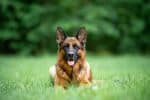
German Shepherd Canis lupus familiaris Similar working and guardian role—property protection and handler-focused trainability. Hovawarts are often slower to mature and more independent/territorial, requiring careful socialization to balance their protectiveness.
Rottweiler
Rottweiler Canis lupus familiaris Estate/guardian niche overlap: both are confident, protective family dogs. The Hovawart typically has a longer coat and is often described as more versatile across tracking, rescue, and obedience when well-trained, but still requires firm, consistent handling.
Leonberger
Leonberger Canis lupus familiaris Large German-origin guardian and utility companion. Both can be steady family protectors; the Hovawart is generally more intense in territorial guarding and may have a higher need for structured work.
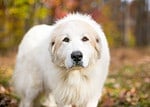
Great Pyrenees
Great Pyrenees Canis lupus familiaris Guardian-function overlap: the Great Pyrenees is more of a livestock-guardian and low-drive patroller, while the Hovawart is more interactive and biddable, better suited to active estate guarding and sport work that requires close human partnership.
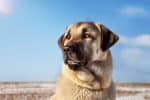
Anatolian Shepherd Dog
Anatolian Shepherd Dog Canis lupus familiaris Occupies a protective, independent guardian niche. The Hovawart usually bonds strongly with its household and is generally more responsive to training, but both require early socialization to prevent over-guarding.
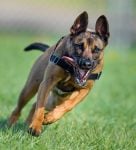
Belgian Malinois
Belgian Malinois Canis lupus familiaris Both are working dogs with overlapping traits of intelligence, confidence, and protection instincts. The Malinois is typically higher-drive and more specialized for sport and police work, while the Hovawart is characterized as a steadier all-around guardian with greater endurance and a strong family attachment.
Gray wolf
Gray wolf Canis lupus Shared canid territoriality and social bonding. The Hovawart differs by domestication and selective breeding that emphasize controllable protective behavior, human-directed cooperation, and predictable coat and size traits, requiring ongoing training and management rather than wild survival strategies.

The hovawart or “hovie” is a medium-sized dog breed from Germany whose name means “Estate Guardian.” True to their name, they are excellent watchdogs — loyal to their family but cautious toward strangers. This is an ancient breed, going back to the 13th century, but it nearly died out in the 20th century. Fortunately, a careful breeding program brought them back. Like other intelligent and energetic working dogs, they thrive when their owners train them and involve them in activities. They do require a high level of attention, so they are not recommended for first-time dog owners.

3 Pros and Cons of Owning a Hovawart

ProsCons
Great guard dog. Loyal to their families and appropriately cautious toward strangers.Need space and exercise. The hovawart is an intelligent and energetic working breed that requires daily outdoor exercise, training, and interaction. They are not well-suited to apartment life or sedentary families.
Good with children and pets. Hovawarts are kind, faithful, and affectionate toward children and get along well with other pets when properly trained and socialized.They do shed. Hovawarts have long hair and should be brushed occasionally, but they do not require an exceptional level of grooming. However, they do shed moderately and are not hypoallergenic.
Exceptionally healthy. There are no particular health problems with this breed. The issue of hip dysplasia, a problem with many breeds, is rarely seen with the hovawart because of careful breeding.Can be aggressive. If not properly trained and socialized, hovawarts can be overly territorial and aggressive. Males may especially have problems getting along with other male dogs.

The Best Dog Food for Hovawart

A hovawart should eat a diet of high-quality dog food that has essential vitamins, minerals, and trace elements. As an energetic breed, these dogs process carbohydrates well, but make sure the food you choose has a high meat content to satisfy their protein needs. Your hovawart can eat a high-quality wet or dry dog food, as well as limited amounts of fresh meat. Add meat broth to dry food to make it tastier.

Hovawart Size and Weight

Hovawarts are medium-sized dogs averaging 25 to 29 inches at the shoulder for males and 23 to 26 inches for females. The weight of either sex can range from 65 to 90 pounds.

Hovawart Common Health Issues

The hovawart is a very healthy dog with few known issues. As with many other canine breeds, hip dysplasia was a problem for this breed in the past. However, careful breeding programs have made it a rare problem for hovawarts today. An underactive thyroid is a potential health problem, but it is not common.

Hovawart Temperament and Behavior

One of the strongest personality traits of the hovawart is its protectiveness. Originally bred as a guard dog for farms and estates, this breed is quite loyal to its family and will warn off strangers and other animals that it sees as a threat. This behavior means new owners must be intentional and consistent in socializing their dog properly with other animals and people so that it does not become aggressive and overprotective.

Another positive behavior of this breed is their high intelligence. They are easily trainable as therapy or service dogs, and for search and rescue operations. Historically, these traits have made them popular choices, not only as agricultural guard dogs, but in military service as well. 

No doubt the best trait of this breed is its devoted, affectionate personality. Hovawarts are kind, fun-loving, and have an even disposition. They bond closely with their owners and families as a “pack” and enjoy all aspects of family life.

How To Take Care of a Hovawart

Maintenance and Grooming

Hovawarts have long black, gold, or blonde fur but do not have thick undercoats, so they do not need extensive grooming, aside from occasional brushing to remove loose fur. They shed moderately and are not hypoallergenic. More grooming will be necessary if the dog roams in wooded or overgrown areas where its coat may pick up debris. Their nails grow fast and require regular trims. Examine their ears regularly for wax and debris, and brush their teeth.

Training

Hovawarts are easy to train because of their intelligence, eagerness to please, and their love of having a job to do. They require a great deal of time, attention, and consistency from their owners.

Exercise

Hovawarts must have daily vigorous exercise to stay physically and mentally healthy. Owners who want a running partner will enjoy their high energy. This breed is not well-suited to apartment life. The ideal environment for them includes a large yard for exploring and running. They do well with agility trials, flyball, searching, and fetching.

Puppies

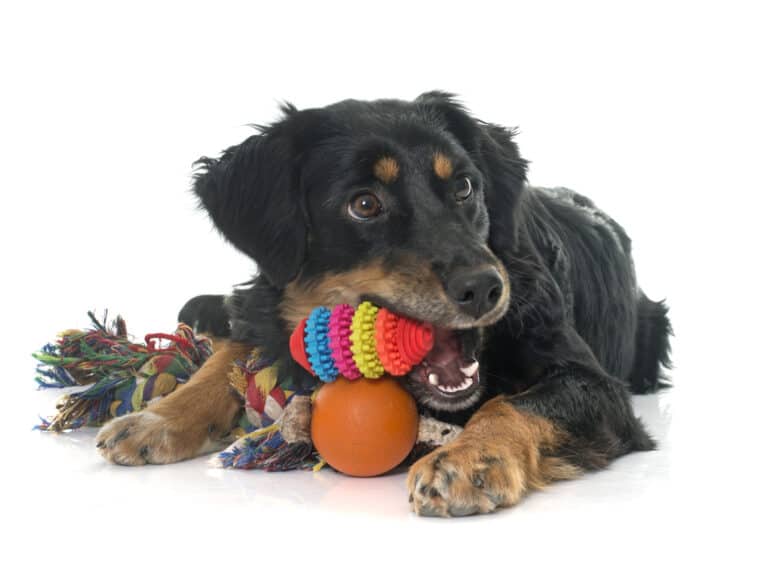
As puppies, hovawarts often engage in mouthing and jumping more than other breeds. They are also slow to mature mentally, so it can take more than a year to accomplish full training. As highly alert dogs, hovawarts can become stressed in new environments. Owners should introduce them to new situations gradually to avoid creating anxiety, aggression, or reactive behaviors.
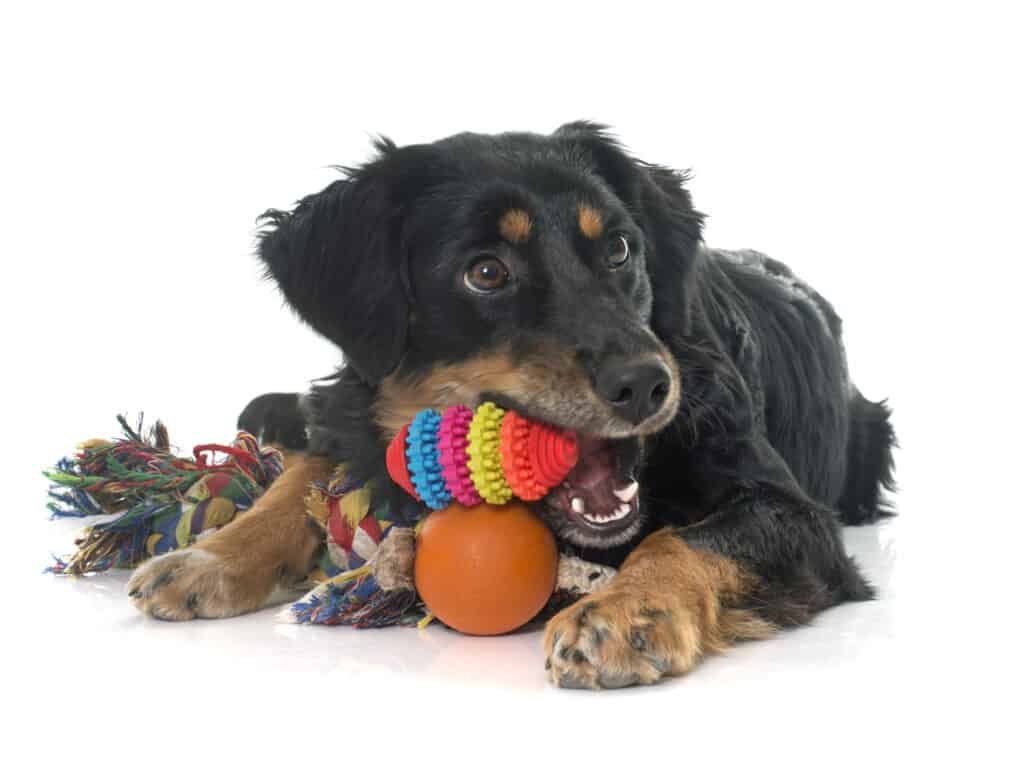
Havowart dog

As puppies, hovawarts often engage in mouthing.

Hovawart And Children

Hovawarts make great family dogs. When raised with children, they adjust well to the normal ways children play with them. They can be a good choice for parents who want a dog that will guard their children. Keep in mind, though, that the hovawart will also guard your children against other children. Your dog may mistake fun playtime screaming as a threat to its family and try to protect assertively. Additionally, some hovawarts may act dominantly toward your children. Adults should closely supervise, provide consistent training, and remove a dominant dog from a home with small children.

Dogs similar to the Hovawart

Other similar dog breeds to the hovawart include the German shepherd, golden retriever, and goldendoodle.

  • German Shepherd: This breed is similar in size and coloration to the hovawarts, has a similar German origin, and makes an excellent guard dog.
  • Golden Retriever: These dogs are medium-sized, possess a kind and gentle nature, and are excellent with children. Their coloration is similar to a blonde hovawart.
  • Goldendoodle: This hugely popular mixed breed is a combination of the golden retriever and poodle. Unlike hovawarts, they are hypoallergenic.

      View all 288 animals that start with H

      Sources

      1. Wikipedia / Accessed November 10, 2022
      2. Petfinder / Accessed November 10, 2022
      3. Helderberg Hovawarts / Accessed November 10, 2022
      4. Dog-Learn / Accessed November 10, 2022
      5. Hundeo / Accessed November 10, 2022
      6. DogFoodAdvisor / Accessed November 10, 2022
      7. American Kennel Club / Accessed November 10, 2022
      8. American Hovawart Club / Accessed November 10, 2022
      9. Wag! / Accessed November 10, 2022
      10. Pet Net ID / Accessed November 10, 2022
      Drew Wood

      About the Author

      Drew Wood

      Drew is a college professor and freelance writer who graduated from the University of Virginia. His travels have taken him to 25 countries and 44 states, where he has enjoyed learning about wildlife in a wide range of environments. In addition to his love of animals, he enjoys scary movies, landscaping, strategy games, and philosophical discussions over a cup of coffee. He is also an emotional support human to a neurotic Spanish Water Dog and a hyperactive Chihuahua mix.

      Thank you for reading! Have some feedback for us?


      Hovawart FAQs (Frequently Asked Questions)

      The average purchase price of a hovawart puppy is $1,000-$1,200. Annually, the typical cost of food, veterinary care, toys, pet insurance and supplies is about $650.