Quick Take
- Two years of failed experiments produced nothing. Then a single moth emerged that a scientist literally couldn't ignore. See the mutation that appeared →
- A tiny chemical tweak at precisely the right moment can push a camouflaged moth into something almost unrecognizable, which hints at how evolution may work faster than anyone expected. See how fast wings can change →
- Moths and butterflies look like they evolved tails the same way, but the evidence suggests something far stranger is going on. Explore the tail evolution evidence →
- Wing shape in moths and butterflies has never been experimentally altered before. So what does the first successful attempt actually reveal? See the experimental method →
Scientists are still learning about some of nature’s most unique species, even after decades of research and countless discoveries. And it isn’t always easy to uncover something new about our planet’s animals and insects. Andrei Sourakov can attest to just how long such a process takes.
Sourakov is the collection coordinator of Lepidoptera at the Florida Museum of Natural History. For two years, he gave developing luna moths tiny doses of chemicals meant to alter their wing patterns, yet the experiments produced no visible changes.
Finally, one specimen emerged with hindwing tails wider than any he had reared before. “This single specimen was so different that I couldn’t ignore it,” Sourakov said.
We dove into the result published in Evolution & Development, which a Florida Museum release describes as the first time wing shape has been experimentally altered in moths or butterflies. In actuality, this seven-year project gives researchers a new way to think about how moths and butterflies may have evolved tails. Let’s check out the details of Sourakov’s work and what he uncovered about luna moths.
This single specimen was so different that I couldn’t ignore it,
Chemicals and Altered Moth Wings
Sourakov worked with both luna moths and polyphemus moths, hand-rearing more than 700 of them from eggs to adults. He added minute amounts of heparin, dextran sulfate, and two sulfated polysaccharides shortly before and after pupation; this is the third metamorphosis stage, when wing patterns are determined. These chemicals boost the activity of a particular group of signaling proteins involved in wing development.

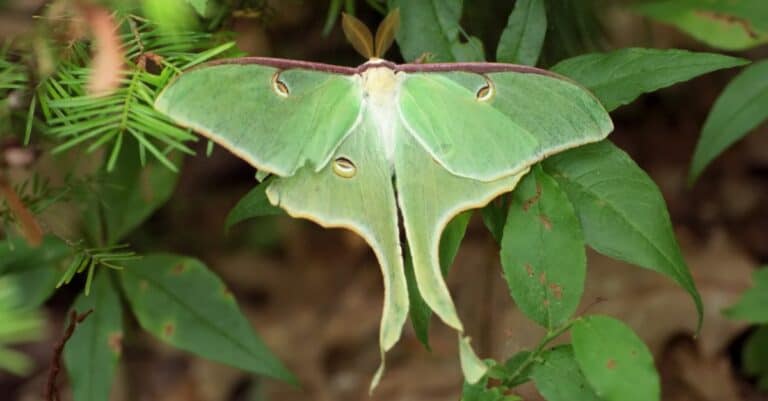
In this experiment, a luna moth developed a wider tail with altered markings.
©K Quinn Ferris/Shutterstock.com
After two years of trial and error, Sourakov continued adjusting the chemical dosage. The first success came as a single luna moth with wider tails and unchanged eyespots, which surprised him. He wondered whether genes that normally control wing patterns were also controlling wing shape in that particular moth, but he later ruled out this theory.
But just how different did these altered moths look compared to their unaltered relatives? Both luna moths and polyphemus moths produced different results.
Chemically-Treated Moth Mutations
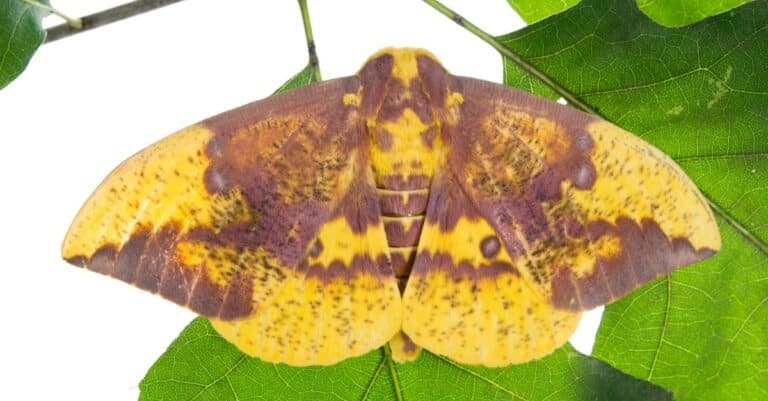
Beginning with polyphemus moths, the yellow borders of the two upper lemon-shaped eyespots thickened, and the brown scales around them turned whiter. The black border around the hindwing eyespots also expanded.
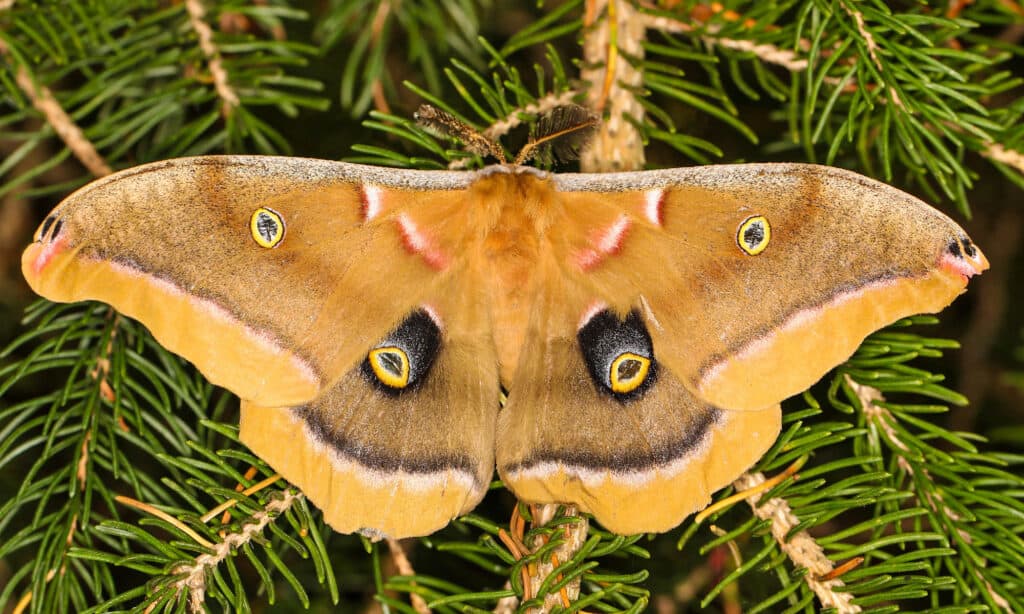
Polyphemus moths were also studied in this chemical research, leading to fascinating results.
©iStock.com/BrianLasenby
In luna moths, the circular eyespots on the hindwings became squinted and gained a thick, mascara-like border. Each change made the eyespots easier to see, and in luna moths, the overall pattern shifted from their typical camouflaged appearance to a much more conspicuous look.
Sourakov said the experiments showed how easily these features can shift from one state to another, from defense to flamboyancy. The chemicals easily expand or contract existing pattern elements, with only a slight increase in certain compounds at the right moment.
The study noted that if a luna moth’s leafy appearance and disguise suddenly shifted or stopped working, these mutations combined with hunting pressure from birds could make eyespots more visible within a few generations.
How Moth and Butterfly Wings Grow
Most flying insects have wings that stop growing once they reach a certain size. However, moth and butterfly wings finish growing in a different way.

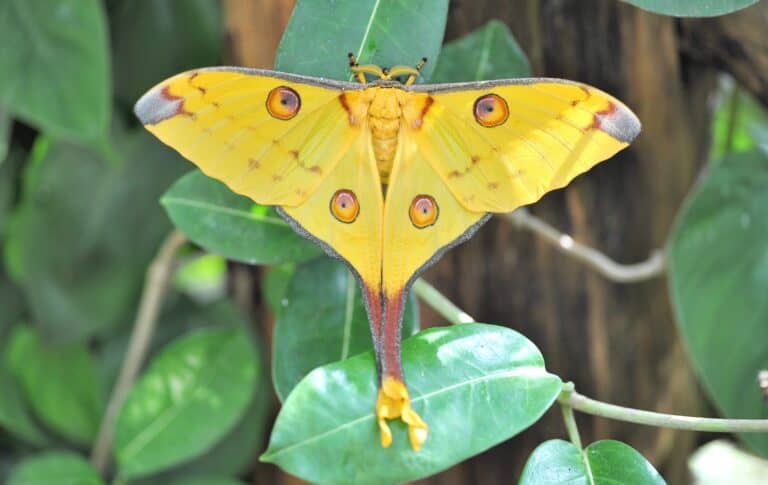
The wings of both moths and butterflies develop on a set cellular schedule.
©KRIACHKO OLEKSII/Shutterstock.com
For example, cells along the edges of the developing wing die on a specific schedule, a process called programmed cell death, and the pattern of those deaths trims the wing’s outline, creating a specific appearance. The final look, including any potential tail, depends on where and when the cells at the fringes of the wings die.
The signal telling those cells to die is carried by a specific protein that does not respond to heparin or dextran sulfate. However, earlier in development, before the margin cells die, a different signaling protein helps control the size of individual wing sections. This protein is mostly inactive by the time eyespots begin to form, which is when Sourakov starts his treatments. That’s why changes in wing section size seldom appear in eyespot experiments, and why a larger-winged and tailed moth is abnormal.
Did Moths and Butterflies Evolve Tails the Same Way?
Moth and butterfly eyespots sit in different parts of the wing, which points to independent origins. An earlier Sourakov study found that heparin enlarged eyespots in two giant silk moth species, while in nymphalid butterflies the same compound can delete them. This suggests that moths and butterflies may evolve tails differently.
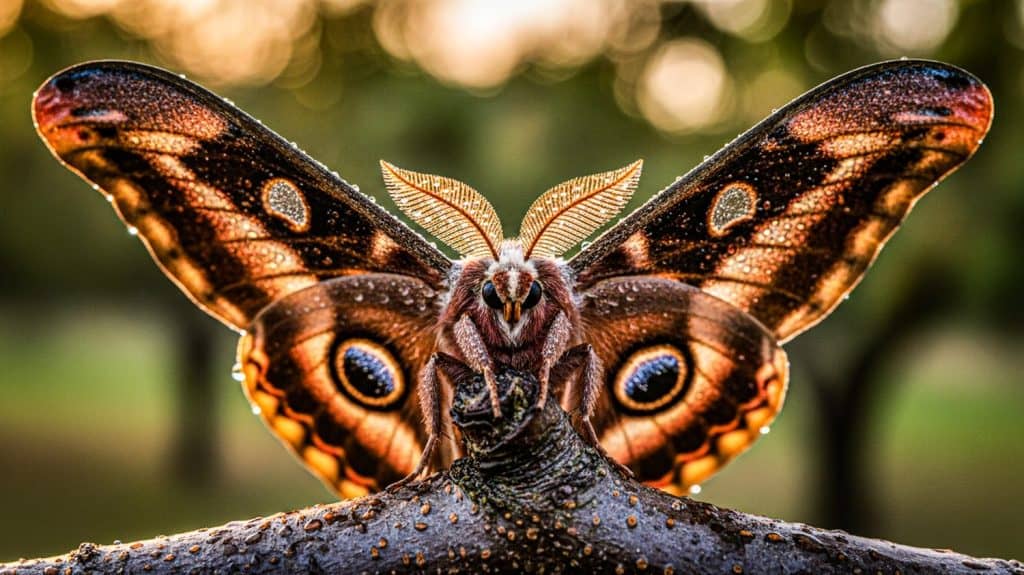
More experiments will determine how exactly the wings of moths develop.
©Dj_double_D/Shutterstock.com
However, at this stage, this evolutionary concept remains a hypothesis. Testing it would require experiments that measure multiple types of protein activity in developing luna moth tails, which requires further funding and interest. Why wing shape changes have yet to appear in butterflies treated with heparin is also still unclear, so further studies must be performed.
Wings and Evolution: How Moth Tails Can Change in a Blink
Luna moth tails are much longer than the average butterfly tail, and their shape affects how the moth flies. But how much a wing can change when a signaling pathway is adjusted at the right moment in development is a fascinating field of study.
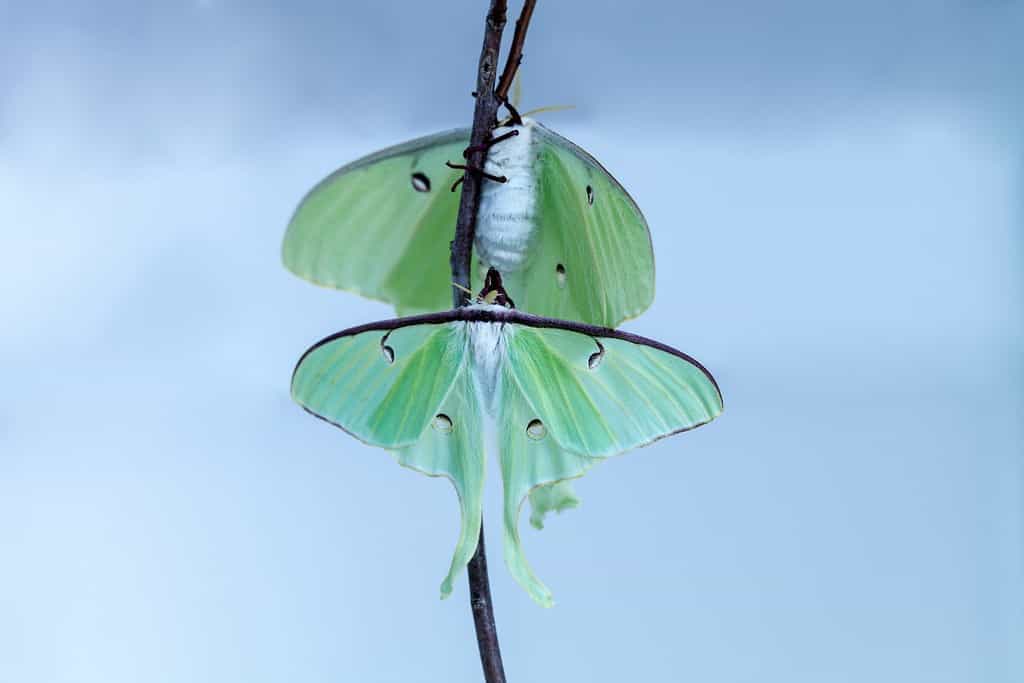
Luna moths are teaching scientists a great deal about how their patterns and wing shapes develop.
©SunflowerMomma/Shutterstock.com
In Sourakov’s experiments, a small shift in timing and chemical dosage widened a tail, thickened an eyespot border, and even changed a camouflaged moth into a rather eye-catching specimen. Developmental adjustments like these could give us plenty of natural selection material to work with, which may help explain how moths and butterflies came to have such a wide range of wing shapes and patterns.