
Quick Take
- Super generation migrating monarchs have an 8-month lifespan and fly over 3,000 miles.
- Central Texans are being called on to help the large population of migrating monarchs.
- Wild weather patterns in Texas have killed much of the milkweed, the only plant on which monarchs lay eggs.
- The migrating monarch population increased by 64% over last year.
Migrating monarch butterfly populations have been on the decline for years. This year has been different, with a significant increase in the wintering population of eastern migrating monarchs in Mexico. The increase means more monarch butterflies will be making their way north this spring. However, the journey through Central Texas will not be easy. Because of this, butterfly advocates and scientists are sounding the alarm for help. Central Texans, the 2026 monarch migration depends on your backyard. The question is: Are you prepared to help?
Migrating Monarchs Face Unhospitable Conditions in Texas
The eastern migrating monarchs have begun their northward migration after spending the winter in Mexico. Conditions proved optimal in Mexico to the point that the butterflies occupied over seven acres. The nectar flowers were abundant, and the weather conditions were mild. The wintering conditions were everything the migrating monarchs needed, not only to survive but also to thrive.
Unfortunately, the same positive weather conditions do not hold for Central Texas. The path the migrating monarchs fly along was baked by blistering February temperatures. As one of the hottest Februaries on record torched the landscape, causing milkweed to be late to grow and stunted, March appeared to give a reprieve. The temperatures became slightly milder, allowing nectar plants and milkweed—on which the migrating monarchs rely—to grow.
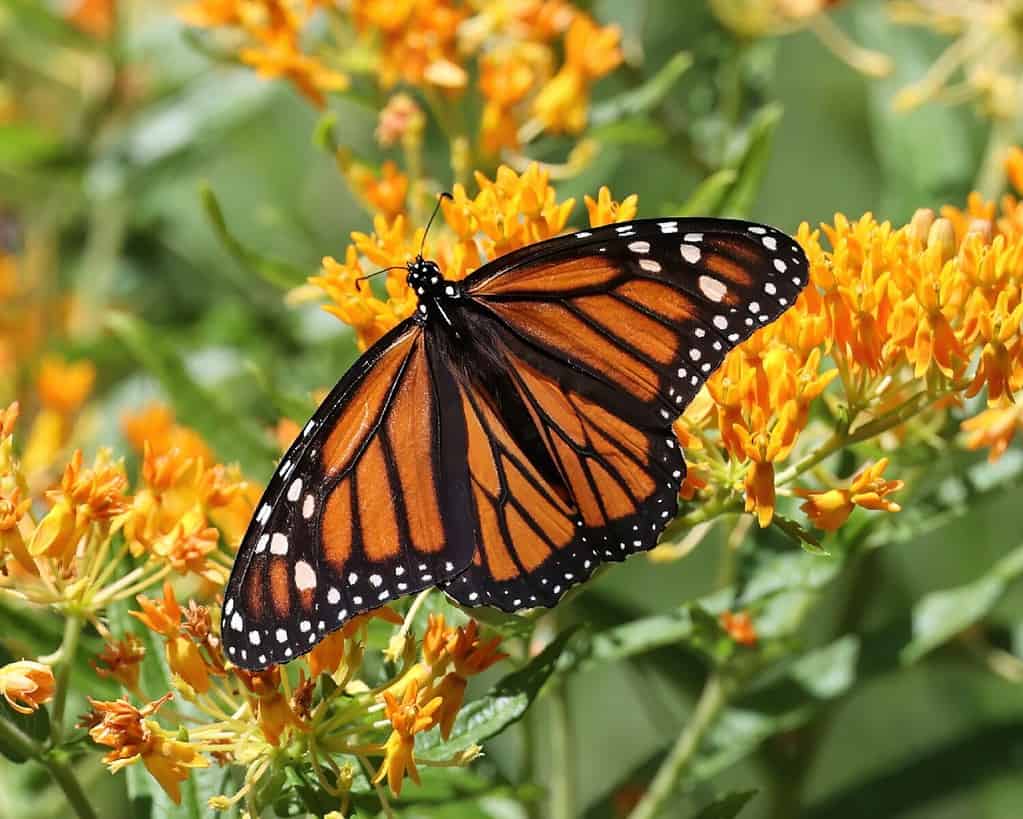
Migrating monarch butterflies are facing tough conditions in Central Texas due to unpredictable weather patterns.
©David Trevarthen/Shutterstock.com
The good news was short-lived. Mid-March brought wild temperature swings to Central Texas. With lows below freezing and highs in the 90s, plants withered and died. This included the milkweed. Migration through this region of Texas is essential for the monarchs, as there is no alternative route. As a result, the success of this year’s migration is uncertain.
Spring Monarch Butterflies Are the “Super Generation”
Central Texans are eagerly awaiting the arrival of the migrating monarch butterflies. Many of those making their way from Mexico through Texas this year are known as the “super generation” of migrating monarchs. This term is applied to the last, or fourth, generation that made their way from the northernmost U.S. states and Canada south to their wintering grounds in Mexico.
Migrating monarchs have multiple generations alive at a time during the migration season. Each generation makes its way farther north before making the winter journey into Mexico. The super generation earns its name not only for its extended lifespan but also for the impressive distances it covers—on average, over 3,000 miles.
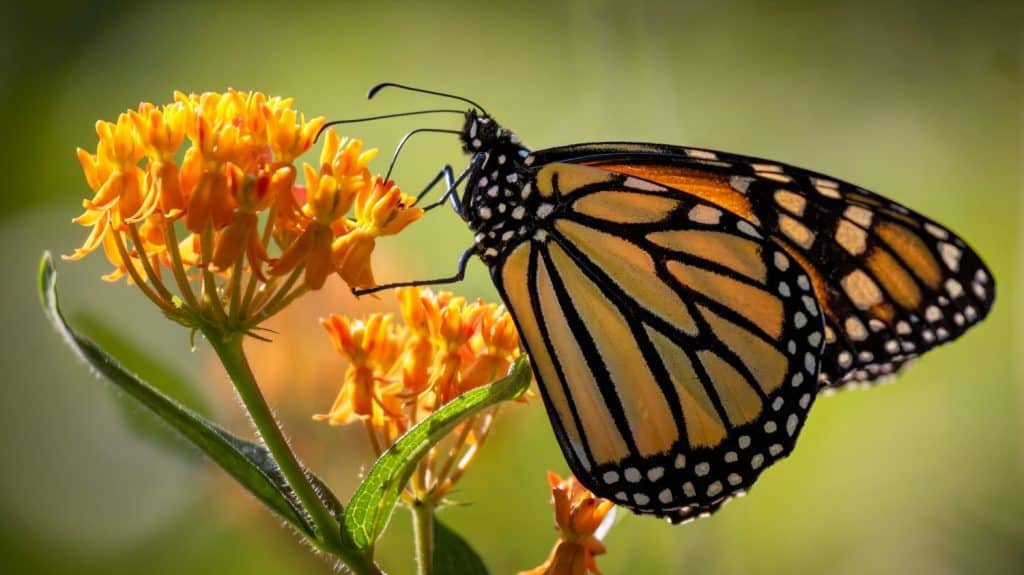
Some of the migrating monarchs coming through Texas are from the “super generation.”
©Rene Bechard/Shutterstock.com
Once the migrating butterflies emerge from the chrysalis, they enter diapause. This means they are not sexually reproductive. The ability to reproduce remains on hold during the wintering period in Mexico. This pause allows migrating monarchs to live for up to eight months.
When spring arrives, the monarchs mature and can reproduce. When monarchs are capable of reproduction, they live only two to six weeks. Therefore, monarchs that do not migrate live only a short time, while migrating monarchs—the super generation—live much longer.
Why Is the Monarch Migration Through Texas Important?
The monarch migration through Texas is important for the survival of the species. There is a direct correlation between the health of migrating monarchs and the health of the environment in Texas. When conditions are not ideal, the outlook tends to be poor for the butterflies.
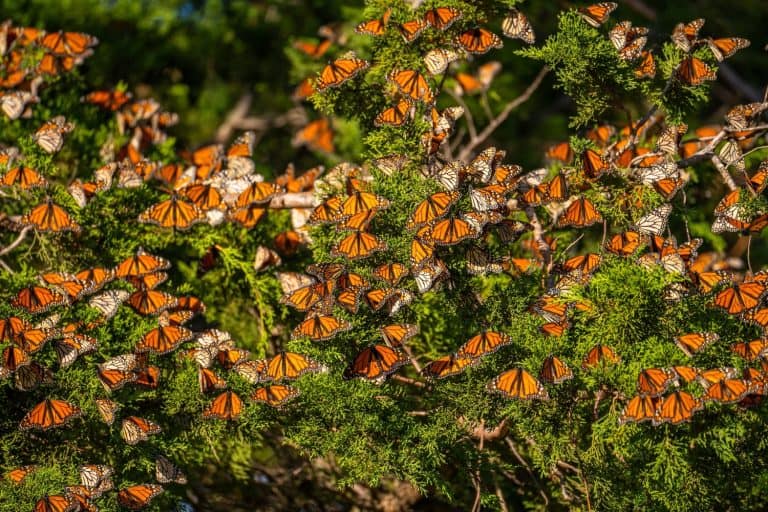
As winter approaches, Texas becomes important to migrating monarchs, as it is the last place where ample food sources are available before the butterflies make their way to their wintering grounds in Mexico. Those who successfully make their 3,000-mile journey from the Northern United States to Mexico will rest in large clusters in trees until it is time to make their way back north in the spring.

Migrating monarchs rely on milkweed and nectar plants in Central Texas for the survival of the species.
©Wirestock Creators/Shutterstock.com
Springtime in Texas is equally important, if not more so, to the migrating monarchs. The butterflies begin to leave Mexico in early March. By this time, they have mated and are looking for milkweed in Central Texas to lay their eggs. Milkweed is the only plant that migrating monarchs will lay their eggs on, and the monarchs will travel up to 60 miles per day to find both milkweed and flowers with nectar.
Because Central Texas is a hotspot for milkweed in the Texas Hill Country, it is common to see large numbers of butterflies during the spring as they continue their migration to the central United States.
Migrating Monarch Population Increased Dramatically from Last Year
Since the 1990s, the wintering population of migrating monarch butterflies has declined. So much so that in 2022, the species was categorized as “endangered” by the IUCN. Despite being listed as an endangered, protected species, 2024 was one of the worst years on record for monarchs. That year was marked by a 59% population decline.

Migrating monarch butterfly populations increased by 64% over the last year.
©Nancy J. Ondra/Shutterstock.com
This year’s eastern population of migrating monarchs has surprised many. Instead of following previous years’ trends, the population has increased dramatically. According to the World Wildlife Fund-Mexico press release, the population increased by 64% from last year.
The news is overwhelmingly positive for migrating monarchs, although the population is still well below historic highs. The population increase has been attributed largely to optimal weather conditions in Mexico. With conditions in Texas fluctuating between extremes, it is unclear how many migrating monarchs will survive or lay eggs. The lack of milkweed in the Lone Star State has not helped the outlook for monarchs, which have also been affected by extreme heat and cold in recent months.
Milkweed Has Been Slow to Grow in Texas
Central Texas experienced one of the hottest Februaries on record. Because of this, milkweed was nearly nonexistent along the Llano River in the Texas Hill Country in February. This was discouraging, as typically, stems of swamp milkweed and antelope horns milkweed begin to sprout. Many scientists were left wondering how the heat would affect the overall growth of the milkweed.
Things did begin to look up as March began. Milkweed plants were observed ranging from 1/2 inch to 5 inches tall, with the most commonly seen between 3 and 4 inches. It was believed that as the migrating monarchs made their way through the Texas Funnel, they would have the necessary milkweed to lay their eggs and continue their life cycle.

Milkweed plants have not fared well in the heat and cold temperature swings experienced in Central Texas.
©Kate Besler/Shutterstock.com
However, weather conditions swung dramatically in mid-March. Temperatures ranged from 25F for several hours at night to above 90F during the heat of the day. According to monarch butterfly advocate Chuck Patterson, the milkweed suffered greatly.
“From what we’ve seen so far, our milkweed did not fare well at all,” Patterson told Texas Butterfly Ranch. “Most of it is shriveled and shocked and does not look like it will recover.”
This could be potentially devastating for the next generation of migrating monarchs. If there is not enough milkweed available, monarchs will not lay their eggs, and the population gains realized this year could be lost.
How Can Homeowners Help the Migrating Monarchs?
As a result of milkweed being devastated by extreme temperatures in Central Texas, a call has gone out to homeowners in the region and beyond to help migrating monarchs. Not only do they need a place to lay their eggs, but migrating monarchs also need to rest and recover from the miles they fly daily. First and foremost, scientists and butterfly advocates alike are asking Texans to plant native milkweed to support the migrating monarchs. Some of the options to choose from include:
- Antelope horns
- Green milkweed
- Butterfly weed
- Swamp milkweed
These plants are best planted in early spring. Those who do not want to wait for the plants to sprout can visit local businesses to purchase established plants to help migrating monarchs make their way through Central Texas now.

Sunflowers are a recommended nectar flower for migrating monarchs.
©Candy_Plus/Shutterstock.com
Additionally, erratic weather has led to scarce nectar sources in the region. By providing flowers that attract the monarchs, they have a place to both fuel up and rest along their journey. Some options to consider for the migrating monarchs include:
- Texas lantana
- Mistflower
- Frostflower
- Zinnias
- Goldenrods
- Sunflowers
Given the large population of eastern migrating monarch butterflies anticipated to pass through the Texas Funnel, they will need all the help they can get to survive. Fortunately, providing a hospitable environment with nectar-rich flowers and milkweed species, migrating monarchs stand a chance of successfully propagating the next generation.
Without help, many migrating monarchs will not survive, and those that do are unlikely to lay many eggs—if any. For those interested in helping, Journey North provides up-to-date information on where migrating monarchs have been sighted.