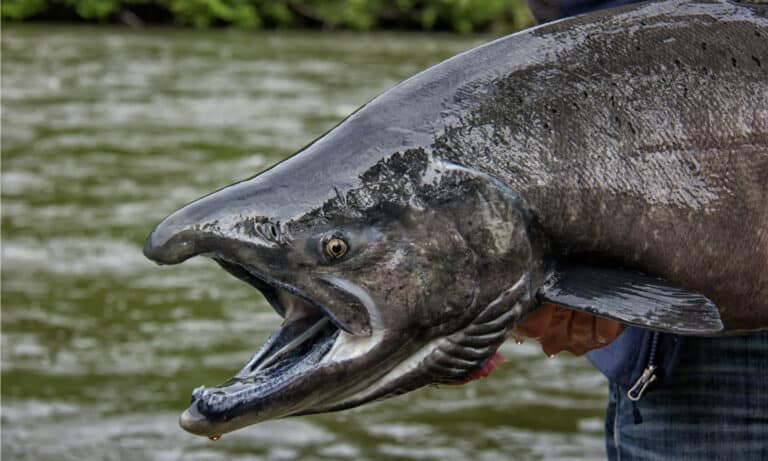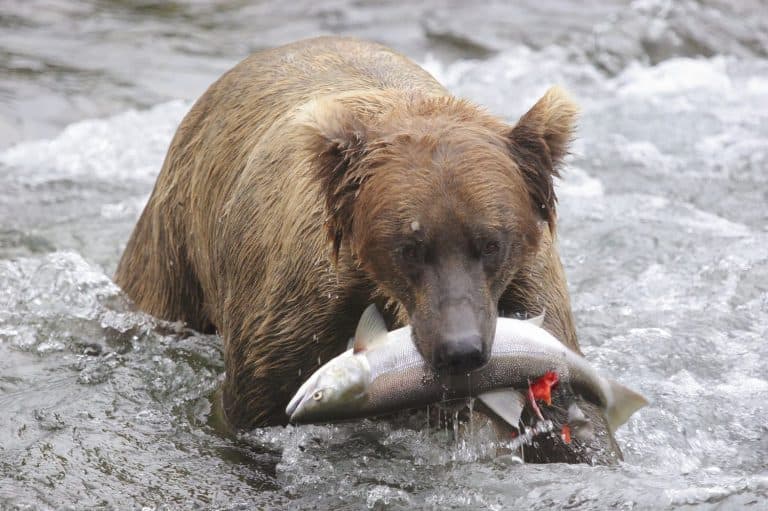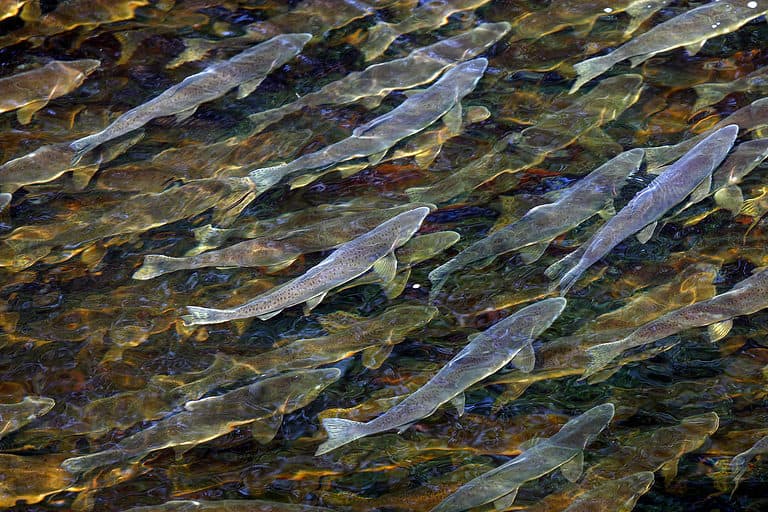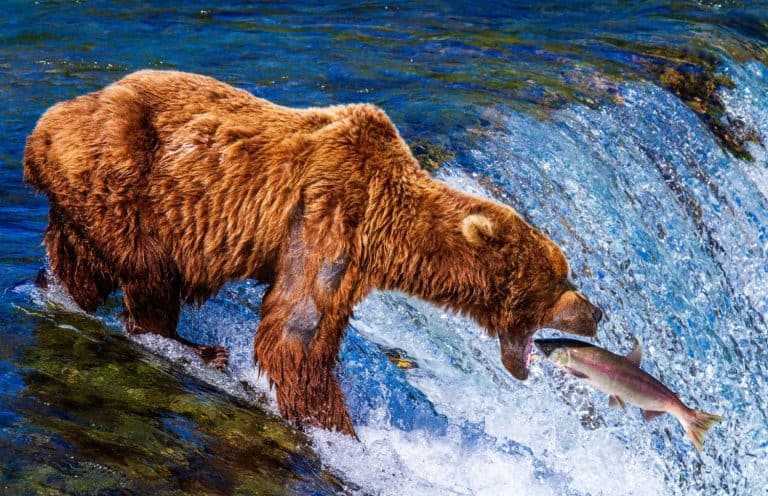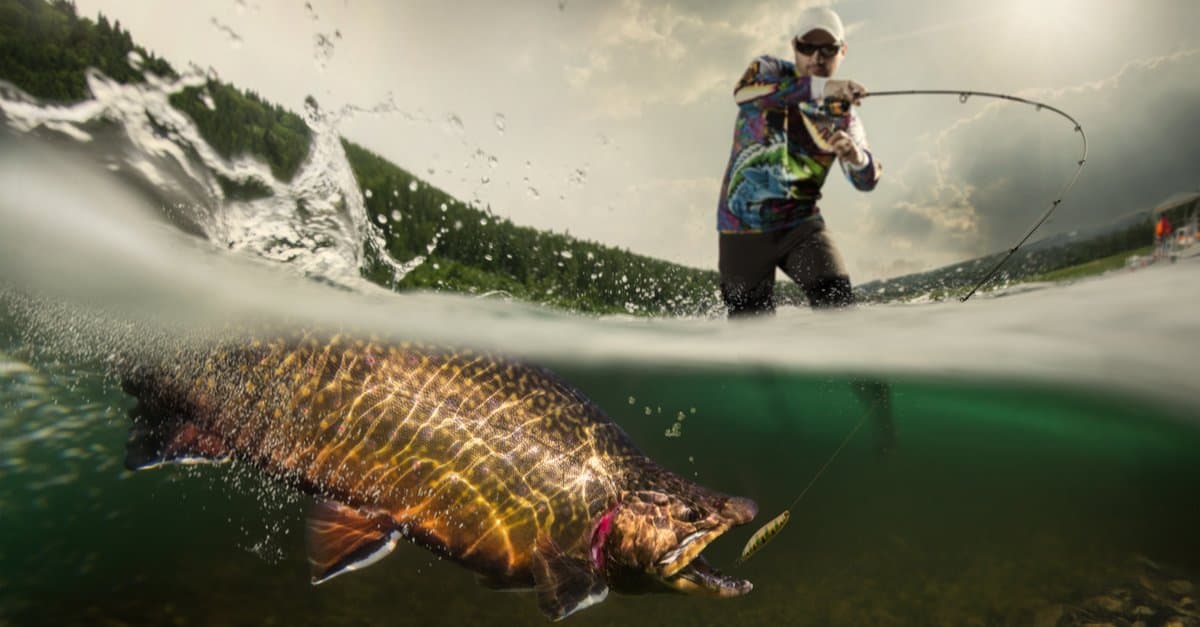

Salmon are key to sustaining the health of the Earth’s river ecosystems: they provide food for multiple species, distribute nutrients into rivers and oceans when they die, and release nitrogen during spawning, which encourages tree growth. They can also be incredibly large, with the largest salmon ever caught weighing almost 100 pounds.
Salmon are revered by some Northwest Indian tribes, being a large part of their diet, history, and culture. Like most animals that are hunted for food, salmon populations have declined due to over-harvesting, despite commercial hatcheries working hard to stabilize their numbers.
Recently, many old and ineffective dams have been removed in the Pacific Northwest to reopen rivers to salmon. There are seven species of salmon in the world today, and they are listed below in order from smallest to largest.
7. Masu Salmon
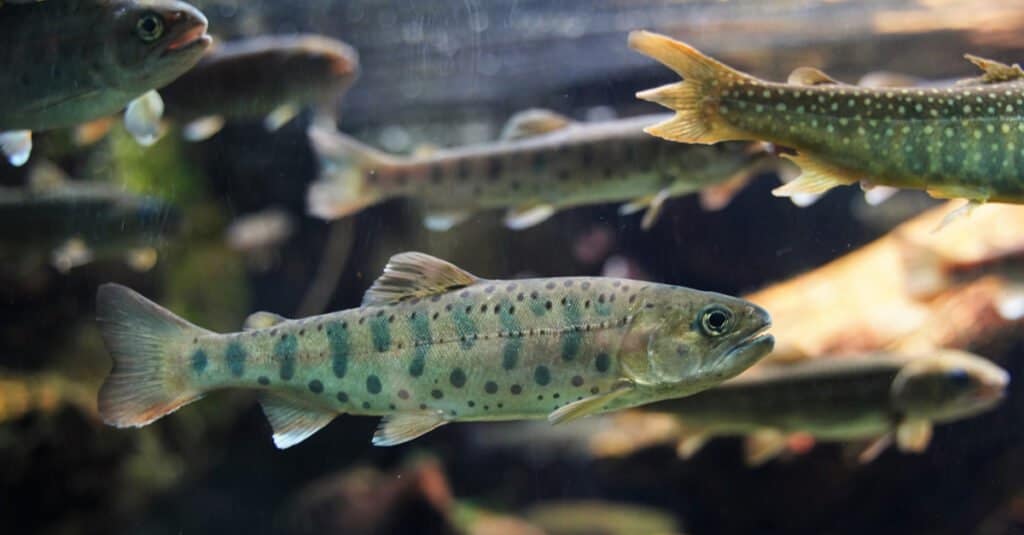
Unlike other salmon, young masu can stay near their redd for up to three seasons before migrating.
©dokosola/Shutterstock.com
| Average Size | Maximum Observed |
|---|---|
| 20 inches, 4.4-5.5 pounds | 28 inches, 20 pounds |
The masu salmon (Oncorhynchus masou) is the dominant salmon in the East Asian Northern Pacific Ocean, with a habitat from Siberia to Taiwan. Like other salmon, a masu usually dies after spawning and can live for up to 3.5 years. Unlike other salmon, young masu can stay near their redd for up to three seasons before migrating to the ocean.
The masu salmon is also known as cherry trout because their stripes become red and crimson when the salmon reaches maturity. There are several subspecies of the masu, including some that are anadromous, as well as freshwater or land-locked varieties. The IUCN currently lists them as endangered.
6. Pink Salmon
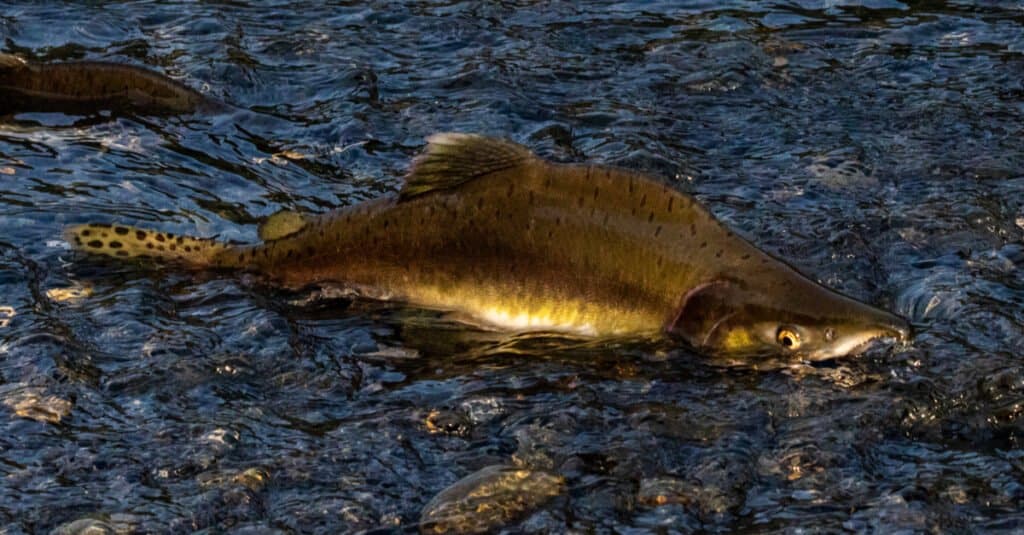
Pink salmon change appearance throughout their lives, developing a distinctive hump.
©Mark A. McCaffrey/Shutterstock.com
| Average Size | Maximum Observed |
|---|---|
| 20-25 inches, 3-5 pounds | 30 inches, 15 pounds |
Also known as the humpback salmon, pink salmon (Oncorhynchus gorbuscha) is the most abundant salmon in the Pacific Ocean. It is generally referred to as the smallest of the North American Pacific salmon. Its native range is extensive, stretching as far south as the Sacramento River and as far north as the Mackenzie River in Northwest Territories, Canada. Occasionally, a pink salmon will be sighted even further south, like in the Salinas River in 2014 and Lagunitas Creek in 2017.
This species changes color and appearance throughout its life, eventually developing a large hump and hooked jaw. According to the Alaska Department of Fish and Game, young pink salmon are not naturally buoyant. They have to swim up to the surface and gulp down bubbles of air into their swim bladder to avoid sinking. Conservation organizations like NatureServe list the population as stable with regional variations.
5. Sockeye Salmon
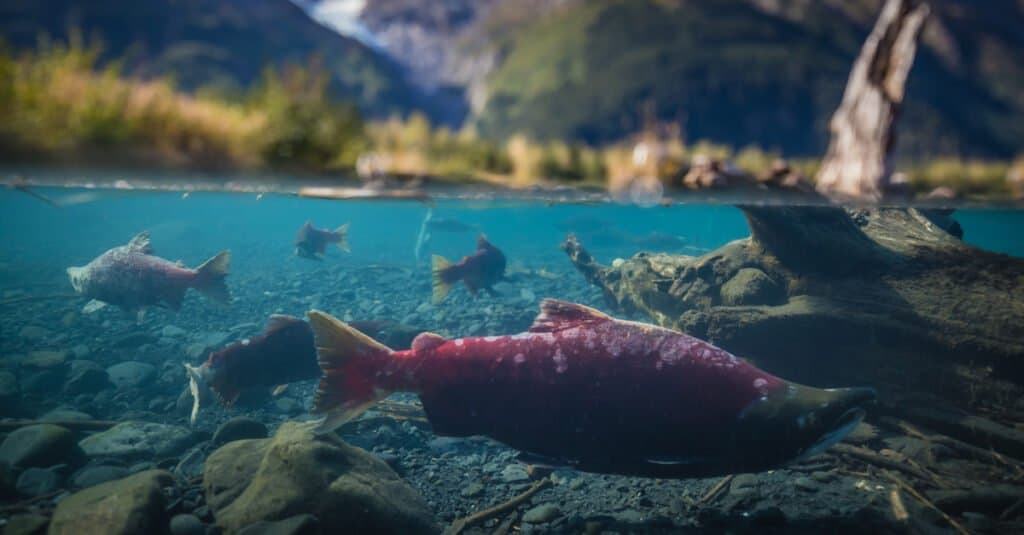
The world’s biggest sockeye run occurs near Bristol Bay, Alaska.
©907Shots/Shutterstock.com
| Average Size | Maximum Observed |
|---|---|
| 21-26 inches, 4-7 pounds | 15 pounds, 3 ounces |
Sockeye salmon (Oncorhynchus nerka) are silver in the ocean and turn bright red during their journey back to their redd. This fish has also been featured in numerous nature documentaries due to its extravagant migrations, called runs, which can cover over 1,000 miles. Not all populations migrate to the ocean. Land-locked sockeyes, known as kokanee, are generally smaller than anadromous sockeyes.
Sockeye salmon eat primarily zooplankton and are a staple of human cuisine. Sockeye numbers are generally declining, but they have a strong presence in several regions and watersheds. The largest sockeye run in the world occurs near Bristol Bay, Alaska; in 2021, 63.2 million fish returned to the bay.
4. Coho Salmon
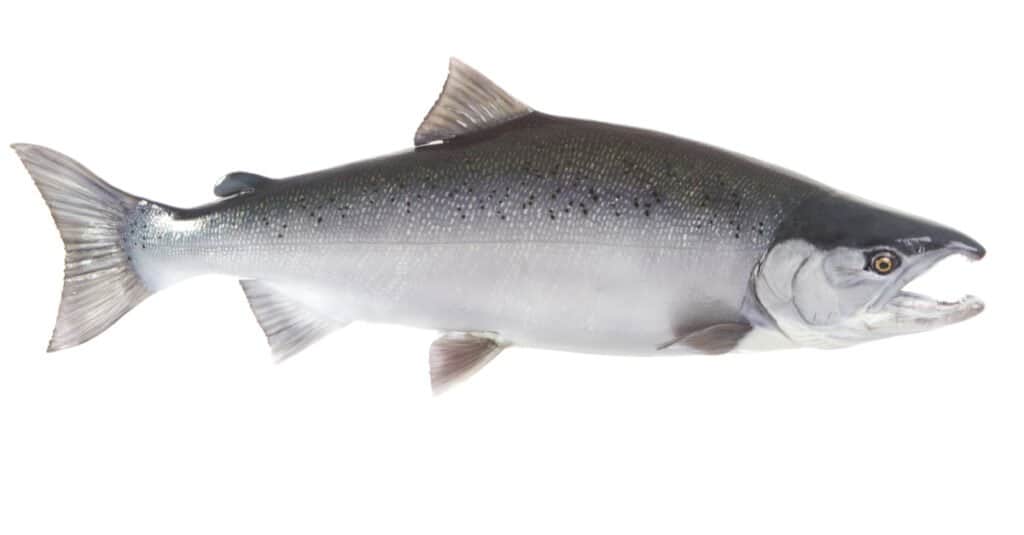
The coho has traditionally lived on both sides of the Pacific Ocean.
©Keith Publicover/Shutterstock.com
| Average Size | Maximum Observed |
|---|---|
| 24-28 inches, 5-10 pounds | 33 pounds, 7 ounces |
The Coho (Oncorhynchus kisutch) is a large species of Pacific salmon; it has silver sides and a dark-blue back during its ocean phase. Like other salmon, the coho’s physiology and color change, developing hooked jaws and red skin. Traditionally, the coho has lived on both sides of the Pacific Ocean. More recently, it has been introduced to the Great Lakes and many other reservoirs in the United States.
Most coho salmon return to spawn after three years, and occasionally, smaller two-year-old males do too. These two-year-olds are called jack males and are not seen as a threat by the older fish. When larger salmon fight over spawning territory, the jack male will sometimes swim over the eggs of the female and fertilize them while the other males are distracted.
3. Chum Salmon
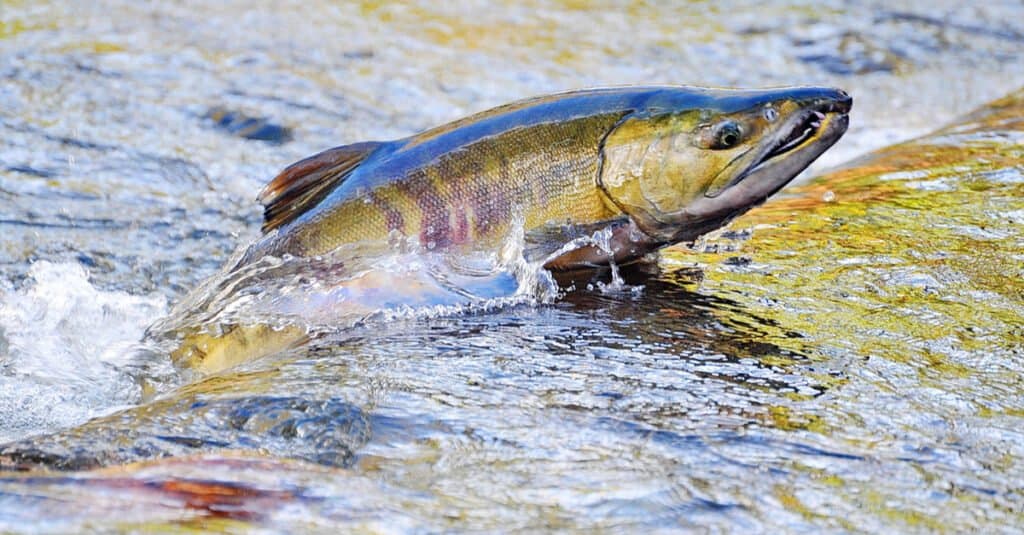
Typical of salmon, chum salmon changes when swimming upstream and develops a tiger stripe pattern of red and black.
©The Old Major/Shutterstock.com
| Average Size | Maximum Observed |
|---|---|
| 24-31 inches, 6.5-12.5 pounds | 44 inches, 42 pounds |
The chum salmon (Oncorhynchus keta) is also known as dog salmon, keta salmon, calico salmon, and silverbrite salmon. It is an anadromous fish living over a wide range in and near the Pacific Ocean. They have one of the longest runs, journeying far up the Yukon River and the Amur River. Chum salmon appear metallic greenish-blue along their backs with black speckles, making them similar to coho and sockeye. Typical of salmon, they change color when swimming upstream and develop a tiger stripe pattern of red and black. Males also grow large, canine-like fangs and a calico color pattern. Chum salmon generally live for 3-5 years, dying shortly after spawning.
2. Atlantic Salmon
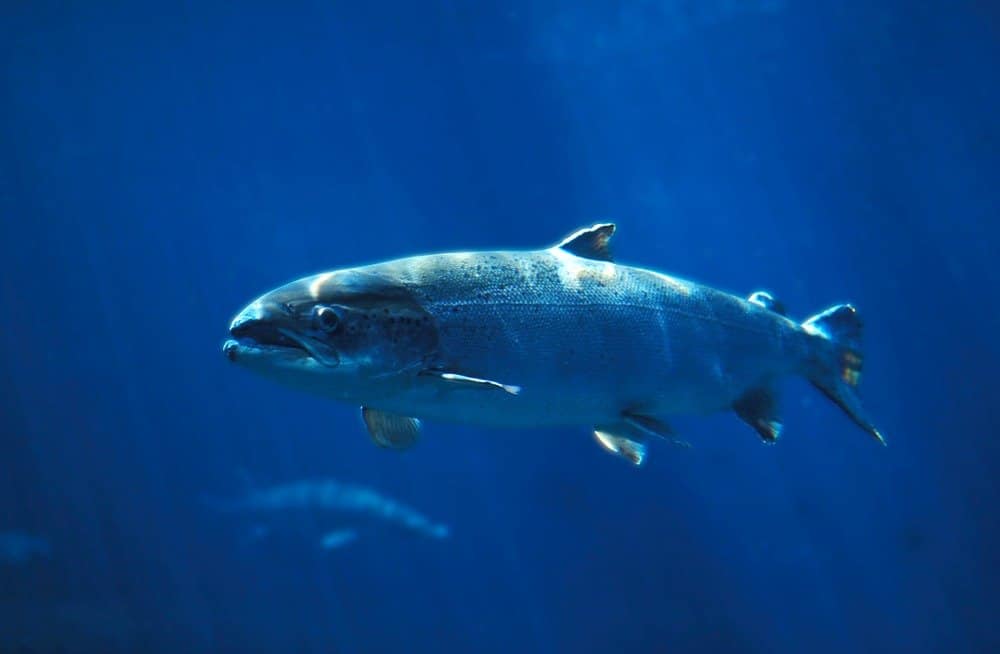
Atlantic salmon is the only species in the Atlantic Ocean.
©slowmotiongli/Shutterstock.com
| Average Size | Maximum Observed |
|---|---|
| 28-30 inches, 8-12 pounds | 63.25 inches, 74 pounds |
The Atlantic salmon (Salmo salar) is the only salmon species in the Atlantic Ocean and can be found off the coasts of Canada, the U.S., and Europe. Similar to other salmon, most populations are anadromous. Unlike Pacific salmon, Atlantic salmon do not always die after spawning and can return for multiple years.
When Atlantic salmon live in freshwater, they have blue and red spots. Upon reaching maturity, the spots are replaced by a silver-blue covering. They are listed as Least Concern by the IUCN, with the most recent assessment in 2018. Restoration efforts are underway in Lake Ontario and many rivers of the Northeast. In Europe, the Atlantic salmon is considered Vulnerable according to the European Red List of Freshwater Fishes.
1. Chinook/King Salmon
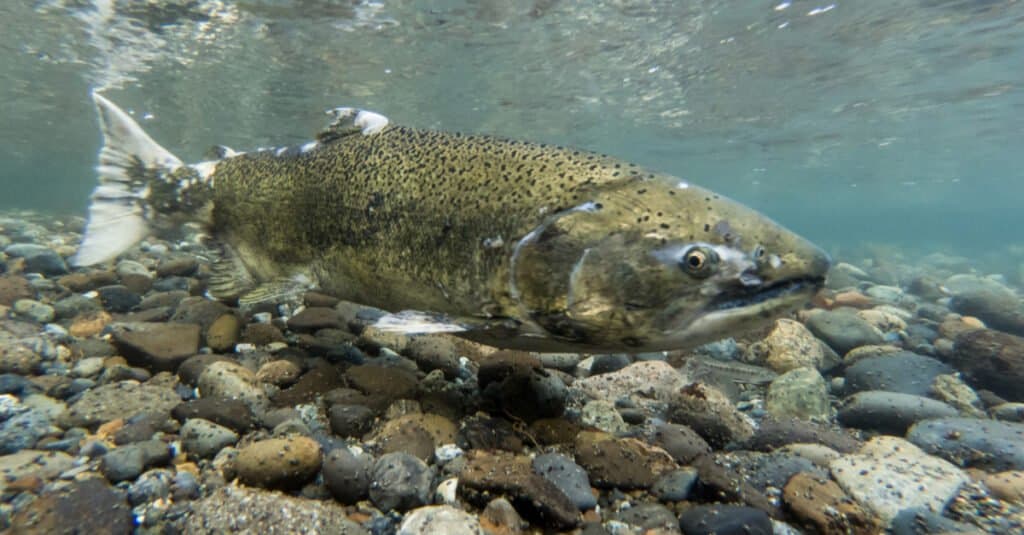
The Chinook is the biggest salmon species in the world and is prized for its nutritional value.
©Kevin Cass/Shutterstock.com
| Average Size | Maximum Observed |
|---|---|
| 36 inches, 30-38 pounds | 58 inches, 97 pounds |
Aptly named, the king or Chinook salmon (Oncorhynchus tshawytscha) is the largest species of salmon on Earth. It has a wide natural distribution and has been introduced successfully to New Zealand, the Great Lakes, and Patagonia. The fish is highly prized for its nutritional value, containing high levels of omega-3 fatty acids.
The IUCN has not assessed the conservation status of Chinook salmon. Some watershed populations are declining, while others are stable and healthy. In the Kenai River, Chinook salmon average around 37 pounds, but the largest sport-caught Chinook weighed 97 pounds. This fish is the current All-Tackle IGFA All-Tackle World Record. Chinooks in the Yukon River have the largest freshwater migration route in the world, traveling 1,900 miles from the mouth of the river to Whitehorse, Yukon.
Similar to other salmon, the Chinook develops a pronounced jaw hook called a kype as it nears spawning and may spend as many as eight years in the ocean before returning to its spawning river. Interestingly, a Chinook’s birthplace can be discerned using its ear bone, much like tree rings reveal information about a tree’s age. The bone, called an otolith, records the chemical composition of the water where the fish spawns, revealing an evolutionary timeline for that specific salmon.