
Quick Take
- One bug on this list bites you painlessly, only to leave a welt the size of a golf ball. Meet the welt-causing gnat →
- A bug nicknamed for a romantic gesture is actually linked to a serious parasitic disease, though not in the way most people assume. Kissing bugs and Chagas disease →
- Northern California hosts two invasive mosquito species carrying diseases most travelers don't associate with the U.S. at all. Invasive mosquitoes in Northern California →
- Not all dangerous bites in Northern California come from insects, and one of the most venomous culprits actually hides in plain sight around homes. The widow hiding near homes →
Northern California has a mild, temperate climate and gorgeous scenery, making it a great place to visit. However, it is also home to a number of insects capable of delivering a painful bite or sting. Some of these bugs also occur in other states. However, others are found only in California. Check out our list of some of the most dangerous biting or stinging insects in Northern California.
1. Southern Fire Ant (Solenopsis xyloni)
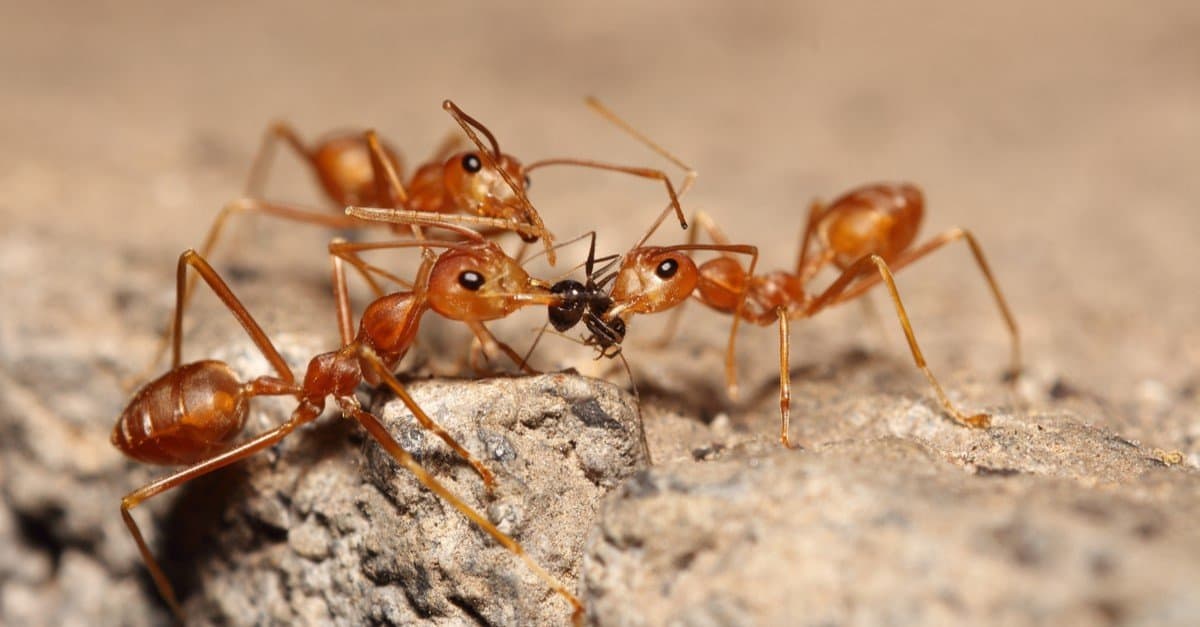
The southern fire ant, also called the California fire ant, is found throughout the state. These ants are found in a variety of habitats, including open woodlands, irrigated nut orchards, and urban parks and backyards. They measure from 0.07 to 0.25 inches in length. California fire ants have dark abdomens with amber-colored heads and thoraxes. They nest in small mounds of loose soil and will swarm the entrance when disturbed. These ants have a painful bite similar to a bee or wasp. The more dangerous and invasive red imported fire ant (Solenopsis invicta) is typically found in the southern and south-central parts of the state, but they are occasionally found further north. These aggressive ants have a very painful sting and toxic venom that can cause blisters.
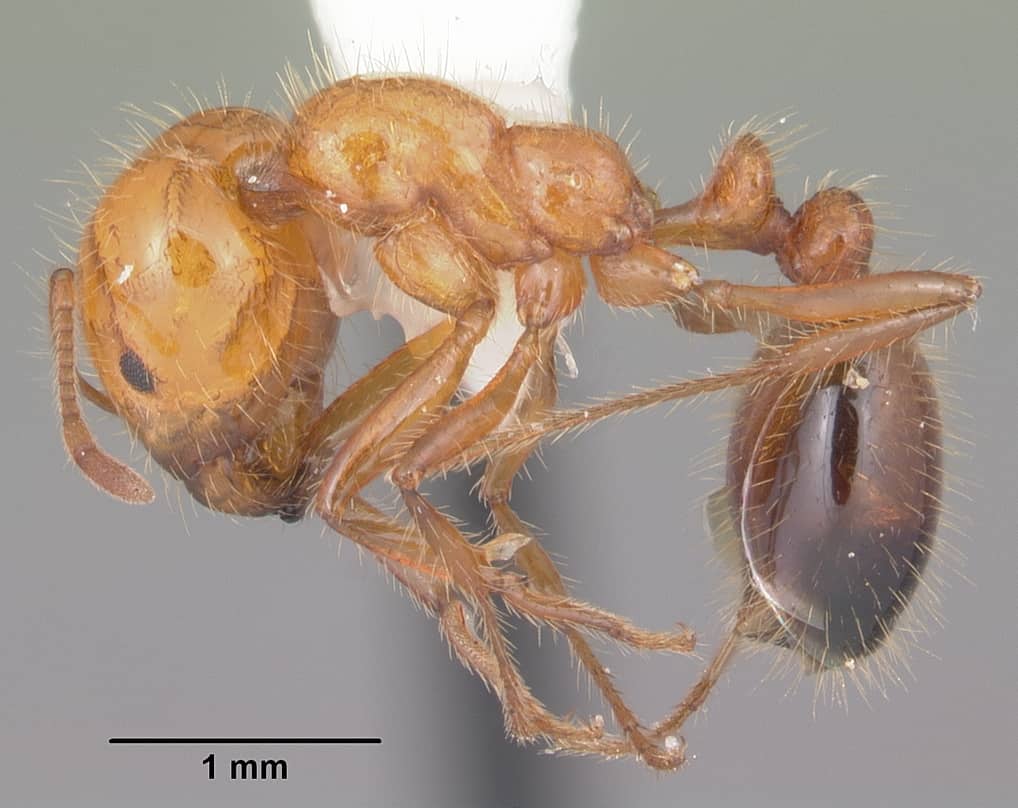
California fire ants are often found in irrigated nut orchards.
2. California Forest Scorpion (Uroctonus mordax)
California forest scorpions, or western forest scorpions, are almost exclusive to the redwood forests and oak woodlands of Northern and Central California. These scorpions require more humidity than their inland desert cousins, and are often found hidden under leaf litter, buried in shallow, moist soil, and under rocks or decaying wood. These small scorpions only reach 1.5 to 2.5 inches in length. They have dark brown to black bodies with lighter-colored legs. California forest scorpions are elusive and would rather avoid a confrontation. Their sting is said to be like a mild bee sting.
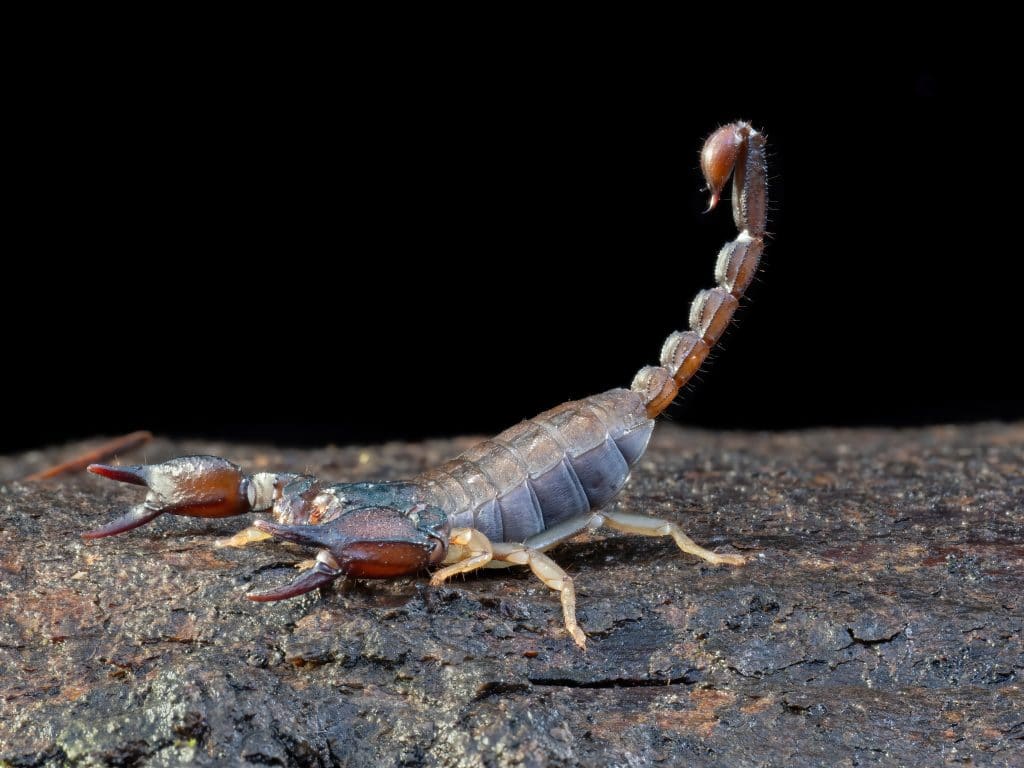
The California forest scorpion is native to California’s redwood forests and oak woodlands.
3. Mosquitoes (Aedes aegypti) and (Aedes albopictus)
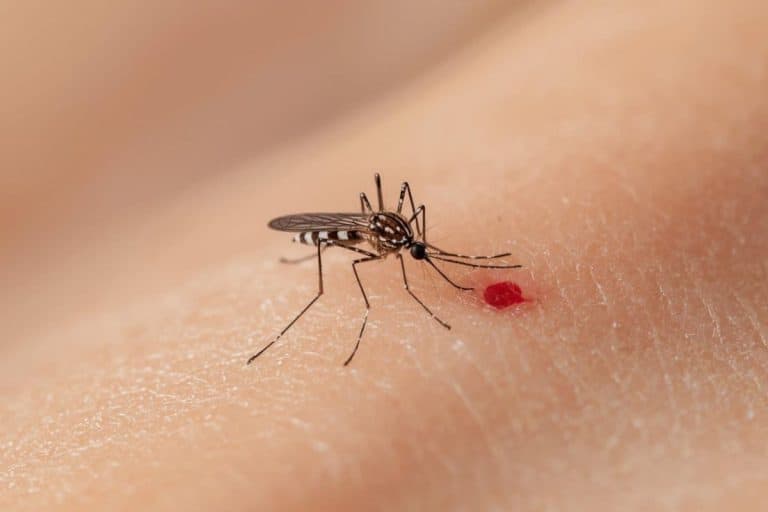
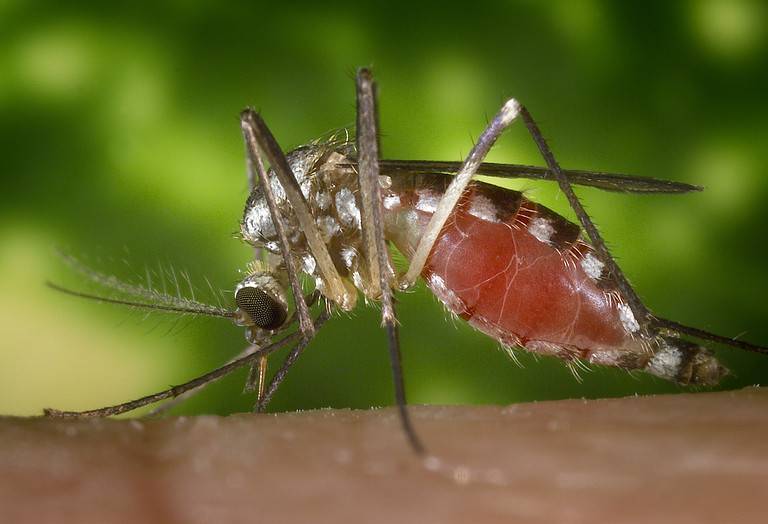
Mosquitoes occur throughout the state of California, but there are two invasive species, the Yellow Fever mosquito (Aedes aegypti) and the Asian tiger mosquito (Aedes albopictus), growing in numbers in Northern California. In addition to spreading Yellow Fever, the Yellow Fever mosquito spreads diseases like the Zika virus, Mayaro virus, Chikungunya, and Dengue fever. These mosquitoes are distinguished by the lyre-shaped marking on their backs and the black and white markings on their legs. The Asian tiger mosquito also carries diseases like the Zika virus, Dengue, Chikungunya, West Nile Virus, Lacrosse, and possibly Yellow Fever. It is a small, dark-colored mosquito with white-banded legs and a white stripe behind its head. Both of these mosquitoes can also transmit heartworm in dogs.
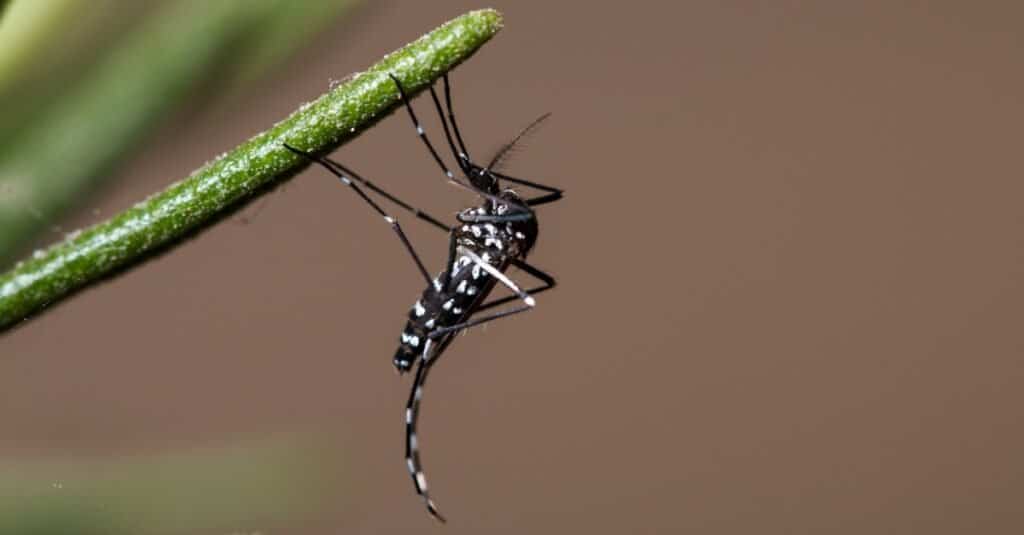
The Asian tiger mosquito carries diseases like the Zika virus, Dengue, Chikungunya, West Nile Virus, and others.
©Oliver Spiteri/Shutterstock.com
4. Black Valley Gnats (Leptoconops torrens)
Biting midges don’t belong to one species. It’s a term used for a wide range of flying, biting insects that belong to the Ceratopogonidae family. These bugs occur worldwide, but those inhabiting Northern California are typically referred to as “no-see-ums” due to their tiny size. One of the most prevalent is the black valley gnat, or buffalo gnat, found in California’s Central Valley, which covers parts of both Northern and Central California. This gnat is black all over and measures approximately 0.063 inches in length. They are most active from mid-May through June when damp clay soil starts drying and cracking. Only the females bite, as they require blood to reproduce. While the initial bite may be painless, it can cause severe itching and leave a welt 1-2 inches in diameter.
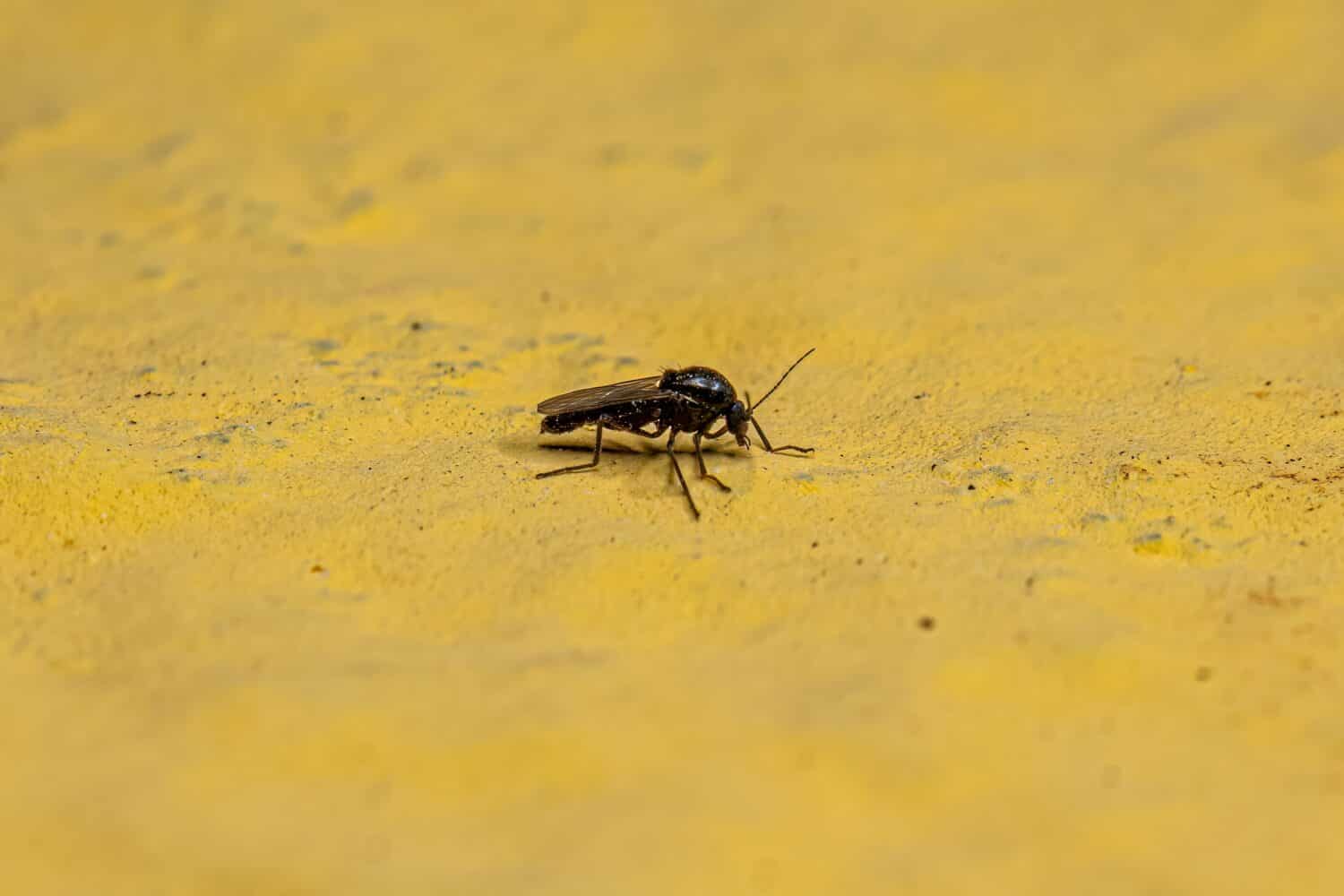
“Biting midges” is a term used for a wide range of flying, biting insects that belong to the Ceratopogonidae family.
©Vinicius R. Souza/Shutterstock.com
5. Kissing Bugs (Triatoma protracta)
The most common kissing bugs in California are Triatoma protracta, also known as the western bloodsucking conenose bugs. In Northern California, they are frequently found in mountainous areas and rural foothills. These insects are notorious for carrying the parasite Trypanosoma cruzi, which is responsible for Chagas disease in many animals, but it is very rare for people to be infected in California. You cannot get Chagas disease from the bite of a kissing bug, as the disease is spread through their droppings. These bugs range from 0.5 to 0.9 inches in length. They are distinguished by their cone-shaped heads and dark brown or black bodies. Their bites are usually painless, but some people may develop mild to severe allergic reactions.
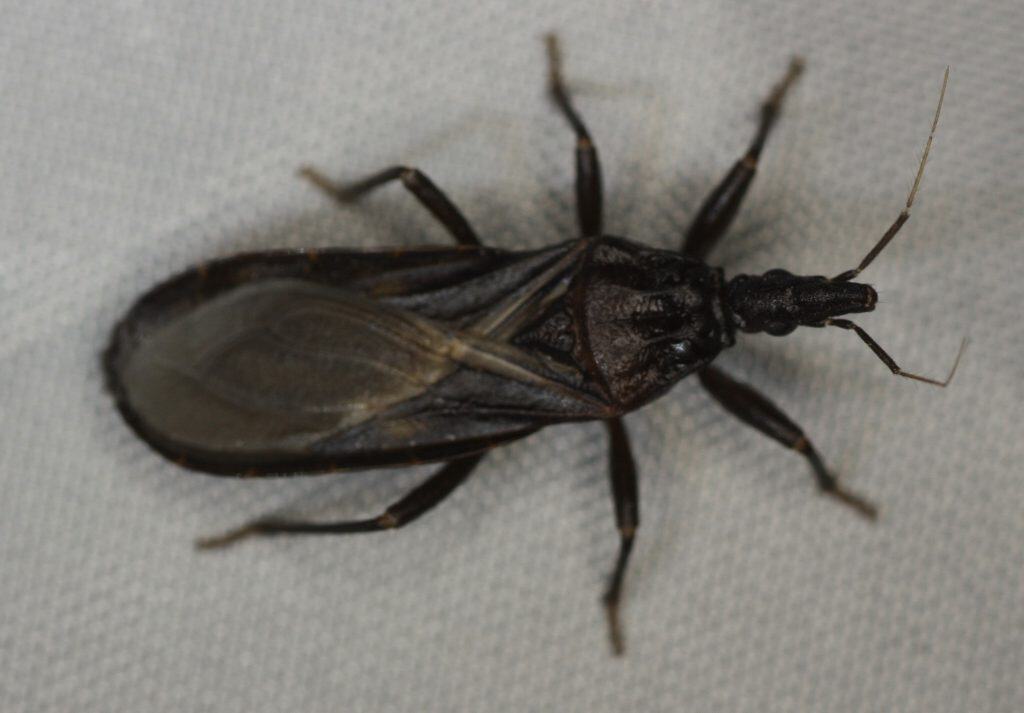
The most common type of kissing bug found in California is Triatoma protracta.
6. Western Black Widow (Latrodectus hesperus)
Northern California is home to over 60 species of spider. However, the most common dangerous spider is the western black widow, which can be found all over the state. Venom from its bite can cause mild to severe reactions, but death is extremely rare. Only the females are capable of delivering a medically significant bite to humans. Western black widows have shiny black bodies with slim black legs and a red or orange hourglass marking on the underside of their round abdomens. These spiders are typically about 0.5 to 0.6 inches in body length. They hang upside down in their irregularly-shaped webs. Western black widows are typically found in relatively undisturbed places.
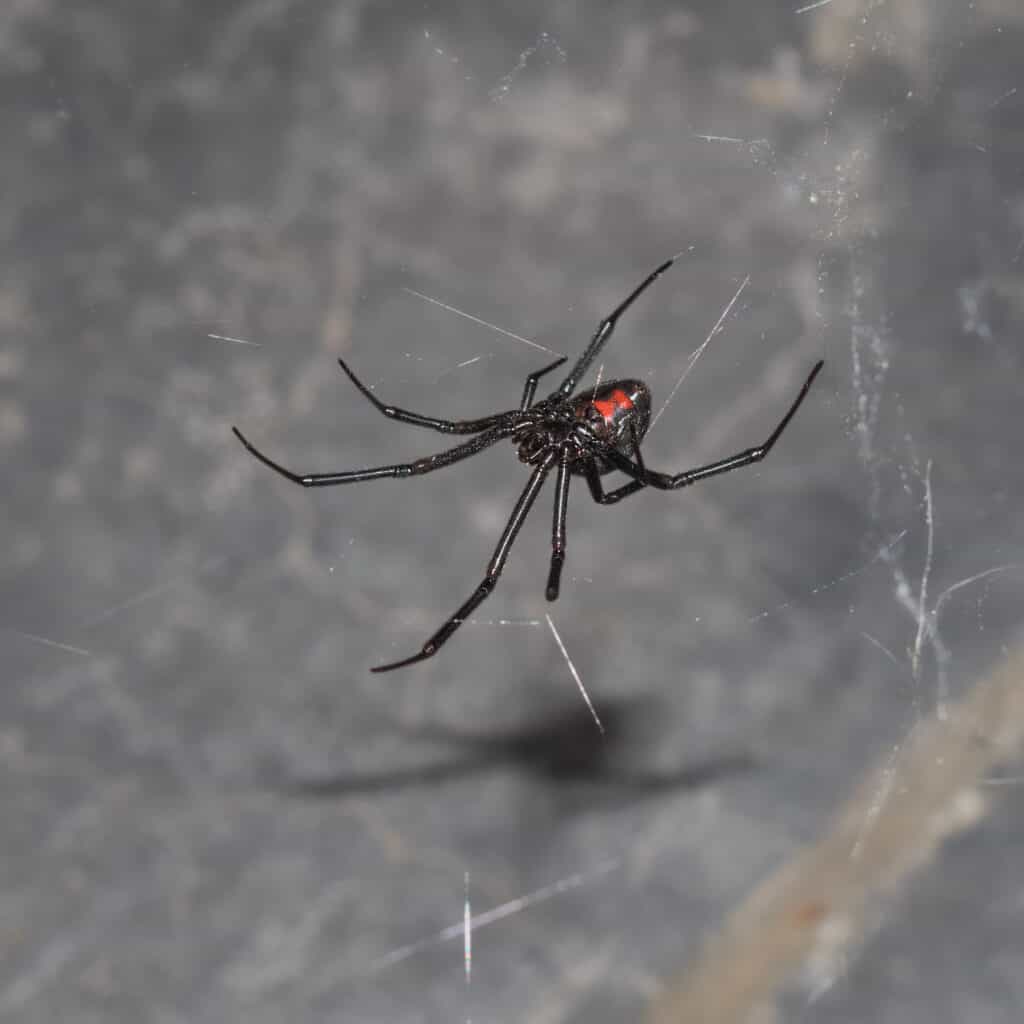
The western black widow is the most common dangerous spider in California.
©iStock.com/Shravan Sundaram Photography
7. Ticks (Ixodes pacificus) and (Dermacentor occidentalis)
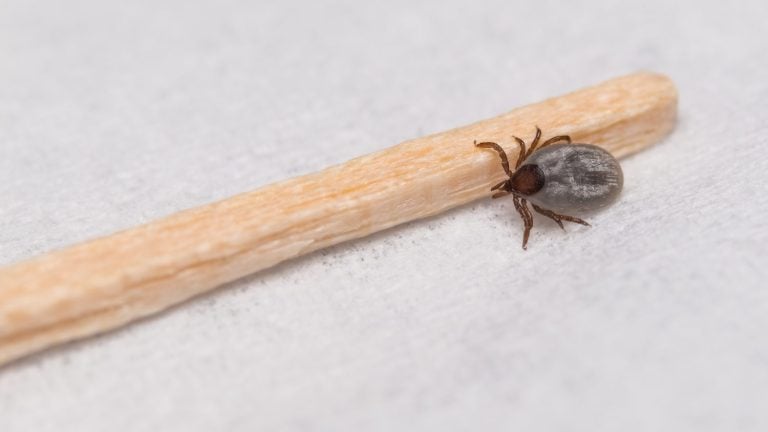
There are around 50 ticks species in California, but the most common biting ticks in Northern California are the western black-legged tick (Ixodes pacificus) and the Pacific Coast tick (Dermacentor occidentalis). The western black-legged tick is the primary carrier of Lyme disease in the state. Unfed adult ticks measure around 0.10 to 0.13 inches in length, with males being smaller. The female ticks have eight, brownish-black legs, a dark, round plate that covers the upper part of the back, and a reddish-orange abdomen. Males are more oval-shaped and are completely brownish-black. They are often found in dense vegetation along the coast and in the coastal mountains.
The Pacific Coast tick can cause the spotted fever called Pacific Coast tick fever, Rocky Mountain spotted fever, 364D Rickettsiosis, and Tularemia. These ticks have dark brown bodies and eight legs. Females have a pale, mottled round plate on their upper backs, while adult males look more mottled all over. They are widely distributed along the entire California coast. Unfed adults range in size from 0.12 to 0.20 inches in length, with males being smaller.
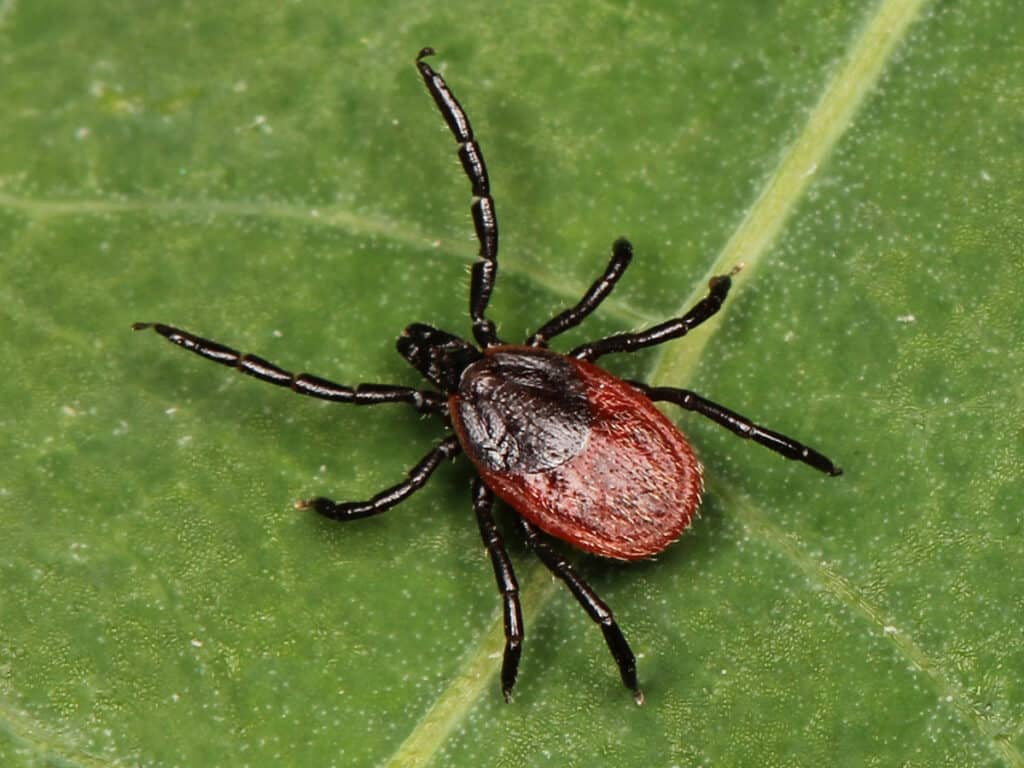
Western-black-legged ticks are the primary carriers of Lyme disease in California.
8. Western Yellowjacket (Vespula pensylvanica)
The western yellowjacket, sometimes called a “meat bee,” is one of the most common flying, stinging insects in Northern California. Unlike other common wasps in the state, western yellowjackets scavenge human food and other garbage. They are the most likely to sting while foraging. The stings are painful and some people may also have allergic reactions. These wasps nest inside wall cavities, in holes in the ground, or in hanging nests of grey paper. They measure 0.5 to 1 inch long. Western yellowjackets have bright yellow and black stripes, a primarily black thorax, and a narrow waist that can barely be seen.
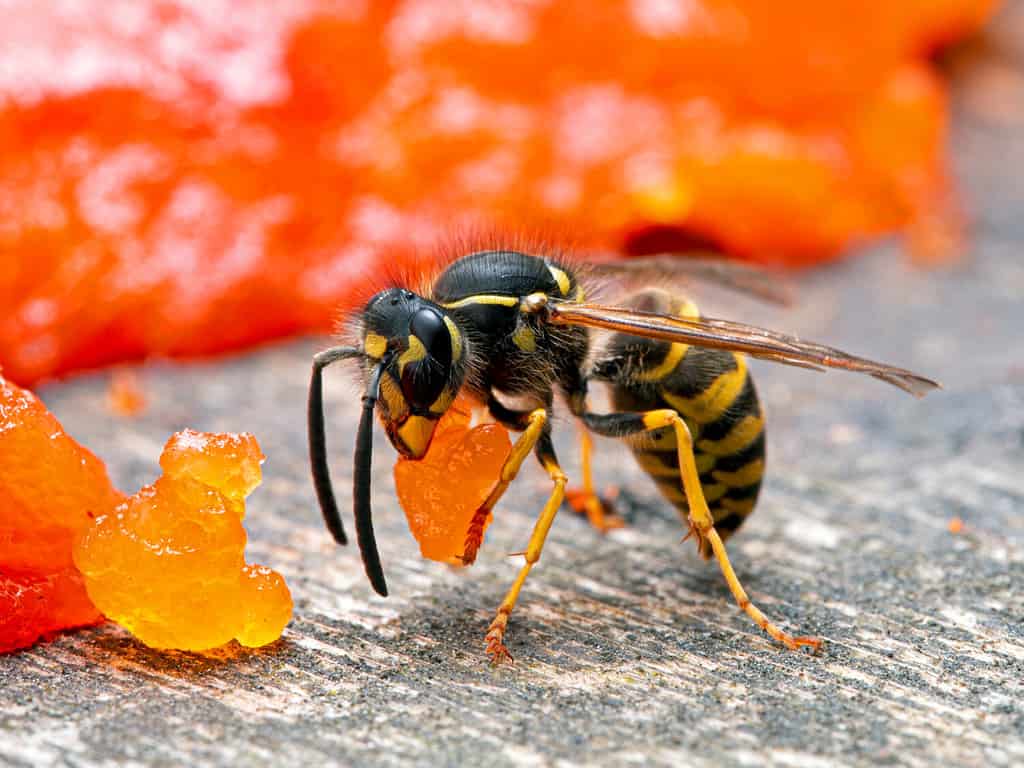
Western yellowjackets are drawn to human food and garbage.
©Ernie Cooper/Shutterstock.com