
Quick Take
- Three hidden properties of that blue-and-yellow can might make bugs think twice. Which one matters most?
- One spraying mistake could turn your window sill into a food-contamination hazard.
- A pantry-friendly list of rivals may outperform the can, but each has a catch.
- Your bug problem may hinge on three things bugs want just like you do.
As the Swiss army knife of lubrication, does WD-40 keep bugs away? Well, WD-40 is certainly a Swiss army knife because it’s useful for so many things. Most people use it to lubricate metal-on-metal parts, revitalize plastic paints, clean, waterproof boots, and prevent snow accumulation. Some even claim it deters rodents.
WD-40 does indeed keep bugs away in some ways. The most surprising aspect of WD-40 is its usefulness in a wide range of circumstances, including far more than what we listed above. As a bug deterrent, WD-40 is surprisingly effective when used the right way. So what makes it useful? Let’s dive in and find out.
How WD-40 Keeps Bugs Away
Three aspects of WD-40 keep bugs away. The first is the lubrication factor. When sprayed around window sills, ledges, overhangs, gutters, and things of that nature, the lubrication creates a slick surface that insects have difficulty grasping.
The second is the odor. A lot of insects are repulsed by powerful odors, which is why things like mint, lavender, and other, strong-smelling essential oils often repel insects. The WD-40 odor is strong, but it isn’t up there with some of the other essential oils, so there may be some bugs that slip through the cracks.
The third is the staying power. WD-40 lasts a long time, mostly because it’s weatherproof. If you spray it on outside surfaces and some rain comes along the next day, it won’t wash the WD-40 completely away, rendering it mostly useless. According to WD-40’s own guidance, it lasts roughly 30 to 60 days on fully exposed exterior surfaces, and longer in sheltered spots.
Those three things, lubrication, repulsion capabilities, and longevity, are what make WD-40 an intriguing bug-repellent for the home. That and the fact that if you don’t feel like running to the store for some insect repellent right now, WD-40 could come in handy.
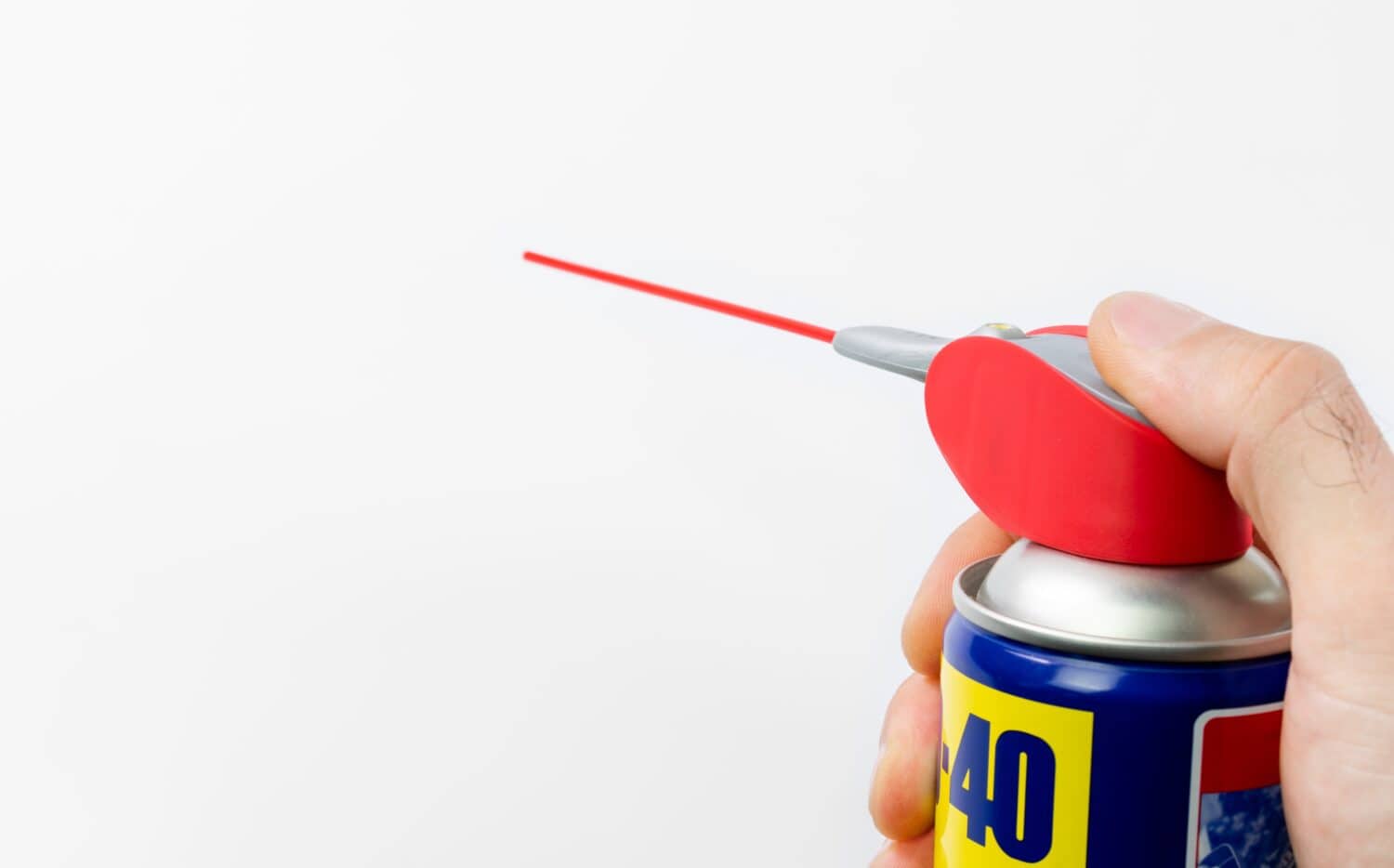
WD-40 makes surfaces slick so insects have a hard time latching on to them.
©Kwangmoozaa/Shutterstock.com
How to Use WD-40 to Keep Bugs Away
Safety comes first and although there are far more dangerous substances out there than WD-40, it still has the potential to harm pets and young children. Never spray it in an area where there is no ventilation. You can have WD-40 in any room of the house that lacks an air current; you just don’t want it in a low-ventilation environment while you’re spraying it.
Also, you don’t want to spray it on window sills or anywhere else inside the house and allow the lubricant to pool up. Gravity will eventually pull it somewhere and you run the risk of getting WD-40 on foodstuff, plates, silverware, and anything you place below or around the area you’re spraying.
Use a paper towel to dab or wipe away any excess WD-40 that’s forming into a pool. Also, you don’t need to press the nozzle and just hose everything down. Unless you are spraying inside the frame around the window, you don’t need the long, red straw that streamlines the spray. For the most part, press and release the nozzle quickly and allow it to atomize.
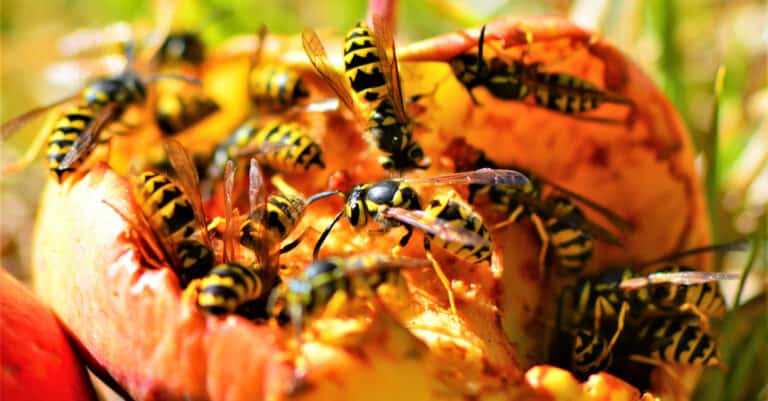
Around windows are some of the best places to use WD-40 to keep bugs away, and all it needs is a thin layer. Spraying it inside the frame deters bugs from trying to slip through and it keeps your window well lubricated, whether it’s a slide-up, casement, bay, etc. You can spray the underside of any surface on the exterior to deter wasps from constructing a nest on the slick surface.
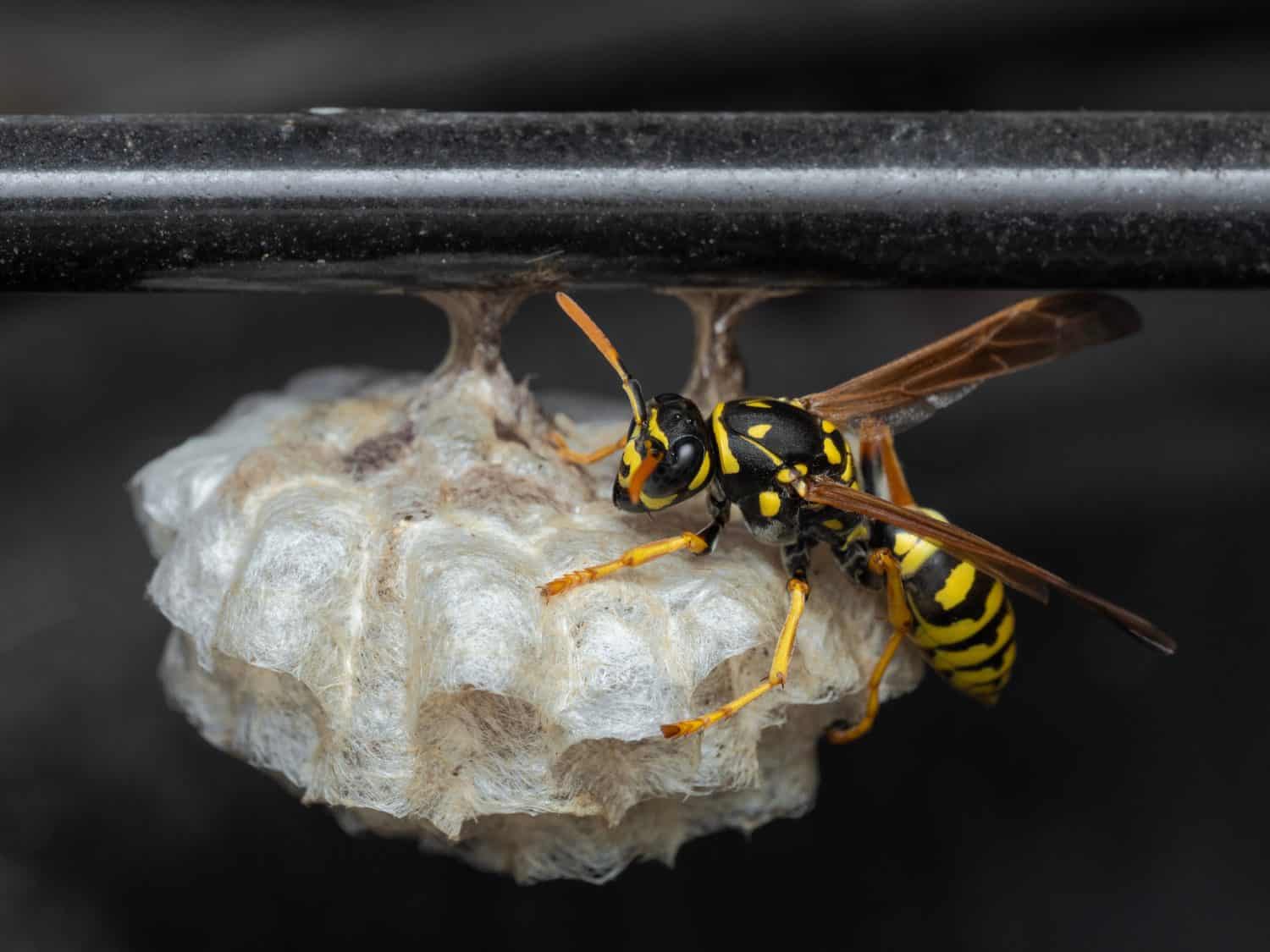
WD-40 sprayed on the underside of any surface on the exterior can keep wasps from building nests.
©Ernie Cooper/Shutterstock.com
More Natural Alternatives to WD-40
There are some more natural options than WD-40 to keep bugs away. We brought up the essential oils above for a good reason. They are an outstanding natural alternative to WD-40. However, like WD-40, their greatest strength is in their odor. The unfortunate side effect is that the odor dissipates rather quickly as well.
If you choose to use essential oils, you should reapply them once a week to ensure you have maximum repelling potential. Here are some solid natural alternatives to WD-40 if you don’t like the idea of spraying the latter inside your home or just don’t like the smell.
- Peppermint essential oil
- Lavender essential oil
- Castor oil
- Citronella
- Garlic cloves
- Thyme
- Sesame Oil
- Spearmint
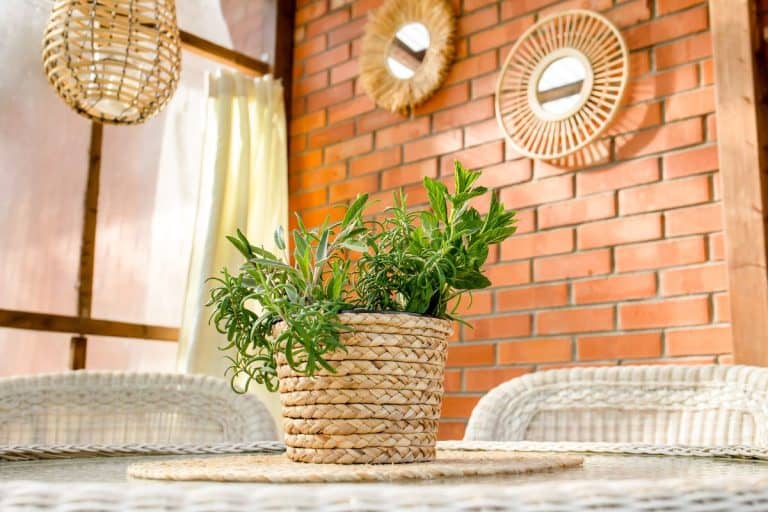
- Rosemary
- Cayenne pepper
Any of the above alternatives are just as good or better than WD-40 at keeping bugs away and applying them is much the same as well. Around window sills, screen doors, door frames, porches, the interior perimeter of shops and garages, and underneath your eaves will all work exceptionally well. Just keep in mind that the odor doesn’t last and some of the alternatives are not waterproof.

Peppermint essential oil deters bugs with its strong aroma.
©iStock.com/Rawf8
Chemical Alternatives to WD-40
There are a wide variety of chemical alternatives to WD-40, but it often depends on the type of insects you’re trying to keep away. Commercial insect repellents using DEET are primarily for use on the skin, not on surfaces.
However, pyrethroids, such as Gamma-Cyhalothrin, Bifenthrin, and Deltamethrin, are found in ready-to-use structural sprays. These chemicals mimic the plant-derived pyrethrins found in chrysanthemums and are widely used in household pest control.
How to Keep Bugs from Invading Your Home
The difficulty in keeping bugs out of your home depends on what kind of home you have and what part of the country you live in as well. Older homes tend to be more vulnerable, as do homes made of wood versus brick or vinyl siding. Fighting insect invasions in Florida is more difficult than fighting one in Minnesota. That’s not because Florida insects want to invade more than Minnesota insects. It’s just that it stays warmer longer in the state of Florida, an environmental condition more conducive to active insects.

Homes made of wood are more vulnerable than homes with brick or siding.
©Cherries/Shutterstock.com
No matter where you live, the best way to repel bugs is to come up with a game plan and incorporate different types of repellents, whether you want to stick with natural ones, full chemicals, or somewhere in between. Bugs are just like people. They want three things: food, water, and shelter. Once you figure out how to remove those three things, your bug problem will no longer be a problem. Check water heaters, behind toilets, and beneath sinks for water leaks. Seal up any hole in the house that isn’t there by design.
If you want to use WD-40 to keep away bugs, use it primarily for your windows, doors, and beneath the exterior eaves. Long-lasting insect repellents are best when used to outline the perimeter of your home’s interior, from one side of the house to the other. Outside, in the yard, remove every standing structure you don’t need or want so bugs can’t infest it and call it home. Most importantly, keep your home as clean as possible inside and out, with all food and drink sources sealed and stored properly.
Final Thoughts on WD-40
Anecdotal reports suggest WD-40 may keep bugs away to a certain degree, though it has not been tested or registered as an insect repellent. However, it’s not the end-all-be-all of bug deterrents. It does have its negatives, such as odor and the potential to create a mess. It’s a wonderful option for keeping wasps from building nests and for outlining the points of egress and ingress in your home.
Besides, who doesn’t keep a can of WD-40 lying around for various uses throughout the house? WD-40’s greatest advantage is its many utilities. So, next time you’re on the lookout for a bug repellent and you just don’t want to head to the store, give that blue and yellow can a second thought. It just might do the trick.