
Quick Take
- Hornets are much larger than bees and even most other wasps.
- There is only one true hornet species with established populations in the U.S., but there are around 4,000 native bee species.
- Hornets are social insects, but over 90% of bee species are solitary.
- Most bees consume nectar, pollen, and honey, but hornets are predators and prey on other insects.
We tend to think of bees whenever we hear a buzz or see a bee-like insect. However, there are many stinging insects that can be mistaken for bees. One of those insects is a hornet. Hornets are wasps that belong to the genus Vespa. All hornets are wasps, but the reverse is not true — all wasps are not hornets. The only true hornet established in the U.S. is the European hornet (Vespa crabro). However, there are at least 4,000 native bee species in the U.S., with honey bees and bumblebees being some of the most common. So, what are the differences between a hornet and a bee? Read on to learn what sets these two types of stinging insects apart.
Quick Comparison Between Hornets and Bees
| Hornet | Bee | |
|---|---|---|
| Appearance | 0.75 to 1.5 inches long; reddish-brown and yellow, distinctive teardrop-shaped markings on abdomen | 0.078 inch to more than 1 inch depending on species; the most common species have black and yellow coloration; often have hairy bodies |
| Habitat | Tan-brown nest with a papery texture; located in concealed areas such as hollow trees | 70% of native bees are ground nesters; 30% nest in cavities in dead trees, rodent burrows, or brush piles |
| Behavior | Social; can fly at night; typically calm when away from the nest but aggressively defend their nests | Typically solitary; most bees do not fly at night; generally docile but can be aggressive in defense of their nests |
| Feeding Habits | Prey on large insects; may also consume fallen fruit; strip bark off plants to eat the sap | Primarily consume nectar, pollen, and honey |
| Sting | More painful sting; reported to be somewhat less toxic than honey bee venom; smooth stingers can sting multiple times | Less painful sting but may have more potent venom; barbed stingers that are lost after stinging; some species are stingless |
The Key Differences Between Hornets and Bees
While both insects have stingers and make a buzzing sound, bees and hornets have many different characteristics that set them apart. Bees are generally considered beneficial to humans and the environment because they make honey and pollinate flowers. While hornets do prey on pest insects, they are often considered a nuisance. Although there is a superficial likeness, hornets and bees have significant differences in appearance, habitat, behavior, feeding habits, and stings.
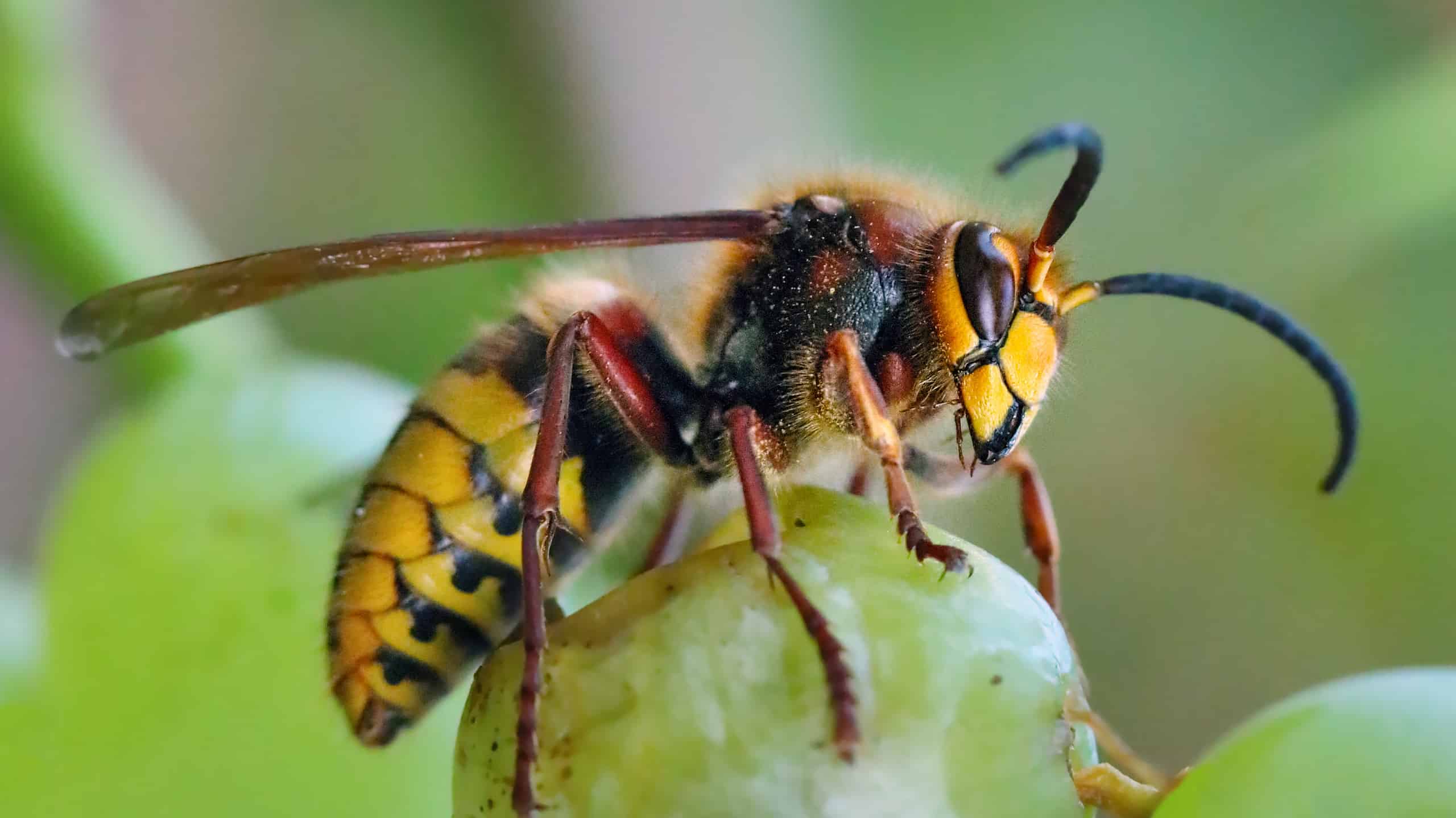
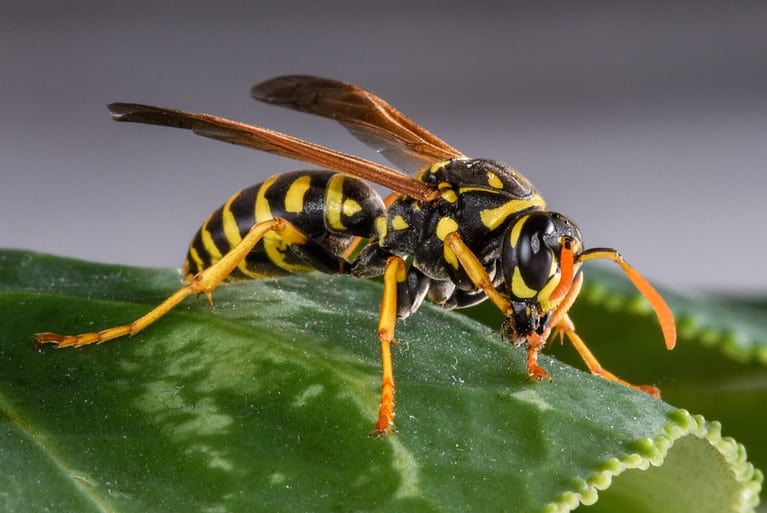
European hornets are much larger than bees.
©TTstudio/Shutterstock.com
Appearance
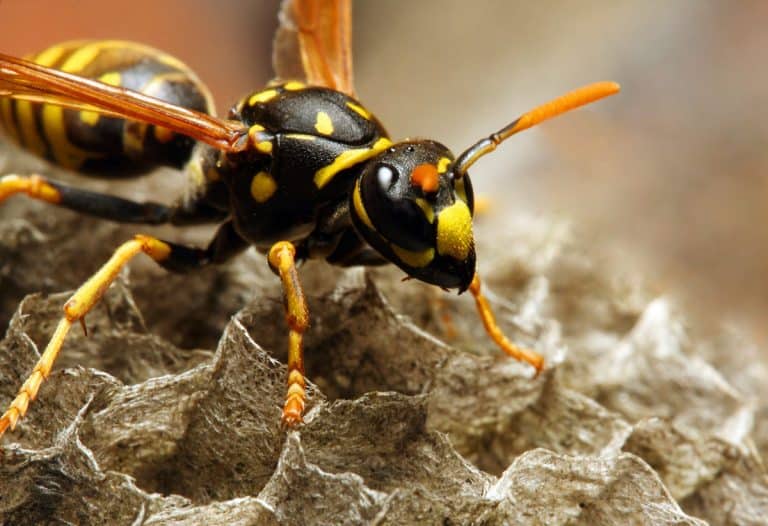
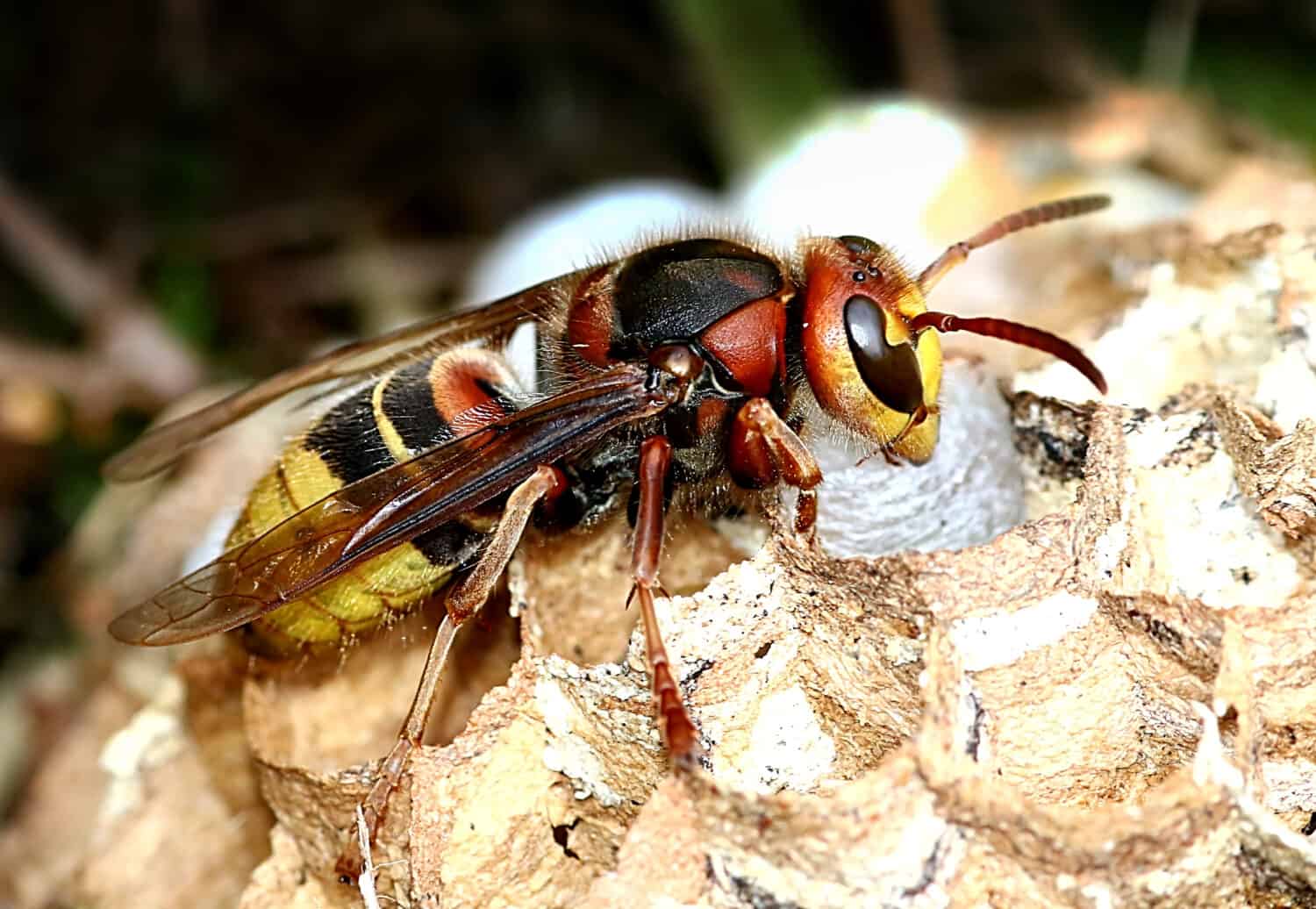
European hornets are longer and leaner than the typical bee. They can reach 0.75 to 1.5 inches long. These hornets have reddish-brown and yellow on their faces and abdomens, and a darker reddish-brown thorax. European hornets have distinctive, teardrop-shaped markings on their abdomens. They also have a smooth, mostly hairless body.
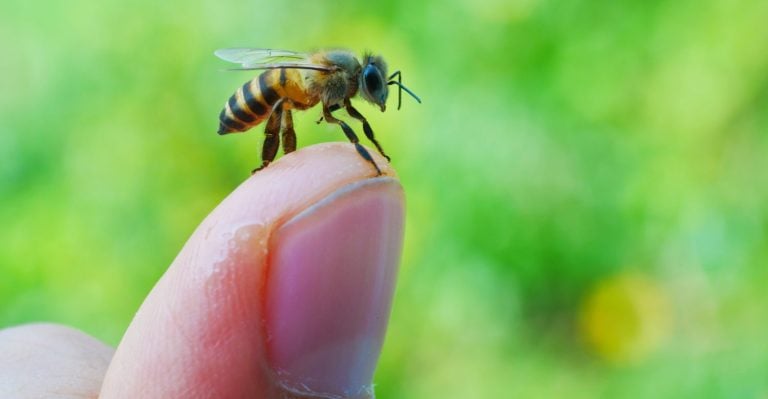
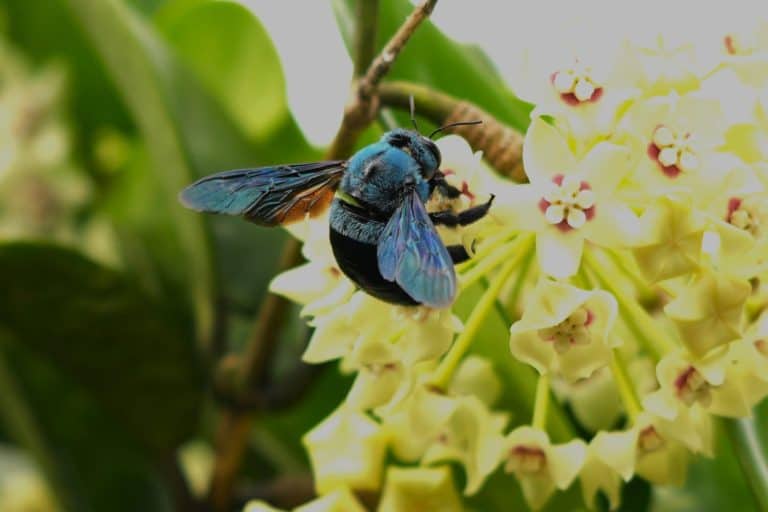
Bees are generally shorter and stockier, ranging from 0.078 inch to over 1 inch, depending on the species. Perdita minima is the smallest bee species in the U.S., while carpenter bees (genus Xylocopa) are the largest. Some of the most common bees are honey bees and bumblebees, which have black and yellow coloration; however, bees can be a variety of different colors. Some bees, such as sweat bees (halictid bees), are even a metallic blue or green. Bees also frequently have hairy bodies.
Habitat
Hornet nests are a tan-brown color with a paper-like texture made from decayed wood fibers mixed with their saliva. They typically locate their nests in concealed locations, such as hollow trees in the woods. However, they can also be found in attics, barns, abandoned honey bee hives, or on the sides of buildings where there is little human activity.
70% of native bees build their nests in the ground, creating burrows in the soil where they will lay their eggs. The other 30% of native bees nest in cavities. These cavities may be located in dead trees, abandoned rodent burrows, or even brush piles.
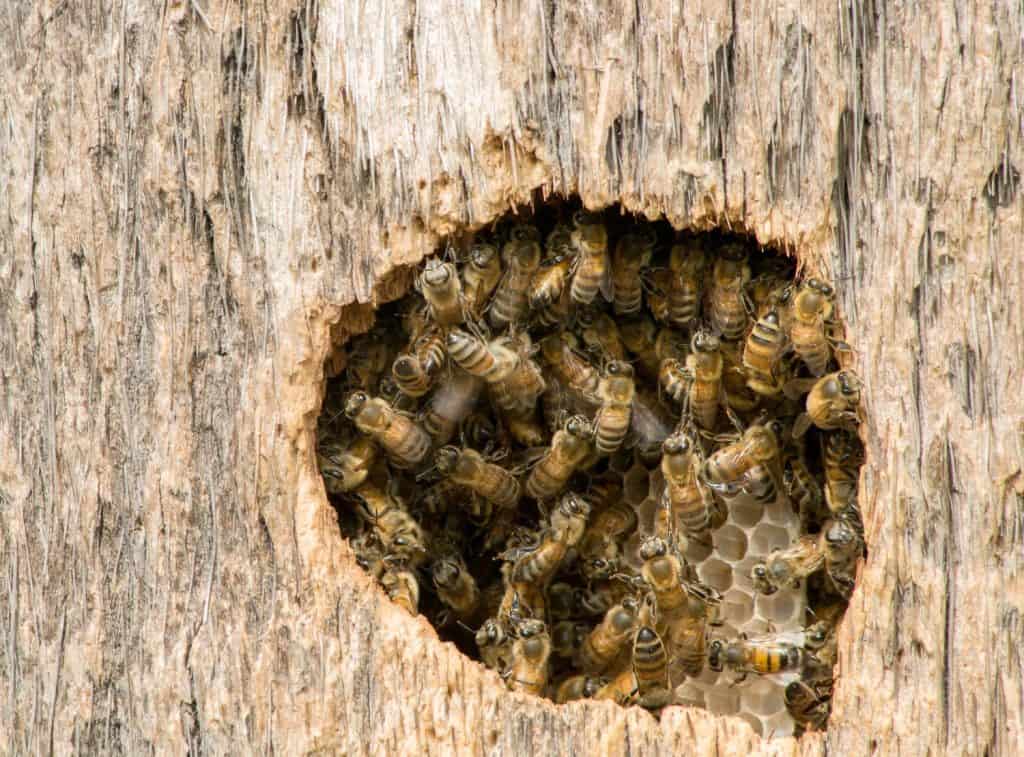
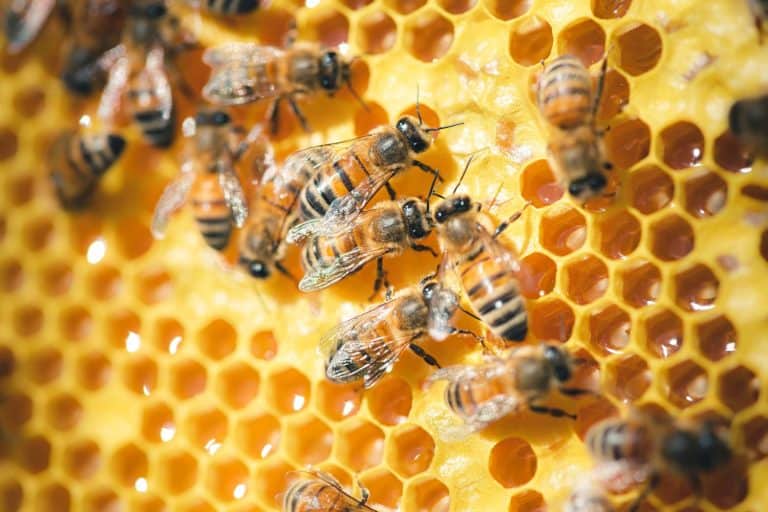
Honey bee hives can contain tens of thousands of workers.
©Donna Bollenbach/Shutterstock.com
Behavior
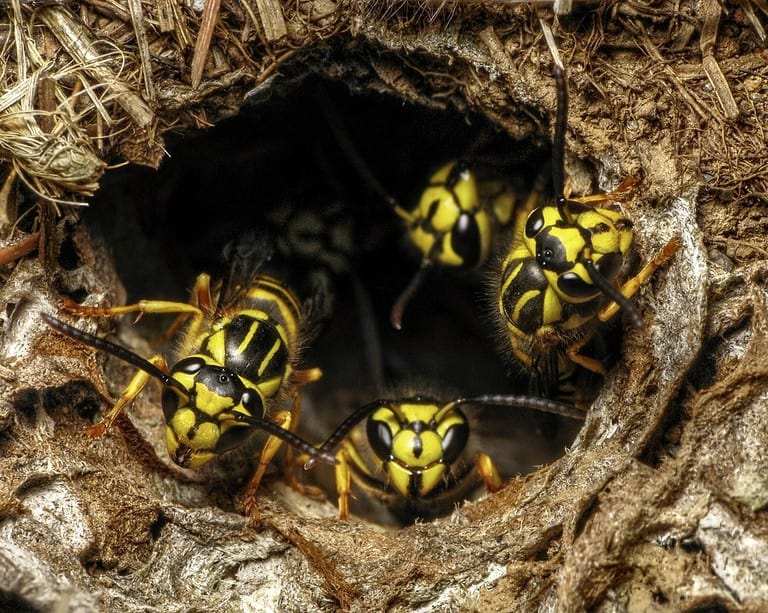
Hornets are social insects. Their nests can contain 300-500 workers, or sometimes more. Like bees, they have a queen, male drones whose only job is to mate with the queen, and infertile female workers. They are not typically aggressive away from their hives, but they will fiercely defend the hive and are also more prone to stinging. These insects may also damage trees and shrubs by chewing the outer bark to reach the sap. Unlike most bees, hornets can fly at night. They are drawn to light and sometimes fly into the glass of lighted windows.
Most bees are solitary and do not live in colonies. Less than 10% of the over 20,000 bee species in the world are social. Some hives, such as honey bee hives, can contain tens of thousands of workers. Other colonies are much smaller. For example, stingless bees typically live in colonies of 50 to 1,000 individuals. These colonies have a similar structure to hornets, with a queen, male drones, and infertile female workers. Some bees can fly at night, but the most common bee species, honey bees and bumblebees, are unable to fly in the dark because they rely on the sun for navigation. Most bees are relatively docile, but they can be aggressive in defense of the hive. They are typically not as quick to sting as hornets.
Feeding Habits
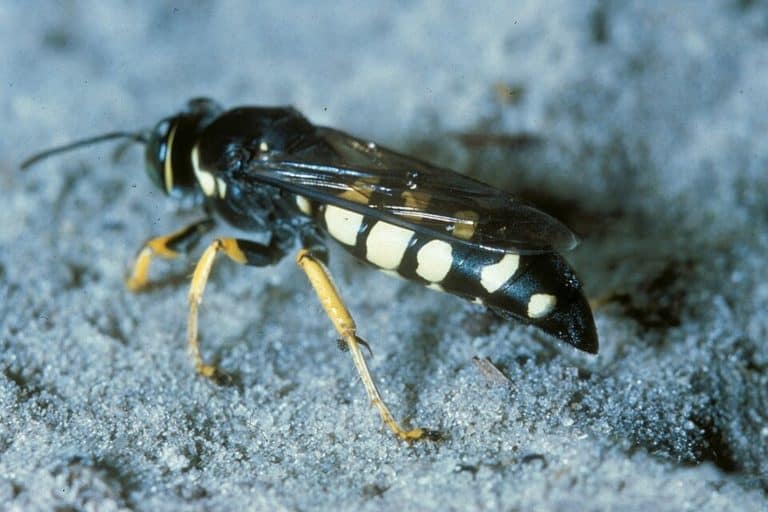
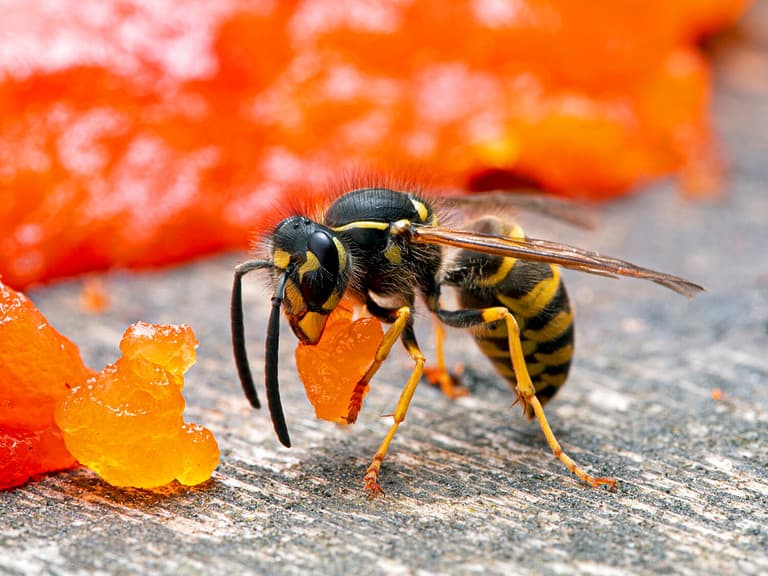
Hornets are primarily predators. Their prey includes many common pests such as grasshoppers, wasps, bees, and other large insects. They often prey on other pollinators by hunting near flowering plants. Hornets also consume fallen fruit and strip the bark off plants to eat the sap. They have also been recorded to eat carrion.
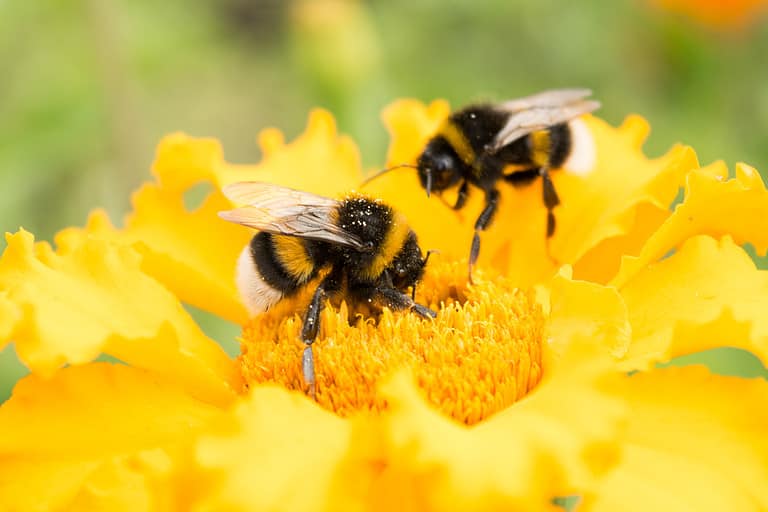
Although bees evolved from predatory wasps millions of years ago, most species typically consume flower nectar, pollen, and honey. Despite the name, carpenter bees do not consume wood. Some bee species have a more varied diet, consuming other bees’ eggs, fungi, and even meat.
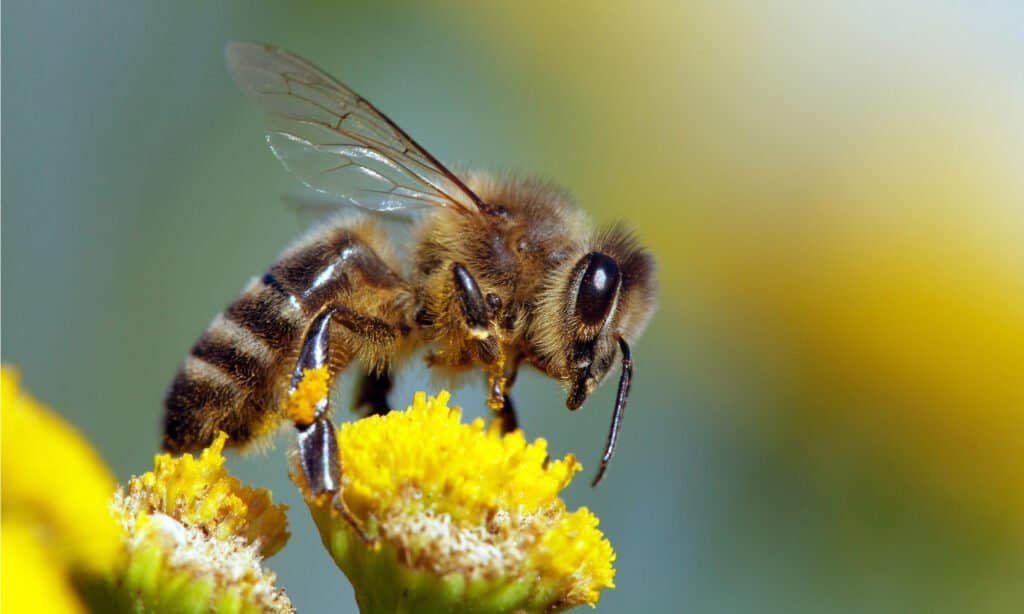
Bees eat a diet that consists of nectar, pollen, and honey.
©Daniel Prudek/Shutterstock.com
Hornet Sting vs. Bee Sting
As mentioned above, hornets are more likely to sting than bees. While their venom is reported to be somewhat less toxic than honey bee venom, they deliver more per sting. In fact, hornets have smooth stingers and can sting their victims multiple times. Stings are said to be more painful, and one report from Europe suggests people are more likely to have an allergic reaction to a hornet sting than a bee sting.
For many bee species, a sting can be fatal, so they are not as quick to sting as hornets unless they are defending the nest. Bees’ stingers are barbed, and the stinger frequently becomes embedded in the skin, killing the bee. Some bees, such as bumblebees, have smooth stingers and can sting multiple times. There are also stingless bees from the tribe Meliponini that appear similar to honey bees but lack stingers.