Quick Take
- One insect was declared extinct, but a shipwreck accidentally caused its survival, and scientists found survivors clinging to a single remote rock decades later. Survival on a single rock →
- A beetle can smell death from miles away, and that eerie superpower is exactly what makes it so hard to save. The beetle that smells death →
- One of these insects vanished for over 80 years and was assumed gone forever. Then someone looked in the right grassland. Rediscovered after 80 years →
- A butterfly's survival depends entirely on a single wild plant, and as that plant disappears, so does the butterfly. One plant, one butterfly →
Insects are the most diverse group of organisms in the world, with nearly 1 million recorded species, although scientists estimate the true number may be anywhere from 14 to 30 million. Insects play a vital role in the functioning of Earth’s ecosystems, from pollination and decomposition to producing items such as honey and beeswax. Sadly, many human activities damage insects’ natural habitats, threatening their survival. As a result, many insects have become rare and endangered. Continue reading to discover eight rare and interesting insects scattered across the globe.
American Burying Beetle
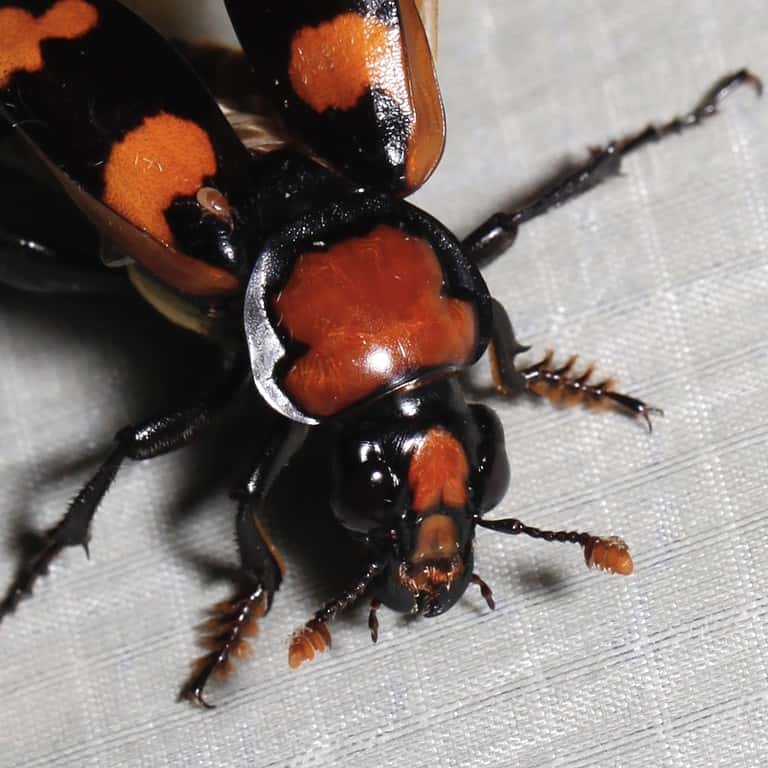
The American burying beetle (Nicrophorus americanus), also known as the giant carrion beetle, is a species once native to much of the United States that was originally listed as endangered in 1989 and has since been reclassified as threatened. These carnivorous insects feed on dead animals, or carrion. American burying beetles have chemical receptors in their antennae that allow them to seek out freshly killed animals from miles away.

The American burying beetle has a shiny black body with bright orange-red markings.
Canterbury Knobbled Weevil
The Canterbury knobbled weevil (Hadramphus tuberculatus) was thought to be extinct for more than 80 years before scientists rediscovered live Canterbury knobbled weevils in 2004. However, with fewer than 100 adults found in the wild at rediscovery and only around 215 captive-bred individuals since released, they are still considered to be critically endangered. These rare insects live in the grasslands of New Zealand’s Canterbury region. Canterbury knobbled weevils have dark brown bodies covered with gray-brown scales.

Canterbury knobbled weevils live in the grasslands of New Zealand’s Canterbury region.
©LocHuynh/Shutterstock.com
Hine’s Emerald Dragonfly
Hine’s emerald dragonfly (Somatochlora hineana) is a rare dragonfly species found in Illinois, Michigan, Missouri, and Wisconsin, as well as the Canadian province of Ontario, where the Minesing Wetlands host the only known Canadian population. These dragonflies have green eyes, a metallic green thorax, and creamy yellow lateral lines. They are among the rarest dragonflies in North America and hover perpetually on the brink of extinction, making them one of the most endangered dragonflies in the world.
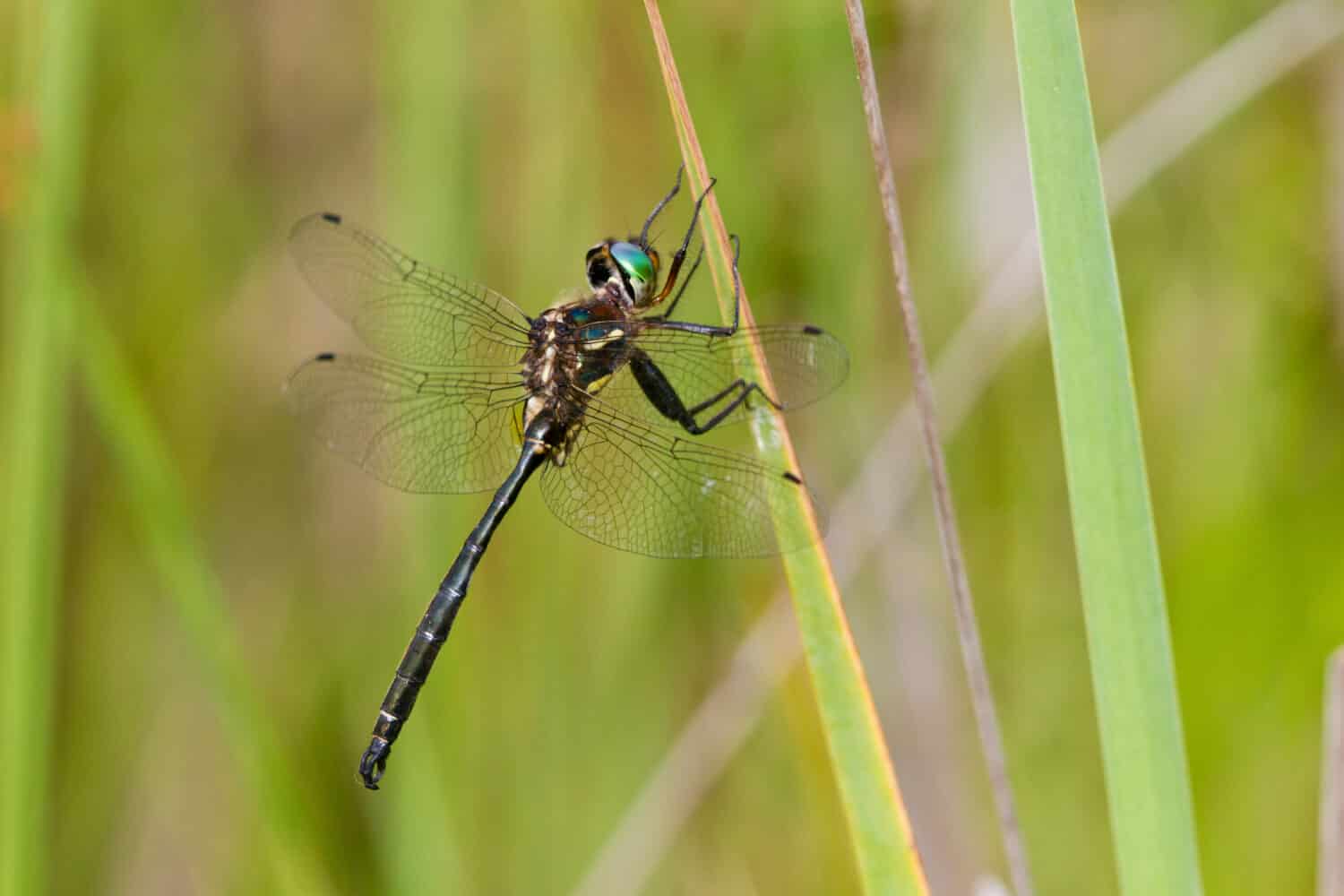
Hine’s emerald dragonflies are among the rarest dragonflies in North America.
©Danita Delimont/Shutterstock.com
Tiger Beetle
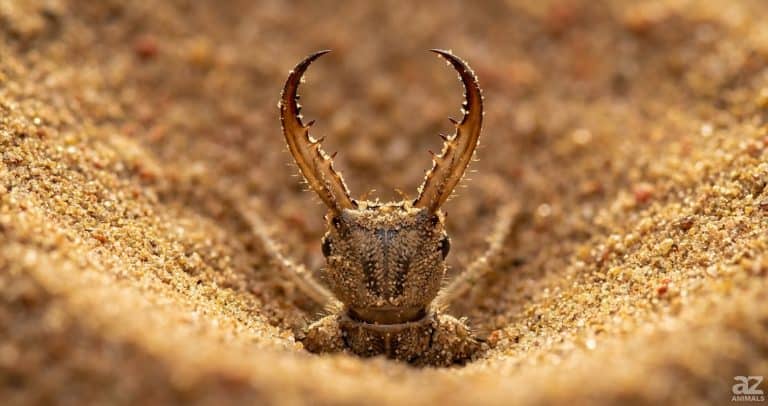
Tiger beetles are beetles belonging to the subfamily Cicindelinae within the family Carabidae, many species of which are endangered or threatened. As their native habitats have been destroyed, tiger beetles have become increasingly rare. These insects are vulnerable because they are restricted to sandy habitats. There, adults catch prey and larvae dig burrows in the sand. Tiger beetles are good bioindicators of environmental quality, and many species are in decline.

Tiger beetles are good bioindicators of the status and stability of the broader ecosystem.
©F.Demonsant/Shutterstock.com
Titan Beetle
The titan beetle (Titanus gigantes) is a South American insect that inhabits the Amazon Rainforest. These huge insects can grow up to 6.6 inches long, making them the largest beetles in the world. Titan beetles have dark brown bodies and strong jaws that can puncture human flesh. Sadly, the native habitat of titan beetles is rapidly disappearing, putting the entire species at risk.
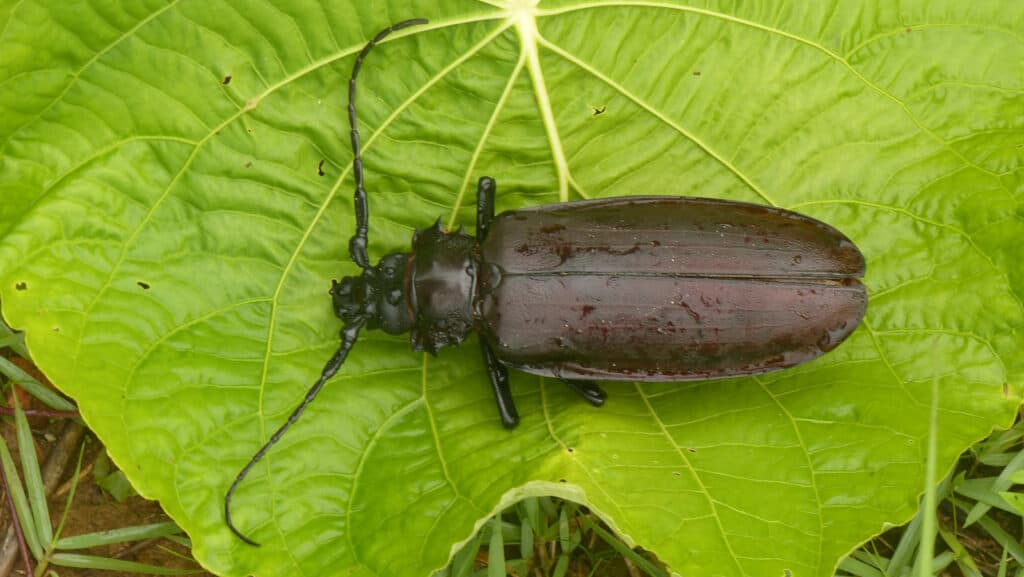
The destruction of tropical rainforests threatens the long-term welfare of the titan beetle.
©guentermanaus/Shutterstock.com
Giant Lacewing
The giant lacewing (Polystoechotes punctata) is a rare insect that can be found in parts of North America. When an entomologist collected a giant lacewing in Fayetteville, Arkansas, in 2012, the discovery was considered remarkable. However, because the insect was initially misidentified, its true significance was not recognized until 2020, when researchers confirmed the identification. The specimen was the first giant lacewing documented in Eastern North America in more than 50 years. It was also the first one ever recorded in Arkansas.
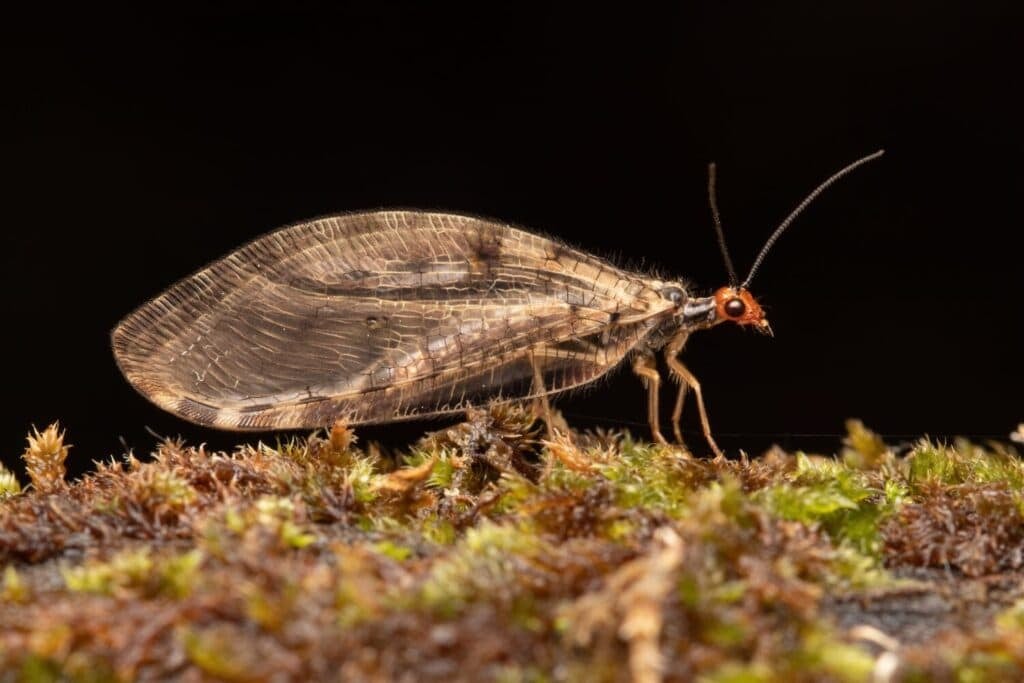
The giant lacewing is considered locally extinct in the Eastern United States and Canada.
©Ferenc Speder/Shutterstock.com
Karner Blue Butterfly
The Karner blue butterfly (Lycaeides melissa samuelis) is an endangered butterfly species native to eastern and midwestern North America, although it is now found only in scattered populations across states including Wisconsin, Michigan, Indiana, Minnesota, New Hampshire, and New York, with the largest concentration occurring in Wisconsin. It is one of the rarest butterflies in the world, partly because Karner blue butterflies require a very specific environment.
Karner blue butterfly larvae can only feed on wild blue lupine. Without wild blue lupine, the Karner blue butterfly cannot survive. These butterflies have wingspans of only about an inch, and wing color varies by sex. Males have silvery or dark blue wings with narrow black margins, while females have grayish-brown wings and irregular bands of orange inside a narrow black border.
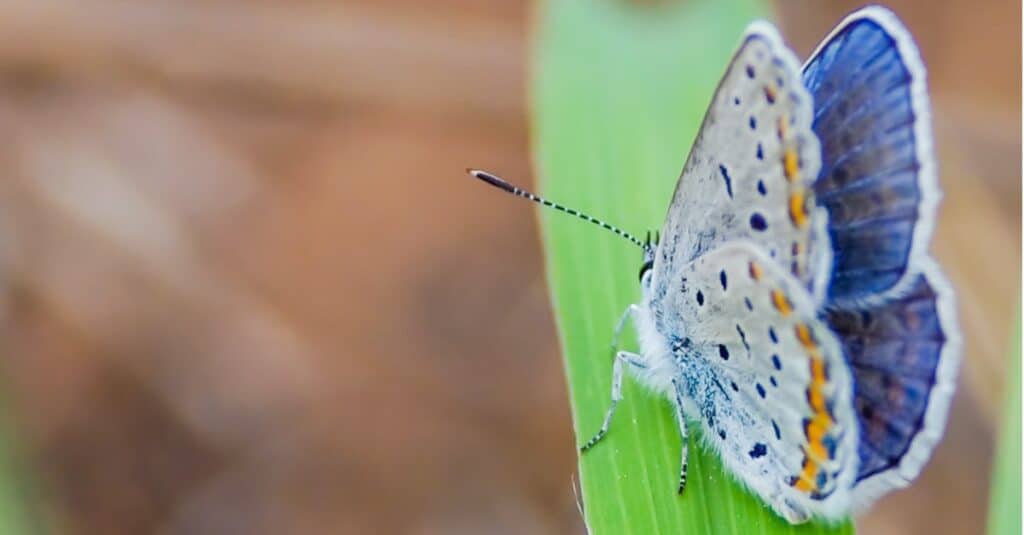
Karner blue butterflies are still fairly abundant in Wisconsin and Michigan. However, they are disappearing along with the wild blue lupine plants their larvae eat to survive.
©iStock.com/BobGrif
Lord Howe Island Stick Insect (Dryococelus australis)
Perhaps the rarest insect in the world, the Lord Howe Island stick insect (Dryococelus australis) lives on Lord Howe Island, an island located between New Zealand and Australia. Also called tree lobsters, these insects are so rare that they were once believed to be extinct, after a 1918 shipwreck introduced black rats that devastated the stick insect population. However, scientists discovered a small number of Lord Howe Island stick insects in 2001 and began captive breeding programs. Lord Howe Island stick insects have black-brown bodies reaching up to six inches in length, strong limbs, and six legs — like all insects.
As of 2026, it is estimated that fewer than 50 mature individuals are left in the wild on Ball’s Pyramid islet, located just southeast of Lord Howe Island in the Pacific Ocean.

The Lord Howe Island stick insect is one of the rarest insects in the world.
©Juilett/Shutterstock.com