
Quick Take
- One insect on this list injects toxins and liquefies its prey, yet it is still labeled completely harmless to humans. See the toxic predator →
- The biggest flyer of them all has a wingspan that will stop you cold, and it survives its entire adult life without ever eating. Meet the non-eating giant →
- One of these giants is probably already living in your backyard, though most people have no idea what it is. Spot the backyard butterfly →
- The largest beetle in the U.S. grows horns, though not for the reason most people assume. Explore the horned beetle →
There are roughly six million species of insects in the world, with over 100,000 insect species in North America alone. Among these hundreds of thousands of species, the size of some of the giant flying insects in the U.S. will surprise you. While these bugs can be intimidating due to their size, they are harmless to humans. Read on to discover the five largest flying insects in the United States and where to find them.
5. Western Hercules Beetle
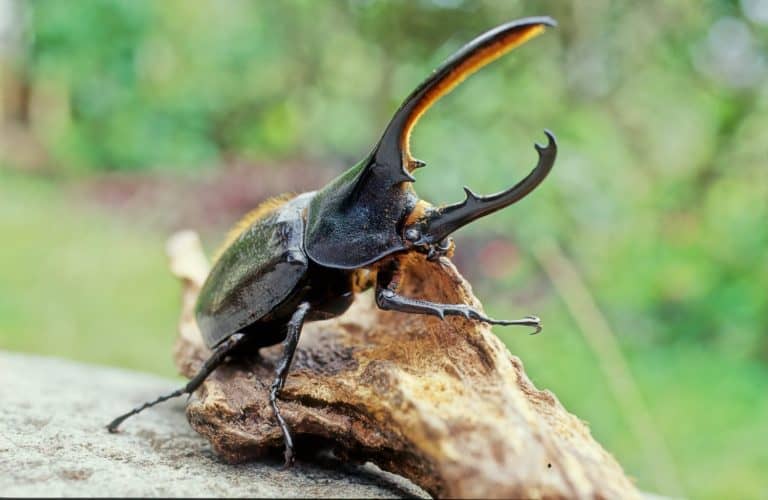
The western Hercules beetle is believed to be the largest beetle in the U.S. (Dynastes grantii). These beetles are pale grey with irregular black spots. Males grow large horns, which they use in dominance fights with other males. The beetle measures between 2 and 3 inches in length, including the horns. Some mounted specimens have wingspans of around 4 inches. It closely resembles the eastern Hercules beetle but has longer horns.
Western Hercules beetles are mainly found in Utah, Arizona, and New Mexico. These beetles favor oak and pine forests at higher elevations. The larvae of the western Hercules beetle feed on decaying wood and soil substrates and are important decomposers in their forest ecosystems. Adult beetles consume tree sap, but they do not harm the trees. They are most active from late July through October.
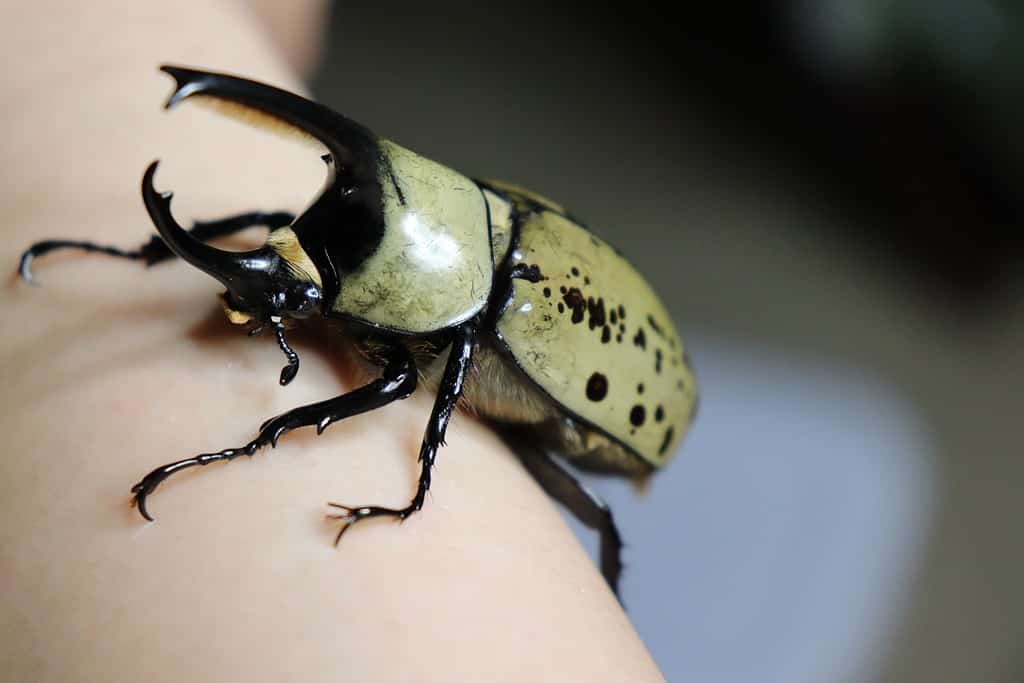
Male Hercules beetles grow large horns to fight for territory or mating rights.
©Lazybugs/Shutterstock.com
4. Giant Water Bug
Giant water bugs (Lethocerus americanus) are the largest true bugs in the country. True bugs belong to the order Hemiptera, whose members have piercing-sucking mouthparts used to feed on plant and animal fluids. These large, predatory, aquatic insects can reach 2 to 3 inches long with a wingspan of 4 inches. They have flat, mottled-brown bodies, leathery wings, long forelegs for grasping prey, and two pairs of rear legs for swimming.
These bugs prefer slow-moving or still freshwater ponds, creeks, and wetlands all across the U.S. They typically prey on aquatic insects but may also eat amphibians, small fish, and other vertebrates and invertebrates. Giant water bugs are ambush predators and use their powerful front legs to snatch prey that comes too close. They then use their needle-like mouthpart to inject toxins that paralyze and liquefy the prey. Giant water bugs are most commonly seen in the summer and early fall.
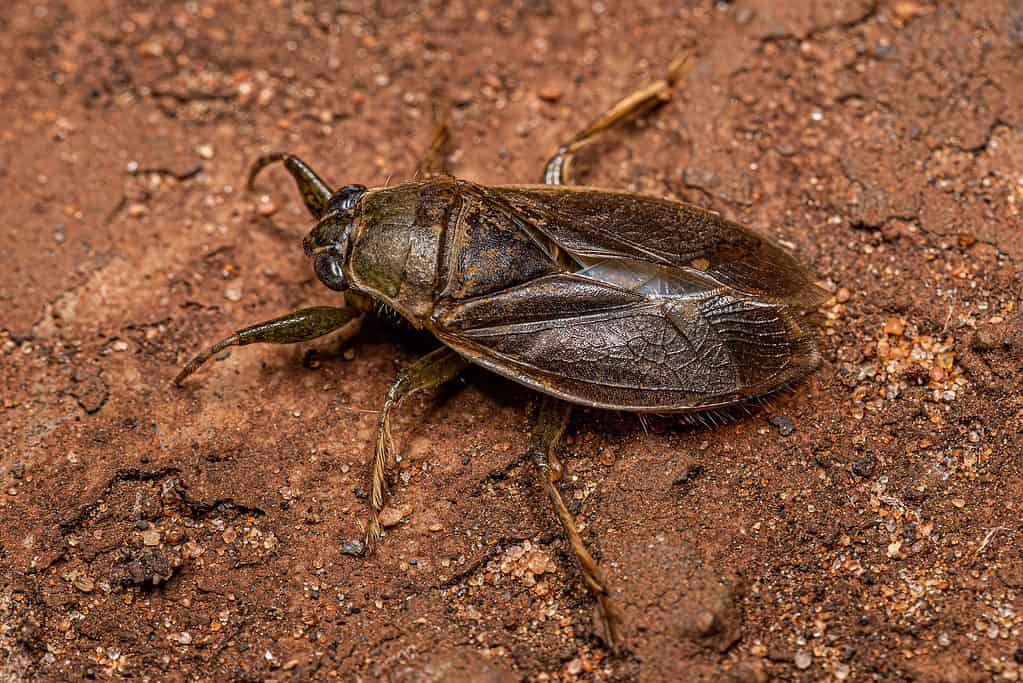
The giant water bug can reach 2 to 3 inches long.
©iStock.com/ViniSouza128
3. Giant Darner
The giant darner (Anax walsinghami) is the biggest dragonfly in the U.S. when considering both body size and wingspan. It measures up to 4.6 inches long with a wingspan of around 5 inches. These dragonflies have bright green heads and thoraxes, with arched brown abdomens. Males generally have metallic blue spots on their abdomens, while females have green spots. They have two pairs of clear, veined wings.
Giant darners are primarily found in the southwestern and western U.S. Their preferred habitats include slow-moving streams, ponds, and marshes with dense vegetation, where they can lay their eggs. Adults can also be seen foraging in forests, grasslands, and even urban areas. The nymphs feed on aquatic insects, tadpoles, small fish, and crustaceans. Adult darners feed on other flying insects, including mosquitoes, gnats, moths, and flies. They are typically seen from April through October.
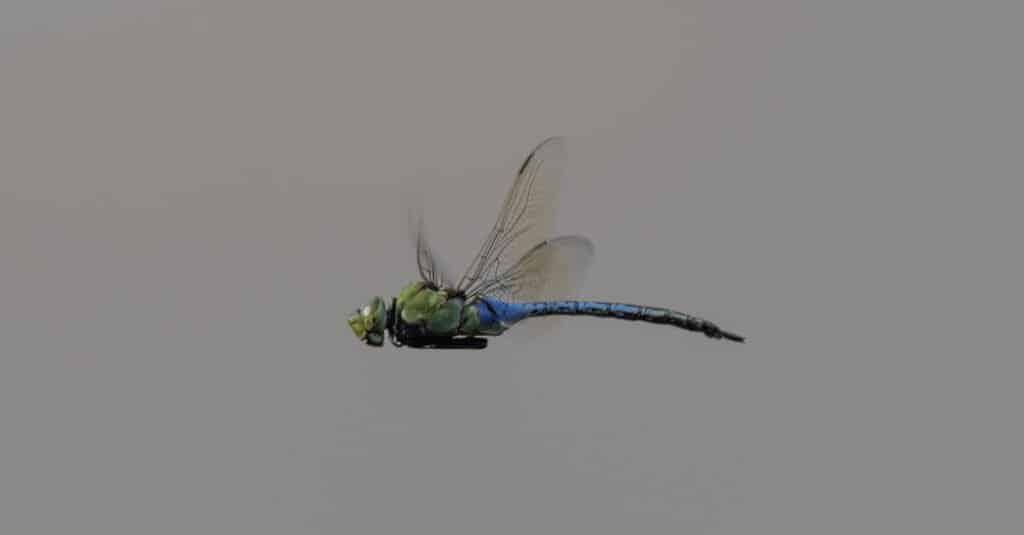
Giant darners are the largest dragonflies in the United States.
©yhelfman/Shutterstock.com
2. Giant Swallowtail
Giant swallowtails (Papilio cresphontes) are the largest butterflies in the U.S., with a wingspan of up to 6 inches, although reports suggest some males can grow larger. These butterflies are dark brown to black, with yellow markings that form lines along the tops and sides of their wings. They have small orange and blue patches on their hindwings, as well as a long, dark tail with a yellow center.
The giant swallowtail is common in open woods, gardens, fields, citrus orchards, wetlands, and parks. These butterflies may produce multiple broods per year. The caterpillars primarily feed on plants in the citrus family, including oranges, lemons, tangerines, limes, and grapefruit. They also eat rue, prickly ash, and hop trees. Adults consume flower nectar from plants such as milkweed, zinnias, and goldenrod. In the northern U.S., these butterflies are most active from June through July, but in the southern U.S. they may be active through November, or even year-round in places like southern Florida.
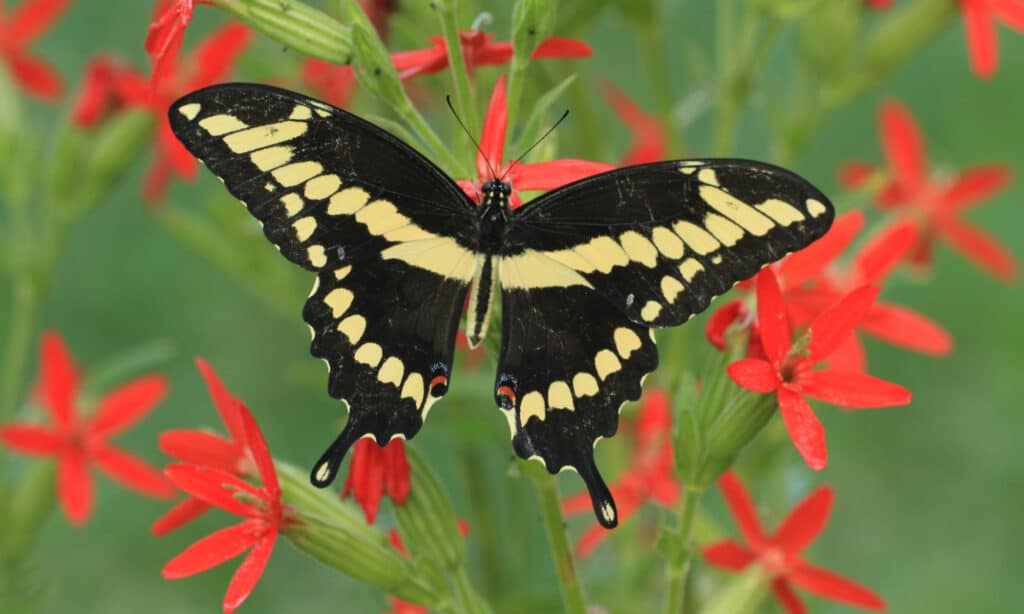
The giant swallowtail primarily feeds on plants in the citrus family.
©Kevin Collison/Shutterstock.com
1. Cecropia Moth
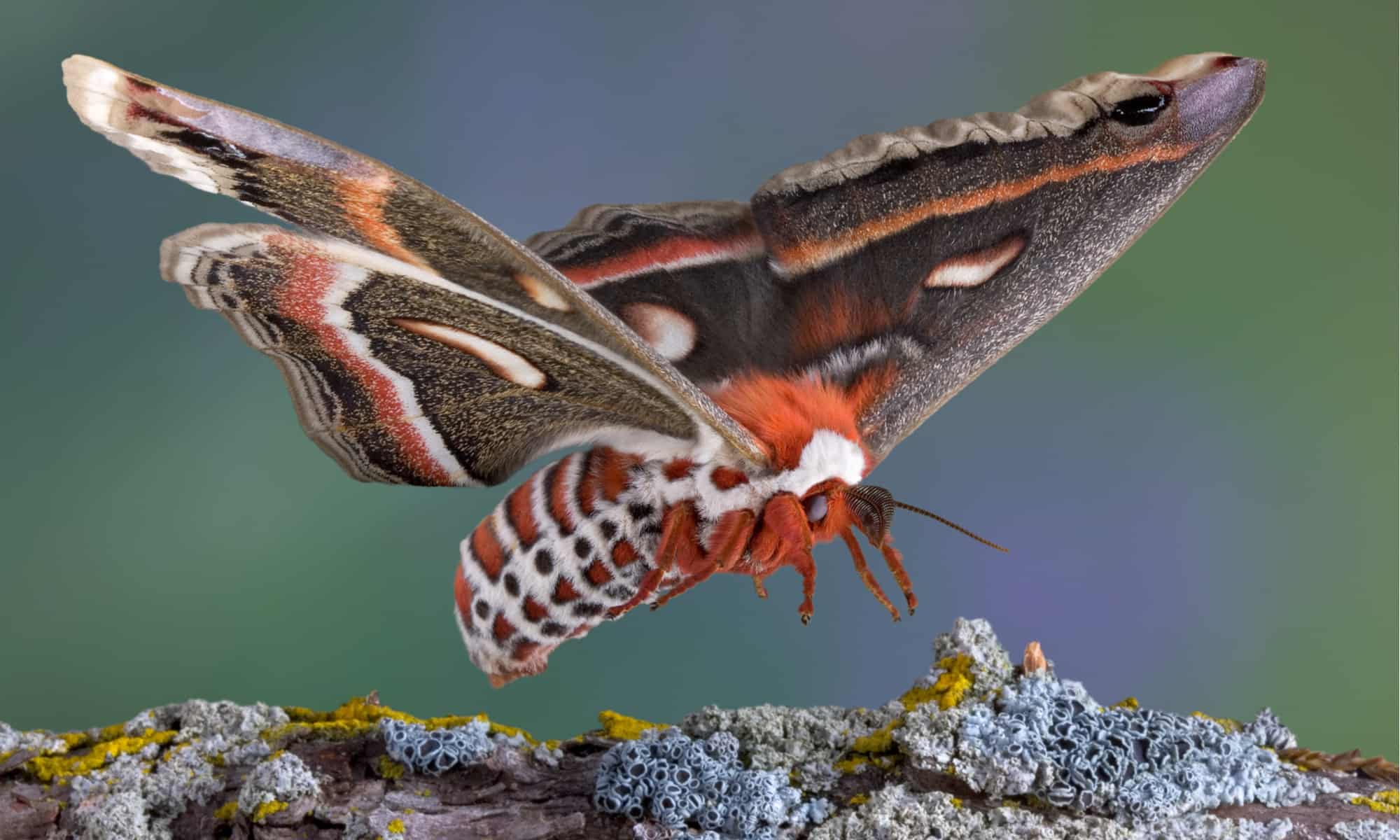
In North America, the cecropia moth (Hyalophora cecropia) is the largest native moth, with a wingspan that reaches up to 7 inches. These moths are primarily reddish-orange, brown, and black, with white spots outlined in orange and black at the center of each wing. They also have black eye spots and lavender patches on the tips of their front wings. Their bodies are stout and fuzzy, with feathery antennae.
Cecropia moths are primarily found east of the Rocky Mountains in the central and eastern U.S. They prefer open areas with hardwood trees but can survive in a variety of habitats. They can be found in both rural and urban areas, including forests, woodlands, orchards, parks, and even backyards. Adult moths are often found on deciduous trees but lack mouthparts entirely and therefore do not eat. The caterpillars feed on various trees and shrubs, such as birch, willow, cherry, maple, and lilac, among others. They are usually seen in late spring and early summer.
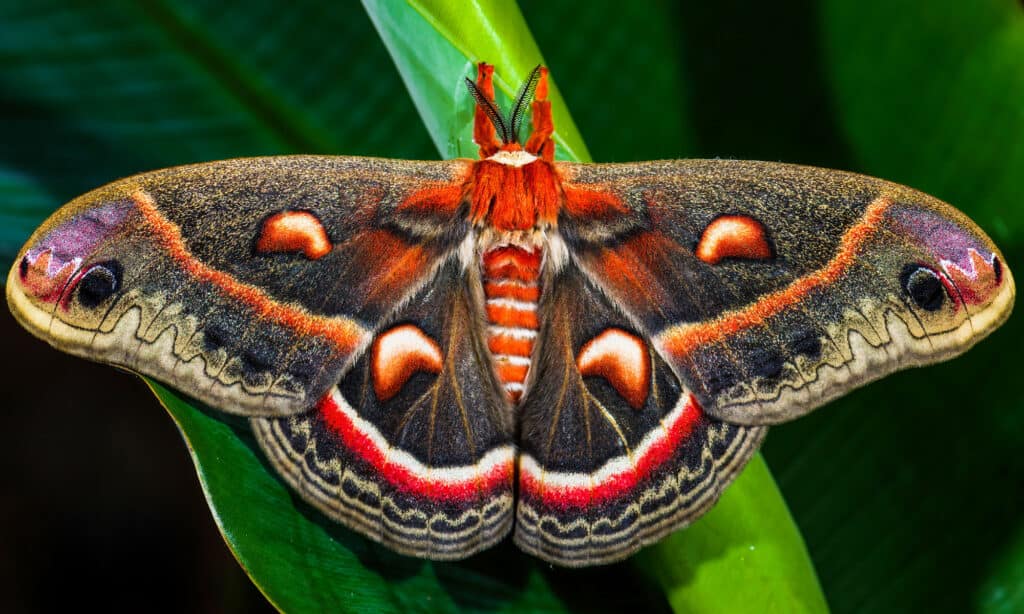
Cecropia moths have a wingspan of up to 7 inches.
©David Havel/Shutterstock.com