
When you have a pest problem in your indoor or outdoor garden, identifying the type of insect you’re dealing with is the first step in getting rid of them. Aphids are among the most common insect pests around. These pesky little bugs feed on plant sap and may cause stunted growth, yellowing, curled leaves, and other adverse symptoms in your plants. But what do aphids look like, and how do you identify them? In this article, we’ll go over the distinguishing features of aphids and how to identify them in your garden.
General Appearance
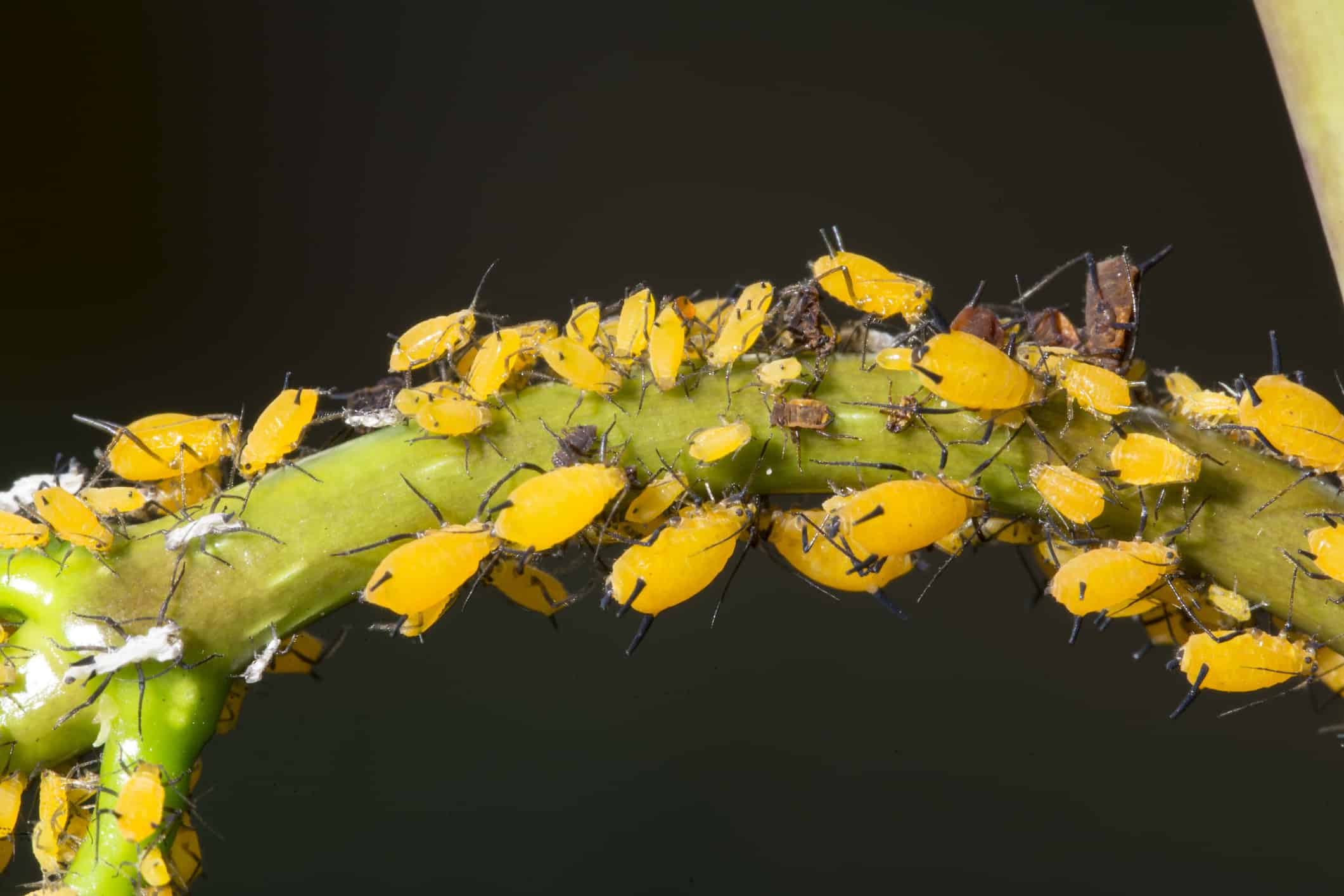
Aphids are tiny insects. They measure just one-sixteenth to one-eighth of an inch in length. They don’t have a hard exoskeleton, which means they’re soft-bodied insects. Aphids have a narrow head and a wide abdomen. This appearance gives them a pear shape. The width of the aphid’s abdomen serves an important purpose: they typically give birth to live nymphs that they carry in their abdomen.
There are more than 4,000 species of aphids, and their color typically ranges from green to black, white, brown, yellow, pink, red, or gray. There may be certain variations from one species of aphid to another. However, certain features are common to all species of this insect. Some of these common traits include:
- They all have soft bodies
- They all have long antennae
- They have two “tailpipes” known as cornicles at the end of the abdomen
Aphids have a preference for soft and tender parts of plants or trees. Thus, they’re more commonly found on new shoots since their mouthparts are not developed enough to pierce through the hard parts of plants and trees, such as the bark or wood. They prefer the juiciest part of the plant, where they can easily access the sap they feed on.
When you’re looking for aphids, the best place to check is on the underside of leaves or new shoots. You may also find them on plant stems or flower buds. However, it is important to note that not all aphid species are easy to spot this way. Some species of aphids (such as the Pemphigus species, or root aphids) live in the soil, and they feed on the tender roots of the plants.
What Do Aphids Look Like When They’re Young?
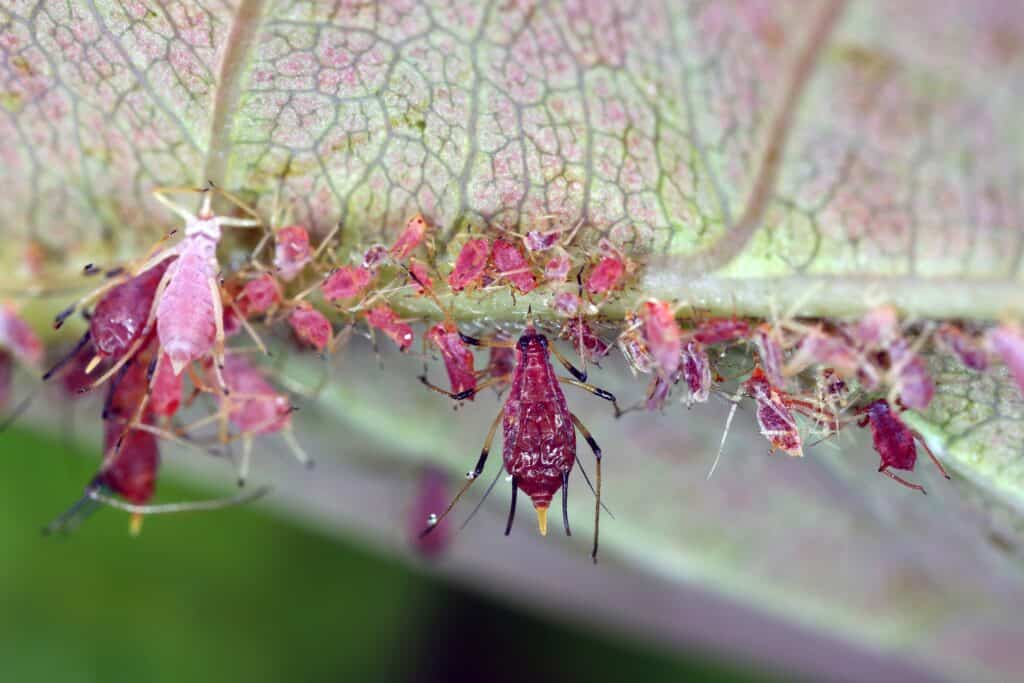
Pictured here is a large colony of rose aphids under a rose leaf in the garden.
©Tomasz Klejdysz/Shutterstock.com
If you ever come across an aphid infestation, you’ll probably notice a mix of large-sized aphids with smaller ones. The tiny aphids typically have the same appearance as the bigger ones. Unlike many insects, where the young tend to have a different appearance, adult aphids and nymphs (baby aphids) have a similar appearance. The only difference between them is the obvious difference in size.
In most cases, when you find an infestation, there’ll usually be more nymphs than adults. That’s because aphids have a short lifespan of about 30 to 50 days. An adult aphid typically gives birth to 50 to 200 nymphs in its short life. These nymphs also start reproducing within one week of their birth, causing a boom in nymph populations that keeps the colony going.
Do Aphids Have Wings?
People often get confused when they find winged insects in aphid colonies since aphids are typically wingless insects. However, some colonies may have winged varieties during certain seasons of the year. Typically, when the seasons change in spring and fall, winged aphids are produced to start new colonies. Winged aphids may also be produced when a colony becomes overcrowded.
Signs of Aphid Presence on a Tree
In addition to identifying the insect itself, there are certain signs of aphid activity that you can look out for on your tree or plant. Discovering any of these signs indicates that an aphid infestation might be ongoing. Some of the signs include:
White Flakes on Plants
When aphids molt, they shed off their exoskeleton, which is often left behind in large quantities in the form of white skins or flakes on the plant. Aphid nymphs molt at least four times before they grow into adults. The exoskeleton they shed is usually left behind on plants, so if you notice these flakes or old skins on your plants, then you probably have an aphid problem.
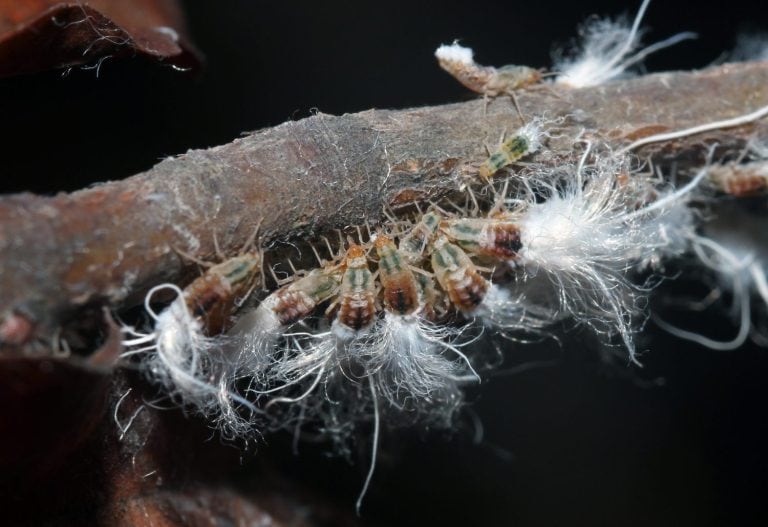
Woolly Coatings
Some species of aphids produce a wool-like coating that protects them from predators like lacewings, ladybugs, and parasitic wasps that feed on them. The coating is a type of wax produced in specialized glands in the aphid’s abdomen. This coating makes it look like the aphids are covered in mold, making it difficult for their predators to eat them.
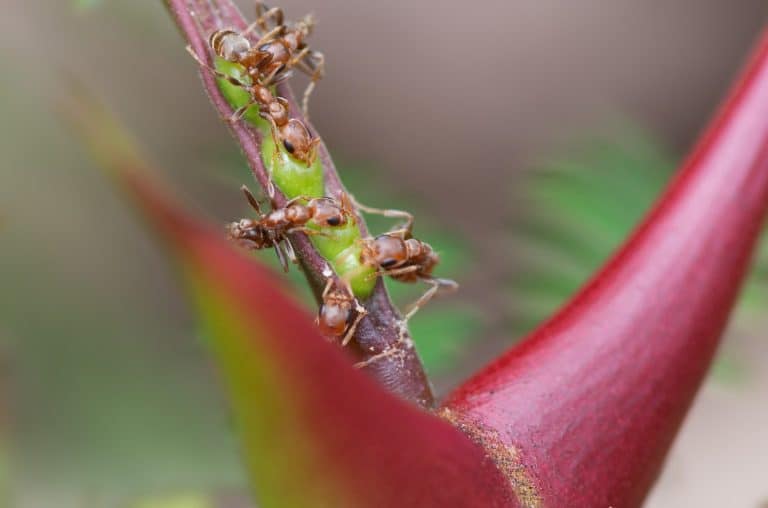
Ants are Often Seen Near Aphid Colonies

Ants and aphids are often in the same vicinity.
©BERNATSKAIA OKSANA/Shutterstock.com
If you have an aphid infestation on a plant in your garden, you’ll most likely find ants nearby as well. These two insects form a sort of symbiotic relationship. The ant protects the aphids from predators and can also aid the spread of aphids from one plant to another.
In return, they feed on a sweet goo known as honeydew produced by the aphids as they suck sap from the plants they infest. Because of this honeydew, ants often take care of aphid colonies and protect their population. This is a crucial point to note since ants often make biological control methods challenging to implement. The ants keep the beneficial pests that were introduced to remove the aphids away from the plant. This is why biological methods of control are best combined with chemical control.
Sooty Mold
The honeydew produced by aphids can be problematic as well. This sticky substance is a by-product of the aphid’s feeding activities, but it isn’t exactly harmful to plants on its own. However, they produce so much of this sticky fluid that it can give rise to a black sooty mold. This is a fungal growth that feeds on the honeydew, covering the plant’s leaves with a dark film as it spreads. This can block sunlight, making photosynthesis difficult.
Signs of Aphid Infestation
As the aphid population grows, you may begin to notice some side effects on your plants. Some of the symptoms of an aphid infestation include:
- Weakened or disfigured plants
- Leaves may start to turn yellow or curl up
- Reduced growth rates
- Low-yielding plants or even death
Aphids infest plants in large numbers. Usually, you’ll find hundreds of them clustered on a plant’s leaves and stems. In many species, their color helps to keep them camouflaged. However, if you pay close attention, you should be able to spot an infestation and take steps to get rid of it right away. The earlier you identify aphids in your garden and start implementing measures to remove them, the better for your plants.