
Quick Take
- These ants build a hunting platform out of fungal paste and plant hair, a structure that is completely invisible to their prey. See the invisible trap →
- The ants appear to destroy the plant they live in, yet the plant actually benefits from it. Explore the mutual benefits →
- This plant hosts only one ant colony at a time, yet no two colonies have ever been documented fighting over it. Researchers know why. Discover why no conflicts occur →
- The plant has physically changed its own anatomy over time just to keep the ants comfortable, doing so in ways you wouldn't predict. See the plant's adaptations →
Over 12,000 ant species have been identified. With such a wide variety of species comes many different hunting techniques. From ambushing to chemical warfare, scavenging, and more, there is no shortage of ways for ants to take down their prey.
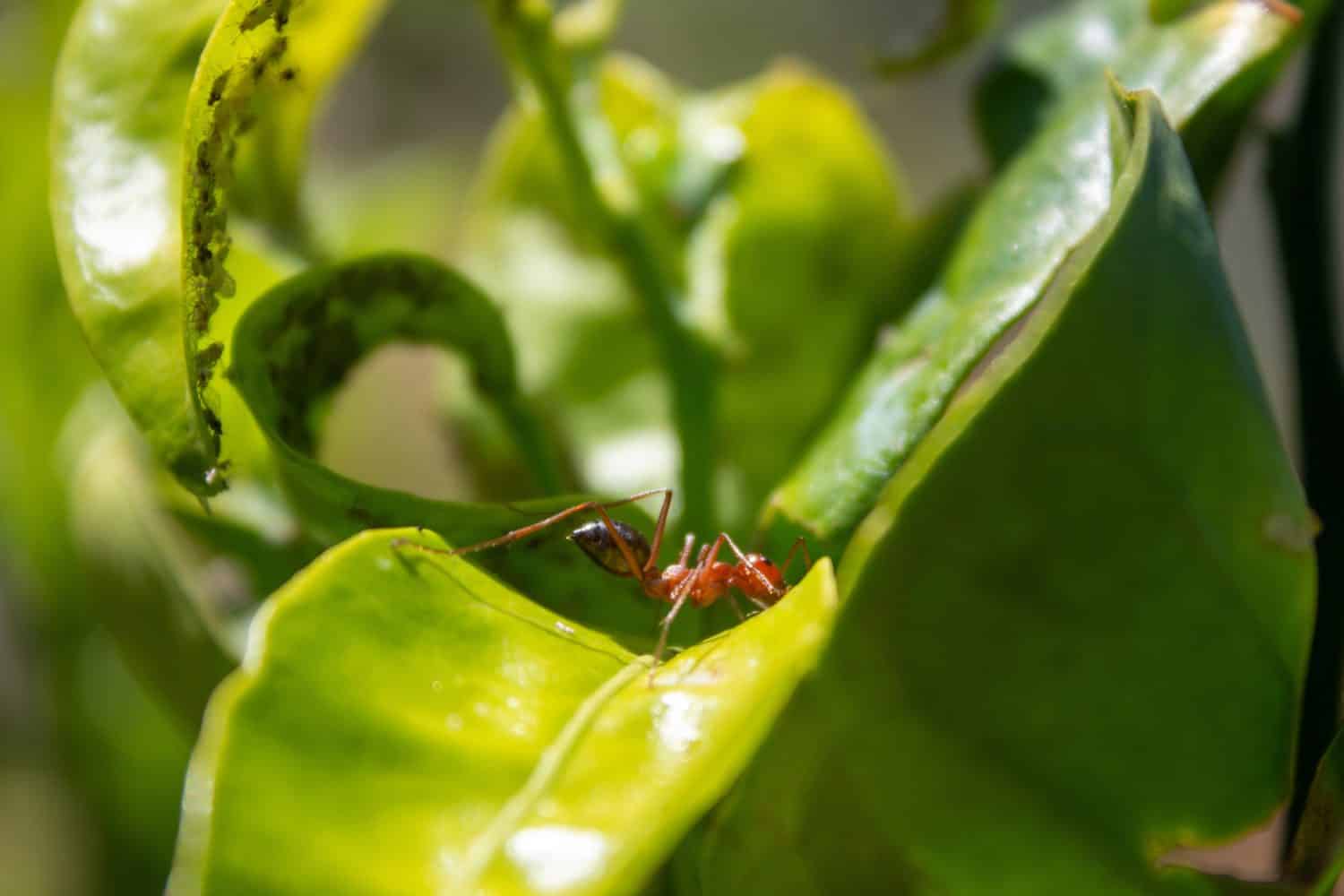
Perhaps one of the most interesting ant hunting methods is ambushing. Amazonian ants build traps to ambush prey, often before insects even realize they are in danger. This is possible only because of a mutualistic relationship between the ants and the plant they live in, with both helping the other survive.
Allomerus decemarticulatus Create a Trap to Capture Prey
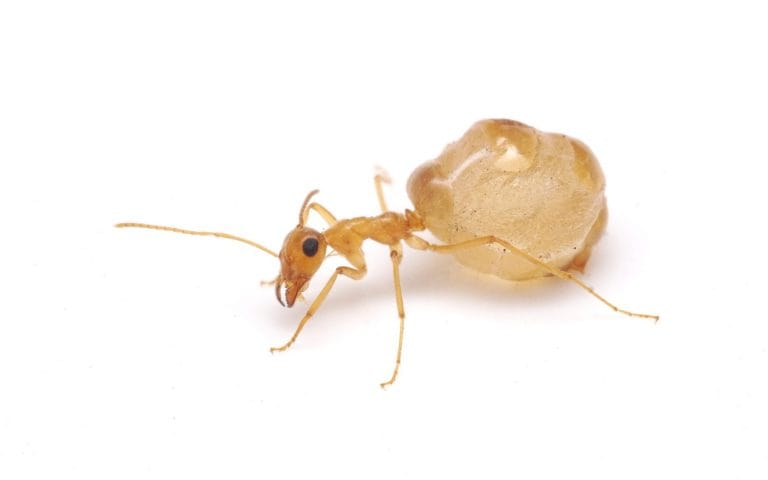
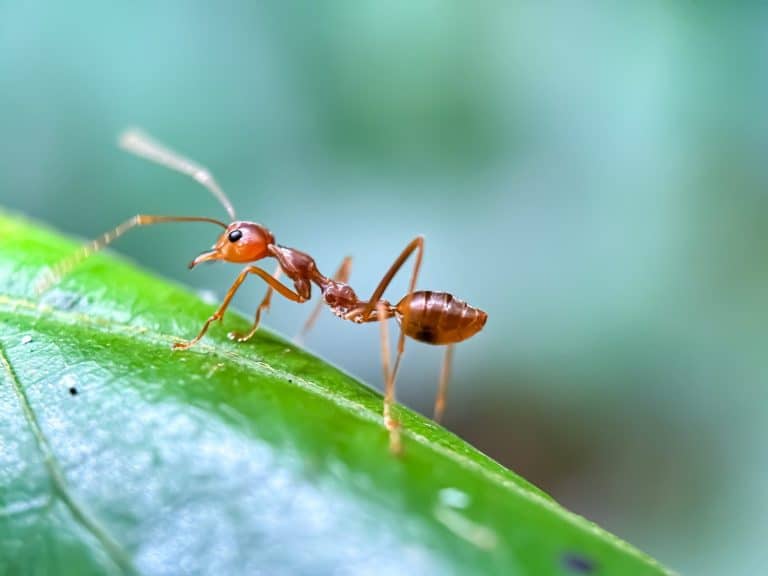
Allomerus decemarticulatus is an ant species found in Ecuador, Brazil, and French Guiana. This ant species does not live in underground colonies as some other species do. Instead, they live within the domatia of Hirtella physophora, protecting themselves from prey.
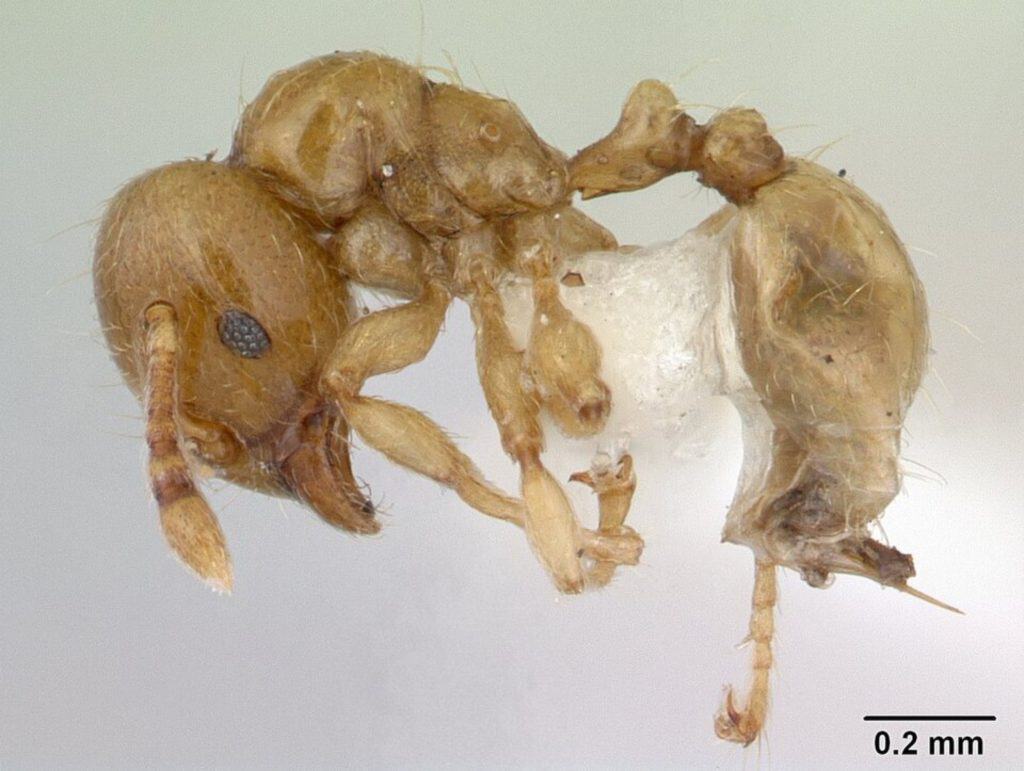
Allomerus decemarticulatus is the species of ant that lives within Hirtella physophora.
A. decemarticulatus is not a docile ant. The species uses the hollowed-out stems of H. physophora to create a hunting ground invisible to its prey. It does this by creating a platform on the stem using the plant’s hairs, or trichomes, along with a regurgitated fungal paste to give the platform structure. The ants then drill holes through the stem and the structure that are no larger than the ants’ heads. With ants just two millimeters long, it is easy to see why prey can miss the holes they create.
The ants wait patiently, mandibles open, in the holes. When prey lands on a H. physophora stem, an ant grabs the insect by the legs or antenna and holds it in place. This gives the rest of the colony time to come out and dismantle the insect, creating a hearty meal for the ants.
Allomerus decemarticulatus and Hirtella physophora Have a Mutualistic Relationship
Plants and insects have different types of mutualistic relationships. However, each aims to ensure the survival of the species that relies on the other. This is why pollination, protection, and seed dispersal are so important for insect and plant species, since neither can survive without the other.
A. decemarticulatus and H. physophora have a mutualistic relationship built on protection. Since the ants drill holes in the plant, it may seem like they are actively destroying it. However, because the stem is hollow, the plant is not harmed. Instead, the plant provides a place for the ants to stay protected while they hunt. It also provides shelter for the rest of the non-hunting colony within the domatia.
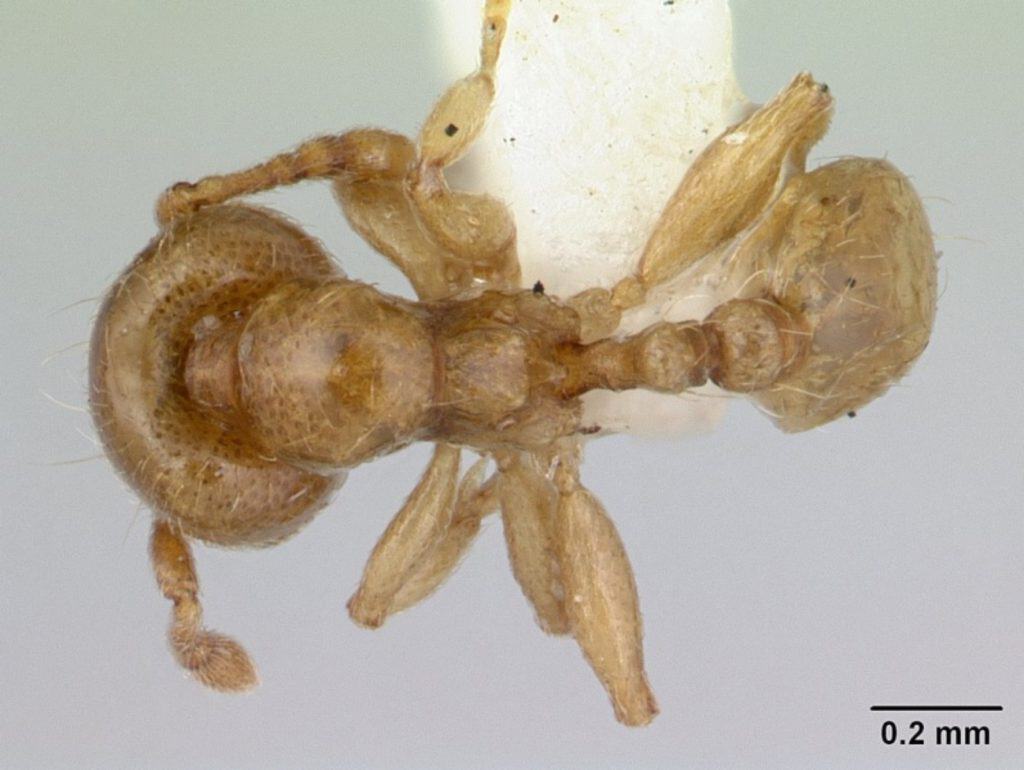
A. decemarticulatus has a mutualistic relationship with H. physophora.
©April Nobile / © AntWeb.org / CC-BY-SA-3.0 – Original / License
A. decemarticulatus does not simply hide within the stems or domatia of H. physophora. Instead, ants walk all over the plant to protect it. The ants ward off insects that are looking to eat developing leaves. If leaves become damaged, the ants will pay closer attention to those areas of the plant until the leaves mature.
A type of fungus grows on H. physophora because of the ants, and although the fungus does not provide nutrition to the plant, it does help the plant with its nutrient uptake. Additionally, the ants indirectly transfer nutrients to the plant through their waste. Consequently, the ants, the fungus, and the plant have a complicated relationship, but one in which all three species can thrive.
Only One Colony of Allomerus decemarticulatus Live in Hirtella physophora at a Time
H. physophora provides both a hunting ground and a home for A. decemarticulatus. However, it is only useful for one colony at a time. Therefore, it is first-come, first-serve for ant colonies looking to set up a long-term home within the plant.
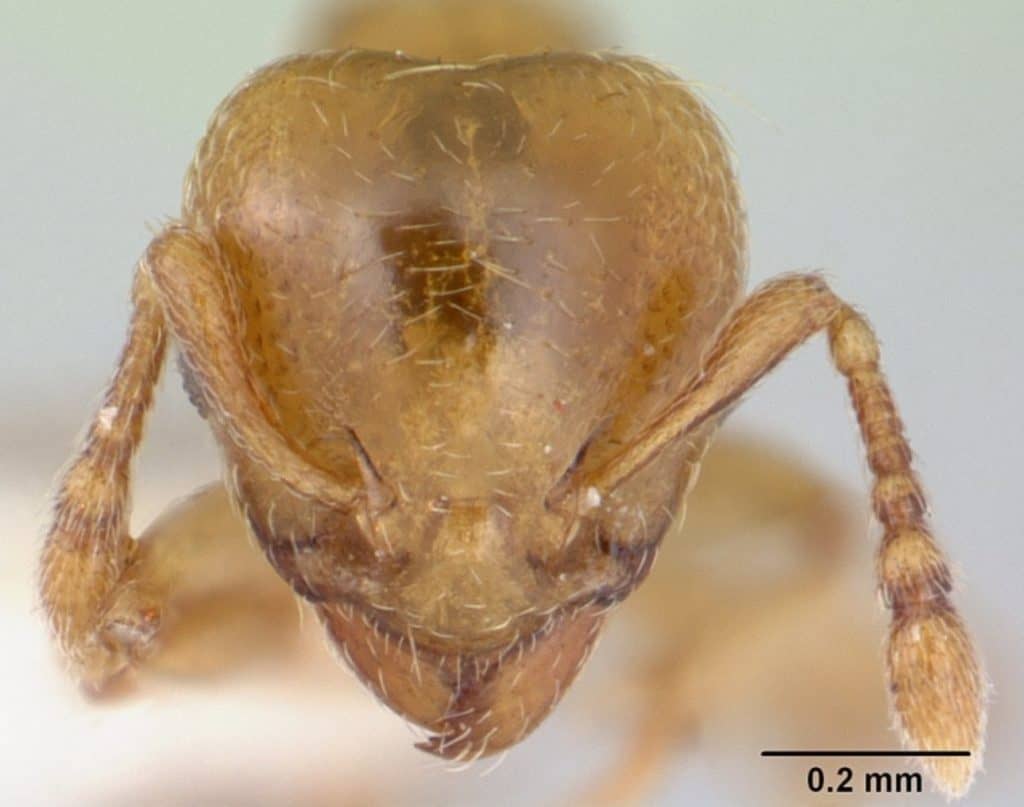
A. decemarticulatus do not appear to fight with others in their species to live in H. physophora.
©April Nobile / © AntWeb.org / CC-BY-SA-3.0 – Original / License
What is interesting is that while H. physophora supports only one ant colony at a time, no documented conflicts occur between separate colonies. It seems that no battles are triggered by ant overpopulation or resource competition.
Once a colony has staked its claim, it sets up its hunting grounds. It protects the plant from species that would want to harm it, seemingly never having to compete with others of its species for shelter.
Hirtella physophora Has Evolved Over Time to Support Allomerus decemarticulatus
Because A. decemarticulatus and H. physophora have a myrmecophilous relationship, both the insect and plant benefit. But to ensure that the ants continue to thrive, H. physophora has actually evolved over time to be the most hospitable host possible for the ants.
Today, the stems where the ants hunt are located very close to the domatia. This means that the ants do not have to go far from the section of the plant where they live in order to hunt. Consequently, when an insect gets trapped in the holes of the stem, the ants are ready to attack. However, a 2008 study found that this placement was not always the case, indicating that the organisms may have evolved over time to better support each other.
Ants rely on insects for food, but this prey can be scarce at times. When this happens, the ants turn to H. physophora‘s sticky, sugary substance in its nectar-producing glands, called extrafloral nectaries. The ants can feed on this to continue to thrive.
Finally, the cell wall of the domatia is thicker than it typically is in a plant like H. physophora. This, according to the study, is believed to have evolved to support the weight of the ants within the plant.
A. decemarticulatus and H. physophora have created a relationship in which the species rely on one another. By allowing ants to drill holes in its stems, the plant enables them to hunt. In turn, the presence of the ants keeps pests that would otherwise eat its leaves at bay. Each is stronger with the other, making for an incredible myrmecophilous relationship indeed.