
Quick Take
- Wingless ants falling over 100 feet have a survival trick that defies what you'd expect from a creature with no wings. See how they glide →
- Scientists removed key body parts from live ants to find out what actually controls their mid-air direction, and the answer isn't what you'd guess. Explore the ablation experiments →
- The forest floor is a death trap for these ants, and that threat is exactly what drove the evolution of their aerial trick. Discover the survival pressure →
- Some other ant species glide too, but they use a completely different technique that flips the whole approach upside down. Meet other gliding species →
Ants don’t have wings, so you might expect that falling from a tree would be a disaster for them. Yet, a group of tree-dwelling ants has evolved a safety procedure that saves their lives. They simply glide back to the tree trunk. This is how they achieve their impressive aerial acrobatics.
Continue reading
What We Know About Gliding Ants
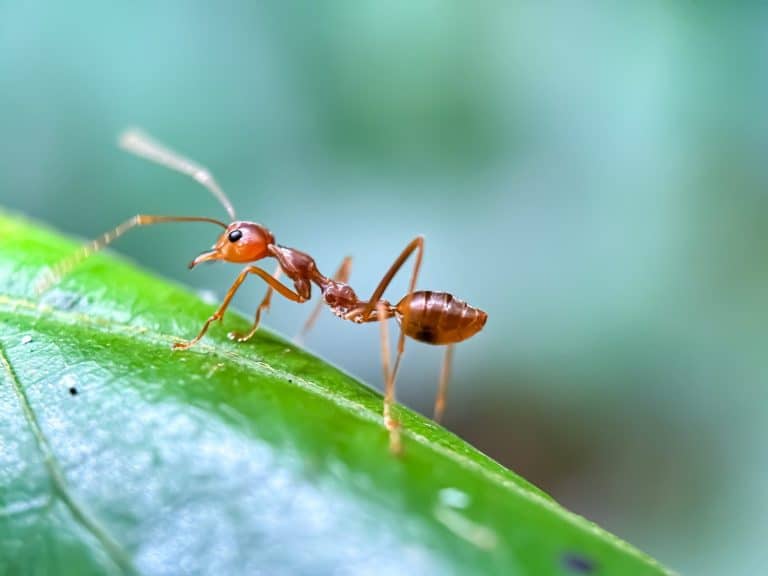
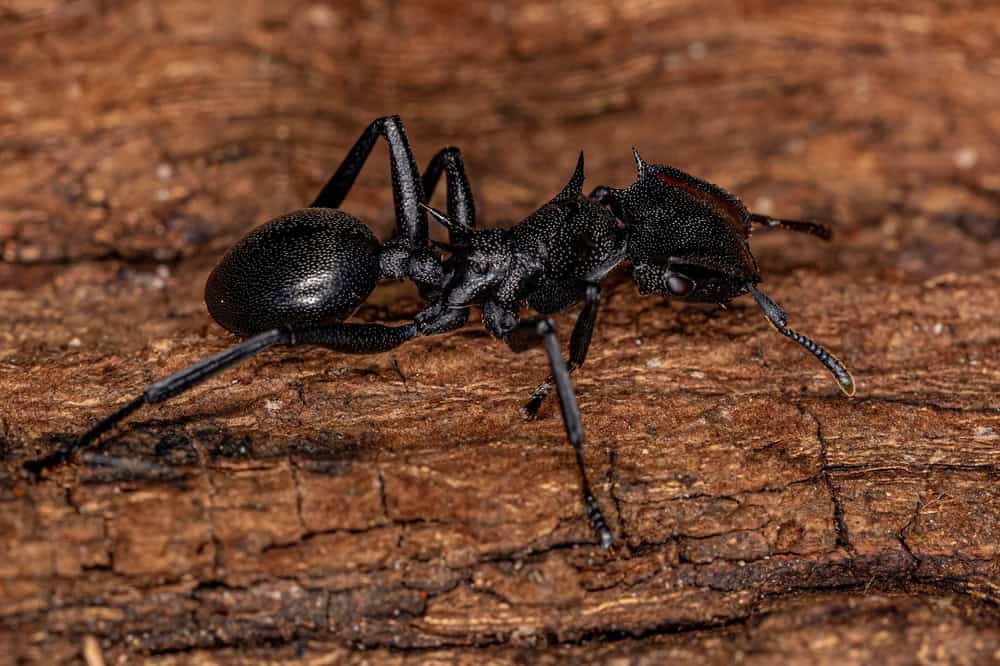
Gliding ants (Cephalotes atratus) belong to the tribe Attini (formerly classified under Cephalotini) – a group of New World tree-living (arboreal) ants. Within the genus Cephalotes, it is one of the largest and most commonly encountered species. They are found in the Neotropical region, so you may spot them in countries such as Argentina, Panama, and Uruguay. Their colonies are made up of workers, queens, and males. The workers are black and reach a length of up to half an inch. They have a heavily armored appearance and a flattened shape.
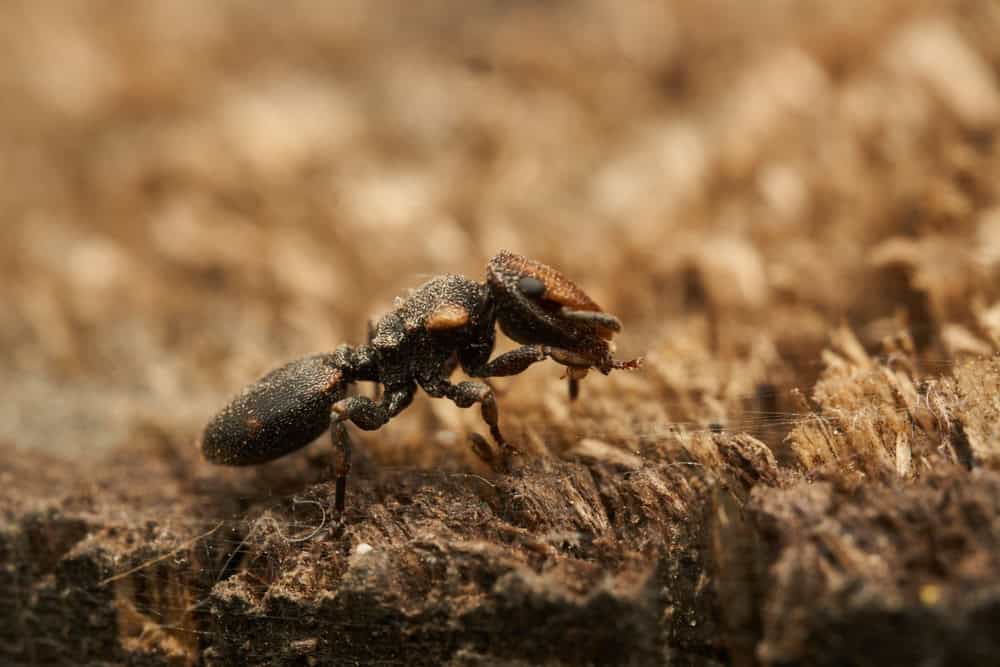
Arboreal ants nest and forage in trees.
©Diaz Aragon/Shutterstock.com
The colonies can number several thousand workers, but some are much smaller. These ants are generalist omnivores and scavengers and are not too fussy about what they eat. Their diet includes nectar, pollen, and bird poop.
As these ants are strictly arboreal, they nest in live or dead plant stems. You will often see them running up and down tree trunks with crevices in the bark. Sometimes, they fall off, which is when their gliding skills come in very handy!
Why Would Ants Glide?
It’s important to stress that these ants do not have wings and therefore cannot fly. However, they were the first species of ant to be recorded gliding, and now several other species have been seen doing the same. The ants can glide from heights of over 100 feet.
Gliding ants can get knocked off trees by high winds, rain, and falling branches. They can also get attacked by predators such as birds and lizards. The ants may jump off the tree to avoid the predator but may also do this in response to looming objects or alert pheromones produced by other ants. Rather than falling straight down to the forest floor, these ants can glide backwards as they fall. This steers them towards the safety of the tree trunk they have just left.
The ability to glide is an important evolutionary adaptation. These ants live at great heights in trees. None may survive a fall of several hundred feet. Also, the forest floor is a hostile and unfamiliar place for these ants, with new potential predators that they are not used to dealing with. They are unlikely to find a pheromone trail down there that would lead them back to their nest. What’s more, the ‘ground’ is likely to be flooded in the rainy season. Their gliding ability keeps them safe.
How Does Cephalotes atratus Glide?
Scientists have used special cameras to figure out which body parts these ants use for gliding in the absence of wings. When they first drop from the tree canopy, they tumble downward. However, in midair, they show a righting reflex. Then, with increased acceleration, the ants reorient their bodies so their hind legs and abdomen point toward the tree, making a 180-degree turn midair to land feet-first on the trunk. Sometimes, they bounce off the tree trunk during the first attempt and need to attempt another landing!
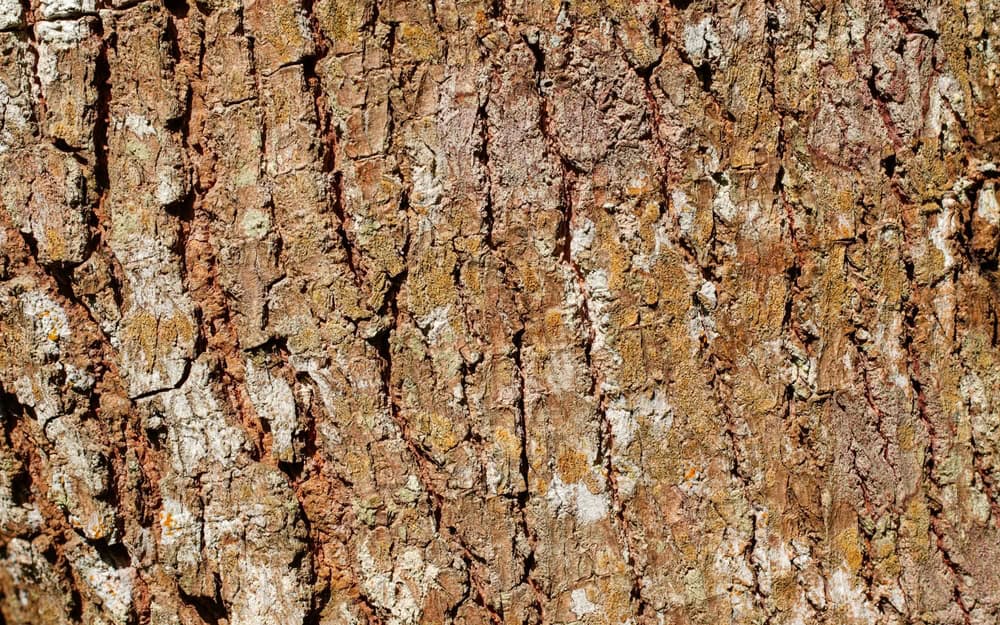
White lichen provides a visual clue for landing.
©aros art gallery/Shutterstock.com
As they glide backwards at a steep angle toward the tree, they use visual cues to select a target landing site. They tend to direct their falls toward light-colored objects, which is actually light-colored lichen on the bark.
Which Parts of the Body Are Crucial for Ants to Glide?
So, without wings, which body parts does an ant need to master gliding? Researchers have investigated the role of the ant’s hindlegs, midlegs, and gaster (the bulbous back end of the ant) in gliding. Using special high-speed cameras, they removed these various body parts (in a procedure called ablation) and observed how well the ants could glide. They measured how well the ants could steer and land on a vertical surface. Also, they recorded the angle they glided at and how fast they moved.
It turns out that hind legs are essential for controlling the direction of the descent. The scientists concluded that the ants use their hind legs as an aerodynamic surface that steers their bodies in the air. However, they also use their legs to right themselves when they first fall, which is an essential part of the process! Ants without hind legs were far less able to complete a directed glide.
Incredibly, these ants are still able to glide even when they are missing body parts. In particular, removing the gaster seems to have little effect on the success rate of gliding. The ants seem to be able to adjust their aerodynamic torques to compensate.
Can Other Ants Glide?
Yes, there is evidence that several other ant species can glide, but they may use different techniques. Some other Camponotus ant species glide headfirst at the tree trunk!
Ants in the genera Dolichoderus and Pachycondyla spin around in a different way, which slows them down and gives them a better chance of landing on vegetation.
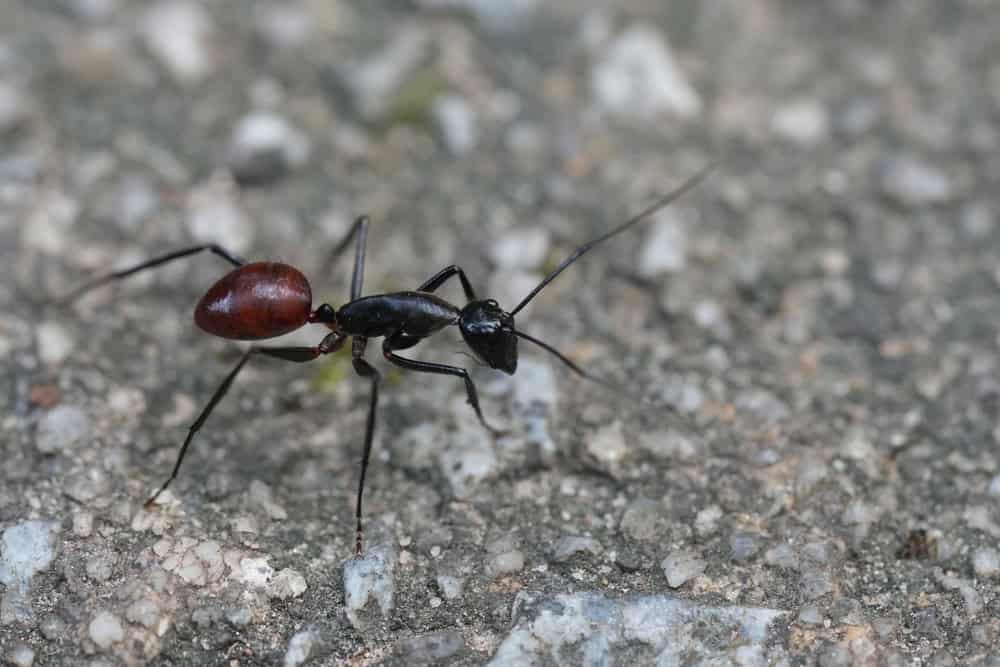
Some other ant species can also glide.
©JimmySheffie/Shutterstock.com
What’s more, the larval forms of several other wingless insects can glide, including mantids, true bugs, and planthoppers. These include jumping bristletails (Archaeognatha).