
Quick Take
- This mouse-sized desert creature is genetically closer to elephants than to the rodents it resembles, and its DNA holds the explanation. Explore the genetic connection →
- Its tiny trunk does something surprisingly similar to an elephant's, though for a very different purpose. See the snout in action →
- Underground, this shrew runs a network so complex it hints at a cognitive trait usually reserved for much larger animals. See the tunnel networks →
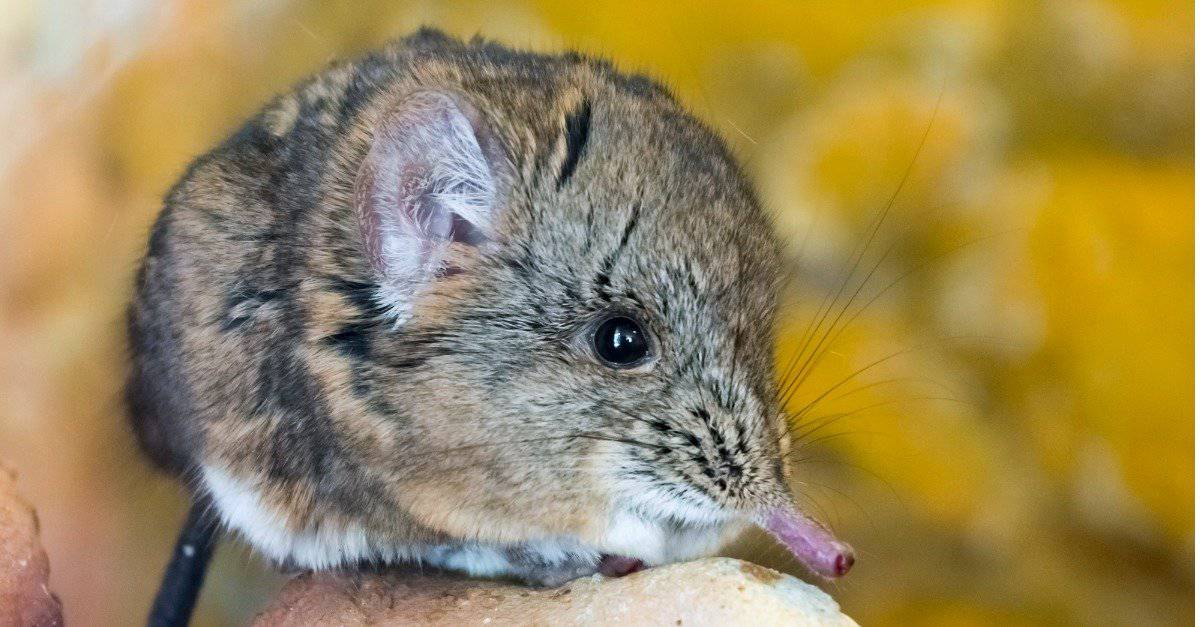
They say big things come in small packages, and that couldn’t be truer for the short-eared elephant shrew (Macroscelides proboscideus) in this Instagram video. Also known as the Karoo round-eared sengi, this four-inch mammal is one of the speediest animals in the Karoo and Namib deserts. But its speed isn’t the only thing it’s known for.
This small, mouse-like creature has a trunk that, surprisingly, makes it more closely related to elephants than to rodents.
The Smallest Member of the Elephant Family
The short-eared elephant shrew contradicts its entire nature. Not only is the mouse-like creature not a rodent, but its DNA also puts it in the same group as elephants. Scientists have traced its genetic lineage back to a group called Afrotheria, which also includes manatees and aardvarks. Their name is also contradictory, as they’re in no way related to shrews.
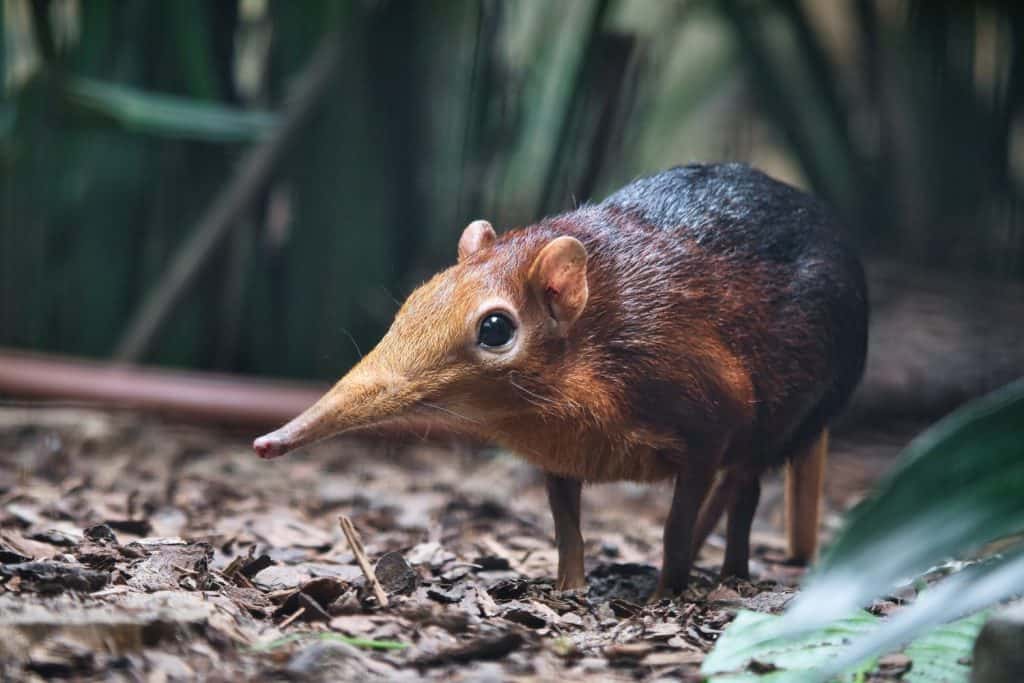
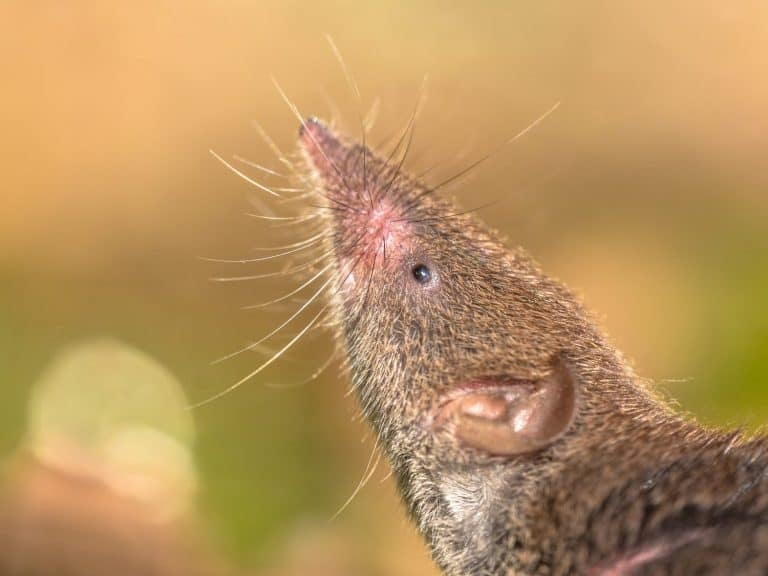
The red-backed elephant shrew is native to Kenya and Tanzania.
©Martin Koebsch/Shutterstock.com
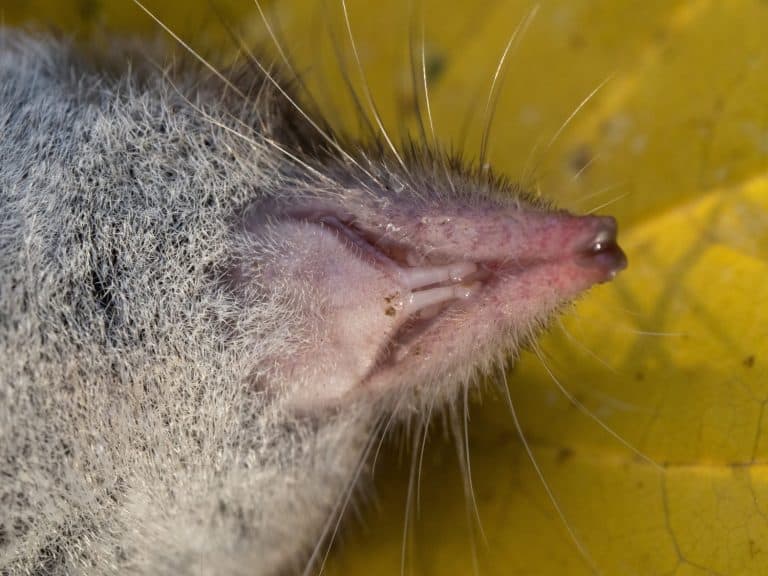
Their most prominent feature–their trunk–is actually an elongated snout. Similar to elephants, the short-eared shrew uses this appendage to sweep and sniff the ground in search of food. Its diet primarily consists of small insects such as ants and termites, both of which are abundant in its habitat. It also feeds on berries and the shoots of young plants. Together with its nose, this little mammal uses its tongue to create a pincer-like hold on its prey before swallowing it whole.
Similar to elephants, the short-eared elephant shrew has keen eyesight and hearing. It can pick up on a faraway disturbance thanks to ears that funnel sound waves. Some species can even pick up on low-frequency sounds, alerting them to danger before it gets too close.
They Can Outrun Their Elephant Cousins
One way the short-eared elephant shrew stands out from many of its relatives is its impressive speed. This fast-footed mammal can run up to 17 MPH, making it one of Africa’s fastest species. They can also do something that elephants can’t: Jump. Short-eared elephant shrews can leap up to 6.5 feet, helping them avoid predators such as birds.
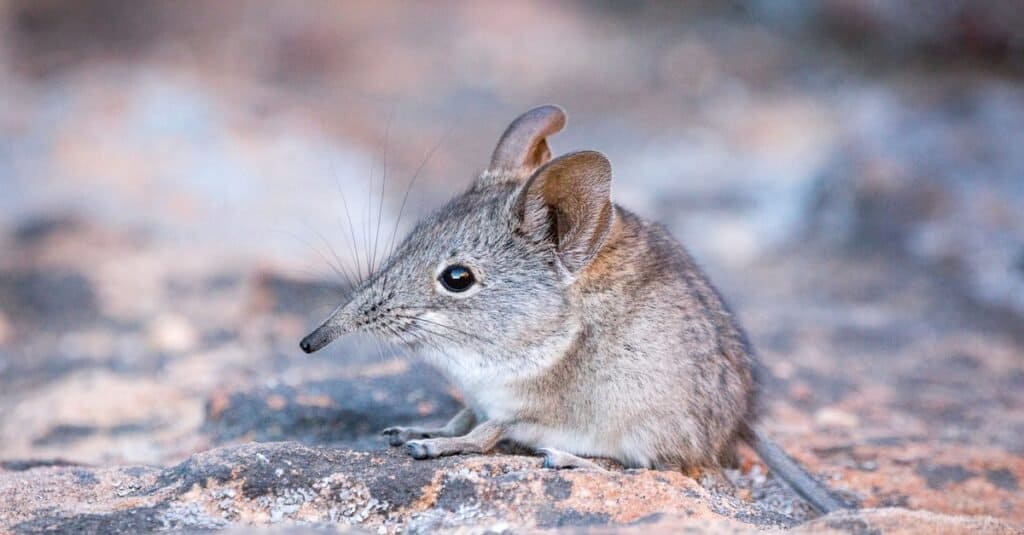
Elephant shrews could fit in the palm of your hand, but you’d have a tough time catching one.
©Nadine Klose/Shutterstock.com
When they’re not leaping great distances or pulling a Roadrunner, they’re navigating intricate underground networks. The short-eared elephant shrew burrows underground to create complex tunnels and chambers, which it remembers remarkably well. It runs through the underground tunnels at the same speed it travels above ground. Their excellent memory is perhaps another trait they share with their large-mammal family.