
Quick Take
- The leopard moth's striking spots aren't just for show. They serve a survival purpose most people wouldn't guess. Discover the pattern's purpose →
- This moth isn't poisonous, yet predators back off anyway. Find out what bluff it pulls to pull it off. See its defensive bluff →
- The 'Giant' in giant leopard moth trips up even experienced observers, with the difference coming down to a single visual detail. Spot the key difference →
- Its range stretches far beyond North America, and the plants it targets might surprise you. Explore its range and diet →
Moths have many different beautiful colors and patterns, and the leopard moth sports one of the most unique looks. As the name suggests, this moth has a leopard-like wing pattern. This Instagram post by @nationalparkservice shows amazing photos of these black and white moths.
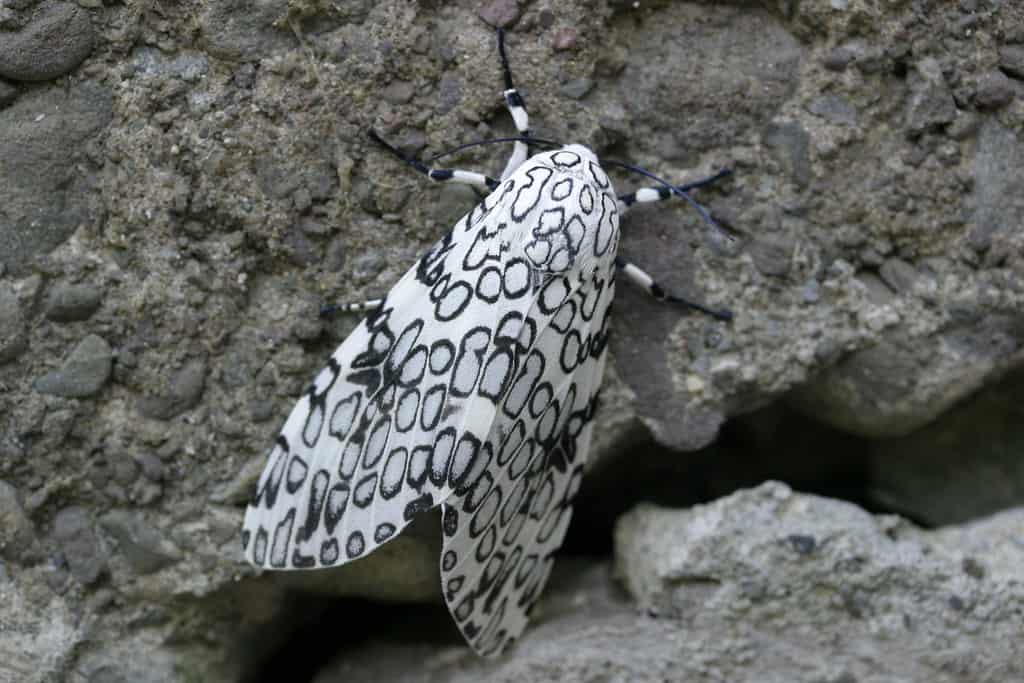
Giant leopard moths are white with black spots, some of which are solid while others are merely outlined.
About Leopard Moths
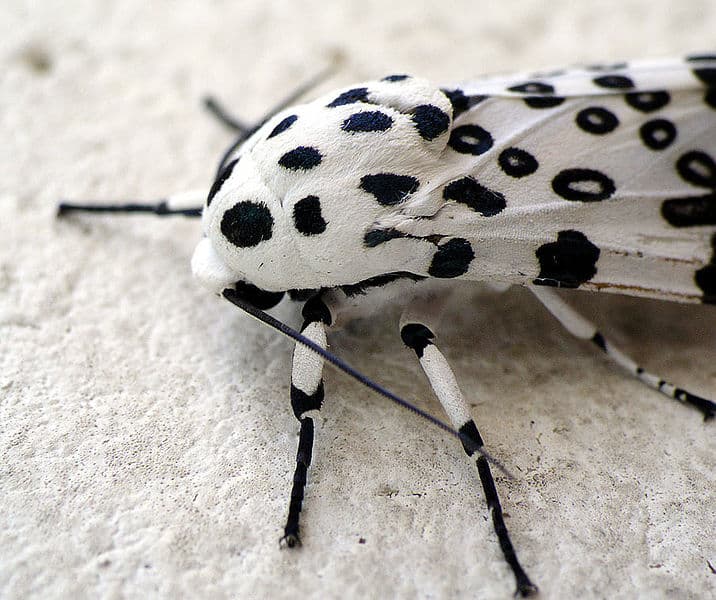
The insect in the video above is a leopard moth. A part of the tiger moth group, these interesting insects get their name from their print pattern. They have brilliant white wings covered in black spots and rings, just like a snow leopard. Leopard moths primarily range throughout North America. They extend from southern Ontario in Canada throughout much of the southern and eastern United States, continuing through Mexico and as far south as Colombia. You can find them as far west as Minnesota, Missouri, and Texas. Leopard moths feed on different plants in this region, including violets, dandelions, sunflowers, magnolias, and more.
Leopard moths‘ pattern is one of the most unique among moths and butterflies. Researchers believe that it is an example of disruptive coloration. This is when the pattern on an animal’s body helps to break up the outline of their body against the background, making it more difficult for predators to spot them. Underneath their black and white wings is a brightly colored abdomen of blue-black with orange markings. When threatened, these non-toxic moths curl into tight balls, exposing their bright abdomen as a warning to predators. In nature, bright colors are associated with poisonous creatures.