




I
Species Profile

Irish Water Spaniel

Canis lupus familiaris

Ireland's curly-coated water retriever
Nikolai Belyakov/Shutterstock.com

Irish Water Spaniel Distribution

Click a location to explore more animals from that region

Origin Location

This map shows the native origin of the Irish Water Spaniel. As a domesticated species, they are now found worldwide.

Loading map...

Found in 1 country

Size Comparison

Human 5'8"
Irish Water Spaniel 1 ft 11 in

Irish Water Spaniel stands at 34% of average human height.

Typical Irish Water Spaniel in the spring garden

At a Glance

Domesticated
Also Known As IWS, Irish Waterdog, Irish Water Dog, Irish Water-Dog
Diet Omnivore
Activity Diurnal+
Lifespan 4 years
Weight 30 lbs
Status Not Evaluated
Did You Know?

Nicknamed the "clown of the spaniel family" for its playful, mischievous streak.

Scientific Classification

The Irish Water Spaniel is a curly-coated water-retrieving gundog breed originating in Ireland, historically used for fetching waterfowl and working in marshy environments.

Kingdom
Animalia
Phylum
Chordata
Class
Mammalia
Order
Carnivora
Family
Canidae
Genus
Canis
Species
lupus

Distinguishing Features

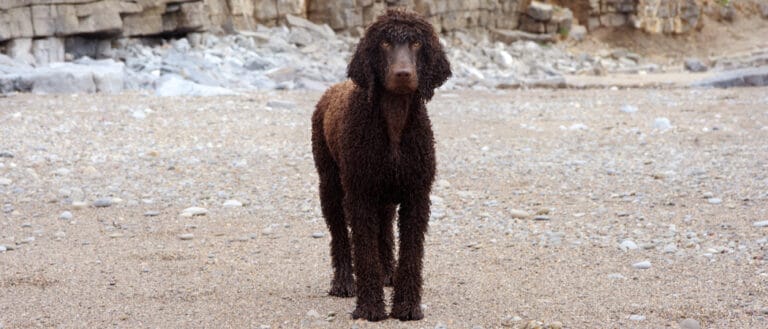
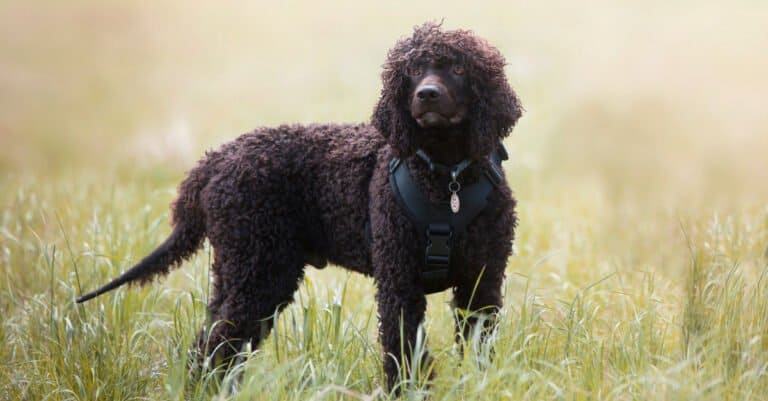
  • Dense, tight, curly liver-colored coat that is water-repellent
  • Characteristic ‘rat tail’ (smooth/short-haired tail base to tip)
  • Topknot of curls on the head
  • Athletic, robust build suited to swimming and retrieving
  • Historically a waterfowl retriever with strong affinity for water

Physical Measurements

Males and females differ in size

Height
1 ft 11 in (1 ft 10 in – 2 ft)
1 ft 10 in (1 ft 9 in – 1 ft 11 in)
Length
2 ft 11 in (2 ft 7 in – 3 ft 2 in)
Weight
61 lbs (55 lbs – 66 lbs)
51 lbs (44 lbs – 57 lbs)
Tail Length
8 in (7 in – 10 in)
Top Speed
31 mph
Medium land speed, strong swimmer

Appearance

Primary Colors
Secondary Colors
Skin Type Domestic dog (Canis lupus familiaris) skin with a dense, water-repellent curly coat; skin is generally resilient but prone to moisture-related irritation if not dried/maintained after swimming.
Distinctive Features
  • Domestic dog breed (not a wild canid): selectively bred in Ireland as a water-retrieving gundog for marshes, rivers, and waterfowl work-distinct from the base species (gray wolf) in temperament, coat structure, and specialized retrieving behavior.
  • Signature tight, crisp curls over body with a distinctive topknot on the head; face often shows short hair with noticeable beard/mustache.
  • Classic "rat tail": thick at the base and tapering to a near-bare tail with minimal feathering-highly distinctive among gundogs and spaniels.
  • Rich liver (brown) coloration is breed-defining; coat texture is oily/water-shedding compared with many other spaniels, supporting cold-water work.
  • Strong, athletic, slightly rectangular build optimized for swimming and retrieving; commonly shows strong rear drive and endurance.
  • Often has webbing between toes and strong feet suited to water and mud; excels in swimming and retrieving in marshy environments.
  • Temperament/working traits: intelligent, energetic, water-loving, persistent retriever; typically bonds closely with family, can be reserved with strangers, and benefits from structured training and a job to do.
  • Care requirements: needs frequent exercise and mental stimulation (retrieving drills, scent games, swim sessions); under-stimulation can lead to restlessness or mischievous behavior.
  • Grooming: curly coat requires routine combing to prevent matting, periodic professional trimming/hand-scissoring, and thorough drying after water work to reduce skin irritation.
  • Ear care is critical (pendant ears + water exposure): regular cleaning/drying to reduce otitis externa (ear infections).
  • Common health concerns seen in the breed: hip dysplasia, elbow dysplasia, chronic ear disease, hypothyroidism, allergic/atopic skin disease, and inherited eye conditions (e.g., progressive retinal atrophy). Screening (hips/eyes/thyroid) is recommended when selecting breeders.
  • Heat management: dense coat and high drive can predispose to overheating during intense activity in warm weather; prioritize water access, shade, and moderated exercise.
  • Diet/conditioning: active working-type metabolism; benefits from balanced nutrition and maintaining lean body condition to reduce joint stress.

Sexual Dimorphism

Sexual dimorphism is present mainly in size and overall robustness (typical of domestic dogs): males are generally taller/heavier with broader heads and more substantial bone; females are slightly smaller and finer-built while maintaining the same coat type and hallmark features (curls, topknot, rat tail).

  • Typically larger frame with broader head and heavier bone
  • May appear more powerful through the chest/neck while retaining the same tight-curled coat and rat tail
  • Typically smaller, slightly more refined build
  • Often appears lighter in overall outline while retaining identical coat texture and distinctive topknot/rat tail

Did You Know?

Nicknamed the "clown of the spaniel family" for its playful, mischievous streak.

Distinctive "rat tail": thick at the base, tapering, and mostly smooth-haired-rare among dogs.

One of the tallest spaniel-type gundogs, built for power and endurance in cold water.

Classic coat color is solid liver (brown), with tight curls and a wispy topknot.

Historically prized in Ireland for retrieving waterfowl from bogs, rivers, and marshes.

The face and throat are typically "smooth" (short-haired), contrasting with the curly body coat.

It's considered a relatively rare breed worldwide compared with other retrievers and spaniels.

Unique Adaptations

  • Dense, tight curls help repel water and insulate in cold, wet conditions-an advantage for long retrieves.
  • Lean, athletic build supports strong swimming and repeated water entries/exits.
  • Pendant ears and curly coat protect skin but require human care to prevent moisture-related issues.
  • Tail shape (smooth, tapered "rat tail") functions as a rudder-like aid in swimming agility.
  • High energy and trainability reflect selective breeding for cooperative hunting work with humans.

Interesting Behaviors

  • Water obsession: many will seek out ponds, puddles, and streams on their own.
  • Confident retrieving: naturally inclined to carry objects and bring them back, often with a proud "parade."
  • Problem-solving mischief: intelligent dogs that may invent games, open doors, or "test rules."
  • Bold cover work: comfortable pushing through reeds and marsh vegetation when conditioned and trained.
  • People-focused partnership: typically works best when given a job and frequent interaction.
  • Vocal/expressive play: some individuals use grumbles, yips, and body language to "talk" during games.

Cultural Significance

Irish Water Spaniel is an Irish gundog developed to retrieve waterfowl in wetlands. It shows Ireland’s sporting-dog tradition as a practical, tough hunting partner along rivers, bogs, and coasts, and remains a heritage breed in field sport and dog shows.

Myths & Legends

Irish sporting tradition preserves the idea of an older "Shannon Spaniel" or "water dog" type-named for the River Shannon-as an ancestral forerunner to later Irish water-retrieving spaniels.

A commonly repeated breed origin story credits 19th-century Irish breeder Justin McCarthy of Dublin with refining and popularizing the modern Irish Water Spaniel type, turning local water dogs into a consistent, recognizable breed.

Old wildfowling anecdotes describe curly water spaniels as dogs that would plunge into icy marshes without hesitation-stories told to praise their courage and stamina in Ireland's wet winters.

In Irish culture, hero dogs like Cú Chulainn (whose name links him to a hound) helped build respect for brave dogs that do their job — an idea later seen in hunters' working gundogs.

Traditional rural nicknames and lore often highlight the breed's unusual tail and topknot, treating these features as lucky "signs" of a true water worker from good Irish stock.

Conservation Status

NE Not Evaluated

Has not yet been evaluated against the criteria.

Population Stable

Life Cycle

Birth 6 pups
Lifespan 4 years

Lifespan

In the Wild
2–10 years
In Captivity
10–13 years

Reproduction

Mating System Polygynandry
Social Structure Managed Domestic
Breeding Pattern Serial
Fertilization Managed Selective
Birth Type Internal_fertilization

Irish Water Spaniel (Canis lupus familiaris): Biologically dogs are polygynandrous (mate with many partners), but breeders arrange planned pairings. People control timing, use health tests, and avoid close inbreeding. Mothers and humans raise the pups.

Behavior & Ecology

Social Pack Group: 3
Activity Diurnal, Crepuscular, Cathemeral
Diet Omnivore meat- or fish-forward diets (e.g., poultry/fish-based kibble or cooked fish as a topper)

Temperament

Breed-specific: energetic water-retrieving gundog; strong affinity for swimming/water work and carrying objects
Intelligent, problem-solving; can be more independent/"opinionated" than many spaniels-responds best to consistent, reward-based training
Affectionate and loyal with family; often reserved or cautious with strangers (early socialization recommended)
Playful/boisterous; thrives with structured outlets (retrieving drills, scent work, agility, long walks, swims)
Typically good with other dogs when well-socialized; may chase birds/small wildlife due to gundog instincts
Care requirements (breed-specific): high daily exercise + mental enrichment; curly coat needs regular brushing/combing to prevent mats and periodic trimming; meticulous ear care after swimming to reduce otitis; provide drying time for coat/ears
Irish Water Spaniels can get ear infections (from lots of water), hip dysplasia (sometimes elbow problems), hypothyroidism, some eye diseases like progressive retinal atrophy, and occasional epilepsy or skin allergies. Vet checks advised.

Communication

bark Alert/excitement/attention
whine Arousal, greeting, frustration
growl Warning/rough play
howl Occasional, situational
grumble/"talking" sounds Contentment or attention-seeking
Body posture and facial expressions Ears, brow, mouth tension
Tail carriage/wag patterns; whole-body wiggle during friendly greetings
Pawing/nudging to initiate play or request interaction
Retrieving presentation (bringing and offering objects) as a learned/instinctive social signal
Scent investigation and marking (especially outdoors); increased sniffing when aroused
Water-specific behaviors (head dips, splashing, shake-off) that can signal excitement and readiness to work
Eye contact and handler-checking when trained for fieldwork; responsiveness increases with clear cues and reinforcement

Habitat

Biomes:
Wetland Freshwater Temperate Forest Temperate Grassland Boreal Forest (Taiga) Tundra Alpine Mediterranean Desert Hot Desert Cold Savanna Tropical Dry Forest Tropical Rainforest Marine +8
Terrain:
Coastal Riverine Muddy Plains Island
Elevation: Up to 16404 ft 3 in

Ecological Role

Human-associated canid (working retriever/companion); potential local mesopredator/scavenger when roaming

assists humans in hunting by retrieving downed waterfowl and game from marsh/water companion animal role within human ecosystems can contribute to nuisance predation on small wildlife if unsupervised scavenging of food waste in human-dominated environments (where access occurs)

Diet Details

Main Prey:
Small mammals Ground-nesting birds and waterbirds Fish and aquatic invertebrates Carrion
Other Foods:
Berries and fallen fruit Grasses and herbaceous plants Starchy plant foods Vegetables and legumes

Human Interaction

Domestication Status

Domesticated

Domestic dogs (from gray wolves) have lived with humans for thousands of years. Irish Water Spaniel (Canis lupus familiaris): a 19th-century Irish water-retrieving gundog bred to fetch waterfowl from cold water and marshes. It is a strong swimmer with tight, water-repellent curls and a 'rat tail.' People keep it as companion, hunting, and sport dog.

Danger Level

Low
  • Accidental injury from size/strength and exuberant jumping during play
  • Nips or bites if poorly socialized, mishandled, or in pain (as with any dog)
  • Higher mouthiness/retrieving drive may lead to grabbing objects or hands without training
  • Risk increases with neglect, lack of exercise/mental stimulation, or improper confinement
  • Zoonotic risks are typical of domestic dogs (e.g., parasites) and are mitigated by routine veterinary care

As a Pet

Suitable as Pet

Legality: Irish Water Spaniel (Canis lupus familiaris) is usually legal to own. It must follow normal dog laws—licenses, leashes, shots, import or quarantine rules. Breed bans are rare; limits are usually about size or kennels.

Care Level: Experienced

Purchase Cost: $800 - $2,500
Lifetime Cost: $18,000 - $45,000

Economic Value

Uses:
Companion animal ownership Sporting/hunting and gundog work Professional training and behavior services Grooming services and coat-care products Veterinary care (preventive and breed-relevant conditions) Dog sports and competitions (field, obedience, agility, dock diving) Breeding programs and pedigree registries Animal welfare/rescue and rehoming
Products:
  • puppies from registered breeders (purchase/adoption)
  • stud services and breeding rights (where applicable)
  • training programs for retrieving/field work and pet manners
  • specialized grooming (hand-scissoring, clipping, de-matting) and coat tools
  • high-quality diet and supplements (as advised by a veterinarian)
  • veterinary screening: hips/orthopedics, thyroid testing, ophthalmology exams
  • hunting/retrieving equipment (dummies, whistles, waders-related accessories for handlers)
  • sport entry fees, travel, and equipment

Quick Take

  • Achieving a 12-year lifespan is only possible for owners who navigate high market costs.
  • Administering Ivermectin medication can create a specific health risk for this spaniel.
  • It is ironic that breeding standards prioritize folklore over documented records.
  • Scouting the litter siblings is a mandatory process to mitigate potential behavioral anxiety.

The athletic and sporty Irish water spaniel’s breeding is almost entirely based on folklore and theory, but it is a lovable, quiet dog. With a hypoallergenic coat, it is in high demand, and the appeal is even greater due to its long lifespan (10-12 years), even though it comes at a high price. It isn’t quite as outgoing as other variations of water spaniels, but it is much healthier overall.

If you’re looking for an intelligent pup with natural curiosity, the even temperament of the Irish water spaniel could be a good match for you.

Informational infographic titled Irish Water Spaniel: The Hypoallergenic Hunter & Watchdog, featuring illustrations of a curly-haired brown dog and various health and care icons.
A hypoallergenic hunter with a history built on folklore—but beware the common medication that could prove fatal to this ancient breed. © A-Z Animals

3 Pros and Cons of Owning an Irish Water Spaniel

ProsCons
Incredible watchdog: This dog doesn’t use its bark for anything except to alert its family of threats, making it a great watchdog.Requires a lot of exercise: This dog is incredibly energetic, so it needs vigorous exercise to keep its mind and body healthy.
Fairly perceptive: Some people see this dog as a rather sensitive soul, taking on the vibe of the people around it.Doesn’t always have a good relationship with other animals: If you have other animals in the home, the Irish water spaniel can become rather aggressive.
Hypoallergenic: Their coat is meant to shed very little, making this dog a great option for individuals who have allergies.Difficult to find: Since the Irish Water Spaniel is a rare breed, it is often hard to find a breeder or a rescue that offers them, regardless of the price

Evolution and Origins

The Irish water spaniel is thought to be one of the oldest of the spaniel breeds, with evidence that they were present around the 7th century AD. Their name was used in the 1100s to refer to dogs that were found in Ireland.

They were bred to be hunting dogs and with their webbed feet and double-layered, water-repellent coats were well-suited as retrievers of waterfowl as well as excellent at hunting game on land.

The Irish water spaniel was brought to France in the 17th century when King James I of England gifted an Irish Water Spaniel to the king of France in an effort to smooth diplomatic relations between the countries.

The origin of the Irish water spaniel is uncertain, as breeder Justin McCarthy, credited for the modern-day dog’s development in the 1830s, did not keep any records. However, some believe that the breed was created through crossing the poodle, Portuguese Water Dog, and now-extinct English Water Spaniel.
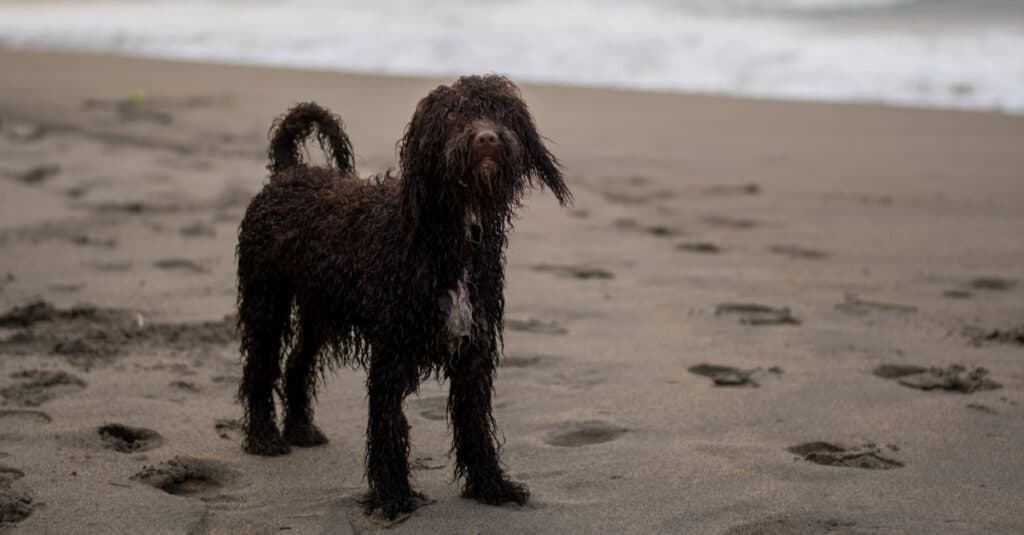
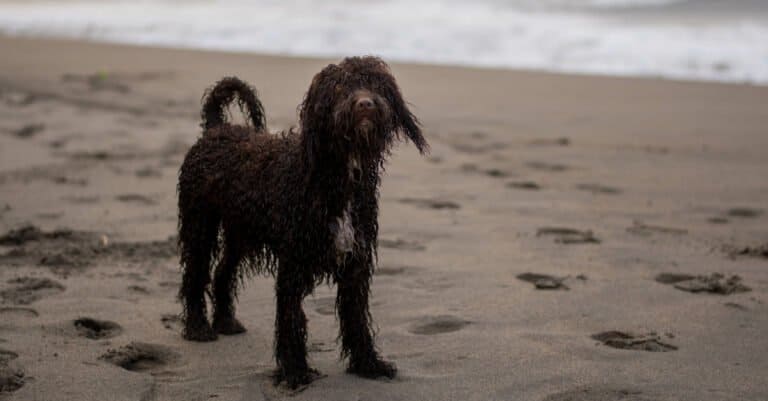
Irish water spaniel - went swimming at the beach

Irish water spaniels make excellent hunting dogs due to their double-layered, water-repellent coats.

Size and Weight

Built for swimming, the average height of the Irish water spaniel is anywhere from 21 to 24 inches, ensuring that it is directly between the sizes of a medium and large dog. It has a waterproof coat, and this dog is typically between 45 and 68 pounds in size. Males typically weigh more than females, with males weighing 55 to 68 lbs and females 45 to 58 lbs.

Common Health Issues

Taking care of the Irish water spaniel and its health needs is crucial to maintaining its long lifespan. The dog is typically pretty healthy, so there aren’t a lot of problems to worry about, especially if the dog is bred by a reputable person. A rescue may have less information about the genetics of the dog, though it isn’t impossible to find one.

Hip and elbow dysplasia is relatively common, which is often due to the long legs of this animal. The condition can be quite painful, so it is best to bring it to a doctor if these bones are causing your dog to limp.

Some dogs are prone to allergic reactions to medications. Even Ivermectin — which is a medication that is typically used to deworm the dog — can cause a bad reaction. Make sure to look for any side effects from the medication that could be a threat.

Thyroid disease is relatively common. This type of condition impacts the dog’s hormones, making it difficult for the metabolism to respond properly.
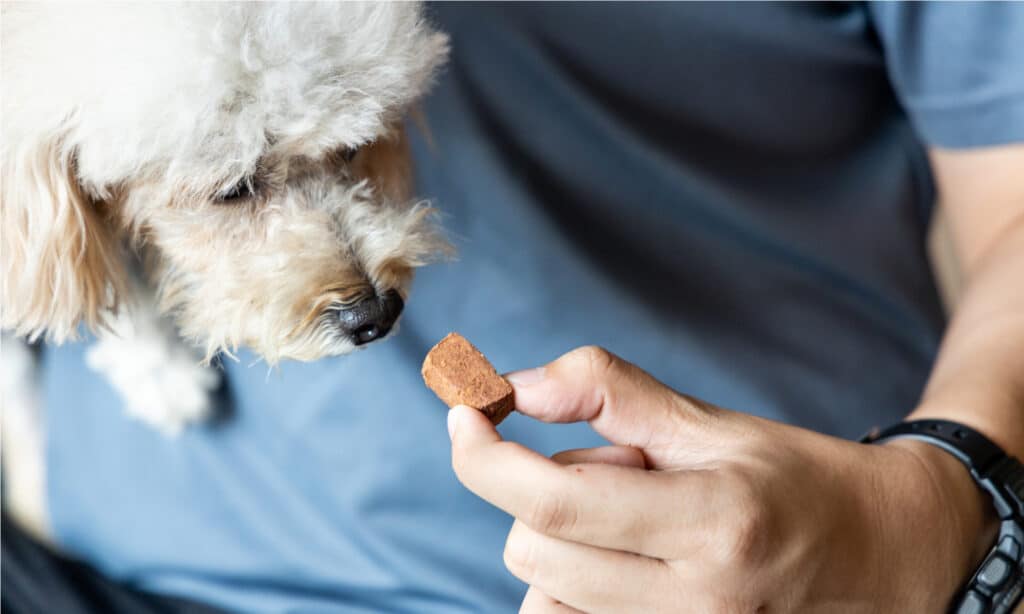
dewormer for puppies

Dogs, including some Irish water spaniels, can have an allergic reaction to medication.

Temperament

The personality of the Irish water spaniel is highly curious and alert. Though other spaniels are typically more outgoing, this specific breed exhibits particularly reserved behavior when it meets strangers. Luckily, this breed doesn’t become aggressive with strangers, only alerting its owners if it feels that a threat is nearby. Since this breed is still rather independent, the Irish water spaniel also tends to test its owner’s limits.

The genetics, training, and socialization of the Irish water spaniel will be the determining factors in the dog’s overall temperament. To get the best idea of their inherited traits, see if it is possible to meet siblings from the litter or the parents. The best way to keep an even temperament is to expose the dog to different sights and sounds at a comfortable pace. If there are local “puppy schools” in your area, enrolling in them can be incredibly helpful for social skills.

Though the Irish water spaniel is relatively active, they won’t keep anyone up at night. They don’t use their voice very much, and the majority of the sounds that owners will end up hearing from this pup are only to warn the family about potential threats. That’s part of the reason that this pet is such a good watchdog. However, this desire to take care of their family is part of the reason that they struggle with anxiety.
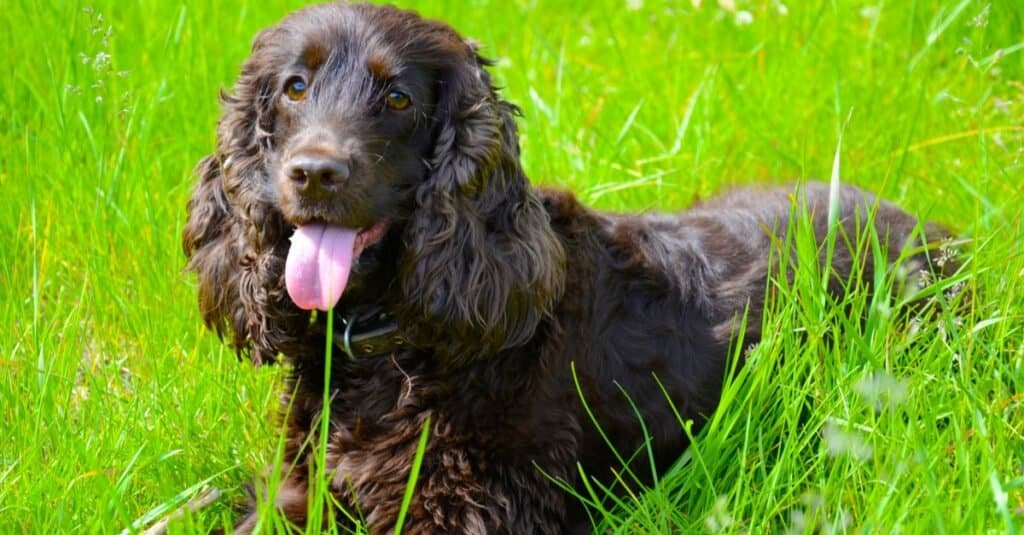
Types of water dogs - Irish Water Spaniel

Irish Water Spaniels are highly curious and alert.

How to Take Care of an Irish Water Spaniel

With any rescue dog, there are specific ways that you should care for them to ensure that they are happy, healthy, and thriving. The Irish water dog is relatively easy to care for, but it is still important to consider certain factors. Adopting a puppy or a full-grown dog as a pet is a big choice, but these tips should easily prepare you.

The Best Dog Food

High-quality dog food is encouraged for the Irish water spaniel. Though it doesn’t matter if the food is prepared at home (under vet recommendation), or commercially prepared. The dog’s age plays a major role. Senior dogs will need more hydration, and puppies will need more vitamins and protein. If purchasing a commercial dog food, look for the age for which the particular bag is meant.

As an adult, this spaniel needs about 1.5 to 2.5 cups each day. But the total amount should be divided into two meals.

While treats are a helpful incentive during training, feeding the dog too much can cause excess weight gain. The only nourishment that this dog should have consistent access to is a fresh bowl of water. Consider also that many Water Spaniels deal with allergies and food sensitivities. Luckily, there are plenty of limited-ingredient and allergy-control dog foods.

Maintenance and Grooming

One of the advantages of the breed is that it doesn’t shed very much. However, it still requires consistent care. With some gentle brushing and regular cleaning of the ears and nails, care can be done on a weekly basis. The breed is known for its hypoallergenic coat, but you’ll need to trim it every two months to keep it neat. If you aren’t taking care of this coat yourself, take this pup to an experienced groomer.
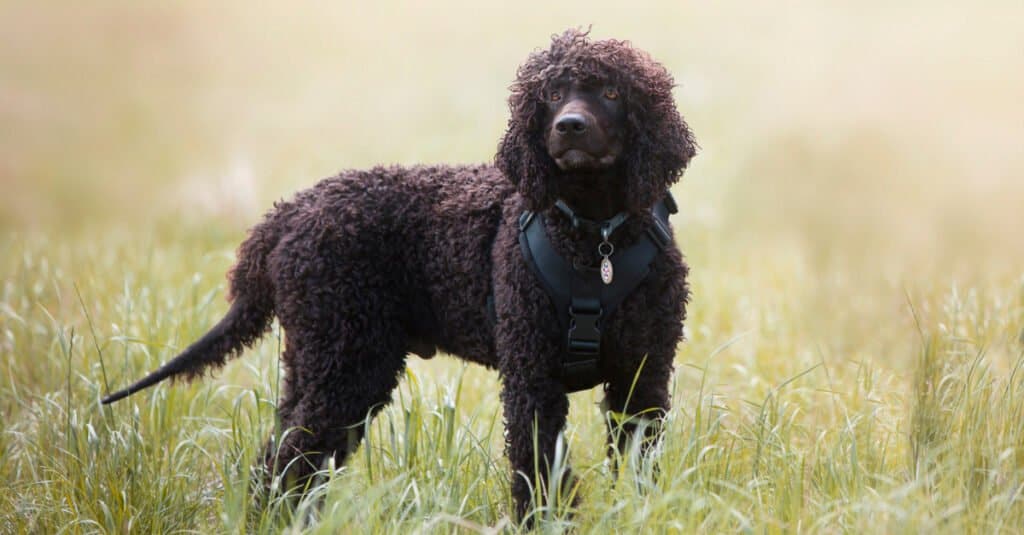
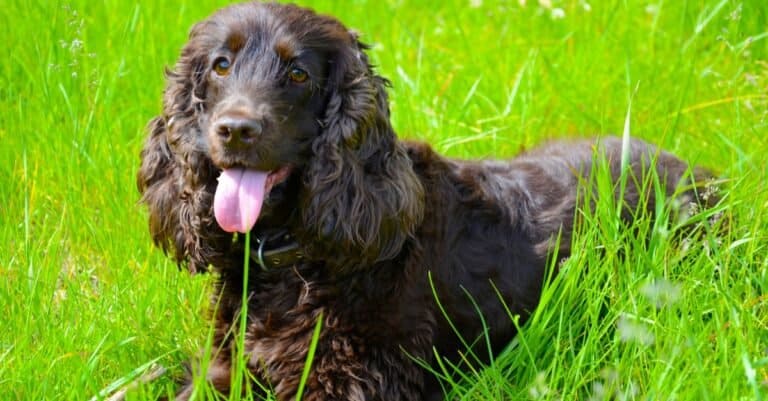
Irish water spaniel - regal in the field

The Irish water spaniel does not shed much.

Training

As long as the Irish water spaniel gets enough exercise during the day, it will be easy to train. They are eager to make their owner happy, and they like to work hard to show their intelligence. The sessions should be fun and engaging, and they will respond to positive reinforcement throughout the training.

This dog is loving and obedient, and some have been trained as therapy or assistance dogs.

Exercise

With all of the high energy of the Irish water spaniel, it definitely needs to have an outlet for its active nature. It doesn’t take much activity to make them happy, and they are extremely easy to train if they get the exercise that they require. Whether you take this pup on a long walk, a jog next to a bicycle, or chase a ball around at the park, all of these efforts will meet the mental and physical demands they have.

One of the favorite activities of the Irish water spaniel is to swim. They are particularly strong swimmers, and they love to get plenty of time in the water as it is needed.
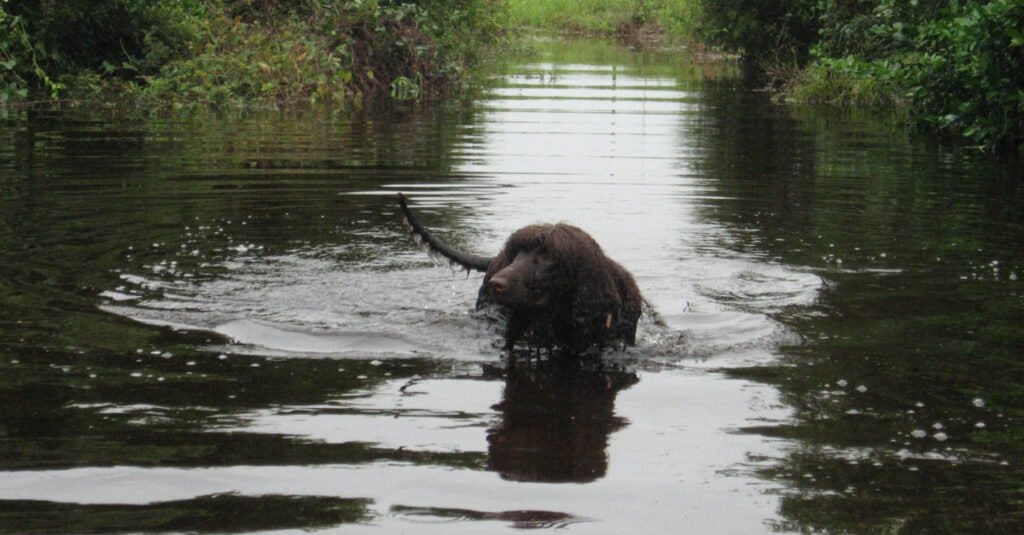
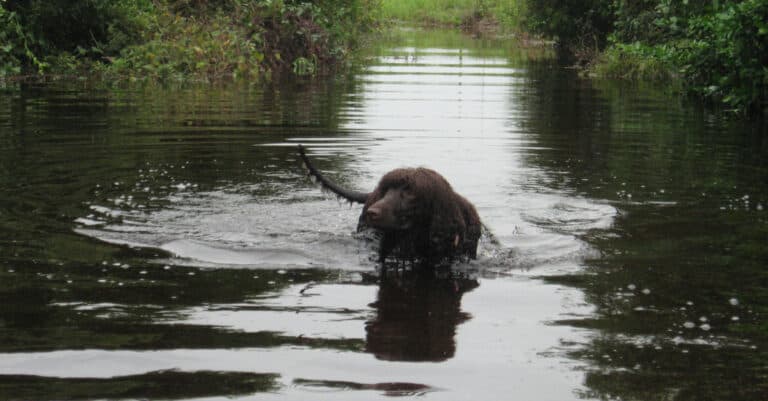
Irish water spaniel - swimming in the creek

Irish water spaniels use their strong swimming abilities to exercise.

Puppies

Grooming efforts need to start when the dog is still in their puppy stage, even though it won’t need a lot of upkeep. Starting early allows you to establish this time as a positive experience.

Irish Water Spaniel and Children

To get the best chances of positive interactions with children, the Irish water spaniel should be raised with them around. Early exposure is the best, but all children should have your supervision around the dog while they are learning to interact with each other. Children should not be allowed to roughly play with this breed by pulling their ears or tails, and your dog should not be allowed to bite.

Just like with children, any animals should be introduced to the Irish water spaniel early as well. They are natural hunters, and they may see small animals as a type of prey.
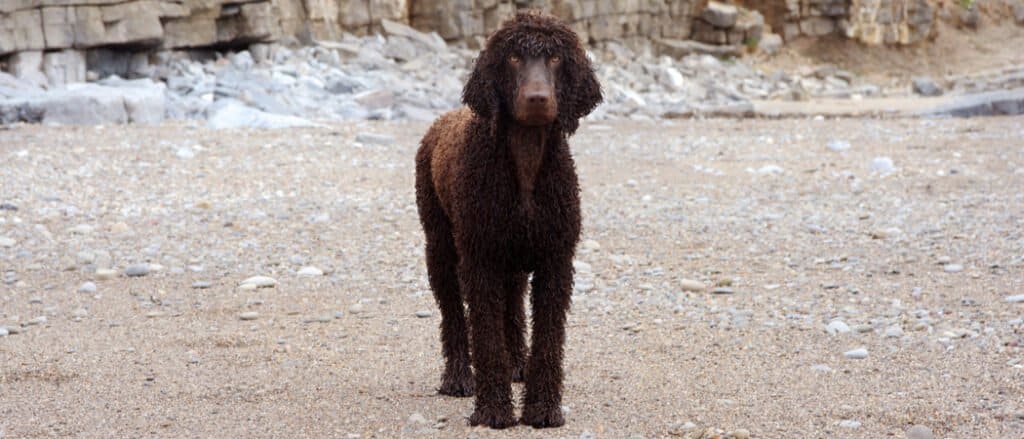
Irish water spaniel

Ideally, the Irish water spaniel should be introduced early to children and other animals in the family.

Dogs Similar to the Irish Water Spaniel

If the Irish water spaniel is difficult to find, or you want a different breed that suits your lifestyle, there are many other species available. Consider the Australian labradoodle, English setter, or the Epagneul Pont Audemer.

  • Australian Labradoodle: The Australian Labradoodle is hypoallergenic as well, offering a much more social personality.
  • English Setter: The English Setter dates back centuries as a cross between the Spanish pointer, the water spaniel, and the springer spaniel.
  • Epagneul Pont Audemer: The Epagneul Pont Audemer looks a lot like the Irish water spaniel, offering a gentle and affectionate temperament.
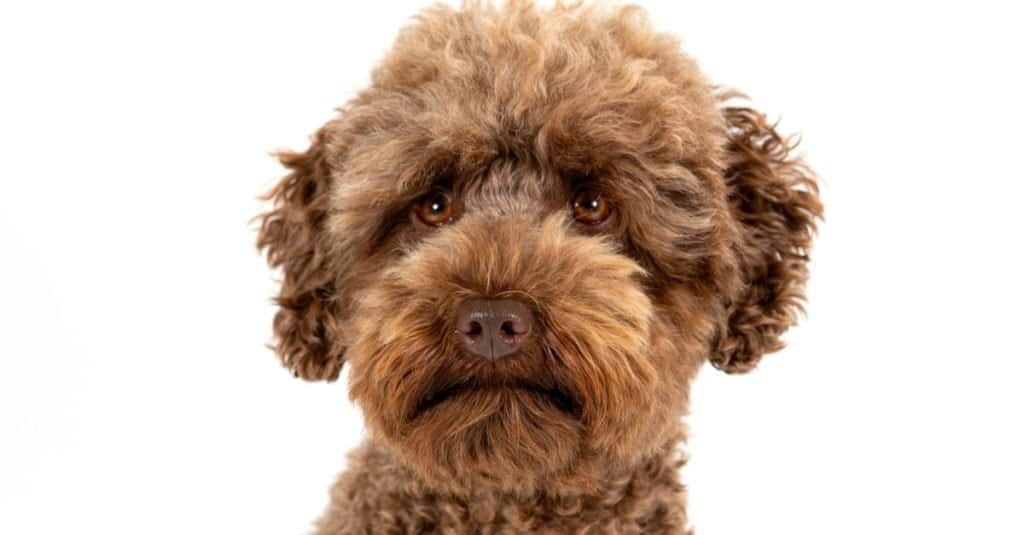
Australian labradoodle dog portrait isolated on white

Australian labradoodle is hypoallergenic, like the Irish water spaniel.

Famous Irish Water Spaniels

The Irish water spaniel has been featured in a few television shows, including a UK-based series in the 1980s called “The Irish R.M.” A few celebrities have even called these dogs their companions, including Justin McCarthy (who allegedly created the breed).

As easy to train as these dogs are, their introverted personality may be the reason that more of them have not been included in movies and television shows.

View all 59 animals that start with I

Sources

  1. Pet AZ / Accessed August 21, 2021
  2. American Kennel Club / Accessed August 21, 2021
  3. dogtime / Accessed August 21, 2021
  4. Wikipedia / Accessed August 21, 2021
  5. iwsca / Accessed August 21, 2021
  6. dogbreedslist / Accessed August 21, 2021
  7. TerrificPets / Accessed August 21, 2021
Catherine Gin

About the Author

Catherine Gin

Catherine Gin has more than 15 years of experience working as an editor for digital, print and social media. She grew up in Australia with an alphabet of interesting animals, from echidnas and funnel-web spiders to kookaburras and quokkas, as well as beautiful native plants including bottlebrushes and gum trees. Being based in the U.S. for a decade has expanded Catherine's knowledge of flora and fauna, and she and her husband hope to have a hobby farm and vegetable garden in future.

Thank you for reading! Have some feedback for us?


Irish Water Spaniel FAQs (Frequently Asked Questions)

Despite their adaptability to almost any routine or home, Irish water spaniels still require a high-energy lifestyle that requires plenty of exercise.