
Quick Take
- Scientists now believe that jellyfish play a more important role in the marine food chain than previously thought.
- Despite their lack of nutritional value, their abundance and ease of capture make jellyfish a valuable food source.
- Fish, seabirds, reptiles, crustaceans, marine mammals, humans, and even other jellyfish eat jellyfish.
- Small crustaceans in the Arctic consume both living and dead jellyfish tissue.
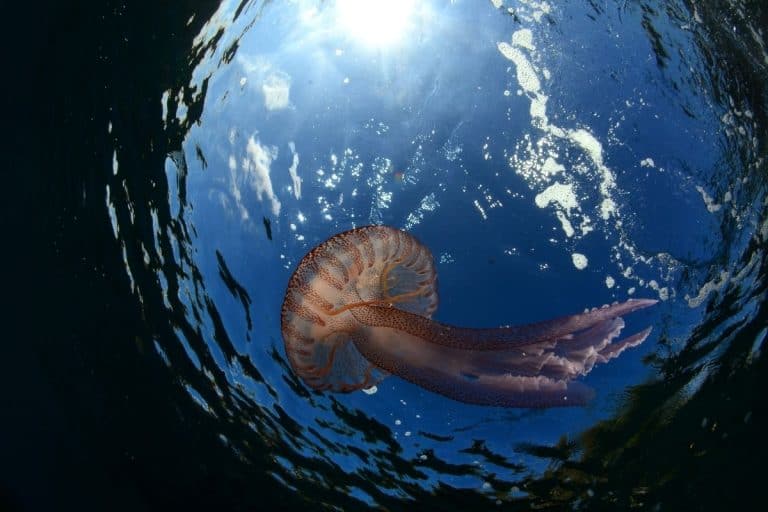
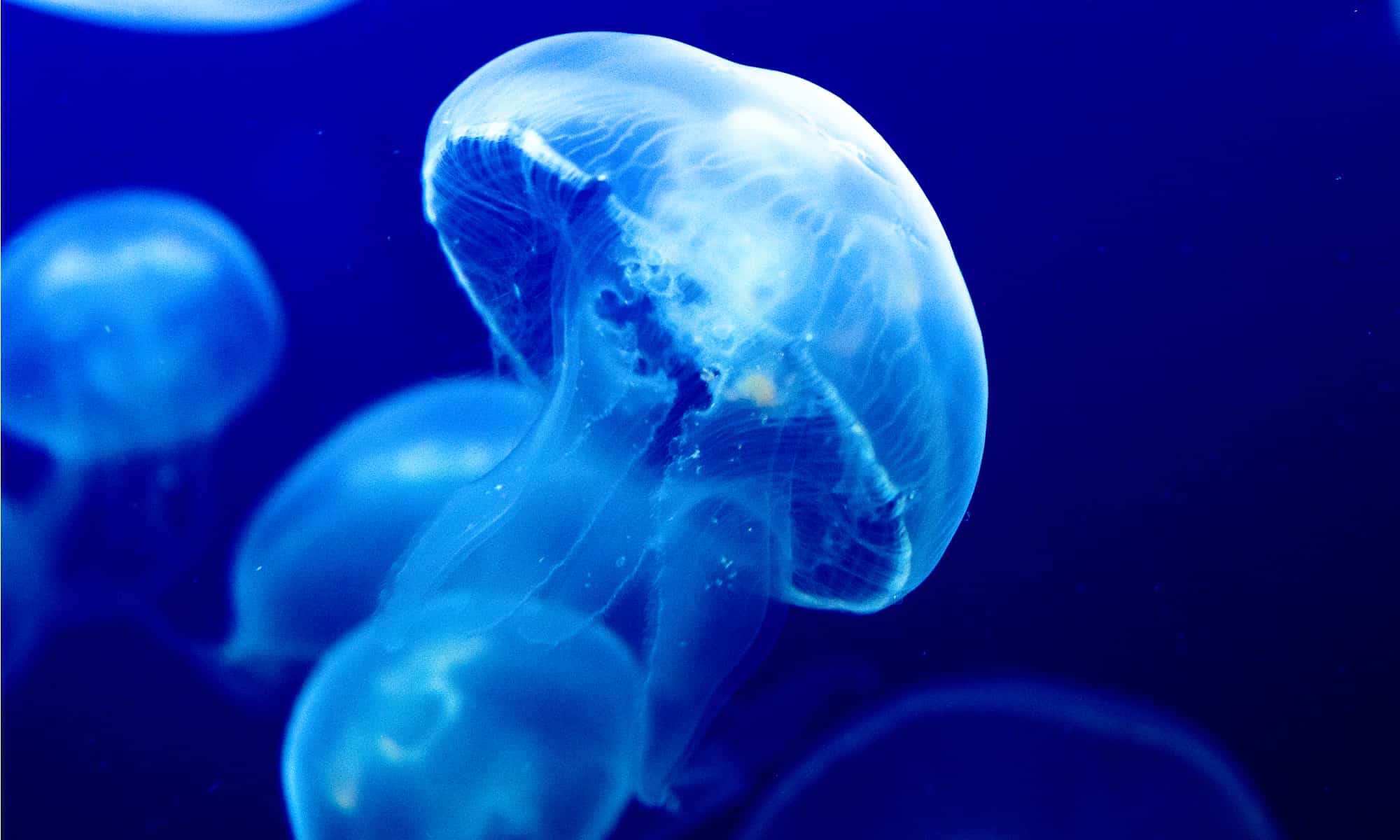
Jellyfish are simple marine animals that inhabit every ocean in the world at a diverse range of depths. There are around 4,000 species in Medusozoa, the subphylum of Cnidaria. These jelly-like organisms have basic nervous systems, but they lack blood, lungs, hearts, and even brains. Jellyfish have radial symmetry, which means their body parts radiate from a central axis. This allows jellyfish to monitor and respond to their environment from every direction. Jellyfish also have thousands of stinging cells in their tentacles for capturing prey and defense. With abilities like these, what types of animals would willingly prey on jellyfish? Read on to learn more about jellyfish predators.
Why Eat Jellyfish?
Jellyfish have long been considered opportunistic prey for other marine animals. Because jellyfish are 95% water, it might seem that they do not provide enough nutrition to justify the energy predators expend to catch them. However, scientists now believe that jellyfish play a more important role in the marine food chain than previously thought. While they may lack substantial nutritional value, their abundance and ease of capture make them a valuable food source.
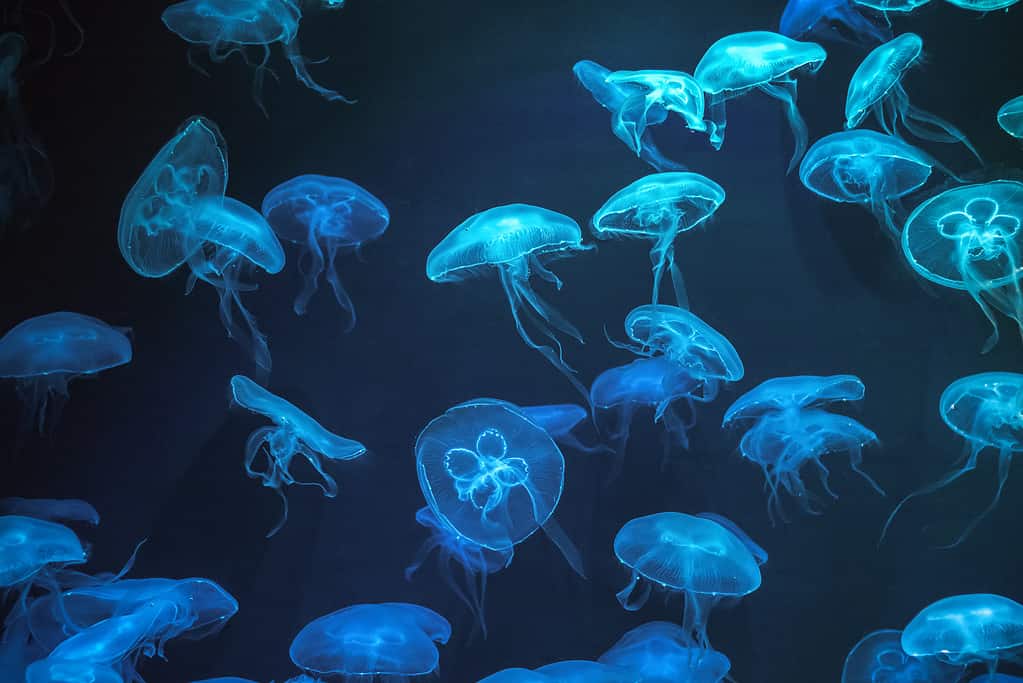
Jellyfish are generally solitary, but they sometimes gather in large groups called blooms or swarms.
©VictorHuang/iStock via Getty Images
Although they do not contain fats, proteins, or carbohydrates, some jellyfish species contain fatty acids that are beneficial for their predators. Fatty acids are crucial for forming cell membranes, reducing inflammation, and supporting reproduction. While a single jellyfish may not provide much nutrition, consuming many at once allows predators to gain essential fatty acids with minimal energy expenditure. Some jellyfish species travel in groups, and others congregate in large, temporary groups called blooms or swarms, making them an easy meal for many ocean dwellers.
Jellyfish Predators
Researchers have also discovered that there is widespread consumption of jellyfish among marine predators. Fish, seabirds, reptiles, crustaceans, and even marine mammals eat jellyfish. Jellyfish also prey on other jellyfish. Humans, particularly in East and Southeast Asia, consume jellyfish, too, where it is popular in many cold dishes. The following sections provide an in-depth look at the animals that eat jellyfish.
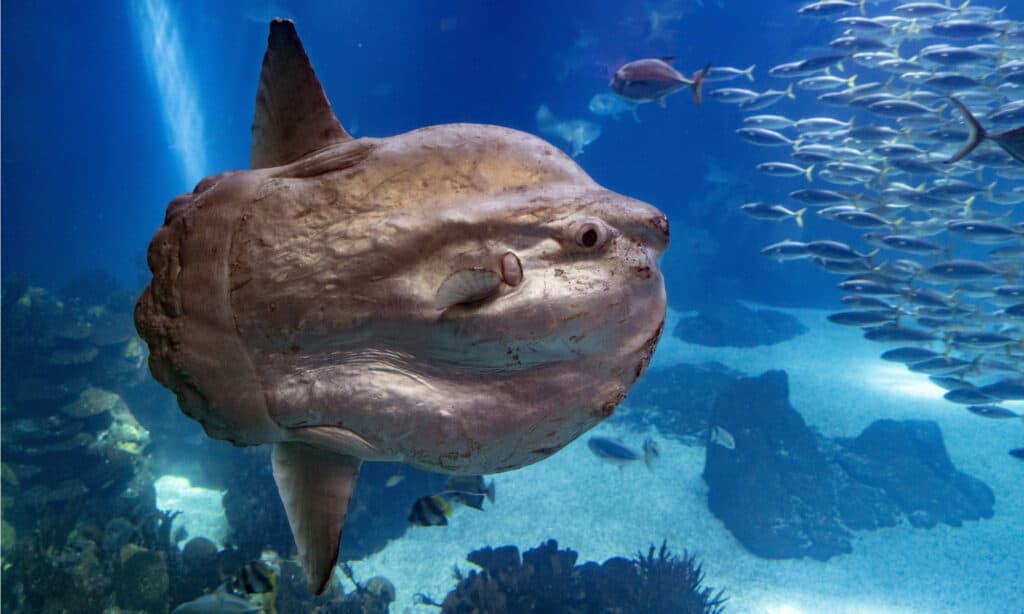
Sunfish are well-known consumers of jellyfish.
©Andrea Izzotti/Shutterstock.com
Fish
Tuna, chum salmon, sunfish, dogfish, grey triggerfish, mackerel, blue rockfish, anchovies, and eels are just a few of the fish species known to consume jellyfish. In fact, chum salmon eat many types of gelatinous prey. They have enlarged, specialized stomachs that expand, allowing them to consume and digest enough jellyfish to make preying on them worthwhile. These fish also have faster digestion rates, making jellyfish a good source of energy.
Seabirds
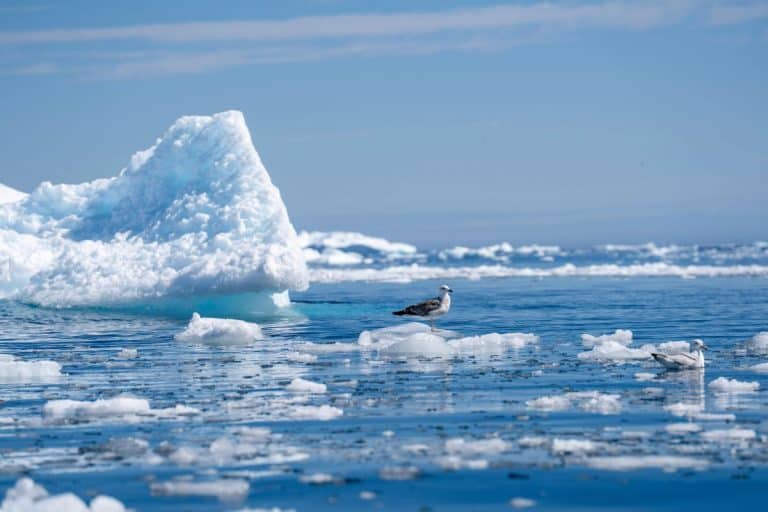
Seabirds including albatrosses, fulmars, puffins, kittiwakes, murres, auklets, gulls, petrels, and penguins have all been documented to consume jellyfish. Some seabirds, such as Northern fulmars, feed selectively on jellyfish organs. Scientists have found that the organs can provide five times the amount of energy than the tissue of the jellyfish bell.
Turtles
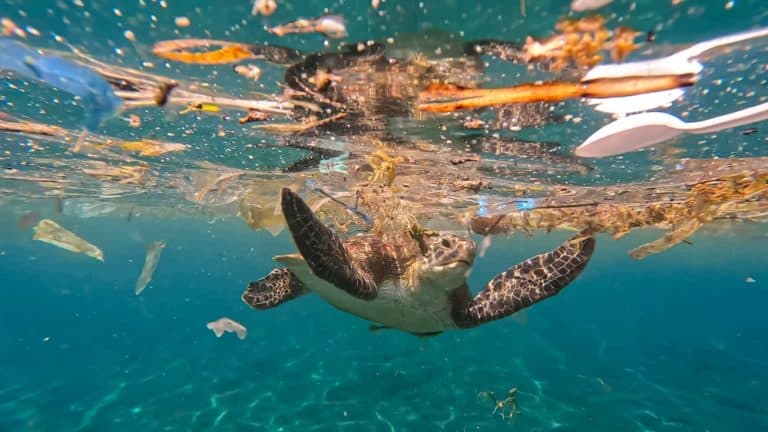
Jellyfish and other gelatinous organisms are the prey of choice for leatherback sea turtles. Leatherback turtles have backward-facing spines called papillae in their mouths and esophagi. These papillae are made of keratin, the same material as human fingernails. The spines trap slippery prey, prevent it from escaping, and protect the turtle’s throat from stings. One study found that leatherback turtles could consume an average of up to 73% of their body mass in jellyfish each day.

Leatherback sea turtles can consume up to 73% of their body mass in jellyfish each day.
Crustaceans
Crustaceans that prey on jellyfish include amphipods, slipper lobsters, juvenile spider crabs, long-nosed spider crabs, red rock crabs, and arrow crabs, among others. Researchers found that some scavenging amphipods in the Arctic consumed the tissue of both living and dead jellyfish, especially during the polar night when other food sources are scarce.
Sharks and Whales
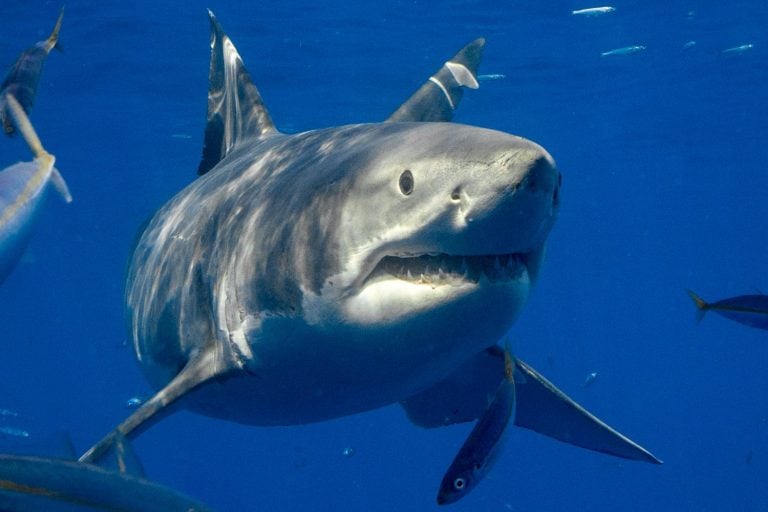
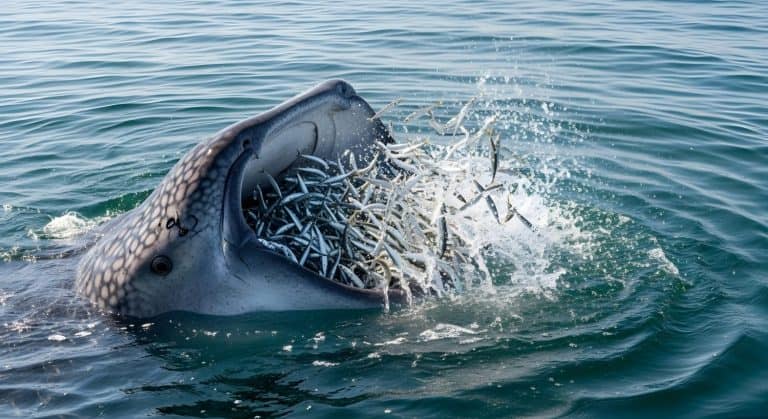
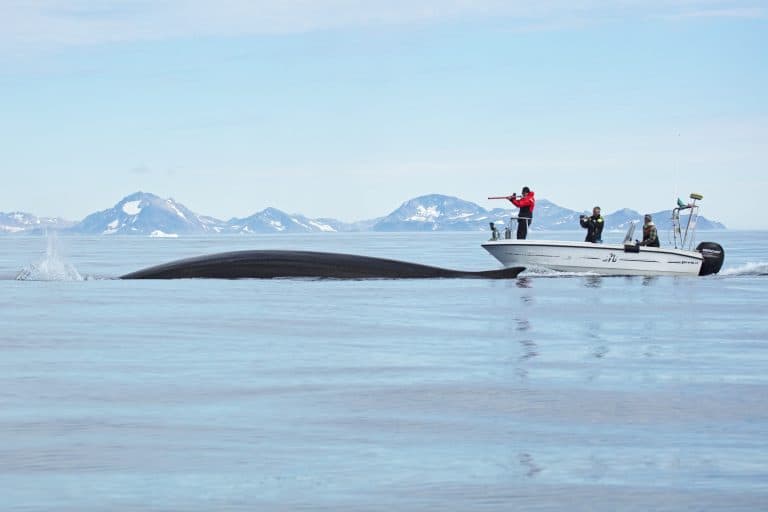
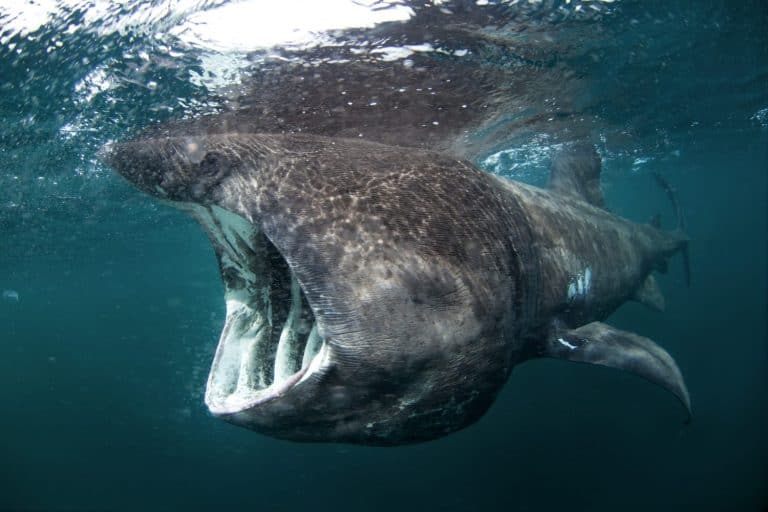
Some large marine animals such as whale sharks and humpback whales also prey on jellyfish. Whale sharks have been recorded feeding and swimming among swarms of jellyfish in the Gulf of California, Mexico, suggesting predatory behavior and competition for resources. Whale sharks have also been observed eating jellyfish in other locations. Humpback whales typically feed on krill, small fish, and plankton, but they have also been known to consume jellyfish.