
Quick Take
- One chameleon species spends more of its life as an embryo than as a living animal, and that is not the only lifespan surprise that sets chameleons apart from other lizards. Explore chameleon lifespans →
- Chameleons and most lizards use their tails in completely opposite ways, and one of those ways doubles as a survival trick that chameleons simply cannot pull off. Compare tail functions →
- Some lizards can reproduce without any males at all, and the method they use is stranger than you'd expect. Discover parthenogenesis details →
- Chameleons have a visual ability that most vertebrates can only approximate, and it changes how they hunt entirely. See how chameleon eyes work →
Over 5,000 lizard species roam the planet, ranging from minuscule lizards that fit on your fingertip to giant beasts capable of chasing down large prey. Among the most interesting of these reptiles are chameleons (Chamaeleonidae), known for their wide range of colors and unique features, with many subspecies. Chameleons are easily recognized among lizards because of their distinctive traits. Here are seven defining characteristics that set them apart from other lizards.
Key Differences Between Chameleons and Other Lizards
There are over 200 species of chameleons. These reptiles are native to Africa and Eurasia, with about half of all species found on the island of Madagascar. Chameleons possess several distinct characteristics that set them apart from other lizard species. These key distinctions are apparent in their physical features, specifically their size, tail, eyes, tongue, as well as their distribution, reproduction, and lifespan.
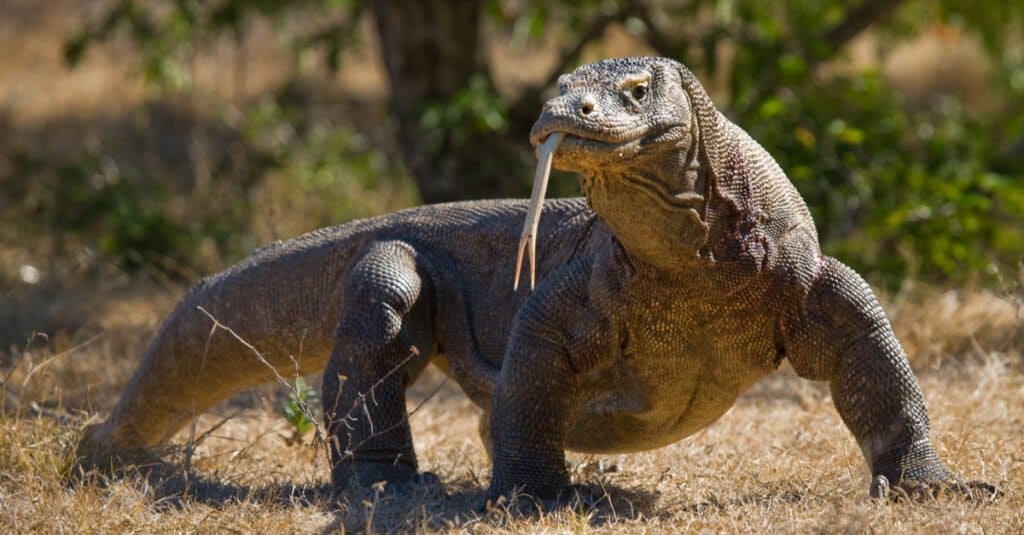
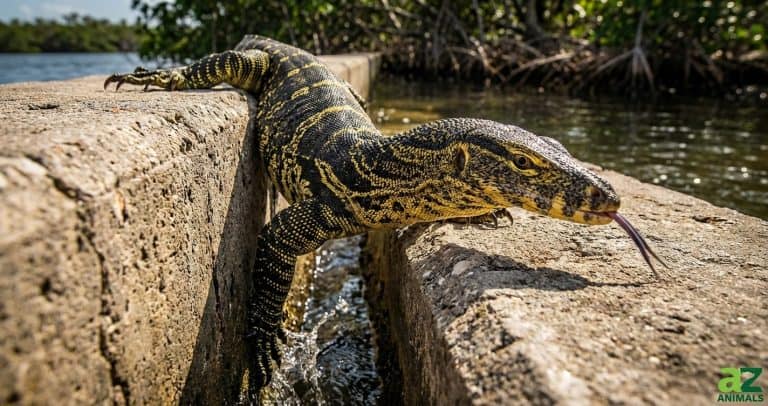
Chameleons are relatively small, but some lizards, like the Komodo dragon, can grow very large.
©GUDKOV ANDREY/Shutterstock.com
Size
Lizards are larger than chameleons on average. There is significant variation among chameleon species, ranging in size from tiny, less-than-1-inch chameleons to much larger ones, like the Parson’s chameleon, which can reach over 26 inches long and weigh more than 1.5 pounds. Although several species of chameleons rank among the smallest lizards in the world, the largest chameleons are approximately the same size as the average lizard.
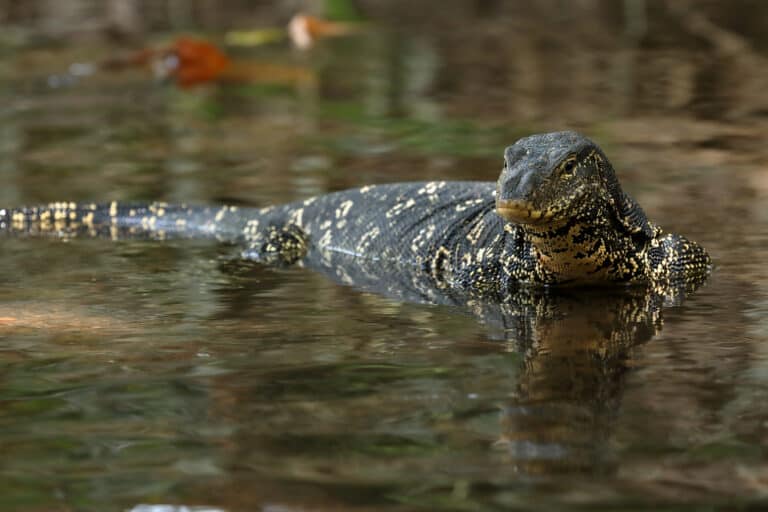
However, some lizards can reach much larger sizes. Specifically, the monitor lizard called the Komodo dragon (Varanus komodoensis), which is the biggest lizard on Earth. The largest verified Komodo dragon weighed 366 pounds and measured 10.3 feet long.
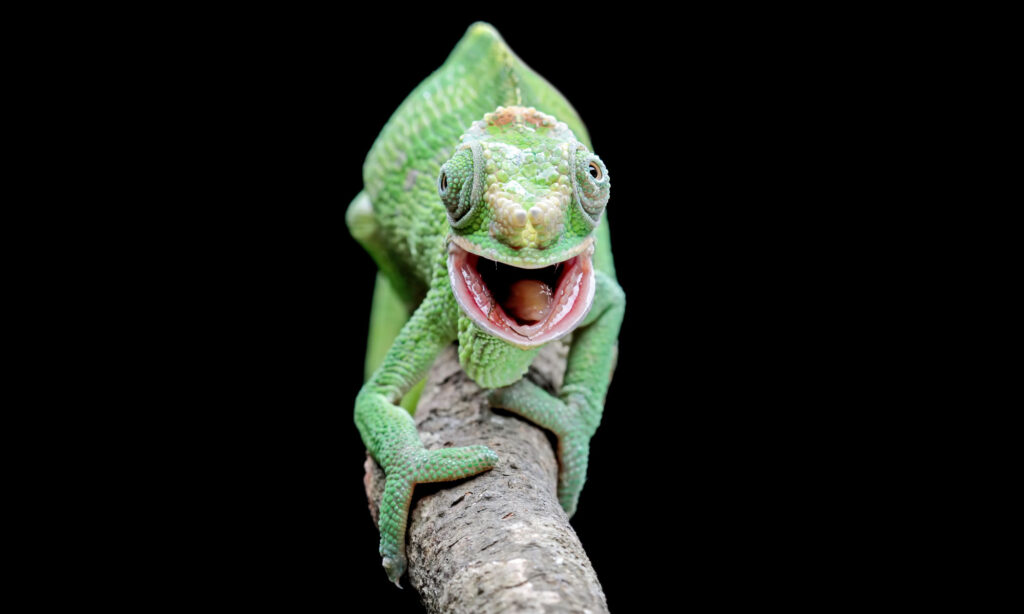
Chameleons come in a wide variety of sizes.
©Agus_Gatam/Shutterstock.com
Distribution
Although they are now found around the globe as a result of the exotic pet trade, chameleons are endemic to Africa and parts of Asia. Their distribution also includes parts of Europe, Madagascar, and other islands in the Indian Ocean. As mentioned above, Madagascar is a major hotspot for chameleon species diversity, with about half of all species found only on the island. Their habitats vary greatly, from rainforests to deserts and savannas.
Other lizards are found on every continent except Antarctica. Because lizards regulate body temperature by relying on external heat sources like the sun, they cannot survive in extremely cold environments like Antarctica. They are found in a wide variety of terrestrial habitats on every other continent.
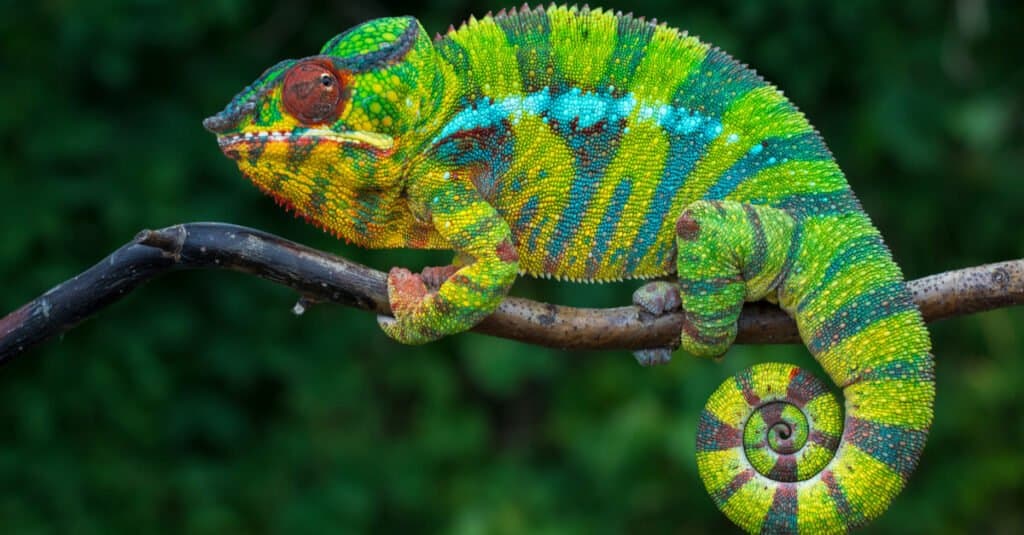
Chameleons are endemic to Africa and Eurasia.
©Jan Bures/Shutterstock.com
Tail
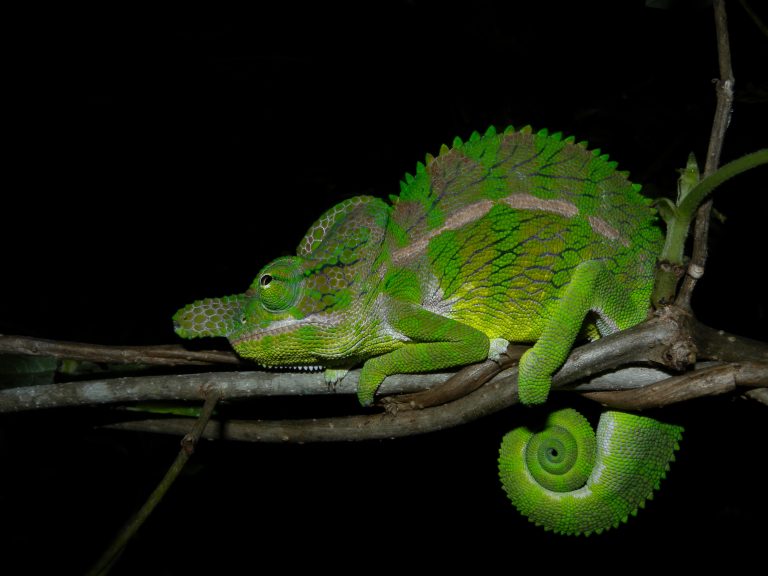
Chameleons have prehensile tails that allow them to grab onto branches and other items. However, most lizards do not have prehensile tails. Prehensile tails are characterized by strong muscles and a flexible structure that allows for precise, controlled movements similar to an extra appendage or hand.
Most lizards, however, have tails with caudal autotomy. This is a defensive mechanism that allows them to shed their tails to distract predators. After a successful escape, lizards can regenerate their tail, but regeneration speed depends on the species.
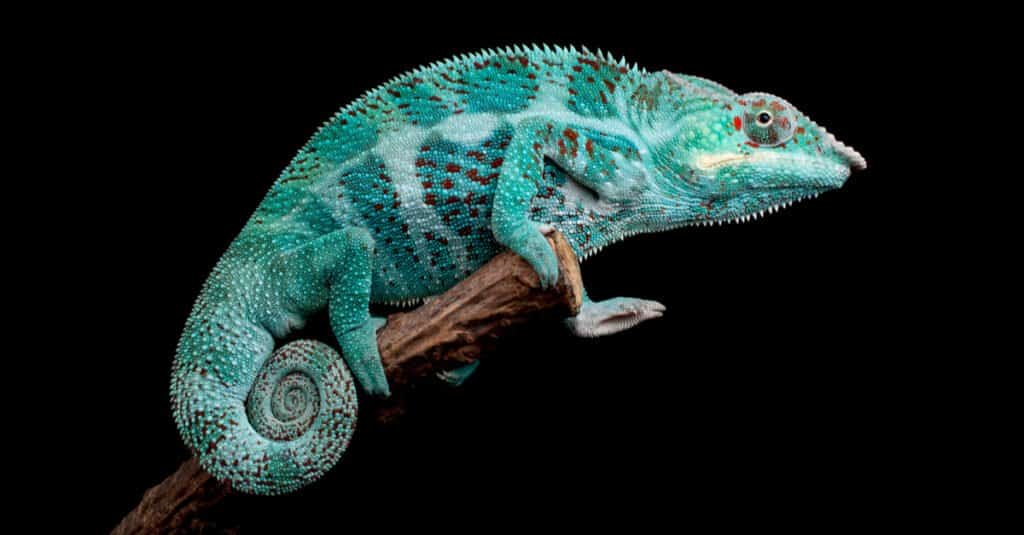
When they’re not grabbing anything, chameleons’ tails are often curled up.
©Ferdy Timmerman/Shutterstock.com
Eyes
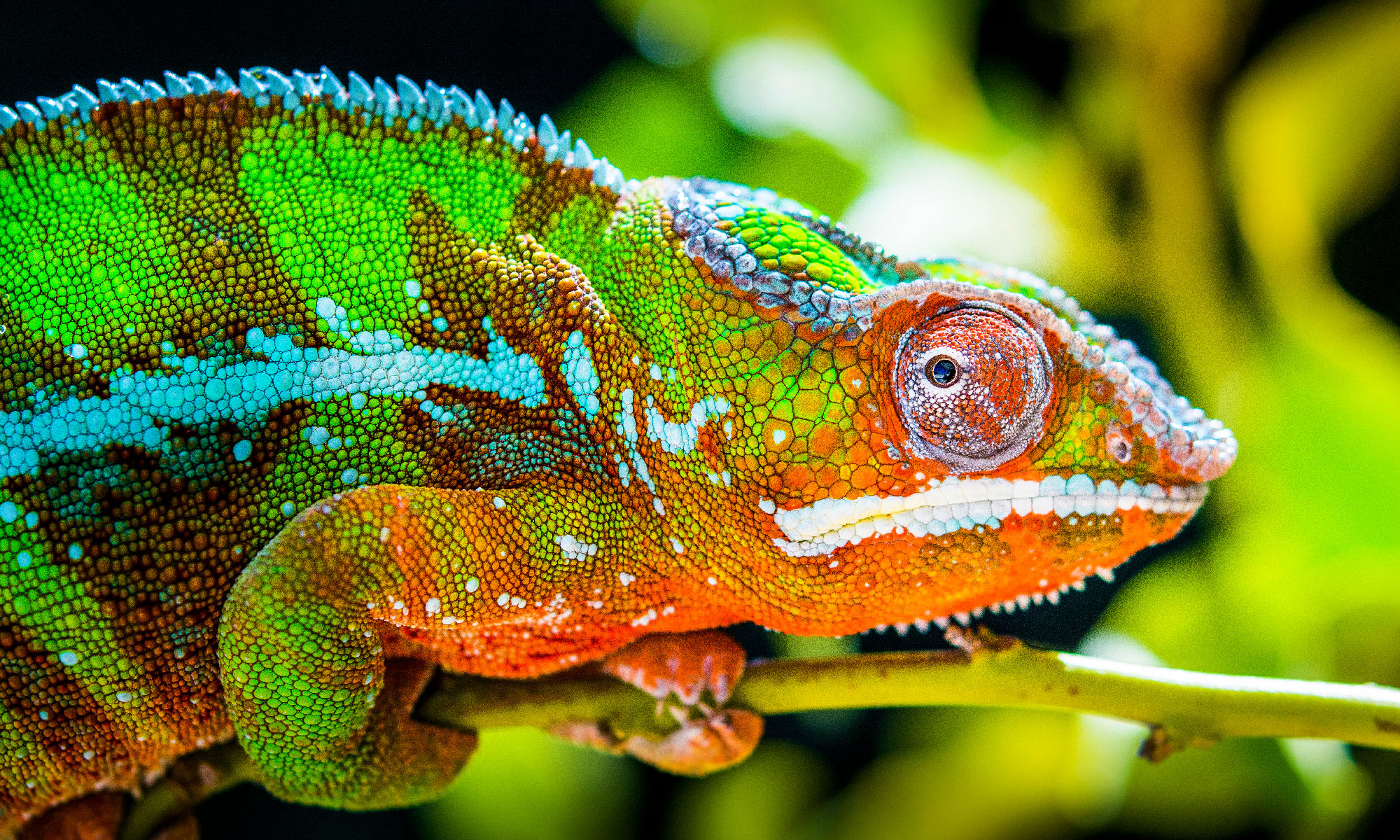
Chameleon eyes have several incredible features, including a protective cone-shaped, scaly eyelid with a small pupil opening. Chameleons can move and focus their eyes independently, allowing each eye to scan a different area simultaneously. This provides a nearly 360-degree field of vision, while also allowing them to focus both eyes on a single target for depth perception. Their vision is characterized by high-density cones for detailed color vision, but they have few rods, making their night vision poor.
The average lizard has two main eyes that function like a camera. The eye has a lens, cornea, and retina, enabling them to see in color, focus on near and far objects, and, in some species, see ultraviolet light. Many also have a small, primitive parietal or “third eye” on top of their head. The third eye detects light changes, aids in thermoregulation and hormone production, and may help with navigation.
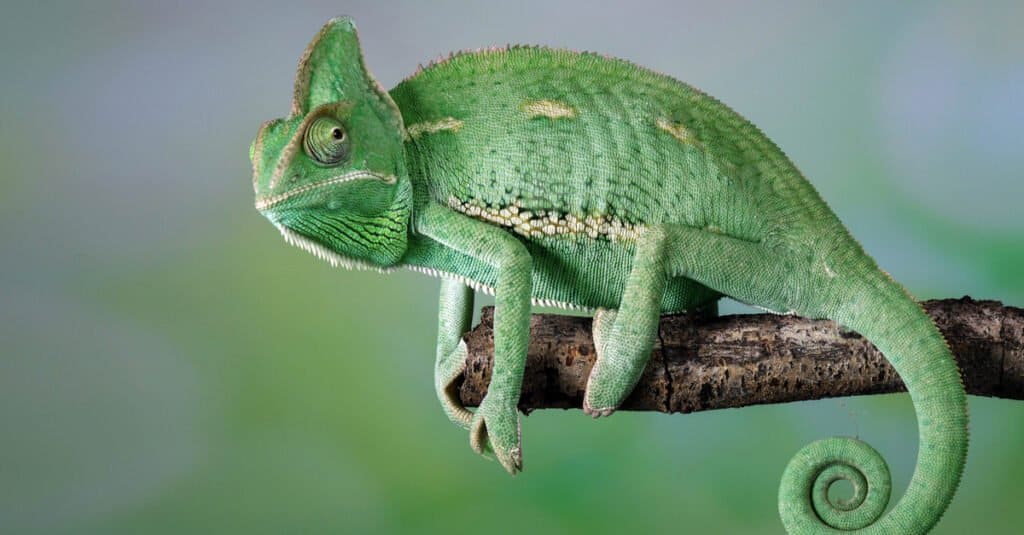
Chameleon eyes can rotate and focus independently.
©Lauren Suryanata/Shutterstock.com
Tongue
Chameleons have extensible tongues that they essentially propel from their mouths to catch prey. Their tongues can be about as long as their bodies in some cases. That makes chameleons very unusual hunters in that they don’t need to be directly on top of their prey to catch it.
Most lizards have short, round tongues. However, a few lizards, like the Komodo dragon, have forked tongues that resemble snakes’ tongues. Komodo dragons and other lizard species flick their long, forked tongues to collect scent particles from the air and determine the direction of a scent’s source.

Chameleons have extensible tongues that help them catch prey.
©Lauren Suryanata/Shutterstock.com
Reproduction
Most chameleons reproduce by laying eggs (oviparous), but Jackson’s chameleons (Trioceros jacksonii) are ovoviviparous. This means they give birth to live young. After a gestation period of 5 to 7 months, Jackson’s chameleons typically produce 8 to 30 offspring.
The vast majority of lizards lay eggs. However, there are some female lizards, such as the New Mexico whiptail and the Komodo dragon, that can produce young without males, creating genetic clones of themselves through parthenogenesis.
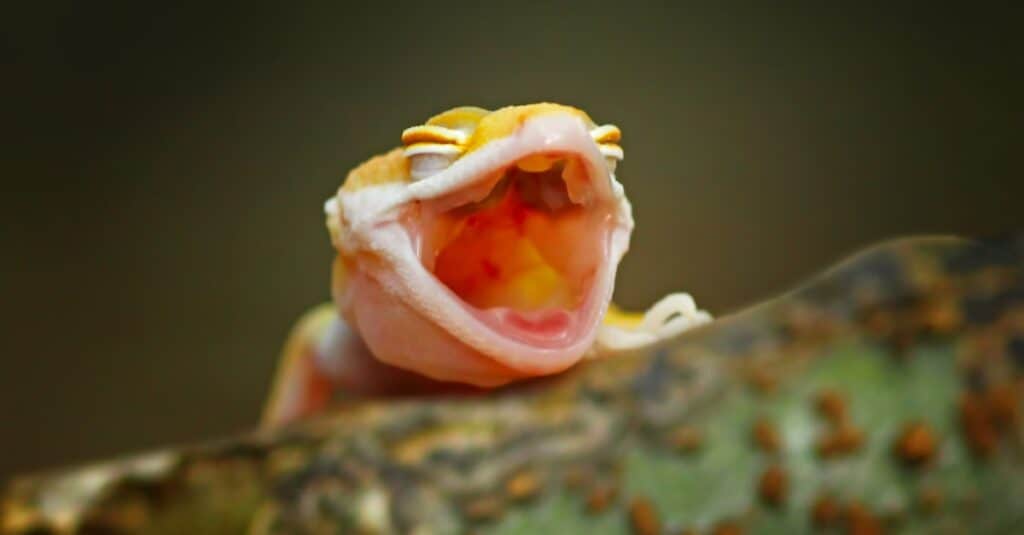
This baby leopard gecko’s sex was determined by how warm its egg was during incubation.
©iStock.com/agus fitriyanto
Lifespan
Chameleons are some of the shortest-lived lizards in the world. Labord’s chameleon (Furcifer labordi) spends more time as an embryo than as an adult. This species takes 8-9 months to develop before hatching, only to live for about 4-6 months before dying. Not all chameleons are as short-lived as the Labord’s Chameleon; most live between 4 and 8 years, and most do not thrive in captivity.
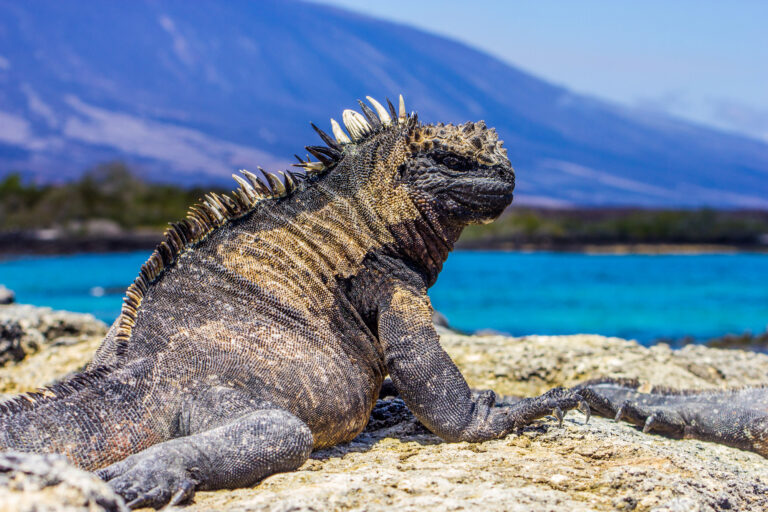
Some species of lizard, like iguanas, can have exceptionally long lifespans, sometimes exceeding 40 years in captivity, due to factors like a controlled environment, consistent food sources, and protection from predators. While wild lizards face dangers that shorten their lifespans, captive animals with proper care can thrive for decades. A Grand Cayman blue iguana (Cyclura lewisi) is among the longest-lived lizards, with some individuals reportedly reaching up to 69 years in captivity, though this record has not been confirmed.
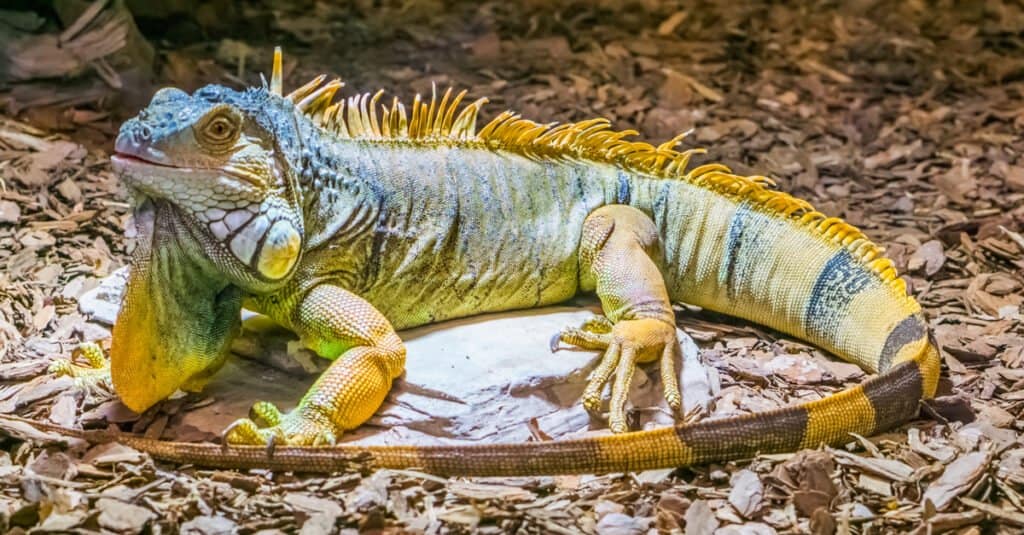
Iguanas are reptiles that can live for over 40 years.
©Charlotte Bleijenberg/Shutterstock.com