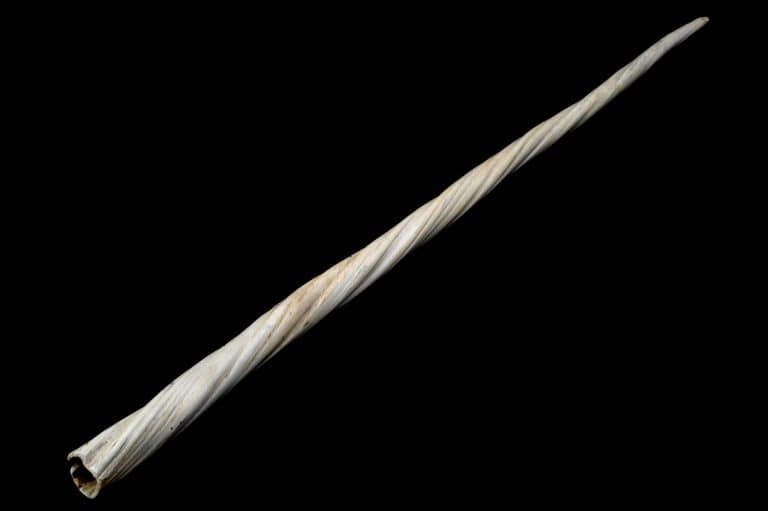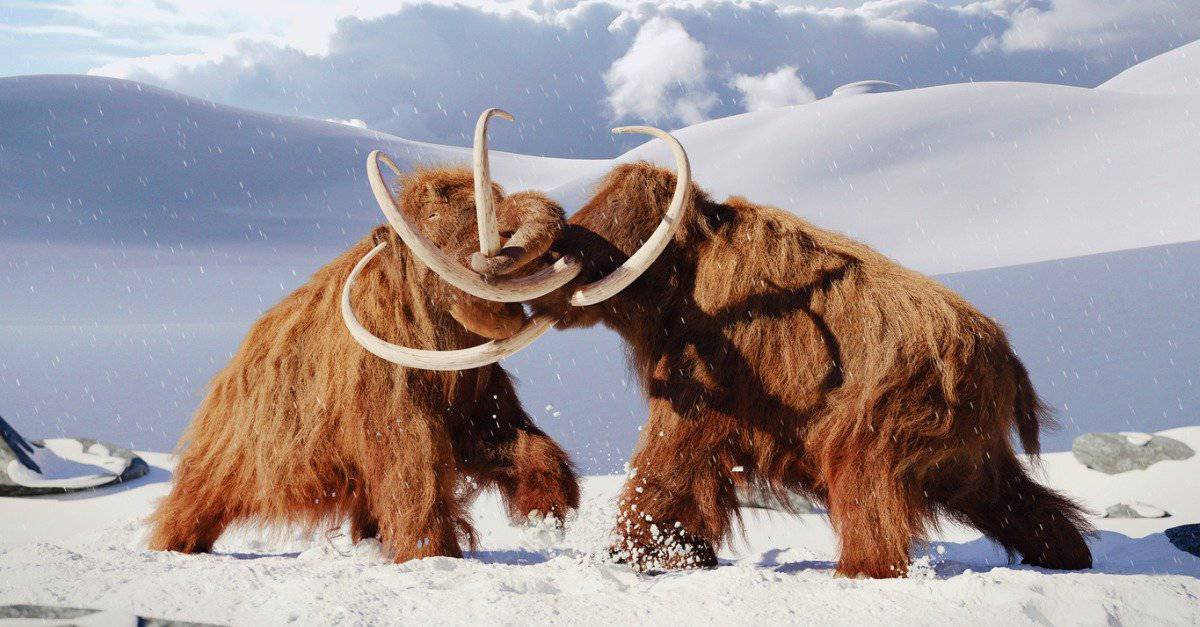

A tusk originally discovered in 2019 at the bottom of the Pacific Ocean has been identified as a mammoth tusk. The tusk was found by a team from the Monterey Bay Aquarium Research Institute 185 miles off the coast of California. It was resting on the ocean floor at a depth of around 10,000 feet — nearly two miles. In July 2021, the scientists were able to retrieve the three-foot-long tusk from the ocean floor. But how did the tusk of a Columbian mammoth end up at the bottom of the ocean, hundreds of miles from shore?
The Mystery of the Mammoth Tusk
Most mammoth tusks are found in the Arctic permafrost or deep underground. Yet despite being at the bottom of the sea for thousands of years, the tusk is perfectly preserved due to the cold temperatures and the high pressures of the deep ocean. This may be the oldest and best-preserved mammoth tusk ever found in the region. While other tusks have been found in the ocean, none have been found at such depths. Researchers note that other specimens have been found only at depths of less than 60 feet.
Scientists are still unsure how the tusk ended up at such depths in the open ocean. However, they do have a few hypotheses. Tsunamis, floods, and ocean currents have swept other animal carcasses and fossils out to sea in the past. This could explain how the mammoth’s tusk ended up on the ocean floor hundreds of miles from the shore. No other remains were found nearby to offer additional clues.
What We Know About the Mammoth Tusk
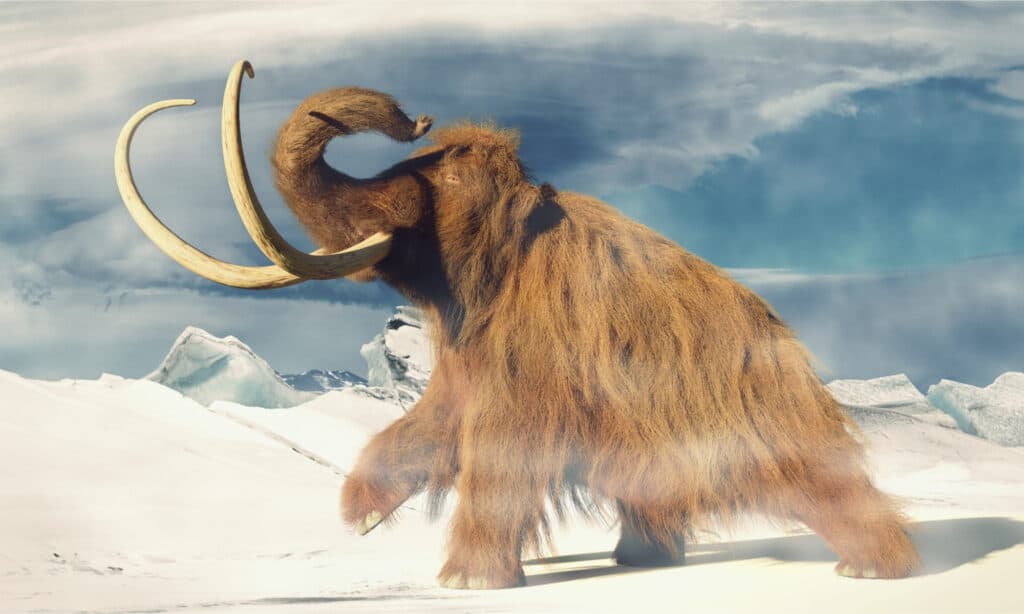
Most mammoth tusks are found in the Arctic permafrost or deep underground.
©Dotted Yeti/Shutterstock.com
When researchers originally found the tusk in 2019, they attempted to extract it from the ocean floor but only succeeded in breaking off a piece of it. However, using only that fragment, researchers were able to determine it belonged to a female mammoth, though they could not determine the age or the species. When they returned in 2021, they were able to collect the entire tusk.
Since the tusk was so well-preserved, scientists were able to recover DNA from the tissue inside. Analysis determined that the tusk was a Columbian mammoth, Mammuthus columbi. This is consistent with the closest mainland location of the tusk. Columbian mammoths roamed North America as far north as Alaska and as far south as Costa Rica. Scientists are still trying to narrow down the precise location where the mammoth may have lived. The tusk is believed to be over 100,000 years old. However, there is also a possibility that this mammoth died during the Lower Paleolithic Era, which lasted from 2.7 million to 200,000 years ago.
The Impact of the Mammoth Tusk
Additional results have not yet been published since the original reports, as testing is ongoing. The tusk’s thick crust of iron-manganese could potentially indicate how long the tusk has been on the ocean floor. By retracing historical ocean currents, scientists may be able to determine where the mammoth originally lived on land.
The tusk was also scheduled for CT scans to create 3D images that will help scientists study the internal and external structure of the tusk. Researchers at the University of Michigan’s Museum of Paleontology planned to examine the CT scans of the tusk. Scientists will also attempt to extract the mammoth’s DNA sequence and genome. One of the most important parts of this testing, however, is that it will help shed light on the evolutionary process of mammoths and how they spread across North America. Testing will also help scientists reconstruct the life and death of this particular mammoth.