Quick Take
- The legal status of a pet monkey depends on where you live, and one rule might surprise you.
- One mistake first-time owners keep making sends many of these tiny primates back to rehoming.
- That adorable size hides some unpleasant habits that owners rarely see in the viral videos.
- The sticker price is only the opening bill, and the long-term costs add up fast.
Having a controversial pet is often popular online, as it can increase engagement, either positively or negatively. However, keeping a wild animal as a pet is never a good idea. While there is no a federal ban on possession, there are some federal laws around ownership, and many states have their own laws regarding keeping monkeys as pets. Finger monkeys, or pygmy marmosets (Callithrix pygmaea), have been trending due to social media. However, what are the laws about owning non-human primates, and do finger monkeys make good pets?
Finger Monkeys Explained
Pygmy marmosets are so small, they almost seem as if they are not real. They are one of the smallest primates in the world and the smallest monkey species. These tiny monkeys only grow 4.5 to 6.2 inches long, tail excluded. Their tails are longer than their bodies, ranging between 6.9 and 9 inches. Female finger monkeys are slightly bigger than males, with an average weight of 4 ounces.
Their babies are tiny, and they cling to people’s fingers in captivity, hence the nickname “finger monkey.” Other names for these tiny primates are pocket monkeys, thumb monkeys, and little lions because of the tufts of fur around their face that resemble a lion’s mane.
Like their larger cousins the common marmoset, they live in the South American rainforests, primarily in high treetops of Brazil, Ecuador, Bolivia, Colombia, and Peru. While finger monkeys aren’t listed as endangered, the IUCN classifies them as Vulnerable, and their population is facing habitat destruction. However, they are very adaptable, which will aid them in their fight for survival.
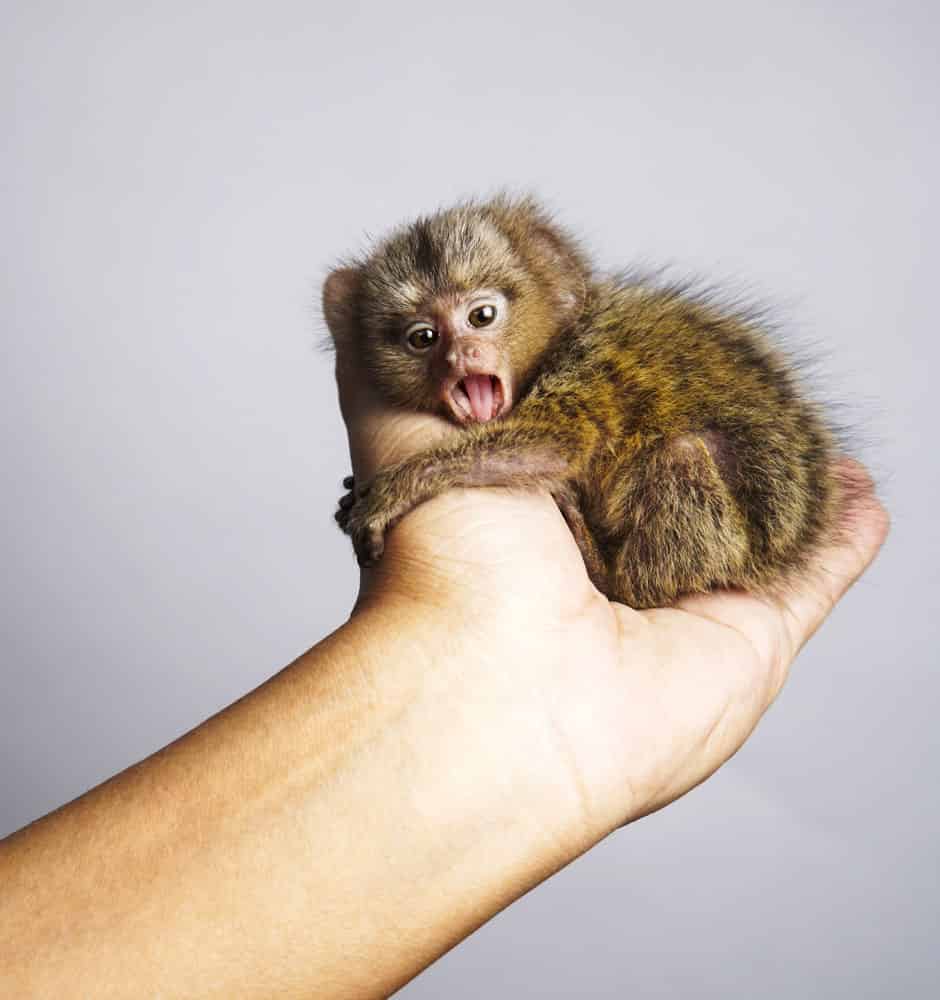
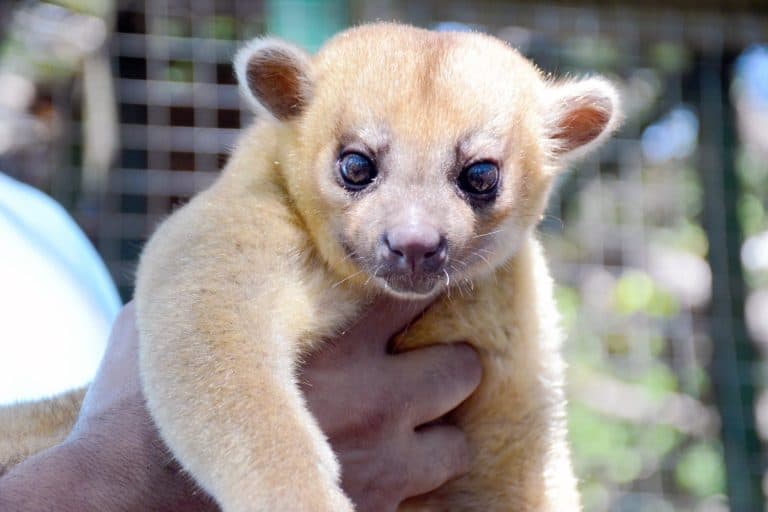
Pygmy marmoset babies are tiny and cling to people’s fingers, leading to the nickname finger monkeys.
©anythings/Shutterstock.com
Is It Legal to Own a Finger Monkey?
As mentioned above, finger monkey ownership is not regulated by a single federal ban regarding the possession of non-human primates as pets. However, it is against federal law to import any non-human primates into the U.S. for the pet trade. So, any pygmy marmoset must come from a captive breeding facility in the U.S. Breeding and selling marmosets or other primates in the U.S. requires a USDA Class A dealer license through the USDA Animal and Plant Health Inspection Service (APHIS) under the Animal Welfare Act (AWA).
The legality of ownership generally comes down to your state and local laws. For example, some states like California and New York have banned ownership of non-human primates outright. Other states like Florida allow ownership, but a permit is required. Potential owners must generally demonstrate proof of their expertise in primate care, meet facility requirements, and undergo a facility and/or cage inspection prior to owning the animal. Owners must also provide evidence that their animal originated from a legal source. Even if your state allows ownership, there may be local ordinances that do not. Research the laws in your state and city to ensure that ownership is legal and that you can meet requirements to keep a marmoset as a private pet.
Do Finger Monkeys Make Good Pets?
It’s not easy to obtain and care for finger monkeys and there is a lot to consider before getting one. Finger monkeys gained popularity because of their tiny size and adorable features. However, they are still wild animals with natural instincts.
Behavior in the Wild
For example, in the wild, they use their long teeth to break off tree bark for the food underneath, so you can only imagine how painful their bite is. They also have long, sharp, claw-like nails that they use to hang onto trees.
Males are particularly aggressive, especially once they reach sexual maturity, and they can be very territorial. This means they may not get along particularly well, or at all, with children and other animals. Just like other primates, they will also fling their feces when they lose their temper.
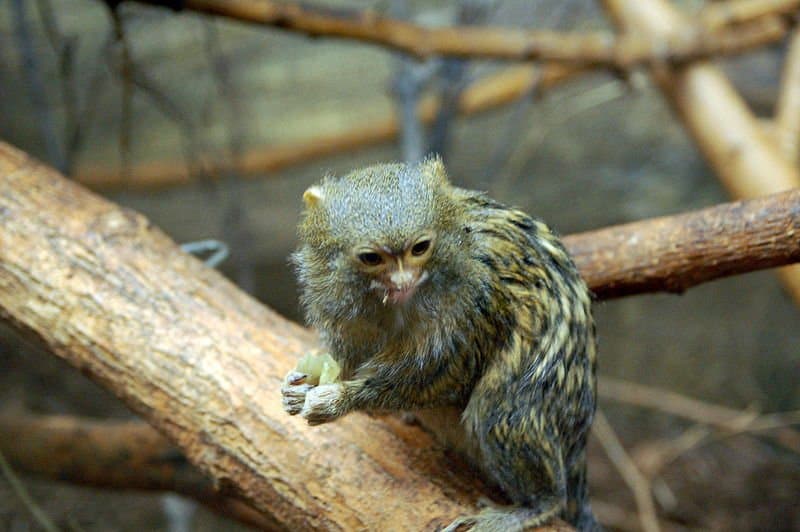
Pygmy marmosets have long incisors to carve holes into tree bark to reach the sticky gum inside.
©RegBarc / Creative Commons – Original
Social Needs
Because these tiny marmosets are not domesticated, they find it hard to adjust to captive living. As a result, finger monkeys often fall into depression due to boredom or anxiety. As they are already prone to aggression, depression will only make it worse. If you think they are too small to cause any harm, think again. When angry, they can become quite destructive. For example, they can scratch and bite you or other people in your home, destroying furniture, curtains, rugs, and much more.
Another con is you can’t just get one of these monkeys. Pygmy marmosets live in groups of 2-9 monkeys in the wild, so you need at least two to keep them happy, but a small family group is best. Unfortunately, many people don’t understand their social needs and only get one. Then when their pet starts to act out because of depression, owners don’t know what to do and often end up rehoming or returning the marmoset.
Diet and Health
Lastly, finger monkeys require a special diet and can easily fall ill if their diet becomes unbalanced. In the wild, pygmy marmosets primarily eat tree sap, gum, and insects they hunt in the trees. Owners must mimic the diet they would eat in the wild, so substitutes like gum arabic or canned marmoset diet must be offered as an alternative.
These little monkeys are also susceptible to several human diseases. The babies especially have weak immune systems. They can get chicken pox, respiratory viruses, the flu, common colds, and measles, among others. So, if they become sick, the bills can rack up. It is not always easy to find an exotic vet, and they typically charge more for their services due to the specialized nature of the care they provide. Marmosets can live for up to around 18 years in captivity, so owning one of these monkeys is a serious commitment.
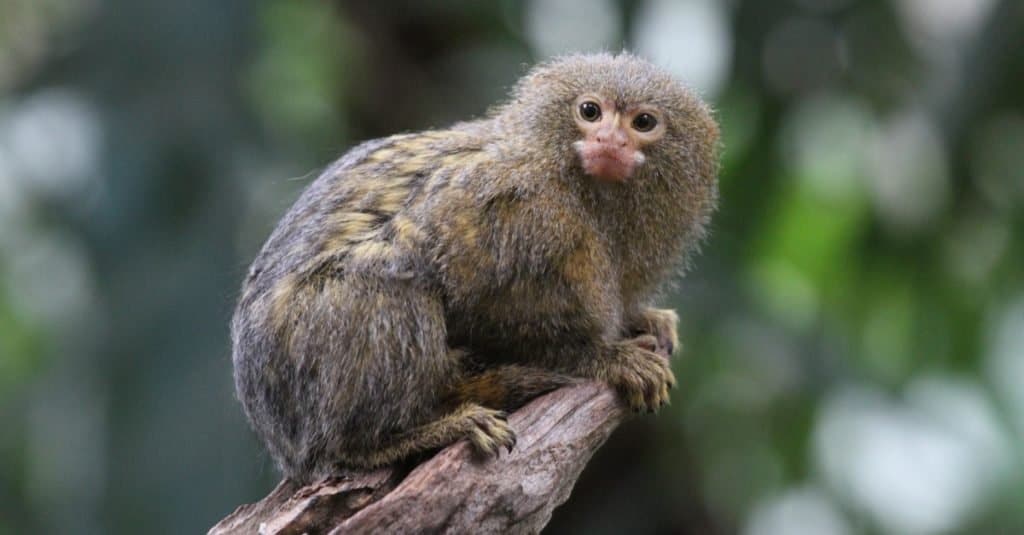
If you’re considering keeping a finger monkey as a pet, there are multiple costs to take into consideration.
©Mihai Ivascu/Shutterstock.com
Costs of Owning a Pet Finger Monkey
If you’ve decided that a finger monkey is the perfect pet for you, you’ll need to consider the expense. Prices to purchase a finger monkey vary depending on availability. More recent price tags range from $4,000-$7,000. Beyond acquiring your pet, you’ll need to factor in set-up costs from its enclosure, which can cost anywhere from $800 to $5,000 or more for a custom enclosure. You will also need enrichment in your enclosure such as swings and ladders.
Other items to get started include food bowls, toys, and bedding can range from $100-$200. Dietary requirements for an adult finger monkey, which includes replacements for sap and gum, cooked meats, fruits, vegetables, and insects, will probably run $50-$100 monthly, depending on how many marmosets you need to feed. Veterinary visits can average $200 per visit, but that doesn’t take into consideration the cost of issues arising that may need treatment.
Finger monkeys do not make good pets. They are not like a dog or a cat and they require a great deal of time and specialized care for up to 20 years. If you are deciding whether or not to purchase one, ensure do plenty of research first to ensure you know what you are getting yourself into.