





Quick Take
- The pygmy marmoset holds the title of world's smallest monkey, though it is not the world's smallest primate, and the real record-holder might surprise you. Explore the classification →
- When a baby pygmy marmoset is born, it is the father rather than the mother who takes on a surprising parenting role unlike most animals. See newborn care details →
- This tiny monkey's relationship with a single tree can quietly transform that tree over time in a way you'd never expect from an animal this small. Discover their tree sap diet →
- The pygmy marmoset didn't always look the way it does today. Its most distinctive physical features evolved for a very specific survival reason that sets it apart from every other primate. See how they evolved →
Pygmy marmosets (also called pigmy monkeys) live in the Amazon forests of South America. These cute creatures are the world’s tiniest monkeys, weighing about 4 ounces in adulthood. Finger monkeys are omnivores that really like to eat tree sap and can leap a distance of 16 feet to get from one tree branch to another. These monkeys live to be about 11–12 years old in the wild.

5 Amazing Pygmy Marmoset Facts
- Pygmy marmosets (also called finger monkeys and pigmy monkeys) live in the tops of trees in the rainforests of South America.
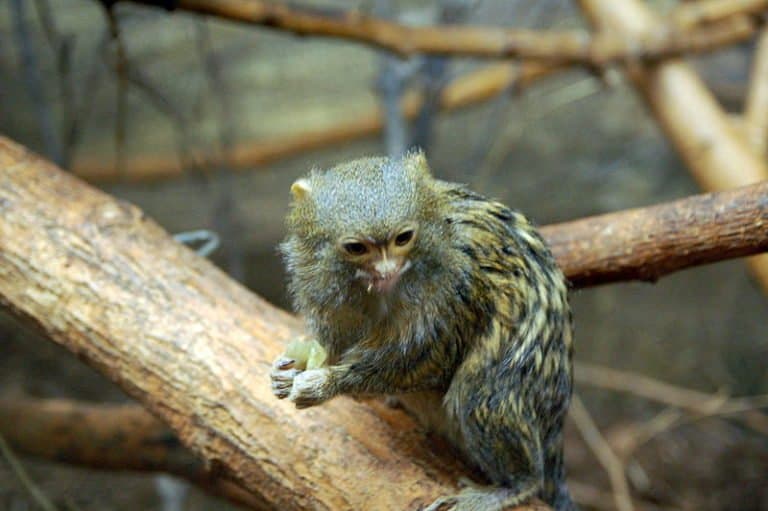
- Finger monkeys have fingernails they use as claws to climb trees.
- Butterflies, fruits, berries, and tree sap are all favorite foods of this small omnivore.
- One male and one female pygmy marmoset breed and live together for a lifetime.
- Pygmy marmosets groom each other’s fur just like other monkeys.
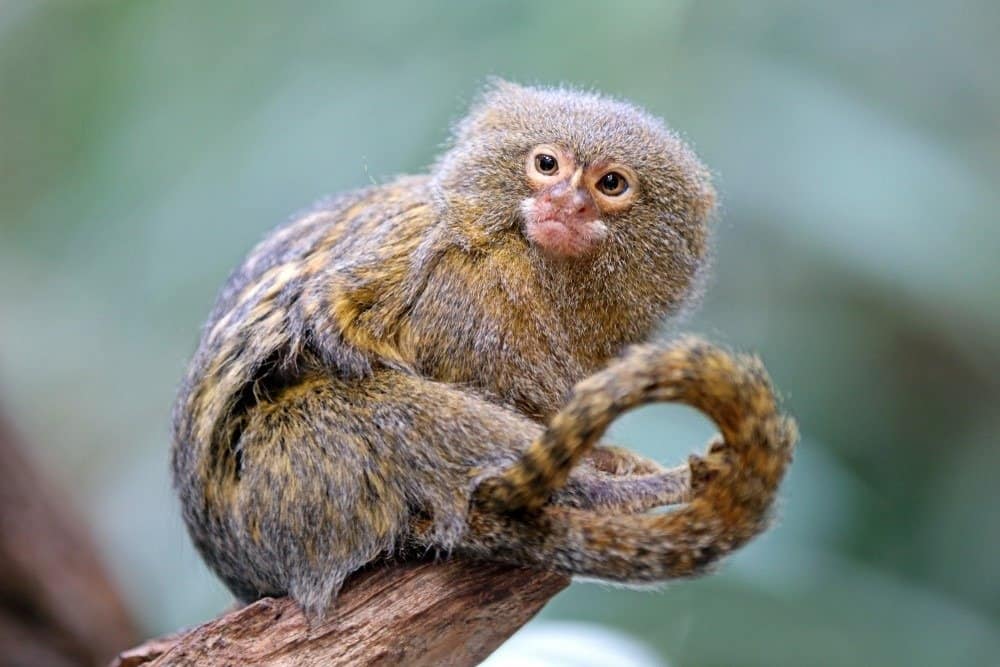
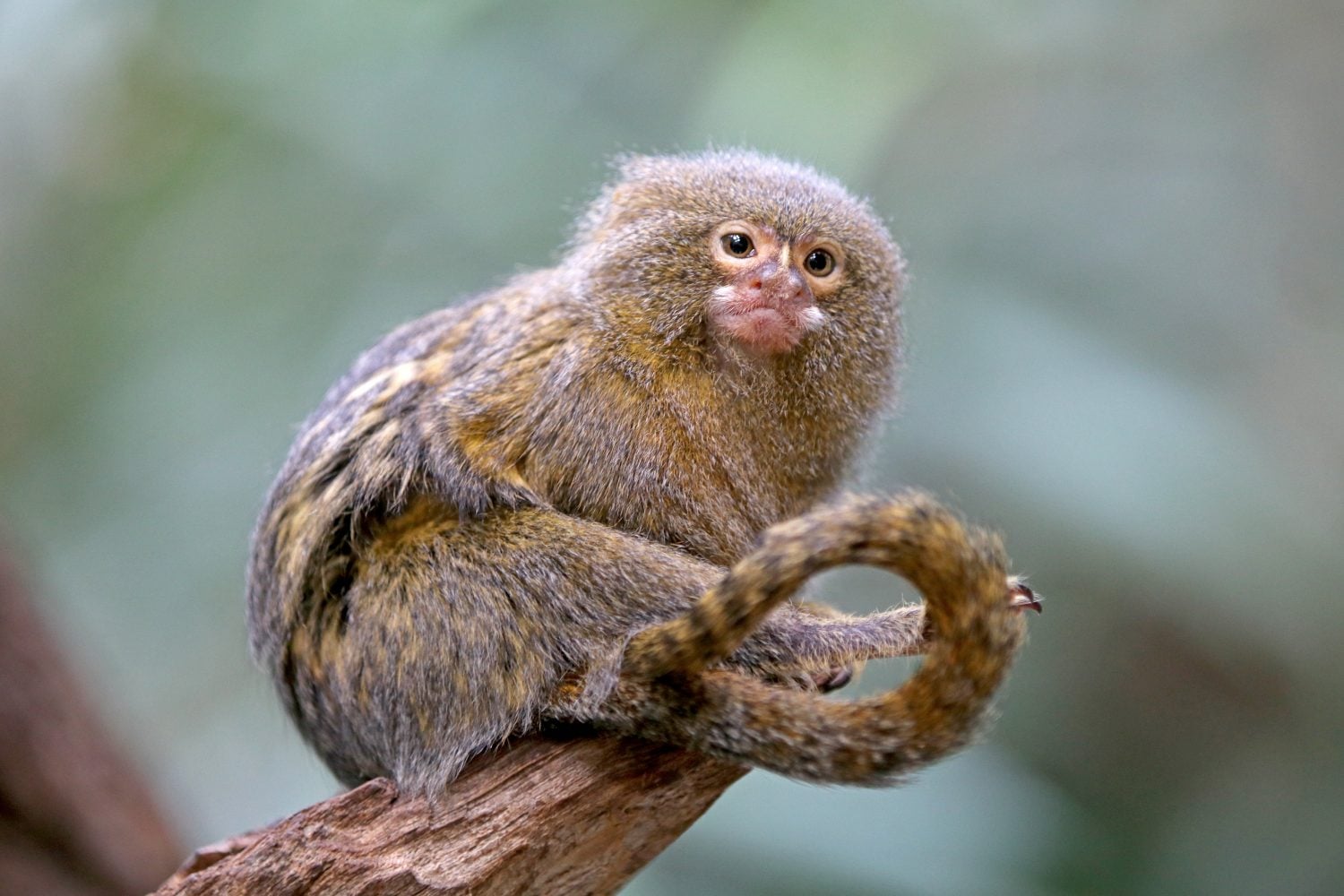
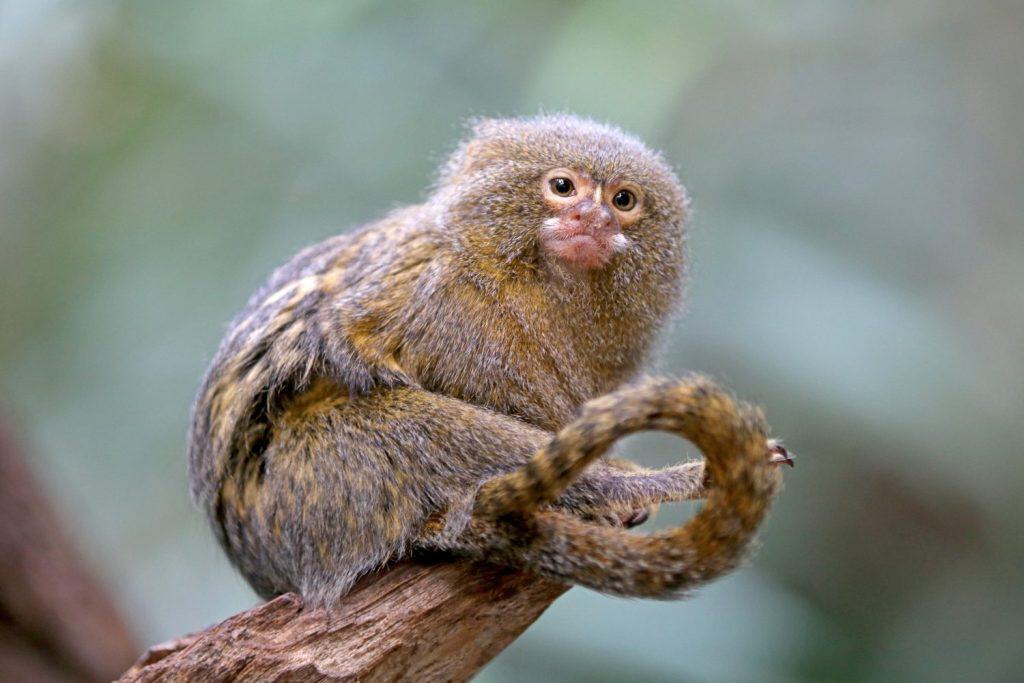
Pygmy marmosets live in the tops of trees in the rainforests of South America.
©Edwin Butter/Shutterstock.com
Evolution and History
This diminutive monkey evolved from larger ancestors, allowing it to flourish in tree canopies and move along the thinnest, weakest branches with ease, much like a squirrel does. Unlike other primates with flat nails, the pygmy marmoset developed long, very sharp claws over time that allowed it to grasp trees and branches. They essentially function as claws for climbing purposes.
Furthermore, this tiny primate adapted to life in the trees by evolving bottom teeth that are exceptional at penetrating bark and accessing tree sap. Their digestive systems have also developed to break down tree gum and sap.
Classification and Scientific Name
The pygmy marmoset is classified under the family Callitrichidae by some sources and under the family Cebidae (subfamily Callitrichinae) by others, reflecting ongoing taxonomic debate, and its class is Mammalia. Marmoset comes from the French word marmouset.
There are two species of pygmy marmoset, which are mostly divided by natural terrain barriers. Both species prefer lowland forests within river floodplains.
- Eastern pygmy marmoset (Cebuella niveiventris): The Eastern pygmy marmoset can be found in the northwestern Brazilian states of Amazonas and Acre and surrounding areas, including northern Bolivia, eastern Peru, and Ecuador.
- Western pygmy marmoset (Cebuella pygmaea): The Western pygmy marmoset is found in an area that covers northeastern Ecuador and northern Bolivia, parts of southern Colombia, the eastern part of Peru, and in Brazil north of Rio Solimões.
Appearance and Behavior
These marmosets have a coat of orangish brown fur with a mixture of brown and black stripes. The dark fur of this small animal helps to hide it as it moves across tree branches. The fingernails of this monkey serve as claws that can grasp the bark of a tree as it climbs. The way this marmoset moves and climbs is similar to that of a squirrel you might see in your local park.
It has a small nose, small eyes, and an ear on each side of its head. These marmosets have extra flexibility in their necks, allowing them to turn their heads to look backward. This helps the animal to be on high alert for predators in the area.
A pygmy marmoset’s tail is longer than its body. It uses its tail for balance as it moves along tree limbs high up in the Amazon forest.
The body of an adult pygmy marmoset measures about 4 to 6 inches long. Plus, its squirrel-like tail is 6 to 9 inches long. A pygmy marmoset’s 9-inch tail is equal in length to an average-sized fork in a silverware drawer. An adult weighs a little over 4 ounces. This means it weighs about the same as one stick of butter from your fridge at home.
This marmoset claims the title of the smallest monkey in the world. But it’s not the smallest primate in the world. That title belongs to Madame Berthe’s mouse lemur, which weighs around 1 ounce!
These marmosets live in groups called troops, with about 5 to 9 members. Living in groups provides these small animals with some level of protection against predators. if one member spots an ocelot, it alerts the rest of the troop to take cover in the trees. These shy animals typically stay with their own troop, remaining hidden in the trees much of the time.
The members of the marmoset troop communicate with one another using squeaks and chirps that only they can understand. One sound may mean there is danger near, while another may be a male calling a female. The sounds these animals make are somewhat similar to the sounds made by brown and gray squirrels.
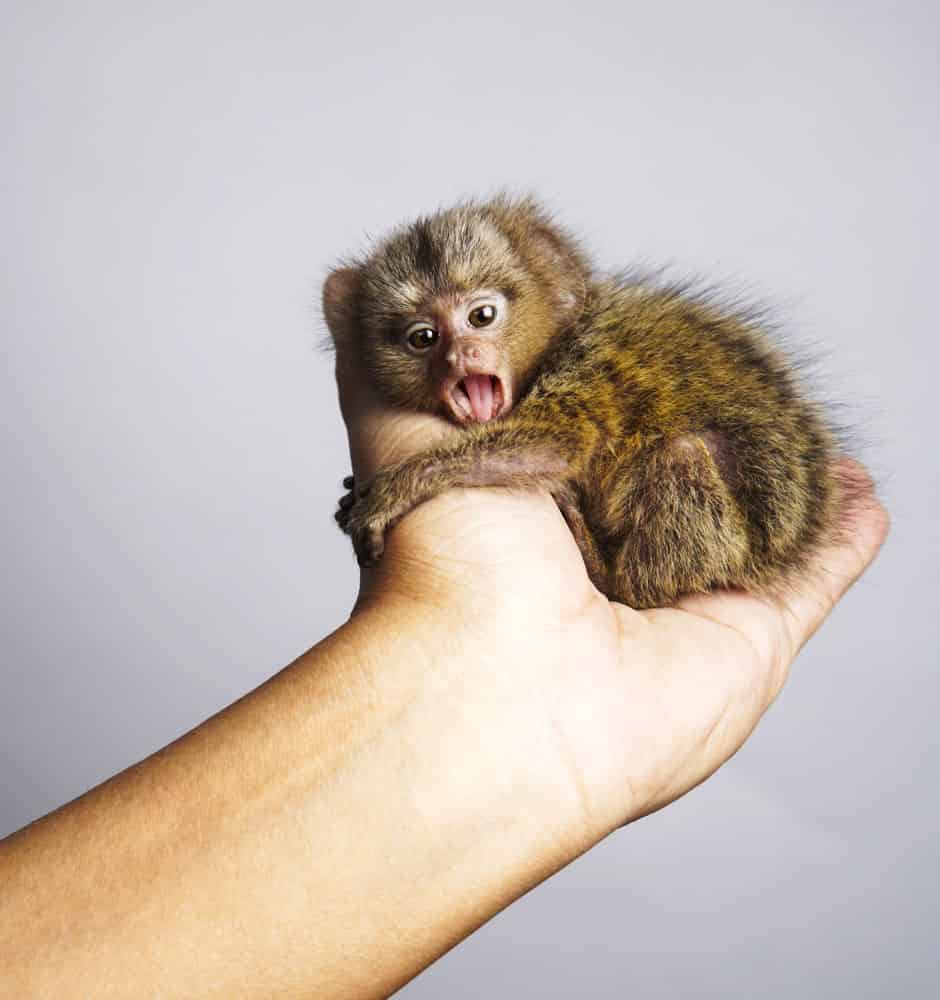
The Pygmy marmoset has fingernails that are like claws to help them climb up and down trees.
©anythings/Shutterstock.com
Habitat
These marmosets live in Peru, Ecuador, Brazil, and Colombia in South America. They live in the Amazon rainforests or in thickets growing near rivers. These animals live in a humid, rainy tropical climate. Pygmy marmosets inhabit the rainforests of South America year-round.
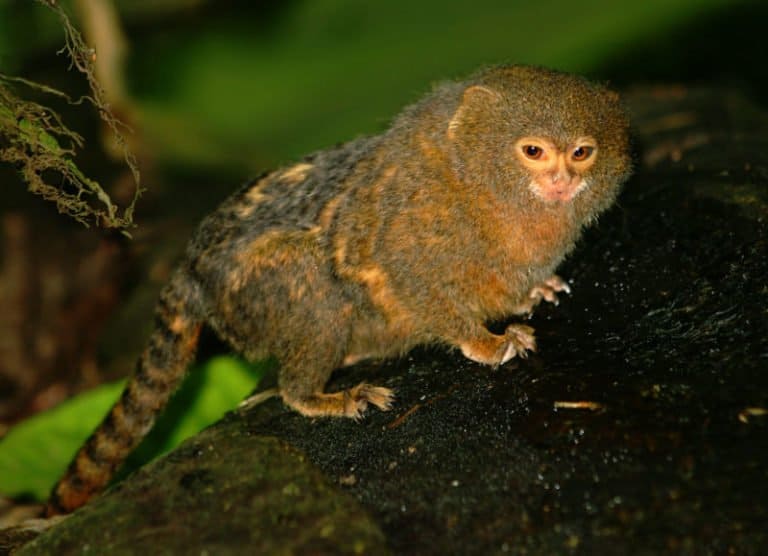
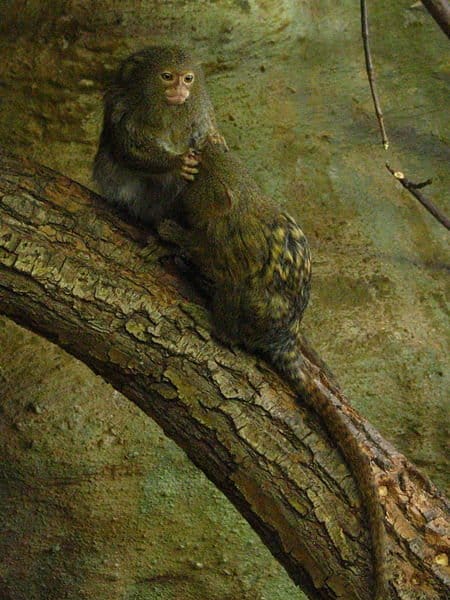
You’ll find these marmosets living in forests where trees grow close together. This allows them to jump easily to the branches of different trees. It is also easier to stay hidden from predators when tree branches crisscross one another. The marmoset’s orange/brown fur also helps it stay hidden among the rainforest’s dark branches and tree trunks. Generally, these marmosets remain in a territory of less than an acre of forest.
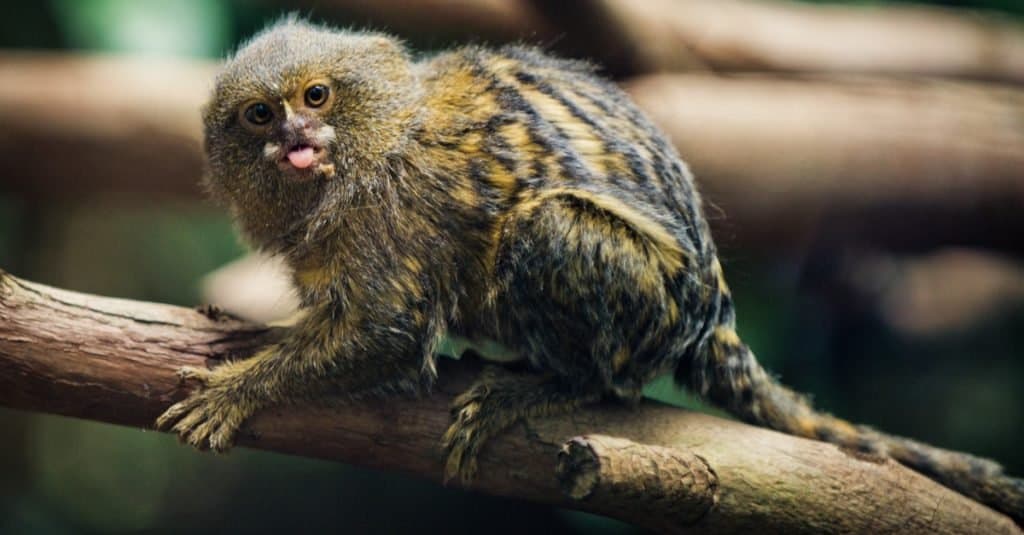
The marmoset’s orange/brown fur also helps it stay hidden among the rainforest’s dark branches and tree trunks.
©Shaun Jeffers/Shutterstock.com
Diet
What do pygmy marmosets eat? The main food source of this animal is tree sap. These marmosets use their bottom row of sharp teeth to dig holes into the bark of a tree. They dig until they reach the sap, then lap it up.
Often, a pygmy marmoset chooses just one tree to dig into for sap every time it wants food. This tree is located somewhere in the specific territory of the monkey. Over time, a single hungry marmoset can make up to 1,300 holes in one tree.
These animals are omnivores, so they certainly eat more than tree sap. They eat fruit, butterflies, leaves, small spiders, and nectar. They are quick and can grab insects that live on the branches around them. The type of food these monkeys eat depends on what is most plentiful in the area.
Since these marmosets are so little, they don’t need to eat very much to survive. They may drink as much as a tablespoon of tree sap at one time. These monkeys like to look for food in the morning and late afternoon.
Pygmy marmosets that are kept in zoos are fed vegetables and fruits along with a special food mixture that’s easy for them to digest. The amounts and types of food they are given are carefully monitored. Feeding this marmoset processed food would be harmful to this little animal.
Predators and Threats
As you may have guessed, these marmosets have many predators because these monkeys are so small. Some of their predators include hawks, snakes, ocelots, and eagles, specifically the harpy eagle.
Since these marmosets stay high up in the trees, they are especially vulnerable to eagles, hawks, and other birds. Plus, there are many snakes that climb trees, such as the pit viper. The pygmy marmoset’s speed and ability to hide are its only defenses against these predators.
The habitat of these marmosets is threatened when trees in the rainforest are cut down and cleared. This takes away their home as well as their food source.
Humans are a threat to these animals in another way. Sometimes these animals are caught and sold as exotic pets throughout the world. This also reduces their population.
The official conservation status of the pygmy marmoset is Vulnerable. Their habitat is threatened by deforestation, but slowing tree clearing could help increase the population of this monkey.
There are laws against buying and selling wild animals as pets. This includes the pygmy marmoset. Enforcement of these laws can contribute to keeping the pygmy marmosets safe in their natural habitat.
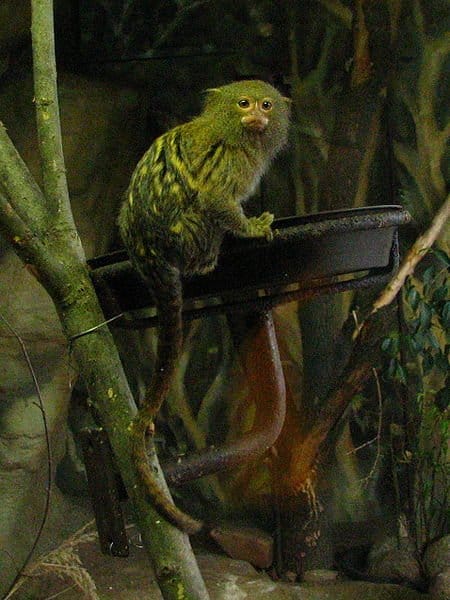
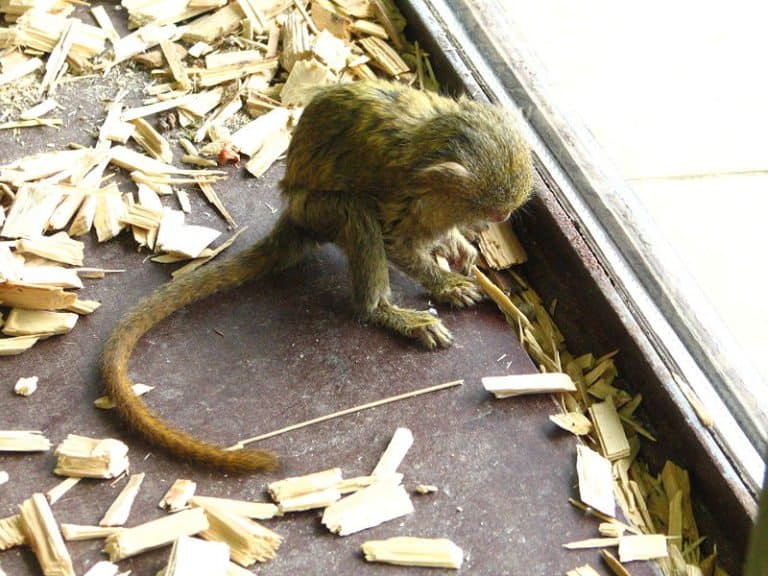
Their habitat is threatened when trees are cleared, but if this could be slowed, it would help increase the population of this monkey.
©Mistvan / Creative Commons – Original
Reproduction, Babies, and Lifespan
Breeding season for these marmosets happens throughout the year. While looking for a mate, a male will mark the area with his scent and follow one female around the territory. One male and one female in a troop breed, and the rest of the members of the group help to take care of the young. This male and female stay together for their lifetime. The gestation period of a pygmy marmoset is about 20 weeks. Generally, there are two live babies in a litter. More rarely, a female will have one or three babies.
A newborn pygmy marmoset weighs 0.4 ounces. A newborn pygmy marmoset is roughly the size of an adult human’s thumb.
During the first couple of weeks of a newborn pygmy marmoset’s life, it rides around on the back of its father. It’s the father who is the main caretaker of pygmy marmoset babies. When it’s time to eat, the father takes the babies to their mother so she can nurse them.
Baby pygmy marmosets start to eat insects and tree sap at about 3 months old. Others in the troop teach the babies how to find food. Once a baby pygmy marmoset is about 1 and a half to 2 years old, it may strike out on its own as an adult. In some cases, however, the young stay with the troop to help raise other babies. This means there may be several siblings in a troop.
The average lifespan of a pygmy marmoset is 12 years. Of course, the number of predators in the area where a pygmy marmoset lives can significantly affect its lifespan. These small monkeys can suffer from malnutrition as they age if there is a decrease in the foods they eat in their environment.
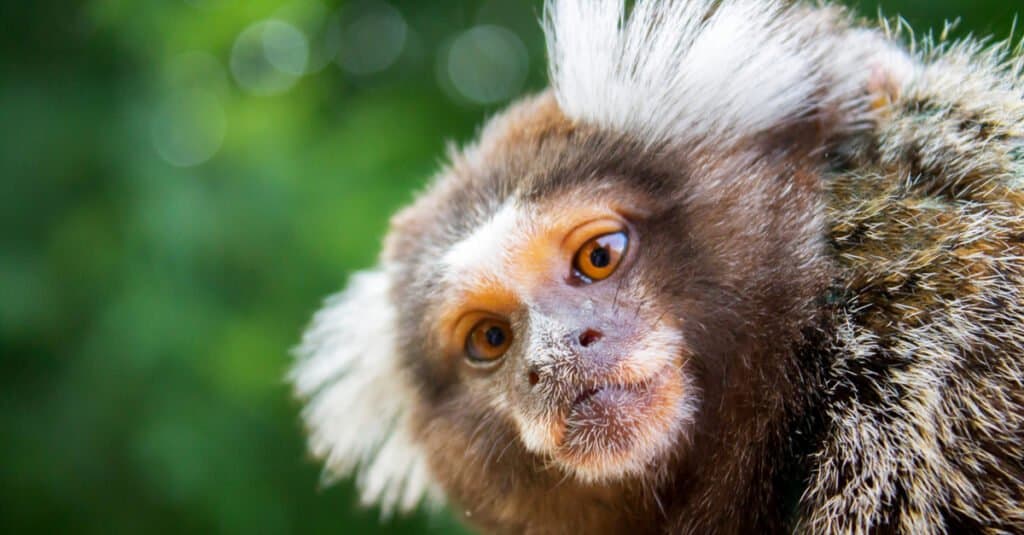
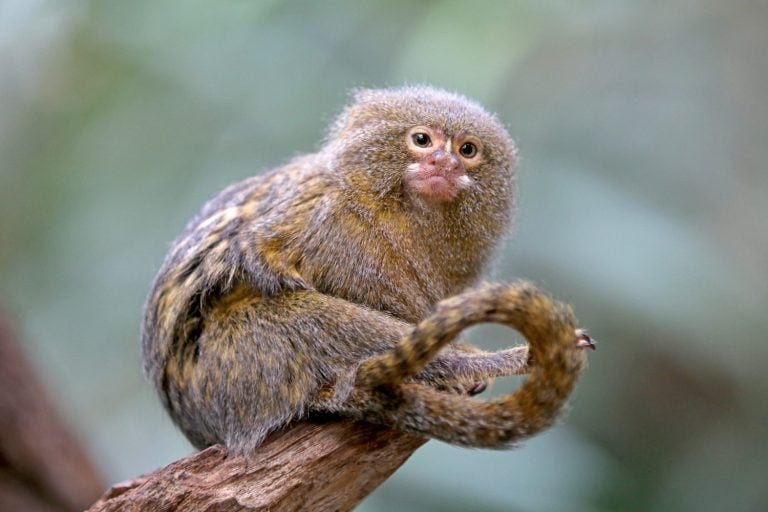
The pygmy marmoset is the smallest marmoset, but its eyes certainly aren’t small!
©donikz/Shutterstock.com
Population
The conservation status of the pygmy marmoset is Vulnerable. The exact population of pygmy marmosets is unclear due to their size and ability to hide in inaccessible areas. But scientists believe the largest concentration of these animals lives near the Amazon and Rio Negro Rivers in South America. Their population seems to be holding steady as some efforts are being made to reduce the clearing of the Amazon rainforest.
Pygmy marmoset Pictures
View all of our Pygmy marmoset pictures in the gallery.

Sources
- David Burnie, Dorling Kindersley Animal, The Definitive Visual Guide To The World's Wildlife / Accessed November 10, 2008
- Tom Jackson, Lorenz Books The World Encyclopedia Of Animals / Accessed November 10, 2008
- David Burnie, Kingfisher The Kingfisher Animal Encyclopedia / Accessed November 10, 2008
- Richard Mackay, University of California Press The Atlas Of Endangered Species / Accessed November 10, 2008
- David Burnie, Dorling Kindersley Illustrated Encyclopedia Of Animals / Accessed November 10, 2008
- Dorling Kindersley Dorling Kindersley Encyclopedia Of Animals / Accessed November 10, 2008
- David W. Macdonald, Oxford University Press The Encyclopedia Of Mammals / Accessed November 10, 2008




.jpg)