
Quick Take
- The method scientists use to collect snarge is the last thing you'd expect, and this surprising approach is changing whale research without disturbing a single animal. See how drones collect it →
- One tiny snarge sample quietly unlocks a startling number of secrets about a whale's health. Explore what snarge reveals →
- Whale blowholes work nothing like human nostrils, and that anatomical quirk is exactly why snarge forms at all. Discover blowhole anatomy →
A whale expelling air from its blowhole is one of the ocean’s most impressive sights. But it’s not just air that comes out of the blowhole. Whales also expel a substance called snarge. This may sound a bit gross; after all, it is essentially whale snot, but it has proved incredibly useful for scientists. Here we explain why.
The Connection Between Blowholes and Snarge
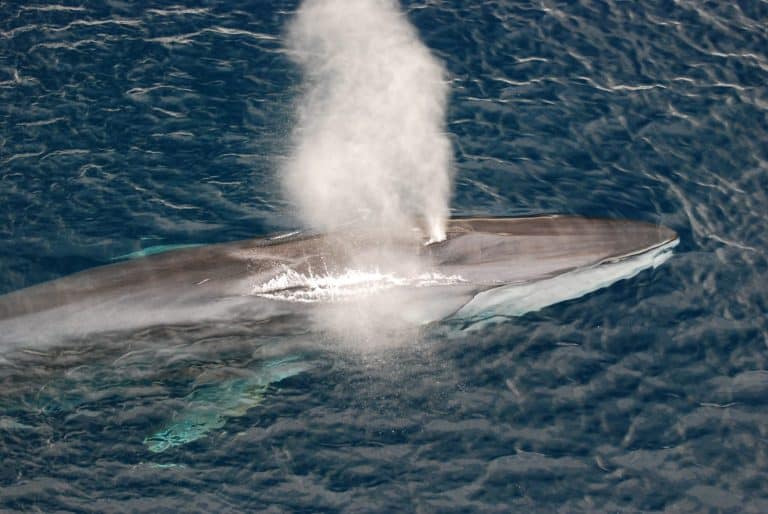
A whale’s blowhole is essentially a large nostril located at the top of its head. It is attached to the trachea, which connects to the lungs, while the esophagus is entirely separate. A whale cannot breathe through its mouth as we can; it can only breathe through its blowhole. Whales can let out a single breath that travels at speeds of up to 300 mph and reaches 30 feet in the air.
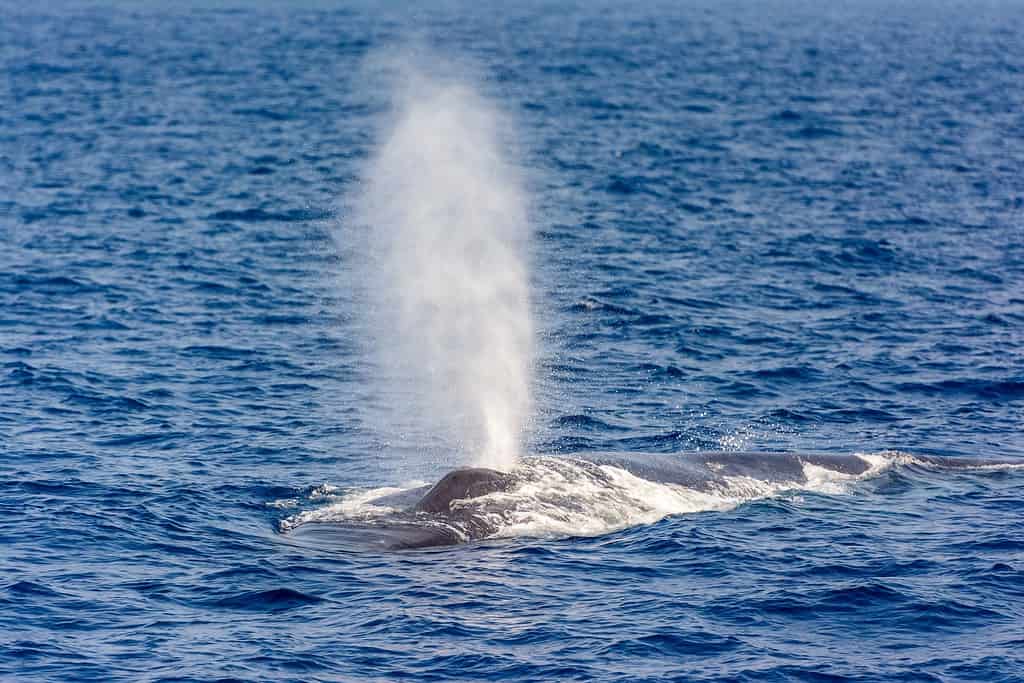
The whale’s blowhole is vital to its well-being.
©iStock.com/Wirestock
Because the blow is so powerful, it causes the water around the blowhole to create a cloud of mist. This is the mist you see shooting into the air when whales exhale. However, the blow also contains mucus and oils from the respiratory tract. This is whale snot or snarge, but the scientific name is “exhaled breath condensate.”
What Is Whale Snarge Made Of?
Whale snarge consists of condensed seawater (from around the blowhole), mucus, and cells from the whale’s body. These substances contain DNA, hormones, and bacteria, which can provide valuable information about the whale’s health.
Scientists have discovered that they can collect snarge using drones. This can reduce the need for more invasive or disruptive methods, such as close boat approaches or biopsy sampling. By analyzing snarge samples, scientists can determine a whale’s pregnancy status, metabolism, stress levels, potential diseases, and exposure to toxins. They can also use genetic information from the DNA to estimate the size of whale populations.
Whale snarge surveys will be extremely useful for future whale conservation efforts, providing scientists with insights into the health of individual whales, overall population health, and ecosystem functioning. Snarge, or snot, is more useful than you probably thought!