Quick Take
- Most pit bull owners switch their dog's food at the wrong time, a mistake that quietly undermines months of healthy growth. See the food transition timeline →
- Pit bulls were once trusted as 'nanny dogs,' so it raises the question of where their dangerous reputation actually came from. Explore the breed's history →
- There's a vaccination timing window that determines when your pit bull can safely socialize. Miss it and you risk more than bad behavior. Check the vaccination window →
- Pit bulls are notoriously hyper, but there's a specific age when that energy finally shifts. That age is later than most owners expect. Find out the calming age →
The American pit bull terrier is one of the most easily recognized breeds across the U.S. Pit bull breeds are estimated to make up about 20% of all the dog breeds in the U.S., and their popularity only appears to be growing! The loving and goofy nature of the pit bull has captured the hearts of animal lovers around the globe, helping to decrease the negative stigma that is often associated with the breed.
Let’s dive into the details of why this pup could make a wonderful addition to the right family! Before adopting one of these good boys or girls, you should know all things associated with pit bull progression. We want to make sure you have the tools needed to be the best pit bull parent possible. Let’s discuss everything you need to know below! We’ll dive into the pit bull’s growth chart, energy levels, potential health issues, and more.
Brief Pit Bull Summary
The pit bull, or the American pit bull terrier, is a beloved dog breed. These pups have had to overcome quite a bit of stigma over the years. The breed was originally created in England to “bait” and bite bulls or other large animals. However, they transitioned into farm dogs when baiting animals was outlawed in the 1800s.
During their work as farm dogs, many of these pups became treasured members of their farmer’s family. It was then noted just how gentle and loving the pit bull was with the children in the home. Eventually, they became “nanny dogs” that helped to guard children.
Due to the pit bull’s powerful stature, this breed has been used in a variety of cruel operations. These include illegal dog fighting rings around the globe. This has been a major contributor to the negative stigma surrounding the breed. However, those who own a pit bull will tell you just how far these rumors are from the truth. A pit bull should be raised in a loving environment that offers plenty of mental and physical stimulation each day. When this is the case, this canine friend can be a wonderful companion.

Pit bulls were once referred to as “nanny dogs” due to how gentle they were with children.
©Susan Schmitz/Shutterstock.com
Pit Bull Growth and Weight Chart by Age
If you’re adopting a pit bull, you will need to have an idea of just how big they can get. Every pit bull will vary based on their genetics. However, we can offer you some averages on what to expect as they grow.
| Age | Male Weight | Female Weight |
|---|---|---|
| Birth | About 1 pound | About 1 pound |
| 1 Month | 3-5 pounds | 2-4 pounds |
| 6 Weeks | 5-10 pounds | 4-10 pounds |
| 2 Months | 5-15 pounds | 5-15 pounds |
| 3 Months | 10-20 pounds | 10-20 pounds |
| 4 Months | 15-25 pounds | 12-20 pounds |
| 5 Months | 15-30 pounds | 15-25 pounds |
| 6 Months | 20-35 pounds | 15-30 pounds |
| 7 Months | 20-40 pounds | 15-35 pounds |
| 8 Months | 25-45 pounds | 20-35 pounds |
| 9 Months | 25-50 pounds | 20-40 pounds |
| 10 Months | 30-55 pounds | 25-40 pounds |
| 11 Months | 30-55 pounds | 25-45 pounds |
| 12 Months | 30-55 pounds | 25-45 pounds |
| 2 Years | 35-60 pounds | 30-50 pounds |
As you can see, there is about a 30-pound weight range for both male and female pit bulls based on their age. As we mentioned above, pit bulls can vary greatly in size based on their genetics. The best indicator of eventual size is the size of their parents.
When Will My Pit Bull Stop Growing?
Pit bulls are typically considered medium-sized dogs, so they should reach their adult size by 12 months of age. Some pit bulls will continue to fill out until they reach 18 months of age. However, the majority of their growth will occur during that first year of life. By the time your pit bull is one, you should no longer expect any major growth spurts.
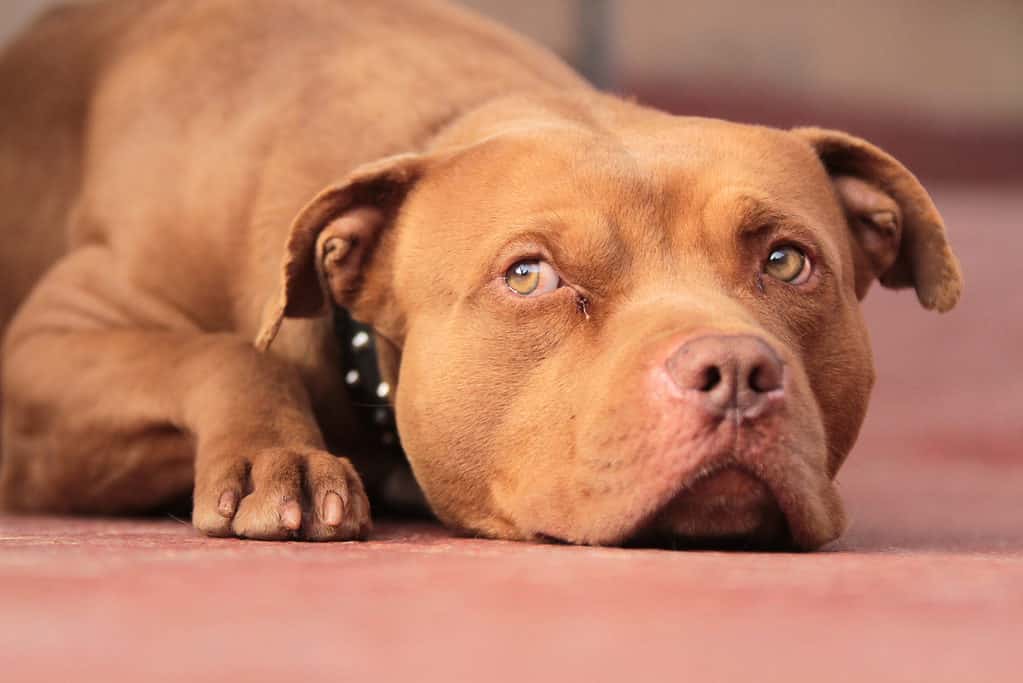
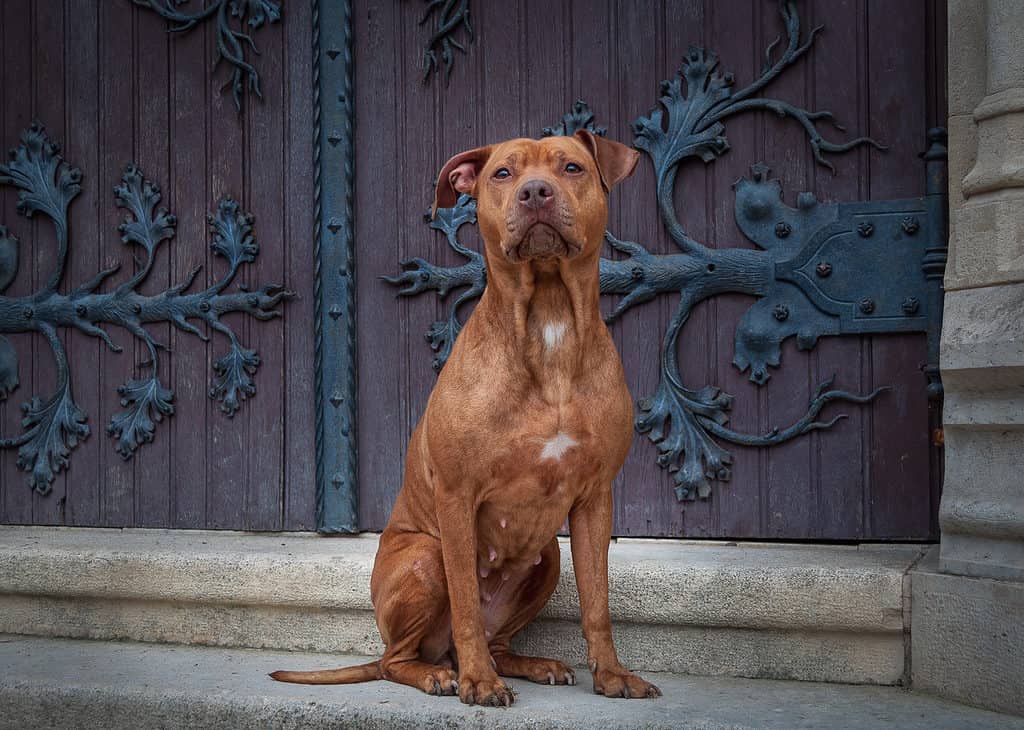
Most pit bulls will weigh anywhere from 30-50 pounds at adulthood.
©David Cohen 156/Shutterstock.com
How Big Will My Pit Bull Be When It’s Fully Grown?
As we discussed above, your pit bull will likely finish most of their growing by the time they reach 12 months of age. There may be differences in eventual size when it comes to male or female pit bulls, but on average, you can expect your pit bull to weigh anywhere from 30-60 pounds. According to the United Kennel Club’s (UKC) breed standards, mature males should weigh between 35 and 60 pounds, while females should weigh between 30 and 50 pounds.
When it comes to height, there are also slight differences between males and females. Breed standards note that the height range for mature males is from 18 to 21 inches at the withers. However, for mature females, the desirable height range is from 17 to 20 inches at the withers.
When Should My Pit Bull Stop Eating Puppy Food?
Puppy food is one of the best tools to help your pit bull grow into a happy and healthy adult! Food developed specifically for puppies is fortified with essential ingredients that promote healthy growth, as well as additional calories per cup that accommodate their daily energy requirements.
Puppy food should always be offered to your growing pit bull until they reach maturity. This means you should offer them a puppy diet until they reach 12 months of age. While some pit bulls will continue to fill out in the following months, they should have completed the majority of their growth by the one-year mark. Once they have reached 12 months of age, you can transition them to an adult kibble. Transition to the new food over a two-week period to prevent any GI upset from the switch.
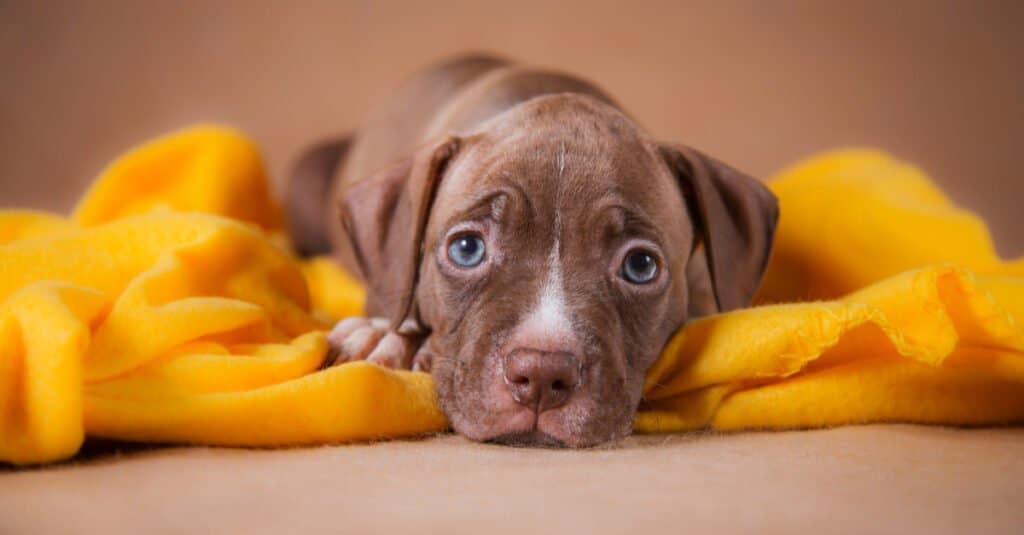
Your pit bull should have all of their permanent adult teeth by the time they are around six months old.
©Maya K. Photography/Shutterstock.com
When Will My Pit Bull Start Losing Teeth?
Once your pit bull puppy has entered the dreaded teething stage, you may wonder when they will finally lose their puppy teeth and develop their permanent teeth. Your pit bull puppy will begin to grow their baby teeth at around three weeks of age. They should have a full set of puppy teeth by the time they reach eight weeks. Your pup will sport these sharp baby teeth for about six weeks. Their adult teeth will begin to erupt at around 12–16 weeks of age.
As your puppy begins to grow their permanent teeth, you will notice their baby teeth falling out. This will happen gradually over the next few months, but they should have a full mouth of permanent adult teeth by the time they are six months old. This means that they should not lose any teeth past the age of six to eight months.
When Should I Start Training My Pit Bull?
Although a properly trained and socialized pit bull is a kind and loving canine friend, they can begin to display undesirable behaviors if they are not well trained. The pit bull is known for being hyperactive and a bit stubborn at times. They will need a well-rounded training routine to help them become the best version of themselves.
No matter what age your pit bull is when you welcome them into your family, we suggest starting their training from that moment. Most dogs are receptive to learning basic commands from the time they are eight weeks old. So any time is the perfect time to jump into an obedience training routine. Starting their training from the moment they enter your home will lay the foundation for the well-rounded pup they will eventually become.
Start training from the moment you bring your pit bull puppy home.
©dezy/Shutterstock.com
Socialization
Just remember that while basic obedience training is essential for your pit bull, you should always factor in socialization. An unsocialized pit bull may struggle around new people and animals, which can be difficult to manage as they grow. An ideal socialization program for your pit bull puppy will involve introducing them to new dogs, new people, new settings, and even new sounds.
Socialization is critical for your pit bull’s development, but we do not suggest allowing your pit bull puppy to interact with unknown dogs until they are fully vaccinated for canine distemper and parvovirus. You can still take your pittie pup to public settings free of animal interaction once they have had their second round of puppy vaccines. However, we suggest waiting until they have received all three puppy vaccines before they meet new canine friends.
What Commands Should I Teach My Pit Bull First?
If you are beginning your pit bull’s training journey, you may wonder which commands you should start with first. While you can certainly extend past these commands and dive into more advanced training, there are a few commands that we think all pit bulls should be comfortable with.
The basic commands that we think all pit bulls should know include:
- Sit
- Stay
- Come
- Lay down
- Drop it
In addition to the basic obedience commands we listed above, don’t forget to socialize your pit bull pup throughout this training process as well. Be sure to introduce them to unfamiliar people (both inside and outside of your home), pets, settings, and sounds.

Be sure to socialize your pit bull pup by introducing them to new people and experiences.
©iStock.com/AimesElement
When Should My Pit Bull Be Housebroken?
Welcoming a puppy into your family is a wonderful time, but most cannot say the same for the potty training process. Potty training a puppy can be very frustrating, so many pet parents want to know when they should expect their puppy to be fully housebroken.
Though every pit bull will be different in how quickly they pick up on potty training, most pit bulls will be housebroken within 3-5 months of starting their potty-training process. Some puppies will catch on much sooner, but this appears to be the average for most medium to large breed dogs.
When Should My Pit Bull Be Spayed Or Neutered?
Unless you plan to breed your pit bull, sterilizing your canine friend is often the best way to promote their future health. Spaying or neutering your pup will not only prevent any unwanted litters of puppies, but it will prevent any reproductive cancers down the line. Whether you have a male or female pit bull, spaying and neutering is ideal for their future health.
Information may vary when it comes to the best time to sterilize your canine companion. However, most vets will agree that the best time to spay or neuter varies depending on the size and breed of the pet, with many veterinary organizations recommending between 6 and 12 months for smaller breeds and up to 18 to 24 months for larger breeds. This seems to be the best time to not only decrease their risk of reproductive infections and cancers, but it’s still a great window to prevent any undesirable behaviors driven by hormones.

Your pit bull will most likely be spayed or neutered between 6 and 12 months of age.
©Natthapot Chantaraviboon/Shutterstock.com
When Will My Pit Bull Calm Down?
Pit bulls are known to have quite a bit of energy, especially during their puppyhood! While pit bulls’ goofy antics and fun-loving nature are some of their best qualities, you may still wonder when they will begin to calm down a bit. Your pit bull may always enjoy playtime, but there will come a time when they will begin to calm down a bit as they mature.
The exact age will vary, but most pitties will begin to calm down once they have reached three to four years of age. They should still enjoy their favorite games and adventures at your side, but they should be much less hyper and more relaxed at this point.
Are Pit Bulls Dangerous to Own?
While we support the love and care of pet owners of all dog breeds, many question whether or not pit bulls are more aggressive than other dog breeds, and if so, are they safe to own? Sadly, pit bulls do have a bad reputation as aggressors. This goes back to their history, as well as their physical attributes, including strong jaws, a powerful bite force, and a tendency to hold and shake when biting. This dog breed does not always socialize well with other dog breeds. Much training and care may be required before your pit bull interacts with any other pets in the household with calmness and tolerance.
Statistically, pit bulls have been involved in a significant percentage of fatal dog attacks. For instance, According to DogsBite.org, there were 48 total dog fatalities from dog attacks in 2019, and pit bulls contributed to approximately 66% of the 522 dog bite fatalities recorded in the United States between 2005 and 2019. Because of these reports, some communities have passed legislation to discourage the ownership of pit bulls. However, well-bred, rigorously trained, and properly socialized pit bulls can make wonderful family companions. It is up to us as their owners to ensure our pit bulls get the training they need.

A properly raised and well cared for pit bull is a happy, healthy companion.
©Mary Swift/Shutterstock.com
Common Health Issues Your Pit Bull Might Experience
Your pit bull will likely have a long and healthy life at your side, but there are a few health complications they are more prone to. All dog breeds will be predisposed to certain health conditions, and the lovable pit bull is no different. Let’s list a few of the health complications that pit bull parents should be on the lookout for!
Skin allergies: pit bulls are highly prone to developing allergies, but especially skin allergies. Pit bulls can be allergic to anything in the world around them, ranging from plant pollen to certain fragrances. Some of the most common signs of allergies in pit bulls include red skin, itching, sores on the skin, excessive shedding, skin odor, ear infections, and paw chewing.
Ear infections: Due to the increased risk of skin allergies in pit bulls, they are more prone to developing painful ear infections. Some of the most common signs of an ear infection in pit bulls include head shaking, pawing at the ears, red ears, ear odor, crusty ears, and facial sensitivity.
Joint disease: Pit bulls have an increased risk of developing painful forms of joint disease. This can include complications like hip dysplasia and elbow dysplasia, and eventually arthritis as a result of the joint deterioration. Some of the most common signs of joint disease in pit bulls include joint stiffness, limping, hesitance with physical activity, difficulty getting up and down, muscle wasting in the hind end, joint swelling, and a change in gait.
Thyroid disease: Pit bulls have a higher risk of developing a thyroid disease known as hypothyroidism. This occurs when the thyroid does not function properly, reducing the dog’s metabolic rate. Some of the most common symptoms of hypothyroidism is weight gain, hair loss. dry skin, lethargy, and skin infections.
Cardiac disease: Pit bulls have a higher risk of developing heart disease due to cardiac abnormalities among the breed. The most common symptoms of cardiac disease in pit bulls include frequent coughing, exercise intolerance, labored breathing, weakness, and abdominal distension.

Pit bulls can be prone to hip and elbow dysplasia.
©Diego Thomazini/Shutterstock.com