

P
Species Profile

Pit Bull

Canis lupus familiaris

Big heart, strong body, smart work
shymar27/Shutterstock.com

Pit Bull Distribution

Click a location to explore more animals from that region

Origin Location

This map shows the native origin of the Pit Bull. As a domesticated species, they are now found worldwide.

Loading map...

Found in 1 country

Size Comparison

Human 5'8"
Pit Bull 1 ft 7 in

Pit Bull stands at 28% of average human height.

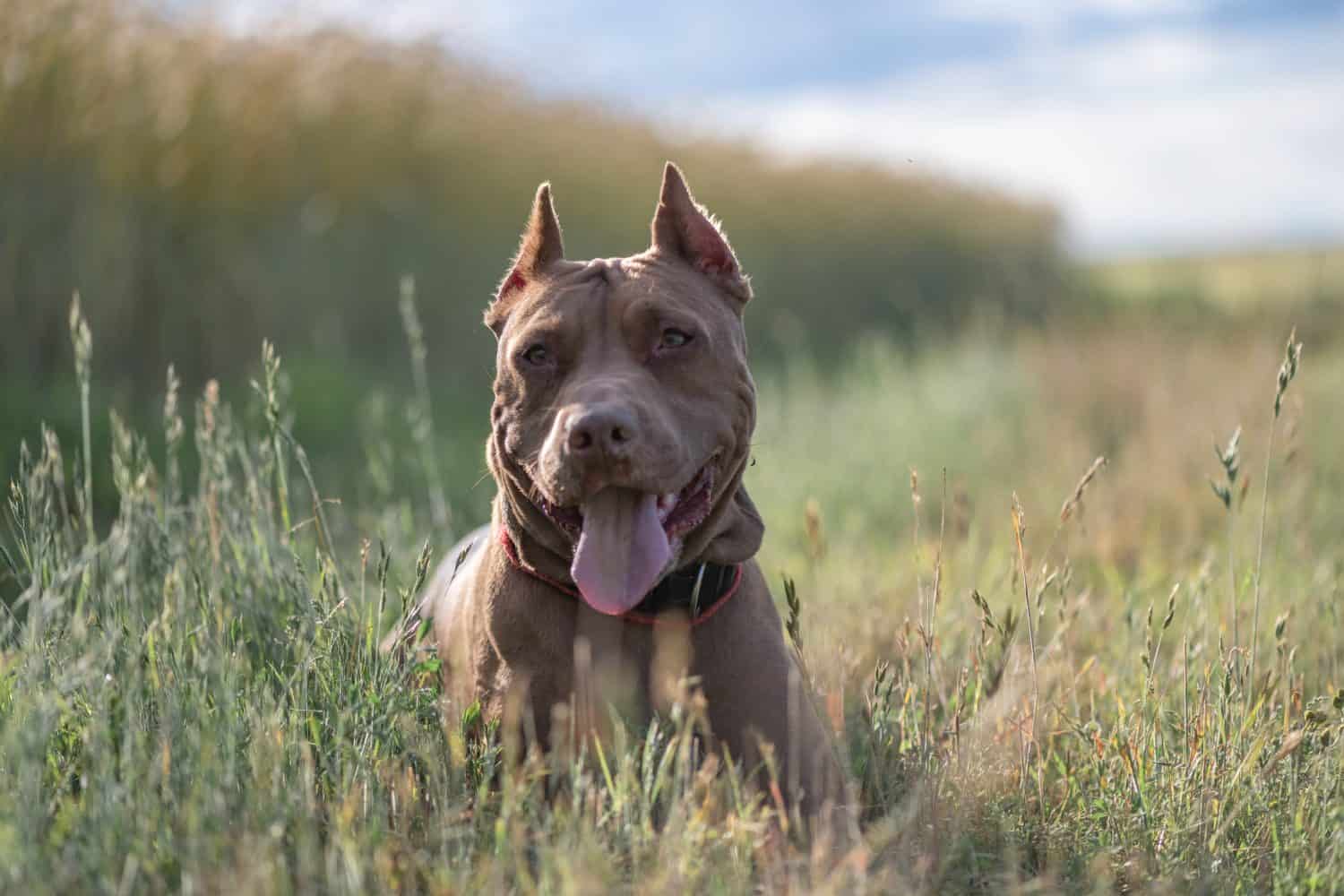
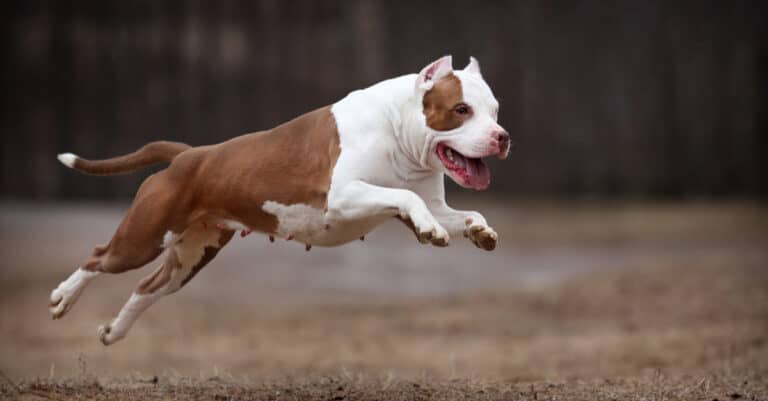
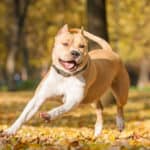
A purebred American pit bull terrier plays outdoors.

At a Glance

Domesticated
Also Known As Pit bull, Pitbull, Pit, Nanny dog
Diet Omnivore
Activity Diurnal+
Lifespan 13 years
Weight 30 lbs
Status Not Evaluated
Did You Know?

The American Pit Bull Terrier (APBT) is a specific breed; "pit bull" is also used broadly for several look-alike dogs (often including AmStaff, Staffordshire Bull Terrier, mixes).

Scientific Classification

A muscular, medium-sized domestic dog type historically associated with bull-and-terrier ancestry; today primarily kept as a companion/working dog. The term “pit bull” is used inconsistently and may denote a specific breed (often APBT) or a broader look-alike group.

Kingdom
Animalia
Phylum
Chordata
Class
Mammalia
Order
Carnivora
Family
Canidae
Genus
Canis
Species
lupus

Distinguishing Features

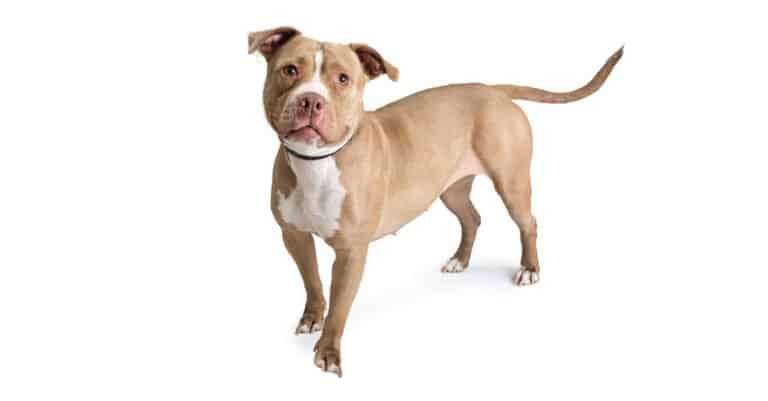
  • Medium-sized, athletic, muscular build
  • Broad head with strong jaw musculature (varies by line and individual)
  • Short, smooth coat in many colors
  • High variability in appearance because “pit bull” is often used as an umbrella label

Physical Measurements

Males and females differ in size

Height
1 ft 8 in (1 ft 6 in – 1 ft 9 in)
1 ft 7 in (1 ft 5 in – 1 ft 8 in)
Length
2 ft 11 in (2 ft 7 in – 3 ft 3 in)
3 ft 1 in (2 ft 9 in – 3 ft 6 in)
Weight
49 lbs (35 lbs – 60 lbs)
42 lbs (31 lbs – 55 lbs)
Tail Length
1 ft 2 in (12 in – 1 ft 4 in)
1 ft 1 in (11 in – 1 ft 2 in)
Top Speed
30 mph
running

Appearance

Primary Colors
Secondary Colors
Skin Type Short, sleek single coat with tight skin; moderate shedding. Skin can be allergy-prone; light coats may sunburn, so sun protection and gentle grooming help.
Distinctive Features
  • Domestic dog (Canis lupus familiaris) selectively bred from bull-and-terrier ancestry; more compact and powerfully muscled than typical village-dog baseline.
  • Medium-sized, athletic build with deep chest, strong shoulders, and defined musculature; optimized for strength and endurance.
  • Broad, wedge-shaped head; pronounced cheek muscles; moderate stop; muzzle medium length, not brachycephalic.
  • Ears naturally rose or semi-prick; tail medium length, tapering, carried low to level.
  • Short coat reveals body condition; weight control is important to reduce joint strain.
  • "Pit bull" commonly refers to a look-alike group; APBT-specific identification is often confused with AmStaff, bully breeds, and mixes.
  • Common health concerns: skin allergies/atopy, demodectic mange susceptibility, hip dysplasia, cranial cruciate ligament injury, hypothyroidism.
  • Care requirements: daily exercise and structured training; early socialization; nail/skin/ear maintenance; avoid overheating and provide coat-appropriate warmth/cooling.
  • Behavior varies by individual and upbringing; avoid assuming uniform temperament based on the "pit bull" label.

Sexual Dimorphism

Males are typically taller, heavier, and more muscular with broader heads and necks. Females are usually slightly smaller with a leaner frame, though both sexes remain strongly built and athletic.

  • Heavier bone and more pronounced shoulder and neck musculature.
  • Broader skull and cheek musculature; thicker tail base.
  • Often higher overall body mass for the same height.
  • Slightly smaller stature with a more streamlined outline.
  • Less bulky head and neck; often finer overall proportions.
  • May show more visible waist tuck at healthy weight.

Did You Know?

The American Pit Bull Terrier (APBT) is a specific breed; "pit bull" is also used broadly for several look-alike dogs (often including AmStaff, Staffordshire Bull Terrier, mixes).

APBTs descend from bull-and-terrier type dogs developed in the 1800s; in the U.S. they were also valued as farm, catch, and companion dogs.

Many APBTs show strong dog-directed drive/selectivity; responsible management and early training are especially important in multi-dog homes.

Coat colors are highly variable; they're short-coated and typically low-shedding compared with double-coated breeds.

They're often praised for athleticism-powerful hindquarters, burst speed, and stamina-making them common in weight pull and other strength sports.

Mislabeling is common: visual ID of "pit bull-type" dogs is unreliable, so shelter and public records often contain errors.

Historically, some pit bull-type dogs became iconic "all-American" mascots in early 1900s advertising and wartime imagery.

Unique Adaptations

  • Bull-and-terrier build: broad chest, strong neck/shoulders, and muscular rear drive support traction sports and physically demanding work compared with the base species' average form.
  • High pain tolerance/stoicism reported by many handlers: can mask injury; routine checks after exercise are important.
  • Short, single coat: better heat dissipation than dense double coats, but less insulation-more sensitive to cold and sunburn than many northern breeds.
  • Jaw and head musculature for gripping tasks: useful historically for catch work; today best directed into safe outlets (tug with rules, bite-free sport foundations).
  • Behavioral adaptability through training: like many domestic dogs (Canis lupus familiaris), APBTs show strong human-directed learning, often thriving with positive reinforcement and clear boundaries.

Interesting Behaviors

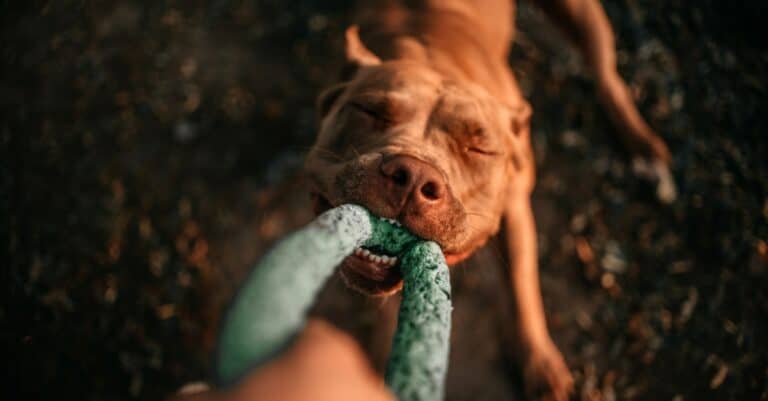
  • Intense play style: many enjoy vigorous tug, flirt-pole, and wrestling games; structured rules (start/stop cues) help keep arousal manageable.
  • People-focus: often seek close physical contact and frequently "check in" with handlers when well-socialized.
  • Tenacious problem-solving: can persist at puzzles/doors/toys longer than many breeds; enrichment reduces boredom-driven chewing.
  • Prey/chase behavior: some individuals are highly motivated to chase squirrels, cats, or moving objects-leash skills and secure fencing matter.
  • Dog-to-dog dynamics: may display high confidence with other dogs; careful introductions, supervision, and avoiding overcrowded dog parks can prevent conflict.
  • Body-language subtlety: stiff posture, hard staring, or "quiet" intensity can precede escalation-handlers benefit from learning early signals.
  • Joyful zoomies and power sprints: short bursts of speed are common; warm-ups help reduce soft-tissue strain.

Cultural Significance

American Pit Bull Terrier (APBT, Canis lupus familiaris) are seen as loyal companions and working dogs (e.g., weight pull), yet face breed-specific laws and media stories. Calling many dogs "pit bulls" hurts mixed dogs' shelter chances, housing, insurance, and public view.

Myths & Legends

In the U.S. and U.K., 19th-century "bull-and-terrier" lore prized a dog's "gameness" (never quitting a task), a quality celebrated in old sporting tales and later reinterpreted by fanciers as determination in work rather than fighting.

Early 1900s American popular culture elevated pit bull-type dogs as symbols of loyalty and grit; family stories and wartime-era imagery often cast them as protectors of home and nation.

The name "pit bull" comes from old blood sports: "pit" for the fighting ring and "bull" for bull-baiting past. That history stuck to the label and warned many people.

American farm-and-frontier anecdotes describe pit bull-type dogs as versatile 'catch dogs' for livestock and vermin control-folksy stories that frame them as do-it-all working companions rather than show dogs.

Shelter and neighborhood oral histories frequently include 'nanny dog' style family tales-handed down as local legends of affectionate dogs devoted to children-reflecting cultural memory and identity more than a formal breed doctrine.

Breed-club and fancier traditions recount foundational kennels and legendary dogs of early APBT lines, treated as origin epics within the community-stories used to explain temperament ideals, athleticism, and the importance of responsible stewardship.

Conservation Status

NE Not Evaluated

Has not yet been evaluated against the criteria.

Population Stable

Life Cycle

Birth 7 pups
Lifespan 13 years

Lifespan

In the Wild
8–16 years
In Captivity
8–16 years

Reproduction

Mating System Promiscuity
Social Structure Managed Domestic
Breeding Pattern Transient
Fertilization Managed Selective
Birth Type Internal_fertilization

In domestic settings, breeding is usually human-managed: females in estrus are paired with selected males, with no lasting pair bond. Natural matings occur via internal fertilization with a copulatory tie; multiple mating can occur if unmanaged.

Behavior & Ecology

Social Pack Group: 4
Activity Diurnal, Crepuscular, Cathemeral
Diet Omnivore Meat-forward, high-quality complete dog food with animal protein (commonly chicken, beef, or fish)

Temperament

Species context (domestic dog HUBS): highly social with humans; behavior shaped strongly by training, early socialization, and environment.
Breed distinction vs typical pet dog: higher persistence/tenacity and arousal; can work through discomfort when motivated.
Human-directed affiliation: often people-friendly, tactile, and eager to engage; may be overly exuberant with greetings.
Dog-directed behavior: greater risk of dog-dog conflict than average; careful introductions and management often needed.
HUBS variation: many are sociable with select dogs, others prefer single-dog homes; compatibility is individual.
Play style: physical, wrestling-oriented, intense tug/chase; benefits from structured play and clear stop cues.
Trainability: responsive to reward-based methods; impulse-control and disengagement skills are especially important.
Guarding/protectiveness: usually alert but not uniformly protective; behavior depends more on lines and learning than breed label.
Handling sensitivity: can be tolerant of roughhousing yet may react to restraint; condition cooperative care early.
Care needs: daily aerobic exercise plus mental work (nosework, obedience, tug rules); boredom increases destructiveness.
Common health concerns impacting behavior: skin allergies/atopy, orthopedic issues (hip dysplasia, CCL tears), thyroid and some cardiac problems; pain can raise irritability.
Management needs: secure fencing/leash, supervised dog interactions, appropriate chew outlets; avoid punitive tools that increase reactivity.

Communication

bark Alert and excitement
whine/cry Attention-seeking or frustration
growl Warning or play-growl
howl Occasional, context-dependent
grumble/rumble Low arousal vocalization during play or solicitation
Broad canine body language: posture shifts, tail carriage, facial tension, hackles, freezing
High-contact signals: leaning, pawing, climbing into laps, nudging hands for interaction
Play invitations: play-bow, bouncy approach, open-mouth "smile," exaggerated side-steps
Arousal signals: rapid panting, hard staring, tight mouth, forward weight shift-use as early intervention cues
Appeasement/affiliation: lip-licking, head turns, soft eyes, curved approaches
Scent communication: urine marking, ground sniffing, overmarking; stress-sniffing during uncertainty
Mouthing and tugging as communication: uses mouth to initiate play; requires bite-inhibition training
Displacement behaviors: scratching, shake-offs, yawning-often seen when conflicted or overstimulated

Habitat

Biomes:
Temperate Forest Temperate Grassland Mediterranean Desert Hot Desert Cold Boreal Forest (Taiga) Tundra Alpine Freshwater Wetland Savanna Tropical Dry Forest Tropical Rainforest Marine +8
Terrain:
Plains Hilly Mountainous Coastal Island
Elevation: Up to 16404 ft 3 in

Ecological Role

Domestic companion/working canid; human-associated opportunistic consumer rather than a wild predator.

Rodent/pest deterrence in human environments (opportunistic predation/harassment) Scavenging of edible waste when accessible (can reduce some organic refuse but also creates conflict if unmanaged) Social/working roles for humans (guarding, sport, assistance tasks) that indirectly influence human-managed ecosystems

Diet Details

Main Prey:
Small mammals Birds Small reptiles and amphibians Carrion and animal scraps
Other Foods:
Fruits Vegetables Grains and starches Grass and plant matter

Human Interaction

Domestication Status

Domesticated

Canis lupus familiaris (domestic dog) comes from gray wolves and was bred by people for work and looks. The American Pit Bull Terrier (APBT) is a muscular, medium dog from bull-and-terrier lines, bred for strength, athletic skill, and drive. APBTs serve as pets, sport dogs, or helpers, but face bad reputation, wrong labeling, and breed laws; training shapes them.

Danger Level

Moderate
  • If poorly managed or trained, the breed's strength and persistence can increase injury severity in a bite incident compared with many smaller or less powerful dogs.
  • Higher likelihood of restrictive handling contexts (muzzles, stronger restraint) in some areas can reflect risk management needs rather than individual temperament.
  • Dog-directed aggression or reactivity in some individuals can lead to redirected bites during fights or high-arousal situations.
  • Misidentification of 'pit bull-type' dogs can affect incident reporting and perceived risk; nonetheless, any strong, athletic dog requires careful supervision with children and unfamiliar people/dogs.

As a Pet

Suitable as Pet

Legality: Laws for American Pit Bull Terrier (pit bull-type dog) vary by place. Some allow them; others ban or limit them. Rules may need muzzles, special registration, sterilization, or higher insurance; landlords may also ban or charge extra.

Care Level: Experienced

Purchase Cost: Up to $2,000
Lifetime Cost: $15,000 - $40,000

Economic Value

Uses:
Companion animal market Training and behavior services Veterinary care (often allergy/dermatology and orthopedics) Animal welfare/rescue and sheltering Canine sports and working-dog activities Regulatory/insurance compliance (permits, higher premiums where applicable)
Products:
  • Adoption/rehoming services and breeder sales (where ethical/regulated)
  • Leashes, harnesses, secure crates, durable toys/chews
  • Professional training (obedience, reactivity management, sport training)
  • Veterinary dermatology/allergy testing, diets, medications
  • Orthopedic care (e.g., CCL surgery/rehab) when needed
  • Muzzles, fencing upgrades, and liability insurance in restricted areas

Relationships

Ecological Equivalents 6

Animals that fill a similar ecological role in their ecosystem

American Staffordshire Terrier
American Staffordshire Terrier Canis lupus familiaris Has a very similar 'pit bull-type' phenotype and bull-and-terrier ancestry and is often conflated with other pit-bull-type dogs in appearance and public labeling. Typically has comparable exercise needs, a handler-focused temperament, and potential for dog-directed reactivity without early socialization.
Staffordshire Bull Terrier
Staffordshire Bull Terrier Canis lupus familiaris Shares bull-and-terrier roots and a compact, muscular build. Occupies a similar niche as a strong companion dog requiring structured training, enrichment, and careful dog-to-dog introductions.
American Bully
American Bully Canis lupus familiaris Developed from pit-bull-type lines with emphasis on heavier bone and muscling. Overlaps in companion role and in strength/handling considerations, but is often less athletic than classic American Pit Bull Terrier lines.
Boxer
Boxer Canis lupus familiaris Medium-large, muscular companion and working dog with high energy and strength; requires daily exercise, training, and owner management to prevent boredom-driven behaviors.
Bull Terrier
Bull Terrier Canis lupus familiaris Another bull-type terrier with a history of tenacity and athleticism. Has comparable requirements for consistent training, impulse-control work, and enrichment to safely channel its drive.
Rottweiler
Rottweiler Canis lupus familiaris Strong, powerful guardian-type companion. Overlaps in responsible ownership needs — early socialization, clear training, and secure containment — and faces stigma and legislative challenges in some regions.

“Pit Bull” is an umbrella term that encompasses several dogs developed from bulldogs and terriers, rather than a single breed of dog. The facts about such dogs reveal that they are all “bully” types with a common origin in ancient Molossers, sharing traits of loyalty, protectiveness, and affection. They were originally used to pull down large game such as wild boars, bull baiting, bear baiting, cattle herding, and pit dog fighting. They are also “terrier” types, that is, medium and large-sized terrier breeds used as working farm dogs to kill vermin, hunt, and guard property and people.

The 5 Different Types Of Pit Bulls And Pit Bull Mixes

The facts about pit bull ancestry show that they originated from bulldogs and terriers. Here are the types of pit bull dog breeds:

  • English Bull Terrier: A “bull-and-terrier” or “bull-type terrier” breed developed from Old English Bulldogs and Old English Terriers.
  • American Staffordshire Terrier: Also called the Amstaff and originally the Staffordshire Terrier, its ancestors are mastiffs, Old English bulldogs, and Old English terriers.
  • Staffordshire Bull Terrier: A descendant of the Old English Bulldog and the Old English Terrier.
  • American Pit Bull Terrier: The original “pit bull” developed from crossing bulldogs with terriers. It is similar to the American Staffordshire Terrier but is smaller and more athletic.
  • American Bully: Also called the Bully Pit, it is descended from a stocky strain of American Pit Bull Terrier crossed with Old English Bulldog, English Bulldog, and American Bulldog.

Here are a few common pit bull mixes that exist:

  • Pitbull Lab
  • Pitbull Mastiff
  • Old Pit Bulldog

3 Pros And Cons Of Owning Pit Bulls

Pros!Cons!
Pit bulls are family dogs: This type of dog is social and develops very strong bonds with its people. They appreciate having someone who is usually around.Pit bull owners experience breed discrimination: These dogs are the most misunderstood due to their history of being used as fighting dogs and abused, as well as discrimination that is common among medium and large-sized dogs in general.
You can find healthy pit bulls at shelters: Due to breed discrimination, many are abandoned at, or rescued by, shelters. 2 years old is a good age that is still young but old enough to let you know the dog’s personality and behavior.
Pit bulls need strong owners: Any of these breeds should always be on a leash when around other dogs and have early training and socialization to keep this behavior under control. Although they love people, it is a bad idea to keep small animals around them due to their having an average prey drive.

They are determined, smart, and athletic: They love playing and learning new things. If you are someone who will spend a lot of time with your dog, one of these breeds could be right for you.
They’re big and can run away. Owners should keep them in houses with backyards and strong fencing so they don’t escape since they have wanderlust. Never allow them off-leash.
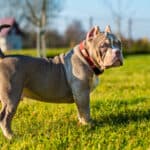
Blue Pit Bull

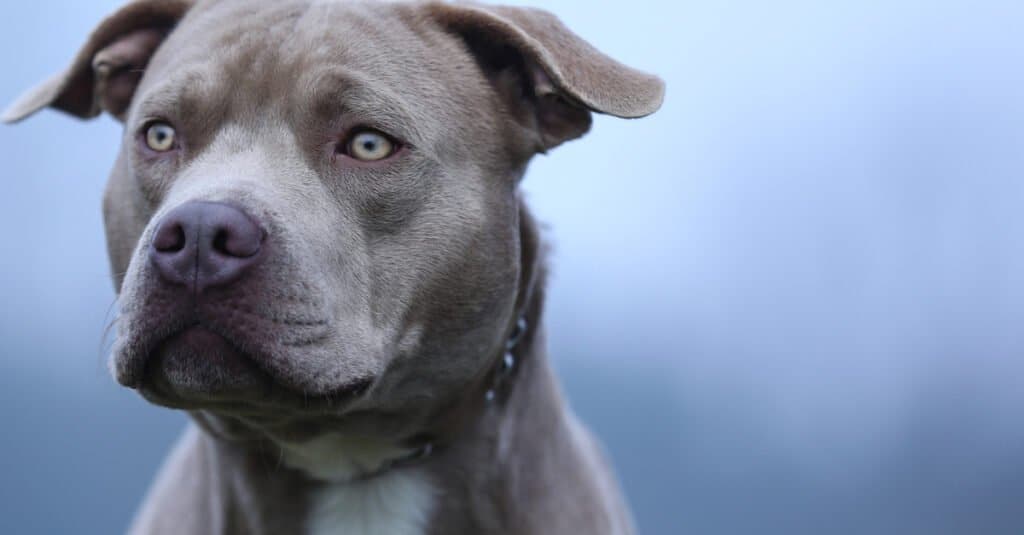
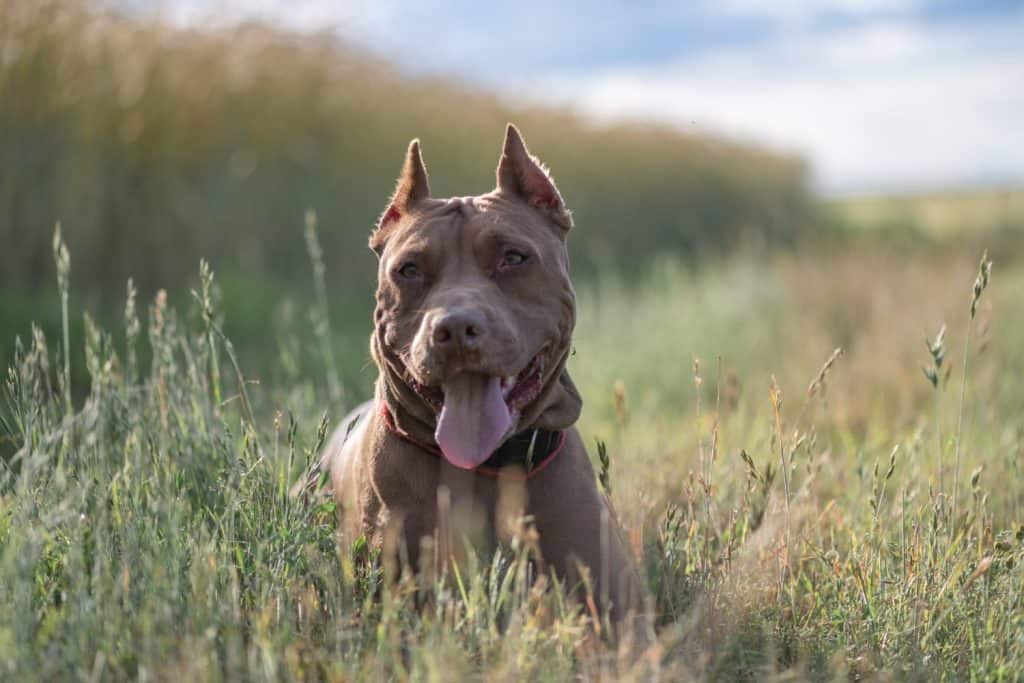
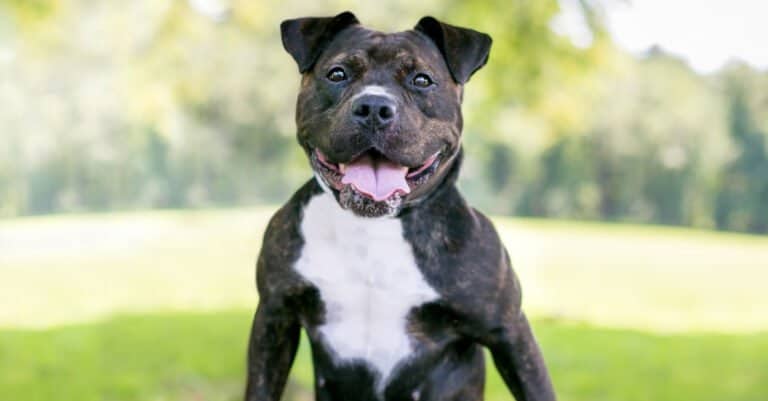
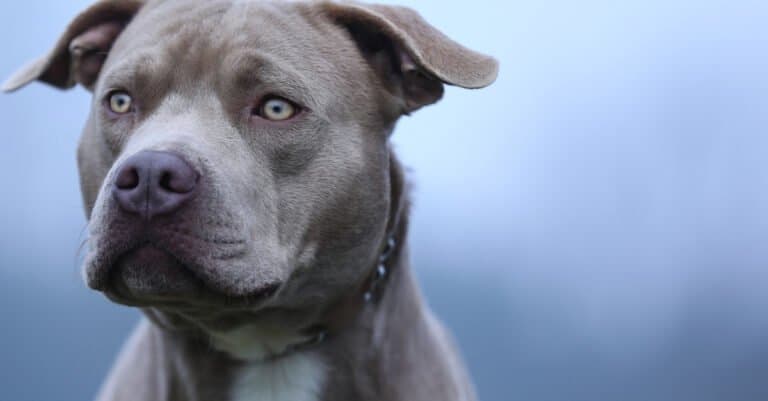
Stocky with almond-shaped eyes, the pit bull is a medium-sized dog that can be found in a variety of colors.

Size And Weight

These dogs are medium-sized with short hair and an average height of 15 to 19″ for males and 14 to 18″ for females. Males weigh 29 to 80lbs fully grown, while females weigh 24 to 75lbs fully grown. The puppies weigh 4 to 8 lbs on average at 8 weeks and are typically fully grown between 12 to 18 months.

Common Health Issues
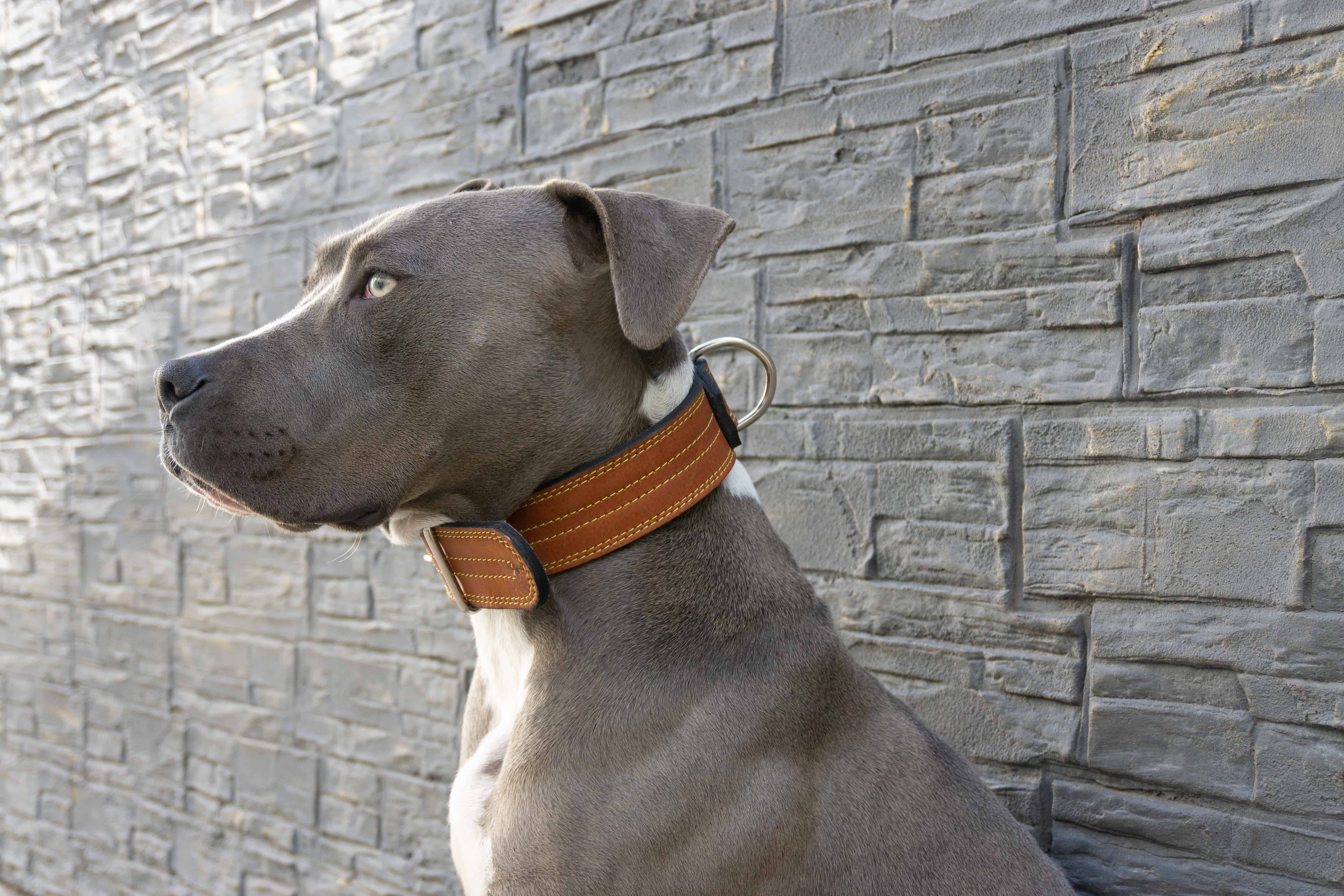
american pit bull terrier

Pit Bulls tend to have health issues like hip dysplasia, so regular vet visits are always recommended.

Pit bulls are usually healthy dogs, but each breed may encounter specific health issues. The American Pit Bull Terrier, in particular, tends to have more health issues than other breeds and encounters them more often, such as demodectic mange, skin allergies, and hip dysplasia.

The English Bull Terrier’s health issues are deafness, heart disease, skin problems, lens luxation, hereditary nephritis (kidney disease), and OCD-related spinning behavior.

The Staffordshire Bull Terrier’s health issues are cataracts, distichiasis (eyelash deformity), mastocytoma (a type of tumor), and persistent hyperplastic primary vitreous (an eye issue).

Its American counterpart, the American Staffordshire Terrier, has health issues dealing with skin problems, allergies, tumors, and cerebellar ataxia.

The American Bully’s health issues are hip and elbow dysplasia, heart disease, and allergies. In sum, the common health issues among these breeds are:

  • Heart disease
  • Skin problems
  • Eye problems
  • Hip and elbow dysplasia
  • Allergies
  • Cancer

These dogs have average to long lifespans. The American Staffordshire Terrier, Staffordshire Bull Terrier, and American Bully all have a lifespan of 12-14 years. The lifespan of the American Pit Bull Terrier is 10-14 years, and the English Bull Terrier is 10-15 years.

Temperament
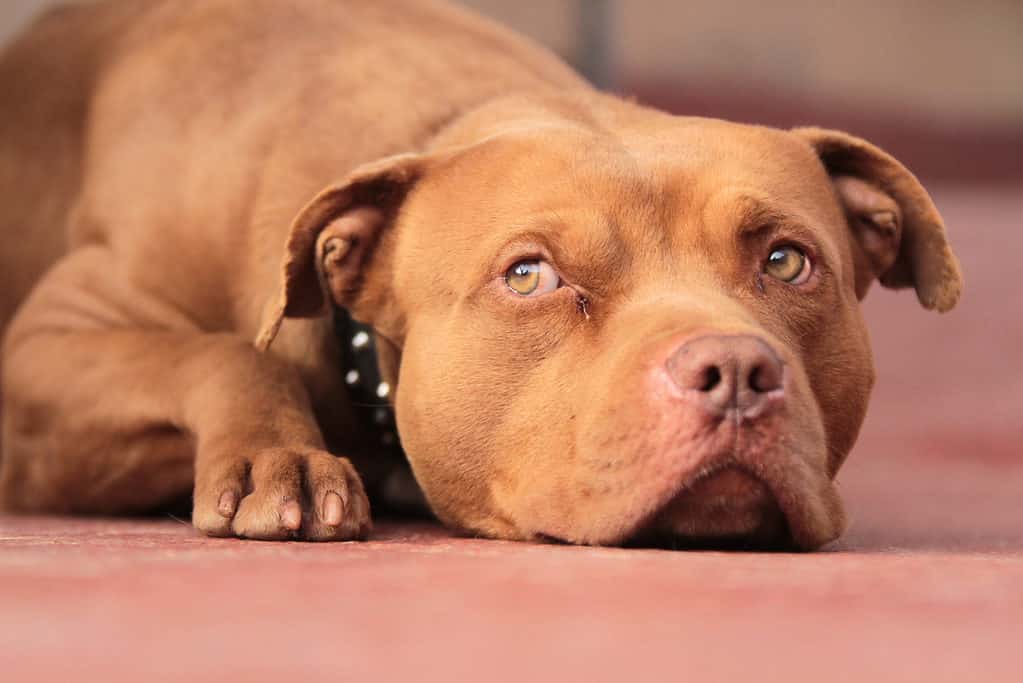
Red Nose Pit Bull Looking Up

Pit bulls are active, loyal, and friendly dogs.

Pit bulls are active, loyal, friendly, affectionate, easygoing, intelligent, strong-willed, and courageous pets. The “pibble” personality has playful, social, and protective traits. These dog types are a popular choice for families given their temperament, especially those with older children. Their behavior is silly, obedient, and stubborn, so they act like puppies into adulthood. The origin of their friendliness is in their development since they weren’t initially bred to be guard dogs.

This does not mean that because of their personality, they cannot be watchdogs or guard dogs, though. These dog types were used to herd cattle, watch livestock, and pull down bulls and bears. Their behavior can be dangerous if they want to be and attack people with indifference or insensitivity to pain, making them fearless and tenacious toward anyone who threatens their family. These traits, along with their physical strength, make them all-around great working dogs and companion animals.

How To Take Care Of A Pit Bull

Although pit bulls are a dog-type group, they all share some similarities in their physical makeup and constitution. Owners should be aware of them and read up on the details of the specific breed they wish to have. Whether it’s joint dysplasia, or heart, eye, and skin problems, they have special needs for their diet and care.

Food And Diet
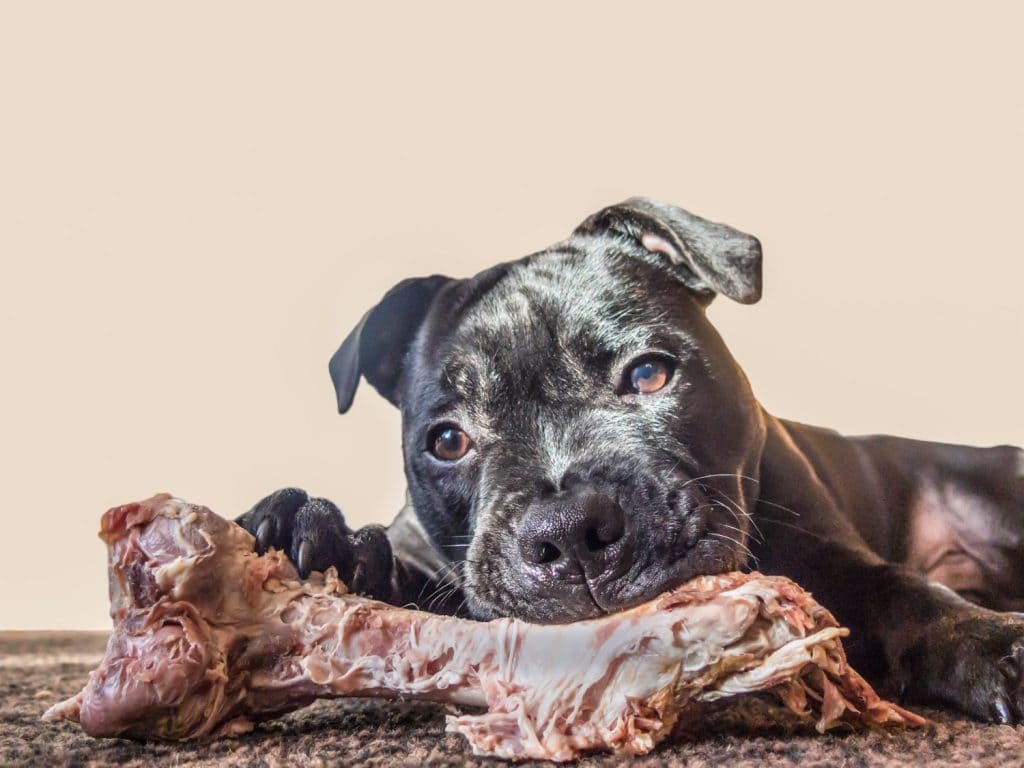
A dog holding and chewing, eating a bone. He is lying down looking at the camera.

Pit Bulls have big appetites and should have a balance of protein and fat.

Pit bulls are medium-sized, stocky dogs that enjoy being athletic and playful. They, especially puppies, have unique health considerations as a dog-type group. New owners should consider the following facts when choosing food for their pets:

Puppy dog food: Pits have big appetites, and puppies are no exception. You’ll want a diet that provides clean animal protein as the first and main ingredient, along with some amount of vegetables or whole grains and fruit for additional nutrients. Additional calcium and phosphorus support growing bones. Feed your puppy 2 to 5 times a day.

Adult dog food: Animal protein and fat are incredibly important to keep your adult dog healthy. The inclusion of probiotics, eggs, brown rice, or a combination of meat and fish meal is ideal. Look also for fatty acids and DHA. The fat-to-protein ratio should be a minimum of 50%, while a lack of high-risk preservatives minimizes the risk of cancer.

Maintenance And Grooming

All pit bulls have a short coat and need little grooming. Although they have minimal shedding, they are not hypoallergenic.

Training
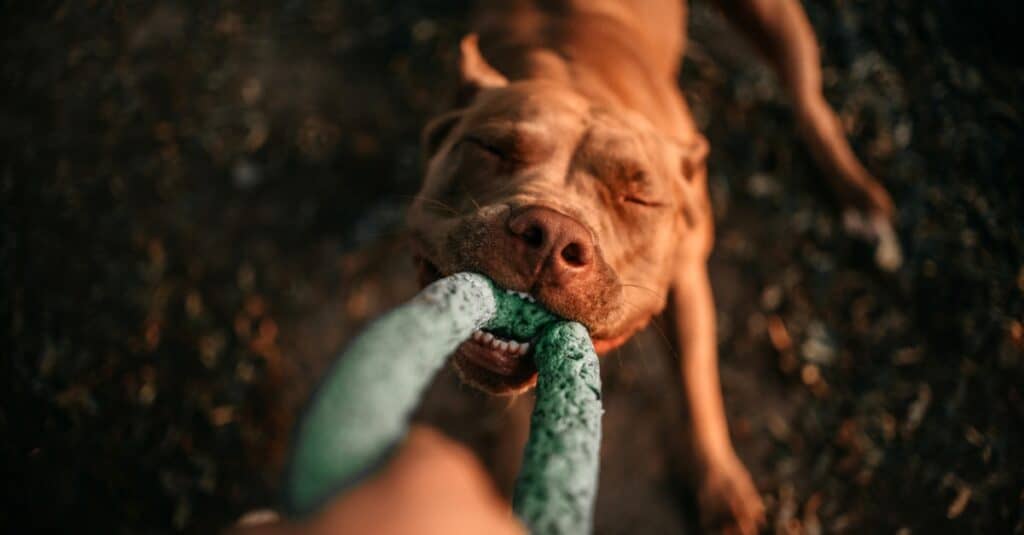
pit bull playing tug

Training and socialization should begin at an early age.

These dogs indeed tend to act aggressively around other dogs, but they can learn tolerance after training and on-leash meet-and-greets with other dogs. The earlier you have your pup trained and socialized for a variety of dogs, people, and situations, the better. They excel with training, even as adults.

Exercise

This breed needs a minimum of 1 to 2 hours of exercise a day, although they wouldn’t say no to more. They love stimulating activities, so you’ll want to include something other than walking and running. Examples are a treadmill, playing fetch, a spring pole, a joy ball, hiking, high jumping, and obstacle courses. However, they do get tired, and sometimes they just want to lie on the couch. Let your dog tell you if it wants to exercise or not, rather than forcing it.

Puppies

Even as a puppy, the pit bull is strong and fast. You’ll want to start exercising early on, with 5 minutes per month of age. Include toys and add stimulating activities as your puppy grows.
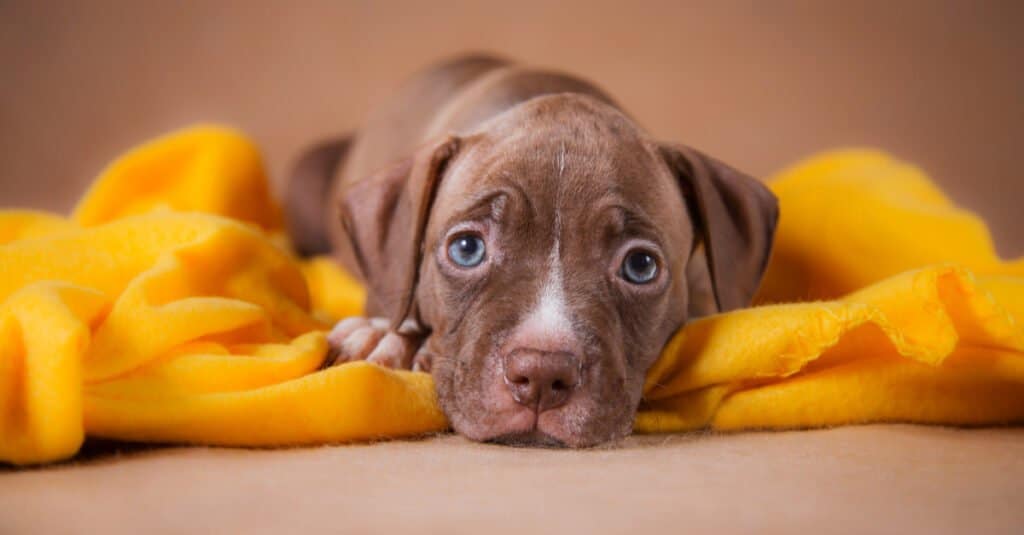
Pit Bull Puppy

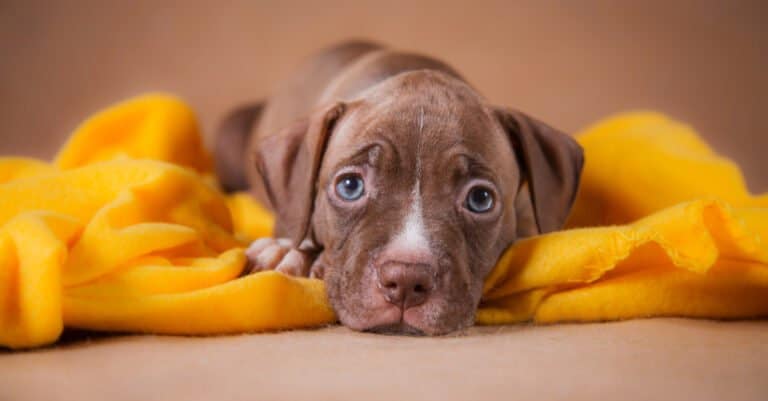
Pit bulls can make wonderful family dogs, thanks to their loyalty, intelligence, and affection.

Pit Bulls And Children

These dogs are very good with children. Never leave small children around them unsupervised, since pit bulls are big and can accidentally hurt them. You’ll want to make sure the environment is safe for the children and never mix their toys together.

Dogs Similar To Pit Bulls

Dogs that are similar to pit bulls include bulldogs, bully kuttas, and bull mastiffs.

  • Mastiff: Descending from the Molossus, mastiffs are more laid-back than pit bulls and have jowls.
  • Boxer: The result of crossing the now-extinct mastiff-type Bullenbeisser with an English bulldog has similarities to pits, such as body shape and being used for hunting, but boxers are larger.
  • Rottweiler: Another breed that is often discriminated against, rottweilers are descended from mountain dogs and have a stronger bite than pit bulls, but pits are faster and more athletic.

Famous Pit Bulls

This breed is widely known through military advertising and children’s comedies. Some examples of pits that made the spotlight are:

  • Bud, the dog that came with Dr. Horatio Nelson Jackson when he made the first road trip across the United States.
  • Sergeant Stubby, a dog that captured a German spy and was the most-decorated dog of WWI.
  • Petey, the mascot of the Little Rascals shorts from the 1920s.
  • Grunt, the dog that played the role of Alex’s companion in the 1983 movie Flashdance.
  • Champion, the three-legged dog April and Andy adopt from the pound on the NBC show Parks and Recreation.
View all 246 animals that start with P

Sources

  1. The Spruce Pets / Accessed December 23, 2021
  2. Wikipedia / Accessed December 23, 2021
  3. American Bully Daily / Accessed December 23, 2021
  4. Dog Time / Accessed December 23, 2021
  5. Barking Royalty / Accessed December 23, 2021
  6. PitBulls.org / Accessed December 23, 2021
  7. Wikipedia / Accessed December 23, 2021
  8. Wag! / Accessed December 23, 2021
  9. Barking Royalty / Accessed December 23, 2021
  10. Dogell / Accessed December 23, 2021
  11. My Dog Breeds / Accessed December 23, 2021
  12. Dog Breeds Expert / Accessed December 23, 2021
  13. Wikipedia / Accessed December 23, 2021
  14. ProCon / Accessed December 23, 2021
  15. NYLN Youth Leader Blog / Accessed December 23, 2021
  16. Devils Den Bullies / Accessed December 23, 2021
  17. American Bully Daily / Accessed December 23, 2021
  18. Our Pets Health / Accessed December 23, 2021
  19. Dogvills / Accessed December 23, 2021
  20. American Bully / Accessed December 23, 2021
  21. Hepper / Accessed December 23, 2021
  22. Dog Food Advisor / Accessed December 23, 2021
  23. PetMD / Accessed December 23, 2021
  24. Golden Retriever US / Accessed December 23, 2021
  25. PitBulls.org / Accessed December 23, 2021
  26. Pit Bull Care Guide / Accessed December 23, 2021
  27. Barkercise / Accessed December 23, 2021
  28. About Pit Bull Dogs / Accessed December 23, 2021
  29. Ani Pet Kingdom / Accessed December 23, 2021
  30. Rover / Accessed December 23, 2021
  31. Your Purebred Puppy / Accessed December 23, 2021
  32. Am Staffordshire Terrier / Accessed December 23, 2021
Melissa Bauernfeind

About the Author

Melissa Bauernfeind

Melissa Bauernfeind was born in NYC and got her degree in Journalism from Boston University. She lived in San Diego for 10 years and is now back in NYC. She loves adventure and traveling the world with her husband but always misses her favorite little man, "P", half Chihuahua/half Jack Russell, all trouble. She got dive-certified so she could dive with the Great White Sharks someday and is hoping to swim with the Orcas as well.
Connect:

Thank you for reading! Have some feedback for us?


Pit Bull FAQs (Frequently Asked Questions)

A pit bull is a bull-and-terrier type dog breed.