
Quick Take
- Not every antler clash is a real fight, and the difference matters more than you might expect. Sparring vs. real fights →
- Seeing antlered bulls fight in the snow seems out of season, but a specific biological reason explains why it is not. Why winter fights happen →
- Bull moose antlers can span over five feet, but their most dangerous feature isn't the size. See their true danger →
- Younger bulls spar for a reason that pays off years later, and knowing that reason changes how you read this entire encounter. How sparring shapes young bulls →
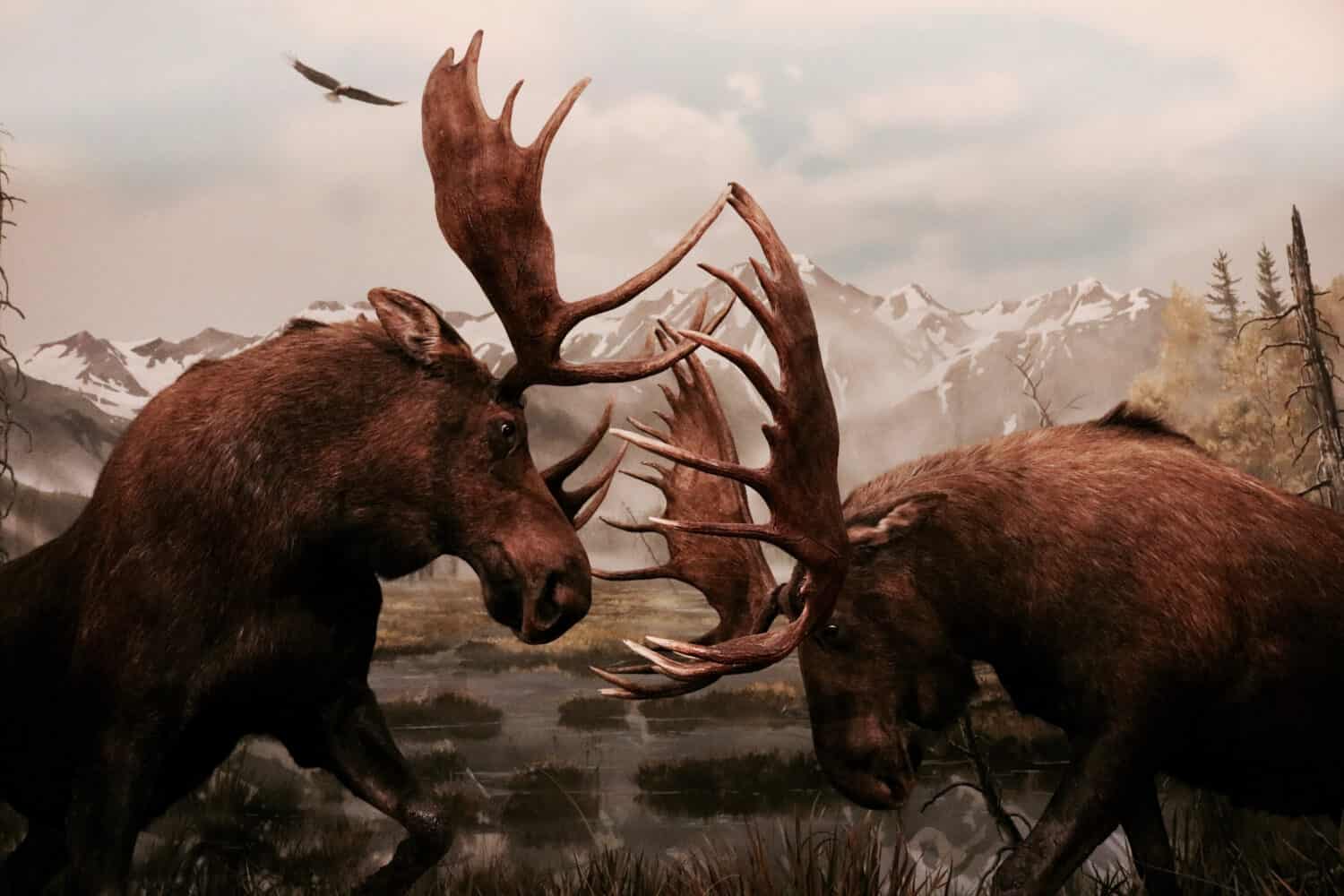
Two enormous bull moose stand face-to-face in a snowy Idaho forest, their massive antlers locked together as they push against one another. Neither animal appears willing to back down, and the surrounding snow makes it even harder to maintain their footing. Fortunately, a nearby trail camera captures the confrontation, giving us a rare look at how these powerful animals compete. But what exactly are they fighting over, and does locking antlers always mean a serious battle is underway?
Watch Two Bull Moose Lock Antlers in the Snow
The footage was shared by TrailCamNut, a wildlife-focused TikTok account featuring trail camera recordings from Idaho. The account regularly captures animals such as deer, black bears, mountain lions, and elk moving through their natural habitats.
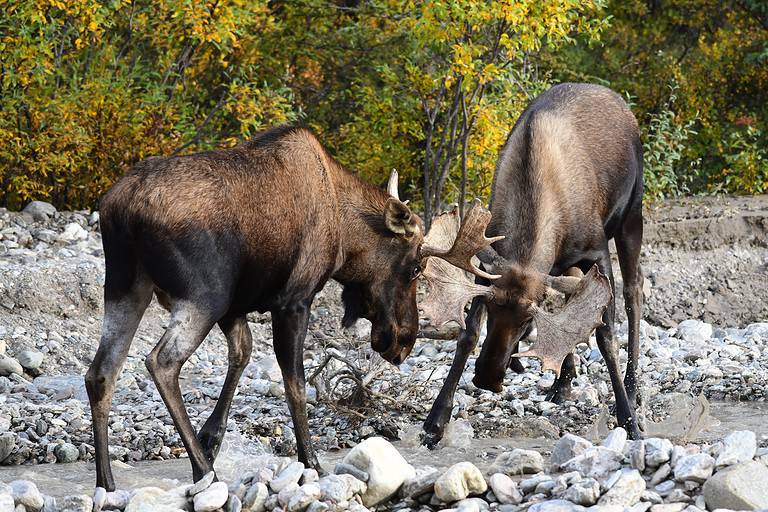
In this particular recording, two bull moose are already engaged in a confrontation when the footage begins. A thick layer of snow covers the ground, and both animals lower their heads, pressing their broad antlers together as they attempt to push each other backward.
The animals shift their weight and adjust their footing as the encounter continues. Around the 25-second mark, the original footage description notes the audible sound of their antlers clashing as they struggle against one another.
It’s an impressive display of strength, especially considering that an adult bull moose can weigh well over 1,000 pounds. But the encounter also raises an interesting question: are these animals fighting to establish dominance, competing for a mate, or simply testing one another’s abilities?
Why Do Bull Moose Lock Antlers and Fight?
For bull moose, locking antlers is closely connected to competition and social status. During the breeding season, known as the rut, males compete for opportunities to mate with females. Their enormous antlers serve as both visual displays of strength and physical tools during confrontations.
According to the Alaska Department of Fish and Game, the moose rut typically peaks in late September and early October. During this period, bulls may challenge rivals by bringing their antlers together and pushing, attempting to force the other animal to retreat.
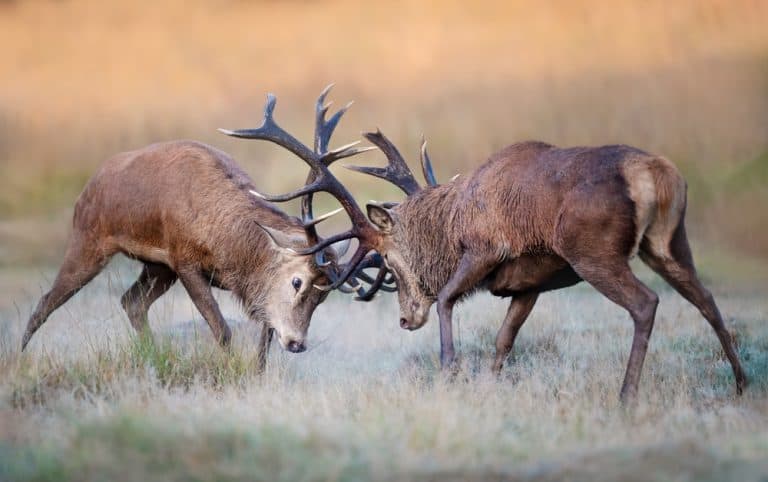
However, not every encounter is an all-out fight. Moose also engage in sparring, a form of competition that allows bulls to assess one another’s strength and develop fighting skills without necessarily risking a serious injury.
Research described by the National Park Service found that younger bull moose may spend considerable time sparring, sometimes continuing into early winter. Older, more experienced bulls generally engage in less frequent sparring, although serious confrontations can still occur during the rut.
Because this video begins after the two moose have already locked antlers, and their ages and the recording date aren’t established, we can’t determine exactly what triggered the encounter. Their behavior could represent a competitive confrontation or a less serious sparring session.
Why Are These Moose Fighting in the Snow?
One of the most interesting details in the footage is the snowy setting. Moose are well adapted to cold climates, and their enormous bodies, long legs, and thick coats help them survive harsh northern winters. But seeing two antlered bulls pushing against one another in the snow raises questions about when the confrontation occurred.
Unlike some other deer species, moose generally breed in early autumn. By winter, much of the intense competition associated with mating has already ended. Nevertheless, younger bulls may continue sparring after the main breeding season.
Adult male moose also shed their antlers annually. According to wildlife officials, mature bulls commonly lose their antlers during December and January, although the timing varies by age and individual. Younger bulls may retain theirs considerably longer.
That means the presence of snow doesn’t necessarily make this encounter unusual. Snowfall can arrive early in northern moose habitats, and some males retain their antlers well into winter.
Without a confirmed recording date or additional information about the animals, it’s impossible to determine whether this particular encounter happened during the rut or afterward. What the footage clearly demonstrates is that the animals are using their antlers to physically challenge one another.
How Powerful Are Bull Moose?
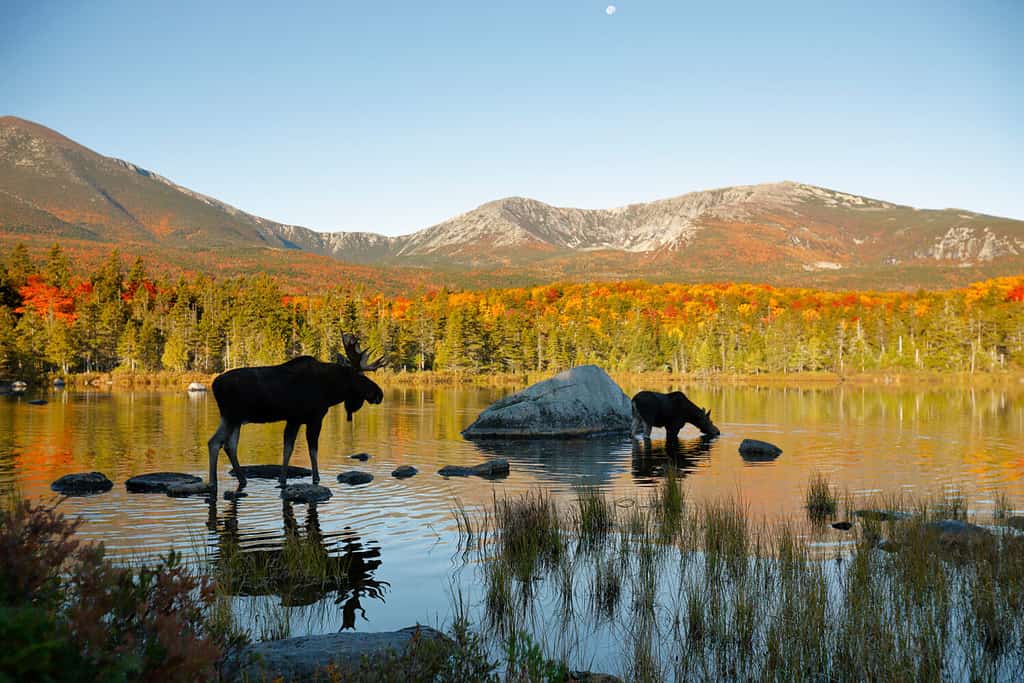
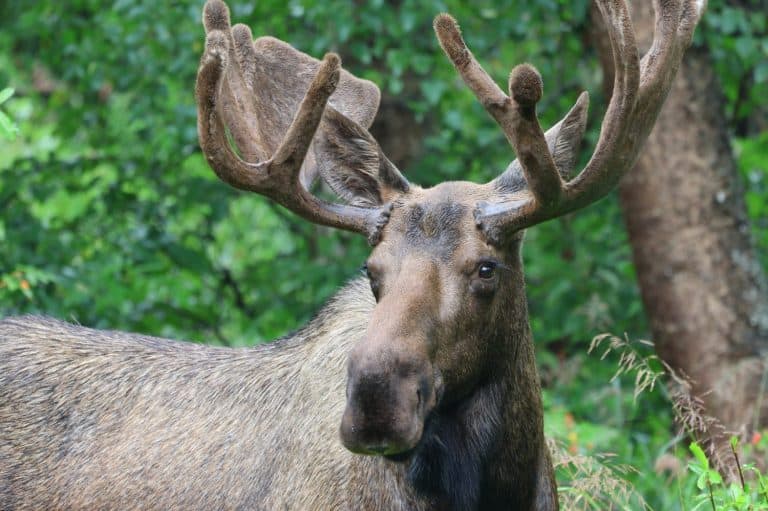
Moose are the largest living members of the deer family, and adult males use their broad antlers during competitive encounters.
©Paul Tessier/Shutterstock.com
Moose (Alces alces) are the largest living members of the deer family, and their size alone makes an encounter between two bulls an extraordinary sight.
Adult male moose commonly weigh between 800 and 1,400 pounds, although exceptionally large individuals can exceed that range. Their massive shoulders, powerful neck muscles, and long legs provide the strength needed to move through deep snow and push against rivals.
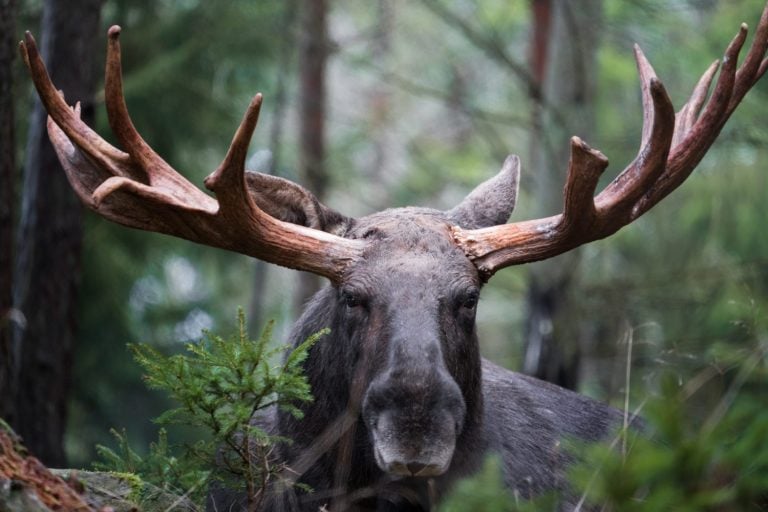
Their antlers are equally impressive. Large bulls can develop antlers measuring more than five feet across, with broad, flattened sections and multiple pointed projections. Unlike the permanent horns of cattle or bison, moose antlers are made of bone and are shed and regrown each year.
During a confrontation, those antlers help distribute the force of each animal’s movements as the bulls push against one another. But they can also be dangerous. Sharp points may cause puncture wounds, and powerful collisions can result in broken bones or other serious injuries.
Wildlife biologists have documented cases in which competing bulls suffer severe injuries or even die following particularly intense confrontations. Fortunately, many encounters end when one animal recognizes that its opponent has the advantage and withdraws.
What Does This Behavior Tell Us About Moose?
What makes this trail camera footage especially fascinating is that it captures an aspect of moose behavior most people rarely have an opportunity to witness. Outside the breeding season, moose are generally solitary animals, although individuals sometimes gather in areas with abundant food or suitable habitat.
During the rut, however, interactions between males become much more important. Bulls assess potential rivals through their size, posture, displays, and occasional physical confrontations. These interactions help establish which animals are more likely to gain access to receptive females.
Sparring can also give younger bulls valuable experience. By testing their strength against other males, they may develop the skills needed for more serious competition as they mature.
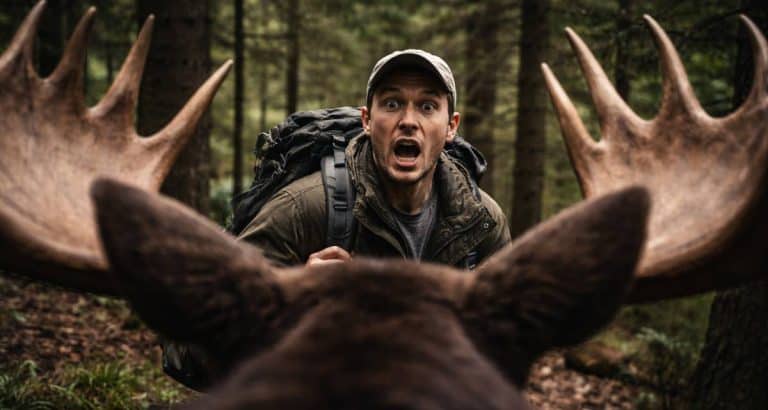
Despite their sometimes awkward appearance, moose are remarkably powerful animals capable of moving quickly over rough terrain. Wildlife officials caution that people should never approach two competing bulls or attempt to interfere with a confrontation. Moose can charge when threatened, and their size makes them extremely dangerous at close range.
In this encounter, the trail camera provides a safe, close-up look at a behavior that plays an important role in the lives of these enormous mammals. Whether the two bulls are engaged in serious competition or simply testing each other’s strength, the footage demonstrates that those massive antlers are far more than an impressive decoration.