
Did you know that platypuses were thought to be a hoax when they were first discovered? People thought they were being tricked by a specimen that was two animals sewn together. This demonstrates just how unique the platypus is. There are many intriguing things to learn about these one-of-a-kind creatures. Keep reading to discover five astonishing facts and see five cute platypus pictures.
#1: Baby Platypuses Hatch from Eggs

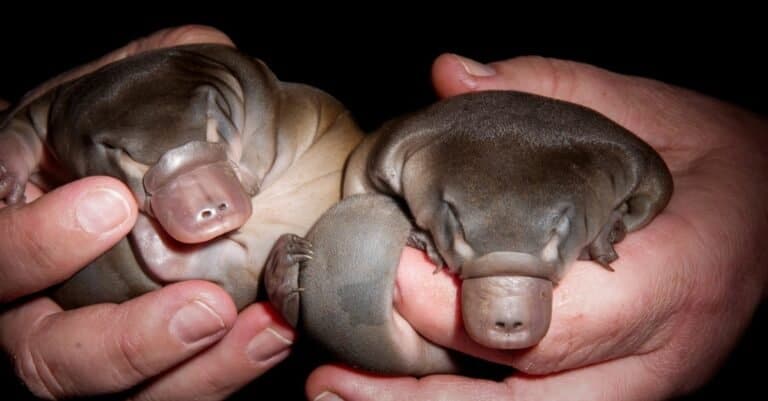
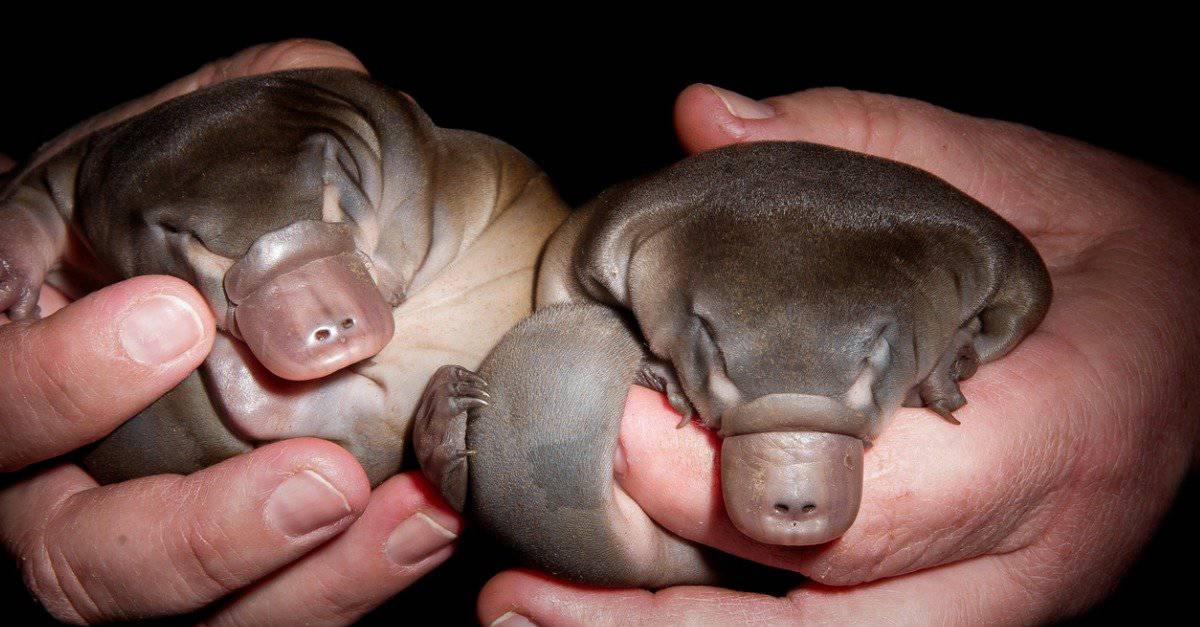
Although they are mammals, platypus babies hatch from eggs.
© www.zoo.org.au via Roderick Eime / Flickr – Original / License
Platypuses are one of five species of monotremes — egg-laying mammals. The pregnant female platypus builds a nest for her eggs in an underground burrow close to the water’s edge. She then collects wet plant materials for her nest to keep the eggs — and later the hatchlings — from drying out.
The gestation period lasts around 16 days, followed by 10 days of incubation. A clutch of 1-3 eggs is laid, with two eggs being the most common. The mother keeps the eggs warm between her belly and her curled tail. The babies use the tiny claws on their feet and the egg tooth, called a caruncle, at the end of their snouts to crack open the egg when it’s time to hatch.
#2: Platypus Puggles Can’t Swim
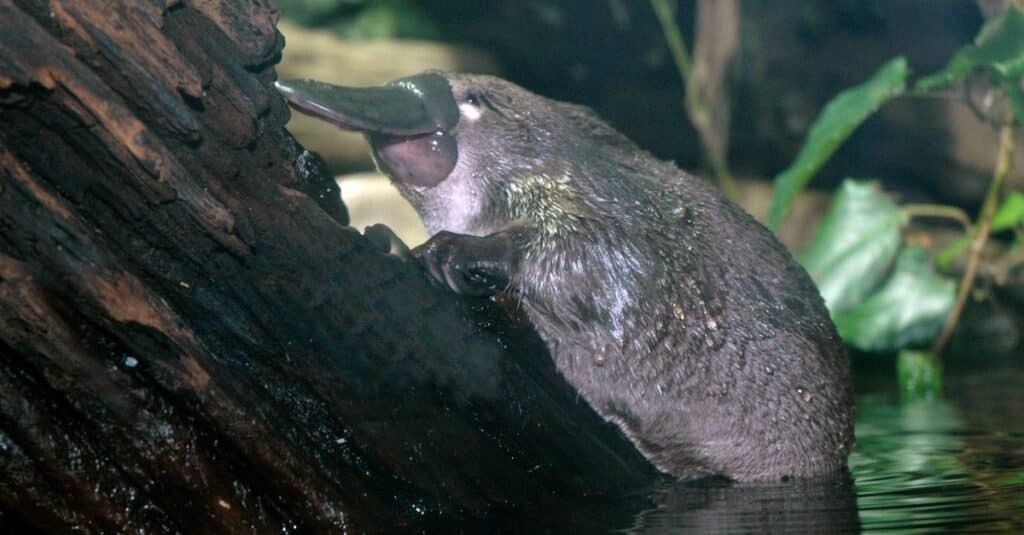
Juvenile platypuses are about 85% of their adult weight when they first enter the water.
©iStock.com/Michel VIARD
An adult platypus can swim up to 2.2mph, but platypus puggles can’t swim at all when they are born. In fact, baby platypuses are only around 0.60 inches when they are born. They are also born blind and hairless.
Fortunately, platypus puggles grow quickly, reaching about 20 times their birth size by the time they are around 14 weeks old. They also grow the coat of dense, waterproof fur they need for insulation. Platypuses remain in their burrows with their mother until they are 3 to 4 months old. Young platypuses are about 85% of their adult weight when they first enter the water.
#3: Platypus Babies Lap the Milk from Their Mother’s Skin and Fur
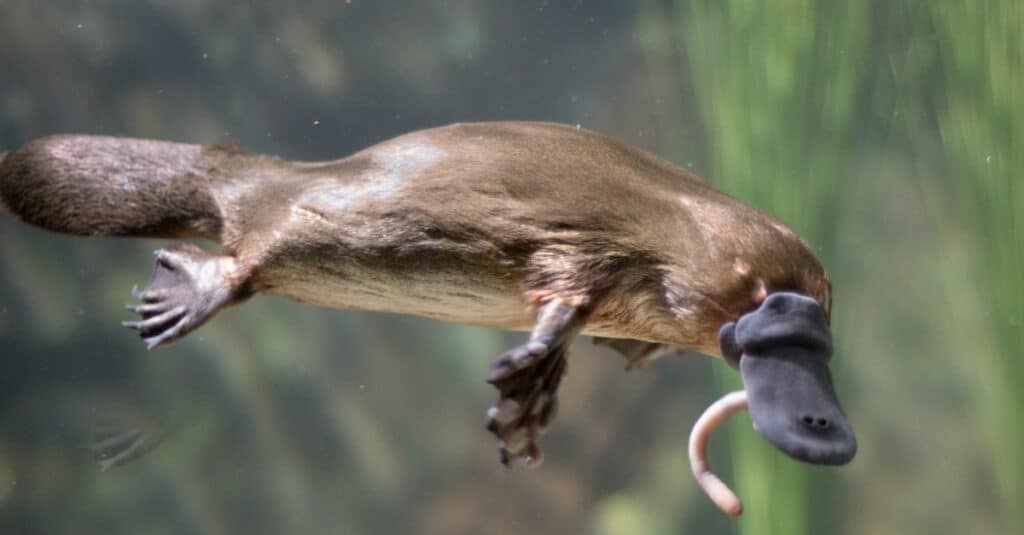
Platypus babies lap their mother’s milk from her skin and fur because platypus females do not have teats.
©iStock.com/JohnCarnemolla
The mother platypus does not have teats for the puggles to nurse from. Instead, she secretes milk from her mammary glands that collects on her abdomen. The puggles drink the milk by lapping it up from their mother’s fur and skin.
Baby platypuses are also born without functional stomachs. The platypus grinds its food so thoroughly that extensive digestion is unnecessary. However, they do have an expanding pouch where a stomach would typically be located. This pouch makes a fluid that aids in nutrient absorption.
#4: Baby Platypuses Are Born With a Set of Temporary Teeth

Platypus babies are born with a temporary set of teeth.
©Martin Pelanek/Shutterstock.com
Platypus babies have three teeth on either side of their upper and lower jaws. However, when they leave the nesting burrow at around 3 to 4 months, they lose all of their baby teeth and never grow more.
These vestigial teeth are replaced by tough, keratin pads at the back of their jaws that break down their food. The pads are strong enough to grind insects, crustaceans, and other invertebrates into mush. Platypuses primarily feed on the surface of the water after foraging for bottom-dwelling prey.
#5: Male Platypus Puggles Become Venomous
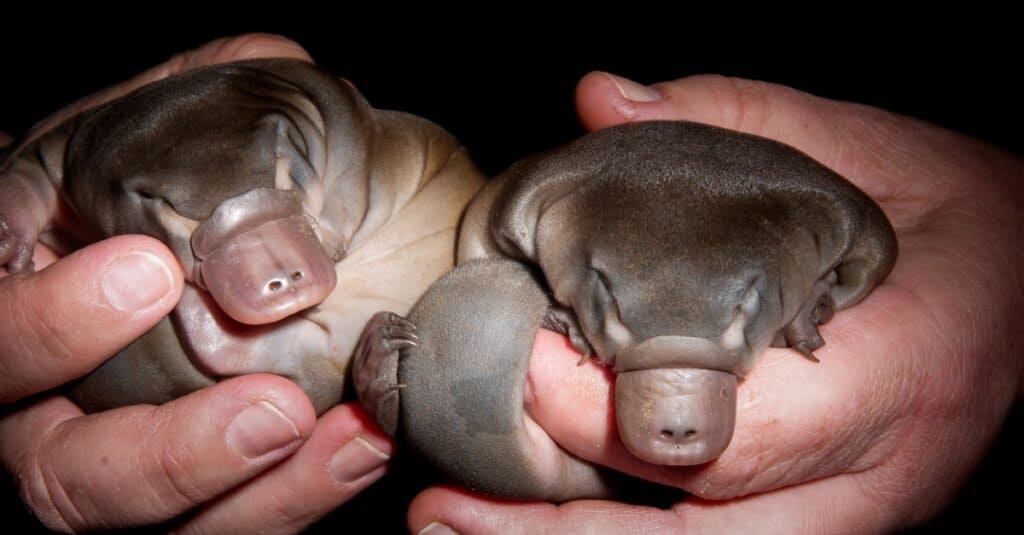
All platypuses are born with spurs on their hind legs, but only the males produce venom.
©iStock.com/IainStych
There are only a few venomous mammals on the planet, and the male platypus happens to be one. Male and female platypuses are born with bony spurs on their hind legs. However, the females lose their spurs by the time they are about 9 months old. Males lose the protective covering on their spurs by 9 to 12 months of age, but do not produce venom until they are mature.
The male’s spurs are around 0.50 inches long. They are connected to venom glands that produce a toxin once the males reach around 4 years old. Previously, it was widely thought that this was used as a defense against predators in the wild. However, researchers now believe platypuses use these spurs in fights with other males during the breeding season.