
Quick Take
- Monkeys eating bananas is a classic image, yet their actual diet is far stranger and more varied than that stereotype suggests. Explore their real diet →
- The size difference between the smallest and largest monkey species is almost unbelievable. We're talking about animals that barely share the same category. See the size extremes →
- Wild monkeys live somewhere most people would never expect, and their habitat has nothing to do with jungles. Discover where they live →
- This monkey's mango technique looks suspiciously deliberate, and watching it raises real questions about just how capable these animals are. Watch the mango technique →
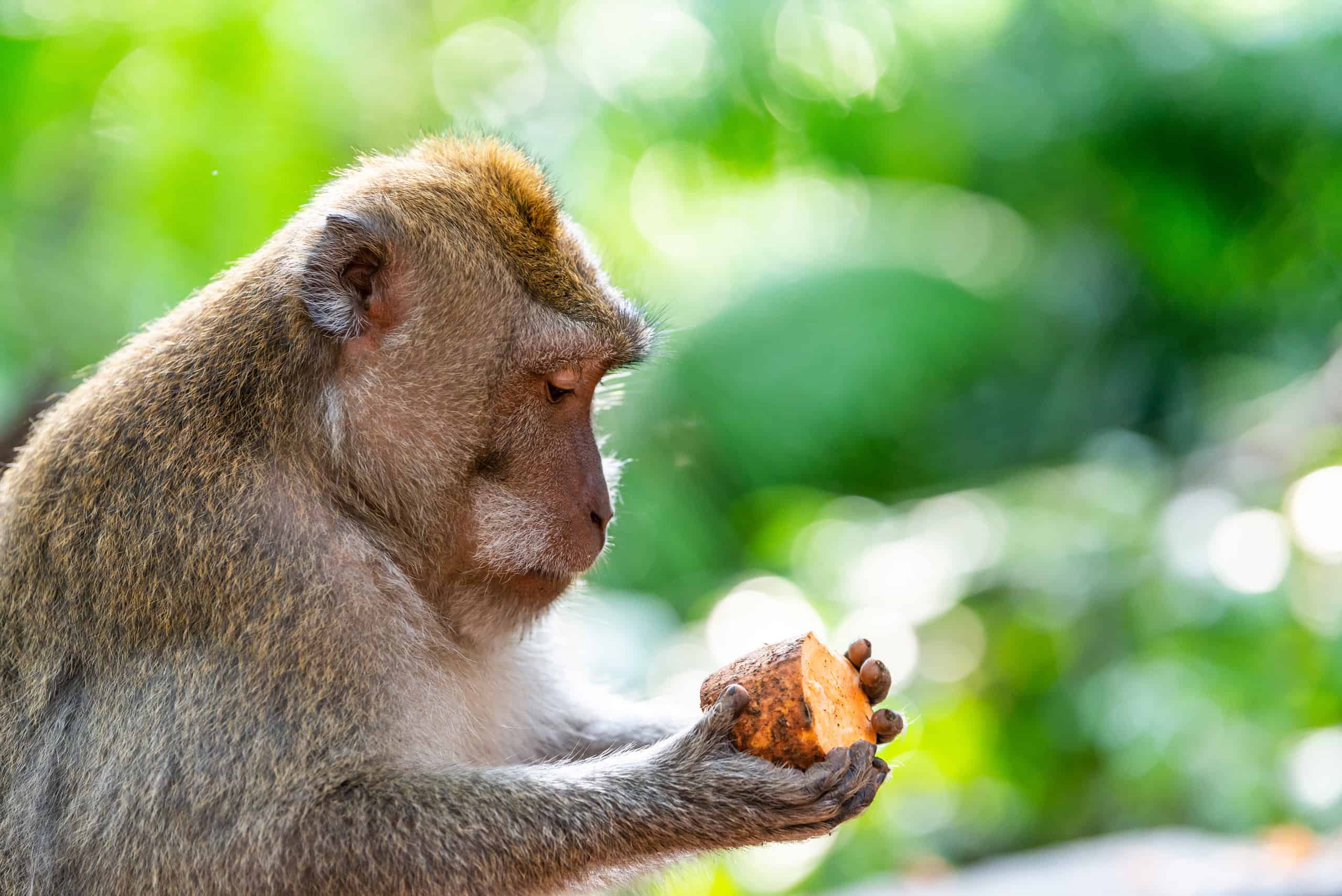
Sometimes you see an animal video that requires absolutely no explanation. This monkey sitting beside a stream and working its way through a mango is one of those videos.
The monkey settles in with a large piece of fruit, uses its hands to pull away the skin, and starts taking bite after bite. Honestly, it looks like somebody enjoying a snack after a long day, and that may be exactly why the video is so entertaining.
It also gives us a good excuse to look at what monkeys actually eat, because the answer is considerably more complicated than “bananas.”
Watch the Footage
What Do Monkeys Eat?
There isn’t one universal monkey diet. What a monkey eats depends heavily on its species, habitat, season, and what food is available. Many species eat fruit, leaves, seeds, flowers, and other plant material, while others also regularly eat insects, eggs, or small animals.
Some monkeys are true dietary generalists. Capuchins, for example, may eat fruit, seeds, flowers, insects, eggs, frogs, reptiles, birds, and other small animals. Other monkeys lean much more heavily toward plants. Howler monkeys are particularly well known for eating leaves along with fruit and flowers.
So yes, mango is absolutely believable monkey food. Fruit is an important part of the diet for many species, but it would be a stretch to call it every monkey’s favorite food based on one very satisfied customer in a viral video.
How Large Do Monkeys Get?
Monkeys come in a remarkable range of sizes. At one end is the tiny pygmy marmoset. At the other is the mandrill, the largest living monkey species.
Adult male black howler monkeys, for example, average around 32 pounds, while females average closer to 16 pounds. Their size can vary by species, with males and females sometimes differing considerably.
The mandrill sits at the heavyweight end. Adult males average roughly 55 pounds, and exceptionally large males can approach 119 pounds.
At the opposite extreme is the pygmy marmoset. These tiny Amazonian monkeys average only about 5 inches in body length and weigh around 4 ounces, not including their much longer tail.
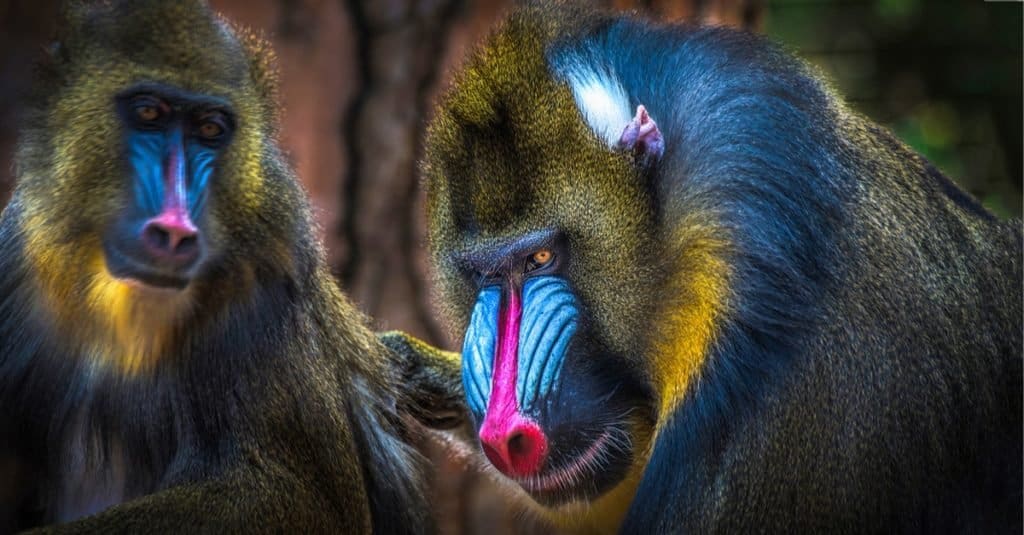
Mandrills are the largest living monkeys.
©Nikolay 007/Shutterstock.com
Where Do Monkeys Live?
Wild monkeys are divided broadly into Old World and New World groups. Old World monkeys are native to Africa and Asia, while New World monkeys live from southern Mexico through Central America and across much of South America.
Their habitats are just as varied as their diets. Many live in tropical forests, but monkeys can also inhabit dry forests, savannas, mountain forests, mangroves, and even cold environments. Japanese macaques are a famous example of monkeys capable of living in snowy conditions.
Whatever species is enjoying the mango in this video, one thing seems pretty safe to say: it picked a good place for lunch and had absolutely no intention of sharing.