





P
Species Profile

Pygmy Shark

Euprotomicrus bispinatus

Small shark, big glow.
CC BY 3.0

Pygmy Shark Ocean Range

Marine Species

Pygmy Shark (Euprotomicrus bispinatus) has a circumtropical, open-ocean range in warm-temperate to tropical Atlantic, Indian, and Pacific waters. It is pelagic-mesopelagic and lives offshore, not on shelves or reefs. Found from the surface to over 1,000 m, it migrates up and down daily and has ventral photophores for counter-illumination. Max length about 25 cm; lifespan unclear.

Loading ocean map...

Ocean Regions 3

atlantic_ocean pacific_ocean indian_ocean

At a Glance

Ocean Species
Diet Carnivore
Activity Nocturnal+
Lifespan 10 years
Status Least Concern
Did You Know?

One of the smallest known sharks: maximum recorded total length ~25 cm (females larger than males).

Scientific Classification

The pygmy shark (Euprotomicrus bispinatus) is among the smallest known sharks, a deep-sea dogfish shark (order Squaliformes) in the kitefin shark family (Dalatiidae). It is a small, pelagic-to-mesopelagic species found in warm oceanic waters and is notable for bioluminescence (photophores) on the underside, likely used for counter-illumination camouflage.

Kingdom
Animalia
Phylum
Chordata
Class
Chondrichthyes
Order
Squaliformes
Family
Dalatiidae
Genus
Euprotomicrus
Species
Euprotomicrus bispinatus

Distinguishing Features

  • Extremely small adult size for a shark (one of the smallest shark species)
  • Bioluminescent photophores, especially on the ventral surface (counter-illumination)
  • Deep-sea squaliform body plan; slender small dogfish-like form
  • Member of Dalatiidae (kitefin sharks), a group that includes small-to-medium deep-sea sharks, some with specialized feeding habits

Physical Measurements

Males and females differ in size

Length
♂ 7 in (6 in – 9 in)
♀ 8 in (7 in – 9 in)

Appearance

Primary Colors
Secondary Colors
Skin Type Tough placoid-scale skin (dermal denticles), relatively smooth to the touch compared with many larger squaliform sharks.
Distinctive Features
  • Extremely small shark: maximum reported total length ~25 cm (Euprotomicrus bispinatus).
  • Large, reflective eyes adapted to mesopelagic light levels.
  • Two dorsal fins, each with a small spine (species name 'bispinatus').
  • Ventral photophores (bioluminescent organs) used for counter-illumination camouflage in open water.
  • Slender, cigar-shaped body with short snout; typical dalatiid (kitefin family) profile.
  • Dark 'collar' marking near gills, contrasting with lighter belly.
  • Pelagic-to-mesopelagic oceanic species; commonly associated with deep daytime depths and nocturnal upward movement (diel vertical migration).

Sexual Dimorphism

Sexes are similar in overall coloration and body shape. Males are distinguished by paired claspers and typically mature at slightly smaller total lengths than females, which may reach slightly larger maximum sizes.

♂
  • Paired claspers on pelvic fins (external reproductive organs).
  • Typically smaller at sexual maturity than females (reported in species accounts).
♀
  • No claspers; pelvic fins lack intromittent organs.
  • May attain slightly greater total length than males in reported maximum sizes.

Did You Know?

One of the smallest known sharks: maximum recorded total length ~25 cm (females larger than males).

Lives in the open ocean (pelagic-mesopelagic) and has been recorded from the surface down to about 708 m depth.

Its underside is packed with photophores (light organs) that can produce bioluminescence for counter-illumination-masking its silhouette from predators below.

The species name means "two-spined", referring to its two dorsal-fin spines-one in front of each dorsal fin.

It belongs to the kitefin shark family, which includes other bioluminescent cookiecutter-type and kitefin-type sharks adapted to deep water.

Despite being a shark, it is small enough to fit in a human hand; most specimens come from midwater trawls rather than fisheries catches.

First described scientifically in 1824 by Quoy & Gaimard, naturalists associated with early 19th-century exploration voyages, from oceanic collections.

Unique Adaptations

  • Ventral photophores for bioluminescence: specialized light organs concentrated on the underside enable counter-illumination camouflage in the open ocean.
  • Extreme miniaturization: adult size around a quarter-meter or less reduces energetic needs in food-scarce midwater habitats.
  • Buoyancy traits shared with kitefin and cookiecutter shark relatives: it has a large, oil-rich liver that helps maintain buoyancy in the water column.
  • Tooth differentiation typical of many squaliform sharks: small upper teeth and larger, blade-like lower teeth suited to grasping and slicing small prey items.
  • Two dorsal spines (diagnostic feature): provides physical defense in a habitat with few places to hide.

Interesting Behaviors

  • Counter-illumination: likely tunes ventral light output to match downwelling moon/starlight, reducing its shadow when viewed from below (a common function of ventral photophores in midwater animals).
  • Diel vertical movement (inferred from capture records): occurs nearer the surface at night and deeper by day, consistent with many mesopelagic predators and prey.
  • Midwater ambush/foraging: cruises the water column for small fishes, squid, and crustaceans (diet reported broadly for the species from stomach examinations in field guides and compilations).
  • Defensive posture (inferred from morphology): dorsal-fin spines can be erected to deter predators during close encounters or when handled by nets.

Cultural Significance

The pygmy shark (Euprotomicrus bispinatus) has little role in fishing or pop culture because it is a tiny, offshore deep-sea shark rarely seen. Scientists note it as one of the smallest sharks and a bioluminescent species with ventral photophores for counter-illumination; it was first described from early 1900s research-vessel catches.

Myths & Legends

Polynesian and Hawaiian traditions include revered shark deities and family-guardian spirits. While not specific to the pygmy shark, these stories reflect long-standing cultural relationships with sharks across the Pacific.

In parts of Melanesia, oral traditions describe powerful shark-spirits as sea guardians. Such lore resonates with the deep-ocean theme of bioluminescent sharks, even though the pygmy shark is rarely encountered.

The pygmy shark (Euprotomicrus bispinatus) was described in 1824 by Quoy and Gaimard from specimens taken on early 1800s exploration voyages. Its name means 'two-spined' for two dorsal fin spines.

Conservation Status

LC Least Concern

Widespread and abundant in the wild.

Population Unknown

Life Cycle

Birth 6 pups
Lifespan 10 years

Lifespan

In the Wild
5–15 years

Reproduction

Mating System Data Deficient
Social Structure Solitary
Breeding Season Unknown (no published, species-specific breeding season reported for Euprotomicrus bispinatus)
Breeding Pattern Transient
Fertilization Internal Fertilization
Birth Type Internal_fertilization

Direct observations of pairing or mate competition are lacking; pygmy sharks are presumed solitary and promiscuous. Reproduction occurs via internal fertilization (male claspers) with aplacental viviparity, producing very small litters (reported as 2 pups in examined females).

Behavior & Ecology

Social Solitary Group: 1
Activity Nocturnal, Cathemeral
Diet Carnivore Small mesopelagic fishes (especially lanternfishes, Myctophidae)

Temperament

Generally shy, non-territorial pelagic shark; encounters with conspecifics appear infrequent (Compagno 2001).
Common HUBS pattern: diel vertical migration-deeper by day, shallower at night; exact depths vary regionally (Compagno 2001; Ebert et al. 2013).
Opportunistic micropredator on small fishes and cephalopods; foraging likely increases during nighttime ascent (Ebert et al. 2013).
Counter-illumination via ventral photophores reduces silhouette, lowering predation risk in open water (Claes & Mallefet 2012).
Maximum reported total length 22 cm; very small body size likely favors avoidance over confrontation (Compagno 2001; Ebert et al. 2013).
Longevity/maximum age not reported in primary literature for this species; demographic parameters remain poorly quantified (FishBase species summary: Euprotomicrus bispinatus).

Communication

None documented; sharks lack known sound-producing organs for social calls General elasmobranch consensus
Bioluminescent ventral photophores for counter-illumination; may also aid conspecific recognition at close range Claes & Mallefet 2012
Chemical communication via olfaction for locating mates and assessing reproductive condition General elasmobranch mechanism
Mechanosensory cues via lateral line detect nearby swimming movements, supporting spacing and prey detection General elasmobranch mechanism
Electroreception Ampullae of Lorenzini) used at short range, primarily for prey localization; may detect nearby animals indirectly (general elasmobranch mechanism
Tactile/body-contact cues likely during mating (e.g., positioning and clasping typical of sharks), but species-specific observations lacking.

Habitat

Open Ocean Deep Sea
Biomes:
Elevation: Up to 3280 ft 10 in

Ecological Role

Small mesopelagic carnivorous predator in warm oceanic waters; part of the deep scattering layer food web.

Regulates abundance of small midwater fishes and cephalopods through predation Transfers energy/biomass from mesopelagic micronekton to higher trophic levels (as prey of larger fishes/sharks) Contributes to vertical carbon/energy flux via diel vertical migration and feeding in the water column

Diet Details

Main Prey:
Small mesopelagic fishes Small bristlemouths and other lightfishes Cephalopods Pelagic crustaceans

Human Interaction

Domestication Status

Wild

No domestication history. Euprotomicrus bispinatus is a naturally occurring, oceanic mesopelagic shark with no record of captive breeding programs or sustained aquarium husbandry. Its deep-water pelagic ecology and capture/transport survivability constraints have effectively prevented domestication or semi-domestication.

Danger Level

Low
  • Negligible threat to swimmers/divers because it is a small (maximum recorded total length about 25 cm) deep-water oceanic species seldom encountered alive at the surface.
  • Minor handling injury risk from dorsal fin spines (the species name bispinatus refers to two dorsal spines) and small teeth if handled on deck.

As a Pet

Not Suitable as Pet

Legality: Pygmy Shark (Euprotomicrus bispinatus) is not listed under CITES, but keeping one is hard and often restricted. Permits, import, and welfare rules are needed; it's not kept in aquariums due to deep-sea capture, high deaths, and lack of husbandry.

Care Level: Expert Only

Purchase Cost:
Lifetime Cost:

Economic Value

Uses:
Incidental bycatch (rare/occasional) Scientific research / biodiversity sampling Educational value (museum specimens, ichthyology collections)
Products:
  • No targeted commercial products (no directed fishery; not used for meat/oil/fins in any consistent, documented way).

Relationships

Related Species 7

Pygmy shark
Pygmy shark Euprotomicrus bispinatus Shared Genus
Taillight shark Euprotomicroides zantedeschia Shared Family
Cookiecutter shark
Cookiecutter shark Isistius brasiliensis Shared Family
Largetooth cookiecutter shark Isistius plutodus Shared Family
Kitefin shark
Kitefin shark Dalatias licha Shared Family
Spined pygmy shark Squaliolus laticaudus Shared Family
Smalleye pygmy shark Squaliolus aliae Shared Family

Ecological Equivalents 4

Animals that fill a similar ecological role in their ecosystem

Dwarf lanternshark Etmopterus perryi Very small deep-mesopelagic shark with ventral photophores used for counter-illumination. Overlaps in size class (among the smallest sharks) and in the midwater niche, including nightly vertical movements typical of many small bioluminescent squaliforms.
Taillight shark Euprotomicroides zantedeschia Small oceanic-to-slope dalatiid with bioluminescence. Shares a mesopelagic lifestyle and likely a similar prey base (small fishes, squid, and crustaceans), but differs in having a conspicuous caudal light organ.
Spined Pygmy Shark Squaliolus laticaudus A small dalatiid occupying similar depth bands in warm-temperate to tropical waters. It has a compact body plan, ventral photophores, and forages in midwater and along slope edges on small nekton.
Cookiecutter shark
Cookiecutter shark Isistius brasiliensis Mesopelagic dalatiid inhabiting warm oceanic waters with strong diel vertical migration. Shares bioluminescent counter-illumination but differs ecologically through specialized ectoparasitic gouging of large fishes and marine mammals.

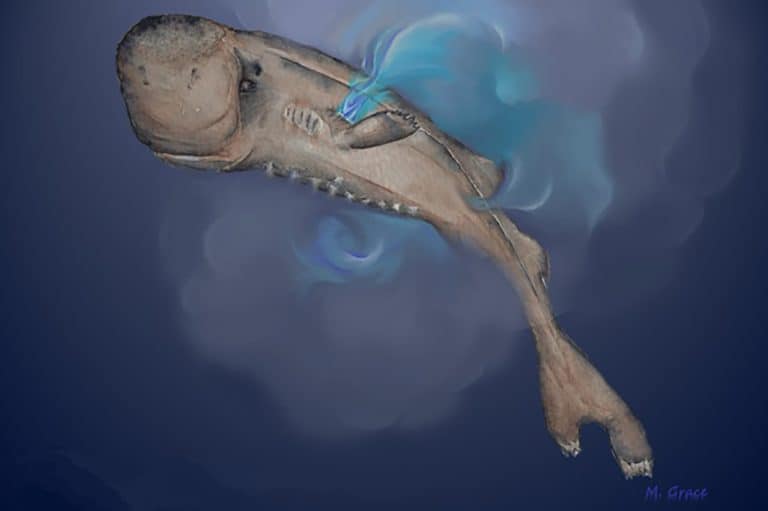
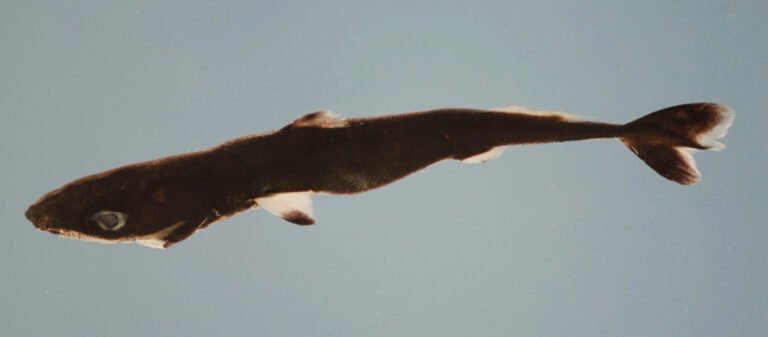
The Pygmy shark is the second smallest shark in the world, with females reaching lengths between 8.6 to 10 inches, while the males only measure 8.6 to 8.7 inches. They are black with light edges on their two dorsal fins, with the front fin smaller than the back. The body is cylindrical, and it has a bulbous snout with big eyes.

The pygmy shark has luminous organs along the underbelly that make it glow, which is a mysterious phenomenon. One theory is that prey swimming beneath the pygmy shark might be attracted to the glow and swim closer. Another is that it provides camouflage from predators because the glow merges with the light from the upper surface, making it harder to see. A third is that it emits pheromones to attract a mate.

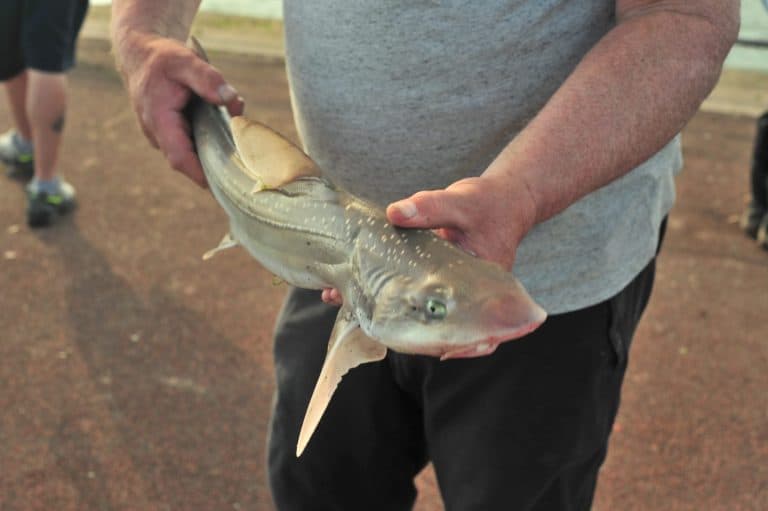
Here, a pygmy shark rests on a scale. It’s small enough to fit in a human hand.

Pygmy Shark Scientific Name and Conservation Status

The Pygmy shark’s scientific name is Euprotomicrus bispinatus. It belongs to the Family Dalatiidae and falls under the Class Chondrichthyes.

Behavior and Habitat

Not much is known about the pygmy shark’s behavior except that they are mostly solitary. However, they do sometimes gather in groups, especially when migrating vertically to find food. Pygmy sharks prefer a diet of deepwater squid, bony fish, and crustaceans.

Pygmy sharks live close to the ocean floor at depths of 6,500 feet during the day. However, their preferred prey rises to the surface to feed on plankton at night, so pygmy sharks follow them to depths of around 650 feet.

Because they are so small and live in deep water, they are not a threat to humans. They prefer temperate and oceanic areas in the South Indian, South Atlantic, and Pacific oceans.

Predators and Threats

Pygmy sharks have no recorded threats or predators. Because they are so tiny, they can avoid getting caught in fishermen’s nets. However, there are cases where people have accidentally caught them while fishing. Researchers require more information on whether overfishing is affecting their population. 

Reproduction

These sharks are ovoviviparous and develop eggs inside the uterus where they hatch. The pygmy shark gives birth to live young with an estimated litter size of eight pups, which measure 2.3 to 3.9 inches at birth. Pygmy sharks are fully grown when they reach around 11 inches.

View all 246 animals that start with P

Sources

  1. Sharks Info / Accessed June 23, 2022
  2. Fish Base / Accessed June 23, 2022
  3. Sheppards Software / Accessed June 23, 2022
  4. Shark Water Extinction / Accessed June 23, 2022
  5. Planet Shark Divers / Accessed June 23, 2022
  6. Shark References / Accessed June 23, 2022
  7. Britannica / Accessed June 23, 2022
  8. Shark Research Institute / Accessed June 23, 2022
  9. The Website of Everything / Accessed June 23, 2022
  10. IUCN Red List / Accessed June 23, 2022
Heather Ross

About the Author

Heather Ross

Heather Ross is a secondary English teacher and mother of 2 humans, 2 tuxedo cats, and a golden doodle. In between taking the kids to soccer practice and grading papers, she enjoys reading and writing about all the animals!

Thank you for reading! Have some feedback for us?