







Quick Take
- This 100-pound guard dog has a personality trait that makes it surprisingly poor at one thing most owners expect from it. Explore the personality traits →
- Most people groom their Pyredoodle wrong at exactly the moment it matters most, and the consequences end up showing up on the dog's skin. See the grooming details →
- The standard training instinct many owners rely on can actually backfire with this breed and make behavioral problems worse. Understand the training approach →
- Pyredoodles were bred to solve one specific human problem, and that original purpose shapes nearly every quirk of their temperament and care needs. Discover the breed's origins →
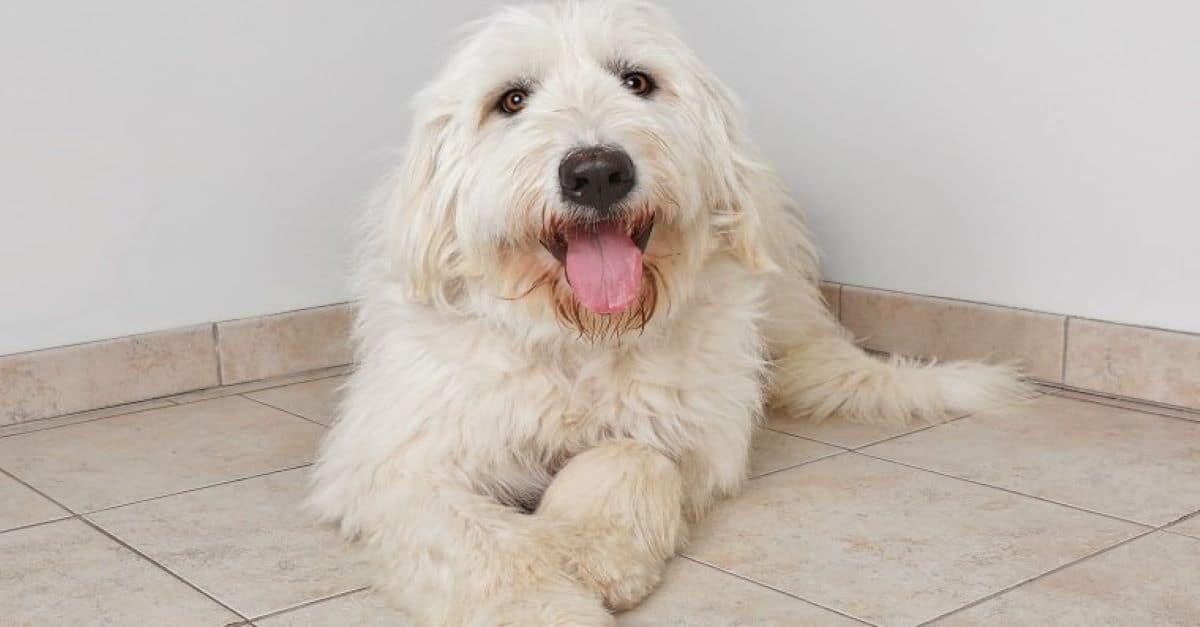
Pyredoodles are one of the most loyal dogs in the world. This breed was created by crossing a standard poodle with a Great Pyrenees, and it takes some of its excellent behavior from both breeds. This dog is happiest when given a job to do, such as guarding your family. While most weigh about 100 pounds, it isn’t easy to find a gentler dog. Additionally, this dog wants to be involved with most family activities, but it is content if you decide otherwise.
This dog, often standing about 30 inches tall, is enough to intimidate many people, but those who get to know this breed find out that they are very gentle and affectionate. If you and your family live an active lifestyle, then this breed may be an excellent choice for you.

The 6 Different Types Of Pyredoodles And Pyredoodle Mixes
The pyredoodle can have either a short or long-haired coat. The hair can be straight or curly, depending on which parent the dog takes after more. Many pyredoodles have a black nose, but nose color can vary depending on genetics. They can be a solid color or a mixture of more than one color.
- Blues: These dogs appear to have a faded black coat. Most are born black and become blue before their second birthday.
- Grays: These dogs may be born with a gray coat or develop it by the time they are about five years old.
- Silvers: These dogs look like they are diluted gray, and they have dark points like blues and grays. Usually, they are born white, but the silver color appears around their feet and head at about six weeks. Then, it spreads across the rest of their body.
- Browns: Brown toy pyredoodles are an intense brown.
- Café-au-laits: This color is a light tan that they are either born with or develop before their second birthday.
- Apricots: You will see a variety of colors in apricot pyredoodles. Some will be very vibrant, almost the color of hay, while others will be so light, you might think they are a cream color.
- Creams: There are many shades of cream found in pyredoodles.
- Black: Pyredoodles may be black all over, or they can be mixed with another color.
- White: There are many variations of white seen in pyredoodles. Some will appear pure white while others have an apricot or beige tint to their coats.
3 Pros And Cons Of Owning Pyredoodles
| Pros | Cons |
|---|---|
| Family dogs: They are great family dogs. | Frequent grooming required: They need to be brushed daily and groomed regularly. |
| Hypoallergenic: Most people find that this light shedder does not cause them to sneeze. | Stubborn: They can be stubborn. |
| Great watchdogs: They take the job of protecting their family seriously, and they are always alert to their environment. | Costly to Feed: Expect this dog to eat between 4 and 6 cups of high-quality dog food daily, depending on its size, age, and activity level. |
History Of The Breed
The Pyredoodle is a mixed dog breed that may have existed before the “designer” dog craze. However, designer breeders started breeding these dogs intentionally in the early 2000s, most likely in North America.
Breeders wanted to mix the Pyrenees with a non-shedding dog breed, such as a standard Poodle. The goal was to create a more allergy-friendly dog breed for people who suffer from allergies. Over time, the Pyredoodle grew in popularity and demand.
Even though the Pyredoodle got its start as a designer breed, many still end up in shelters and rescue groups. If you are considering owning this loving pup, consider adoption to see if it is the right choice for you.
Size And Weight
Males usually stand between 28 and 32 inches tall. They usually weigh between 90 and 100 pounds. Females are generally a little smaller, typically weighing between 85 and 95 pounds and grow to be between 22 and 26 inches tall.
Common Health Issues
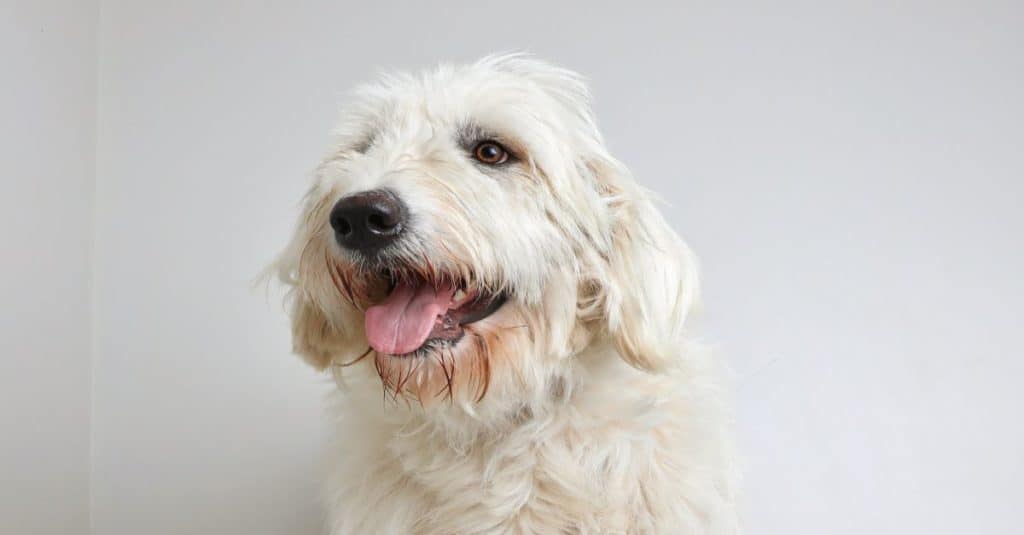
Pyredoodles have common health concerns that include bloat and Cushing’s disease.
©iStock.com/GeorgePeters
Like all dog breeds, there are some common health concerns in Pyredoodles. These include:
- Bloat
- Cushing’s disease
- Hip dysplasia
- Entropion
Let’s look at each in more detail.
Bloat occurs when the dog’s stomach fills with air and twists, and it can be life-threatening. You may see the dog trying to belch or vomit, but nothing is coming up. This disease can be deadly in minutes as blood cannot get to the heart. Therefore, seek emergency veterinary treatment.
Cushing’s disease, also called hyperadrenocorticism, occurs when the adrenal glands produce too much cortisol. Excessive drinking and urinating can be early signs. This disease is usually treated with oral medication when caught early.
While hip dysplasia is more common, pyredoodles can also suffer from elbow dysplasia. It occurs when the bone does not fit snugly into the socket. In some dogs, this can be quite painful, while it may not bother some dogs at all. Most dogs with this inherited disease develop arthritis as they get older.
Entropion occurs when the eyelid rolls inward. You may notice a young animal rubbing its eyes continuously, as this condition usually develops before the dog is six weeks old. Veterinarians can surgically correct it.
Temperament
While most pyredoodles are very loyal, they tend to develop wanderlust. Make sure the animal is in a secure location. Additionally, give it activities to keep it busy so that it doesn’t have time to think about wandering your neighborhood.
Many pyredoodles tend to be shy dogs. Therefore, you need to give them plenty of opportunities to socialize when they are young. Consider taking your dog to a dog park often and letting him make some friends.
Pyredoodles love to feel that they have a job to do. One of their favorites is to protect you and your family. Therefore, make sure you include this dog in your family adventures often. Children can easily be let out in the backyard with this dog watching over them because his loud bark will notify you if something is amiss.
How To Take Care Of Pyredoodles
If you are a new Pyredoodle owner looking for advice on how to care for your pet, especially puppies, there are several factors to keep in mind. While most dogs of this variety are healthy, learn the most critical diseases so that you can spot them quickly. Think about the dog’s diet and exercise needs.
The Best Dog Food
Like other dogs, pyredoodles have different nutritional needs throughout their lives.
Pyredoodle puppy food: By the time your puppy weighs 60 pounds, it should be eating about 1,670 calories per day. Be sure to choose a food that is high in calcium and phosphorus, as this can help prevent bone problems later in life. While under three months, you may want to free-feed your puppy, but then switch to feeding two or three meals a day with limited treats so that your pup does not grow too quickly, as this can also lead to bone problems.
Pyredoodle adult food: You should feed the full-grown dogs at least two meals a day. They should get about 2,200 calories per day when full-grown. This breed tends to put on weight easily, so choose high-quality dog food.
As a giant dog breed, Pyredoodles need to get adequate nutrition. It’s also a good idea to find dog food for sensitive stomachs, or opt for wet or raw food, since it’s less likely to lead to bloat than kibble.
Maintenance And Grooming
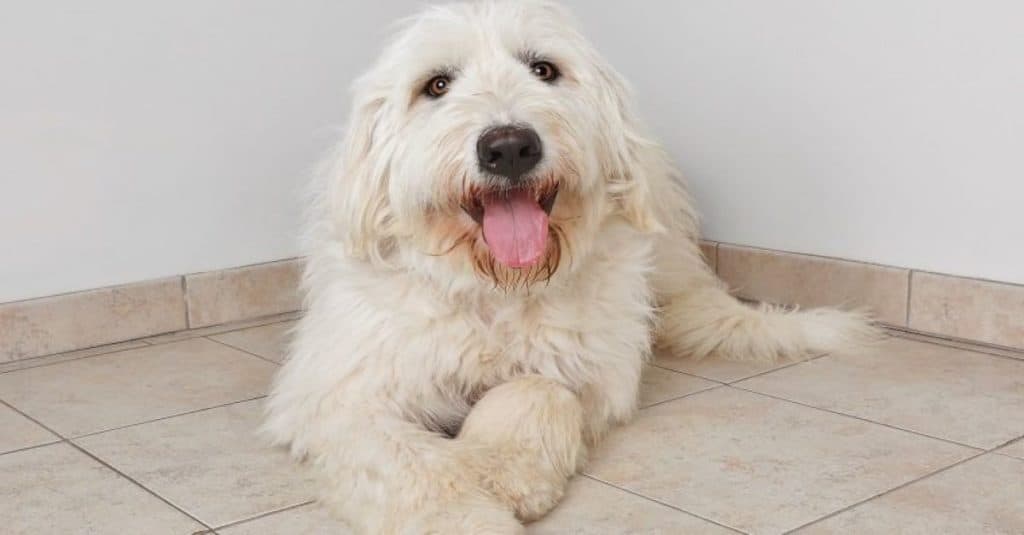
Pyredoodles should be taken to a groomer every six-to-eight weeks.
©iStock.com/GeorgePeters
Pyredoodles can have short or long coats, depending on whether they take after the standard poodle or the Great Pyrenees. These dogs can shed heavily in warm weather, so it is a great time to increase your dog’s grooming. Every day, you need to use a slicker brush and a comb to ensure that you are getting all tangles out. While this is especially important while they are puppies, it is also important when they are full-grown. Grooming the dog when it is young is also a great chance to nip any bad temperament traits in the bud.
Additionally, take your pyredoodle to the groomer every six-to-eight weeks. The coat of many pyredoodles transitions from baby to adult at about six months. This is a critical time to get your dog groomed, as the process often leads to matting. Then, skin issues can occur.
Training
Pyredoodles need positive reinforcement while you are training them. They have incredible memories, and it can be hard for them to forget a negative experience. Therefore, you should always praise your dog when he does the right thing. Since this dog tends to be shy, negative reinforcement, such as yelling, can make it even shyer and more fearful. You want your dog to have a loving temperament, so you must treat it with love.
Both the standard poodle and the Great Pyrenees are working dogs used to figuring things out on their own. Make sure that you give your dog some problems to figure out every day.
Exercise
Pyredoodles need at least 30 minutes of exercise every day. It can be a brisk walk or a jog. Try to do it when temperatures are cooler so that your dog does not become overheated. They love to go on hikes, so if you can find an off-leash area to visit regularly, that would be ideal. Except when temperatures get too high, they are even willing to carry your backpack for you. This breed also loves to go swimming. If temperatures get very high, consider breaking exercise into shorter sessions.
Puppies

Most people find that Pyredoodles are light shedders, and they do not cause them to sneeze.
©iStock.com/curtoicurto
These puppies need good-quality dog food designed for large dogs, and not food for mini breeds, three times a day. You must choose high-quality food because your puppy needs to grow steadily, as bone problems sometimes occur in dogs that grow too quickly. Puppies need to be groomed daily, especially near the six-month mark when their adult coat is developing. Since this dog tends to be shy, you must socialize it often as a pup. Always use positive reinforcement while training your dog.
Pyredoodles And Children
Pyredoodles love to be nanny dogs. Most will protect your family if needed, but they are often afraid of strangers. This trait means that they are more likely to bark to let you know something is going on. While their large size may be overwhelming for families with small children, they love to go on adventures with older children. Their large size, as opposed to mini breeds, means they are seldom injured while children are playing with them.
Dogs Similar To Pyredoodles
Breeders have developed other dog breeds that are similar to pyredoodles. These include:
- Sheepadoodle: This is a cross between a standard poodle and an old English sheepdog.
- Newfiedoodle: This is a cross between a standard poodle and a Newfoundland dog.
- Labradoodle: This is a mix between a standard poodle and a Labrador Retriever.
Pyredoodle Pictures
View all of our Pyredoodle pictures in the gallery.

iStock.com/GeorgePeters
Sources
- Dogtime / Accessed March 15, 2021
- Dogfood / Accessed March 15, 2021
- Petguide / Accessed March 15, 2021
- Dog Breed Plus / Accessed March 15, 2021
- Wagwalking / Accessed March 15, 2021
- Puppy Toob / Accessed March 15, 2021
- Patriotic Petcare / Accessed March 15, 2021
- Pyredoodles / Accessed March 15, 2021