
Quick Take
- Arctic hares are the largest species of hare in Canada, weighing up to 12 pounds.
- Mountain cottontails are the smallest among Canada’s native rabbit and hare species.
- European hares, also known as brown hares, can only be found in southern Ontario.
- Snowshoe hares have large, furry feet that act as natural snowshoes.
Canada is home to five main native species of rabbits and hares, plus one introduced hare species. Rabbits and hares belong to the family Leporidae. Although the terms “rabbit” and “hare” are often used interchangeably, rabbits are generally smaller than hares and have shorter ears. But how do their sizes compare? Read on to discover the six largest rabbits and hares found in Canada.
6. Mountain Cottontail
The mountain cottontail (Sylvilagus nuttallii), also called Nuttall’s cottontail, typically measures 14 to 15 inches in total length and weighs between 2 and 3 pounds. They are the smallest among Canada’s native rabbit and hare species. These rabbits primarily occur in brushy and wooded areas of Saskatchewan, Alberta, and British Columbia. They have greyish-brown fur, a white belly, and a large, fluffy, white tail. They have relatively short, rounded ears with black tips.
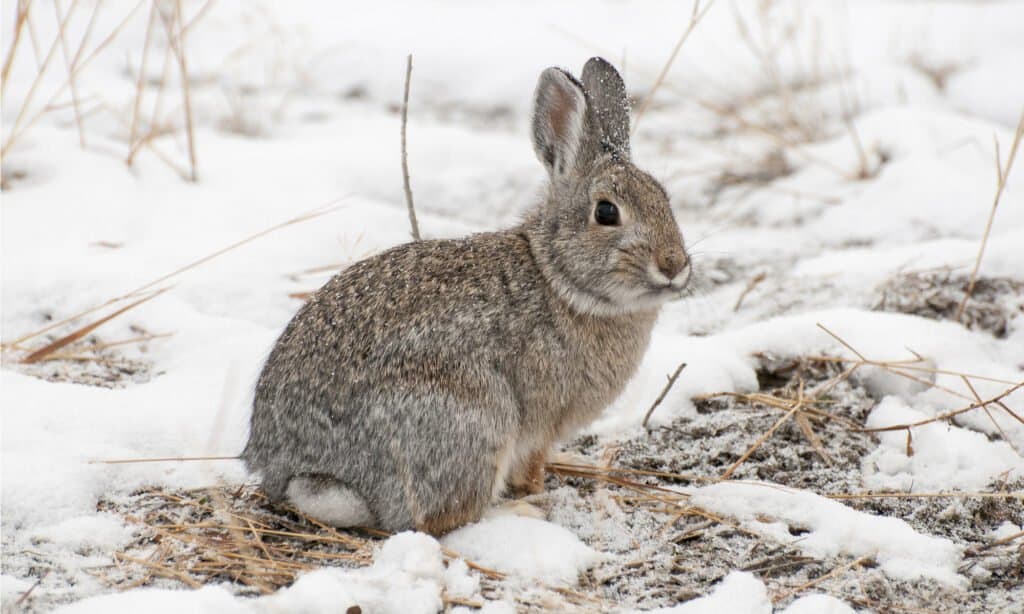
Mountain cottontails are the smallest of Canada’s native rabbits and hares.
©moosehenderson/Shutterstock.com
5. Eastern Cottontail
The eastern cottontail (Sylvilagus floridanus) is primarily found in open woodlands, shrublands, and meadows in Ontario, Quebec, Manitoba, and Saskatchewan. These rabbits measure between 15 and 19 inches and weigh 1.8 to 4.4 pounds, with populations further north weighing more. They have reddish-brown to grey fur along their backs and sides, white to grey undersides, and a white, rounded tail that resembles a cotton ball.
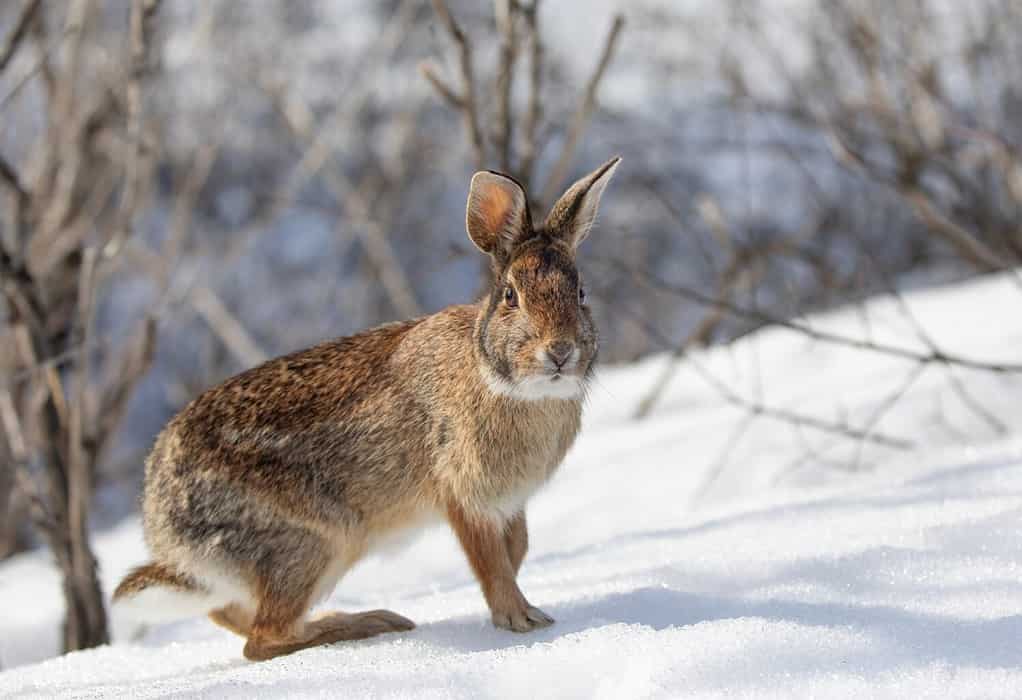
Eastern cottontails are medium-sized rabbits that weigh up to 4.4 pounds.
©Jim Cumming/Shutterstock.com
4. Snowshoe Hare
Snowshoe hares (Lepus americanus) generally range from 16 to 20 inches long and weigh from 3 to 5 pounds. They can be found in the forests of every province and territory in Canada. Snowshoe hares have brown fur in the summer that changes to white in the winter. These hares are known for their large, heavily-furred hind feet that can measure 4.6 to 5.8 inches long. Their feet act as natural snowshoes to help them maneuver in heavy snow.
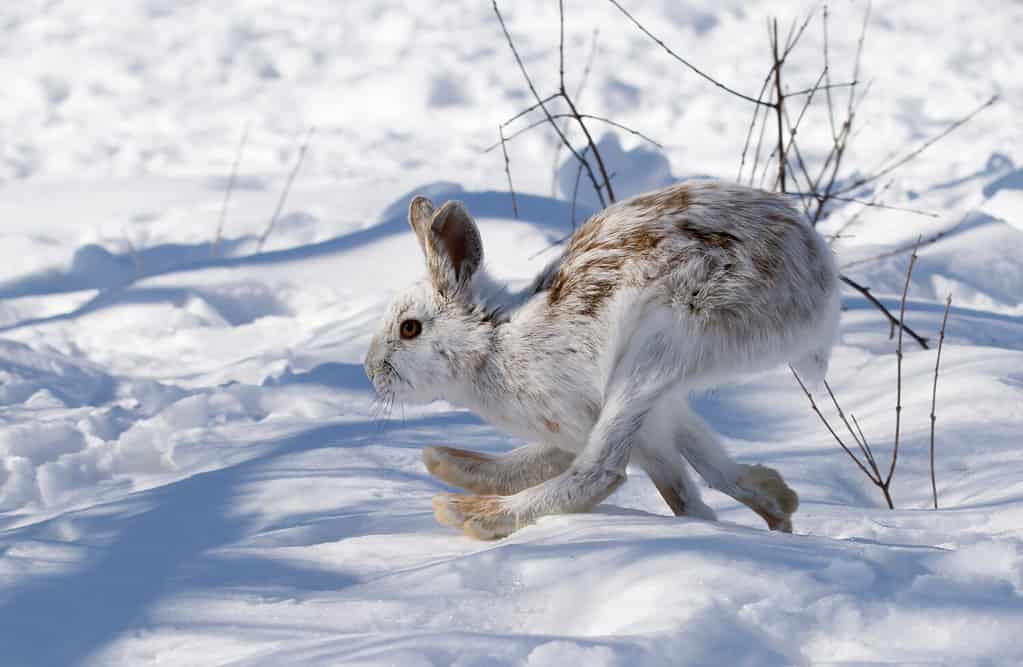
Snowshoe hares have large, furry feet that help them travel in deep snow without sinking.
©Jim Cumming/Shutterstock.com
3. European Hare
European hares (Lepus europaeus), also known as brown hares, were introduced to Canada in the 1910s. Although they are common in open, cultivated land in southern Ontario, they have not established populations in other parts of Canada. These hares have greyish- to yellowish-brown fur with pale bellies. Their fur may become more grey in the winter, but it does not turn white like that of other hares. Their ears are long with black tips. European hares are among the fastest land animals, capable of reaching speeds of around 45 mph. They generally weigh between 6 and 11 pounds with a length between 24 and 30 inches.
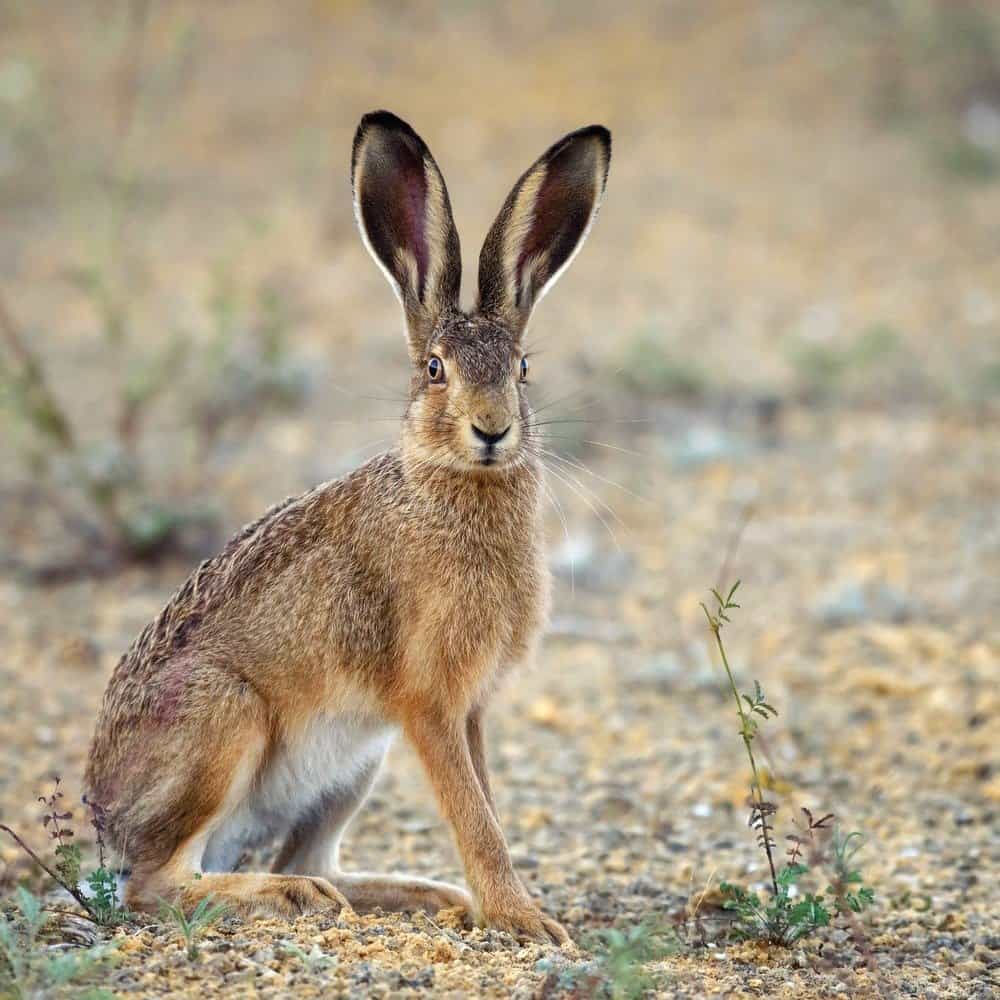
European hares were introduced into Canada in the 1910s.
©WildlifeWorld/Shutterstock.com
2. White-Tailed Jackrabbit
The white-tailed jackrabbit (Lepus townsendii) is one of the largest species in North America. It inhabits the grasslands of Canada’s southern Prairies, including Alberta, Saskatchewan, Manitoba, and parts of British Columbia. Adult jackrabbits weigh between 6 and 10 pounds and measure 22 to 26 inches long. During the summer, the jackrabbit is a brownish-grey with a white belly, tail, and feet. However, its fur lightens to white with slightly darker ears during the winter. These rabbits have unusually long ears and a unique way of running: they drop down low to the ground and accelerate to speeds of up to 40 mph.
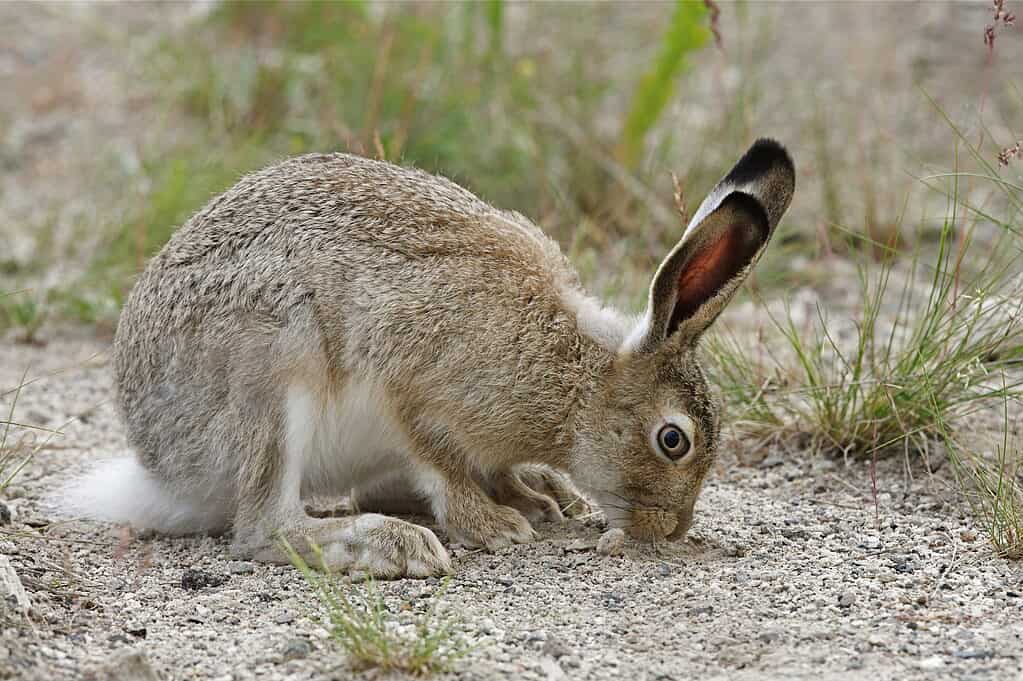
White-tailed jackrabbits inhabit Canada’s southern Prairies.
©Tom Reichner/Shutterstock.com
1. Arctic Hare
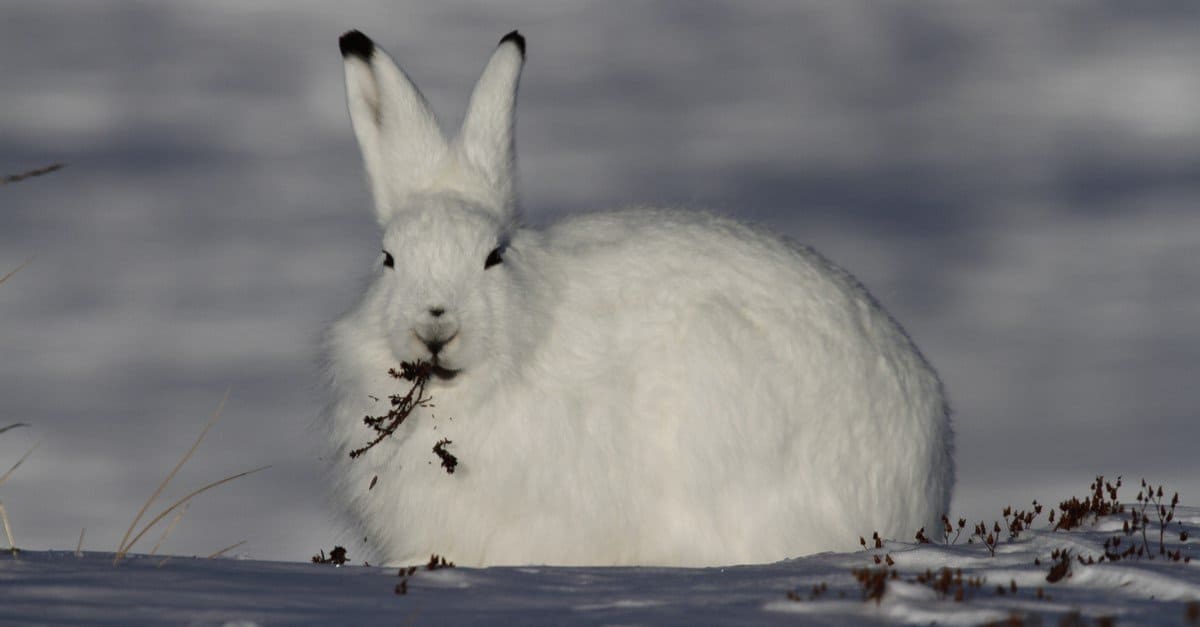
The Arctic hare (Lepus arcticus) is the largest hare in Canada. It weighs between 6 and 12 pounds and measures 18 to 26 inches long. This hare lives in the treeless northern tundra of Canada and the Canadian Arctic islands. In the winter, the Arctic hare’s fur changes to a thick, bright white, which provides excellent camouflage and warmth in the snow. In the summer, their coats change to a bluish-grey or brownish-grey shade. These hares have short ears to help conserve heat and long claws to dig in the snow. They can also run at speeds of up to 40 mph.
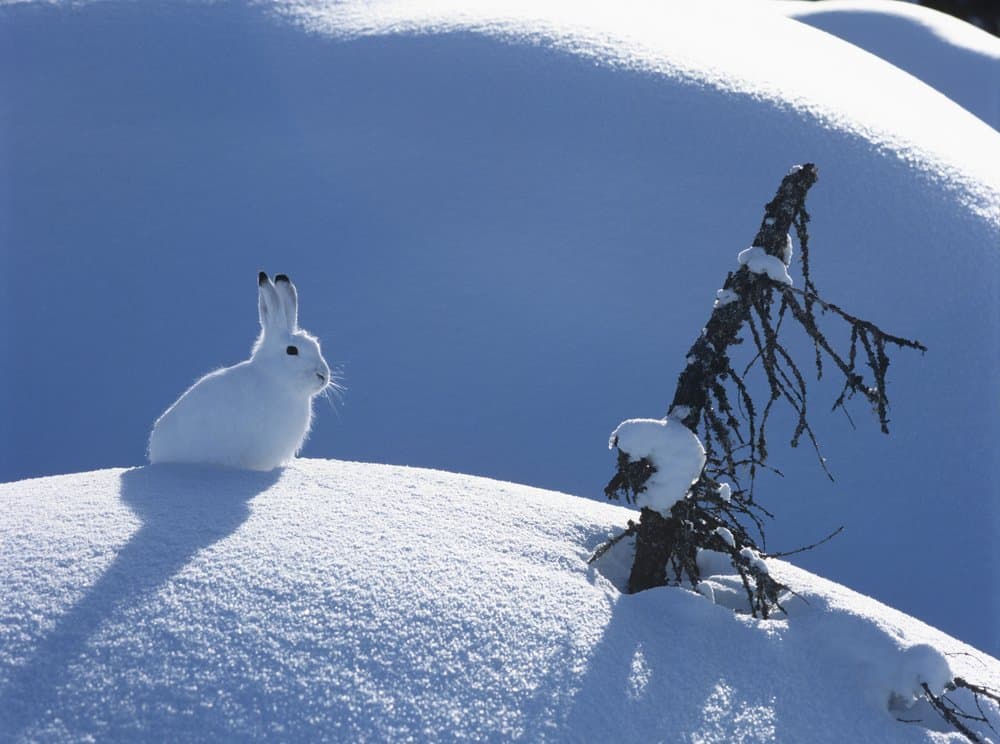
Arctic hares are the largest hare species in Canada.
©sirtravelalot/Shutterstock.com