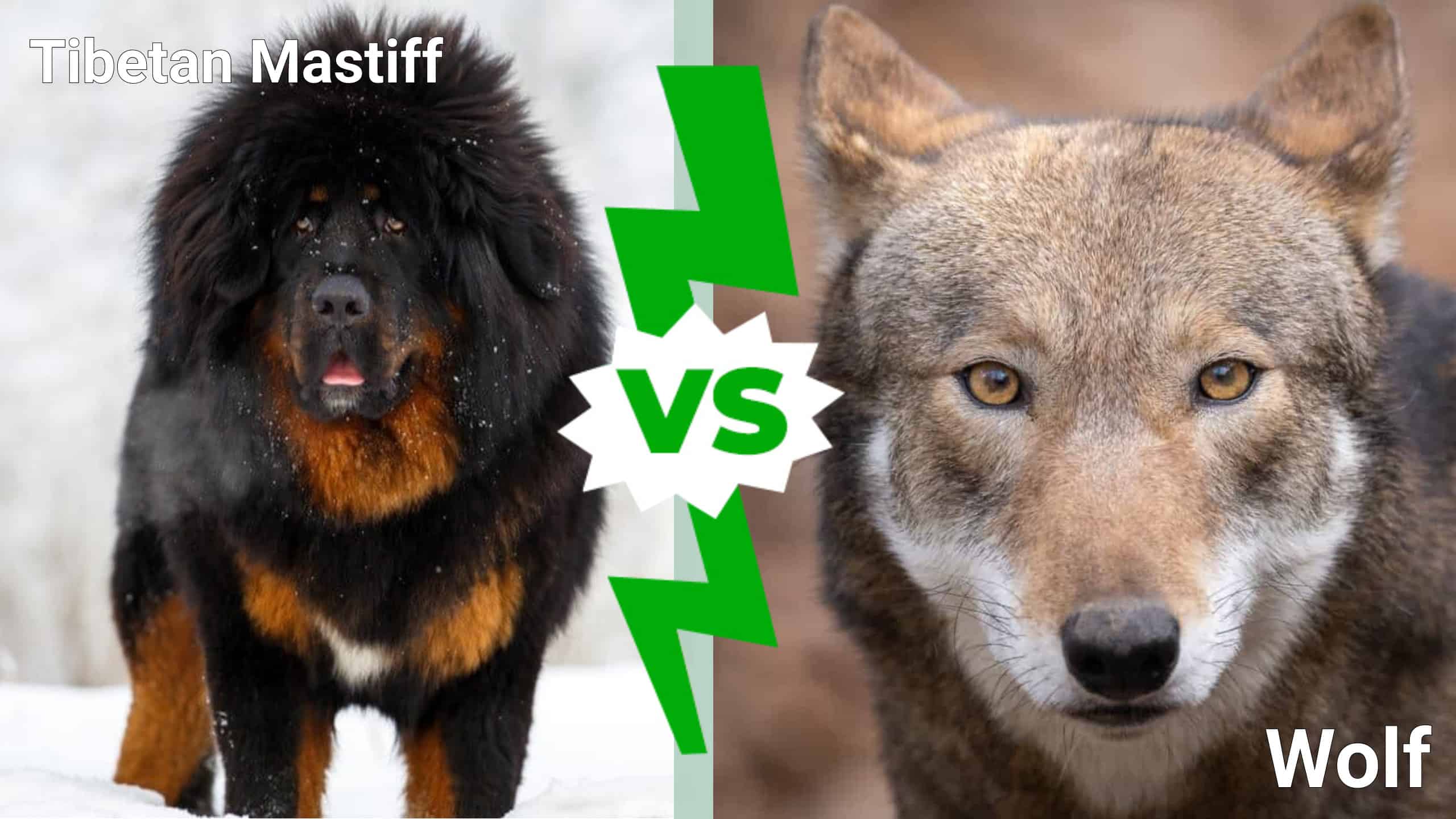

One is domesticated while the other is wild. They have some similarities, including some coat colors. However, they differ in many ways. Discover the differences between a Tibetan mastiff vs. a wolf!
Tibetan Mastiff vs. Wolf: A Comparison
| Tibetan Mastiff | Wolf | |
|---|---|---|
| Height | Female: 24 – 48 inches Male: 26 – 30 inches | 24.6 – 24.8 inches at the shoulder |
| Weight | Female: 70 – 120 pounds Male: 90 – 150 pounds | Female: 51 – 120 pounds Male: 66 – 180 pounds |
| Coat Type | Double coat, medium length | Thick, coarse, straight, and long |
| Colors | Cream sable, blue-gray, brown and tan, red gold sable, blue-gray and tan, black, black and tan, brown, red gold, and cream | Gray and brown variations; some completely white, brown, or black |
| Temperament | Mellow, devoted, watchful, highly intelligent, imposing, and intimidating | Playful, caring, highly intelligent |
| Social Needs | A working dog that needs activities or a job | Sociable; wolves live and hunt in packs |
| Life Expectancy | 10 – 12 years | In the wild, up to 10 years and up to 20 years in captivity |
| Health Problems | Hip dysplasia, seizures, autoimmune thyroiditis, and elbow dysplasia | Distemper, parvovirus, and rabies |
Key Differences Between a Tibetan Mastiff and a Wolf
There are several key differences between a Tibetan mastiff and a wolf. For one, Tibetan mastiffs are domesticated while wolves remain wild. Aside from that, their height and weight differ only slightly along with their coat type. Both Tibetan mastiffs and wolves have different color variations but there are more recognized colors for the Tibetan mastiff than there are for a wolf.
Both of these animals are highly intelligent and while the wolf demonstrates care and playfulness, the Tibetan mastiff has an intimidating appearance with a mellow personality. Whereas the Tibetan mastiff needs mental stimulation and activities to remain healthy, the wolf relies on its pack for security and for hunting advantages. The other two key differences are their life expectancies and the health problems they face throughout their lives.
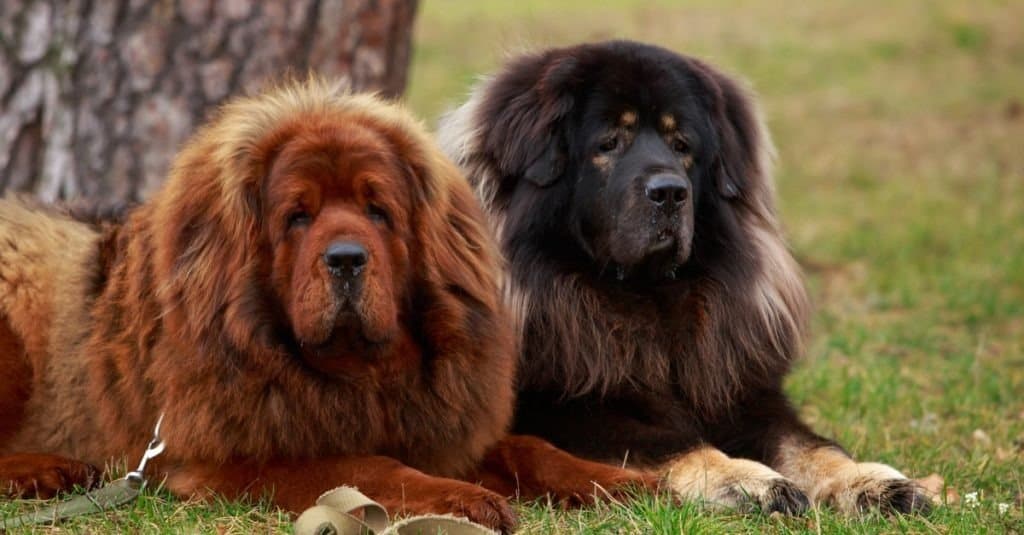
Both Tibetan mastiffs and wolves have different color variations but there are more recognized colors for the Tibetan mastiff.
©Olga Aniven/Shutterstock.com
Tibetan Mastiff vs. Wolf: Height
Tibetan mastiffs grow almost double the size of wolves. They stand up to 48 inches if they’re female and up to 30 inches if they’re male. Wolves, on the other hand, stand at 24.8 feet maximum at the shoulder. In most cases, if you compare a fully grown Tibetan mastiff with a fully grown wolf, you’re going to see a massive size difference, especially because the Tibetan mastiff has extra fluff that makes them appear even larger.
Tibetan Mastiff vs. Wolf: Weight
Female Tibetan mastiffs can grow to weigh anywhere between 70 and 120 pounds whereas the males can weigh anywhere between 90 and 150 pounds. Wolf females might weigh a little bit less at 51 pounds up to 120 pounds while males may weigh between 66 and 180 pounds. Despite these slight differences, they can average about the same weight.
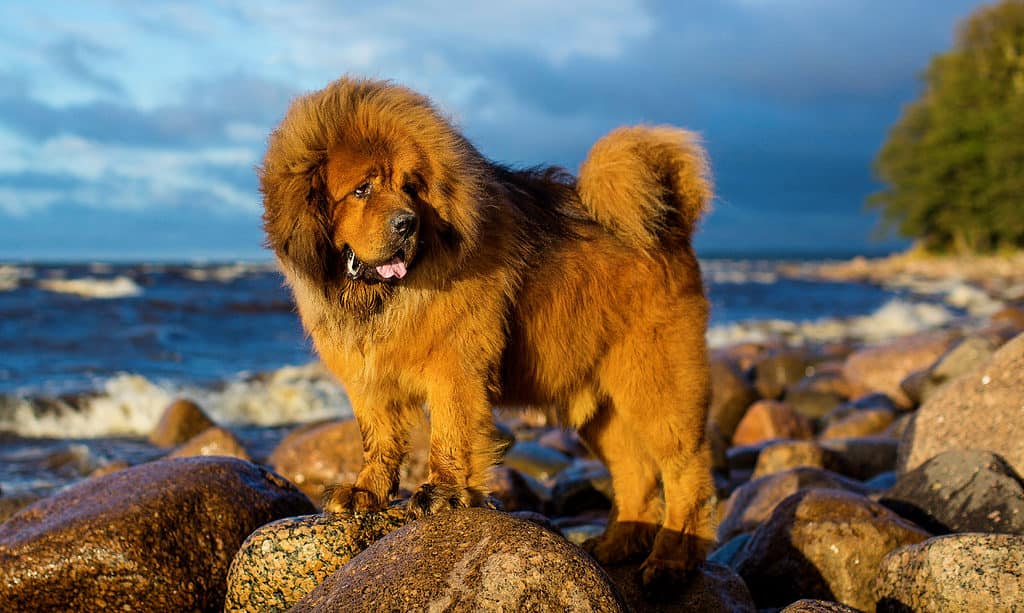
Tibetan mastiffs grow almost double the size of wolves and with their extra fluff, they appear even larger.
©Kat_marinina/Shutterstock.com
Tibetan Mastiff vs. Wolf: Coat Type
Tibetan mastiffs have a double coat that’s typically about medium length. They look extra fluffy because of their coats. Wolves have straight, long fur that’s both thick and coarse.
Tibetan Mastiff vs. Wolf: Colors
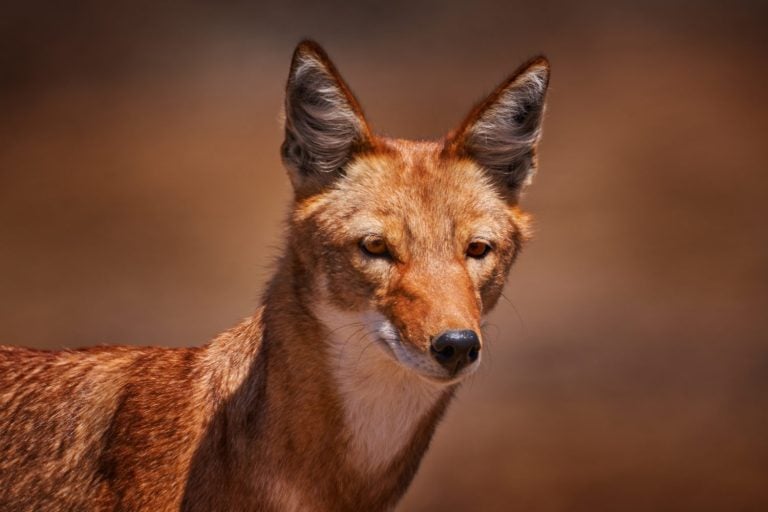
For the Tibetan mastiff, there are several color variations that you can expect. Some of the solid colors they may have include cream, brown, black, and blue-gray. However, they may also be brown and tan, red gold sable, gray and tan, or reddish gold. Wolves are usually some variation of gray and brown but there are some that are completely white, some that are completely brown, and some that are completely black.
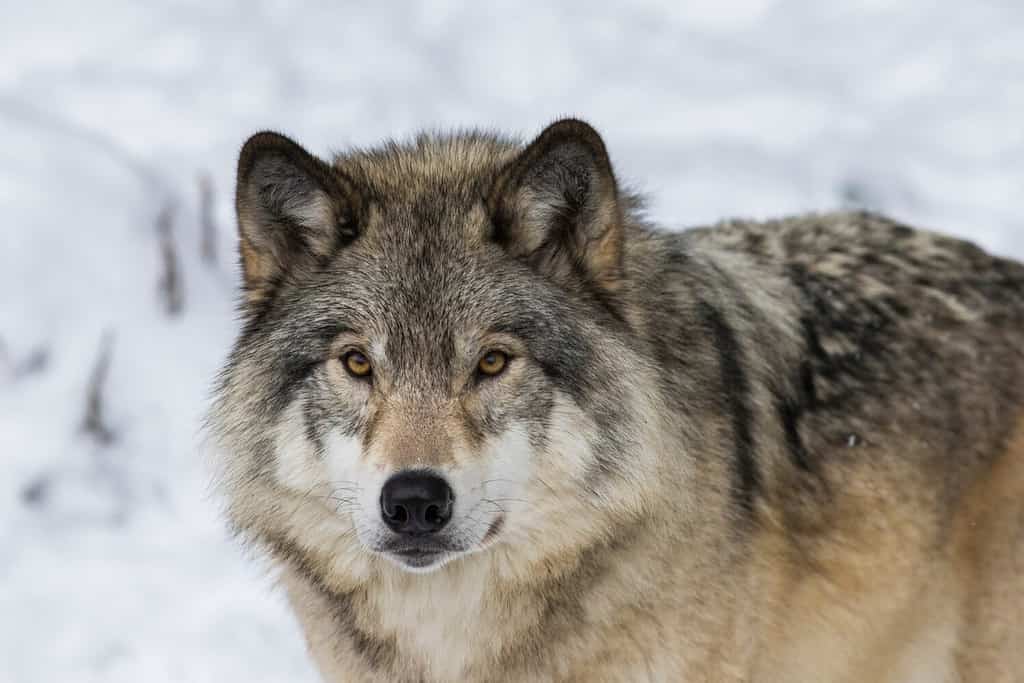
Wolf colors vary and are often a variation of gray and brown.
©Mircea Costina/Shutterstock.com
Tibetan Mastiff vs. Wolf: Temperament
Tibetan mastiffs have an intimidating presence. They can feel imposing when they’re around you, which helps to keep predators at bay. They are great, devoted companions in a family household. These are loyal dogs with a rather mellow personality. Sometimes they may appear aloof, but these dogs are highly intelligent and though they respond well to training, they may lean more toward their instincts than to what they’ve learned. Wolves are sociable creatures that rely on their packs for a healthy life. They display high intelligence and a strong degree of care for one another.
Tibetan Mastiff vs. Wolf: Social Needs
Tibetan mastiffs require a job to keep busy. They need some sort of activity to keep them entertained. This is a working dog that does best when there are meaningful tasks presented for completion. They are devoted to their family and so long as they have a job, they are happy to spend time with their human counterparts. Wolves are different because they live in the wild. They rely on one another and so live and hunt in packs. They’re highly sociable creatures.
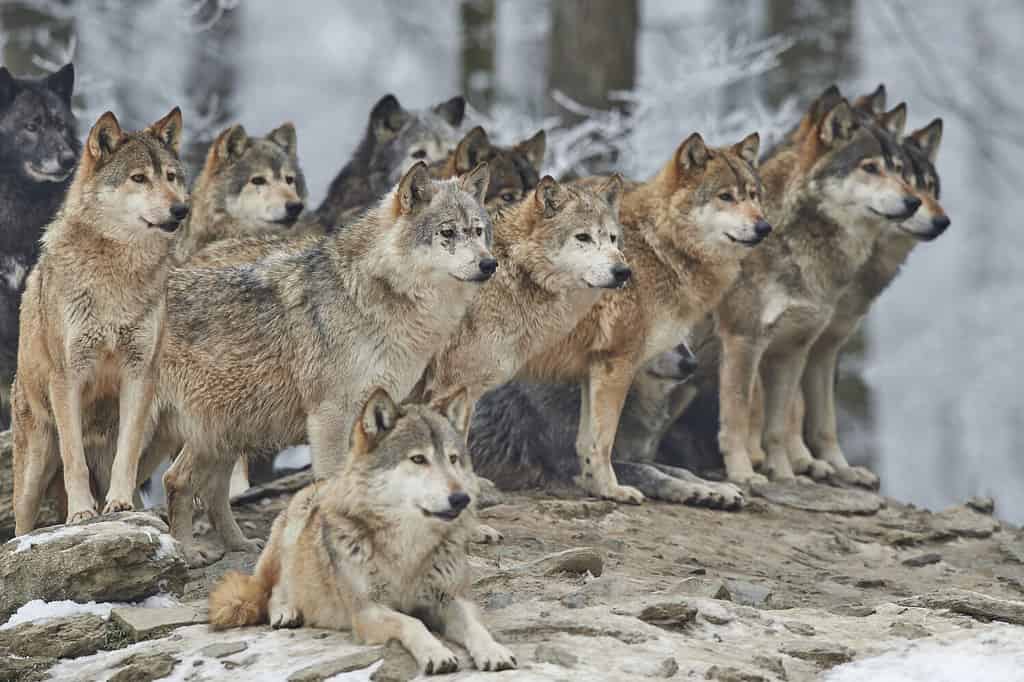
Wolves are sociable creatures that rely on their packs for a healthy life.
©Michael Roeder/Shutterstock.com
Tibetan Mastiff vs. Wolf: Life Expectancy
On average, Tibetan mastiff lives between 10 and 12 years. In the wild, wolves have a similar life expectancy, usually living up to 10 years. However, if a wolf is in captivity, it is not exposed to different threats or predators, which extends its lifespan. That’s why in captivity wolves may live up to 20 years.
Tibetan Mastiff vs. Wolf: Health Problems
Tibetan mastiffs, like most breeds, have a susceptibility to certain health conditions. Some of those conditions include both hip and elbow dysplasia along with the possibility of seizures and even autoimmune thyroiditis. Wolves face a different set of health complications that include parvovirus, distemper, and rabies.