
Quick Take
- Even a well-trained dog or cat poses a danger to your rabbit that no amount of training can fully eliminate, and most owners find this out the hard way. See the predator risk →
- Litter training a rabbit actually works, though it requires one specific condition to be met first. See the key condition →
- Your flooring could be the hidden reason your rabbit refuses to explore the room, and fixing it costs almost nothing. Fix the flooring issue →
- Rabbits kept without a same-species companion develop problems that most owners mistake for personality traits rather than a welfare issue. Understand the welfare impact →
Rabbits are active animals that do best when they have substantial space to run and hop. Do you want to allow your rabbits to free roam but aren’t sure how? Or maybe you’re looking to improve your free-roam space. Keep reading for more tips and tricks for free-roaming rabbits, including how to bunny-proof your home, litter-train your bunnies, and set up a rabbit-friendly space your bunnies will love.
#1: Bunny-Proof Your Space
First, you’ll need to bunny-proof your space so that your rabbits are safe and don’t destroy your things. Choose a room or multiple rooms where you can remove all dangerous items and eliminate hazards such as other pets, children running around, or hot food that could spill on your rabbit if you trip.
Use cord covers to block access to any wires and pick up anything you don’t want them getting into. Not all rabbits chew baseboards, but you may need to cover them, as well as any wooden furniture legs (C&C grids are useful for things like this). You’ll also want to make sure they can’t crawl underneath furniture, where they can be difficult to reach. Some rabbits will urinate in these spaces if allowed, which can be challenging to clean as well. To keep them from forbidden rooms, you can either keep the door closed or install a pet gate in the doorway.
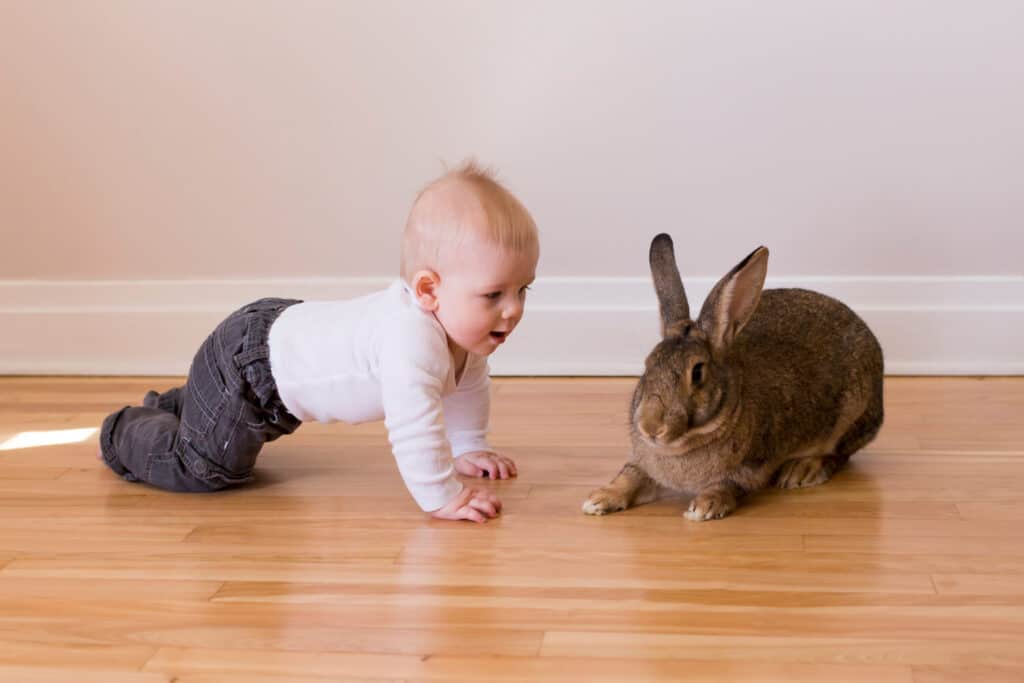
Keeping your floors clear is one way to rabbit-proof your home.
©Anne Richard/Shutterstock.com
#2: Litter Train Your Rabbits
You can litter-train rabbits to reduce the mess they leave around the house. You often can’t expect perfection, but most rabbits can learn to use the litter box most of the time. However, it works best with spayed and neutered rabbits.
Litter boxes filled with hay should be placed in corners of the room, since rabbits naturally defecate and urinate while eating. Don’t use cat litter for your rabbit; instead, choose a rabbit-safe litter such as paper bedding or aspen shavings.

Litter training your rabbits keeps their space, and yours, cleaner.
©mkzdillon/Shutterstock.com
#3: Set Up a Home Base
You’ll want to start with your rabbits in their “home base,” which is typically a dog exercise pen containing all of their necessities. This includes their litter box, hides and toys, and food and water bowls. As your rabbits acclimate to their new home and use the litter box reliably, you can open up their space and allow them to free roam more and more. At first, watch them carefully to ensure they don’t get into anything you missed while bunny-proofing and that they don’t have accidents outside of the litter box.
Keeping a home base for them can help your rabbits feel that they have someplace safe to go. It keeps their things in one spot and also allows you to confine them if you have guests, they regress in litter training, or it’s temporarily unsafe for them to free roam.
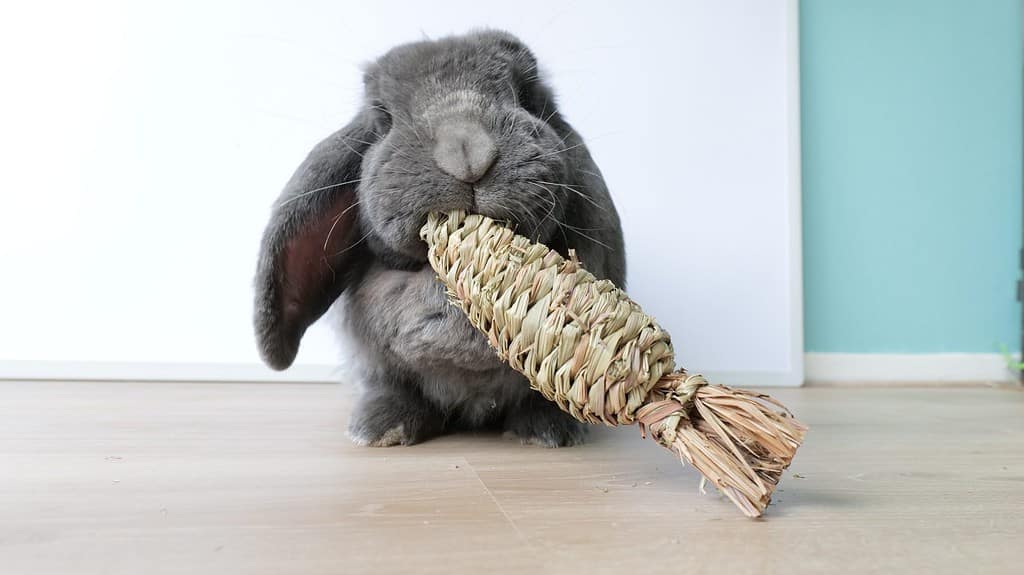
Your rabbits’ home base should include their toys and other necessities.
©Mariska van Dasselaar/Shutterstock.com
#4: Provide Plenty of Enrichment Items
If your rabbits don’t seem to explore their free-roam space, make sure they have enough enrichment items spread out around the room. They should also have plenty of places to hide, as they might not feel safe going too far out into the open to explore.
Tunnels can encourage your bunnies to run around the room, toys give them something to interact with, and houses provide a sense of safety. You don’t need rabbit items everywhere on your floor, but spreading them around your home is a good idea. After all, the bunnies are part of the family.
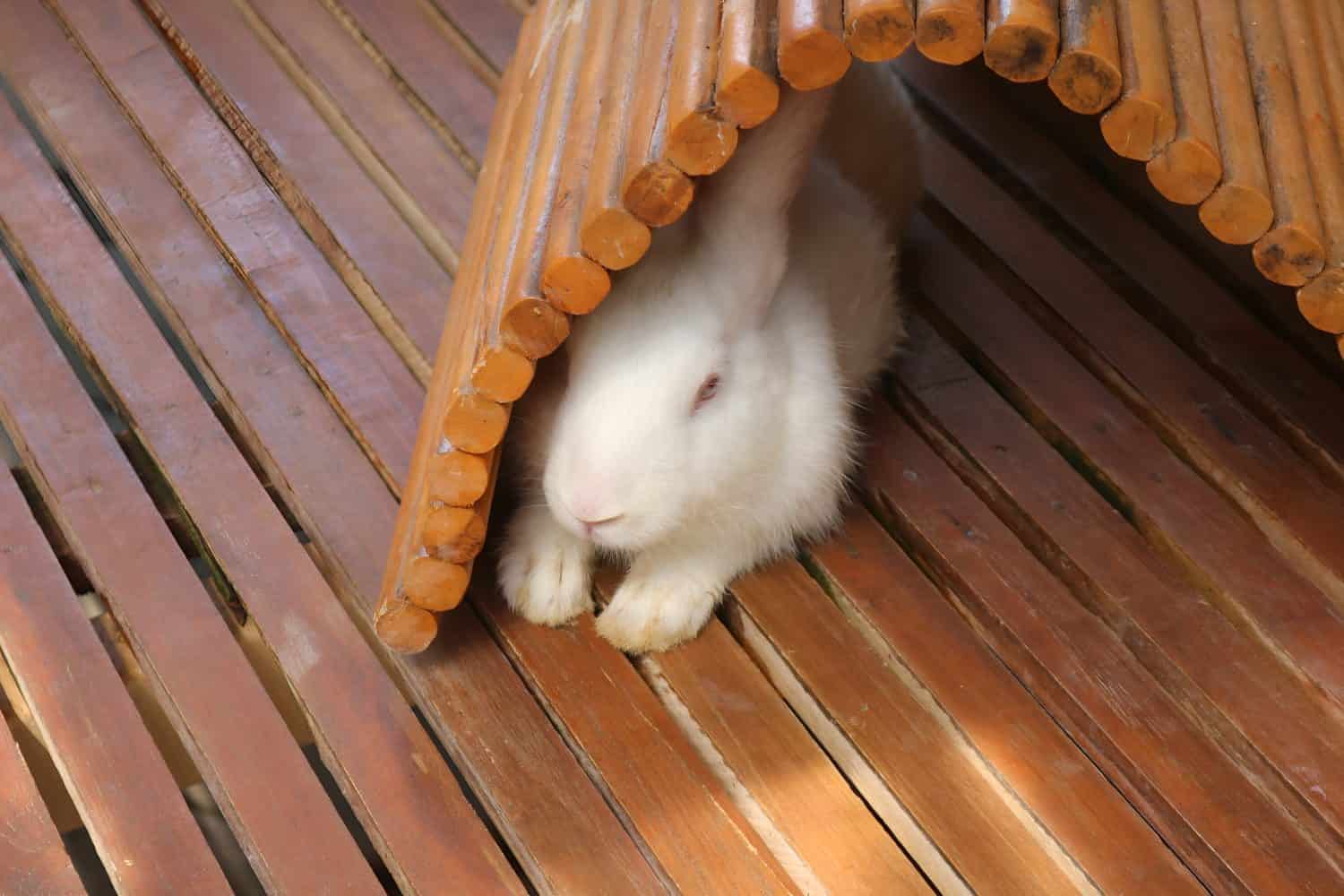
Give your rabbit plenty of tunnels, hides, and toys.
©laneophyte/Shutterstock.com
#5: Use Rugs to Encourage Exploration
Another tip to encourage your bunnies to explore is to use rugs or washable mats. Many rabbits don’t like to walk on hard flooring, and some will refuse to do so altogether. Carpet is softer on their feet and allows them to get a grip when hopping or running. Most bunnies will slip on tile or hardwood floors, which can be frightening for them.
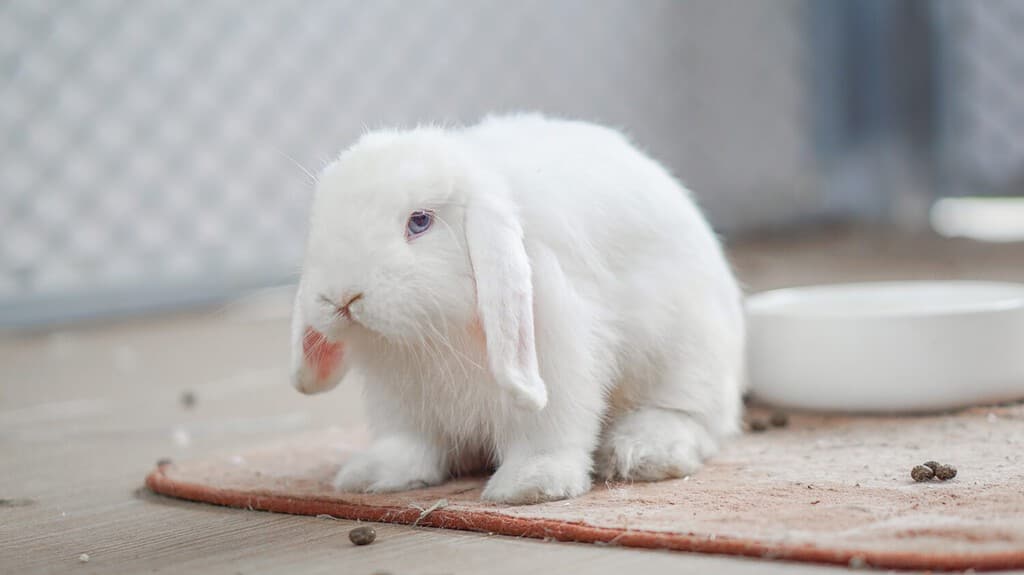
Many rabbits won’t walk on hard flooring.
©Choco'Love/Shutterstock.com
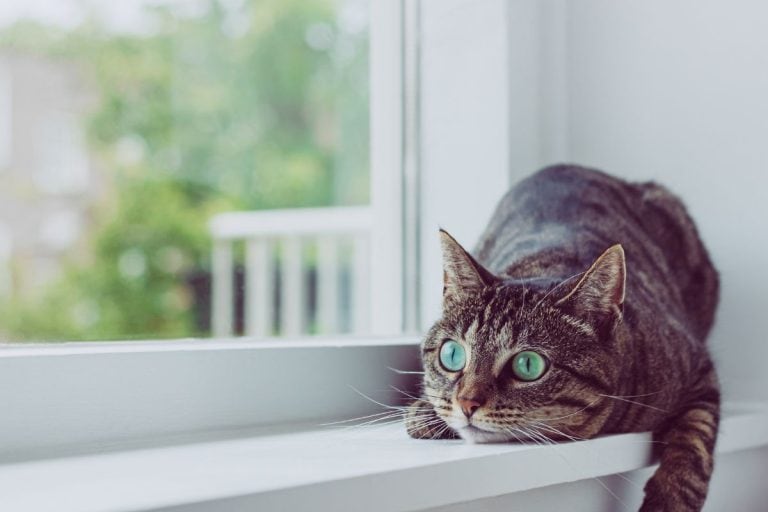
#6: Don’t Allow Interactions with Cats, Dogs, or Other Predator Animals
We all see cute videos online of unlikely animal companions, but unfortunately, these pairings are often unsafe for the animals involved. This is especially true when it comes to allowing cats, dogs, ferrets, or other predatory animals around your rabbits. Ideally, they should be kept separate at all times; at a minimum, they should never be left together unattended.
It only takes a second for a cat or dog to hurt your rabbit. They can even injure rabbits while trying to play. The truth is that all cats and dogs have prey drives that training cannot completely eliminate. Some live with rabbits peacefully, but even with animals that have low prey drives, there is always a risk, and it’s not worth taking.

Rabbits should not be around predator animals such as dogs, cats, or ferrets.
©iStock.com/adogslifephoto
#7: Make Sure They Have a Companion
Make sure your rabbit has at least one rabbit friend. They’ll be more confident in exploring their free-roam space and will likely be more active as well. Humans cannot fully meet rabbits’ social needs because we are not rabbits ourselves. We love them, and they can show affection toward us. However, expecting that you’ll be enough for your rabbit is like expecting a person to interact only with rabbits, never other humans, for their entire life.
Rabbits are social animals who naturally live in large colonies. They get lonely when left by themselves, which will inevitably happen when living with humans who need to work, run errands, and socialize outside the house. Living alone causes stress and often depression in rabbits. Signs of depression can include lethargy, hiding, loss of appetite, over-grooming, and destructive behavior.

Rabbits naturally live in groups, so they should never be kept alone.
©ansoz/Shutterstock.com
#8: Learn How to Bond With Your Rabbits
Of course, it’s also important for you to have a good relationship with your rabbits. This is much easier when they are allowed to free roam, but some people still find it difficult. Bunnies aren’t like dogs and cats. They are prey animals that are naturally very skittish. Grab some vegetables or even your rabbits’ favorite fruit (many love bananas) and get down to your rabbits’ level. You can either sit or lie on the floor. Let them come to you, encouraging them by leaving small bits of food nearby. Slowly move the food closer until you can set it on your leg, then feed your rabbit by hand.
Doing this for a little while each day will help your rabbits adjust to you and your presence. Keep in mind that this might be a slow process and that new bunnies will take time to adjust to your home and family. The more time you spend together, even if you just sit on the couch while they hop around, the more they’ll get used to you. Later, you can develop an even closer bond by teaching your rabbit tricks, sitting nearby while they eat their daily vegetables, petting them, and even coaxing them into your lap if they enjoy cuddles.

Hand-feeding your rabbits helps them feel comfortable with you, as they’ll associate you with positive memories.
©Katarinks/Shutterstock.com