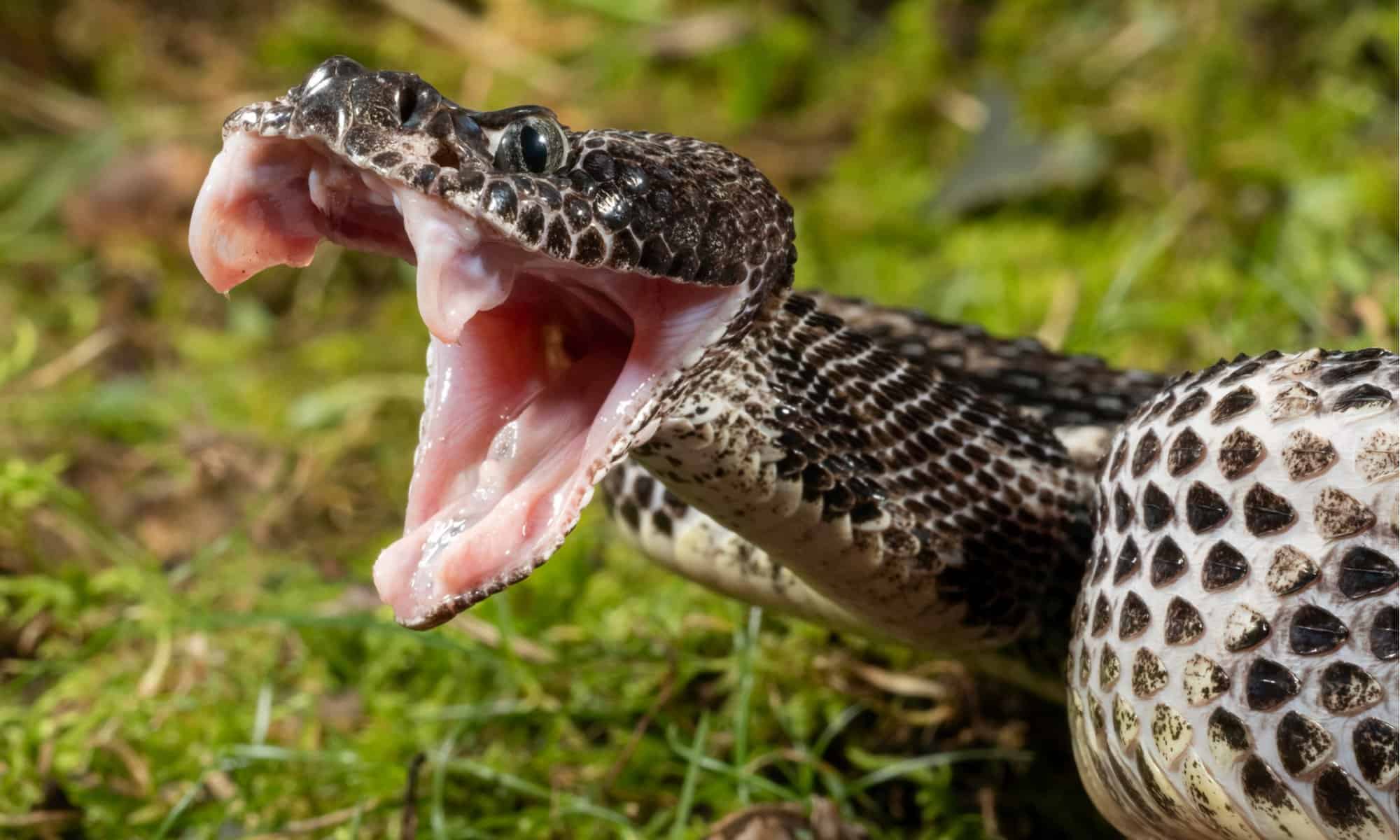

Located along the southeast coast of the United States, South Carolina is mostly humid and subtropical, with mild winters and hot summers. Within the state, there are three main geographic regions with varying environments. These include the Blue Ridge Mountains region along the northwestern edge of South Carolina, the Piedmont region extending from the northern regions to central South Carolina, and the Atlantic Coastal Plain, which covers the southeastern half of the state.
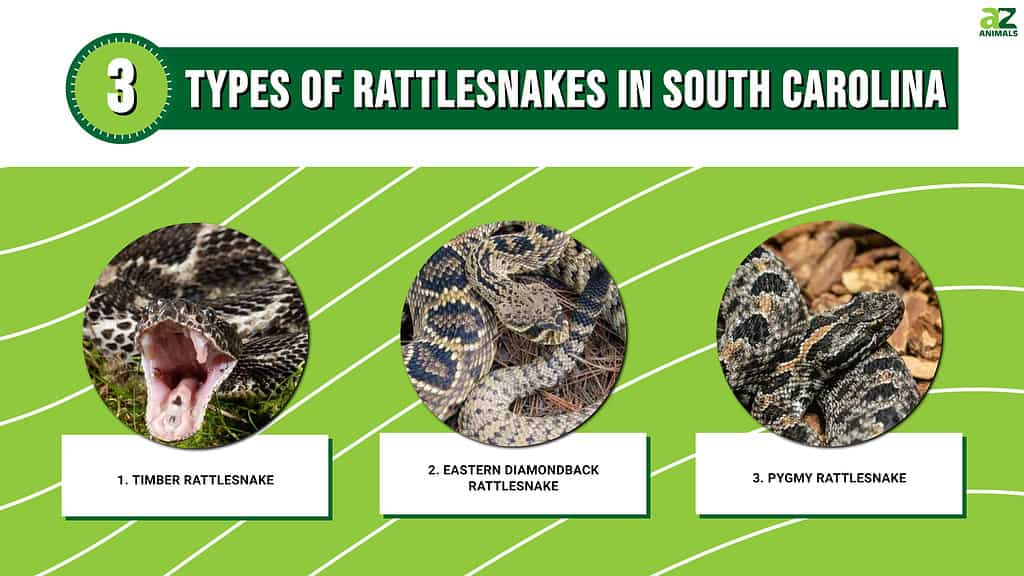
Each of these three regions is home to its own unique environment and wildlife, including over 36 species of snakes. Only six of South Carolina’s snake species are venomous and dangerous to humans, including coral snakes, copperheads, cottonmouths, and rattlesnakes. Let’s take a closer look at the three types of rattlesnakes in South Carolina.
1. Timber Rattlesnake
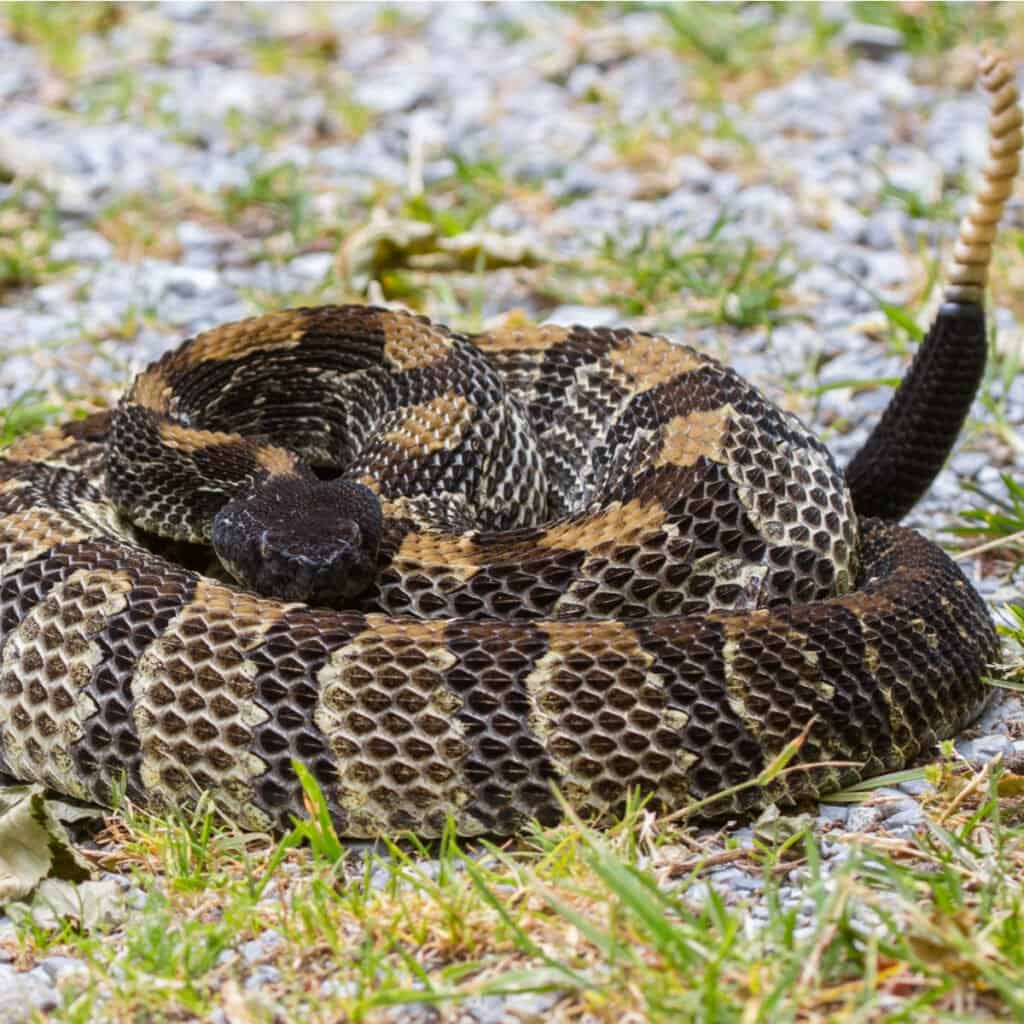
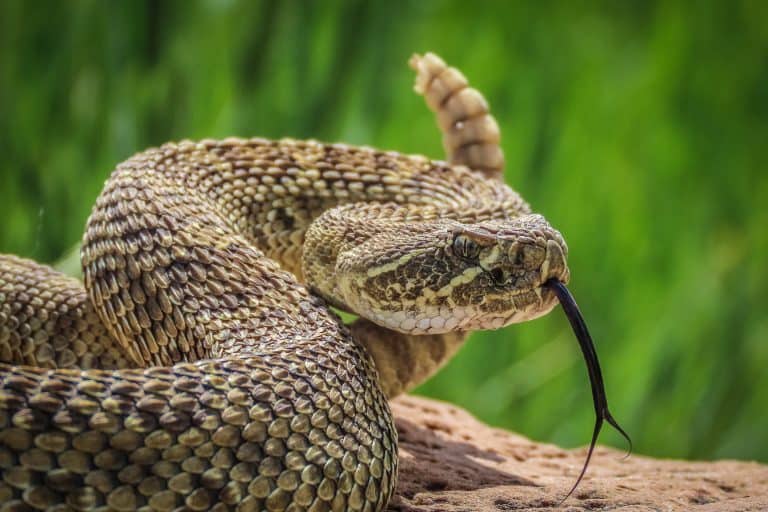
There are two main color variants of timber rattlesnakes in South Carolina.
©Frode Jacobsen/Shutterstock.com
| Timber Rattlesnake | Range |
|---|---|
| Range | All of South Carolina |
| Length | 36-60 inches |
Timber rattlesnakes are common throughout the state of South Carolina. Timber rattlesnakes are protected by state laws in South Carolina. It is illegal to kill snakes on public land, and as of 2025, possession of venomous reptiles without a permit is prohibited. Always check current regulations before interacting with any wild snake. As cold-blooded animals, these snakes are generally more active during the warmer months. During this time, they can often be seen coiled up as they patiently wait to ambush any unsuspecting prey animals that happen to scurry by. Timber rattlesnakes eat small mammals like mice, squirrels, and rabbits. Occasionally, they may also eat birds that get too close.
Timber rattlesnakes are especially common in July and August when they are seeking mates. Female timber rattlesnakes give live birth to five to 14 baby snakes sometime during the late summer or early fall. If you are out exploring the natural beauty of South Carolina during these warmer months, be sure to keep an eye out for these snakes. Although timber rattlesnakes do not actively attack humans, they are dangerous. Their venom is extremely toxic and can destroy organs, tissue, and circulatory systems.
The Two Types of Timber Rattlesnakes in South Carolina
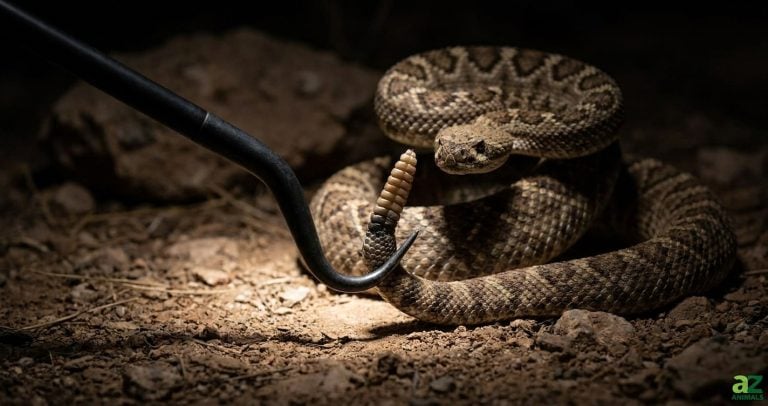
So, what exactly do timber rattlesnakes look like? These snakes have large, heavy bodies, and typically grow between 36 to 60 inches in length. Timber rattlesnakes have wide, triangular-shaped heads with thin necks and cat-like elliptical pupils. The end of their tail is dark and has a large, segmented rattle. Some snakes may also have an orange or yellowish-colored stripe running down the center of their backs, although many snakes do not. Other timber rattlesnakes can sometimes be so dark in color that they look almost completely black.
Timber rattlesnakes have a wide variety of colors throughout their larger range, but in South Carolina, there are two color variants. The first is the timber rattlesnakes that live in mountainous areas. These snakes are typically yellow or yellowish-brown and have dark chevron bands running along the length of their bodies. They are common near ponds and streams, or along south-facing rock outcroppings.
The second color variant lives in the Piedmont region and the Atlantic Coastal Plains. Timber rattlesnakes in these regions are referred to as “canebrake rattlers”. These snakes are usually lighter in color than those found in the mountains. Their bodies come in various shades of pink, pinkish-orange, or tan, with dark chevron bands. Canebrake rattlers enjoy forested areas and wetland habitats.
2. Eastern Diamondback Rattlesnake
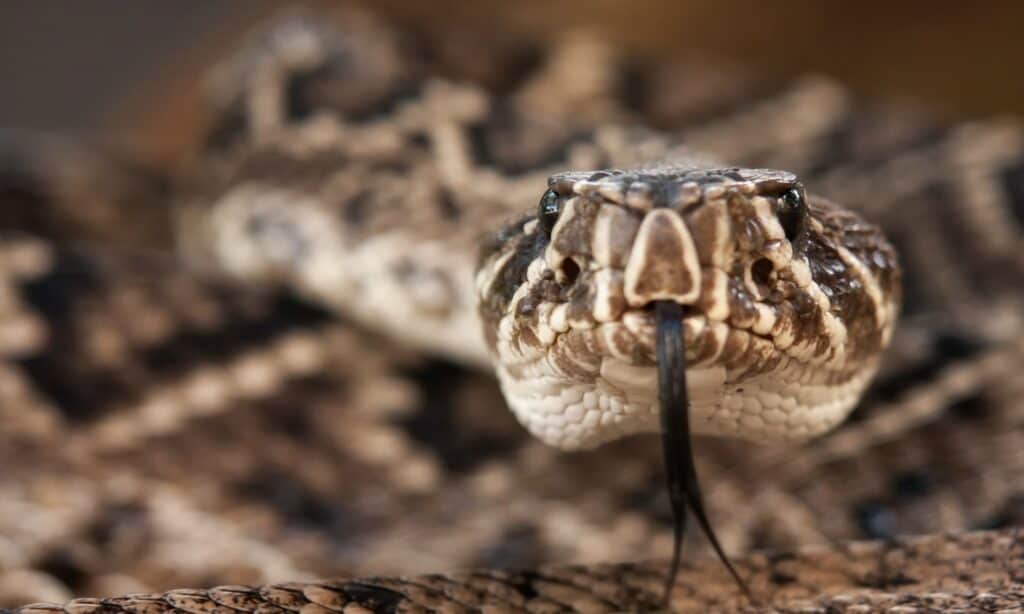
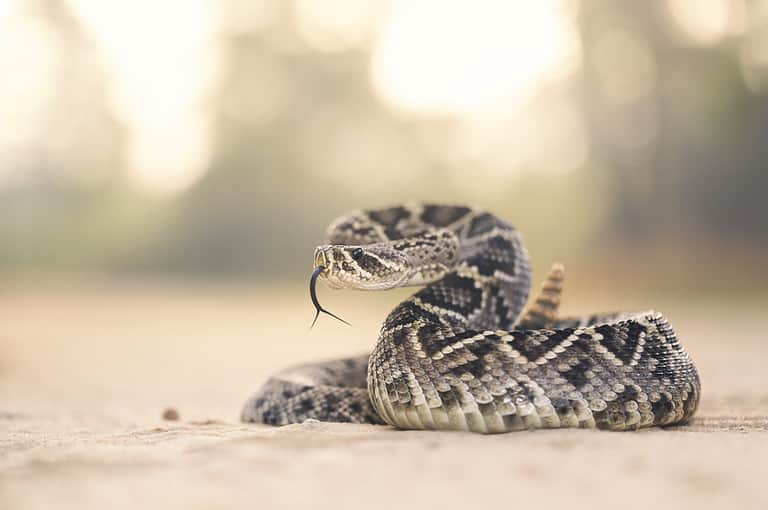
The diamond patterns on the back of eastern diamondback rattlesnakes often fade towards their tail.
©iStock.com/Wide-River-Rick
| Eastern Diamondback Rattlesnake | |
|---|---|
| Range | Lower Coastal Regions of South Carolina |
| Length | 33-72 inches |
Eastern diamondback rattlesnakes live along the lower coastal regions of South Carolina. These snakes live in grasslands, rolling pine hills, sandy coasts, and longleaf pine flatwoods. Eastern diamondback rattlesnakes are large and extremely dangerous. However, humans rarely see or encounter them in South Carolina. If you do see an eastern diamondback rattlesnake, it is best to stay at least 20 feet or more away from it. Most bites from eastern diamondback rattlesnakes occur when the snake is stepped on or harassed by a human.
Like their name, eastern diamondback rattlesnakes have large, distinctive dark diamond markings along their backs. They have a sandy base coloring, and their scales are heavily keeled, which means each scale has a textured ridge. Eastern diamondback rattlesnakes are the largest venomous snakes in South Carolina, growing up to eight feet in length. However, most snakes do not grow longer than six feet.
When they feel threatened, eastern diamondback rattlesnakes often rattle their tails loudly as a warning. However, in many cases, these snakes choose to stay quiet in the hope that they can remain undetected. During the warmer months of the year, eastern diamondback rattlesnakes hunt small mammals. They especially like to eat mice, rats, and rabbits. During the winter, these snakes shelter in the burrows of other animals like gopher tortoises.
3. Pygmy Rattlesnake
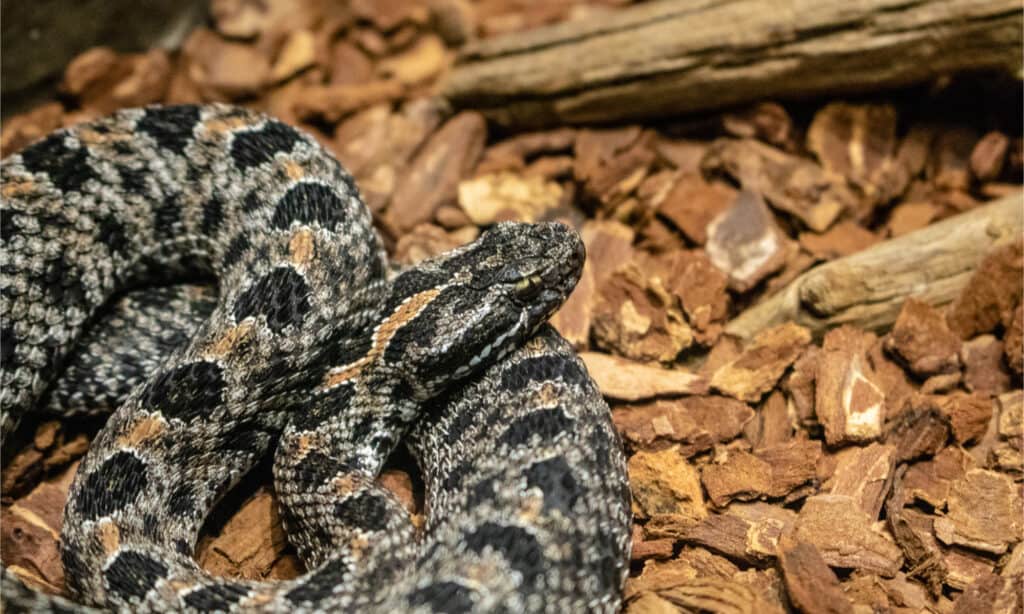
Ground rattlers, or pygmy rattlesnakes, reside in South Carolina.
©Suzanna Ruby/Shutterstock.com
| Pygmy Rattlesnake | |
|---|---|
| Range | Coastal Plains Region of South Carolina |
| Length | 14-30 inches |
Pygmy rattlesnakes (sometimes spelled pigmy) live in the Coastal Plains Region of South Carolina. These snakes typically live in mixed forests, sandhills, and floodplains. Between March and October, it is possible to encounter a pygmy rattlesnake anywhere near bodies of freshwater like marshes, swamps, ponds, and streams. Pygmy rattlesnakes are active during these months as they hunt for small animals like frogs, lizards, and small rodents.
Compared to the other rattlesnakes in South Carolina, pygmy rattlesnakes are very small, growing only 14 to 30 inches in length. These snakes also have very small rattles that make a light buzzing sound when they vibrate their tails. In fact, you probably won’t hear them if you are more than three feet away. Despite their small size, however, they are venomous and can act aggressively. Their venom is cytotoxic, but they cannot inject a large amount into each bite because they have small fangs.
Pygmy rattlesnakes are typically pinkish or gray in color and have dark blotches and spots running down their backs and the sides of their bodies. Some snakes also have a reddish, orange, or pinkish stripe running along the middle of their backs between the blotches. However, many pygmy rattlesnakes lack this colored stripe. Young pygmy rattlesnakes have bright yellow tips on their tails that they twitch to look like a worm. This helps the small snakes lure smaller animals close so they are easier to catch.