
Quick Take
- Rattlesnakes are responsible for the majority of fatal snake bites in the U.S.
- All rattlesnakes have both fangs and backward-facing teeth to hold prey and prevent it from escaping.
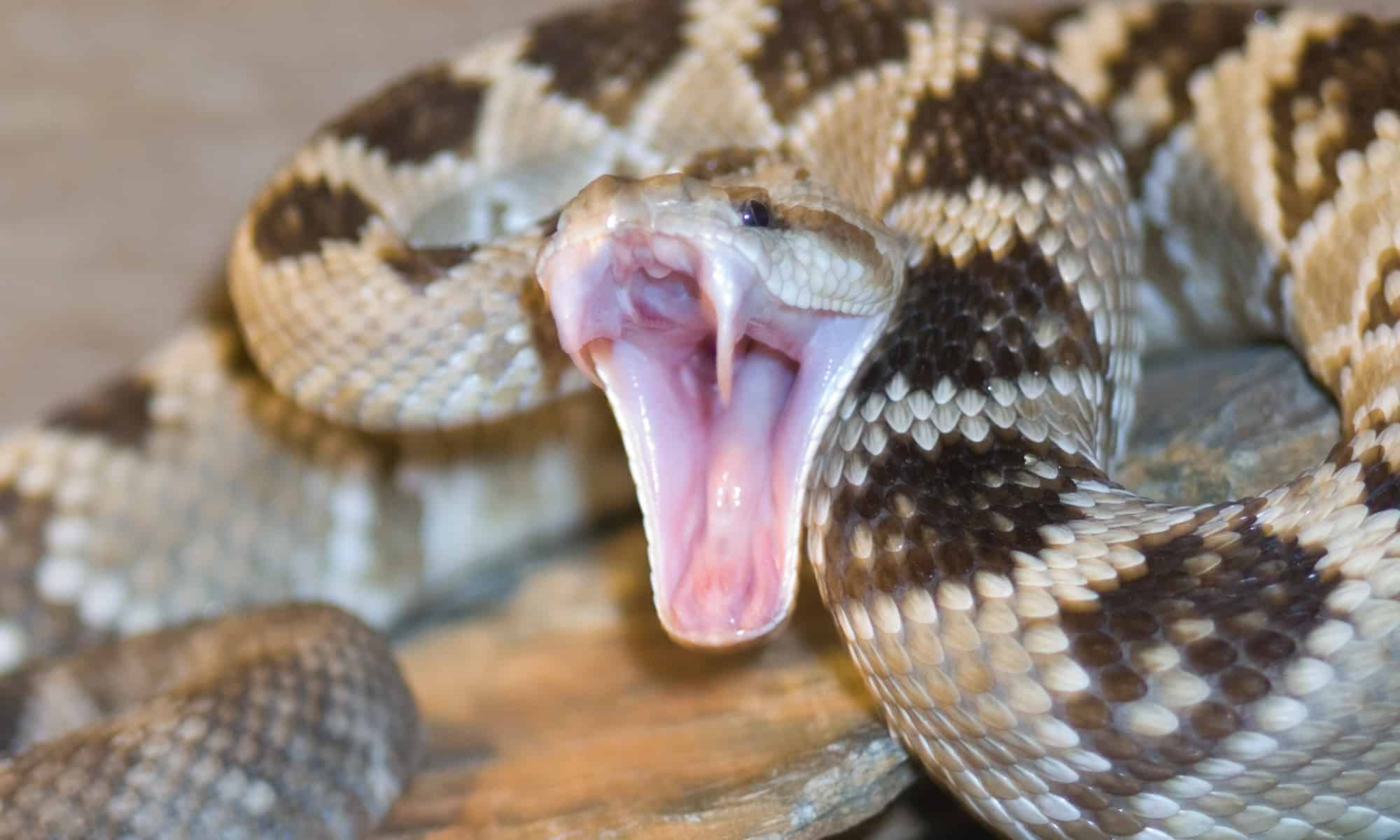
- Rattlesnake fangs are hinged and fold flat against the snake’s upper jaw until needed.
- Snakes, including rattlesnakes, have replacement teeth under their gums.
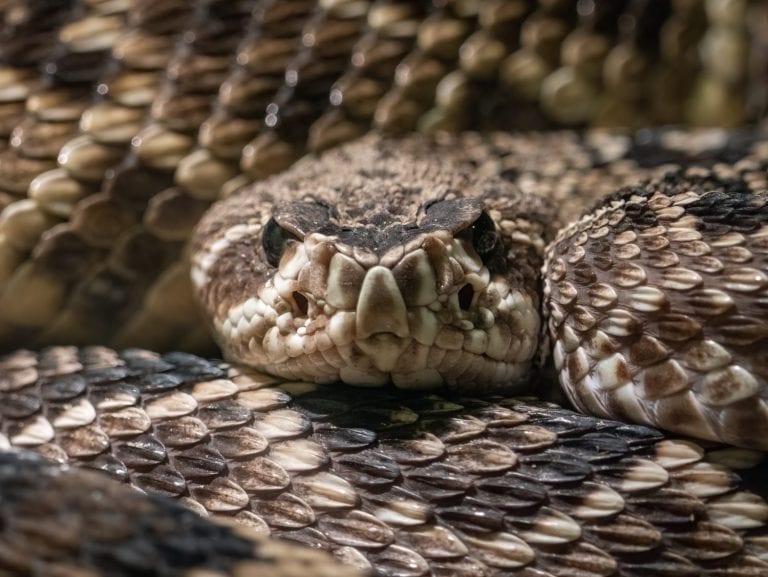
Rattlesnakes belong to the subfamily Crotalinae, also known as pit vipers due to the heat-sensing glands, or pits, located on each side of their face between their eyes and nostrils. Pit vipers are the largest and most dangerous group of venomous snakes in the U.S., responsible for over 97% of venomous snake bites. Pit vipers like rattlesnakes are well-known for their large fangs, but they also have teeth. Read on to learn everything you need to know about rattlesnake teeth vs. fangs.
Do Rattlesnakes Have Teeth?
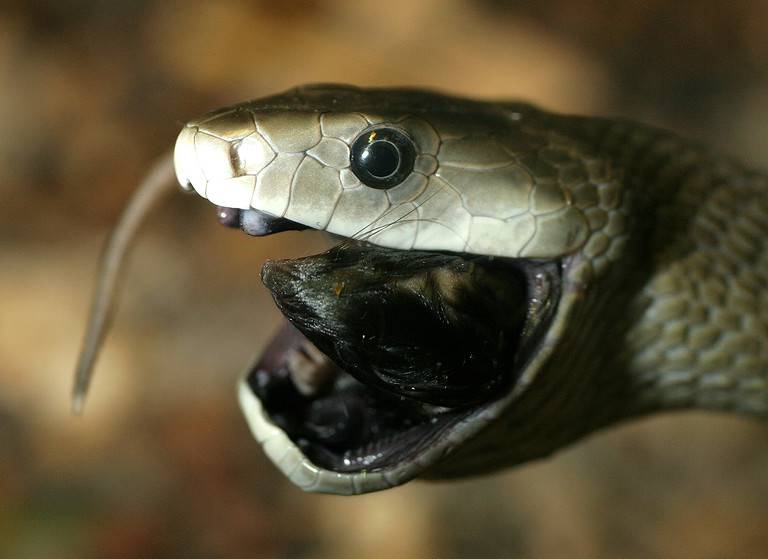
All snakes have teeth, known as dentition. Every snake species has aglyphous dentition, which means they have ungrooved teeth that face backwards to hold prey and prevent it from escaping. Some snakes, such as boa constrictors, bull snakes, and North American kingsnakes, only have aglyphous dentition. However, other snakes have fangs in addition to these backward-facing teeth. There are three other types of dentition referring to fangs: solenoglyphous, proteroglyphous, and opisthoglyphous.
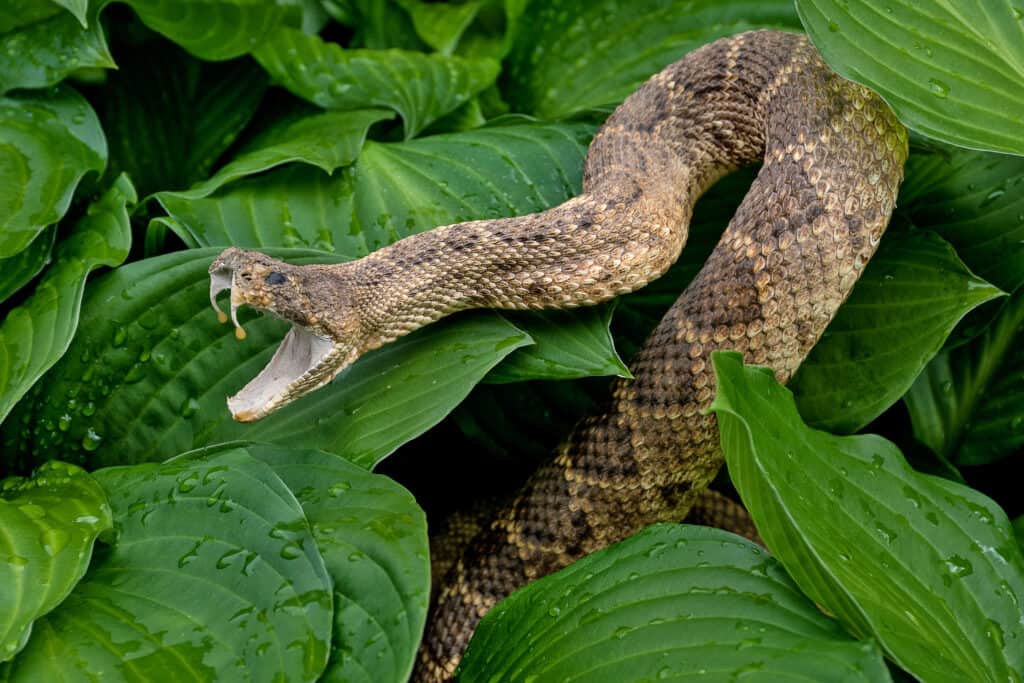
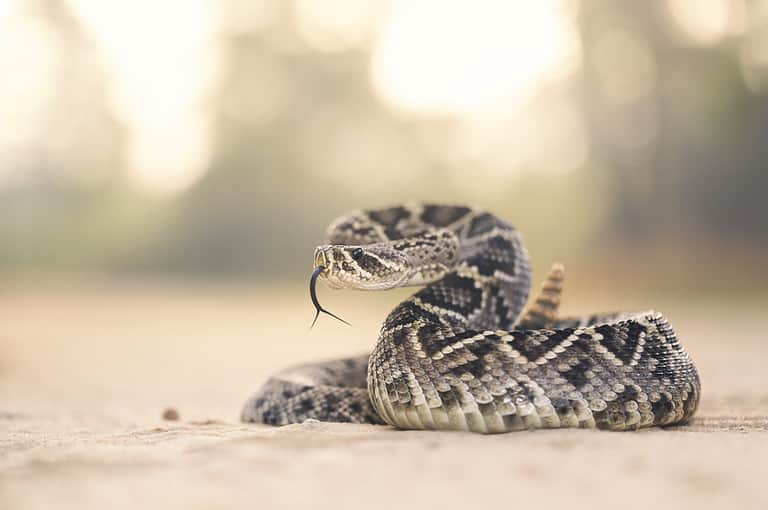
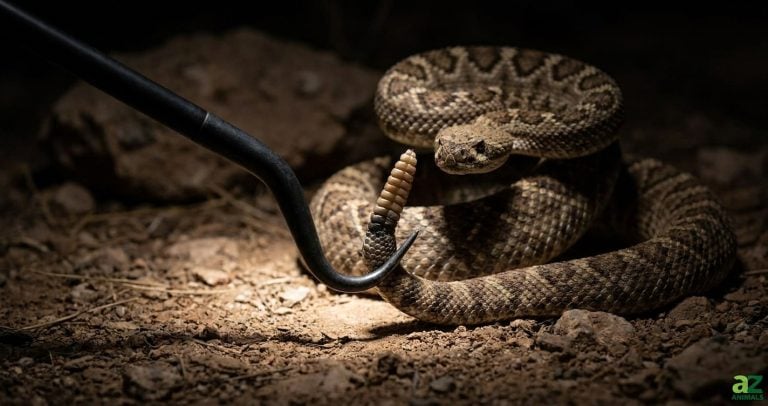
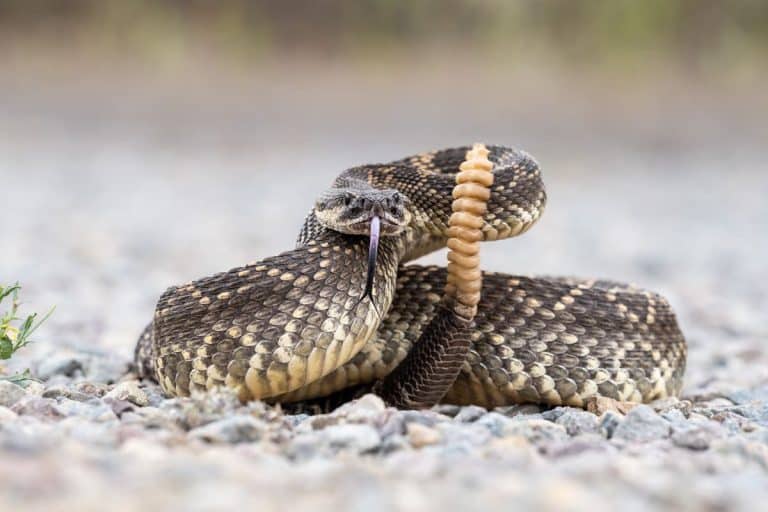
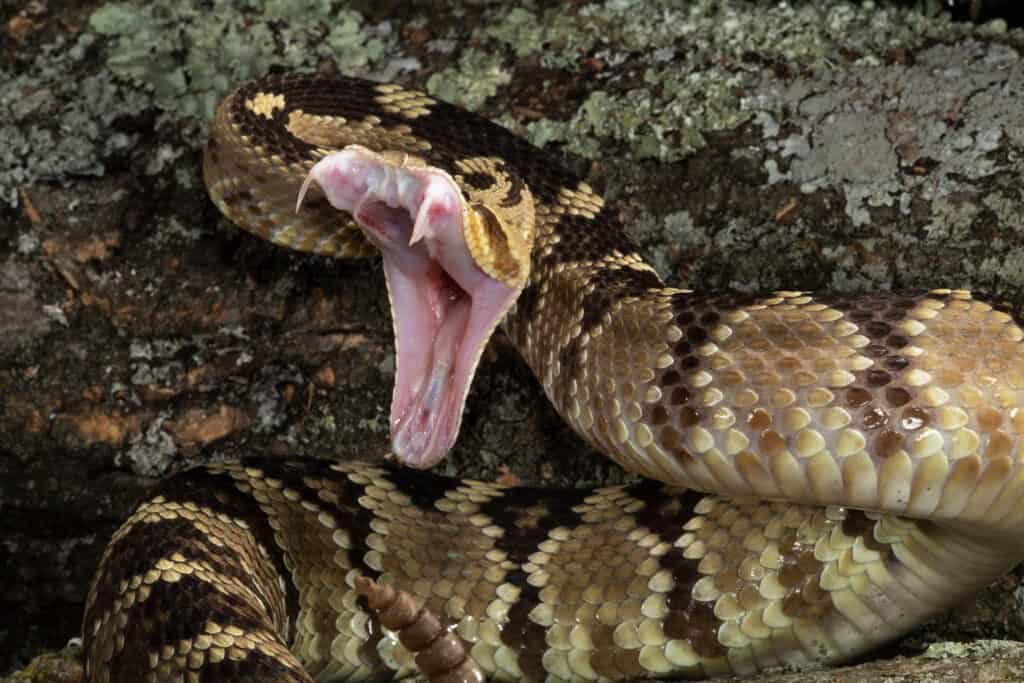
Rattlesnakes have both teeth and fangs.
©Maria Dryfhout/Shutterstock.com
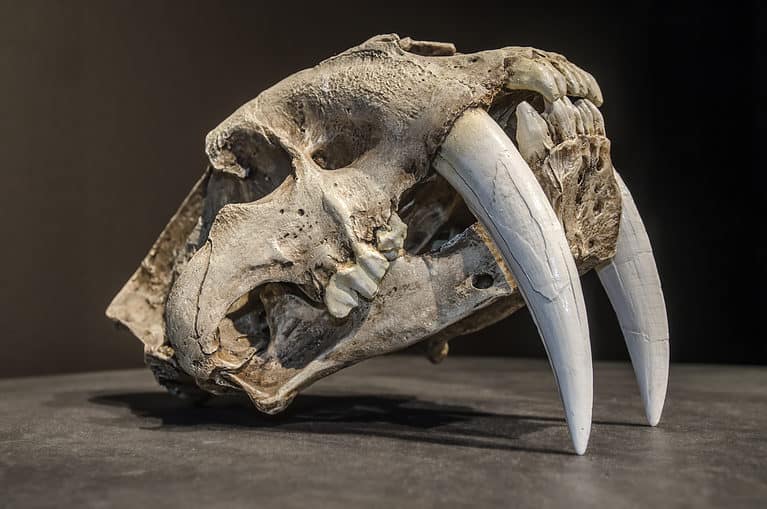
Like all pit viper species, rattlesnakes have solenoglyphous dentition. Solenoglyphous snakes have both teeth and large fangs. These fangs are sharp and hollow to allow for venom delivery, similar to the way humans get injections with a needle. The fangs are hinged and fold flat against the snake’s upper jaw until needed. When the snake is ready to strike, the fangs unfold and swing forward. Even baby rattlesnakes are born with teeth and fangs capable of envenomation.
Rattlesnakes and other species with solenoglyphous dentition have fangs connected to venom glands at the back of their heads. They contract their muscles to force the venom out, pushing it through a duct and a hole at the base of each fang. The venom flows through the sharp tips of their fangs and is injected into their prey. Pit vipers can control the amount of venom they inject with a bite. Around 20% of strikes are “dry” bites, meaning no venom is injected. Some sources indicate the number could even be as high as 50%. Researchers believe the amount of venom injected depends on the snake’s perception of the situation.
Rattlesnakes Can Replace Their Teeth
Rattlesnakes have polyphyodont teeth, which means they continuously shed and replace their teeth throughout their lives. However, snakes have an unusual process for shedding their teeth. Researchers have discovered that snakes do not shed and regrow their teeth through external resorption like other reptiles. Most reptiles have a replacement pit, or hole, that forms as a new tooth grows. The replacement pit enlarges as the new tooth develops, eventually eroding the base of the old tooth so it can be shed. A similar process occurs in humans. Our replacement teeth break down the roots of our baby teeth until they become loose enough to fall out.
Rattlesnake teeth are made of pulp, dentin, cementum, and enamel.
©Joe McDonald/Shutterstock.com
Snakes, including rattlesnakes, have replacement teeth under their gums, but they do not form replacement pits. Instead, snakes undergo a type of internal tooth resorption. The inner pulp of a snake’s tooth becomes filled with cells called odontoclasts. These cells break down the tooth from the inside. This process eventually weakens the base of the tooth, allowing it to break off so the new tooth can replace it.
How Harmful Are Rattlesnake Bites?
Rattlesnakes cause the majority of snakebite-related deaths in both humans and animals in the United States. However, rattlesnakes would rather avoid humans than bite them. The purpose of rattlesnake venom is to immobilize prey and aid in digestion. It can take as long as three weeks for a rattlesnake to replace its venom. Envenomating a threat may result in an inability to immobilize prey, forcing the snake to go hungry until its venom is replenished. This is why some defensive bites are dry bites with no venom.
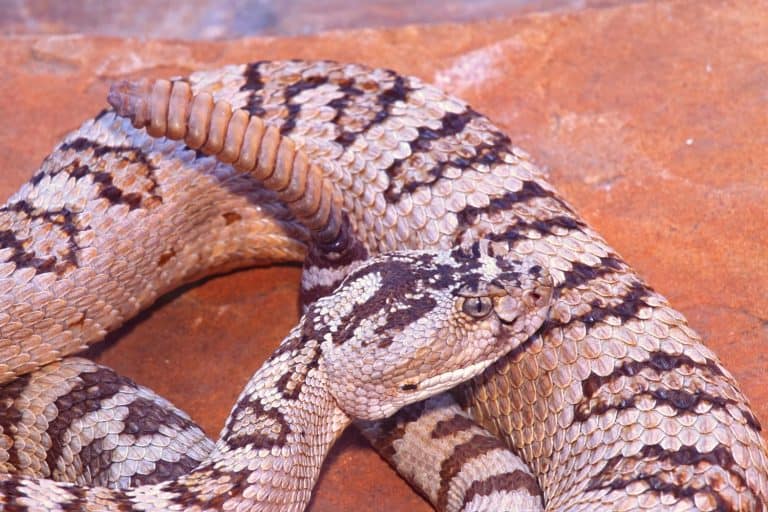
Different rattlesnake species are found across the various regions of the continental U.S. The venom is a complex mix of different types of toxins, and the properties vary by species. Victims may experience localized pain, swelling, and necrosis, as well as shock, hemorrhaging, paresthesias, and respiratory failure. Most rattlesnake bites occur on the extremities. Scientists and doctors recommend immobilizing the affected limb in the field and taking the victim to the hospital immediately.