

Quick Take
- Red pandas are officially classified as carnivores, but their actual diet tells a completely different story. Explore their real diet →
- Despite sharing a name and a bizarre physical trait with the giant panda, science says red pandas are far more closely related to a very different animal. See their true relatives →
- Human fascination with red pandas has not saved them. In fact, it has become one of the forces working against them. How fascination hurts them →
- Up to 80% of red pandas never make it to adulthood, a sobering figure that reveals just how precarious their survival strategy really is. See the survival odds →
Living high in cold mountain climates means that red pandas are well adapted to keeping warm, equipped with dense fur and a warm, bushy tail. However, on especially cold days, red pandas have been known to sunbathe high in the canopy to warm themselves up while sleeping during the day. A study conducted in 2001 found that 79% of the red pandas reported were found within 328 feet (100 meters) of the nearest body of water, indicating that a good water source may also be crucial to their already strict habitat requirements. Evidence also suggests that red panda reproduction rates have been declining, which is believed to be related to the decline in the foods that they eat in order to survive and reproduce successfully.

Classification and Evolution
The red panda (Ailurus fulgens) is a cat-sized mammal of the order Carnivora that is found inhabiting the temperate mountain forests on the slopes of the Himalayas, where it subsists predominantly on a diet of bamboo and other plant matter. Ailuridae is a family in the mammal order Carnivora, of which the red panda is the only living representative. As their name suggests, they are quite distantly related to the larger and more famous giant panda. The Himalayan and Chinese red pandas diverged from each other approximately 250,000 years ago, while red pandas as a group diverged from their common ancestor with bears around 40 million years ago.
The red panda shares a peculiar trait with the giant panda, with both animals having elongated wrist bones — or false thumbs — for grasping bamboo. However, molecular testing has shown the red panda to be more closely related to raccoons, weasels, and skunks. The red panda is also known by a number of different names in their native regions, including the lesser panda, the red cat-bear, and the firefox, a name derived from a Chinese translation of red panda.
Like their much larger distant cousin, the red panda relies on bamboo for nutrition, and with rapid deforestation of these unique areas, there is less and less for these animals to eat, which has ultimately led to the red panda being listed as being an endangered species.
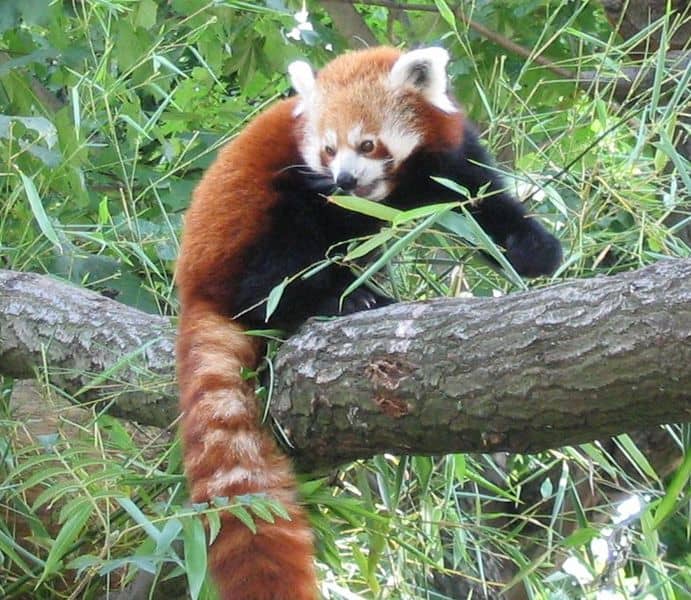
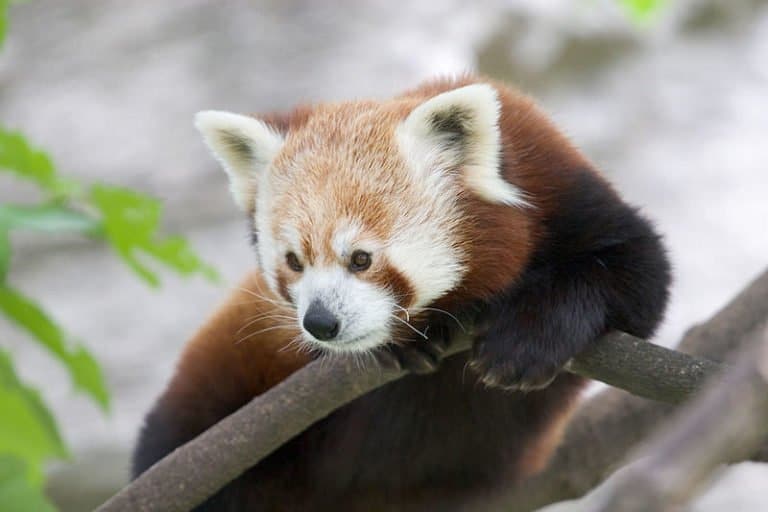
Red Pandas resemble raccoons more than bears.
©Mikegr on de.wikipedia / Creative Commons – Original
Anatomy and Appearance
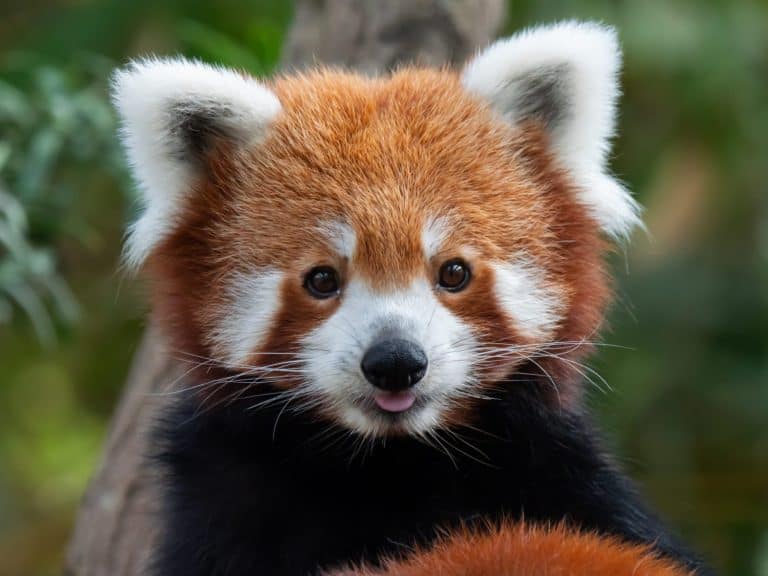
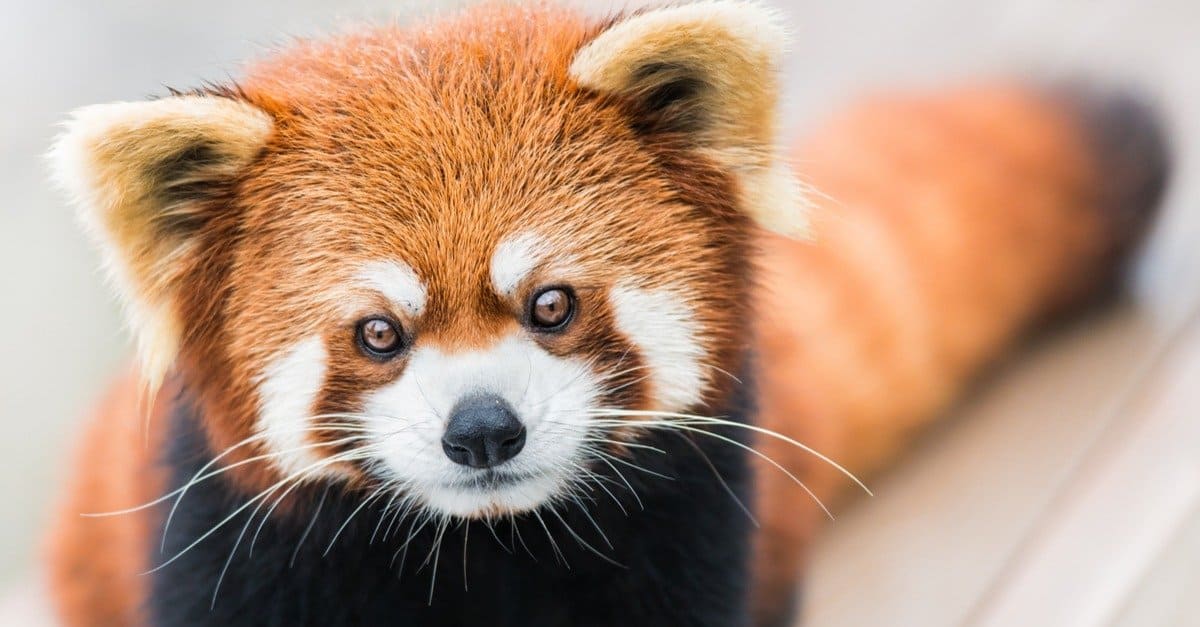
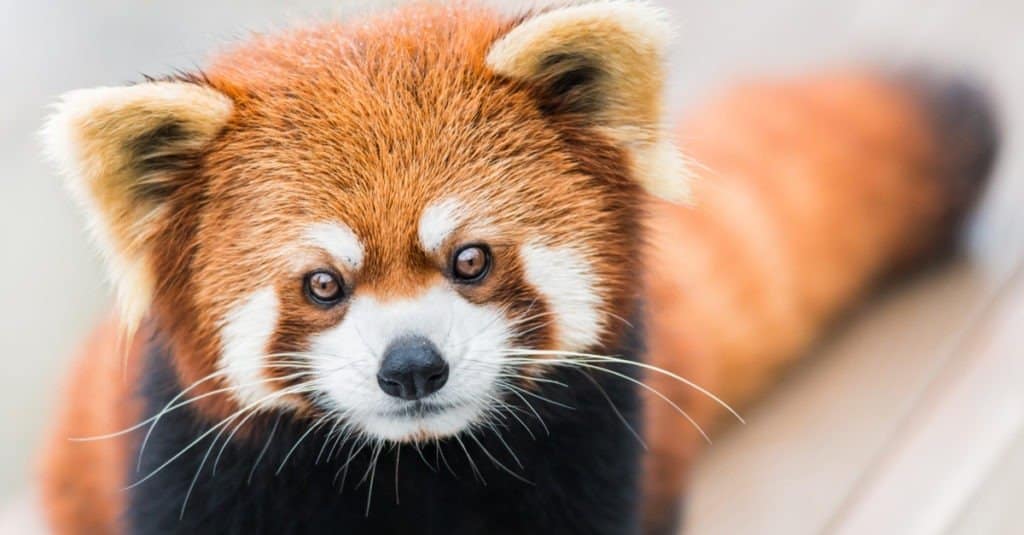
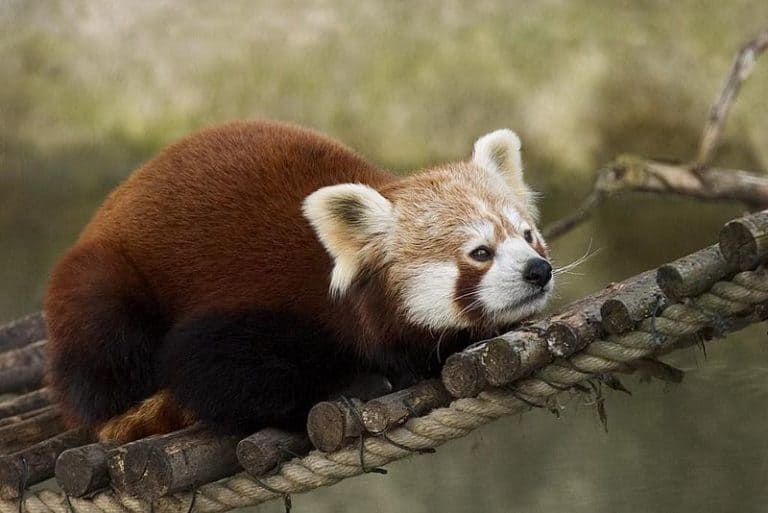
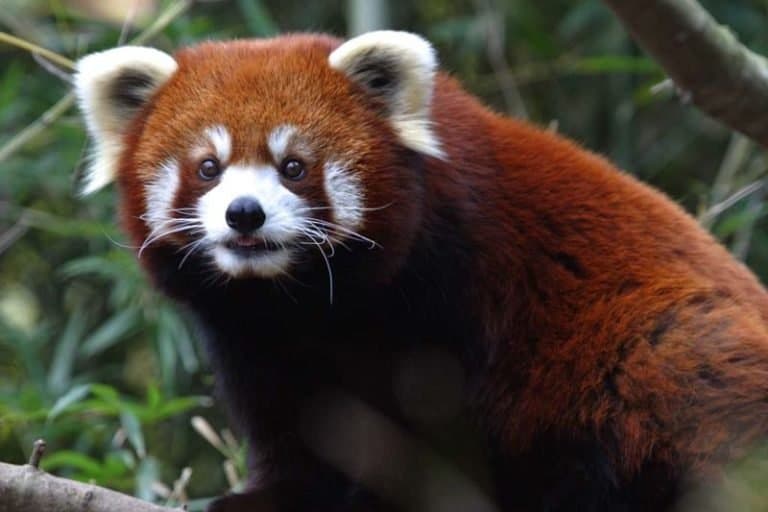
The red panda is an endearing animal that is about the same size as a large housecat, with a cat-like face and a long, bushy tail. Their bodies are covered with thick reddish fur except for their almost white-colored ears, cheeks, muzzle, and spots above their eyes. The red panda also has reddish-brown stripes that run down either side of its white muzzle, along with alternating light and dark rings on its tail.
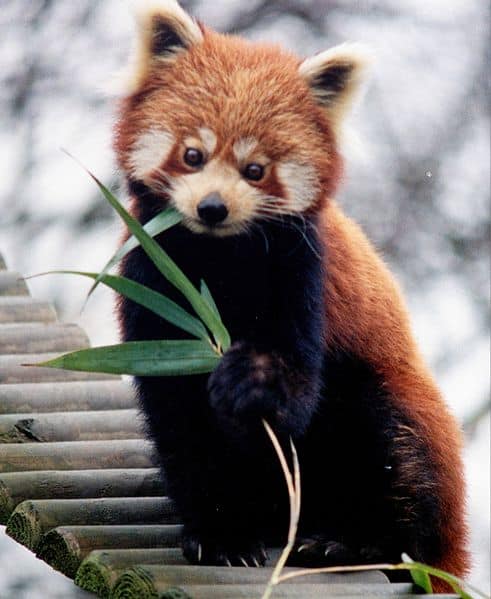
The red panda is equipped with semi-retractable claws to aid stability while climbing on trees and branches. They also have strong, tough jaws which they use to chew on bamboo. Like the giant panda, the red panda also has a unique extended wrist bone that operates similarly to a human thumb, allowing them to hold onto bamboo while they are chewing it.
Thick, tightly packed fur helps to keep red pandas warm during the cold winters they face in their habitat. The red panda also sports extra thick fur on the soles of their feet for warmth and traction.
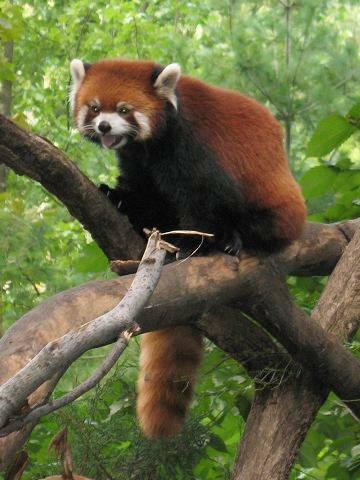
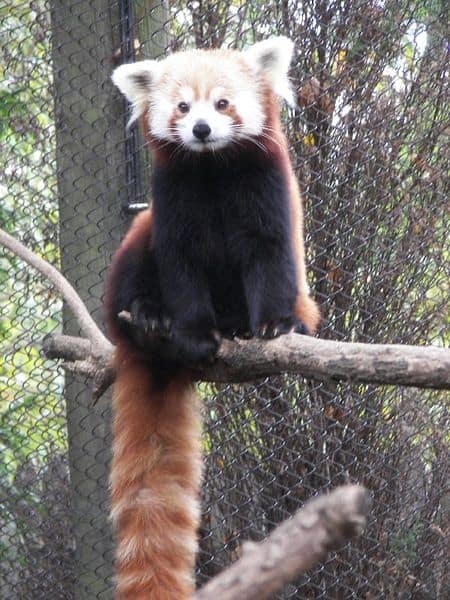
Red Pandas are being pushed out of their native habitats.
©Stavenn / Creative Commons – Original
Distribution and Habitat
The red panda inhabits the temperate forests in the Himalayas at altitudes between 6,600 and 14,100 feet (2,000 and 4,300 meters). These high mountain slopes are typically covered in deciduous hardwood forests with bamboo that is crucial to the red panda’s survival, growing beneath the forest’s canopy. Their historical range extended through Bhutan, Nepal, India, Myanmar, and China, where their range often overlapped that of the even rarer giant panda. Now, however, the red panda is extinct in some of these areas, and its numbers are rapidly declining in others.
Due to the fragile ecology of their native mountain forests and their reliance on a diet largely consisting of bamboo, the red panda is being pushed into smaller and more isolated pockets within their once wide range. Climate change is affecting the ability of these habitats to produce adequate bamboo to sustain the species.
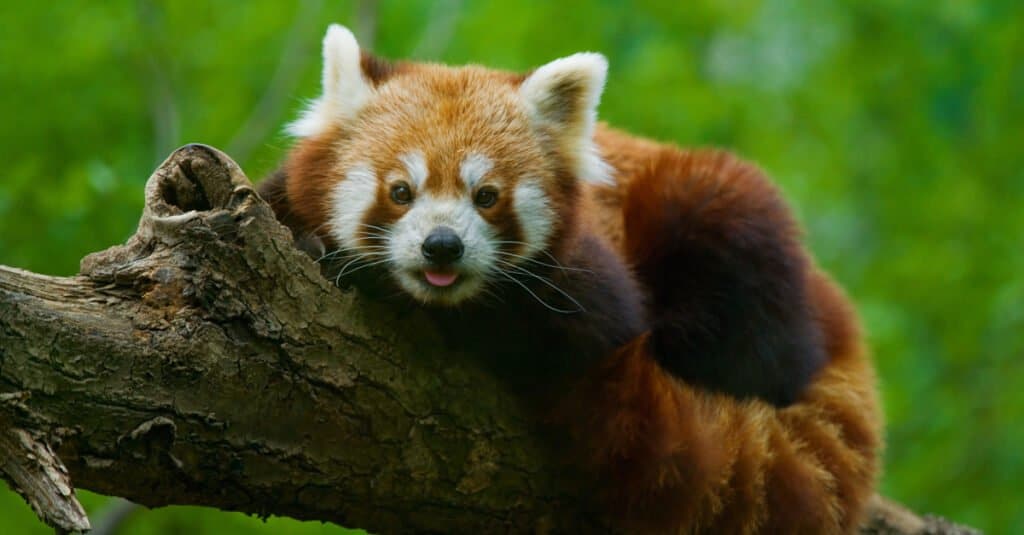
Red pandas spend their days sleeping and nights eating.
©dean bertoncelj/Shutterstock.com
Behavior and Lifestyle
The red panda is generally a nocturnal and solitary animal, except during breeding season. Red pandas spend the daylight hours sleeping in branches high in the tree canopy with their long, bushy tail wrapped around them to keep them warm. Although they are known to feed in the trees, they usually come down to the ground after dusk to begin foraging in the safety of the darkness.
The red panda is a territorial animal that marks its path with droppings and urine, and releases a musky secretion from its anal glands. They often communicate with one another using short whistles and squeaks. The red panda is a strong and agile climber, and while it normally sleeps safely in the branches during the day, it can also dart up a trunk, using its sharp claws, if threatened by predators.
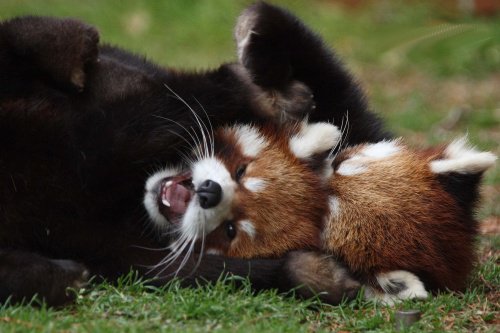
Red panda cubs may not leave the nest until they are three months old.
©Mizunoryu / Creative Commons – Original
Reproduction and Life Cycles
Red pandas usually breed between January and March. After a gestation period that can range from 98 to 162 days, the female gives birth to 1 to 4 cubs. The cubs are born blind, and although they begin to open their eyes within a few weeks, the eyes of the red panda cubs may not fully open until they are around six to eight weeks old.
Before her cubs are born, the female red panda builds a nest — in a hollow tree, among roots, or in a bamboo thicket — lined with leaves, moss, and other soft plant material. Red panda cubs typically do not leave the nest until they are around three months old and are strong enough to negotiate the tricky branches. They feed solely on bamboo until they are old enough to stomach other foods. Red pandas reach their full adult size after about a year. There is a high mortality rate in young red pandas, with up to 80% never reaching full adulthood.
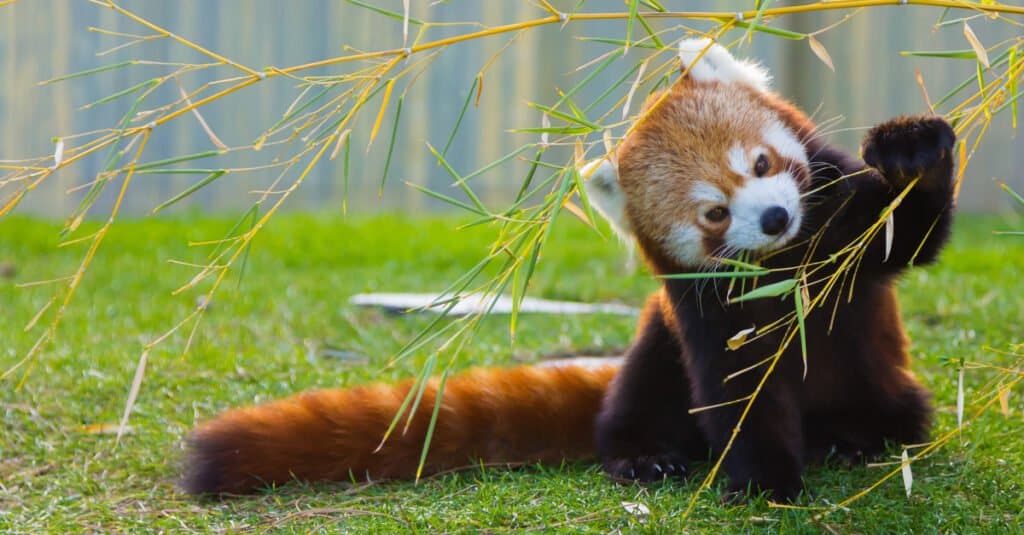
Red pandas are classified as carnivorous, but their diet is mostly bamboo shoots.
©Jose Angel Astor Rocha/Shutterstock.com
Diet and Prey
Although the red panda belongs to a carnivorous group of mammals, their diet is in fact almost entirely vegetarian, as bamboo shoots comprise the majority of their diet. However, as the red panda is a mammal, it has a short digestive system, meaning that while bamboo holds little nutrition in any event, red pandas cannot get the most out of their meals. Unlike the giant panda, however, the red panda will also eat a variety of other foods to supplement its diet. These foods include acorns, berries, and grasses, along with grubs, mice, lizards, chicks, and birds’ eggs.
Red pandas have excellent sight, smell, and hearing. The red panda also has long, white whiskers on its snout, which help it to navigate through the dense vegetation in the darkness of night, when it most actively forages for food.
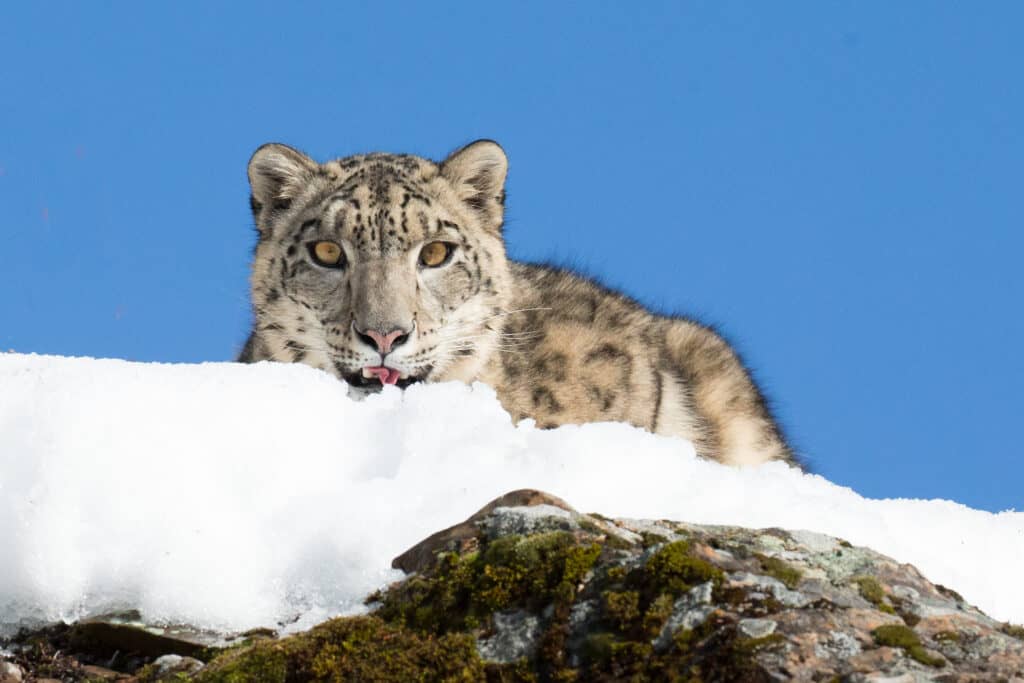
Snow leopards, martens, and birds of prey are the only natural threats to red pandas.
©Warren Metcalf/Shutterstock.com
Predators and Threats
Because red pandas inhabit high-altitude mountain forests, they have fewer natural predators than if their habitat were further down the slopes. Snow leopards and martens are the only real predators of the red panda, although birds of prey and small carnivores prey on the smaller and more vulnerable cubs.
The biggest threat to the red panda, however, is people, who have affected this species mainly through deforestation of their unique habitats. Due to human encroachment, illegal hunting, and poaching, the panda population numbers have suffered a serious decline, with these populations also being pushed into more separate, isolated areas. One of the main concerns with this is that these populations will be threatened by inbreeding, leading to less genetically fit individuals in these populations.
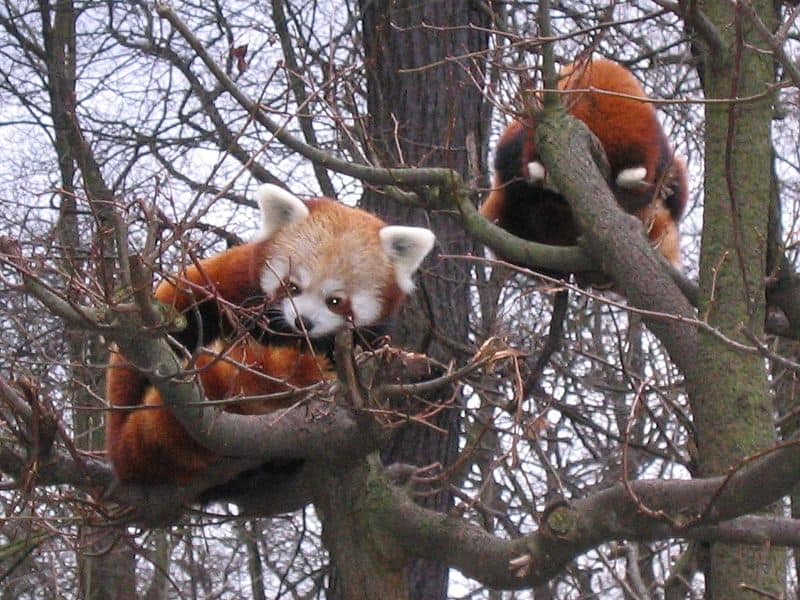
Red pandas sunbathe high in the trees to warm themselves in cold weather.
©Aconcagua / Creative Commons – Original
Relationship with Humans
Red pandas have been admired by people for years, but most of the experiences that we have with them are in zoos and animal institutions. These rare and secretive animals are incredibly difficult to spot in the wild. Our fascination with red pandas, however, is one of the factors in their demise. For example, one Indian village reported that 47 red pandas were captured and sold to zoos around the world in just one year.
Human interference with their unique and specialized habitats, though, is believed to be the biggest reason for the decline in red panda numbers throughout the Himalayas, with deforestation mainly in the form of logging being one of the primary culprits. As with the giant panda, the red panda relies heavily on high-altitude bamboo thickets to survive, and without them, unfortunately, it has nowhere else to go.
Conservation Status and Life Today
Today, the red panda is listed on the IUCN Red List as being an animal species that is Endangered in its natural environment and is therefore severely threatened by extinction in the near future. There are estimated to be fewer than 3,000 red pandas remaining in the wild. There are fewer than 10,000 red pandas in total, with the majority of these inhabiting small protected zones located in national parks. Several captive breeding programs have also been established in Asia, Europe, and North America and appear to be having a positive impact on the red panda population.
Red Panda Pictures
View all of our Red Panda pictures in the gallery.

How to say Red Panda in ...
Sources
- David Burnie, Dorling Kindersley Animal, The Definitive Visual Guide To The World's Wildlife / Accessed December 5, 2008
- Tom Jackson, Lorenz Books The World Encyclopedia Of Animals / Accessed December 5, 2008
- David Burnie, Kingfisher The Kingfisher Animal Encyclopedia / Accessed December 5, 2008
- Richard Mackay, University of California Press The Atlas Of Endangered Species / Accessed December 5, 2008
- David Burnie, Dorling Kindersley Illustrated Encyclopedia Of Animals / Accessed December 5, 2008
- Dorling Kindersley Dorling Kindersley Encyclopedia Of Animals / Accessed December 5, 2008
- David W. Macdonald, Oxford University Press The Encyclopedia Of Mammals / Accessed December 5, 2008
- Animal Corner / Accessed December 5, 2008
- National Geographic / Accessed December 5, 2008
- Bear Life / Accessed December 5, 2008
- Animal Info / Accessed December 5, 2008
- IUCN Red List / Accessed December 5, 2008