
Quick Take
- Sandhill cranes are omnivores whose diet is mostly plant matter, but this varies by environment and season.
- Migratory cranes rely more on cultivated grains, sometimes consuming leftover corn, barley, and wheat up to 90% of their diet.
- Other plants and animal matter make up the other 10% of their diet, including insects and small vertebrates, while fish are rarely eaten.
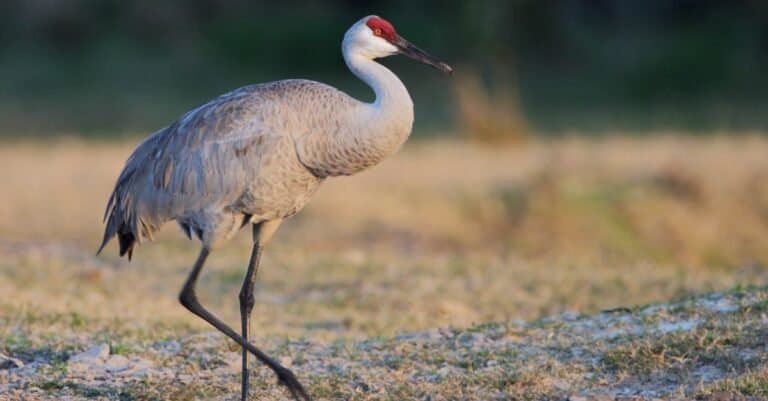
Sandhill cranes (Antigone canadensis) are large, migratory wading birds that live and breed in open habitats across North America. They can be found in freshwater marshes, ponds, and bogs, as well as drier areas like prairies, fields, and pastures. These birds can reach up to 3.9 feet in length with a wingspan of 6.5 feet. The males are slightly heavier than the females, weighing an average of 8.3 pounds, with some birds growing to nearly 11 pounds. But what do sandhill cranes eat to grow as large as a goose or even larger? Read on to learn more about the sandhill crane’s diet.
The Sandhill Crane Diet
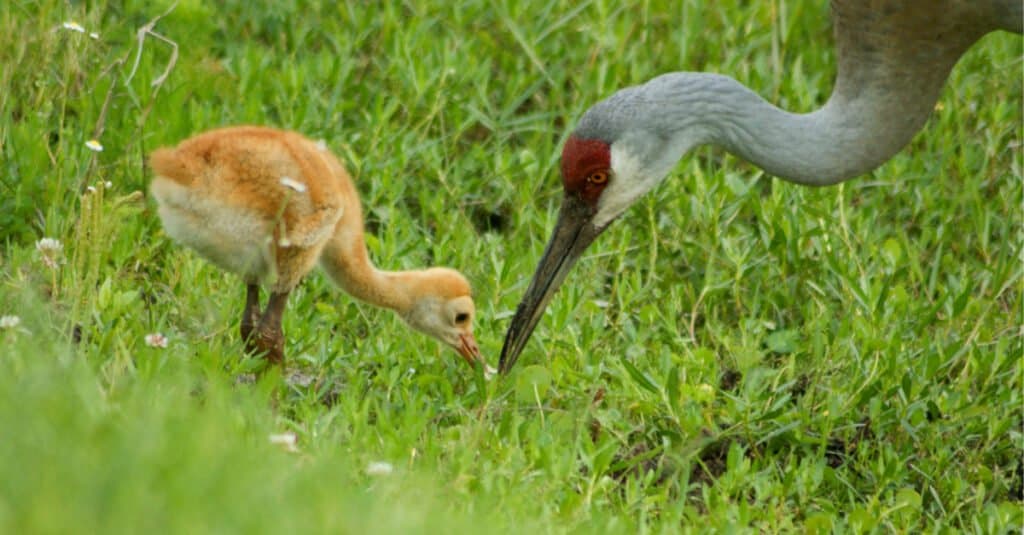
Sandhill cranes are omnivores, with a diet that depends on the available resources in their habitat.
©iStock.com/Bkamprath
Sandhill cranes are opportunistic omnivores, so they eat both plant and animal matter. However, their diet can vary widely, depending on their environment and the season. Each spring, sandhill cranes travel north across North America to breed and raise their young, stopping in northern states including Alaska, Oregon, Idaho, and Nebraska. When the weather turns cooler, they fly in large flocks to their wintering grounds in Florida, Texas, New Mexico, and northern Mexico.
Plant Matter
No matter where they are or what time of year it is, sandhill cranes prefer plants, which make up the majority of their diet.
The sandhill crane’s diet is composed of vegetation such as:
- Seeds
- Berries
- Roots
- Tubers
- Acorns
- Peanuts
- Cultivated grains including wheat, barley, and corn
Non-migratory cranes, such as the Florida sandhill crane, have a more consistent diet that includes acorns, tubers, insects, snails, and other small vertebrates. In contrast, migratory cranes have a more varied diet with a greater emphasis on cultivated grains. They frequently feed on leftover corn, barley, and wheat, which can make up as much as 90% of their diet. Sandhill cranes have also been observed eating ripening seeds in standing fields or knocking seeds to the ground.
Animal Matter
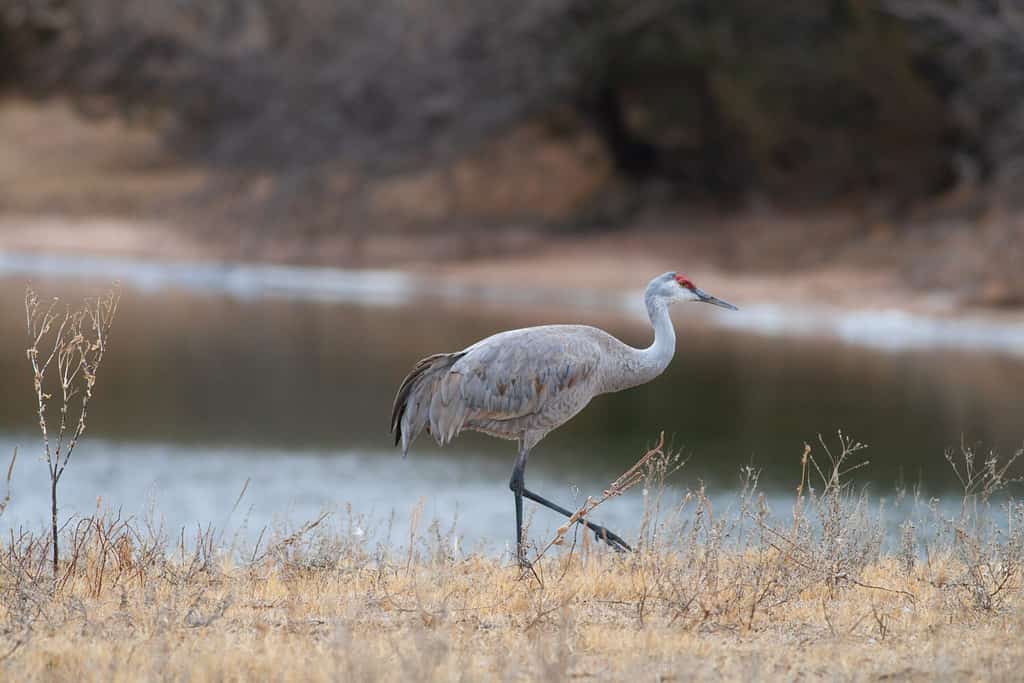
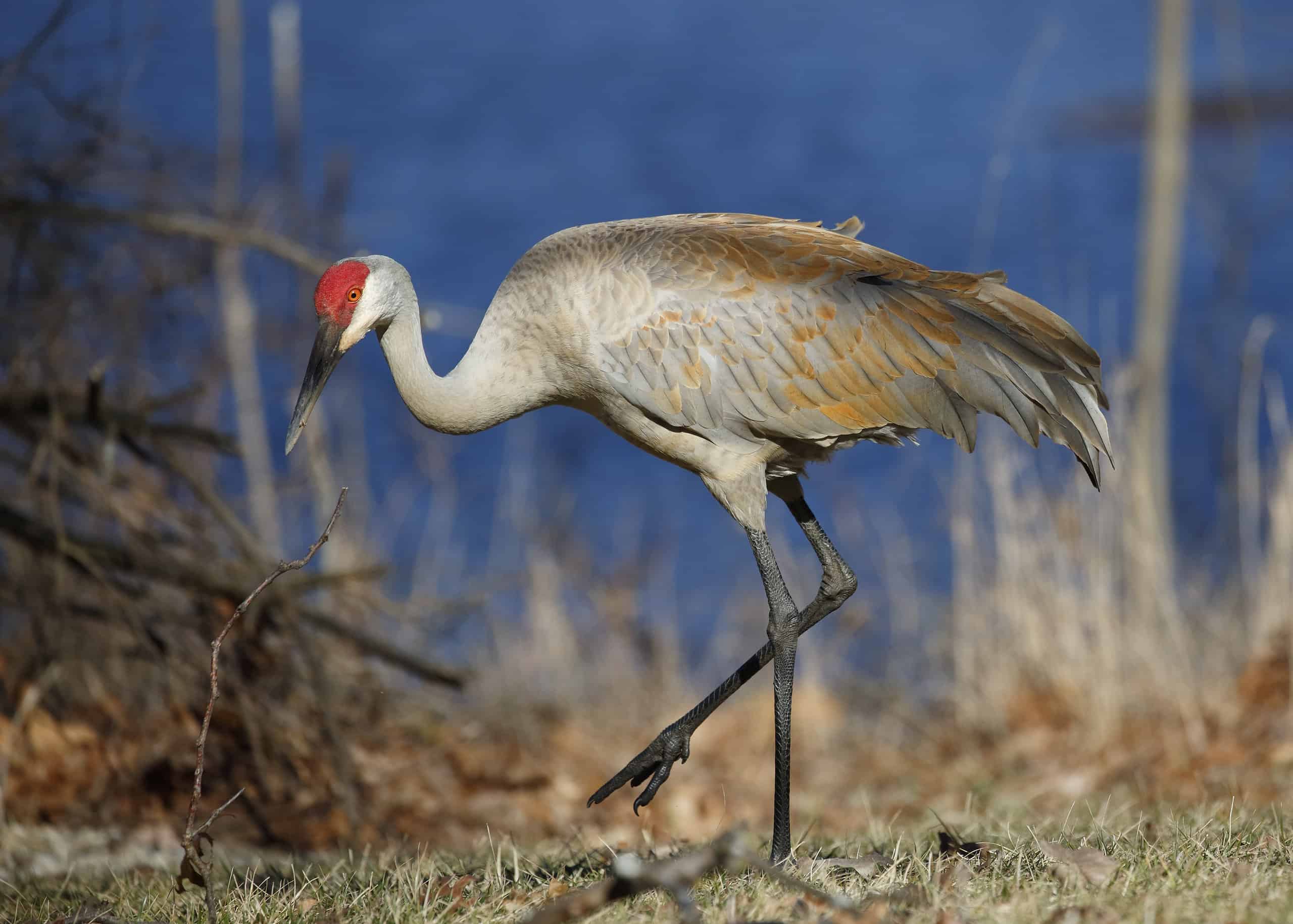
Sandhill cranes forage on land or in shallow water.
©Benjamin Tillotson/Shutterstock.com
The other 10% of a crane’s diet includes animal matter. Sandhill cranes will consume a variety of animal matter, from insects to small rodents. Unlike other wading birds such as storks and herons, sandhill cranes rarely eat fish.
Some of the animal matter in their diet includes:
- Insects and insect larvae
- Earthworms
- Grubs
- Snails
- Frogs
- Lizards
- Snakes
- Mice and other small rodents
- Nestling birds and bird eggs
- Crayfish
Because fish are not an essential part of their diet, sandhill cranes do not hunt in open water. Instead, they use their long beaks to forage and dig on land and probe for aquatic vertebrates and invertebrates in marshy areas. Their feet have three long toes with sharp claws, which they use to scratch in the dirt and locate food. Sandhill cranes forage in flocks except during the breeding season.
What Do Young Sandhill Cranes Eat?
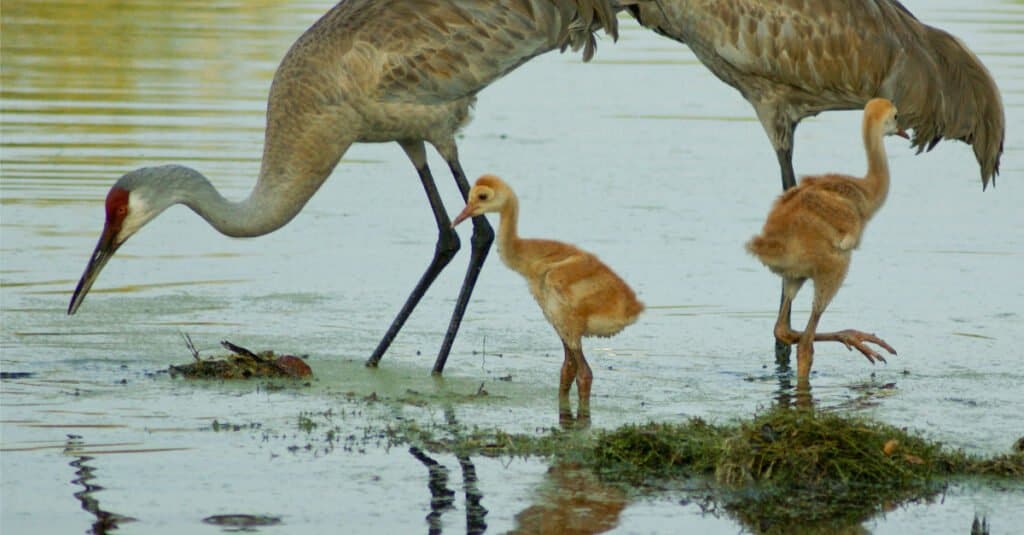
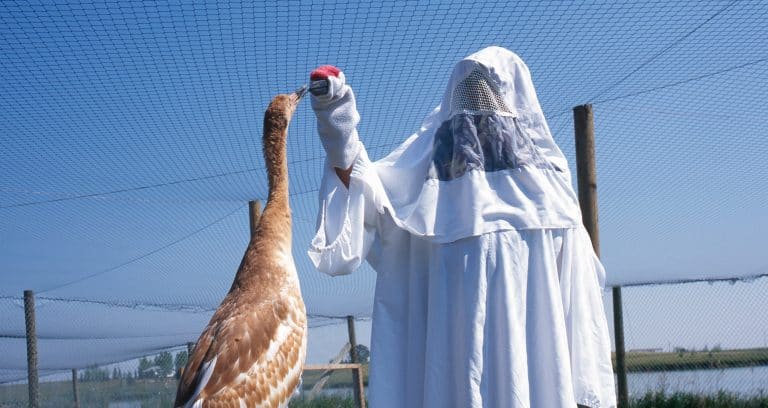
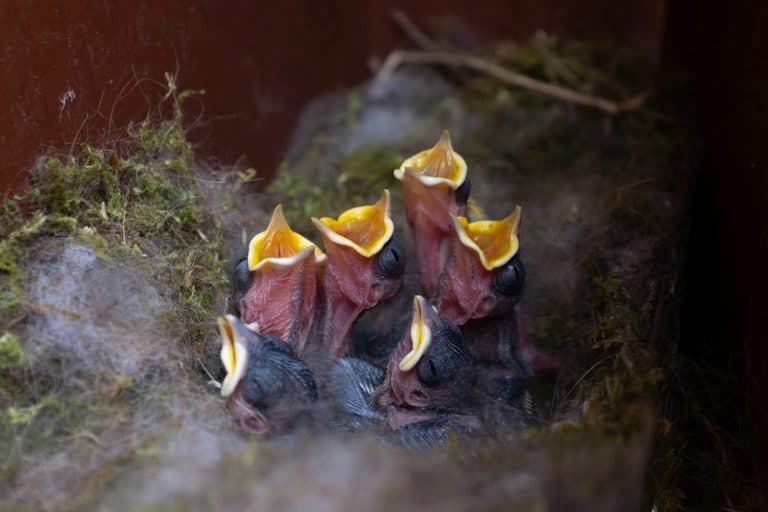
Sandhill crane chicks learn to forage by watching their parents.
©iStock.com/Bkamprath
Sandhill crane offspring are precocial. They are born covered in down and with their eyes open. Within 24 hours, the chicks are able to follow their parents when they leave the nest. Both parents help feed the young until the chicks gradually learn to feed themselves.
The chicks eat a high-protein diet of insects, worms, grubs, and other invertebrates to support their growth. They learn from their parents how to forage on the ground for seeds, berries, and grains. As they grow, they also learn to probe the water for amphibians and reptiles. Although they fledge at around two months old, the chicks stay with their parents for nine to ten months until they are ready to be independent.