
Quick Take
- Sea lions rarely take a single sip of water, yet they somehow stay hydrated. The way they pull it off is stranger than you'd expect. How they stay hydrated →
- Some sea lions deliberately swallow large rocks, and scientists still argue about exactly why. The rock-swallowing mystery →
- The whiskers around a sea lion's mouth are far more than decorative. They serve as the secret weapon behind how these animals hunt in total darkness. How whiskers enable hunting →
Sea lions are marine mammals commonly seen around ports and coasts all over the world. They are highly intelligent and are often trained for educational shows at aquariums. Currently, there are six extant species of sea lions across the world. They have each specialized in their own regions and ecological niches, but they all have similar diets and habits. Read on to learn more about sea lions and what they eat.
Where Do Sea Lions Live?
As noted above, there are six living sea lion species. Their diet somewhat depends on their habitat. Let’s take a look at the different species and where they live.
California Sea Lion
The California sea lion (Zalophus californianus) lives on the western coast of North America. Its range extends from the southern regions of Alaska all the way through to Mexico and the Gulf of California. California sea lions are often the ones people see performing in circuses or kept in captivity. Females generally reach 6 feet long and weigh up to 240 pounds, while males reach 7.5 feet long and weigh up to 700 pounds.
Steller Sea Lion
The Steller sea lion (Eumetopias jubatus) is the largest species in the world, with some of the males weighing as much as 2,500 pounds and measuring up to 11 feet long. Females weigh up to 800 pounds and measure up to 9.5 feet long. These big animals live along the coast of Japan through the Pacific rim, all the way to central California. There are less than 100,000 Steller sea lions left in the world, a drastic reduction over the past 30 years.
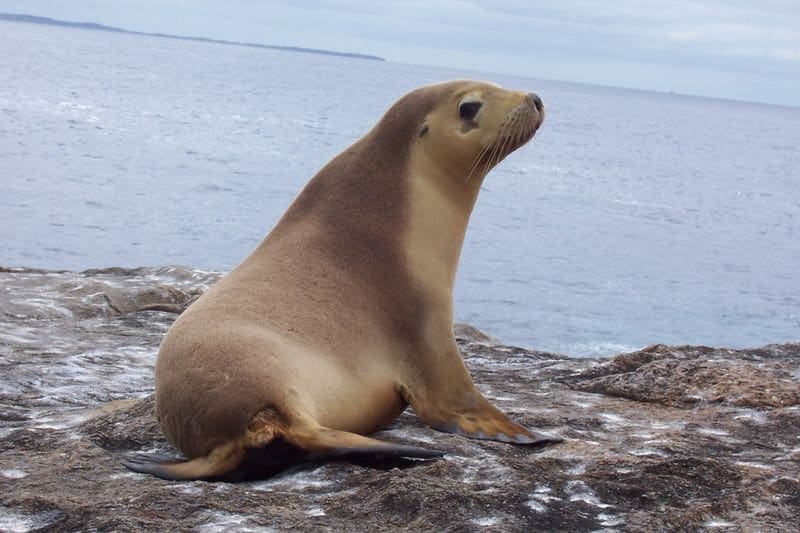
Male Australian sea lions weigh up to 3.5 times more than the females.
Australian Sea Lions
Australian sea lions (Neophoca cinerea) are found primarily along Australia’s western and southern coasts. They often gather in large colonies but occasionally break into smaller groups of 10-15. They are highly sexually dimorphic, with males reaching 1.25 times the length and up to 3.5 times the weight of females. Males measure 8.2 feet long and weigh 440 to at least 661 pounds.
Galapagos Sea Lion
The Galapagos sea lion (Zalophus wollebaeki) is the smallest sea lion species in the world. They are found primarily on the Galapagos Islands, with smaller numbers also inhabiting Isla de la Plata off the coast of mainland Ecuador. These sea lions are closely related to California sea lions. They are known to be playful and are often heard barking, much like a dog would. Males weigh up to 440 pounds and measure 6.9 feet long, while females weigh a maximum of 209 pounds and measure up to 5.8 feet.
New Zealand Sea Lion
The New Zealand sea lion (Phocarctos hookeri) is one of the rarest sea lions on Earth, with a population of only around 10,000 individuals. They are located primarily around the Auckland and Campbell sub-Antarctic islands. Males measure up to around 11.5 feet in length and weigh up to 881 pounds. Females measure up to 6.5 feet in length and weigh up to approximately 350 pounds.
South American Sea Lion
The South American sea lion (Otaria flavescens) is also sometimes known as the Patagonian sea lion. It is found on the coasts of South America, from Peru on the Pacific side up to Brazil on the Atlantic side. They are highly sexually dimorphic, with the males growing significantly larger than the females. Males can reach 8.2 feet long and weigh up to around 770 pounds. Females can reach up to 6.5 feet in length and weigh up to 330 pounds. Additionally, the males have short noses and extremely thick necks.
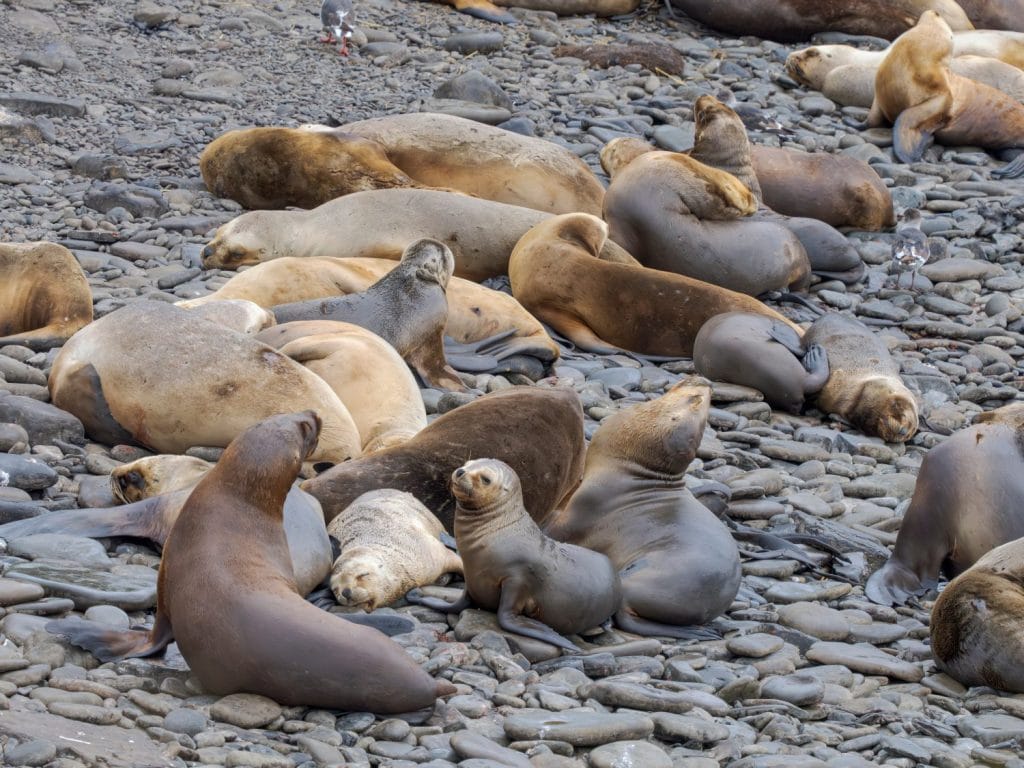
South America sea lions are found from Peru on the Pacific Ocean to Brazil on the Atlantic Ocean.
©Danita Delimont/Shutterstock.com
The Sea Lion Diet
Sea lions are opportunistic carnivores and marine predators that obtain all of their food from the sea. They are coastal-dwelling animals that rely on their intelligence and ability to swim in order to hunt their prey. On the West Coast of North America, the most predominant species of sea lion is the California sea lion. These animals are known to eat over 50 species of fish and are among the top predators in the water. Their favorite and most reliable food sources are squid, octopus, hake, anchovy, opaleye, and herring.
Additionally, sea lions are known to eat larger fish, especially in coastal areas where they are abundant. California sea lions living on the Washington coast, for example, utilize the massive runs of salmon that happen each year as a large food source. They often wait by the mouth of Lake Washington, consuming large amounts of salmon, lamprey, and other large fish.
An interesting dietary fact is that sea lions don’t actually drink water. They get most of their moisture needs from their food. There are some examples, however, of males drinking seawater while fasting. Male sea lions fast during the breeding season, mostly so they can devote their time to defending their territory. They fast for a few weeks, then they resume eating again.
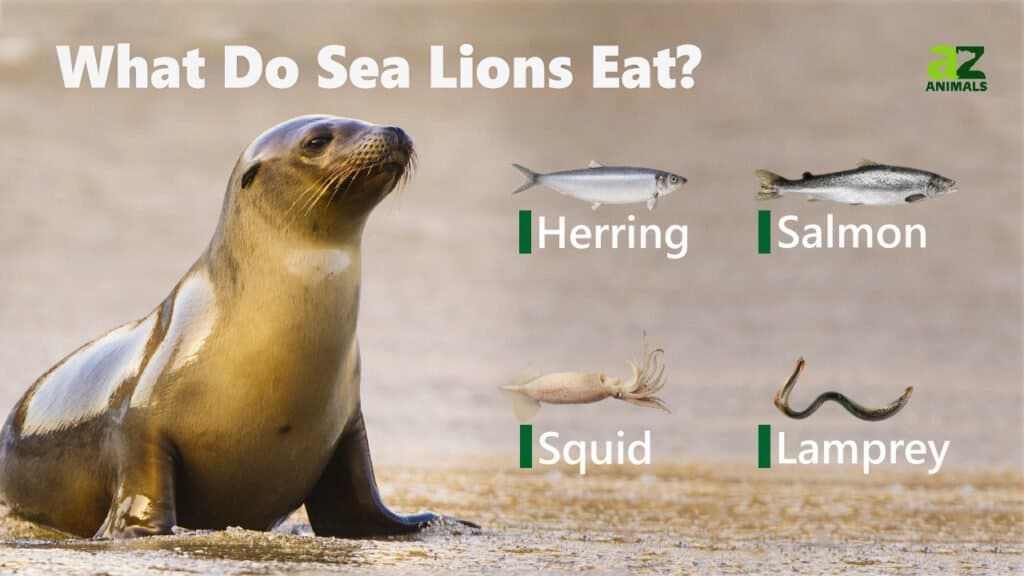
Foods Sea Lions Eat
Although there are some differences depending on region and species, here are some of the common foods that sea lions eat:
- Cephalopods like squid and octopus
- Hake
- Northern anchovy
- Sardines
- Opaleye
- Herring
- Lamprey
- Steelhead salmon
- Crustaceans
An adult sea lion can consume up to 8% of its body weight in food per day, or about 40 pounds in some larger individuals. Sea lions do not chew their food. They eat by tearing their food into large chunks and swallowing them whole.
How Do Sea Lions Hunt?
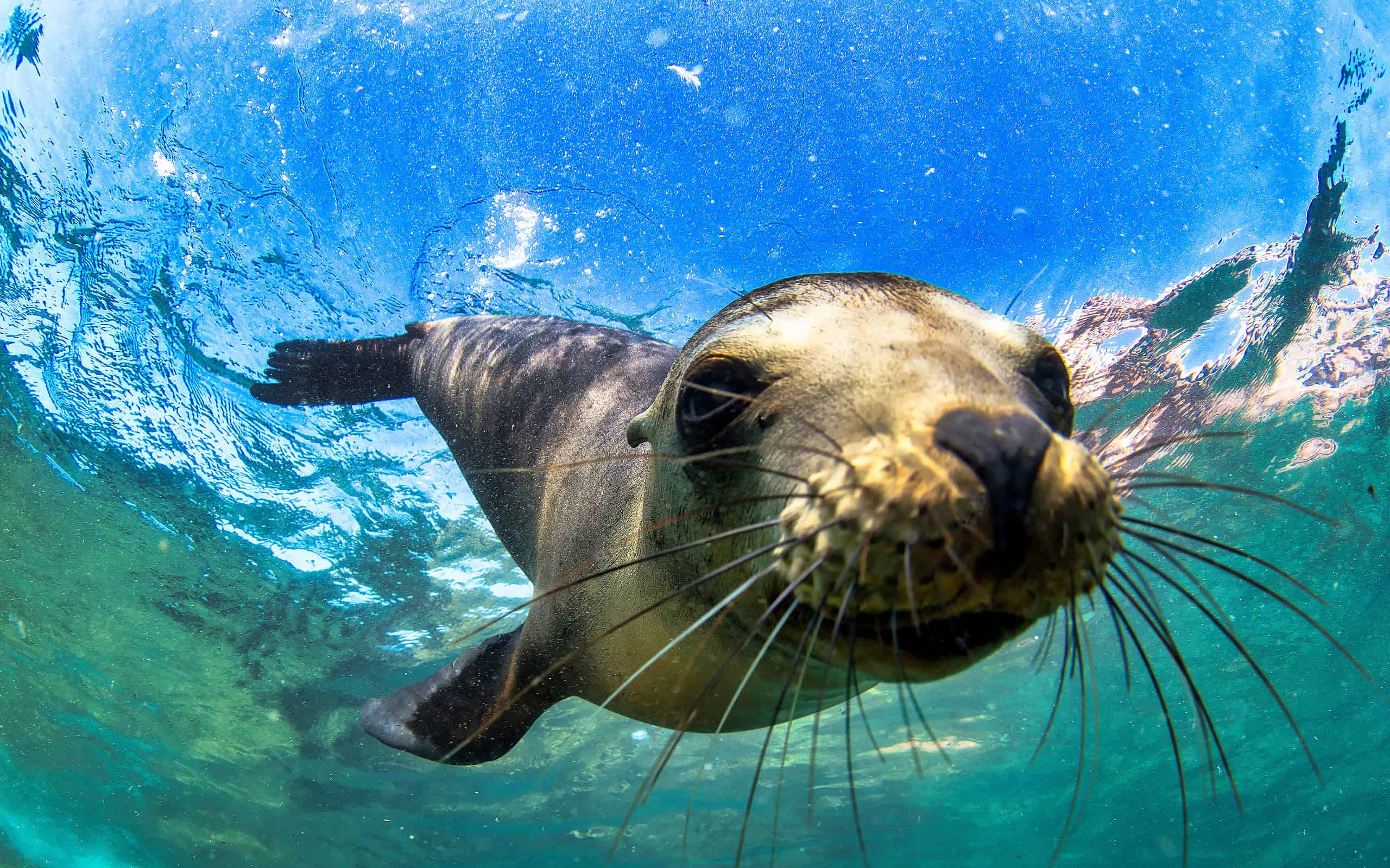
Sea lions are excellent predators, taking and eating multiple fish every day. One of the biggest tools that sea lions use when hunting is their vibrissae. Vibrissae are long hairs that grow around the mouth, often called whiskers. House cats have their own version, and they all work in relatively the same way. Using these tactile organs, sea lions are able to sense fish nearby and pursue them, especially when the fish aren’t visible.
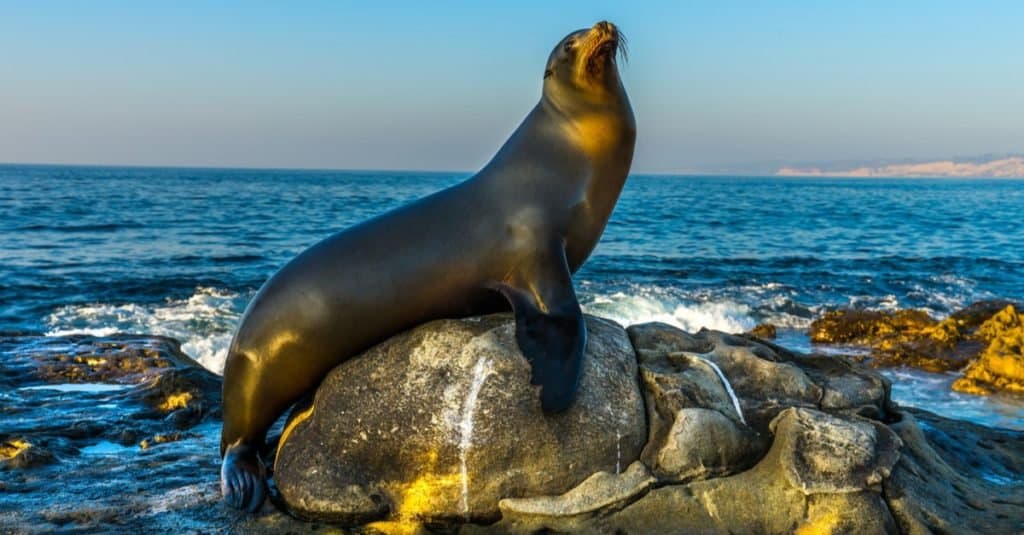
Sea lions hunt by diving underwater and searching for fish with their vibrissae.
©Daniel Avram/Shutterstock.com
Sea lions have the ability to hold their breath for long periods of time, 8-20 minutes on average. Their nostrils are naturally closed, but using special muscles, they are able to open them when they surface. When a sea lion is about to dive, it fully exhales and heads under. On average, they are able to reach depths of 400-900 feet in search of food.
One strange adaptation that sea lions have acquired is the habit of eating large rocks. This is particularly seen in Steller sea lions and California sea lions. While there is still much debate as to the actual reason for this, some scientists theorize that the rocks act as a ballast that allows them to regulate how fast and deep they can dive without exerting extra effort. Others suggest it may curb hunger pangs during fasting or aid in digestion.