
Quick Take
- Deliberately launching yourself onto a beach should be a death sentence for a whale. Yet certain orcas have turned it into a calculated, repeatable hunting technique. See the hunting technique →
- Orca calves don't arrive knowing how to do this. They have to be taught, and the way mothers run that training is stranger than you'd expect. How mothers teach calves →
- The moment an orca misjudges a single wave, its own body begins working against it in ways that have nothing to do with drowning. Explore the physical dangers →
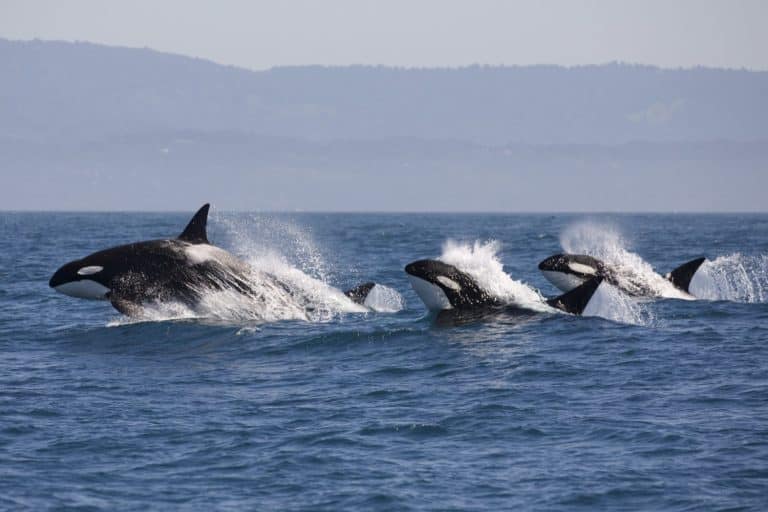
Orcas, also known as killer whales, are one of the smartest marine species in the world. Their brains can weigh up to 15 pounds and have similar gyri and cortices to those of a human. This helps them observe, process, and problem-solve faster than many other animals, marine or otherwise.
This unique brain power has also shaped how they hunt and survive. In some parts of the world, such as Patagonia and Argentina, orcas will even take calculated risks to catch their prey. This risky but rewarding behavior relies on speed, skill, and just a little bit of luck to execute. Thankfully, these orcas are pros at doing it.
Orcas Deliberately Strand Themselves On Beaches
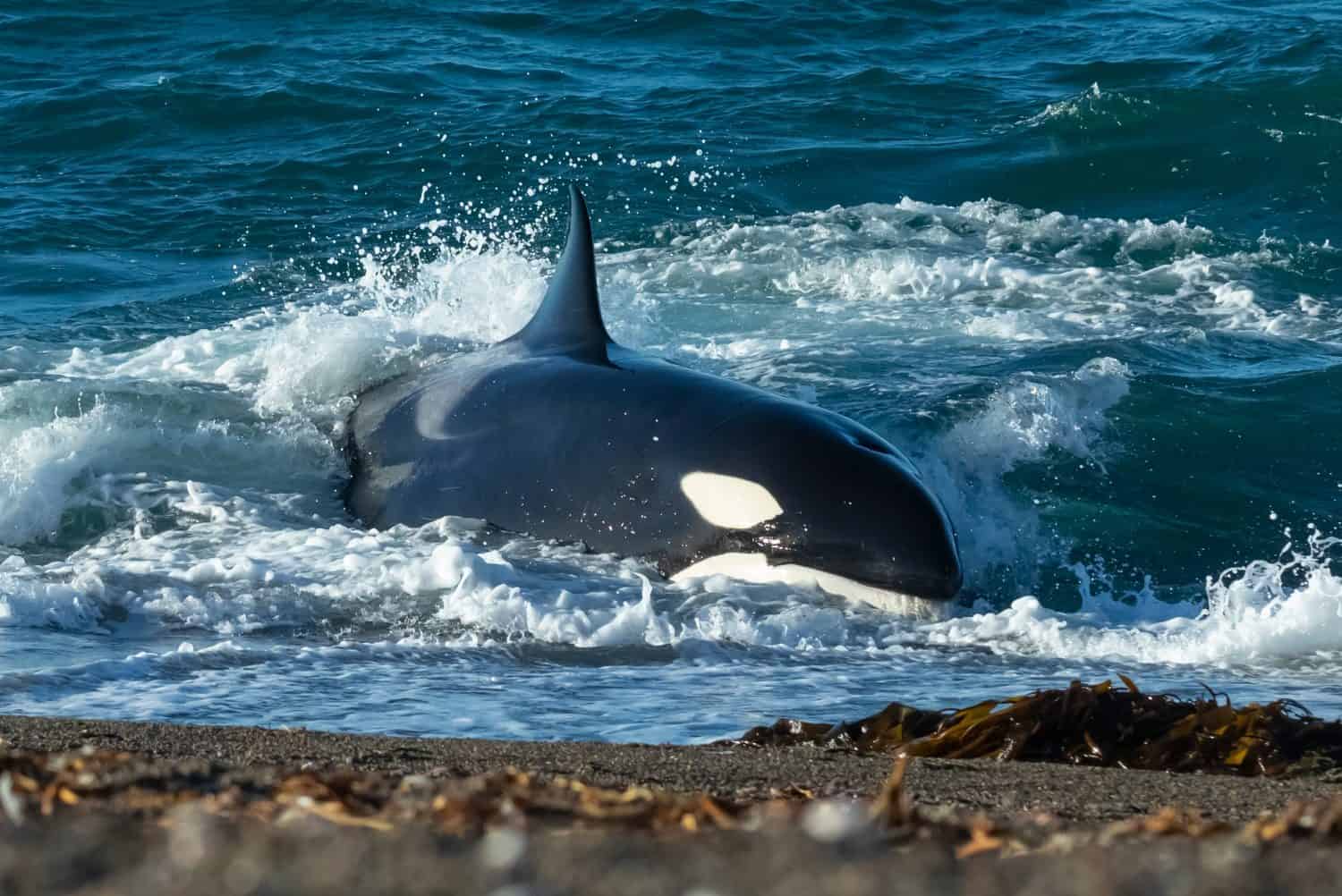
This specific hunting technique — known as deliberate stranding — has been observed at Península Valdés in Patagonia, Argentina, and the Crozet Archipelago. It’s incredibly high stakes and can even be fatal for an orca who is ill-timed in its movements. It’s also highly dangerous for juveniles, especially those who have not observed or practiced deliberately stranding themselves at high tide. This is the opposite of accidental stranding, which means an orca has been beached by means beyond its control.
| Deliberate Stranding | Beached Orca |
| Orcas follow a visible rhythm with the tides. | There may not be any prey around, and the tide might be high or low. |
| Whales launch themselves onto the shore but remain within reach of the waves. | Visible signs of distress, including rapid breathing, unnatural stillness, and vocalizations. |
| Typically done where there are groups of sea lion pups. | Inability to move its tail or flippers. |
| Capable of pushing themselves back into the water with no visible distress. | Turned on its side or away from the water, which is likely too far for it to reach. |
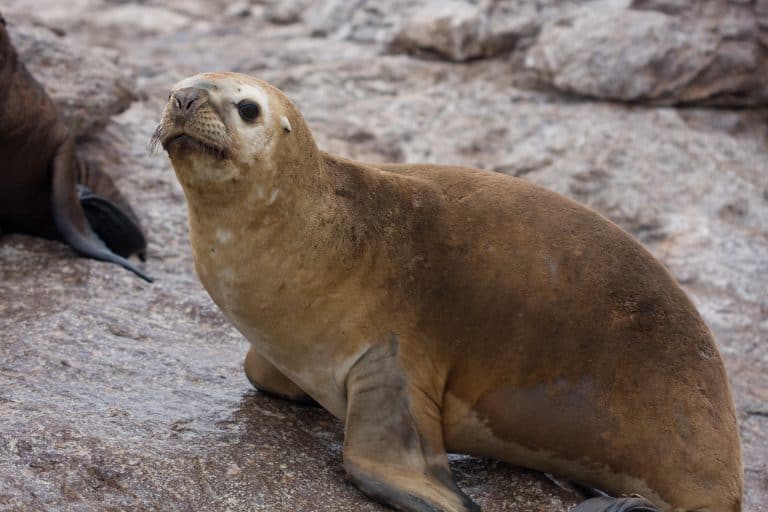
The orcas executing it well must time their movements perfectly. It begins by scouting out their hunting grounds, which typically include beaches where sea lions are nesting. An orca’s goal is to snatch a sea lion pup, rather than an adult, because it’s an easier target. Unbeknownst to the sunbathing sea lions, orcas scout shallow water until they’ve located a spot where the waves are the strongest.
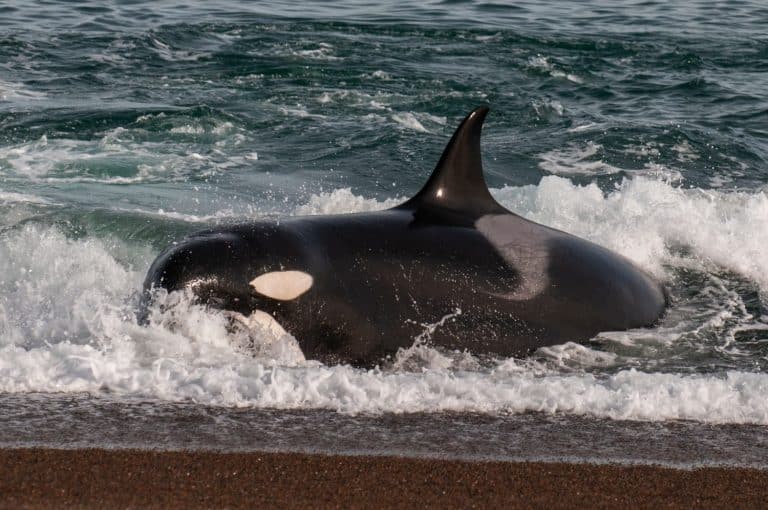
At high tide, they jump–literally. Orcas time their movements with the waves, launching their enormous bodies onto the shore. In the span of one wave crest, they bite down on a sea lion pup before letting the waves pull them back to the open ocean. At times, orcas will wiggle and shuffle their bodies to get back to where the undertow is the strongest. Their tails and flippers come in handy, helping them propel themselves toward the water.
This Behavior Is Learned, Not Instinctive
As one of the smartest marine species in the world, orcas have the ever-evolving ability to find solutions. When they need food, they find ways to get it. Experts believe this is how deliberate stranding came to be. The behavior is not instinctive for orcas or any other whale species, and some pods have been observed practicing being stranded before rescuing themselves.
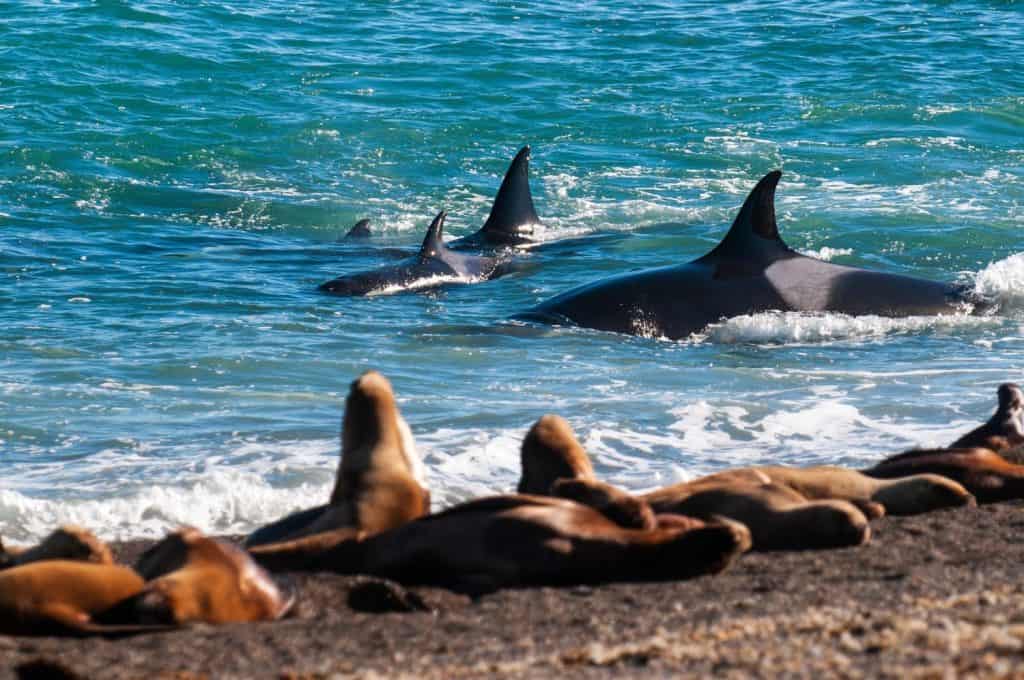
Orcas are not an animal you expect to see on the beach, but the element of surprise is half the hunting battle.
©Foto 4440/Shutterstock.com
It was first witnessed in the 1970s in Argentina, where the same pod would deliberately strand itself hundreds of times. As time went on, scientists began to witness juveniles as young as five or six engaging in the same seemingly reckless behavior. When they did, their mother was always close by. In the event that the calf became truly stranded, its mother produced artificial waves large enough to help her calf wiggle itself free of the shore.
At times, mothers were even seen putting themselves between their calves and the shore danger zone. As their offspring learned and became proficient, they’d slowly remove themselves as the safety net. What scientists were witnessing in these moments was evolutionary adaptation in real time. Not only were orcas learning to hunt in a new way, but they were also passing this knowledge down to the next generation.
Not Every Pod Will Take the Risk
Another aspect of the behavior observers noticed throughout the decades is that deliberate stranding is pod-specific. Not every pod engages in this behavior. The reasons behind this are unclear. However, the pods that do engage in deliberate stranding sometimes take on more risk than reward.
There are several significant risks that can be fatal for whales that are deliberately stranded. If an orca misjudges the timing of a wave, it can land further up on the beach than intended. With no waves to reach it, the orca lies in wait, which does significant damage to its body.
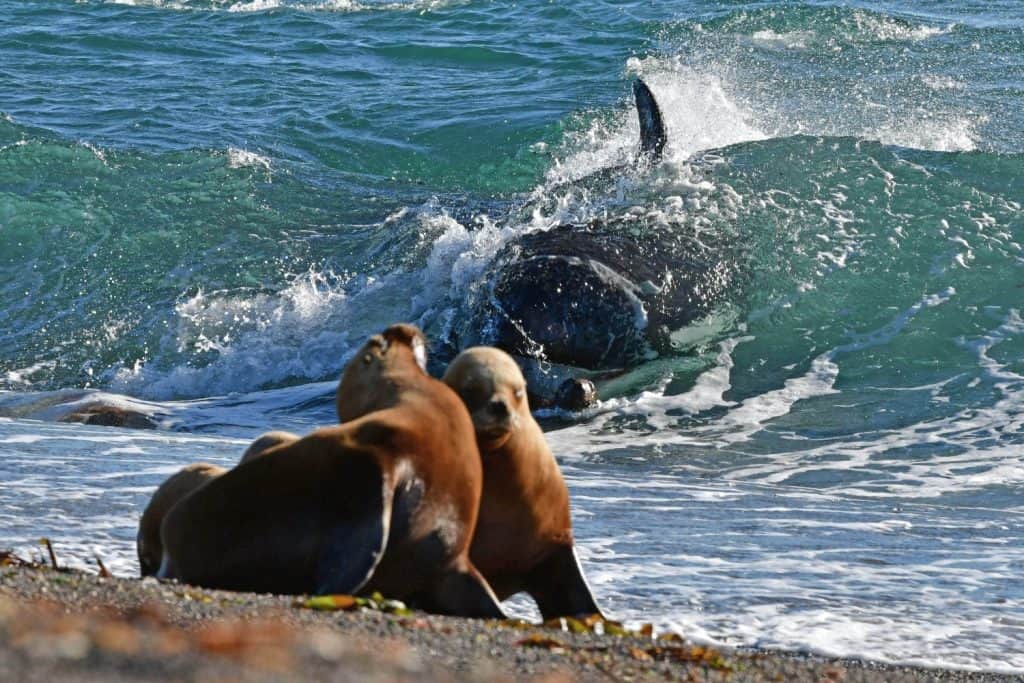
Orcas must time their deliberate stranding perfectly with the tide.
©Maxi Jonas/Shutterstock.com
Lying on the beach for a prolonged period of time causes compression. Whereas in the water, there’s no pressure on the orca’s organs as it swims, on land, there’s too much pressure. This can cause respiratory distress, the collapse of vital organs, and circulatory failure. Depending on the temperature, orcas can overheat very quickly out of the water, adding to the stress on their bodies.