
Quick Take
- Doctors had three theories for why Timmy was swimming in erratic circles, and the one they couldn't rule out reveals something deeply troubling about Florida's coastal waters. See the three theories →
- Timmy's flipper tags told a story that completely reframed her rescue, and what they uncovered about her final days before being found makes her behavior far harder to explain. Discover what the tags revealed →
- Postmortem studies of sea turtle hatchlings contain one statistic so striking it should permanently change how you think about your trash can. See the hatchling statistics →
- A 70-to-80-year-old animal returning to nest faces a threat that didn't exist when she was born, and that threat has nothing to do with the ocean. Explore threats on land →
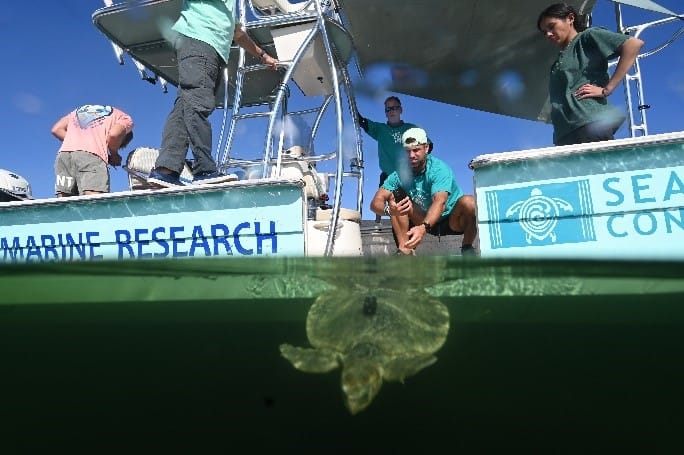
On July 19, 2026, a loggerhead sea turtle was observed swimming erratically near the surface of the water nearly seven miles south of Sugarloaf Key, in Florida. Working in coordination with the U.S. Coast Guard, the Turtle Hospital in Marathon, Florida, transported the turtle to their medical facility for treatment and further observation.
Once Timmy—the name given to the female turtle by rescuers—arrived at the hospital, specialists immediately began trying to determine the cause of her abnormal behavior, considering whether it was due to a neurological issue, a boat strike, or another calamity.
Continue reading
What Happened to Timmy?
“We have some theories,” says Bette Zirkelbach, manager at the Turtle Hospital. Initially, doctors at the hospital believed Timmy may have ingested something toxic, but her blood plasma tested negative for biotoxins.
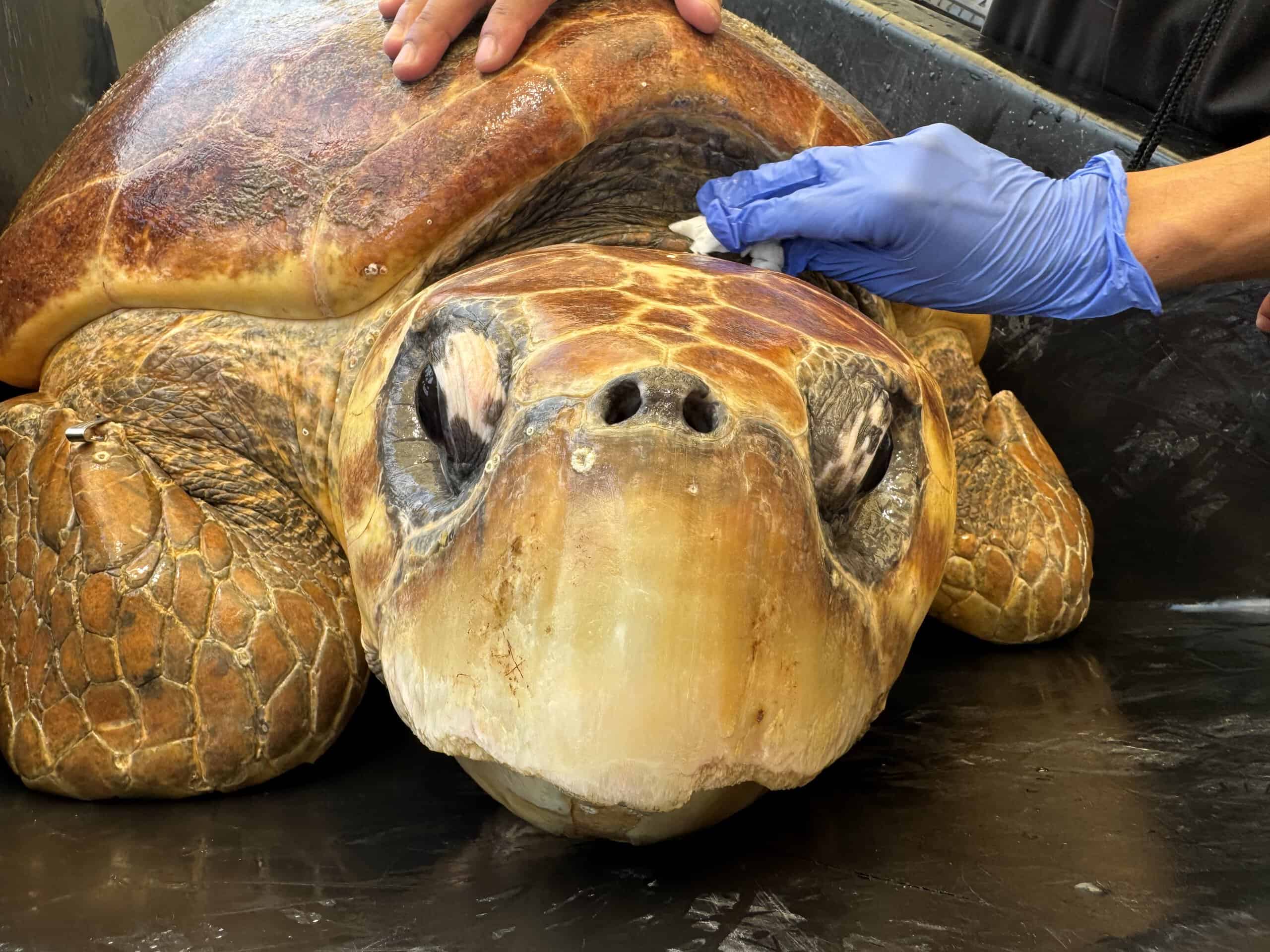
The turtle may have also been brushed by a boat and received a blunt-force injury. Visible marks on Timmy’s head and neck led Zirkelbach, who has worked at the hospital since 2012, to believe the turtle had some impact with a boat, which could have caused her to act abnormally in the water.
Under the care of specialists at the hospital, Timmy responded well to treatment and didn’t exhibit any abnormal behavior once placed in the hospital tank for further observation.
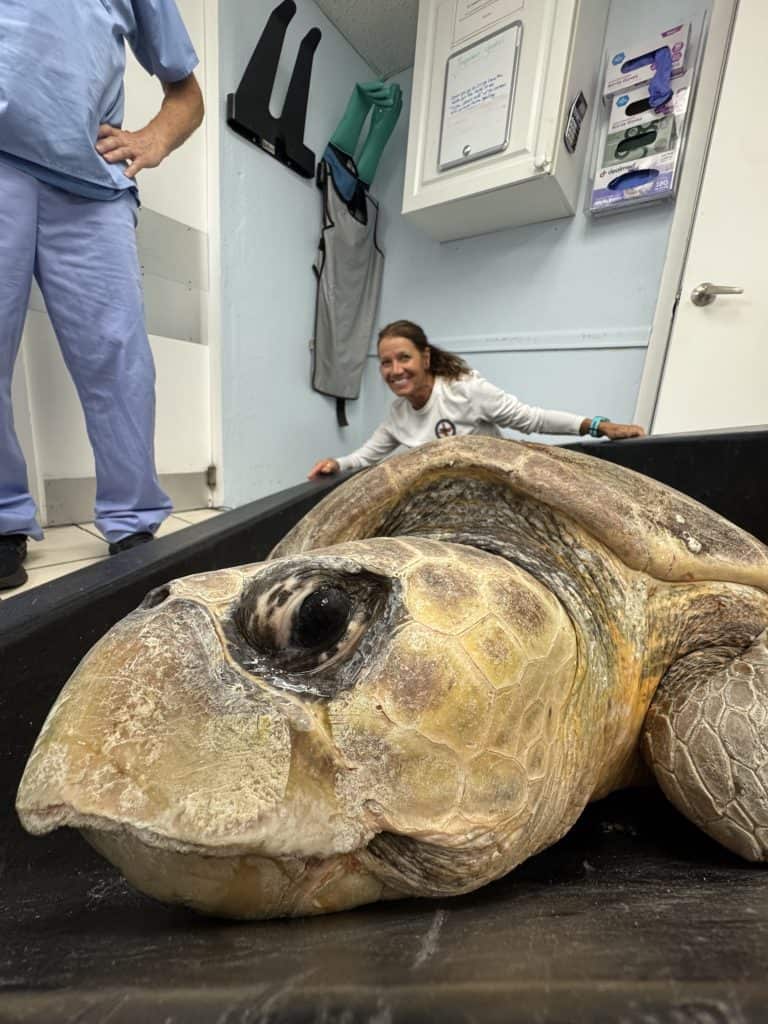
The team at the Turtle Hospital worked to determine the cause of Timmy’s erratic behavior in the water, whether it was something neurological or the result of a boat strike.
“It’s not unusual for a wild animal that’s never been in captivity to not act normally in a tank,” adds Zirkelbach. “For the first 24 hours, she did what loggerheads normally do when they’re put into a hospital tank, then settled down. She’s eating pretty much everything we put in front of her. She has a hearty appetite, and her blood chemistry is testing within normal limits.”
Timmy’s Decades-Long Journey
Weighing approximately 270 pounds, Timmy was estimated by the team at the Turtle Hospital to be between 70 and 80 years old. “It’s incredible to see an animal that has been in our ocean for so many decades that still looks pristine,” says Zirkelbach. “She still has all her flippers, and her carapace, her shell, is in good shape.”
Additional background information was provided by flipper tags, previously placed on the turtle from the Mote Marine Laboratory and Aquarium in Sarasota County, which revealed that she had already nested three times during the 2026 season, with her most recent nest laid on July 9, days before her rescue.
Considering her nesting activity, another theory about Timmy’s behavior was that she was in the middle of mating and was interrupted. “You may see turtles at the surface look like they’re fighting, and we get reports of that and videos all the time during mating season, but there’s usually another turtle involved,” says Zirkelbach. “It’s possible she was mating, and a boat came up on her, and the male took off.”
After thriving in the hospital tank, Timmy was moved into a larger 160,000-gallon tidal pool at the hospital, which provides more of a natural environment.
The odds are stacked against them out there.
Bette Zirkelbach, Manager, The Turtle Hospital
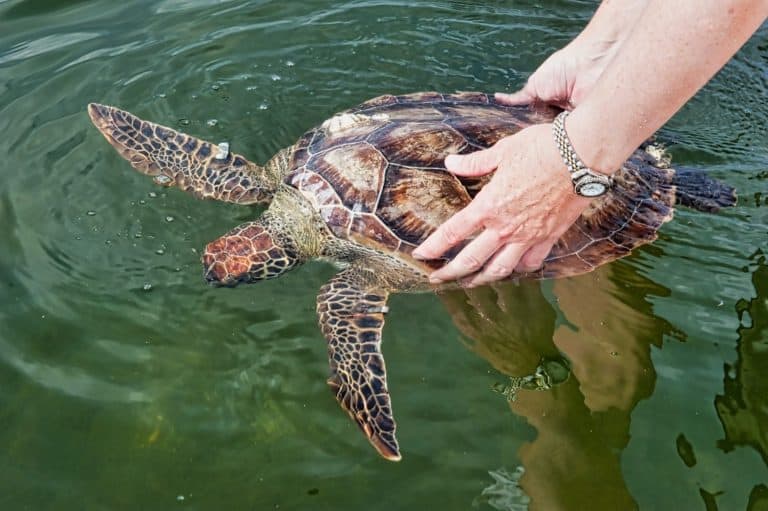
“Obviously, it doesn’t mimic the deep ocean, but it’s better than the hospital tank,” Zirkelbach says. There, the medical staff continued to observe Timmy’s behavior and eventually decided she was ready to return to the ocean.
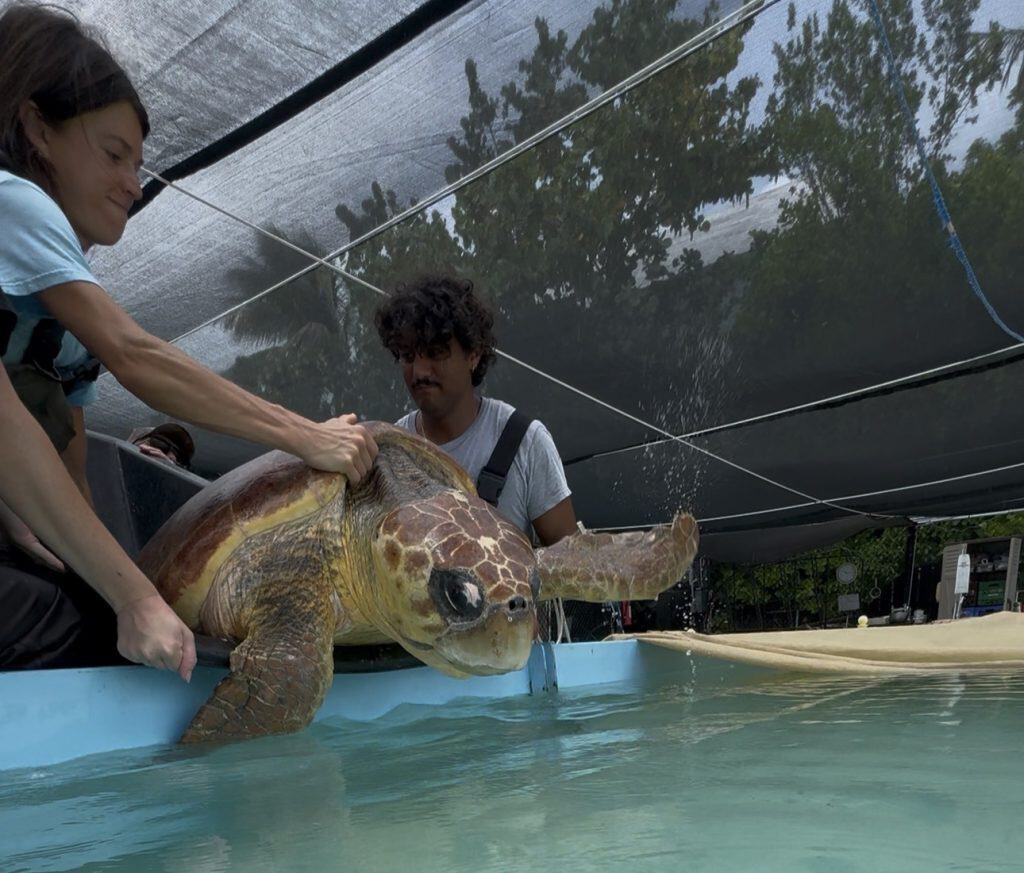
This 160,000-gallon tidal pool more closely mimics her natural environment.
Human Impact
Today, there are an estimated 36,000 to 67,000 mature female loggerhead turtles nesting worldwide, though some sources suggest the number could be higher. Like most sea turtles, loggerhead turtles are often threatened by marine pollution, entanglement in commercial fishing gear as bycatch, vessel strikes, and climate change, which can alter sand temperatures and sex ratios. Warmer sands produce more female turtles, while cooler nesting sites breed males.
While Timmy’s story ends with her return to the ocean, not all rescued sea turtles have such positive outcomes. Despite life-saving efforts by the team at the Turtle Hospital, Mini—another recent adult loggerhead patient—suffered damage to her spinal column from a boat strike and later succumbed to her injuries.
Since the Turtle Hospital opened in 1986, it has treated more than 3,000 sea turtles. This year alone, Zirkelbach has already seen an increase in boat strikes impacting sea turtles.
“The odds are stacked against them out there,” says Zirkelbach, who says they’ve had as many as 40 turtles come into the hospital in one evening. Most turtle injuries or illnesses are caused by a common culprit: human activity.
While boat strikes are the most common threat, Zirkelbach says they also find turtles entangled in fishing gear and lines, or turtles that have ingested plastics or other synthetic materials—often resulting in impactions due to a lack of natural food sources.
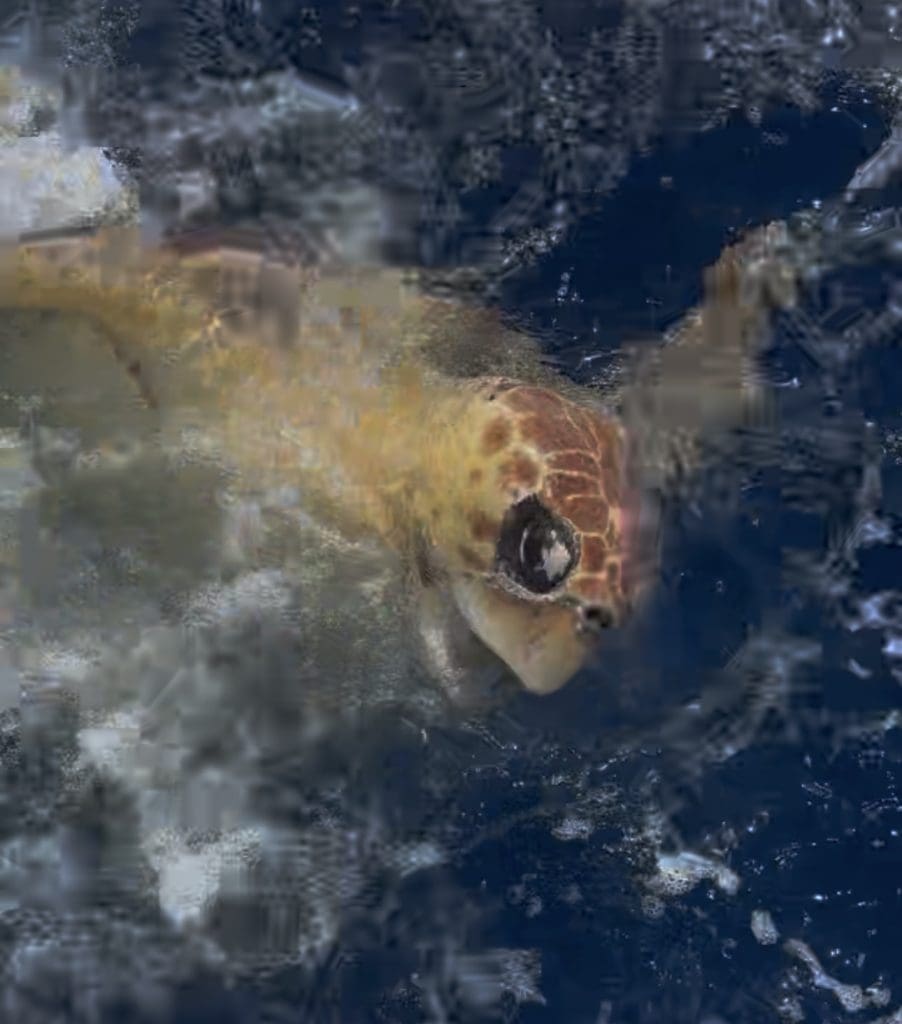
Previous flipper tags, placed on Timmy from a research facility in Sarasota County, revealed that the turtle had already nested three times this year, including days before her rescue.
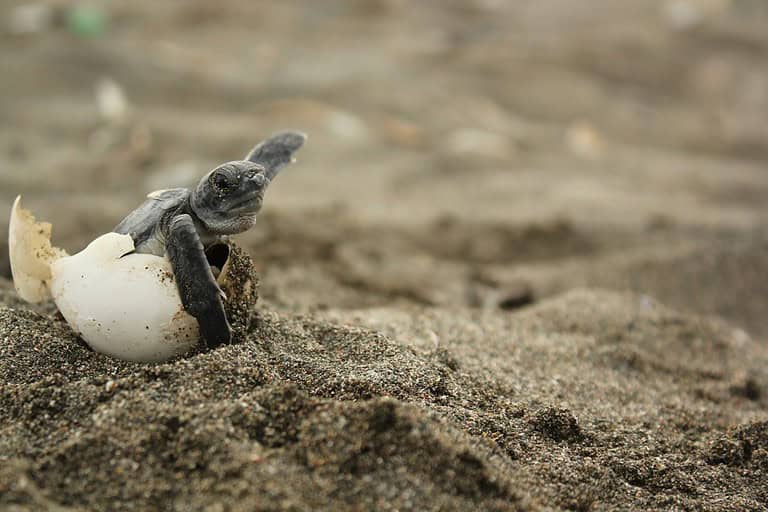
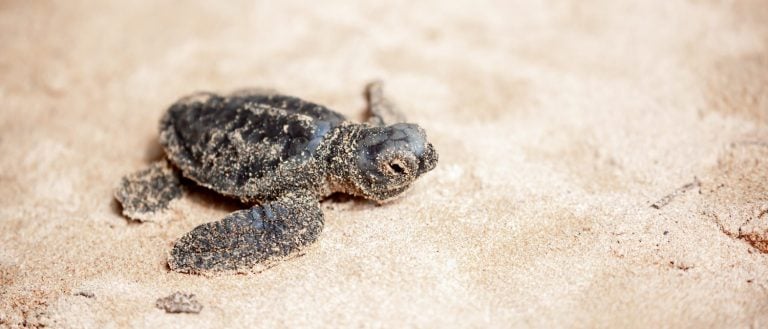
“When what they normally eat isn’t readily available, they start eating other things that get them into trouble,” says Zirkelbach. “Sea turtles are opportunistic eaters, so they eat what’s in front of them. Baby turtles are eating tiny bits of plastic and synthetics, and in postmortem studies of these hatchlings, plastic was found in the gastrointestinal tracts of as many as 93 percent of them. We really need to do better and realize that even though it’s out of sight, out of mind in our trash can, a lot of that ends up in our oceans.”
In addition to pollution, artificial lighting along the beachfront—which often redirects hatchlings away from the ocean—and coastal development have further reduced the reproductive success rates of sea turtles.
Most sea turtles take 20 to 30 years to reach sexual maturity. When they are ready, females typically return to their birthplace to nest. “When you think about our coastlines and our coastal development in those 20 years, the female turtles go back to their natal beach, and when they’ve returned, a lot has happened,” says Zirkelbach. “There might be a seawall, a condominium, or no access to the beach.”
Although not all turtles can be saved despite best efforts, stories like Timmy’s make the work that Zirkelbach and her team do at the Turtle Hospital worthwhile.
“I do believe that humans innately care and want to care about something,” she says, “and more education is the most important component for saving our marine life.”