
Quick Take
- The whale shark is the largest living fish.
- Whale sharks have over 3,000 teeth that they don’t use.
- Whale sharks are gentle giants that do not pose a threat to humans.
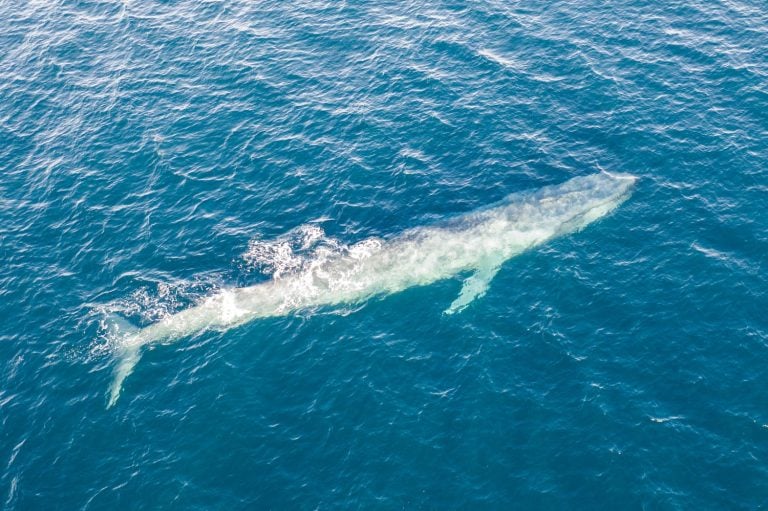
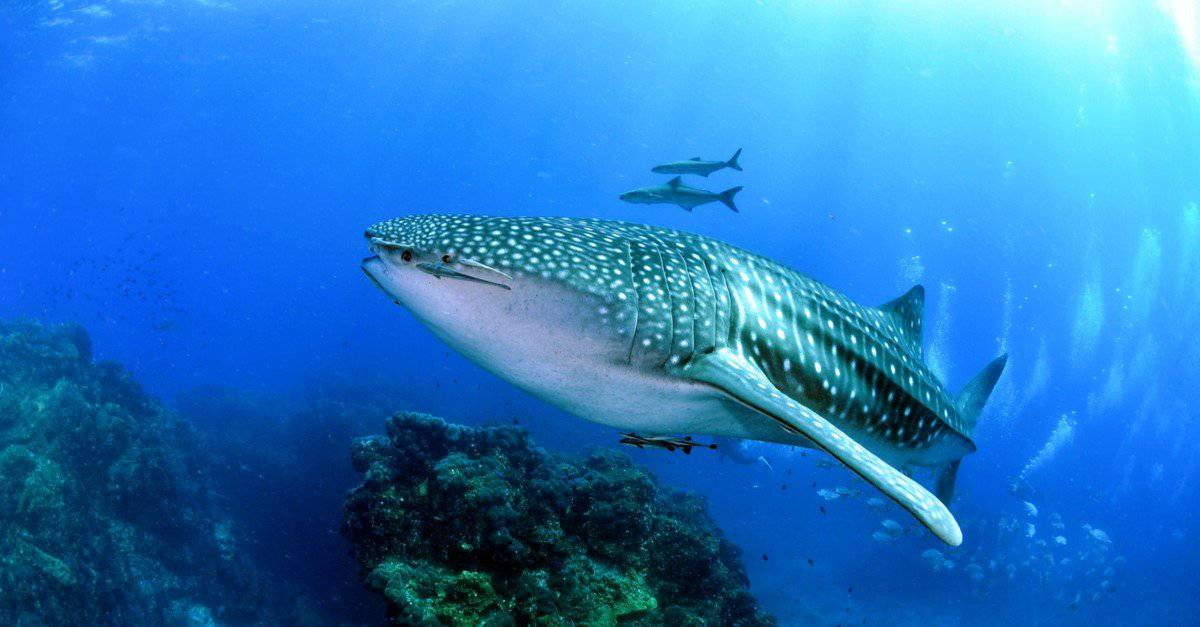
Whale sharks (Rhincodon typus) are the world’s largest living fish, typically measuring 20 to 40 feet long and weighing up to 20 metric tons, which is about 44,000 pounds. They inhabit warm, tropical, and warm-temperate oceans worldwide, often appearing near the surface to feed on plankton. Whale sharks have the thickest skin of any living animal, measuring up to 4 inches thick. Their gray-blue skin is covered in a checkerboard pattern of spots and stripes, which is unique to each individual, and is reinforced with tooth-like structures called dermal denticles to reduce drag. Whale sharks have over 3,000 tiny teeth arranged in more than 300 rows, but they do not use them for eating. Instead, they use spongy, mesh-like filtering pads to trap food. Because they rely entirely on this filter-feeding mechanism to consume microscopic plankton and small fish, these massive, gentle giants are not dangerous. Dive in to discover everything you’ve ever wanted to know about whether or not whale sharks are dangerous.
Are Whale Sharks Dangerous?
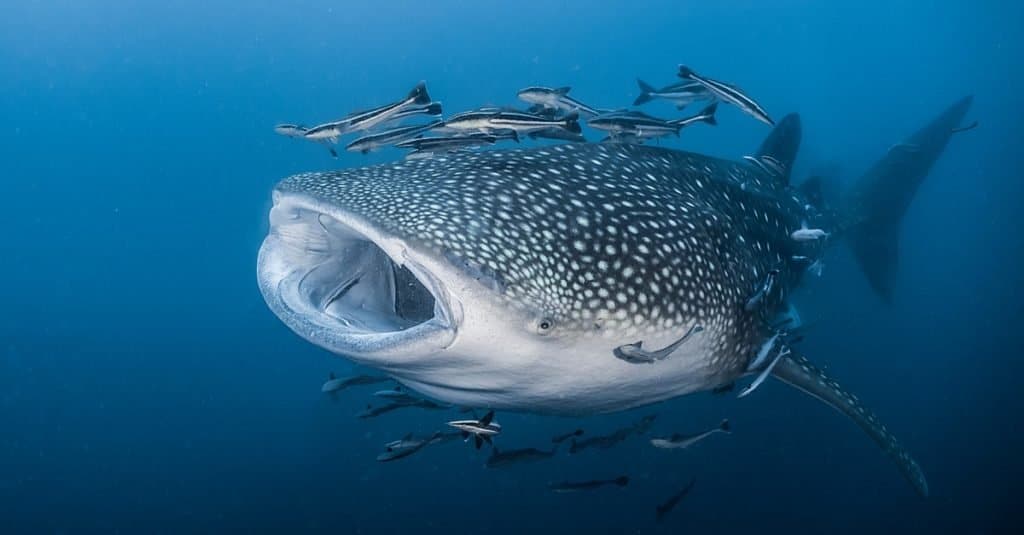
Whale sharks are gentle creatures who pose no threat to humans.
©Onusa Putapitak/Shutterstock.com
Whale sharks are not aggressive and do not pose a threat to humans. With throats only about the size of a quarter, whale sharks are biologically incapable of swallowing a human. They are not predatory, and their interactions with humans are generally calm. Although they have thousands of teeth, they are vestigial, non-functional teeth, about the size of a pencil tip. They are evolutionary remnants from their predatory ancestors, likely retained because they require little energy to produce.
Could a Human Fit into a Whale Shark’s Mouth?
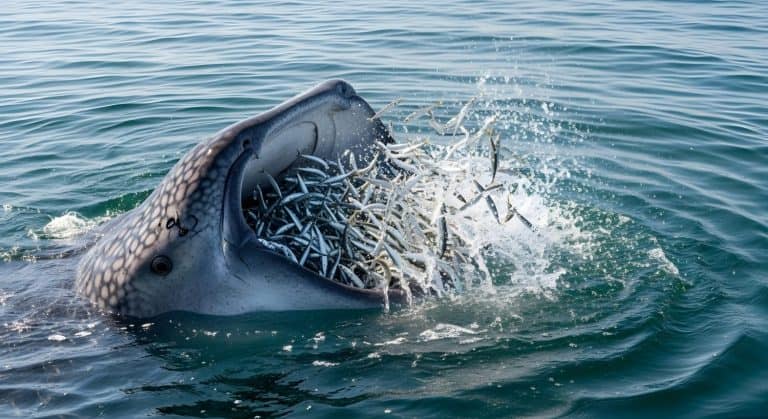
A human could physically fit inside a whale shark’s mouth. While the animal’s throat is remarkably narrow, its mouth is cavernous and could accommodate an adult human. However, even if a human were to end up inside a whale shark’s mouth, it wouldn’t stay there very long. Whale sharks have a built-in coughing mechanism. As soon as they detect something that isn’t their natural food, they immediately trigger this reflex to expel the object out.
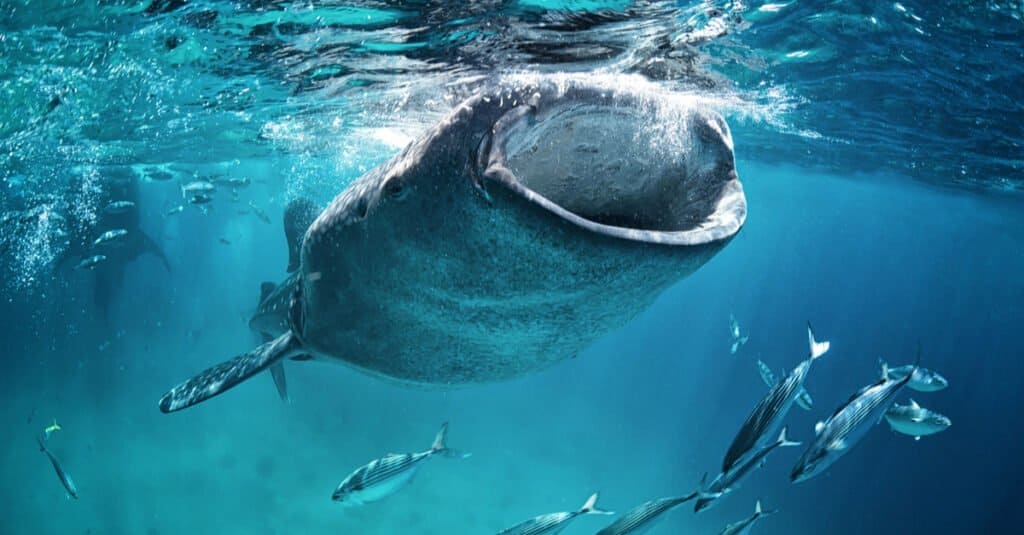
There are no accounts of whale sharks attacking humans, even though their cavernous mouths are large enough to accommodate a person.
©Fata Morgana by Andrew Marriott/Shutterstock.com
Has a Whale Shark Ever Killed a Human?
There is no record of a whale shark killing a human. In fact, there is no record of these fish ever attacking human beings. Apart from their naturally calm demeanor, their teeth are not capable of biting. Even if they wanted to, they could not bite, chew, or swallow anything as large as a human.
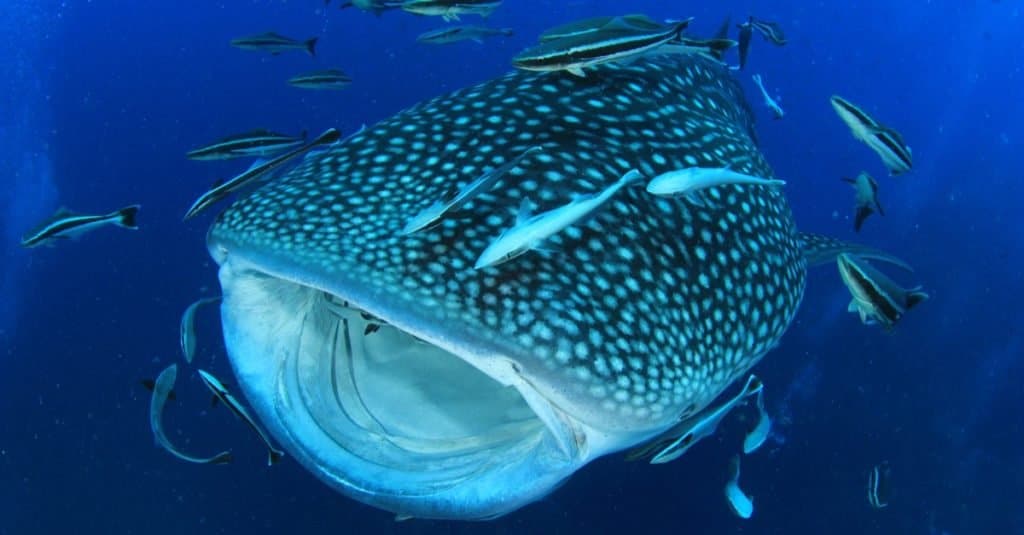
Whale sharks have 300 rows of tiny teeth.
©Rich Carey/Shutterstock.com
Since they do not use their teeth, humans are not at risk of being bitten by these sharks. They also do not bite into their food but swallow it whole.
Are Whale Sharks Intelligent?
Although studies regarding whale sharks and their cognitive abilities are still ongoing, it is safe to say that they are demonstrably intelligent. Captive whale sharks have been known to anticipate feeding by swimming in circles when humans come close to their tanks. Their unusual method of standing upright to catch more food requires an impressive amount of coordination and skill. Although sharks are known to be quite inquisitive, most whale sharks in the wild tend to ignore humans.
Can You Swim with a Whale Shark?
Snorkeling and scuba diving alongside whale sharks is a popular tourist activity. Snorkeling and scuba diving alongside whale sharks are popular tourist activities. These sharks have beautifully patterned skin, which is worth seeing up close. Whale sharks are gentle, slow-moving fish with a cruising speed of approximately three miles per hour (mph), so it is easy to keep pace with them.
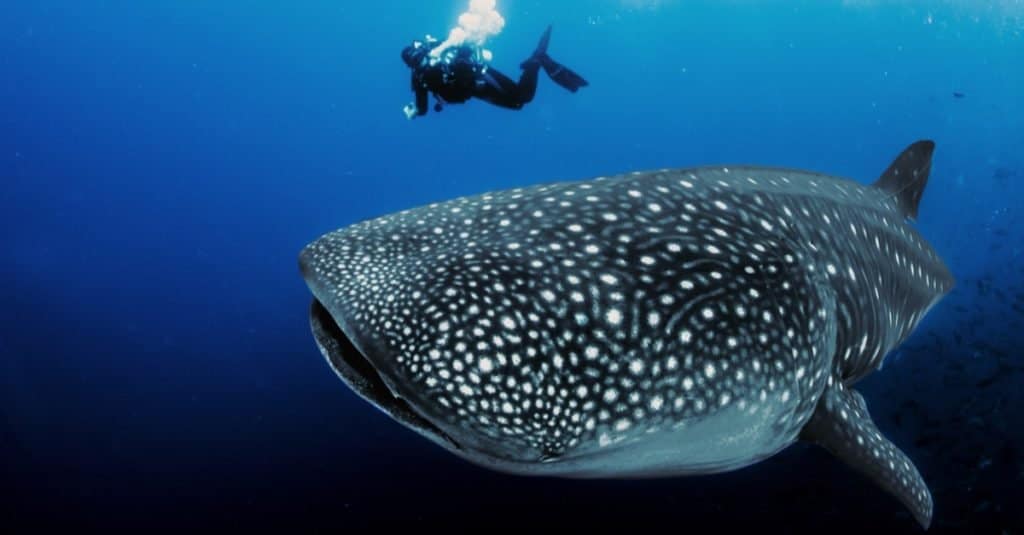
When swimming with whale sharks, it is important to keep your distance to avoid damaging their slime coat, which protects them from disease.
©Lindsey Lu/Shutterstock.com
It is advisable to use a professional, certified guide service when swimming with whale sharks. In many locations, local regulations and permits require a guide to be present. Attempting to find and interact with whale sharks on your own is not considered safe and generally not legal.
These fish have been listed as an endangered species due to threats such as overfishing, bycatch, vessel strikes, and habitat loss. Therefore, humans are actively discouraged from intruding on their habitats.