
S
Species Profile

Shiloh Shepherd

Canis lupus familiaris

Big-hearted shepherd, steady and strong
Maggie Shore/Shutterstock.com

Shiloh Shepherd Distribution

Click a location to explore more animals from that region

Origin Location

This map shows the native origin of the Shiloh Shepherd. As a domesticated species, they are now found worldwide.

Loading map...

Size Comparison

Human 5'8"
Shiloh Shepherd 2 ft 4 in

Shiloh Shepherd stands at 41% of average human height.

Shiloh Shepherd

At a Glance

Domesticated
Also Known As Shiloh
Diet Omnivore
Activity Diurnal+
Lifespan 4 years
Weight 63 lbs
Status Not Evaluated
Did You Know?

Shiloh Shepherds were developed in the United States to create a large, German Shepherd-type dog with emphasis on temperament and sound structure.

Scientific Classification

The Shiloh Shepherd is a domestic dog breed developed in the United States as a large, German Shepherd–type companion and working dog, selectively bred for temperament, structure, and size.

Kingdom
Animalia
Phylum
Chordata
Class
Mammalia
Order
Carnivora
Family
Canidae
Genus
Canis
Species
Canis lupus

Distinguishing Features

  • Large-bodied shepherd-type dog with substantial bone and a robust frame
  • Thick double coat; often a plush/longer coat compared with many German Shepherd lines
  • Common color patterns include sable and bi-color variations (varies by registry/line)
  • Bred with emphasis on stable, companionable temperament

Physical Measurements

Males and females differ in size

Height
♂ 2 ft 5 in (2 ft 4 in – 2 ft 6 in)
♀ 2 ft 3 in (2 ft 2 in – 2 ft 4 in)
Length
♂ 3 ft 10 in (3 ft 7 in – 4 ft 1 in)
Weight
♂ 121 lbs (99 lbs – 141 lbs)
♀ 99 lbs (79 lbs – 119 lbs)
Tail Length
♂ 1 ft 6 in (1 ft 4 in – 1 ft 8 in)
Top Speed
28 mph
running

Appearance

Primary Colors
Secondary Colors
Skin Type Domestic canine skin with moderate pigmentation, covered by dense double coat (plush or smoother).
Distinctive Features
  • Domestic dog breed (Canis lupus familiaris), not a separate wild species; U.S.-developed German Shepherd-type.
  • Larger, heavier-boned frame than many modern German Shepherd Dogs; substantial chest and strong neck.
  • Often a straighter topline and more "old-style shepherd" outline (varies by line/registry).
  • Thick double coat; common plush/long coat with pronounced ruff and heavy seasonal shedding.
  • Wedge-shaped head with alert expression; erect ears (occasionally softer set in youth).
  • Bushy, low-carried tail; agile but typically less extreme angulation than some show-line GSDs.
  • Bred for stable companion/working temperament: confident, biddable, generally calmer than high-drive lines (individual variation).
  • Health concerns seen in large shepherd breeds: hip/elbow dysplasia, degenerative myelopathy risk, bloat (GDV), allergies, thyroid issues.
  • Care requirements: regular brushing/undercoat removal, structured daily exercise, early socialization and training, joint/weight management and screening (hips/elbows).

Sexual Dimorphism

Males are typically taller and more heavily boned with broader heads, thicker necks, and more pronounced mane. Females are usually slightly smaller and finer-boned while retaining the same shepherd outline and coat type.

♂
  • More robust bone and musculature; heavier forequarters.
  • Broader skull and more pronounced stop; thicker neck and ruff.
  • Often larger overall mass and chest width.
♀
  • Slightly smaller frame with finer head and neck.
  • Often more refined outline while maintaining strong structure.
  • May appear more lightly feathered, though coat length varies by line.

Did You Know?

Shiloh Shepherds were developed in the United States to create a large, German Shepherd-type dog with emphasis on temperament and sound structure.

They are domestic dogs-a selectively bred descendant of the gray wolf-shaped by human-directed selection rather than wild evolution.

Coats are often plush/double and can be notably heavier than many modern German Shepherd lines, suiting cooler climates with good grooming care.

They're commonly described as "family-first" shepherds: protective and alert, but typically bred to be less sharp/reactive than some high-drive working lines.

Their size and bone can be substantial; responsible breeding aims to keep movement efficient and joints well supported.

Like many large breeds, their life and comfort are strongly influenced by early joint-friendly conditioning, lean body weight, and appropriate exercise.

Because "Shiloh Shepherd" refers to a modern breed type with different registries/lines, adults can vary in build and coat-asking about lineage and health screening matters.

Unique Adaptations

  • Domestic-dog flexibility: compared with the wild gray wolf, Shiloh Shepherds show human-directed social bonding, responsiveness to cues, and adaptability to home routines.
  • Insulating double coat (in many lines): guard hairs plus undercoat help with cold-weather comfort, but require regular brushing to manage shedding and prevent matting.
  • Large, athletic frame: bred for a "shepherd build" that can combine strength with endurance; maintaining fitness and lean weight supports mobility.
  • Temperament selection: emphasis on stable, biddable companionship-an adaptation produced by selective breeding rather than natural selection.
  • Keen olfaction and auditory sensitivity: inherited canine sensory strengths support tracking games, search-style work, and environmental awareness.

Interesting Behaviors

  • Shadowing/"velcro" tendency: staying near favored people and monitoring household activity, reflecting companion-oriented selection.
  • Perimeter checking: patrolling fences/doorways and watching sightlines, an extension of shepherd guardian instincts.
  • Soft-mouthed carrying: some individuals like to gently carry toys or objects, a common canine behavior shaped by play and retrieve drives.
  • "The lean" and body blocking: using their large frame to stand between family and unfamiliar stimuli, a calm protective gesture.
  • Social scanning: frequent head turns and ear work to track sounds; shepherd-type dogs often read environments continuously.
  • Problem-solving with paws and nose: nudging latches, pawing at doors, or scenting for hidden items-cognitive engagement is often high in shepherd breeds.

Cultural Significance

The Shiloh Shepherd (Canis lupus familiaris) is a modern American family companion derived from German Shepherd lines. It keeps herding, guarding, service, and therapy skills, showing how people shape dogs for homes and work.

Myths & Legends

The name "Shiloh" comes from the Hebrew Bible, where it was an ancient place of gathering and sanctuary. Owners often call the dog breed a peaceful haven and calm companion.

In European pastoral tradition, large shepherd dogs were sometimes treated as "night watch" companions believed to sense danger before humans; modern shepherd-type dogs inherit this folklore of intuitive guardianship.

Norse and broader Germanic storytelling includes wolves as powerful, fate-linked figures (such as Fenrir); shepherd-type dogs are often culturally framed as the 'tamed shadow' of the wolf-strength under human partnership.

Indigenous North American stories often show Wolf as teacher, pathfinder, or guardian. Shepherd-type dogs, like the Shiloh Shepherd (Canis lupus familiaris), are linked to these ideas of guidance and loyalty, culturally not as one tale.

Anecdotal origin lore among enthusiasts often highlights the breed's U.S. development as a deliberate attempt to preserve an 'old-style' shepherd look and stable temperament-an informal modern legend of "bringing back the classic shepherd."

Conservation Status

NE Not Evaluated

Has not yet been evaluated against the criteria.

Population Stable

Life Cycle

Birth 7 pups
Lifespan 4 years

Lifespan

In the Wild
2–8 years
In Captivity
9–14 years

Reproduction

Mating System Polygynandry
Social Structure Managed Domestic
Breeding Pattern Serial
Fertilization Internal Fertilization
Birth Type Internal_fertilization

In this breed, mating is typically human-managed: breeders select pairs per female heat cycle, creating serial pairings. Without management, domestic dogs can be multi-male/multi-female, but Shiloh Shepherd litters usually result from planned, controlled matings.

Behavior & Ecology

Social Pack Group: 4
Activity Diurnal, Crepuscular, Cathemeral
Diet Omnivore Animal-protein-rich meals (e.g., cooked chicken or beef-based diets)

Temperament

HUBS: Domestic dogs are human-social pack generalists; Shilohs typically show calmer, softer stability than many GSD lines.
Breed distinction: selectively bred for steadier nerves, sociability, and larger size; often less sharp/guard-driven than base species.
Affectionate and people-oriented; may form strong attachment and prefer staying near household members.
Confident but sensitive; responds best to consistent, reward-based training and low-conflict handling.
Good with familiar children and pets when early-socialized; may be reserved with strangers without being fearful.
Working tendency: enjoys structured jobs (obedience, tracking, therapy-style work); thrives on mental enrichment.
Variation: some individuals are more protective or more outgoing; early socialization strongly shapes adult sociability.
Health/social impact: hip/elbow dysplasia and degenerative myelopathy risk-avoid excessive jumping, manage weight, support joints.
Health/social impact: bloat/GDV risk-feed multiple small meals, slow feeding, avoid hard exercise around meals.
Care requirement: heavy double-coat shedding; regular grooming reduces discomfort and irritability, improves handling tolerance.
Care requirement: adolescent phase can be mouthy and impulsive; consistent boundaries and adequate exercise reduce nuisance behaviors.

Communication

bark Alert or demand
whine Attention, frustration, greeting
growl Warning, play, resource tension
howl Social contact, excitement
grunt/sigh Contentment, settling
body posture and facial expressions Ears, tail carriage, eye contact
appeasement gestures Lip-licking, head turns, crouch
play signals Play bow, bouncy approaches, self-handicapping
scent investigation and marking Urine, ground sniffing
tactile contact Leaning, pawing, nudging
spatial behavior (blocking, circling, following) indicating attachment or protective intent

Habitat

Biomes:
Temperate Forest Temperate Grassland Boreal Forest (Taiga) Tundra Alpine Mediterranean Desert Hot Desert Cold Freshwater Wetland +4
Terrain:
Plains Hilly Mountainous Coastal
Elevation: Up to 14763 ft 9 in

Ecological Role

Human-associated omnivorous canid; in contrast to the wild gray wolf's ecosystem role as an apex predator regulating ungulates, the Shiloh Shepherd's primary niche is domestic companion and working dog (e.g., protection/guard presence, service/therapy, search-and-rescue style tasks, sport/obedience).

human companionship and mental-health support property deterrence/alerting to intruders (watchdog function) assistance/service work (mobility/psychiatric support where trained) search-and-rescue and tracking potential (when trained) educational/cultural role in human communities

Diet Details

Main Prey:
Small mammals Birds ungulate carrion/trim
Other Foods:
Berries and other fruits Vegetable matter Grasses Fungal and plant fibers

Human Interaction

Domestication Status

Domesticated

Canis lupus familiaris (domestic dog) comes from the gray wolf. The Shiloh Shepherd is a U.S. breed based on German Shepherds, bred for larger size, calmer behavior, and a strong build. It is a family companion and working dog for service, therapy, search, and sports, and needs people for care and breeding.

Danger Level

Moderate
  • Bite/injury risk typical of large, strong dogs-heightened if poorly socialized, frightened, or mishandled
  • Adolescent/young adult exuberance can cause accidental knocks/falls
  • Protective behavior may emerge without structured training and controlled exposure to strangers
  • Resource guarding or dog-dog reactivity can occur if genetics/training/management are poor
  • Risk increases with pain (orthopedic disease) or neurological conditions affecting behavior

As a Pet

Suitable as Pet

Legality: Generally legal as a domestic dog; may be subject to local rules affecting large breeds, intact animals, zoning/HOA limits, leash/muzzle ordinances, or occasional breed-restriction policies that lump "shepherd-type" dogs together. Verify city/county and housing/insurance requirements.

Care Level: Experienced

Purchase Cost: $1,500 - $4,000
Lifetime Cost: $20,000 - $60,000

Economic Value

Uses:
Companion animal market Professional training and behavior services Working and service-dog prospects (limited, temperament-dependent) Therapy/visitation programs (screening required) Dog sports and events Breeding (niche registries) Veterinary, nutrition, grooming, and rehabilitation services
Products:
  • puppies from health-tested breeding stock
  • stud services (where ethically managed)
  • training classes/private lessons
  • boarding/daycare services
  • grooming tools and services (deshedding, coat care)
  • specialty diets/supplements (as veterinarian-advised)
  • orthopedic screening (hip/elbow imaging) and related veterinary care

Relationships

Ecological Equivalents 5

Animals that fill a similar ecological role in their ecosystem

German Shepherd
German Shepherd Canis lupus familiaris Shiloh Shepherd is a larger German Shepherd-type herding/working dog, a calmer companion with heavier bones and a long or smooth coat. Watch for hip and elbow problems, degenerative myelopathy, and bloat; needs training, exercise, and grooming.
Belgian Malinois
Belgian Malinois Canis lupus familiaris Occupies the same working niche (protection, sport, utility) but is usually lighter, faster, and higher-energy than most Shiloh Shepherds. Shiloh Shepherds are generally larger, more oriented toward companionship, less driven to work constantly, yet still require clear training and a job.
Alaskan Malamute
Alaskan Malamute Canis lupus familiaris Comparable large, northern-type build and endurance; overlaps in needs for space, conditioning, and heavy-shed grooming. Contrastingly, the Shiloh Shepherd is more handler-focused in biddability and has a herding/utility style, whereas the Alaskan Malamute tends toward independent sled-dog tendencies.
Siberian Husky
Siberian Husky Canis lupus familiaris Similar endurance and coat-care demands; used as a benchmark for escape/roaming tendencies and prey-drive management. Shiloh Shepherds are typically bred for stronger recall and handler orientation than many spitz-type sled breeds, but still require secure fencing and enrichment.
Wolfdog Canis lupus × Canis lupus familiaris Sometimes compared because of large size and wolf-like appearance; the overlap is mostly in appearance and their roles as pets and guard animals. Shiloh Shepherds are bred for domestic behavior, easy training, and greater predictability, whereas wolfdogs are less consistent and harder to manage.

The Shiloh shepherd is a relatively new breed of dog, developed in the 1970s in the United States by combining several herding and working breeds. This gorgeous large breed looks similar to the German shepherd but is about 30% larger and heavier, with a more wolf-like appearance. They have instincts to herd and guard, but have been specifically developed to have a calm and kind temperament. In this way, they are more of a companion dog than a working breed. They are sociable, affectionate, and non-aggressive. Reinforcing these positive personality traits requires patient, consistent, and loving training from caring owners. Fortunately, Shiloh shepherds are intelligent and easily trained and are excellent with children and other pets.

3 Pros and Cons of Owning Shiloh Shepherds

ProsCons
Great family dog – They have a gentle, loving disposition and get along well with children and other pets. They are highly social and enjoy play that stimulates their minds. They shed Though they come in long-haired and short-haired varieties, they all shed and are not hypoallergenic. Owners should brush them at least once a week to remove loose fur.
Medium to low energy – shiloh shepherds are generally calm, even-tempered, and not overly energetic. They do still require daily mental and physical stimulation and socializing with their owners.Rare and expensive – As a relatively new breed, shiloh shepherds are uncommon and can be expensive. You may have to travel some distance to find a puppy from a good breeder.
Fewer hip issues – Because of intentional selective breeding, they are less prone to hip dysplasia.Needs attention – Although not excessively energetic, they are a herding breed that enjoys having a job to do, and they are highly social. If left alone for long periods of time, they can become anxious.

The Best Dog Food

Food choices for Shiloh shepherds should not be based solely on cost but on providing your pet with a high-quality diet appropriate to their developmental level. Good food can help prevent health issues that may be expensive to treat and shorten the lifespan of your companion.

Younger dogs can eat wet or dry food as well as meat scraps or meat broth in moderation. As dogs age and become less active, they need a diet specially formulated for adult or senior dogs that will help them maintain a healthy weight and provide vitamins and minerals to keep their systems as strong as possible.
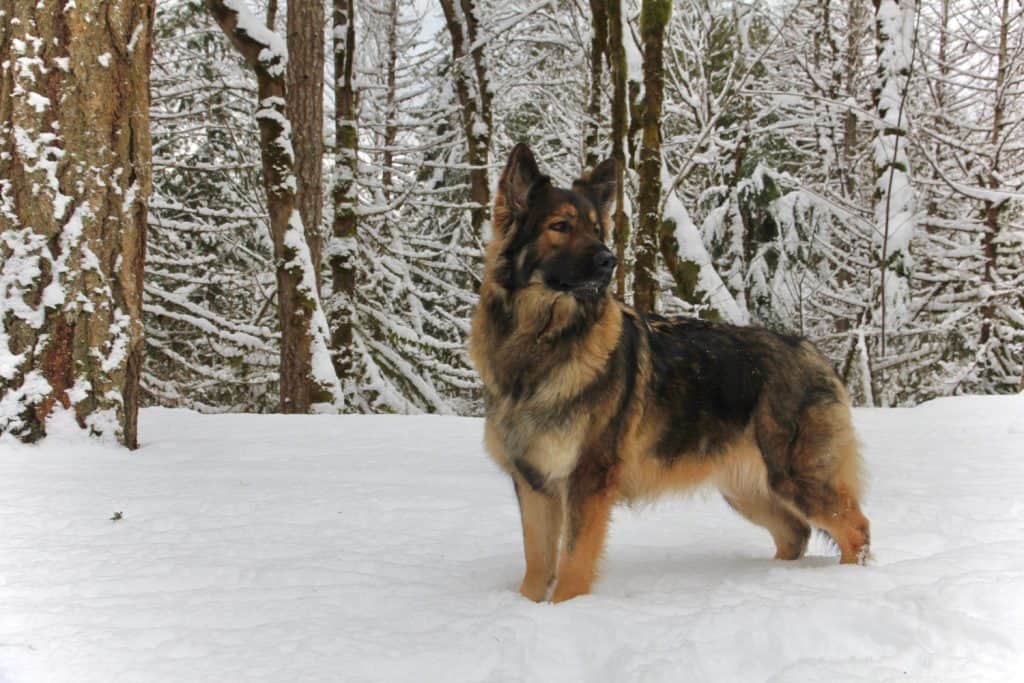
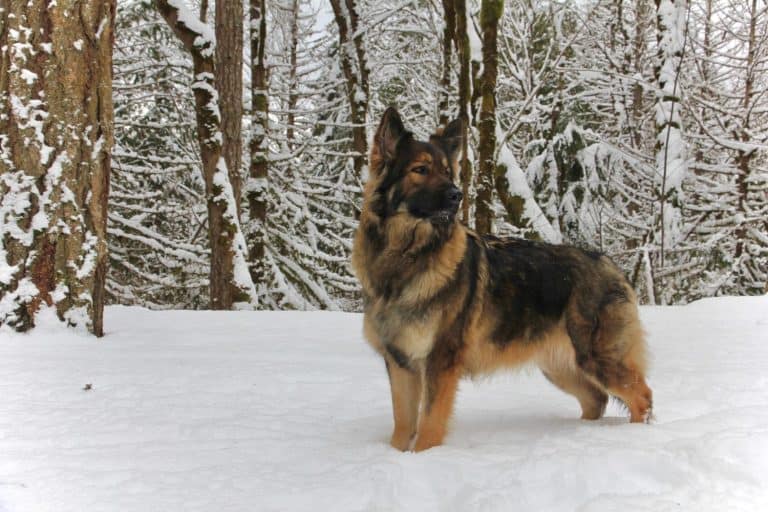
Christmas time Shiloh Shepherd (Mixal)

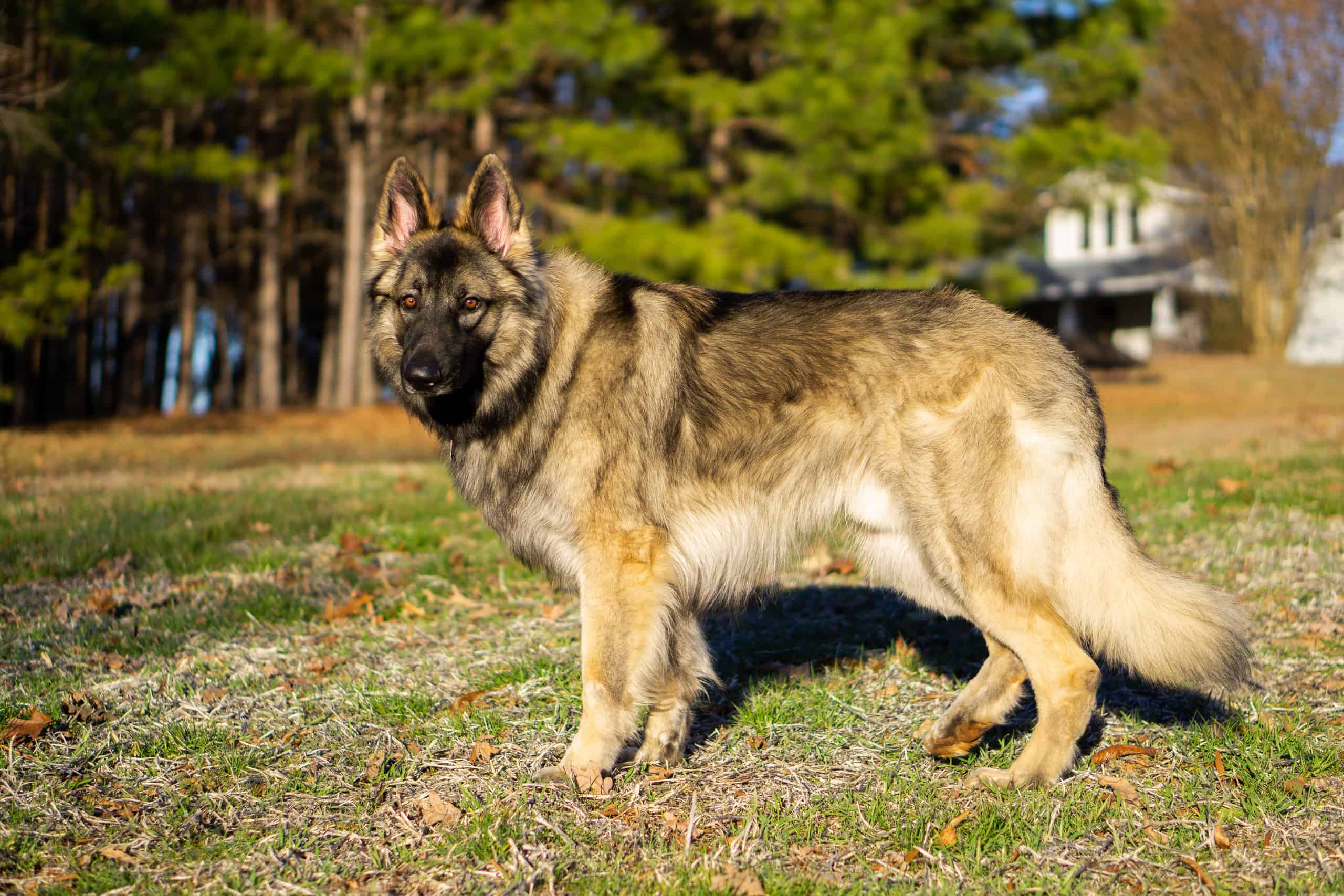
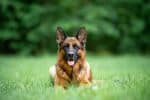
Shiloh Shepherds are large dogs with blocky heads and a heavy, powerfully built bone structure.

Size and Weight

Shiloh shepherds are large dogs, with full-grown males ranging from 28 to 30” tall and weighing 100 to 120 lbs, and females 26 to 28” tall and weighing 80 to 100 lbs. Their large size is visually enhanced by their blocky heads and heavy, powerfully built bone structure. Those with plush coats appear even larger. Their appearance can be intimidating to strangers, which helps them protect their family without any aggressive behavior.

Common Health Issues

Shilohs may have similar health problems as other larger breeds. Careful breeding to create a heavier, squarer bone structure has reduced the problem of hip dysplasia, but has not completely eliminated it. This is a painful issue that can cause lameness in dogs and may require expensive surgery to correct.

Some owners are tempted to overfeed large breeds. However, feeding should be carefully regulated, especially as the animal reaches old age, to prevent obesity-related health problems.

Shiloh shepherds may also experience degenerative myelopathy, which can lead to paralysis; bloat, a gastrointestinal syndrome; allergies that may cause itchy skin, scratching, and bacterial infections; heart disease, including an irregular heartbeat, or pannus, an eye disease that can cause blindness. However, these are issues that can affect any large breed, not only shiloh shepherds. Ask your veterinarian to check for signs of any of these diseases and disorders.

Temperament and Behavior

These dogs are part of the herding dog group and still retain herding and protective instincts. However, they are calmer, softer, and easier to handle than German shepherds and others of this group. They are a better active companion dog, while the German Shepherd is a better working dog. This breed is confident, energetic, outgoing, and friendly. They are gentle, loving, and loyal to their owners, and they get along well with children and pets. Additionally, these dogs are highly social and do not like being alone for long periods of time. They do bark, but not excessively.

How To Take Care of Shiloh Shepherds

Maintenance and Grooming

Shiloh shepherds can have plush or short, smooth coats. They come in various colors, including all black, dark brown, red, golden, silver, and many other variations. They shed and require a moderate amount of grooming to keep their coats neat and healthy. However, regular brushing will help control shedding.

Training

Shiloh shepherds are easier to train than similar breeds, having been developed specifically as calm companion dogs through selective breeding. Owners can successfully train them for search and rescue, herding, or as therapy or service dogs. Properly socialized as puppies, they do well with children and other pets. They are highly social and intelligent, so they enjoy play, training, and various tasks.
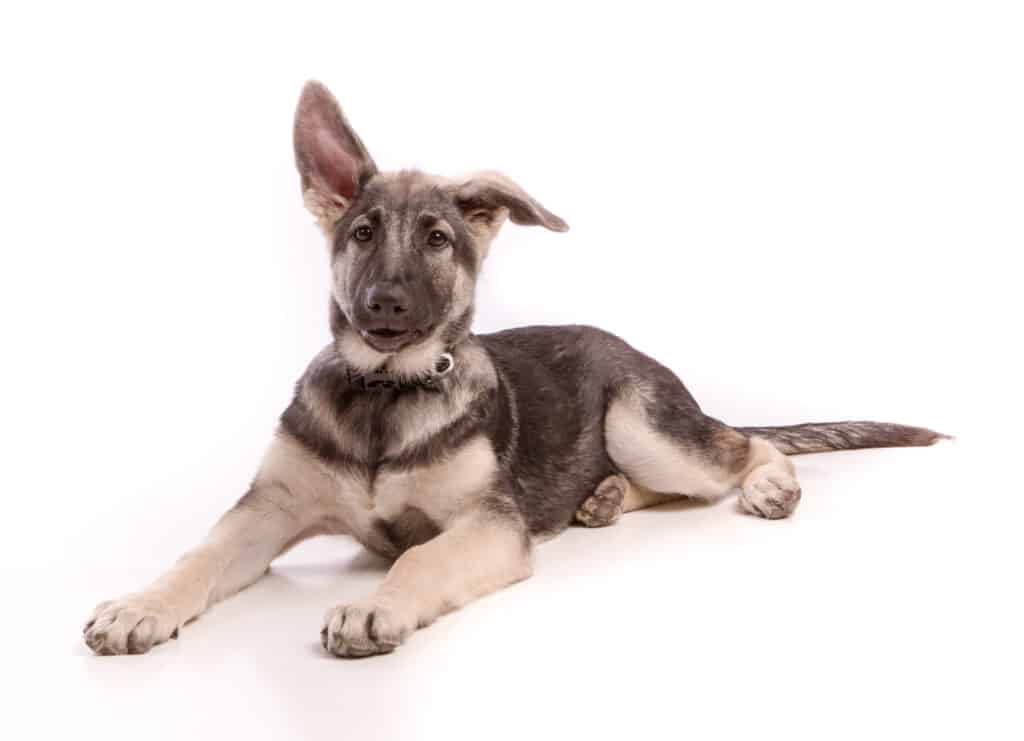
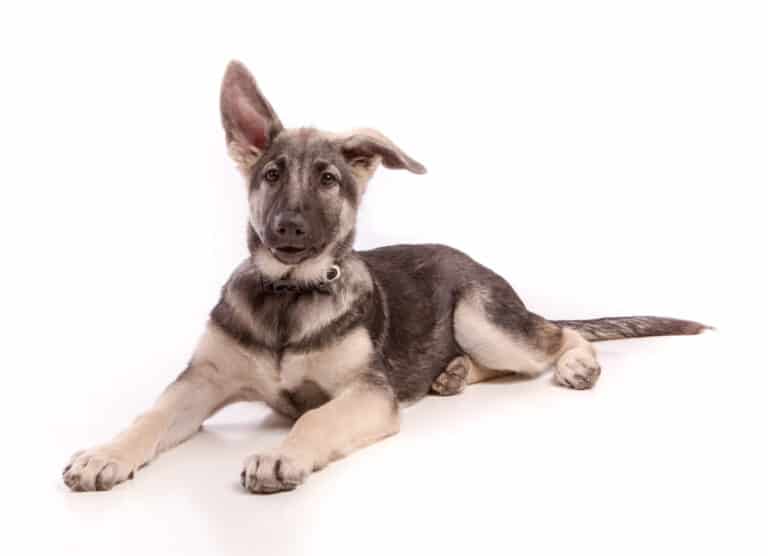
Puppy Shiloh Shepherd

Puppy Shiloh shepherds need plenty of socialization to learn how to interact well with children.

Exercise

This breed needs mental stimulation, attention, and exercise. They should have a 60-minute walk or similar level of activity every day, and they enjoy puzzle toys and training sessions that keep them alert. If they are not given enough stimulation, they may try to entertain themselves by barking and chewing. However, it is also important not to give them too much exercise, especially in their first two years. Over-exercise can damage their growing joints and bones.

Shiloh Shepherds and Children

Shiloh shepherds are gentle, affectionate, and protective of children, and they get along well with other pets. However, as with any breed, they need training and adult supervision as they learn the rules and their place in the “pack.”

Dogs Similar to Shiloh Shepherds

Other similar dog breeds include the German shepherd, Alaskan malamute, and the Siberian husky.

  • German Shepherd: This breed is similar in appearance to the Shiloh shepherd. However, it is smaller, more excitable, and better equipped to be a working dog.
  • Alaskan malamute: This is a large-breed working dog native to Alaska, bred for strength, endurance, and hauling heavy loads on sleds.
  • Siberian husky: A medium-sized working dog related to the spitz, this breed has a beautiful, thick coat and is intelligent, friendly, and known for being dramatic and funny family pets.
View all 391 animals that start with S

Sources

  1. YourPureBredPuppy / Accessed November 14, 2022
  2. HelloBark / Accessed November 14, 2022
  3. Wisdompanel / Accessed November 14, 2022
  4. International Shiloh Shepherd Alliance / Accessed November 14, 2022
  5. Animalso / Accessed November 14, 2022
  6. PetMD / Accessed November 14, 2022
  7. Pet Net ID / Accessed November 14, 2022
Drew Wood

About the Author

Drew Wood

Drew is a college professor and freelance writer who graduated from the University of Virginia. His travels have taken him to 25 countries and 44 states, where he has enjoyed learning about wildlife in a wide range of environments. In addition to his love of animals, he enjoys scary movies, landscaping, strategy games, and philosophical discussions over a cup of coffee. He is also an emotional support human to a neurotic Spanish Water Dog and a hyperactive Chihuahua mix.

Thank you for reading! Have some feedback for us?


Shiloh Shepherd FAQs (Frequently Asked Questions)

The initial purchase price of a shiloh shepherd puppy is $800-$1,000. Annual upkeep in the form of food, veterinary care, medication, pet insurance, toys and supplies is about $650.