
The idea of giving a fish tank a proper cleaning always seems like a lot of work, but it doesn’t have to be. Often, a partial cleaning is the ideal approach. And though it may mean more frequent upkeep needs, it actually is less overall work and, more importantly, it preserves the beneficial bacteria for your fish’s overall health.
Preparation
- Use a dechlorinator. Too much chlorine and chloramine will kill good bacteria.
- Match the new water temperature within 2-3°F of the tank.
- Match pH and water hardness if your tank has sensitive species.
Clean Without Upsetting the System
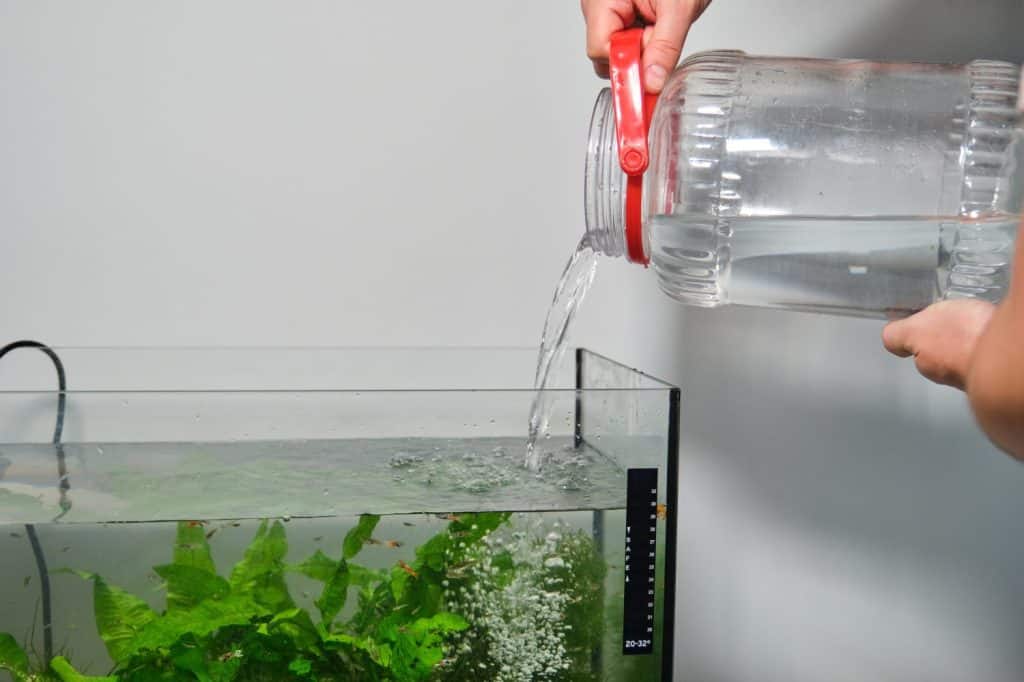
Partial water changes ensure that aquarium ecosystems don’t get too upset.
©Ladanifer/Shutterstock.com
The key principle to keep in mind when doing a partial water change for your fish tank is keeping its ecosystem intact. An aquarium is healthy when it has enough nitrifying bacteria. These bacteria primarily live on solid surfaces, including filter media like sponges and bio-balls, substrate surfaces, and rock or driftwood decor — not in the water column itself. They convert toxic ammonia into nitrite, which converts into nitrate.
While removing tank water does not directly remove large amounts of beneficial bacteria, aggressive cleaning of filter media or substrates can disrupt bacterial colonies and destabilize the nitrogen cycle. The goal of a partial water change is to remove excess waste while leaving enough bacteria alive and functioning.
Water Timing and Volume
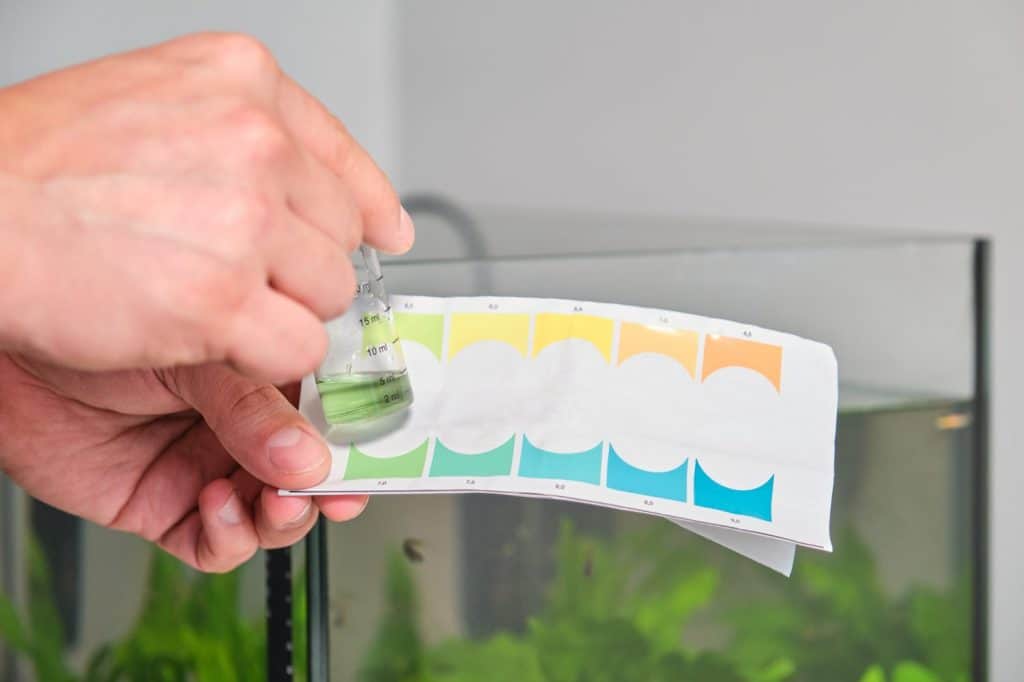
Typical stocked freshwater fish tanks need to be changed once a week, while heavily planted tanks need to be changed every 10 to 14 days.
©Ladanifer/Shutterstock.com
The size of the tank dictates the level of water change. Typical stocked freshwater tanks need to be partially changed once a week. Lightly stocked or heavily planted tanks may require water changes weekly or every 10–14 days, depending on plant growth, feeding levels, and nitrate readings. Heavily stocked tanks need to be changed every five to seven days.
Avoid changing more than 40% of the water unless it’s an emergency. Too much too soon can ruin pH levels, destroy bacterial colonies, and destabilize the tank’s temperature. A 20-30% water change per clean is ideal.
Filter Cleaning
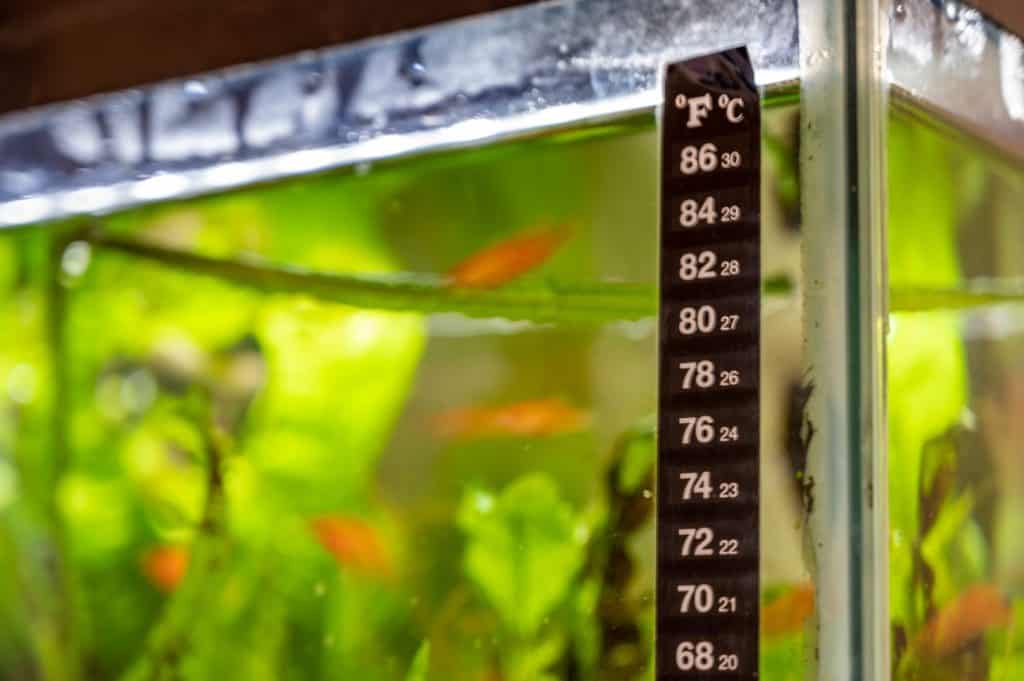
Filter media must be cleaned in a leftover bucket of tank water so bacteria colonies aren’t decimated.
©Lost_in_the_Midwest/Shutterstock.com
This is the tricky part of the process because it requires cleaning, but not so much that it destroys all the beneficial bacteria. The goal is to remove mechanical media and intake tubes, clean them just a bit, and put them back in the tank as soon as possible.
First, be sure to save a bucket of removed water from your partial water change. Take the removed media and tubes and place them in the bucket. Gently remove debris, but avoid too much cleaning. Reinstall these pieces into the tank immediately so that not a lot of bacteria are harmed.
It’s best to avoid several things, even if they seem intuitive. For example, do not rinse filter media under tap water, replace all media at once, or deep-clean every tank compartment simultaneously. Cleaning multiple biological surfaces at the same time can temporarily reduce bacterial populations and interfere with the nitrogen cycle. It’s best to clean one piece of media two to four weeks apart.
Terrain Techniques
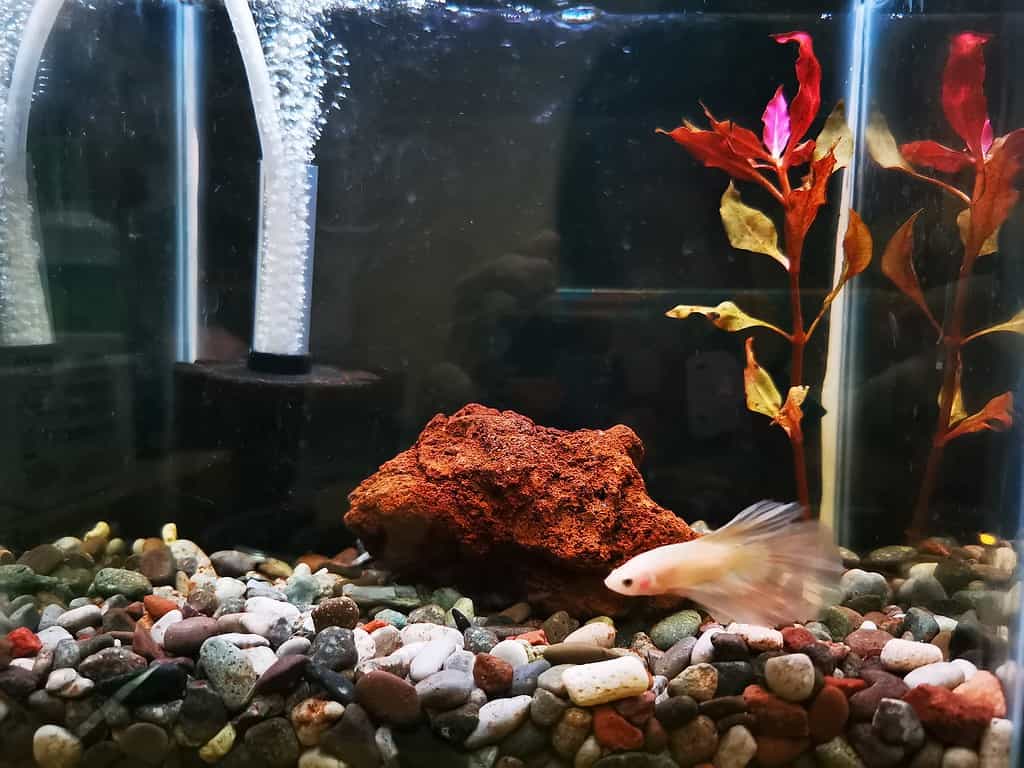
Substrates also require a delicate cleaning.
©Debbie Kates Castanares / CC BY-ND 2.0 – Original / License
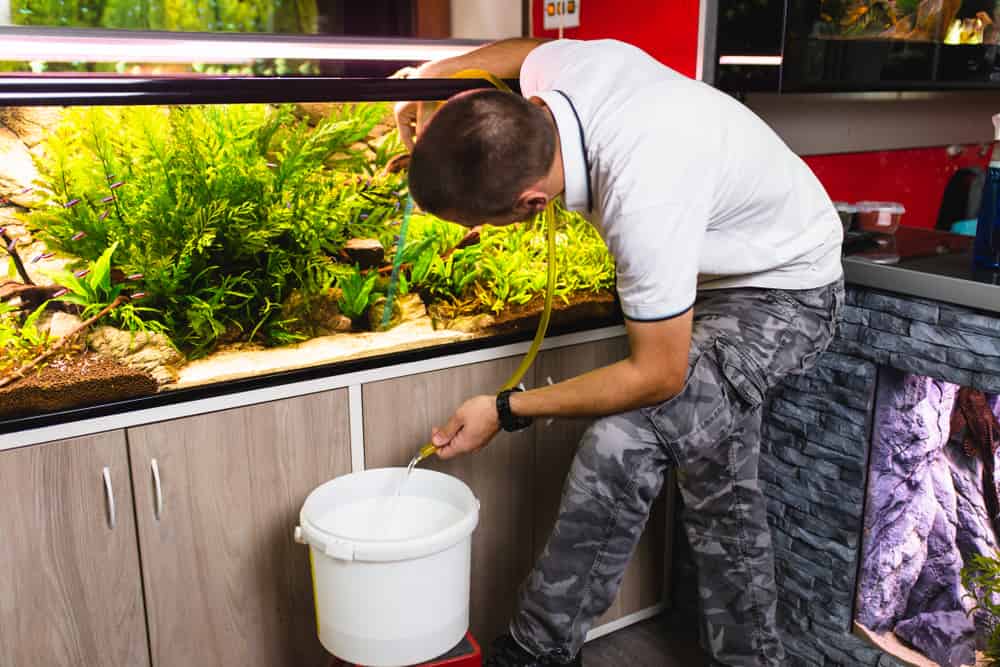
If you have a gravel substrate, use a gravel vacuum siphon. Push this straight into the gravel and slowly lift it so waste rises, but the gravel falls back into the tank. Only clean a third to a half of a gravel substrate per cleaning session.
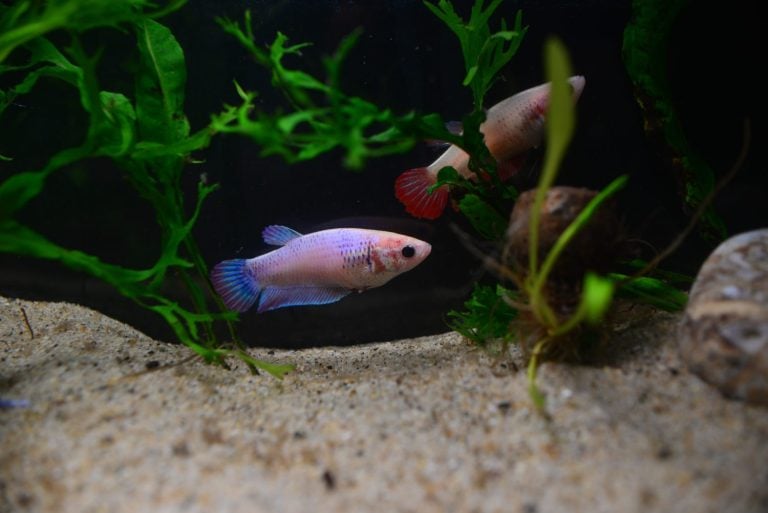
If you have a sand substrate, hold your siphon just above the substrate surface. Swirl it gently so debris lifts up without pulling sand into the siphon. Avoid plunging the siphon deeply into sand, as this can cloud the water and disturb settled sediment.
A planted or Aquasoil substrate is the easiest to clean. It really only requires spot-cleaning of visible waste. Let plant roots and microfauna do the rest of the cleaning for you.
Workflow
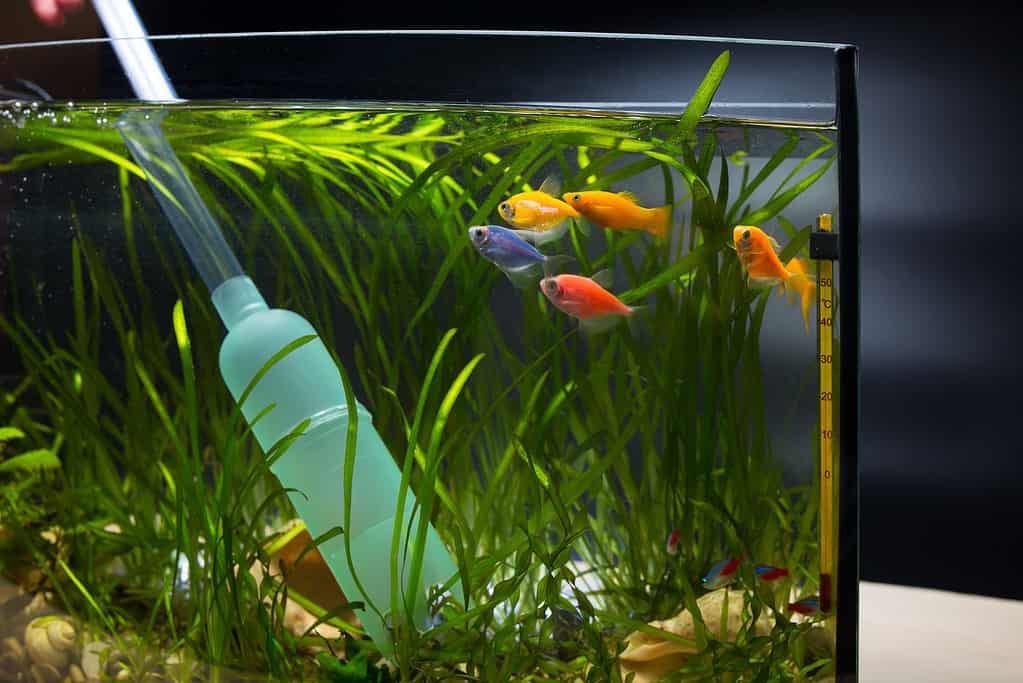
A proper order of operations and avoidance of several actions will ensure your partial water change goes off without a hitch.
©Sergiy Akhundov/iStock via Getty Images
Partially cleaning a tank is a delicate procedure. Be sure to follow these steps to ensure safety and success:
- Unplug the tank’s heater and filter
- Remove the selected portion of the tank water
- Clean substrate with gentle siphoning
- Wash filter media in leftover tank water
- Refill the tank with treated water
- Turn the heater and filter back on
The goal here is to clean part of the tank without destroying its delicate ecosystem. Without enough beneficial bacteria, tanks will become toxic and eventually kill their inhabitants. Ensuring that enough bacteria survive a cleaning requires doing it piecemeal. It also requires avoiding several actions.
- Don’t clean media, tank walls, and substrate all at once
- Don’t use household cleaners
- Avoid overcleaning, especially when it comes to filters
- Don’t replace filter cartridges too often